Slides
Lesson plan
Build a Story Mountain That Readers Climb
Students learn hooks, showing details, and clear event order. They plan and draft a short real or imagined narrative.
Objectives
- Students will order five events so a problem grows to a climax and resolves.
- Students will use hooks, dialogue and pacing as technique to develop experiences.
- Students will add relevant sensory details that show people, place and feelings.
Success criteria
- I can order my story in five parts that lead to a turning point.
- I can start with a hook and add one line of real-sounding dialogue.
- I can show feelings and place with two strong sensory details.
Key words
| Word | Meaning |
|---|---|
| narrative | a story about real or made-up events told in order |
| sequence | the order in which events happen, where each causes the next |
| climax | the biggest turning moment or choice at the top of the mountain |
| dialogue | the words people in a story say out loud to each other |
| sensory detail | words that show what can be seen, heard, felt, smelled or tasted |
| hook | a mysterious opening that makes readers ask what happens next |
Timed plan (60 minutes)
| Time | Stage | What happens |
|---|---|---|
| 5 min | Starter | Activate story experience and launch the mountain goal for clear sequencing. Welcome class and say the hook line with energy. Show Slide 1 title and Slide 2 Think, pair, share question. Give 30 seconds think, 60 seconds pair talk, then take 3 shares. Link answers to today: we will build stories readers cannot put down. |
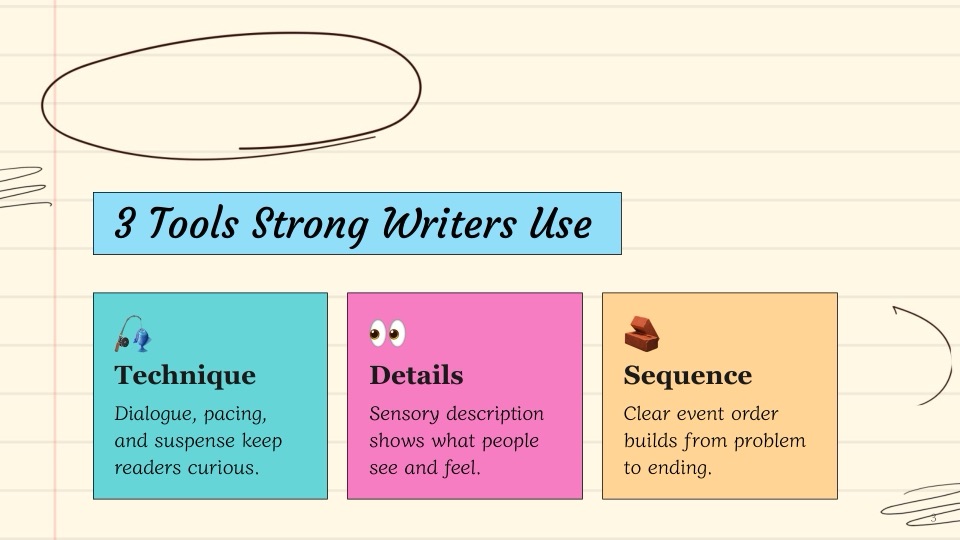
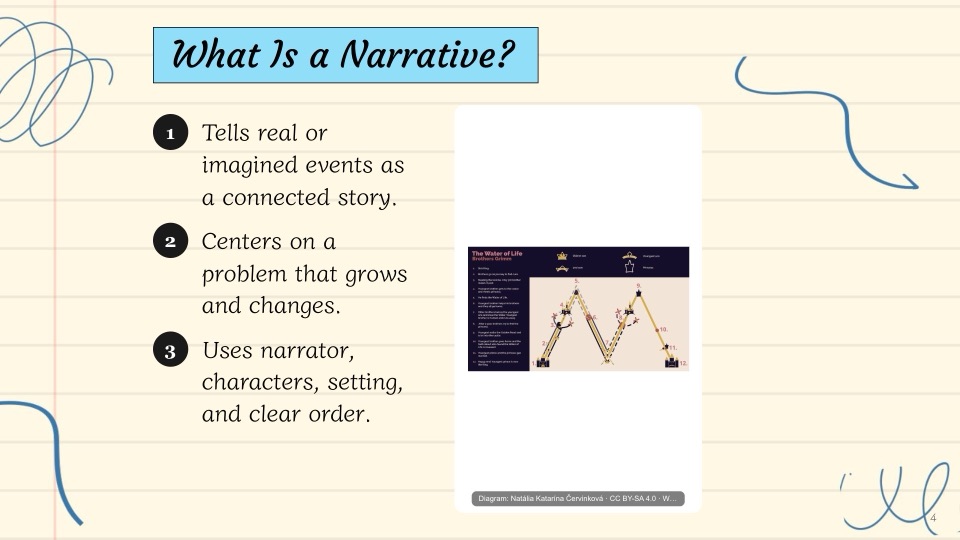
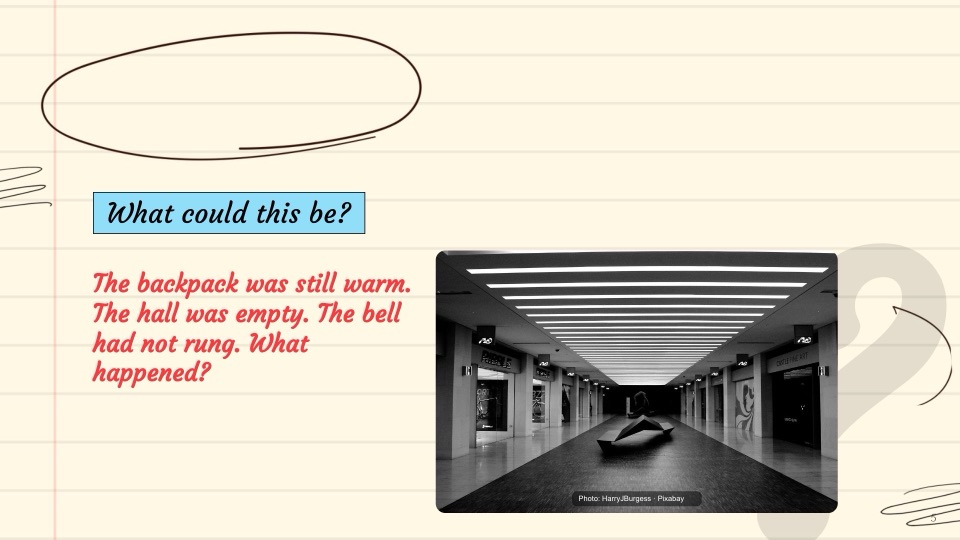
| 10 min | Teaching | Explain technique, details, and sequence tools strong writers use. Show Slides 3-4 and name the 3 tools: technique, details, sequence. Explain a narrative tells real or imagined events as a connected story centered on a problem that grows, using narrator, characters, setting and clear order. Show Slide 5 mystery and read it aloud, then show Slide 7 big idea. Model how the hook plus order plus showing makes readers curious. |
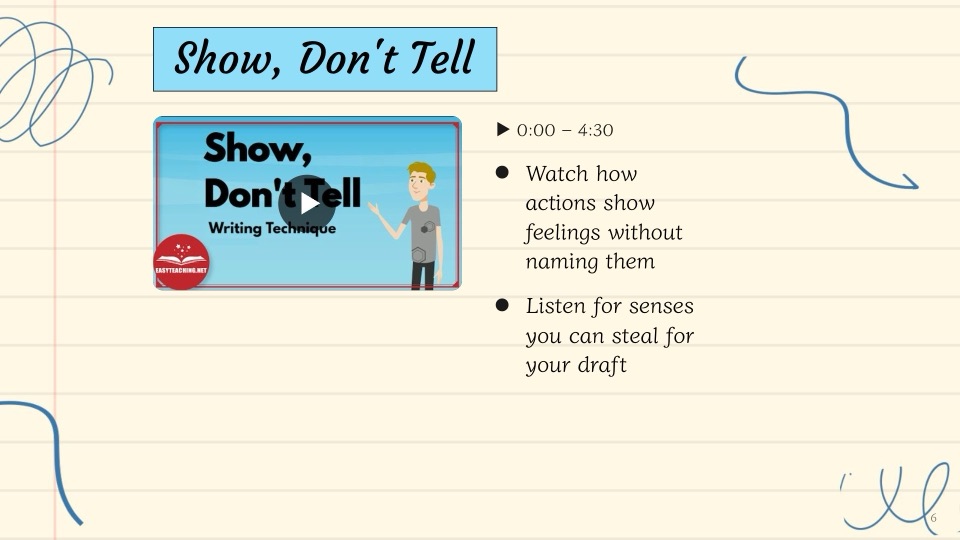
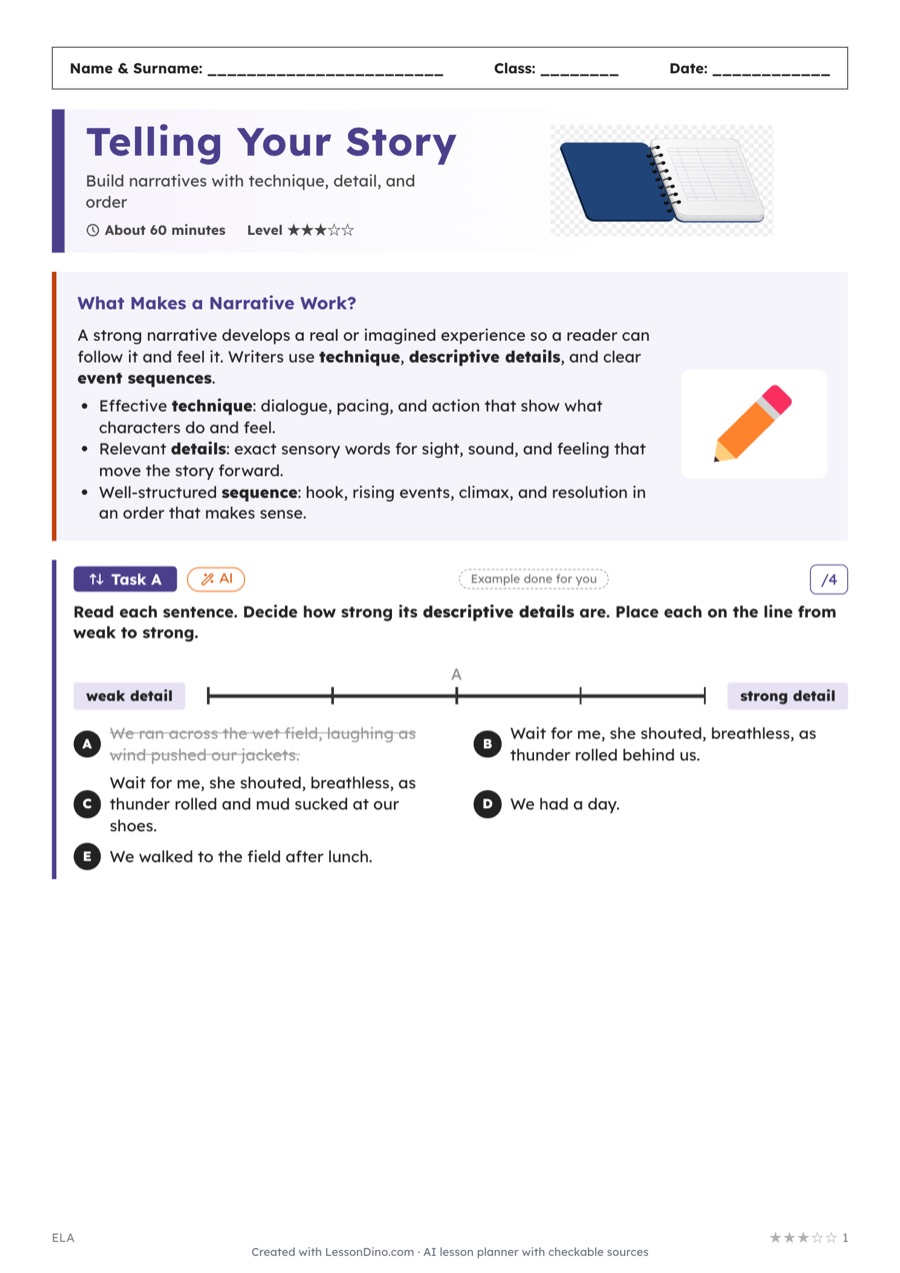
| 15 min | Guided practice | Practice replacing telling with showing details together. Show Slide 6 and play Video clip 3 (0:00–4:30) about Show, Don't Tell Technique. Model one rewrite: Telling: The hallway was loud. Showing: Locker doors slammed and sneakers squeaked past me at noon. Hand out Worksheet Task A and give pairs 5 minutes to place sentences from weak to strong. Take feedback and underline senses that show without naming the feeling. |
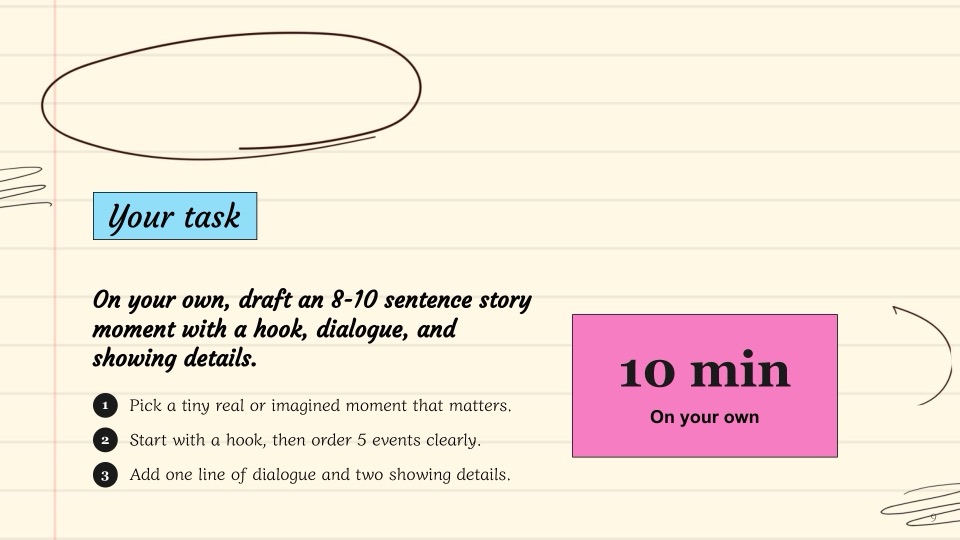
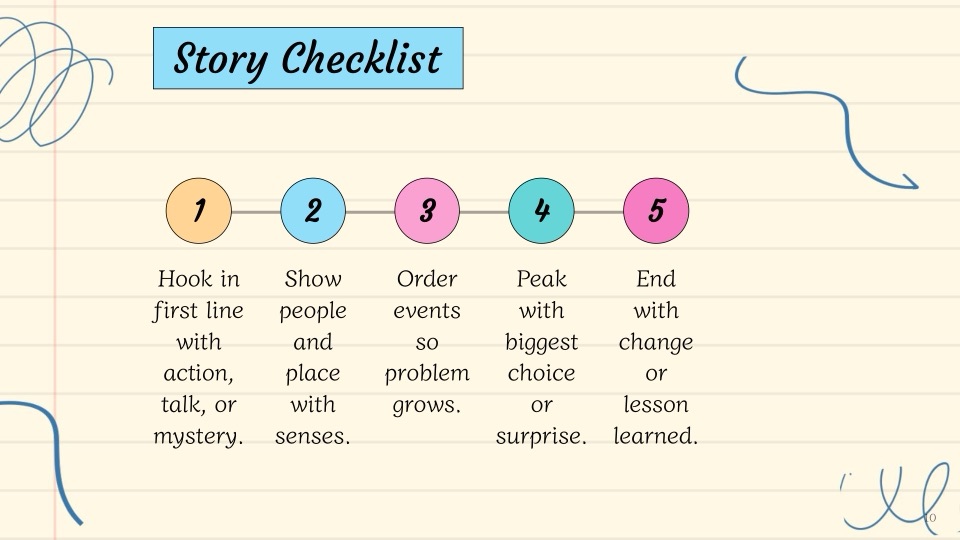
| 20 min | Main activity | Build and draft a five-part narrative mountain with hook, dialogue and showing. Give each group five strips, markers, tape and show Slide 9 task. Model a five-sentence mountain about a student missing the bus, making sure each event causes the next. Send groups to write one sentence per part, tape mountain in order, then add one dialogue line and two showing details. Circulate with Slide 10 Story Checklist and prompt cause-and-effect fixes; frequent short writing with quick revision builds skill. |
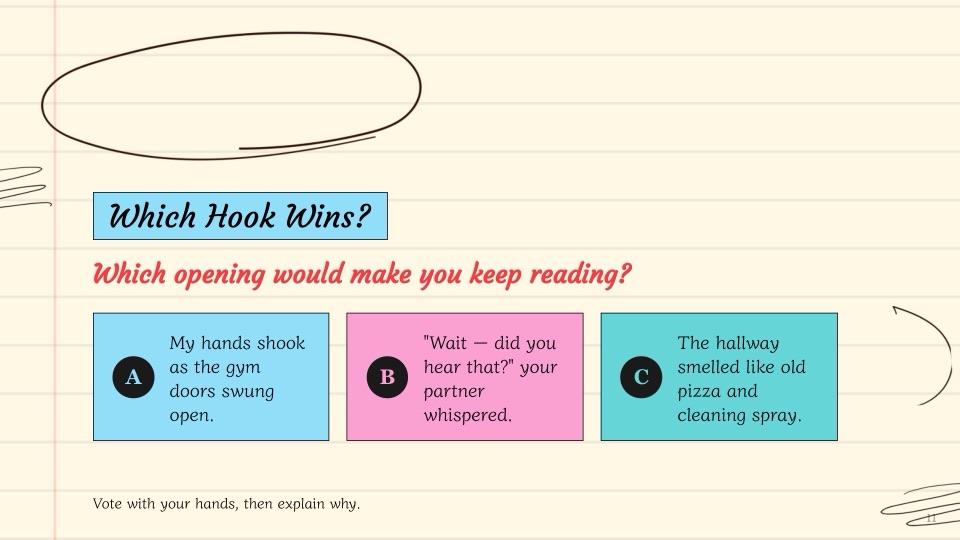
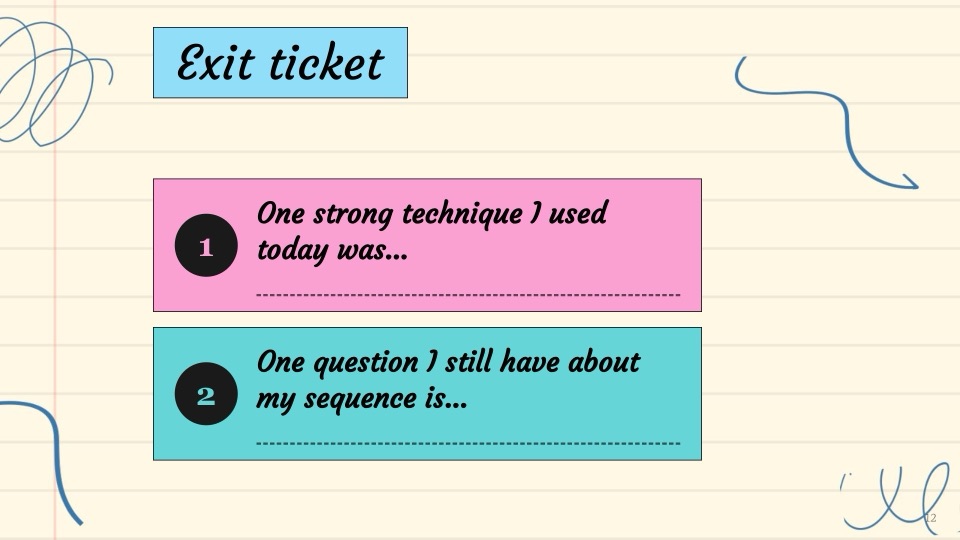
| 10 min | Plenary | Evaluate hooks and check use of technique, details and sequence. Show Slide 11 Which Hook Wins? and read the openings for vote. Ask voters to defend choice with one craft reason: action, question, or vivid detail. Show Slide 12 exit ticket and have students write two sentences in notebooks. Collect and preview next lesson on pacing and revision. |
Common mistakes
- Telling feelings instead of showing them (She was scared).
How to spot it: Draft uses was/were plus feeling words with no senses.
Rewrite with actions and senses; craft means showing through detail, not summary. - Events listed but not connected by cause and effect.
How to spot it: Mountain sentences could be swapped without changing story.
Add so/because link and check each event causes the next in the structure. - Dialogue sounds flat with no beat or tag.
How to spot it: Talking lines stand alone with no movement or voice.
Add one action beat and voice choice to develop character through speech.
Support
- Use partially filled mountain with first two events done; students finish last three.
- Provide senses checklist, dialogue beat menu, and I saw/heard/felt frame for drafts.
Stretch
- Add a second small climax twist on a sticky note between falling action and resolution.
- Rewrite same setting for opposite mood using only detail changes, and add subtext to dialogue.
Check questions
- Name the five mountain parts in order.
Answer: Exposition, rising action, climax, falling action, resolution. - Rewrite telling: The students in the gym were nervous. Show it with one sense.
Answer: Hands shook / sneakers squeaked / breaths held - any action or sense that shows without naming. - Give a hook first line for a storm-blackout story.
Answer: Starts with action, talk, or mystery that launches the problem, e.g. dialogue or sound.
Curriculum
Write narratives to develop real or imagined experiences or events using effective technique, relevant descriptive details, and well-structured event sequences.
Video clips
Clips on YouTube, from the start and end times we chose. Check each one before you show it.
-
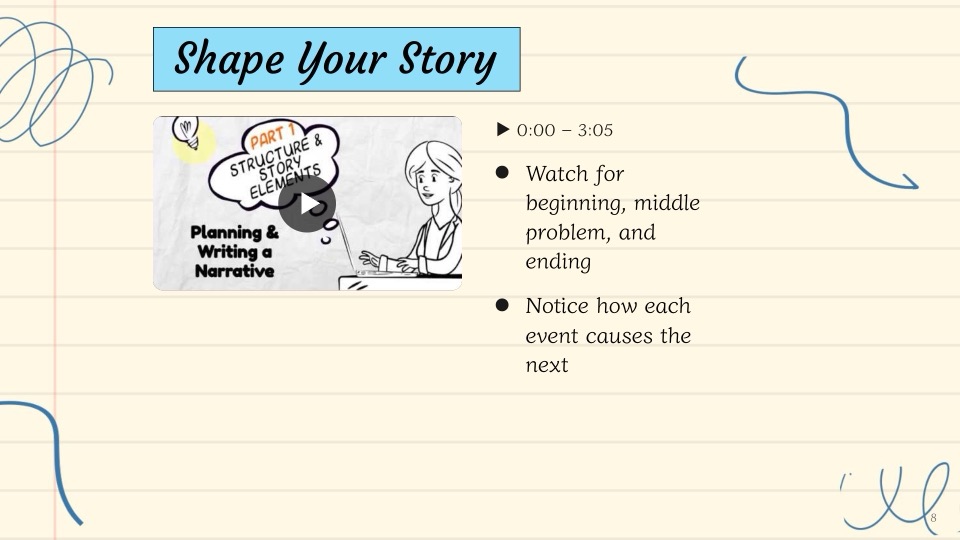
Narrative Structure and Elements from 0:00 to 3:05
EasyTeaching: Writing a Narrative: Part 1 Structure & Elements | EasyTeaching
Clear student-paced explainer of narrative structure that fits Grade 7 and directly supports well-structured event sequences.
-
Show, Don't Tell Technique from 0:00 to 4:30
EasyTeaching: Show, Don't Tell Writing Technique | EasyTeaching
Student-friendly demonstration of show-don't-tell with visuals at the right level for ages 12-13 to build descriptive details.
Worksheet
Sources
- English Language Arts cps.edu
- Ohio's Model Curriculum with Instructional Supports-ELA, Grade 7 education.ohio.gov
- Beginning Creative Writing - Harvard Division of Continuing ... coursebrowser.dce.harvard.edu
- Fundamentals in Creative Writing: The Grammar of Narrative creativewriting.uchicago.edu
- THE EFFECTS OF CREATIVE WRITING ACTIVITIES ON NARRATIVE TEXT ... files.eric.ed.gov
- Introduction - Creative Writing - LibGuides at Malone University libraryguides.malone.edu
- Creative writing en.wikipedia.org
Picture credits
Made with Lesson Dino's AI on 16 October 2026. AI can make mistakes, so check facts against the sources before you teach.