The worksheet
About this worksheet
Students learn to interpret literary, biblical, and mythological allusions in context. They sort examples in groups and prove meanings with clue words. This Grade 7 ELA worksheet gives students (ages 12–13) six pages of practice on allusions and figures of speech, part of the language unit. It goes with our free Allusions and figures of speech lesson, which has the slides and a timed lesson plan.
What it covers
By the end, students should be able to:
- Students will interpret literary, biblical, and mythological allusions using context clues.
- Students will classify allusions by type and explain clues that show meaning.
How to use it
- Use it for practice after the teaching part of the lesson, once students have seen the worked examples on the slides.
- Support: Give cards with the context clues already bolded and a word bank with plain-language meanings to choose from.
- Stretch: Have students explain in writing why the writer used an allusion instead of plain language and what tone it adds.
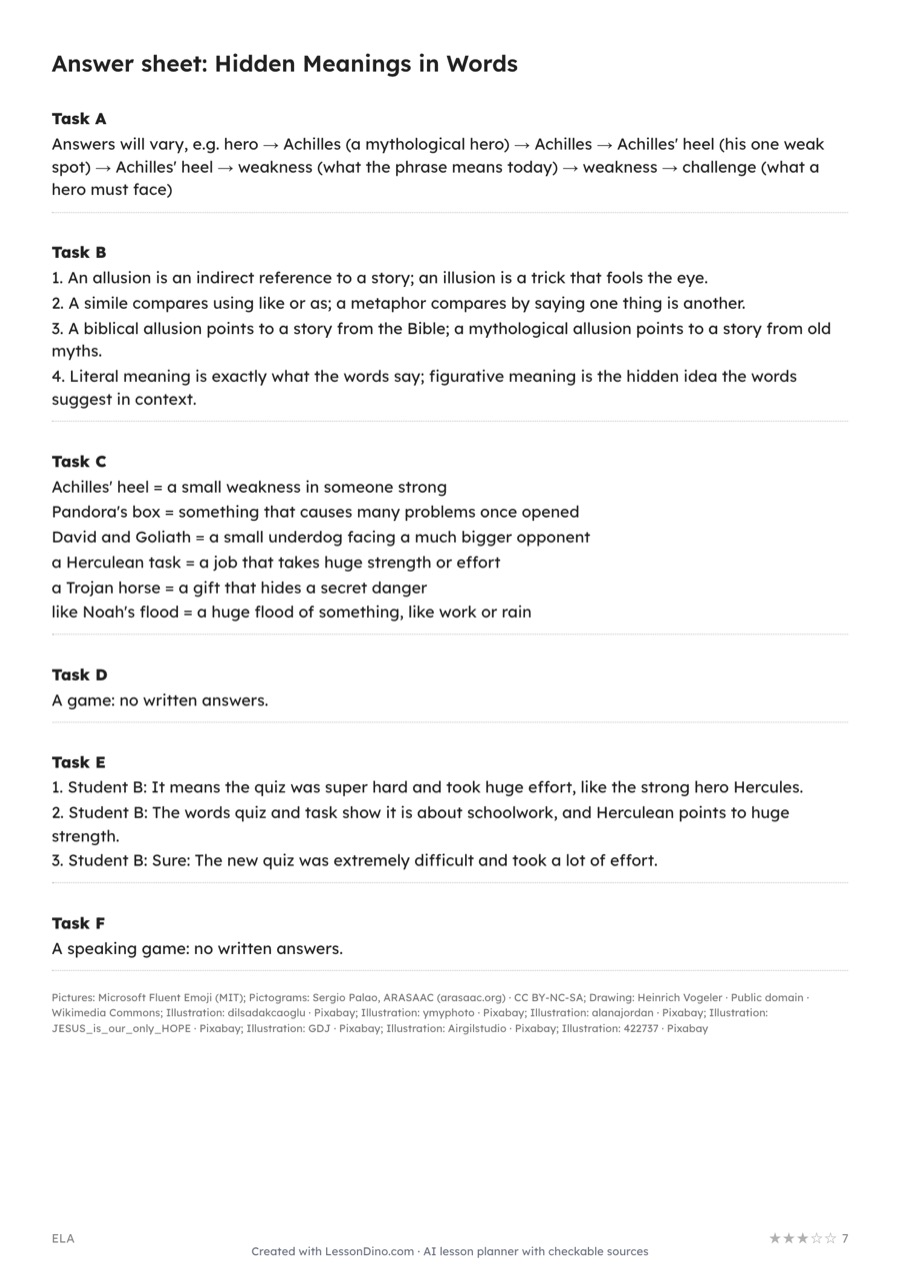
- The answer sheet is the last page, so you can print it on its own or let students check their own work.
Key vocabulary
- allusion: a short hint that borrows a well-known story
- figure of speech: words that mean more than just the plain words
- context: the words and situation around a hint
- interpret: to say what something means in this place
Mistakes to watch for
- Taking the allusion literally, like Achilles heel is about feet. Point to Slide 4: It is not about feet. It means a small weakness. Ask what surrounding words describe.
- Naming the story but ignoring context, so same hint always means same thing. Cover the allusion, read only the rest of the sentence, then ask what feeling fits: praise, humor, or warning.
- Mixing up literary, biblical, and mythological labels. Use Slide 10 mindmap test: play or poem, Bible story, or gods and monsters. Recall Destiny's Child links to the Book of Isaiah, so biblical.
What's on the worksheet
Spot Hidden References
Learn what allusions are and how context shows their meaning.
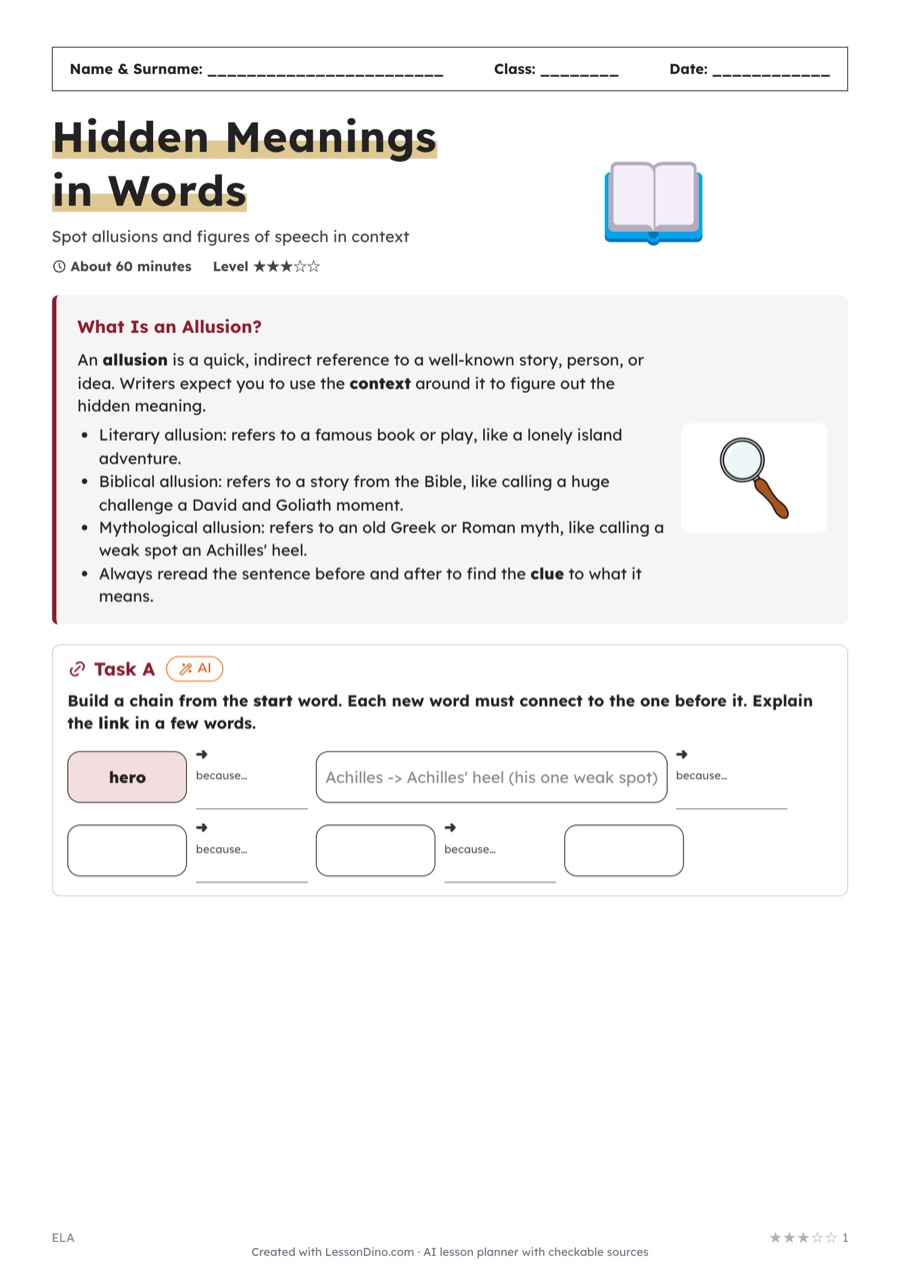
What Is an Allusion?
- An allusion is a quick, indirect reference to a well-known story, person, or idea. Writers expect you to use the context around it to figure out the hidden meaning.
- Literary allusion: refers to a famous book or play, like a lonely island adventure.
- Biblical allusion: refers to a story from the Bible, like calling a huge challenge a David and Goliath moment.
- Mythological allusion: refers to an old Greek or Roman myth, like calling a weak spot an Achilles' heel.
- Always reread the sentence before and after to find the clue to what it means.
Build a chain from the start word. Each new word must connect to the one before it. Explain the link in a few words.
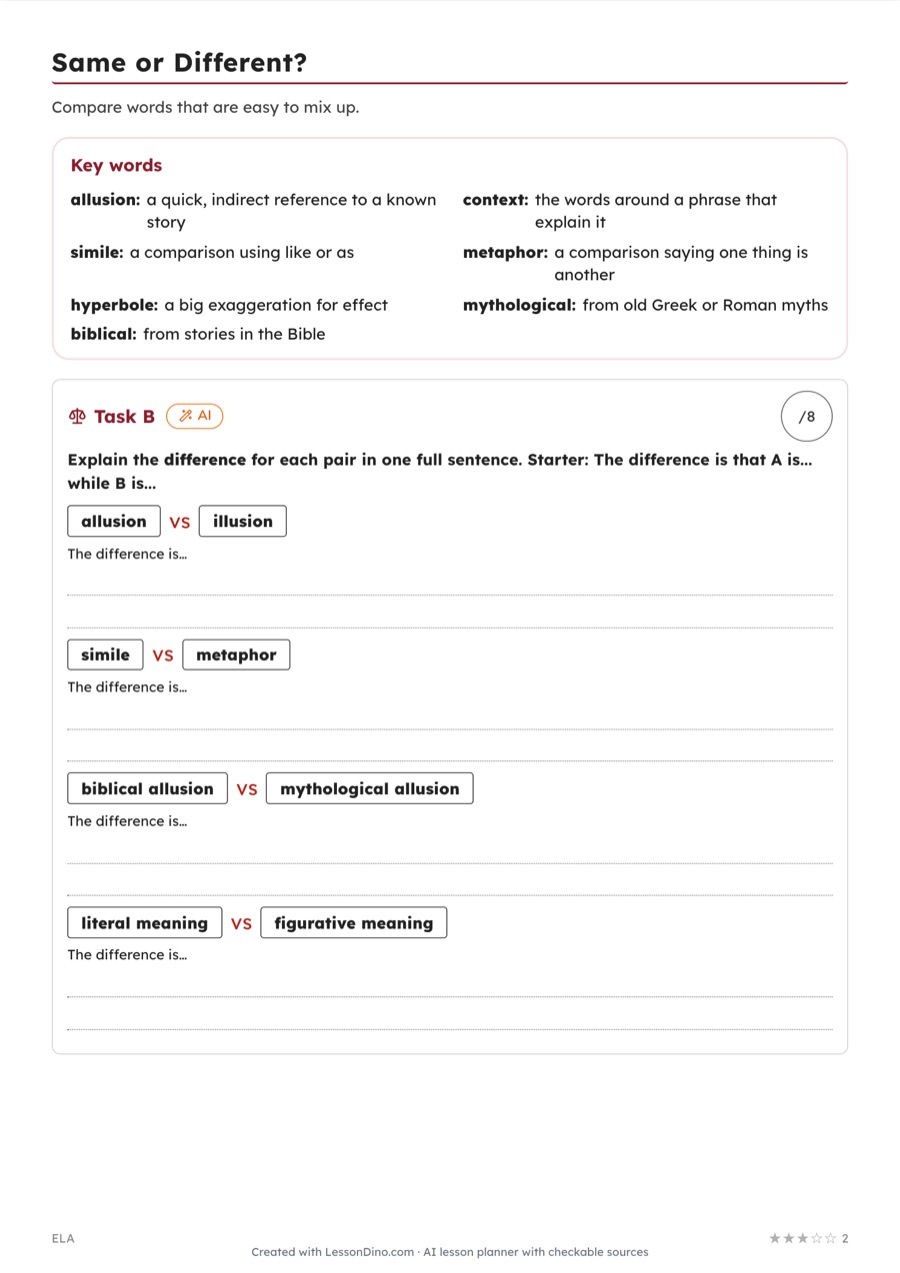
Same or Different?
Compare words that are easy to mix up.
| Word | Meaning |
|---|---|
| allusion | a quick, indirect reference to a known story |
| context | the words around a phrase that explain it |
| simile | a comparison using like or as |
| metaphor | a comparison saying one thing is another |
| hyperbole | a big exaggeration for effect |
| mythological | from old Greek or Roman myths |
| biblical | from stories in the Bible |
Explain the difference for each pair in one full sentence. Starter: The difference is that A is... while B is...
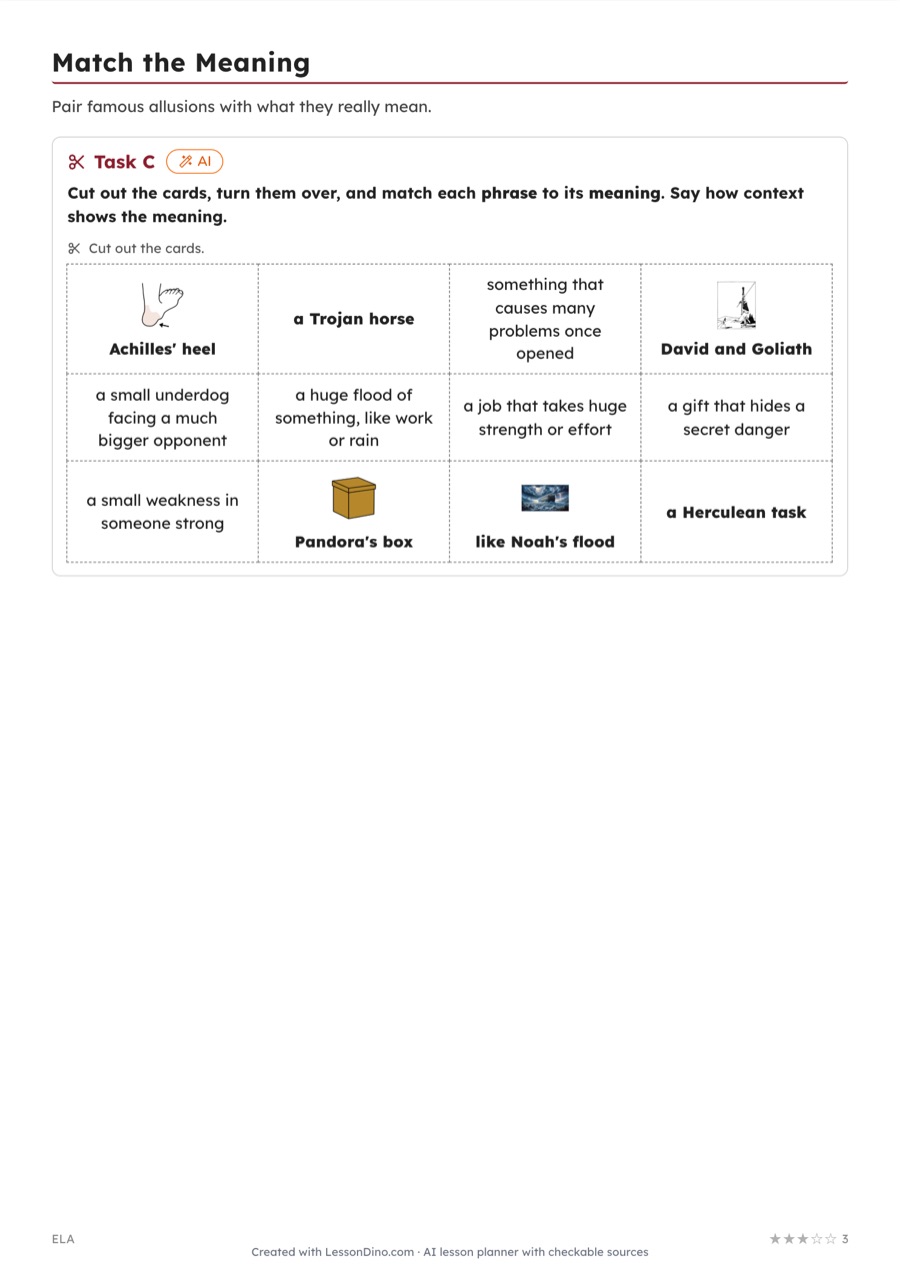
Match the Meaning
Pair famous allusions with what they really mean.
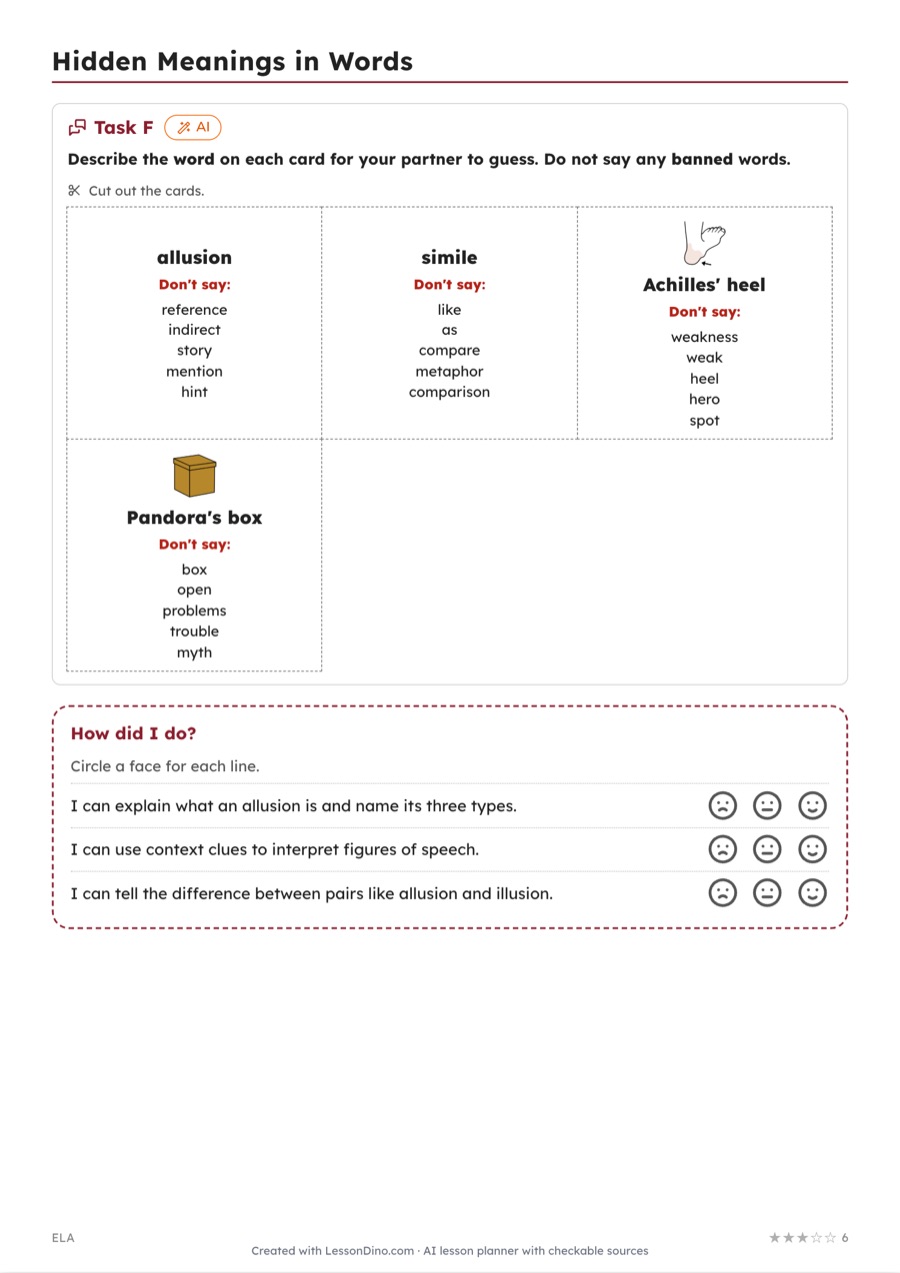
Cut out the cards, turn them over, and match each phrase to its meaning. Say how context shows the meaning.
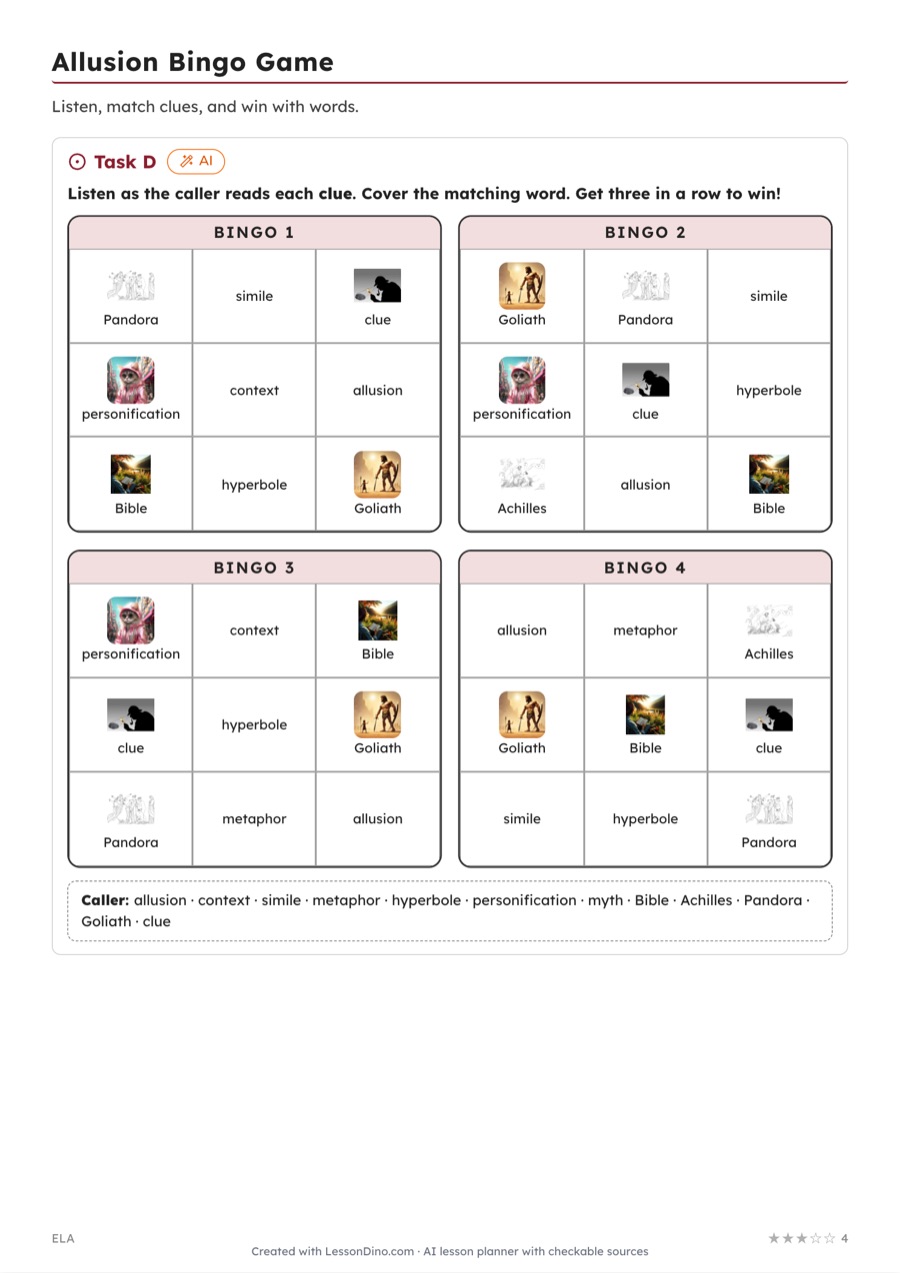
Allusion Bingo Game
Listen, match clues, and win with words.
Listen as the caller reads each clue. Cover the matching word. Get three in a row to win!
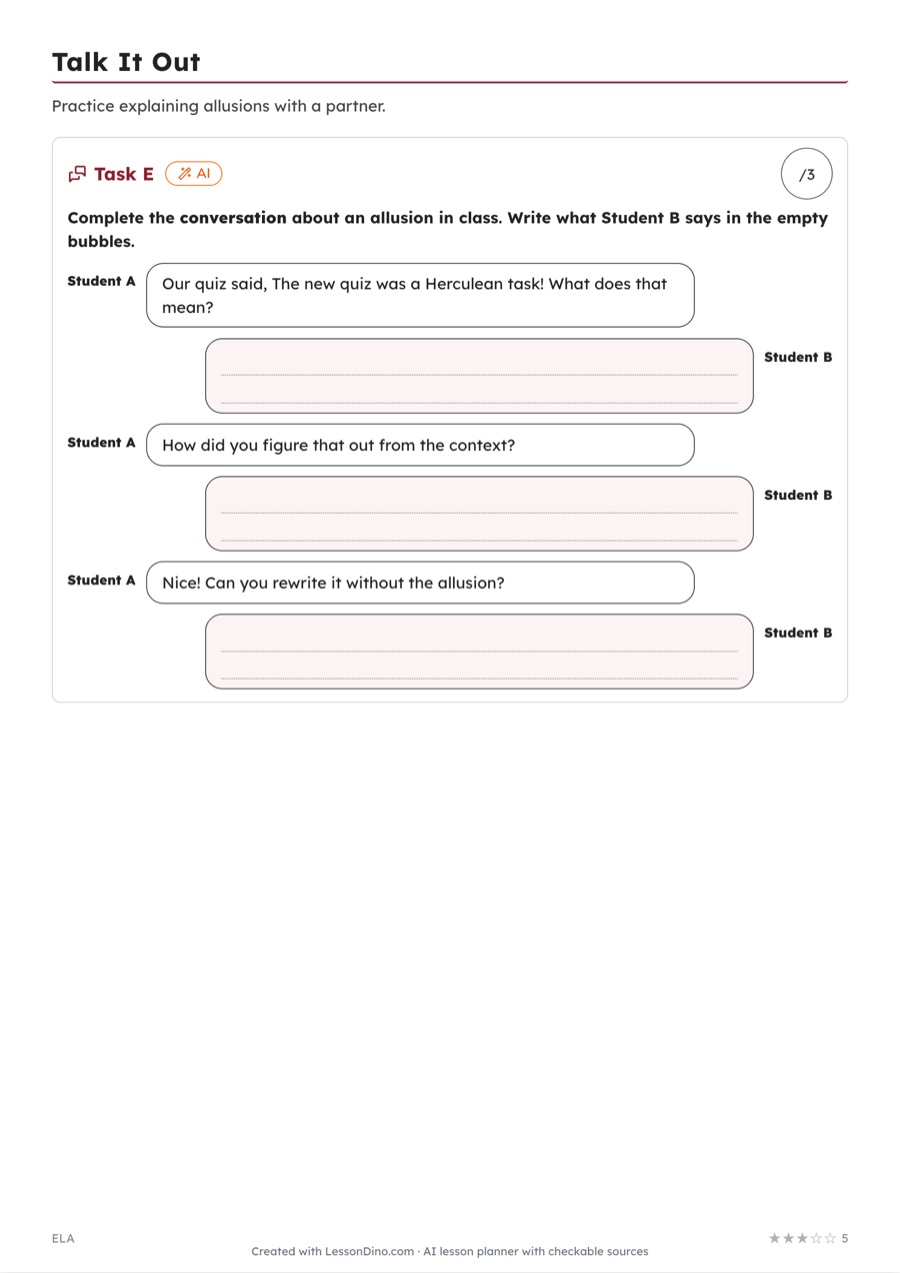
Talk It Out
Practice explaining allusions with a partner.
Complete the conversation about an allusion in class. Write what Student B says in the empty bubbles.
Page 6
Describe the word on each card for your partner to guess. Do not say any banned words.
Answers
Show the answers
The answers are on the answer sheet, the last picture above.
Curriculum
Interpret figures of speech (e.g., literary, biblical, and mythological allusions) in context.
Made with Lesson Dino's AI on 17 October 2026. AI can make mistakes, so check the answers and facts against the sources before you teach.