Slides
Lesson plan
Whose Eyes Shape the Story?
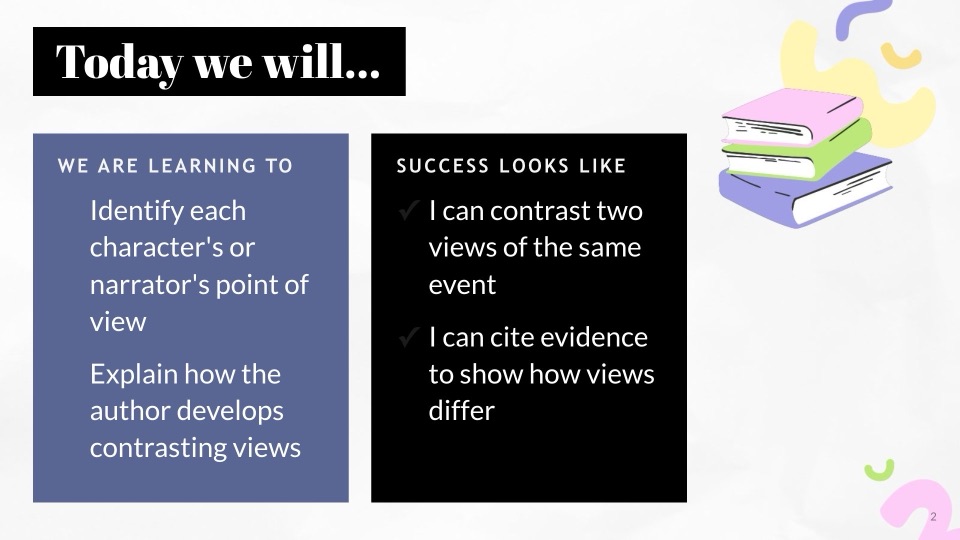
Students learn how authors develop and contrast points of view. They underline clue words and write a short evidence-based contrast.
Objectives
- Students will identify word choices that reveal each character's point of view.
- Students will explain how the author develops and contrasts two views of same event.
- Students will cite text evidence to support analysis of each contrast.
Success criteria
- I can contrast two views of the same event with evidence.
- I can underline feeling words that show each point of view.
- I can explain in one sentence how the views contrast.
Key words
| Word | Meaning |
|---|---|
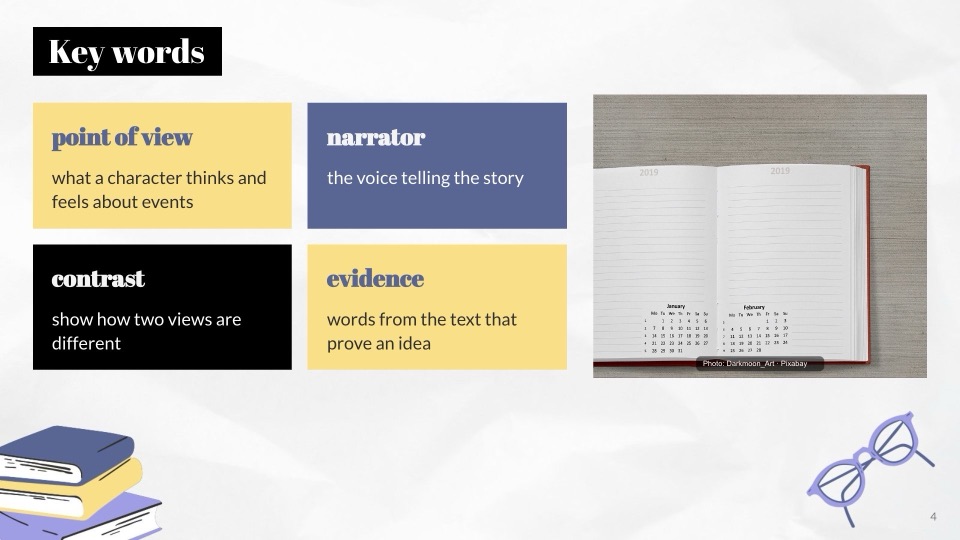
| point of view | what a person in the story thinks and feels about what happens |
| narrator | the voice telling the story to the reader |
| contrast | showing how two things are not the same |
| evidence | words from the text that prove what you say |
| tone | how the voice sounds in feeling, like upset or hopeful |
Timed plan (60 minutes)
| Time | Stage | What happens |
|---|---|---|
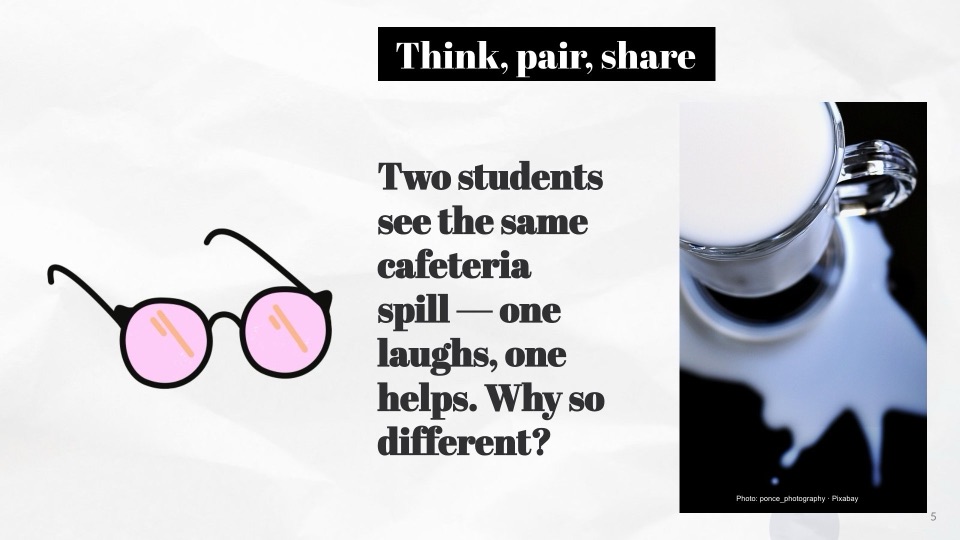
| 5 min | Starter | Activate prior ideas about point of view and hook interest in contrasting views. Show Slides 1-2 and read title and objectives aloud. Show Slide 5 and say the hook about the group project mess. Ask pairs to turn and talk for 1 minute on why the same ten minutes felt so different. Take 3 answers and link them to point of view. |
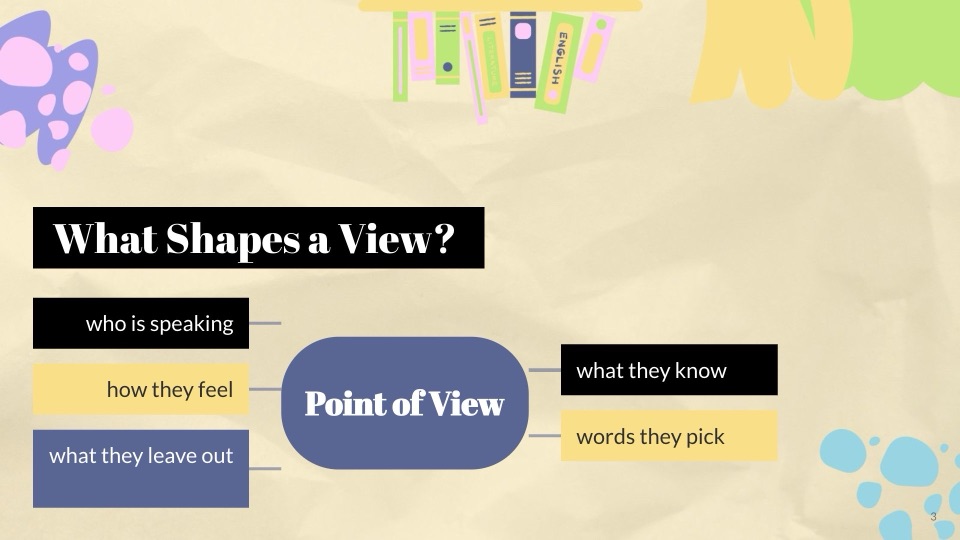
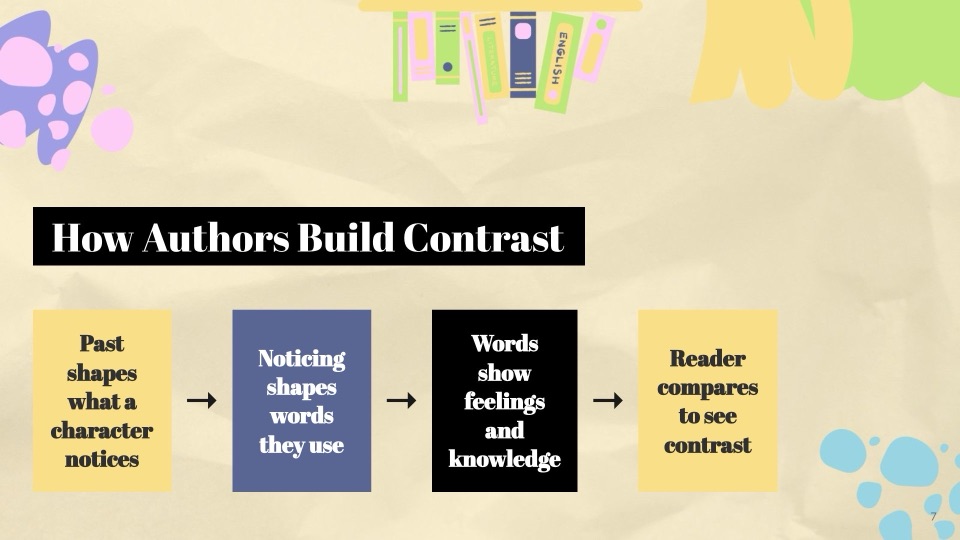
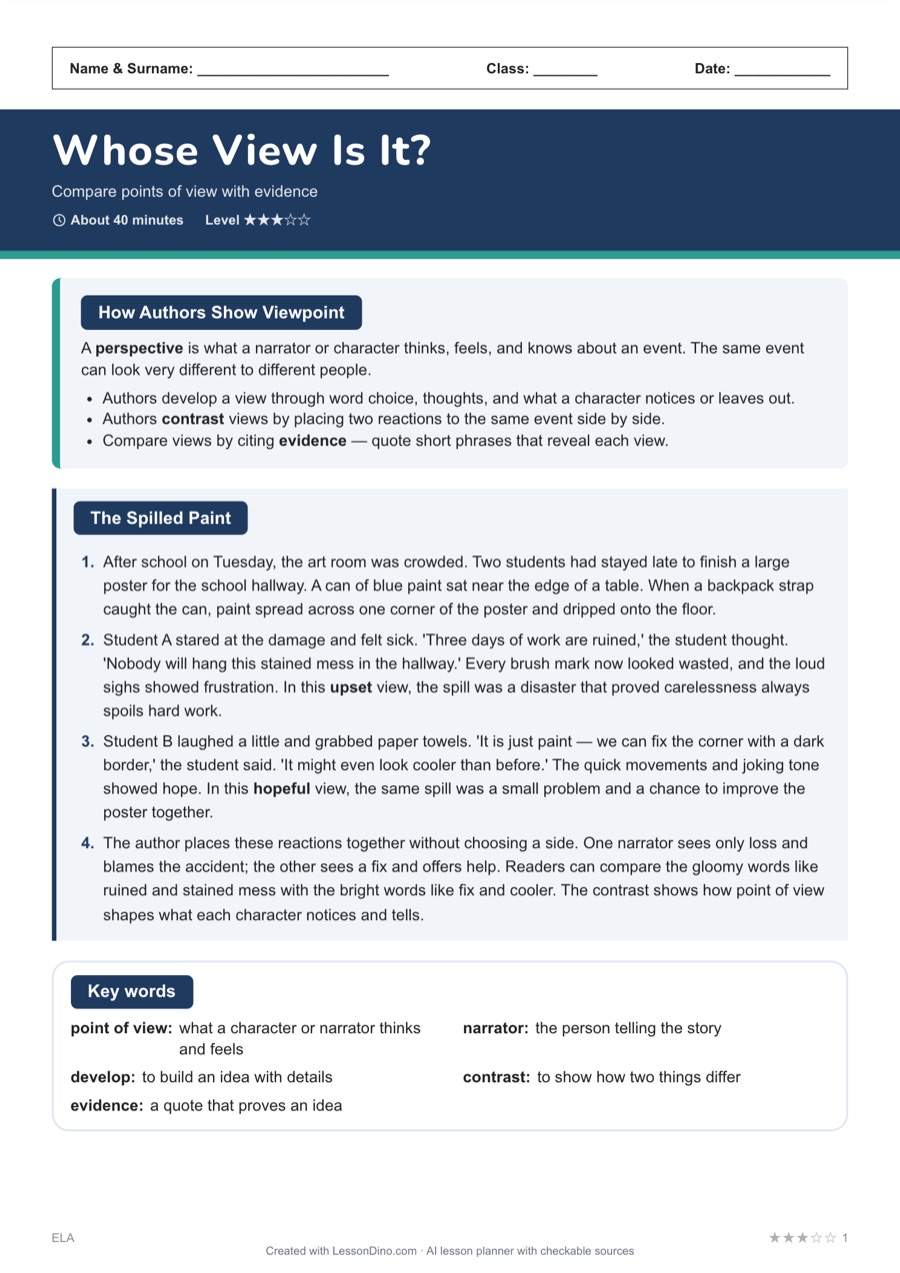
| 10 min | Teaching | Teach key terms and how authors use word choice, focus and tone to build contrast. Show Slide 3 mindmap and explain what shapes a view: who speaks, what they know, how they feel, words they pick, what they leave out. Show Slide 4 and teach point of view, narrator, contrast, evidence in student-friendly words. Model with paragraph 1 of The Spilled Paint: same spill, two students will see it differently. Think aloud how noticing shapes words and words show feelings, so reader can compare to see contrast. |
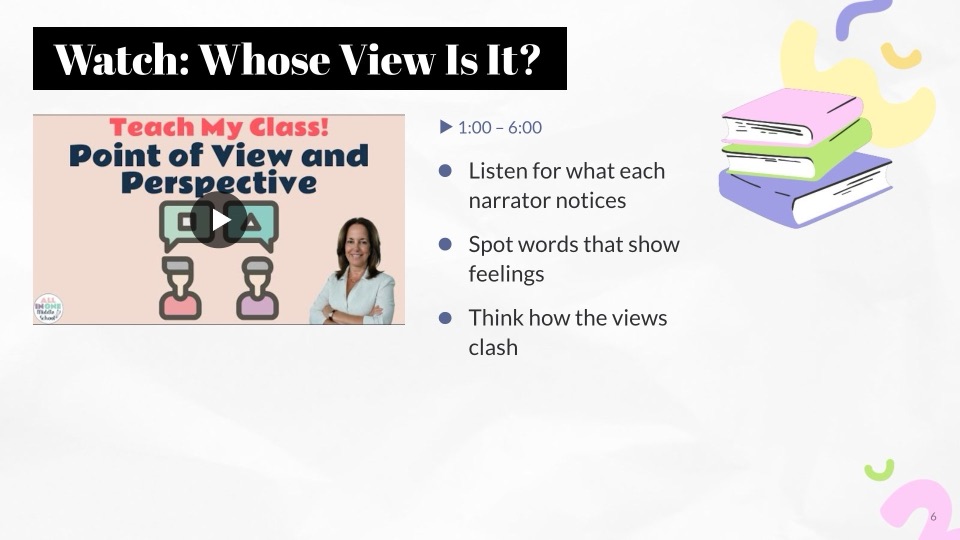
| 15 min | Watch and Model | Model how to track development and contrast of two views with textual evidence. Play Video clip 1 (1:00–6:00) on Slide 6; students listen for what each narrator notices and words that show feelings. Show Slide 7 chain and model with The Spilled Paint paragraphs 2 and 3 side by side. Think aloud identifying words and phrases demonstrating each character's point of view. Show how author places reactions together to develop contrast and shapes what each includes and leaves out. |
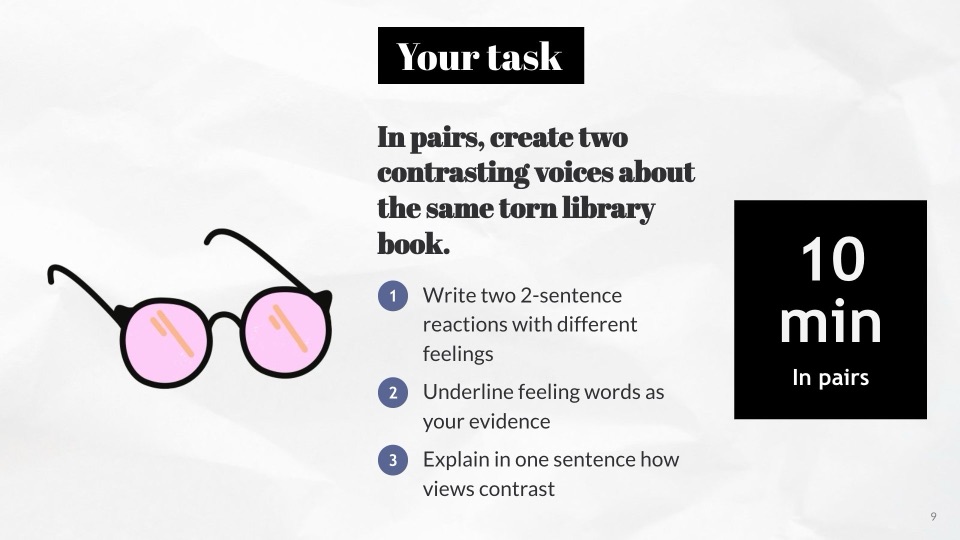
| 20 min | Main Activity | Pairs identify clue words and write an evidence-based contrast of the two views. Hand out paragraphs 2-3 and highlighters in two colors; assign one color per student view. Direct pairs to underline words and phrases demonstrating each character's point of view, then discuss what each includes and leaves out. Direct pairs to complete Worksheet Task C: write contrast with one quote for each view and explain the contrast. Circulate, prompt with word bank and check quotes are exact. |
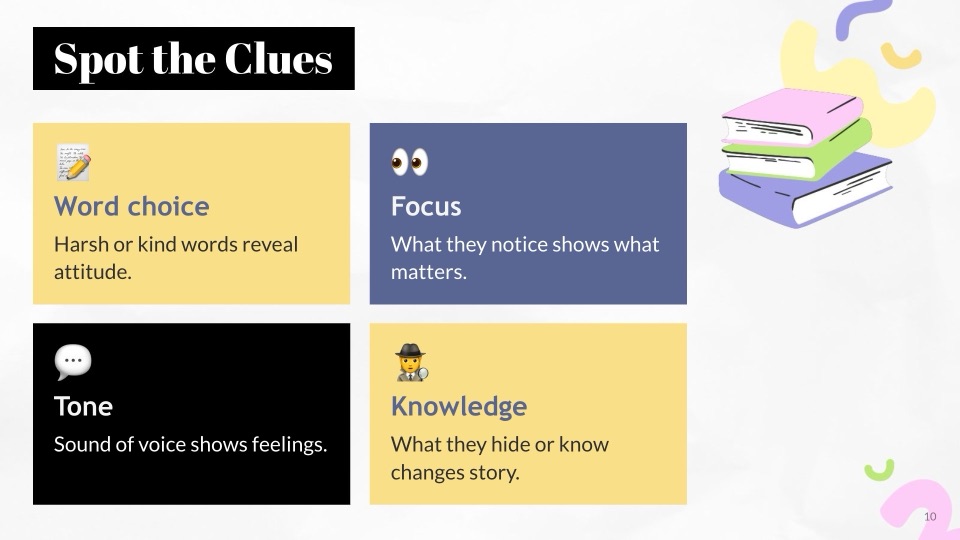
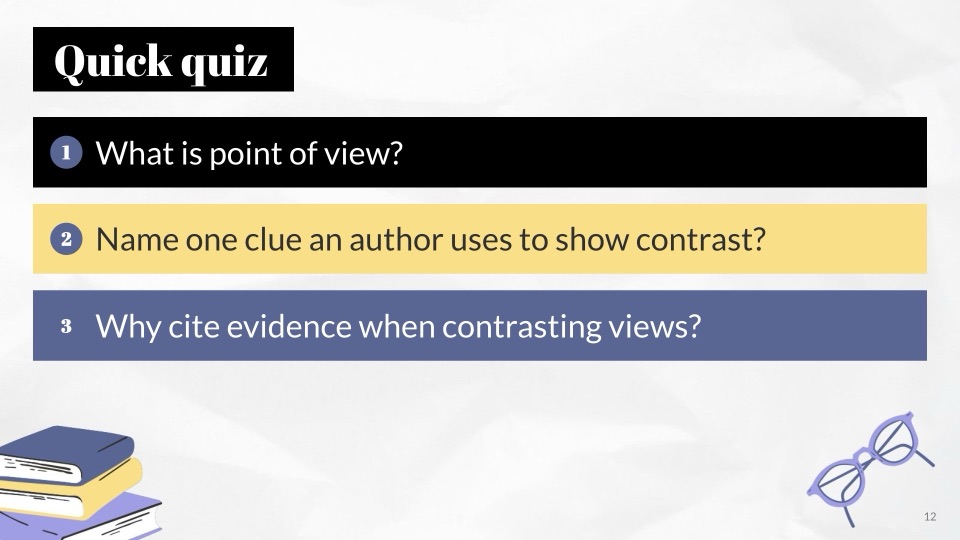
| 10 min | Plenary | Check success criteria and secure how authors develop contrast. Invite two pairs to read contrasts aloud; class points to strongest evidence. Show Slide 10 Spot the Clues and review word choice, focus, tone. Run Slide 12 quick quiz orally and link back to objectives. Preview homework and collect Task C. |
Common mistakes
- Thinking point of view only means first-person vs third-person narration.
How to spot it: Student labels I vs he/she but cannot say what character thinks or feels.
Reteach that in Grade 7 we contrast what characters think and feel about events; ask: What words show attitude? Point to ruined vs fix. - Using only one quote or retelling plot instead of contrasting.
How to spot it: Contrast paragraph has one view or no quotes.
Require one quote per view and a contrast sentence: Model citing several pieces of textual evidence for explicit meaning and inferences. - Confusing same event with same point of view.
How to spot it: Student says both agree because they saw the same spill.
Highlight what each includes and leaves out to show point of view influences description; compare sighs vs laughed.
Support
- Give a word bank of opinion and feeling words like unfair, hilarious, nervous, and on purpose to help spot point of view.
- Use two-color highlighting and sentence starters to link quote to inference.
- Post core attitudes upset vs hopeful for matching language to attitude.
Stretch
- Ask students to explain what each character pays attention to and what each one ignores, and why that matters for the reader.
- Have students predict what a third watcher would add or leave out and justify with tone words.
- Connect contrast to central idea development across the excerpt.
Check questions
- Student A calls the poster a stained mess. What point of view does that show?
Answer: Upset view that the spill is a disaster and work is ruined. - Give one quote that shows Student B has a hopeful point of view.
Answer: It is just paint — we can fix the corner with a dark border or It might even look cooler than before. - In one sentence, how does the author contrast the two views?
Answer: The author contrasts gloomy, blaming words with bright, helping words to show one includes loss while the other includes a fix.
Curriculum
Analyze how an author develops and contrasts the points of view of different characters or narrators in a text.
Video clips
Clips on YouTube, from the start and end times we chose. Check each one before you show it.
-
Point of view and perspective for middle school from 1:00 to 6:00
Teach My Class with All in One Middle School: How to Understand Point of View and Perspective | Teach My Class I ELA Lessons for Middle School
Directly about understanding and contrasting point of view and perspective and made for middle school, so vocabulary and pace are right for 12-13.
-
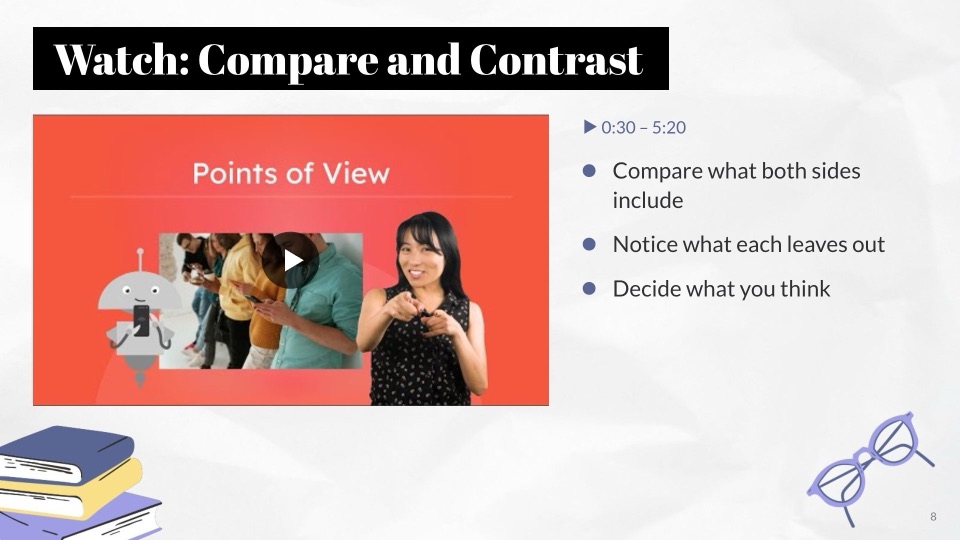
Compare and contrast perspectives from 0:30 to 5:20
Miacademy & MiaPrep Learning Channel: Points of View - Compare and Contrast Perspectives in Texts
Clearly about comparing and contrasting perspectives in texts with clear examples at a pace that works for 12-13.
Worksheet
Sources
- English Language Arts Standards » Reading: Literature » Grade 7 thecorestandards.org
- ELA Grade 7 - Chicago Public Schools cps.edu
- COMPARING AND CONTRASTING SIMILAR TEXTS - University of Kansas simvilledev.ku.edu
- Analyzing and comparing authors' points of view | Guided practice en.khanacademy.org
- Comparing two accounts of the same topic - Khan Academy khanacademy.org
Picture credits
- Photo: sasint · Pixabay
- Photo: Darkmoon_Art · Pixabay
- Photo: ponce_photography · Pixabay
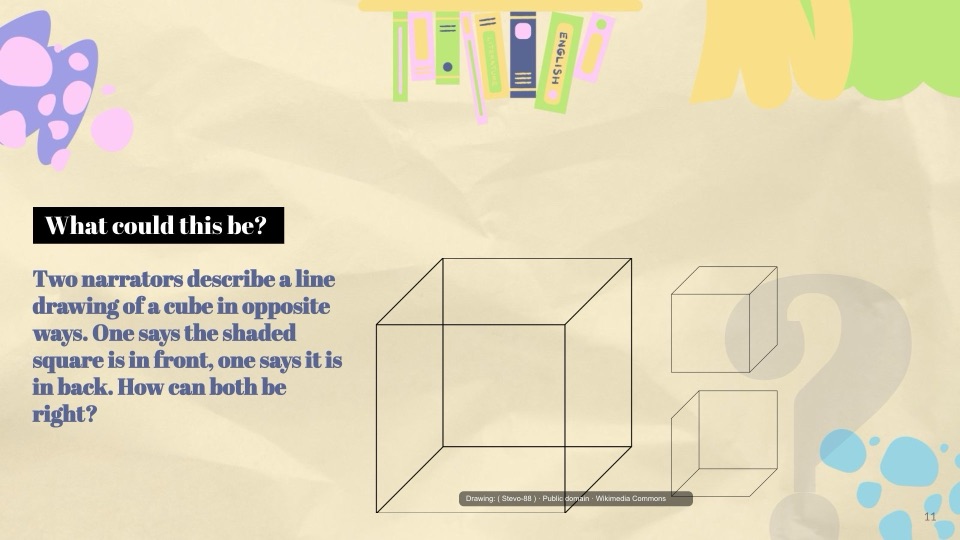
- Drawing: ( Stevo-88 ) · Public domain · Wikimedia Commons
- Pictograms: Sergio Palao, ARASAAC (arasaac.org) · CC BY-NC-SA
- Illustration: sananthropis · Pixabay
- Illustration: GDJ · Pixabay
Made with Lesson Dino's AI on 17 October 2026. AI can make mistakes, so check facts against the sources before you teach.