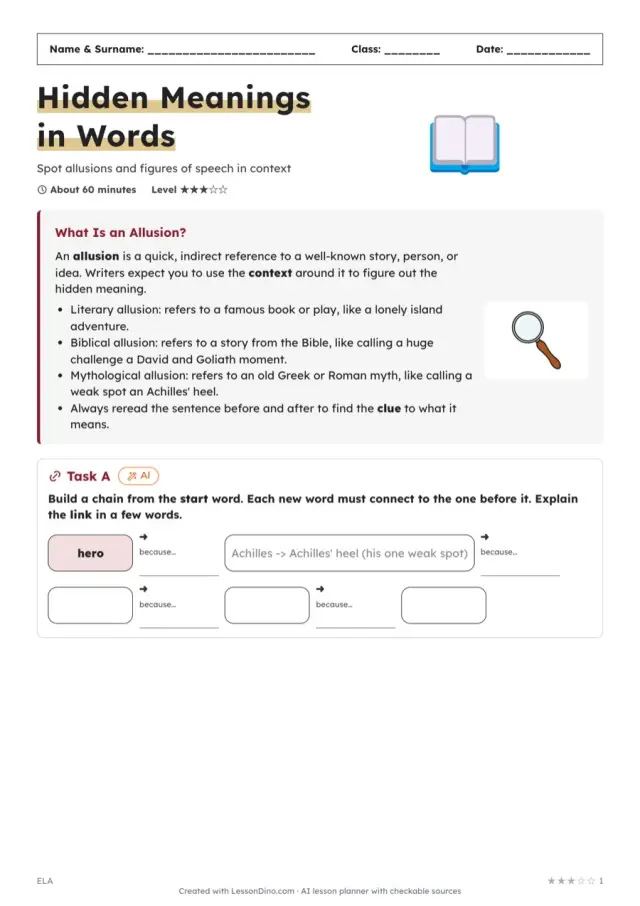
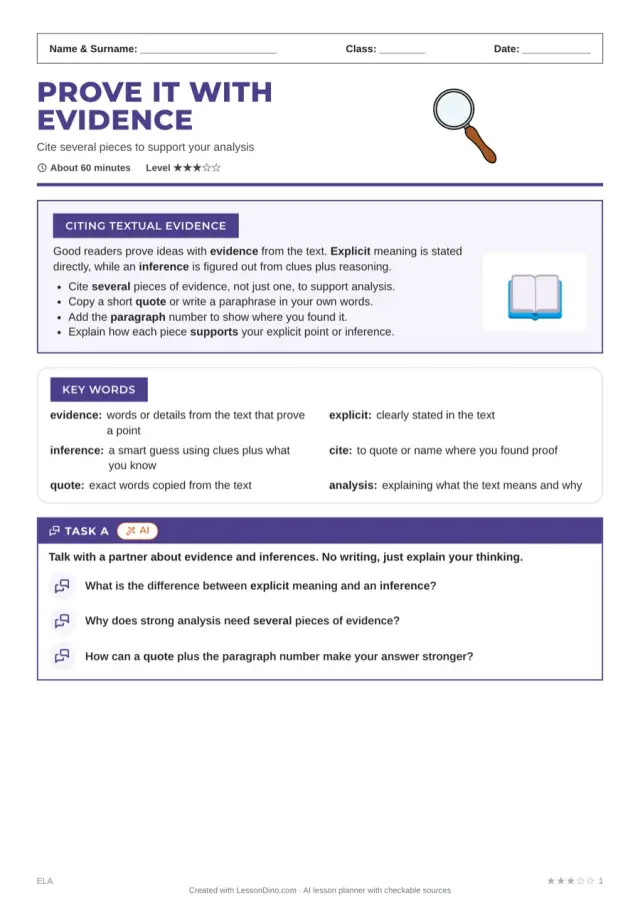
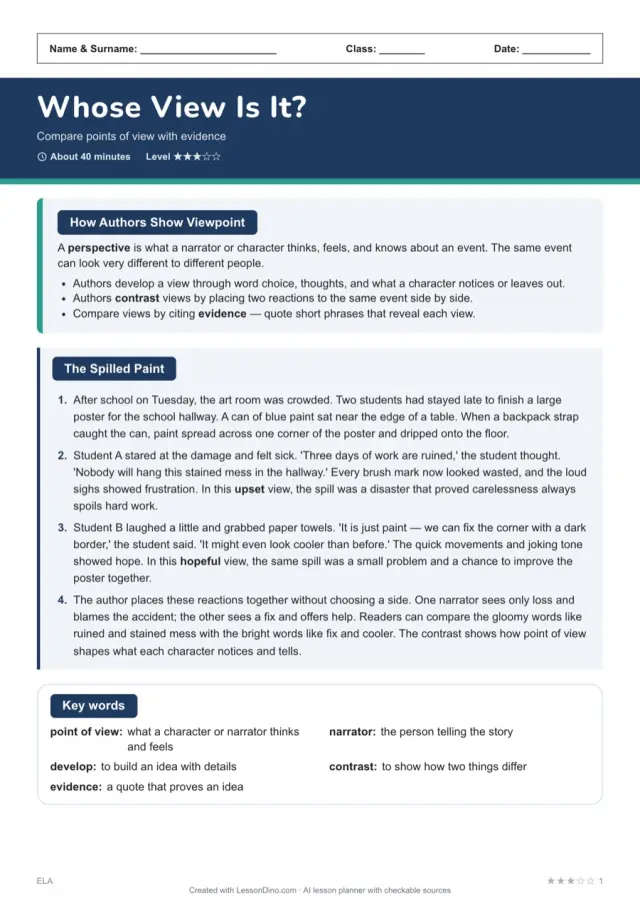
The worksheet
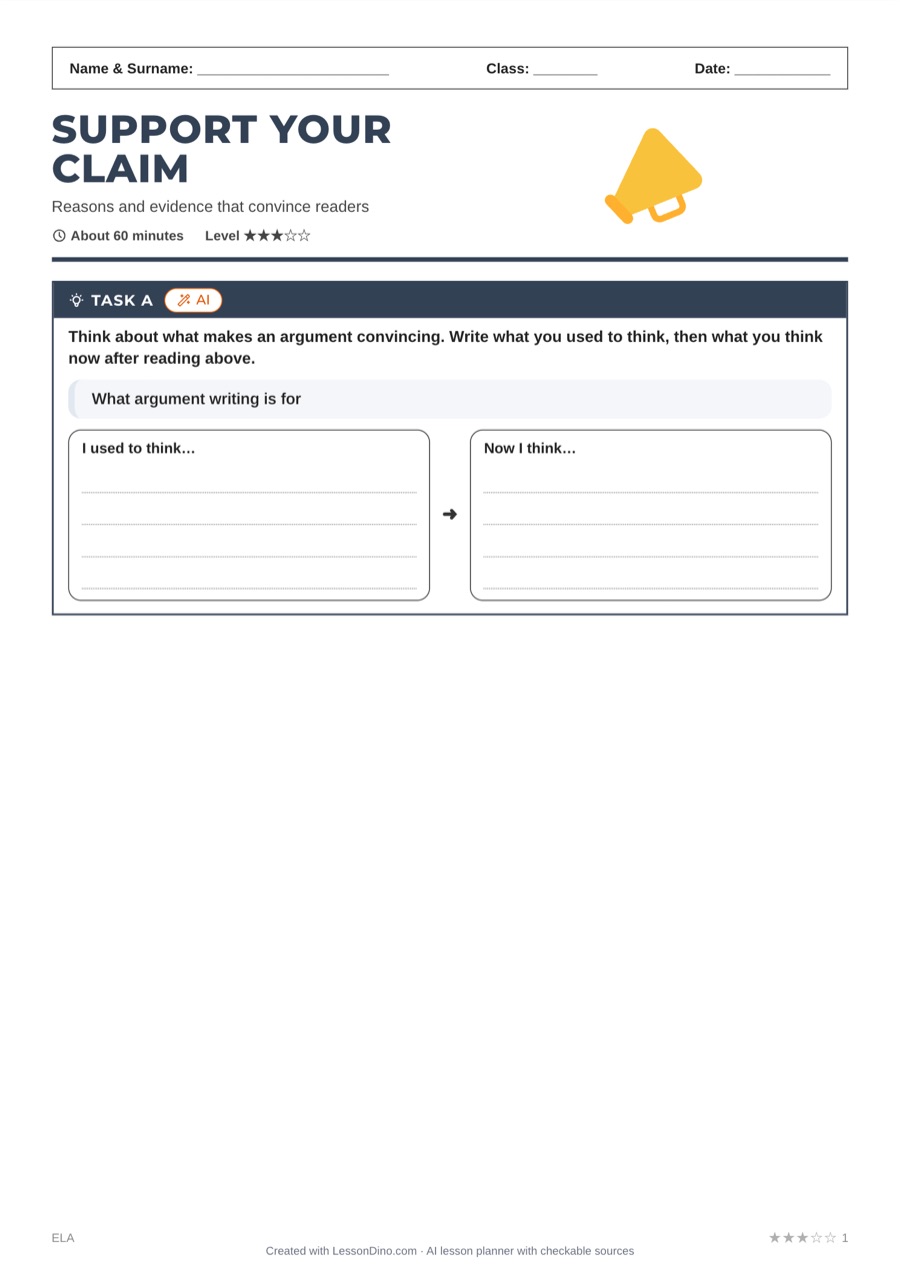
About this worksheet
Students learn to support a claim with clear reasons and relevant evidence. They plan and write one argument paragraph about a school topic. This Grade 7 ELA worksheet gives students (ages 12–13) five pages of practice on argument writing, part of the writing unit. It goes with our free Argument writing lesson, which has the slides and a timed lesson plan.
What it covers
By the end, students should be able to:
- Students will write a clear claim with reasons and relevant evidence.
- Students will tell reasons apart from evidence and link them clearly.
How to use it
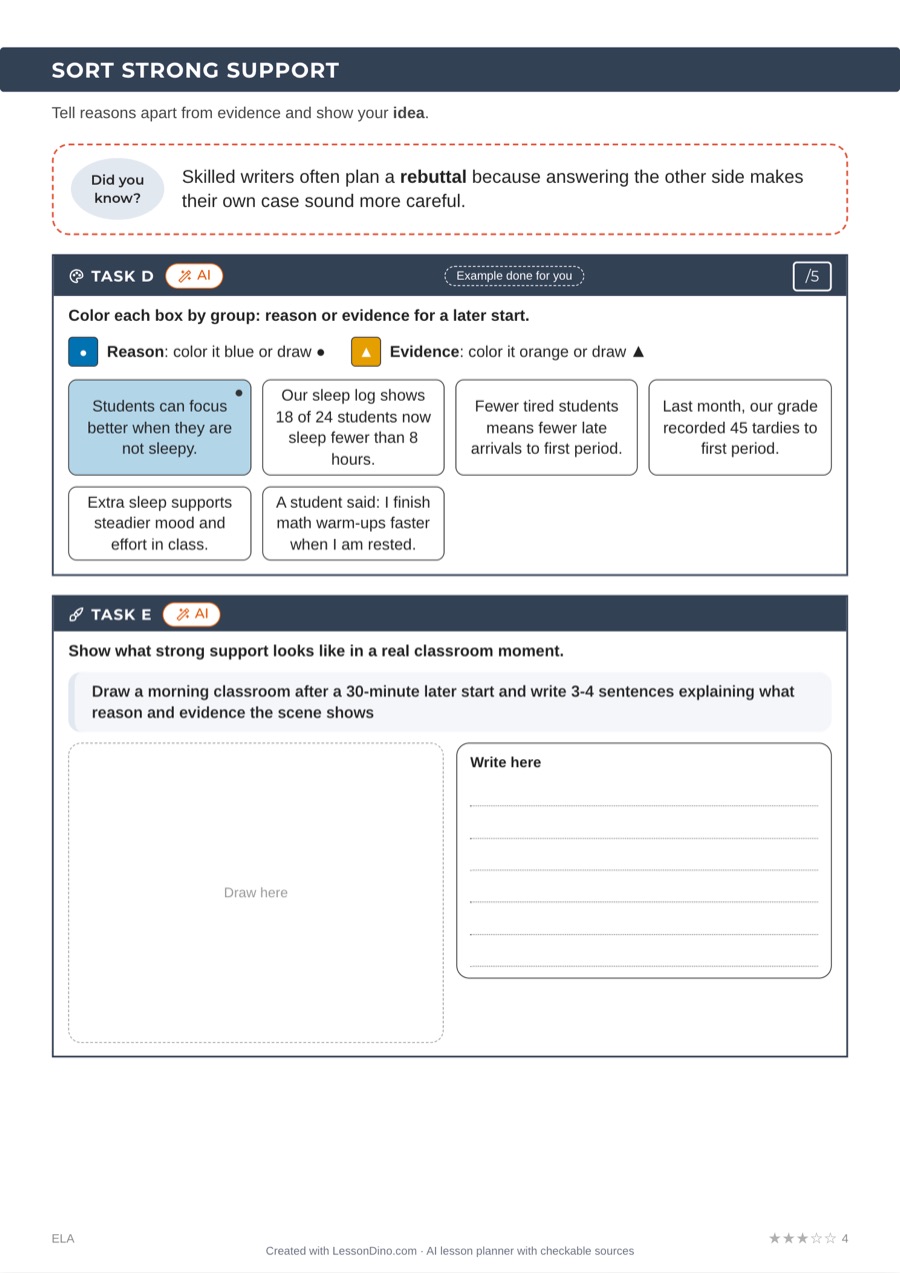
- We Do Together (10 minutes): Hand out Worksheet Task D and model coloring one box as reason or evidence.
- Support: Provide a half-filled organizer with the claim and first reason done so students only add evidence and explanation.
- Stretch: Have students add a second piece of evidence from a different type of source and explain which is more credible, since the credibility of the source is essential to the argument.
- The answer sheet is the last page, so you can print it on its own or let students check their own work.
Key vocabulary
- claim: the main point you are trying to prove, often called a thesis statement
- reason: why you think your main point is right and matters
- evidence: a checkable fact or example that shows a point is true
- explanation: one or two sentences that show how your fact proves your why
Mistakes to watch for
- Mixing up reason and evidence. Use Slide 4 test: If it answers why it matters, it is a reason. If it answers how we know with a fact, it is evidence.
- Thinking a thesis is a title. Remind that a thesis is not a title. Use frame: School should ___ because ___ and ___.
- Using feelings instead of logic. Highlight verifiable facts in one color and emotional appeals in another. Rewrite feelings into checkable proof, since argument focuses on logic with verifiable facts.
What's on the worksheet
Build Strong Arguments
See how claims, reasons, and evidence fit together.
Think about what makes an argument convincing. Write what you used to think, then what you think now after reading above.
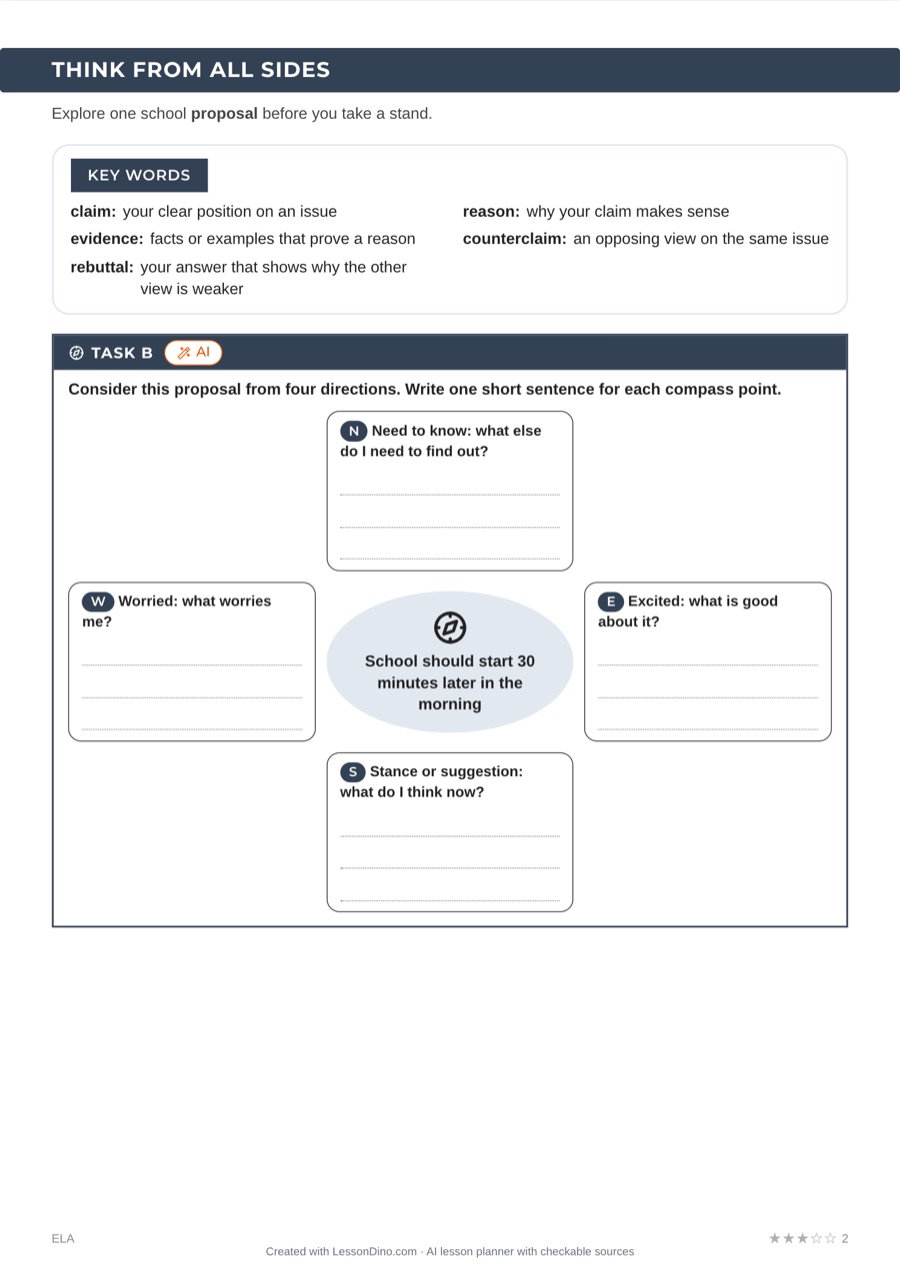
Think From All Sides
Explore one school proposal before you take a stand.
| Word | Meaning |
|---|---|
| claim | your clear position on an issue |
| reason | why your claim makes sense |
| evidence | facts or examples that prove a reason |
| counterclaim | an opposing view on the same issue |
| rebuttal | your answer that shows why the other view is weaker |
Consider this proposal from four directions. Write one short sentence for each compass point.
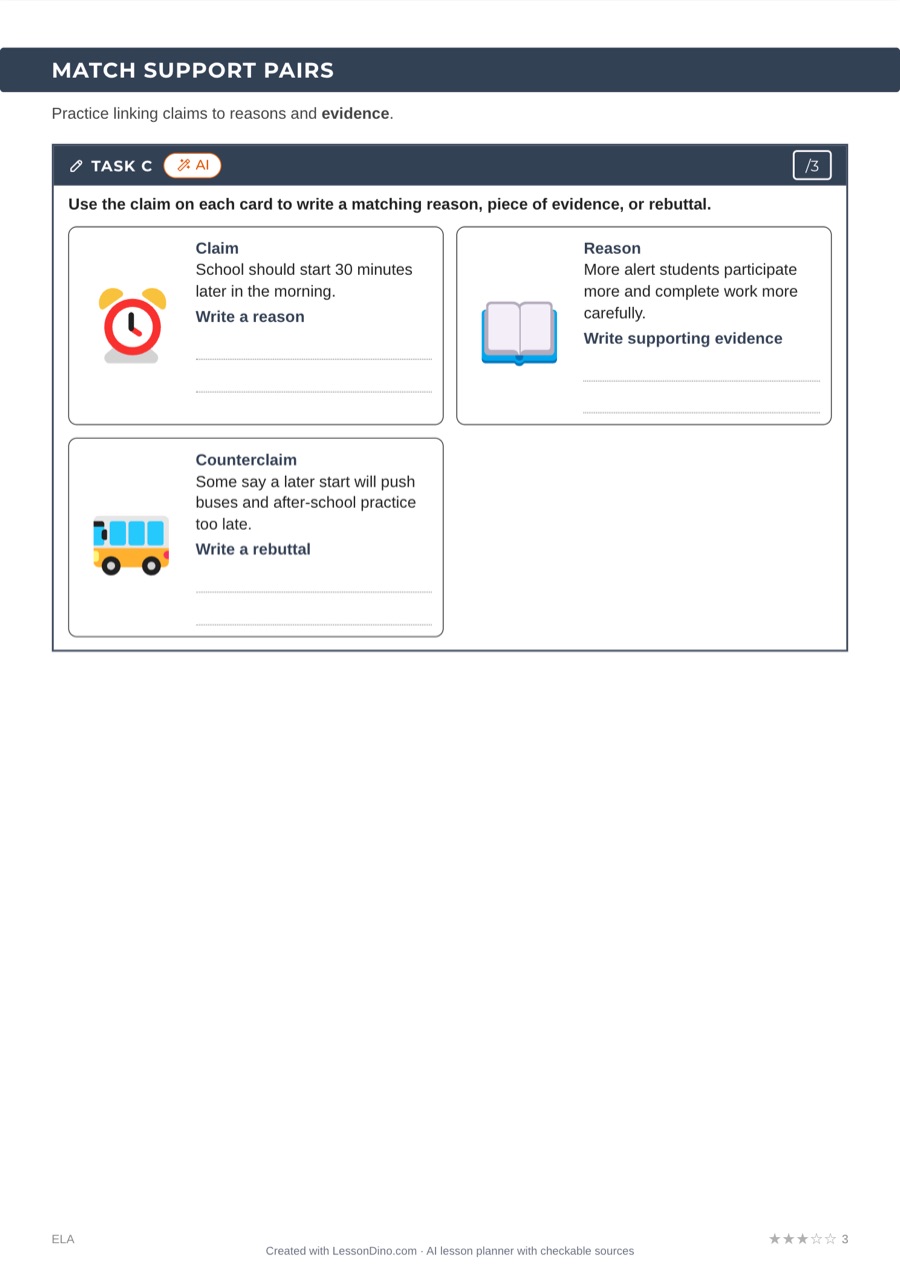
Match Support Pairs
Practice linking claims to reasons and evidence.
Use the claim on each card to write a matching reason, piece of evidence, or rebuttal.
Sort Strong Support
Tell reasons apart from evidence and show your idea.
- Skilled writers often plan a rebuttal because answering the other side makes their own case sound more careful.
Color each box by group: reason or evidence for a later start.
Show what strong support looks like in a real classroom moment.
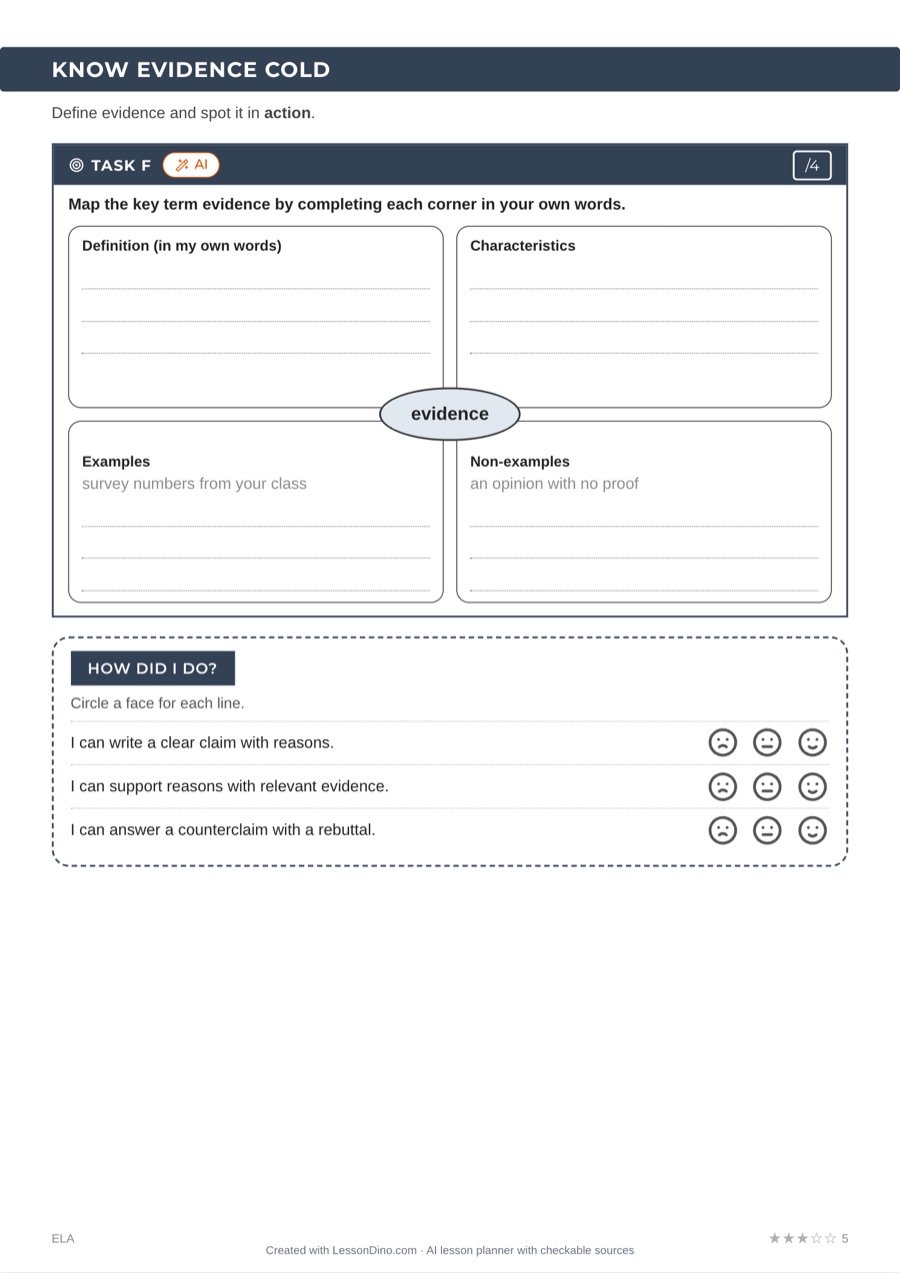
Know Evidence Cold
Define evidence and spot it in action.
Map the key term evidence by completing each corner in your own words.
Answers
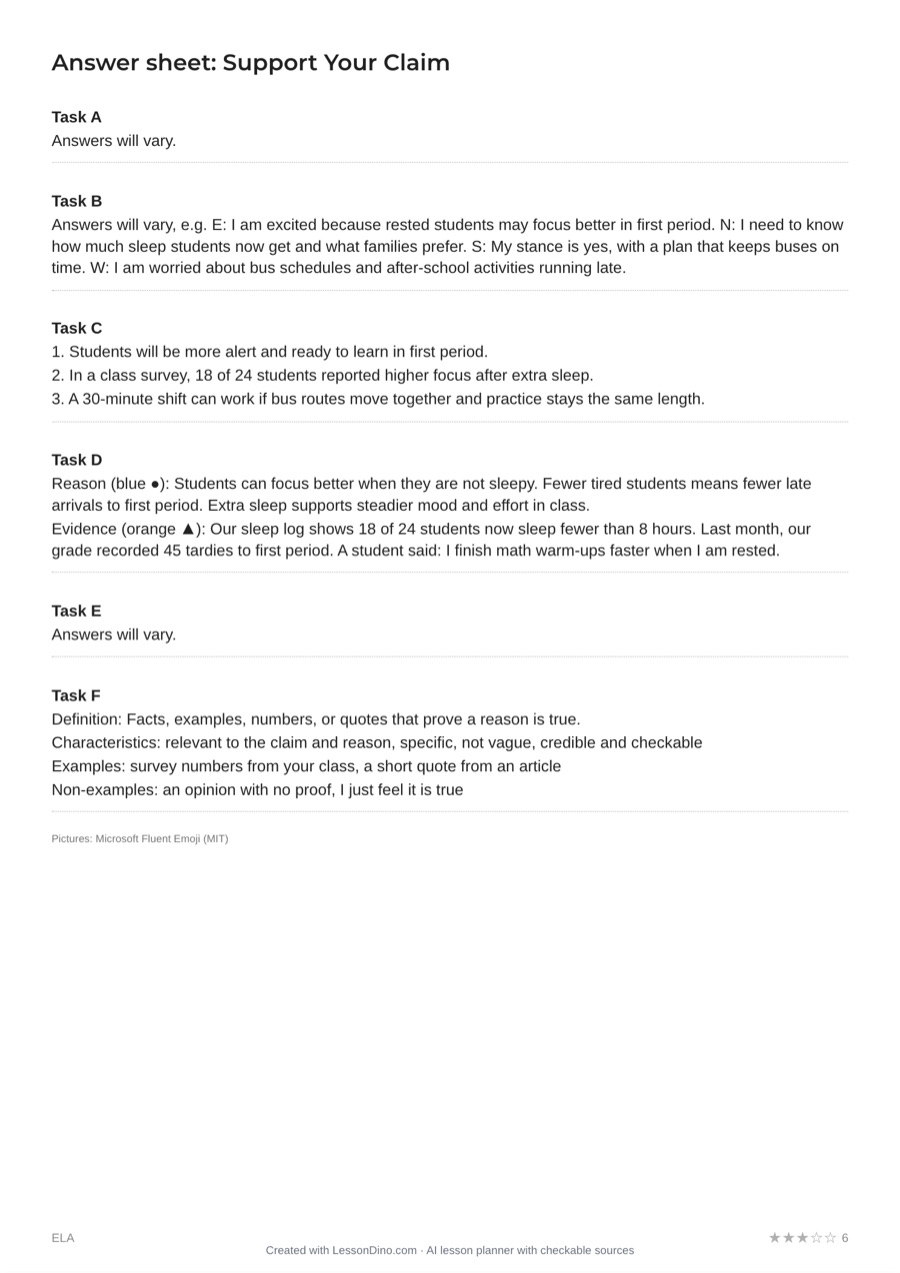
Show the answers
The answers are on the answer sheet, the last picture above.
Curriculum
Write arguments to support claims with clear reasons and relevant evidence.
Made with Lesson Dino's AI on 17 October 2026. AI can make mistakes, so check the answers and facts against the sources before you teach.