The worksheet
About this worksheet
Students learn how authors develop and contrast points of view. They underline clue words and write a short evidence-based contrast. This Grade 7 ELA worksheet gives students (ages 12–13) six pages of practice on comparing points of view, part of the reading literature unit. It goes with our free Comparing points of view lesson, which has the slides and a timed lesson plan.
What it covers
By the end, students should be able to:
- Students will identify word choices that reveal each character's point of view.
- Students will explain how the author develops and contrasts two views of same event.
- Students will cite text evidence to support analysis of each contrast.
How to use it
- Main Activity (20 minutes): Direct pairs to complete Worksheet Task C: write contrast with one quote for each view and explain the contrast.
- Support: Give a word bank of opinion and feeling words like unfair, hilarious, nervous, and on purpose to help spot point of view.
- Stretch: Ask students to explain what each character pays attention to and what each one ignores, and why that matters for the reader.
- The answer sheet is the last page, so you can print it on its own or let students check their own work.
Key vocabulary
- point of view: what a person in the story thinks and feels about what happens
- narrator: the voice telling the story to the reader
- contrast: showing how two things are not the same
- evidence: words from the text that prove what you say
- tone: how the voice sounds in feeling, like upset or hopeful
Mistakes to watch for
- Thinking point of view only means first-person vs third-person narration. Reteach that in Grade 7 we contrast what characters think and feel about events; ask: What words show attitude? Point to ruined vs fix.
- Using only one quote or retelling plot instead of contrasting. Require one quote per view and a contrast sentence: Model citing several pieces of textual evidence for explicit meaning and inferences.
- Confusing same event with same point of view. Highlight what each includes and leaves out to show point of view influences description; compare sighs vs laughed.
What's on the worksheet
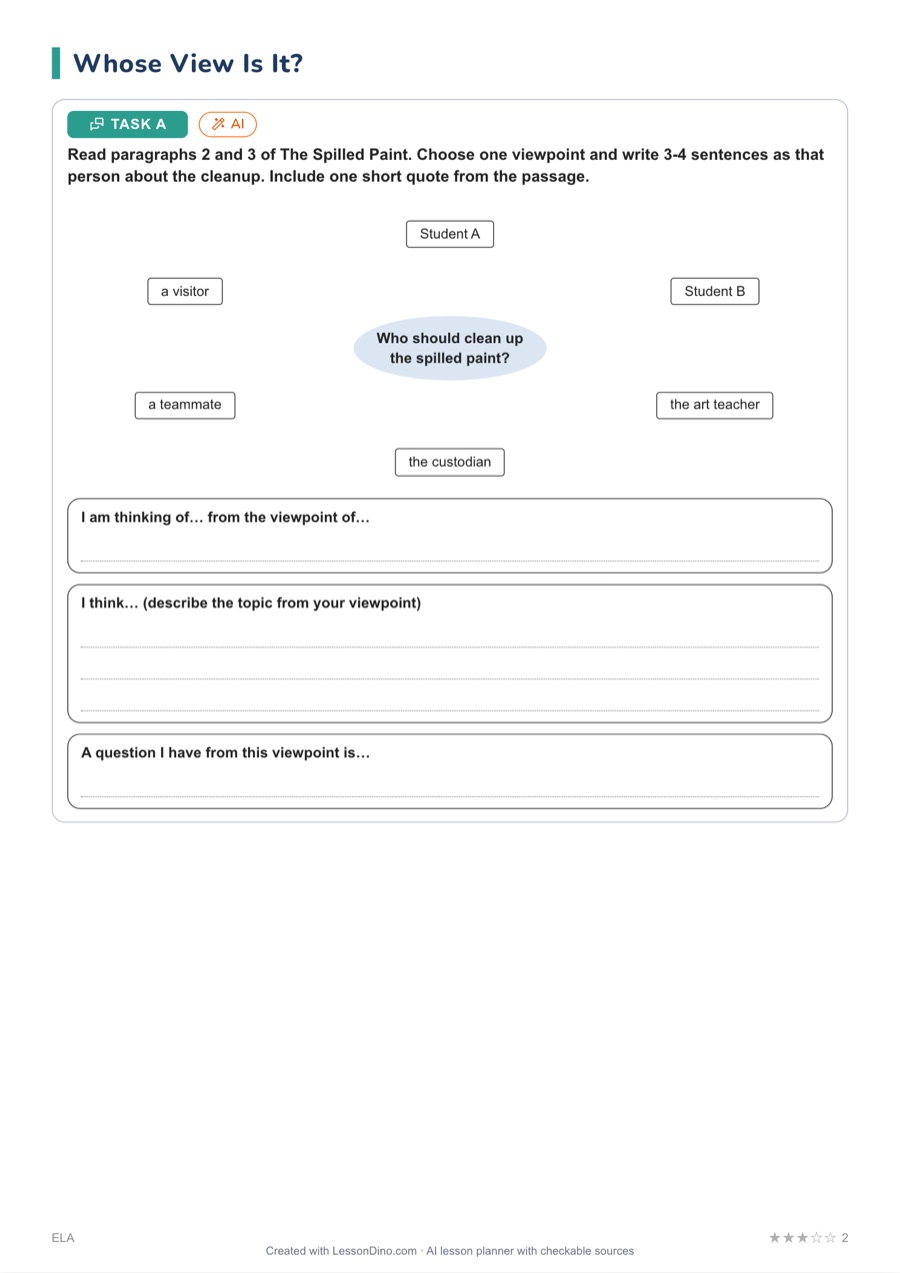
Whose Eyes Tell It
Read two views of one spill and take a viewpoint.
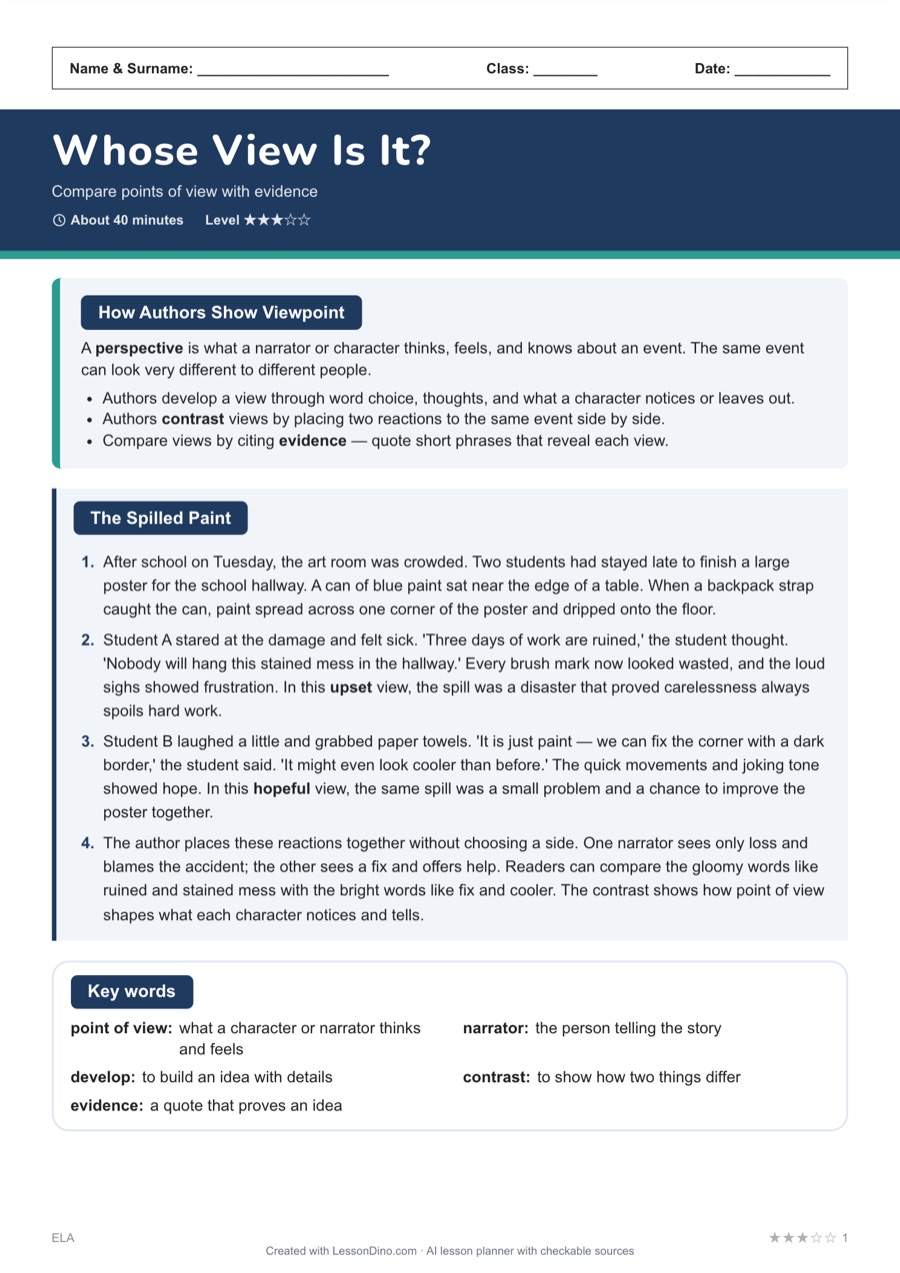
How Authors Show Viewpoint
- A perspective is what a narrator or character thinks, feels, and knows about an event. The same event can look very different to different people.
- Authors develop a view through word choice, thoughts, and what a character notices or leaves out.
- Authors contrast views by placing two reactions to the same event side by side.
- Compare views by citing evidence — quote short phrases that reveal each view.
The Spilled Paint
| Word | Meaning |
|---|---|
| point of view | what a character or narrator thinks and feels |
| narrator | the person telling the story |
| develop | to build an idea with details |
| contrast | to show how two things differ |
| evidence | a quote that proves an idea |
Page 2
Read paragraphs 2 and 3 of The Spilled Paint. Choose one viewpoint and write 3-4 sentences as that person about the cleanup. Include one short quote from the passage.
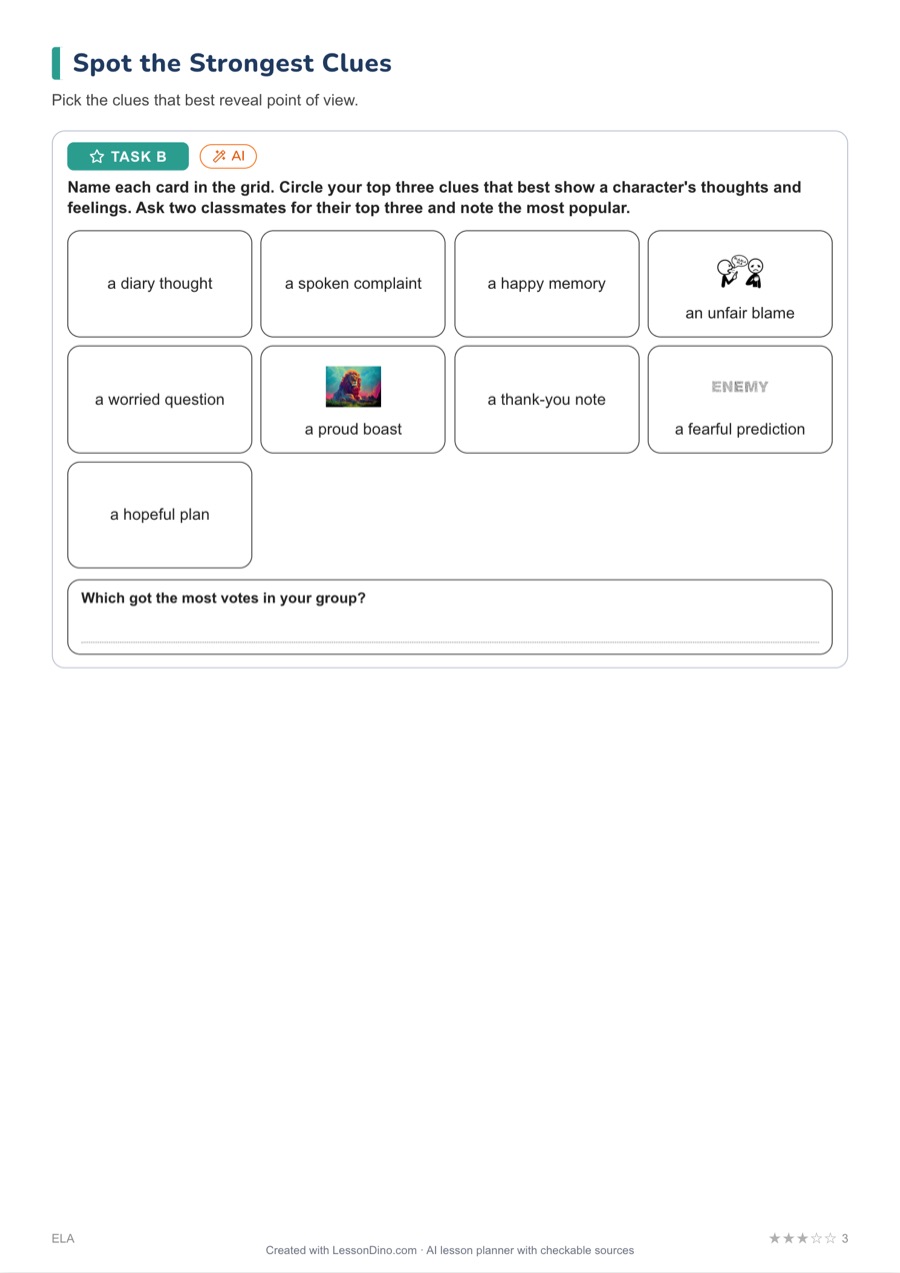
Spot the Strongest Clues
Pick the clues that best reveal point of view.
Name each card in the grid. Circle your top three clues that best show a character's thoughts and feelings. Ask two classmates for their top three and note the most popular.
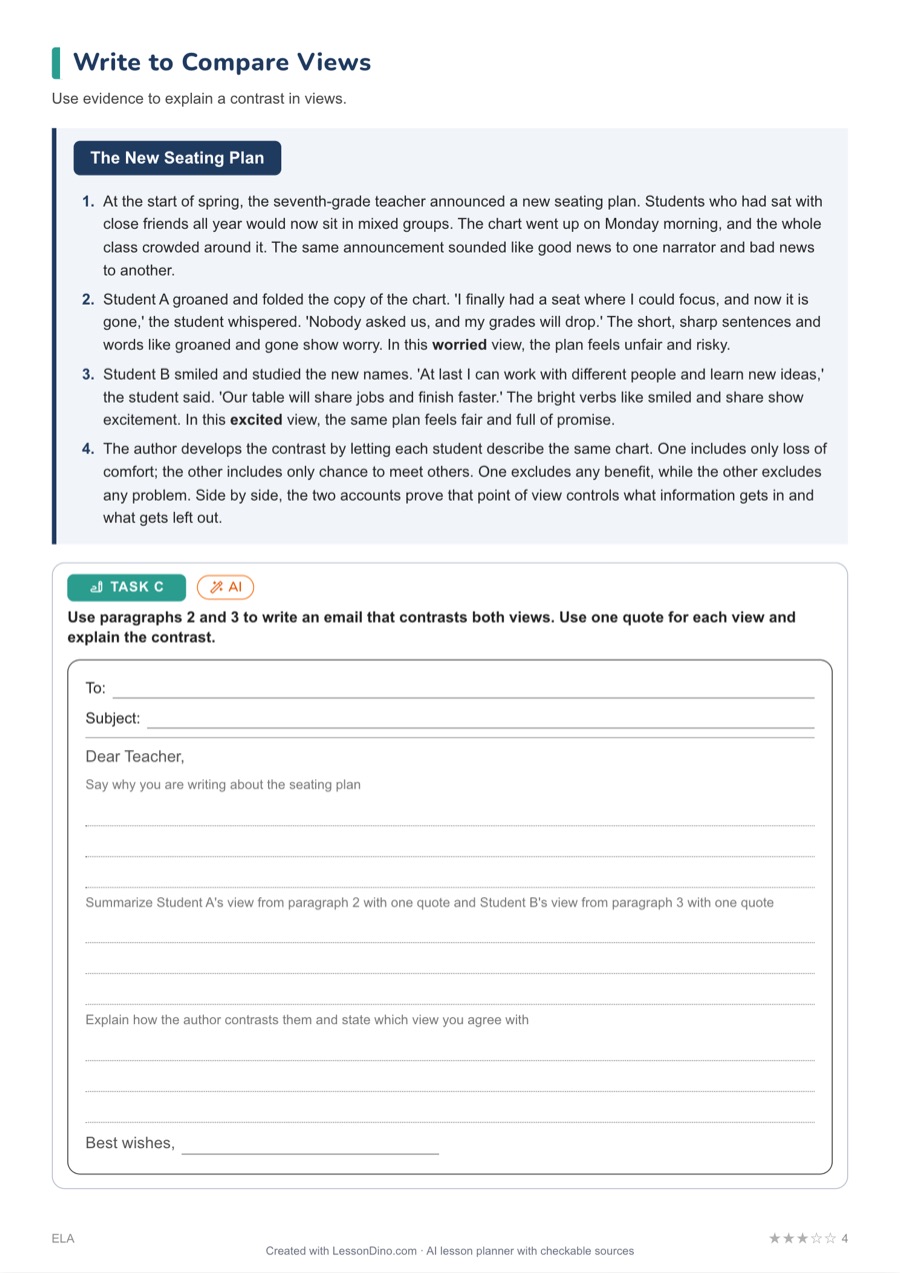
Write to Compare Views
Use evidence to explain a contrast in views.
The New Seating Plan
Use paragraphs 2 and 3 to write an email that contrasts both views. Use one quote for each view and explain the contrast.
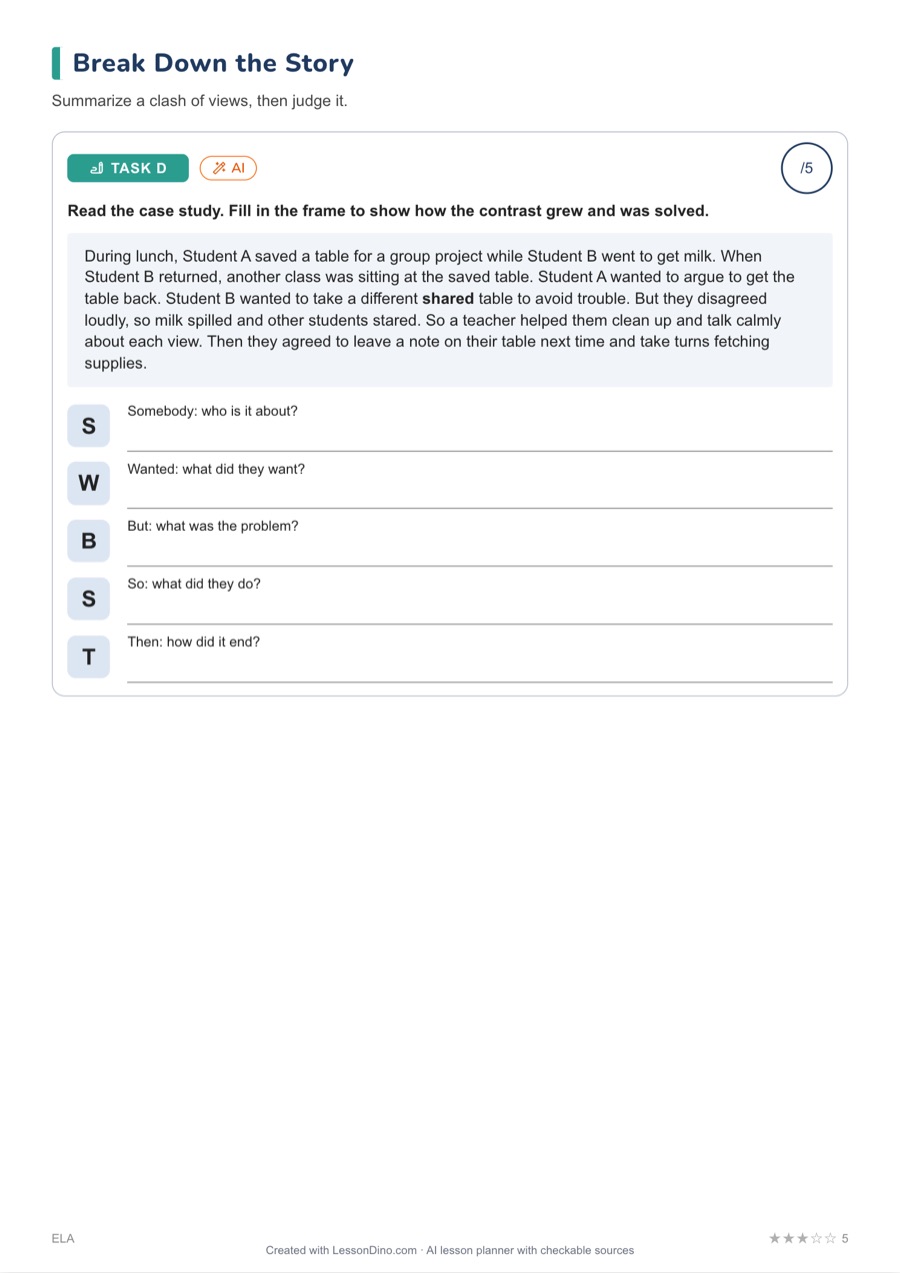
Break Down the Story
Summarize a clash of views, then judge it.
Read the case study. Fill in the frame to show how the contrast grew and was solved.
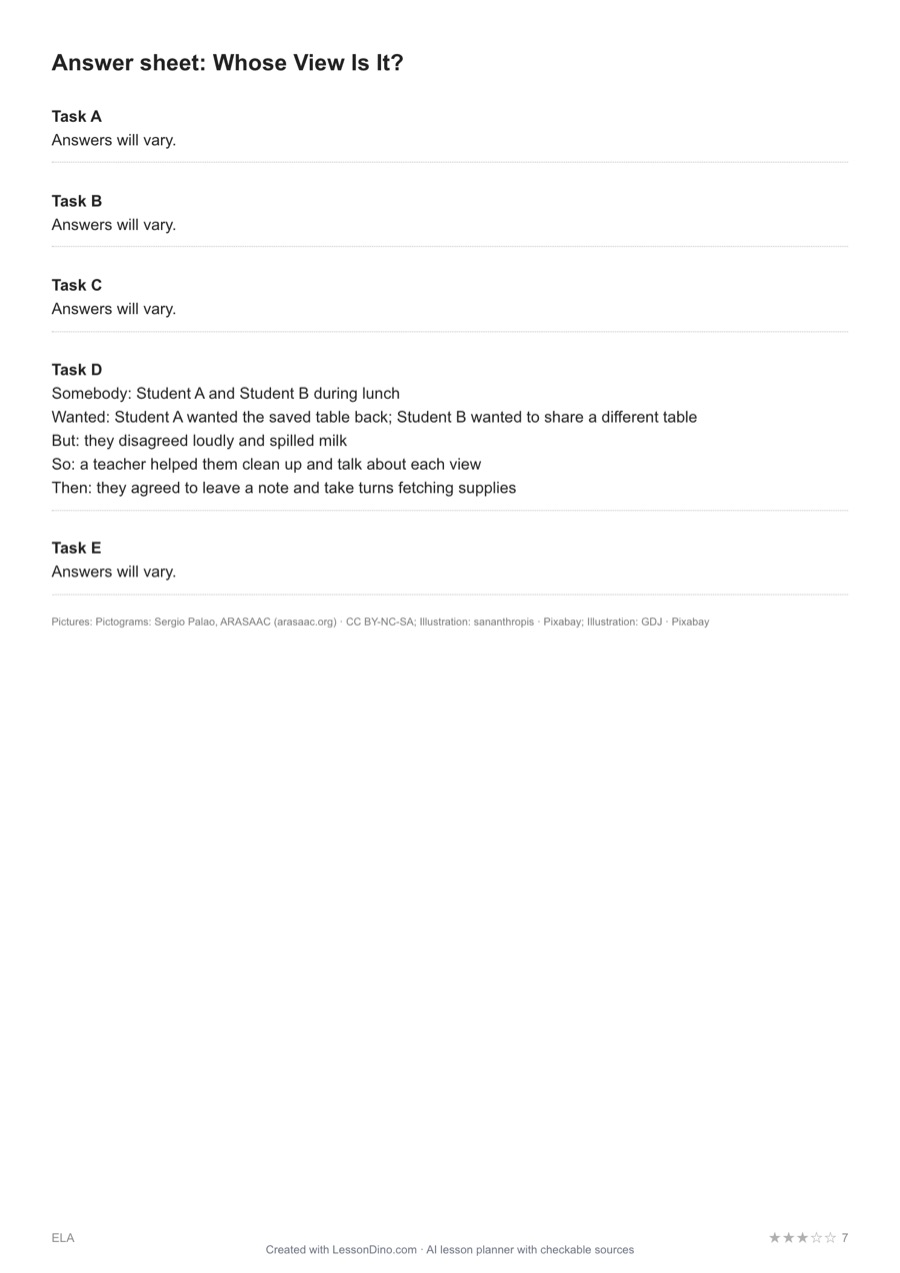
- During lunch, Student A saved a table for a group project while Student B went to get milk. When Student B returned, another class was sitting at the saved table. Student A wanted to argue to get the table back. Student B wanted to take a different shared table to avoid trouble. But they disagreed loudly, so milk spilled and other students stared. So a teacher helped them clean up and talk calmly about each view. Then they agreed to leave a note on their table next time and take turns fetching supplies.
Page 6
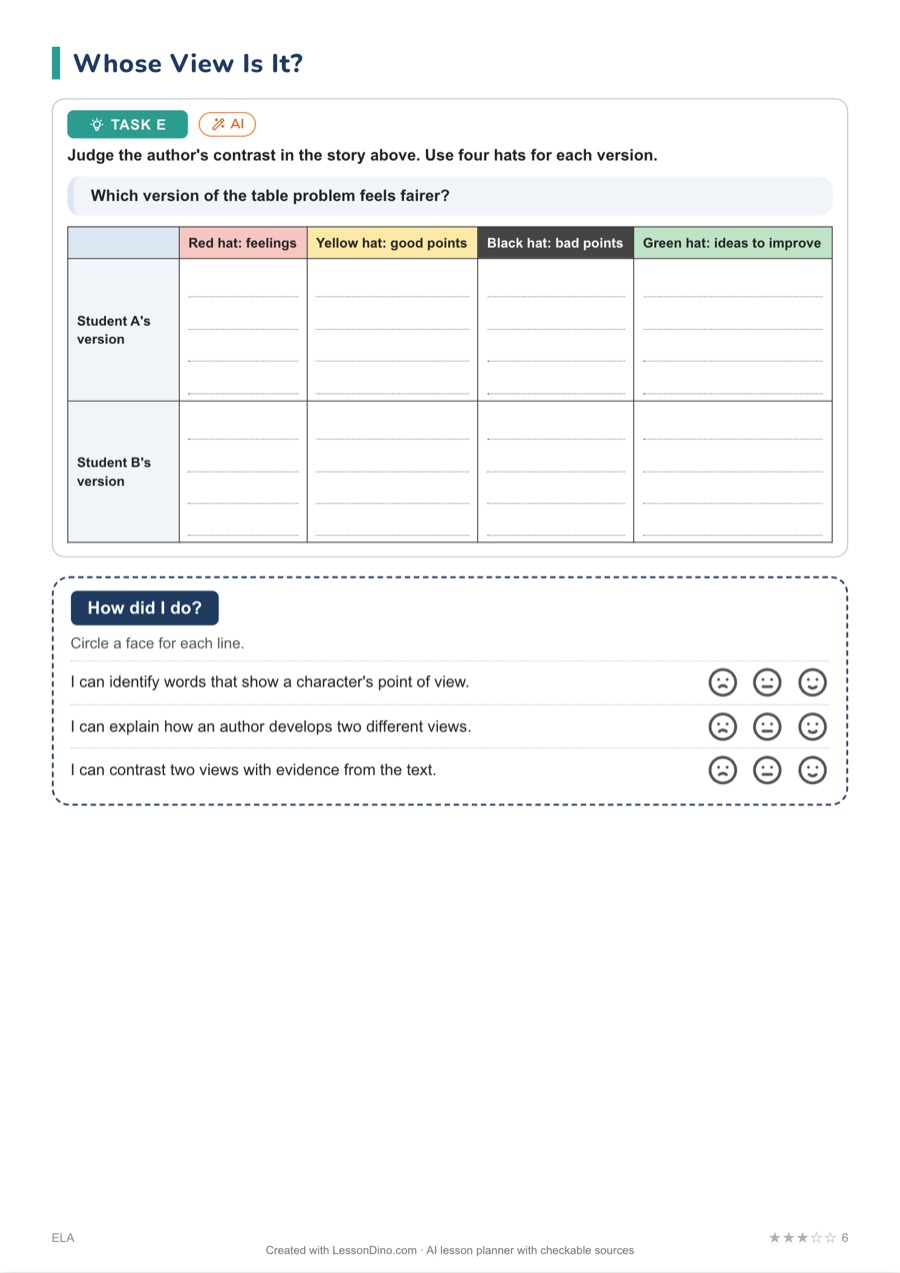
Judge the author's contrast in the story above. Use four hats for each version.
Answers
Show the answers
The answers are on the answer sheet, the last picture above.
Curriculum
Analyze how an author develops and contrasts the points of view of different characters or narrators in a text.
Made with Lesson Dino's AI on 17 October 2026. AI can make mistakes, so check the answers and facts against the sources before you teach.