The worksheet
About this worksheet
Students learn how setting, plot and characterisation create effects on the reader. They write a short speech, action and thought exchange that reveals character. This Year 7 English worksheet gives students (ages 11–12) six pages of practice on writing about a character, part of the reading unit. It goes with our free Writing about a character lesson, which has the slides and a timed lesson plan.
What it covers
By the end, students should be able to:
- Students will explain how setting shapes behaviour and feelings.
- Students will link a plot choice to what a character values.
- Students will write speech, action and thought to reveal character.
How to use it
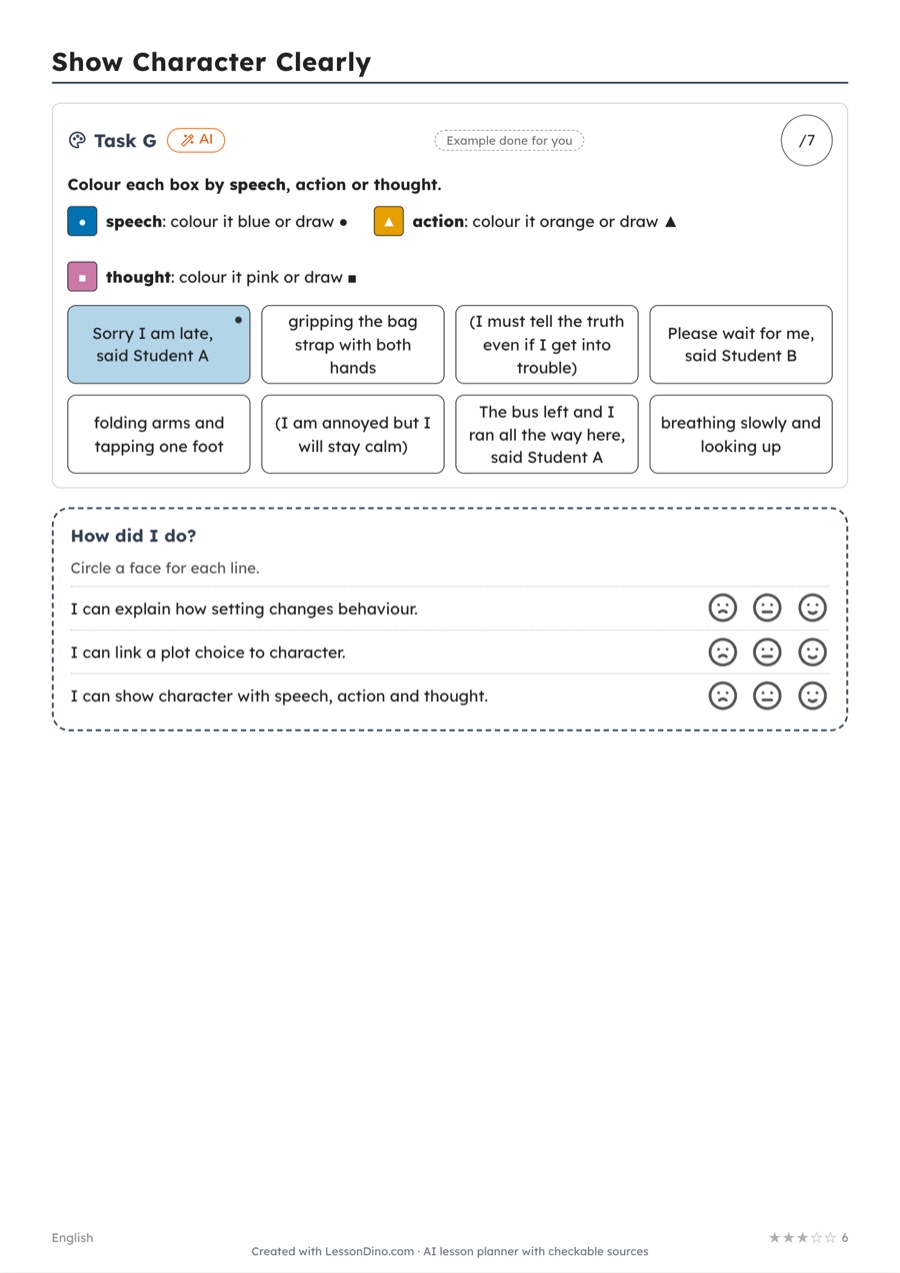
- Guided practice (10 minutes): Hand out Worksheet Task G and guide pairs to colour each box by speech, action or thought.
- Support: Provide a model paragraph with the three parts labelled in different colours.
- Stretch: Rewrite one line of dialogue so it sounds polite but the action shows the opposite feeling.
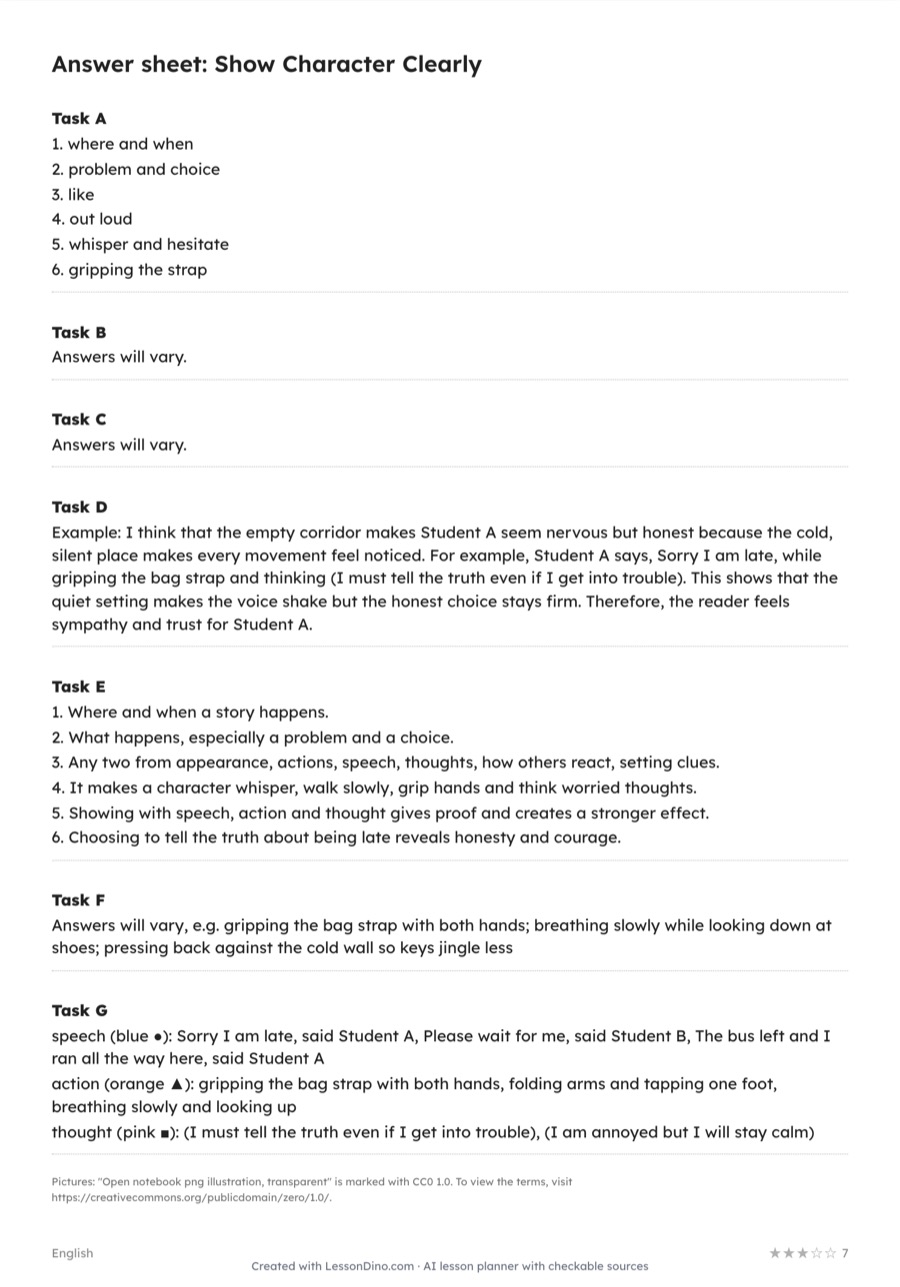
- The answer sheet is the last page, so you can print it on its own or let students check their own work.
Key vocabulary
- setting: where and when a story happens
- plot: what happens, often a problem followed by a choice
- characterisation: how a writer shows what someone is like
- effect: how writing makes a reader feel, think or judge
Mistakes to watch for
- Telling the trait instead of showing it, e.g. he was nervous. Swap for voice and body: whispering, slow steps, gripping bag.
- Treating setting as background that does not change behaviour. Add two setting-driven changes: busy places force rushing and shouting; empty places force whispering and slow steps.
- Mixing up speech, action and thought. Use punctuation test: speech in quotes, thought in brackets, action is body/voice with no quotes.
What's on the worksheet
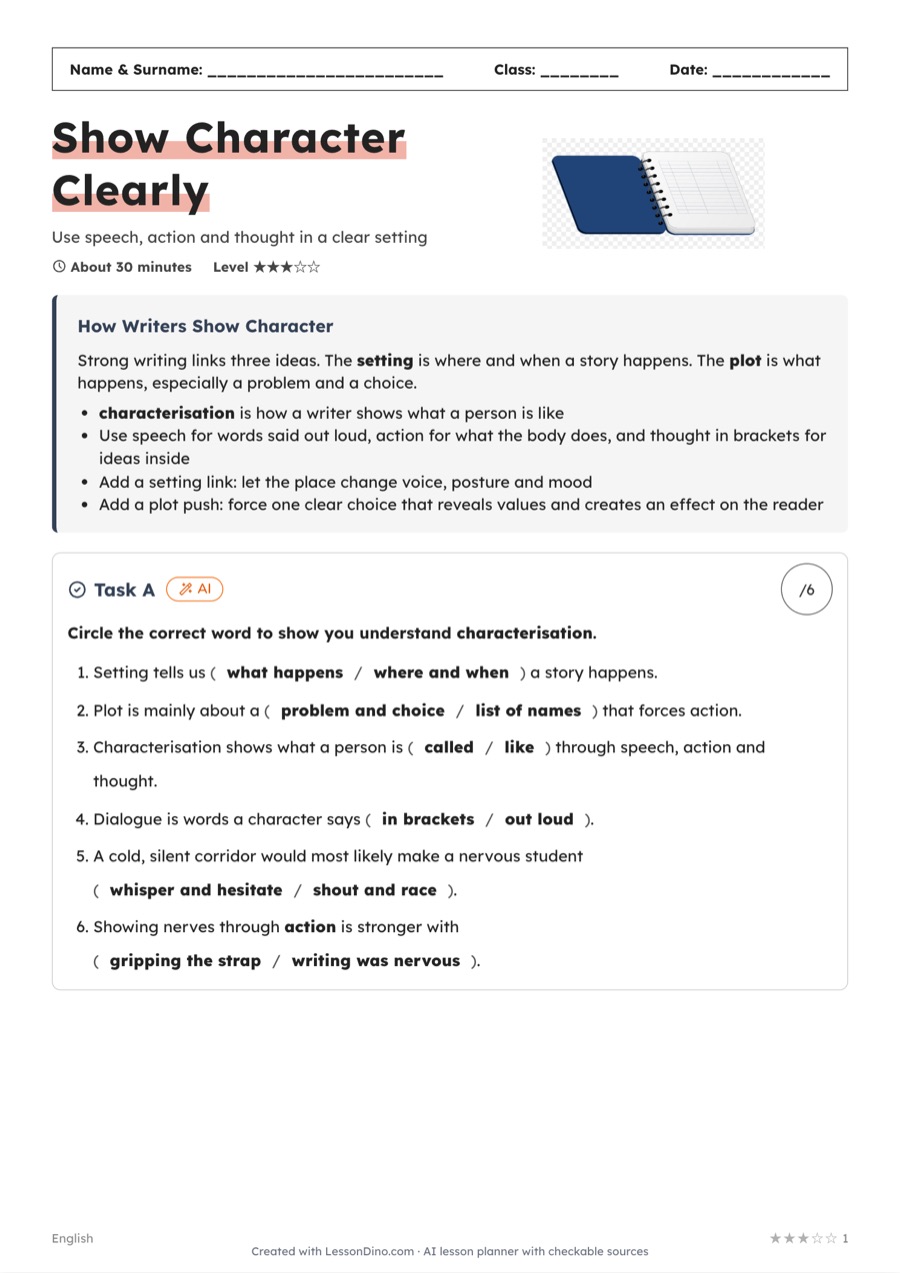
Show, Don't Tell
Learn how setting, plot and characterisation work together.
How Writers Show Character
- Strong writing links three ideas. The setting is where and when a story happens. The plot is what happens, especially a problem and a choice.
- characterisation is how a writer shows what a person is like
- Use speech for words said out loud, action for what the body does, and thought in brackets for ideas inside
- Add a setting link: let the place change voice, posture and mood
- Add a plot push: force one clear choice that reveals values and creates an effect on the reader
Circle the correct word to show you understand characterisation.
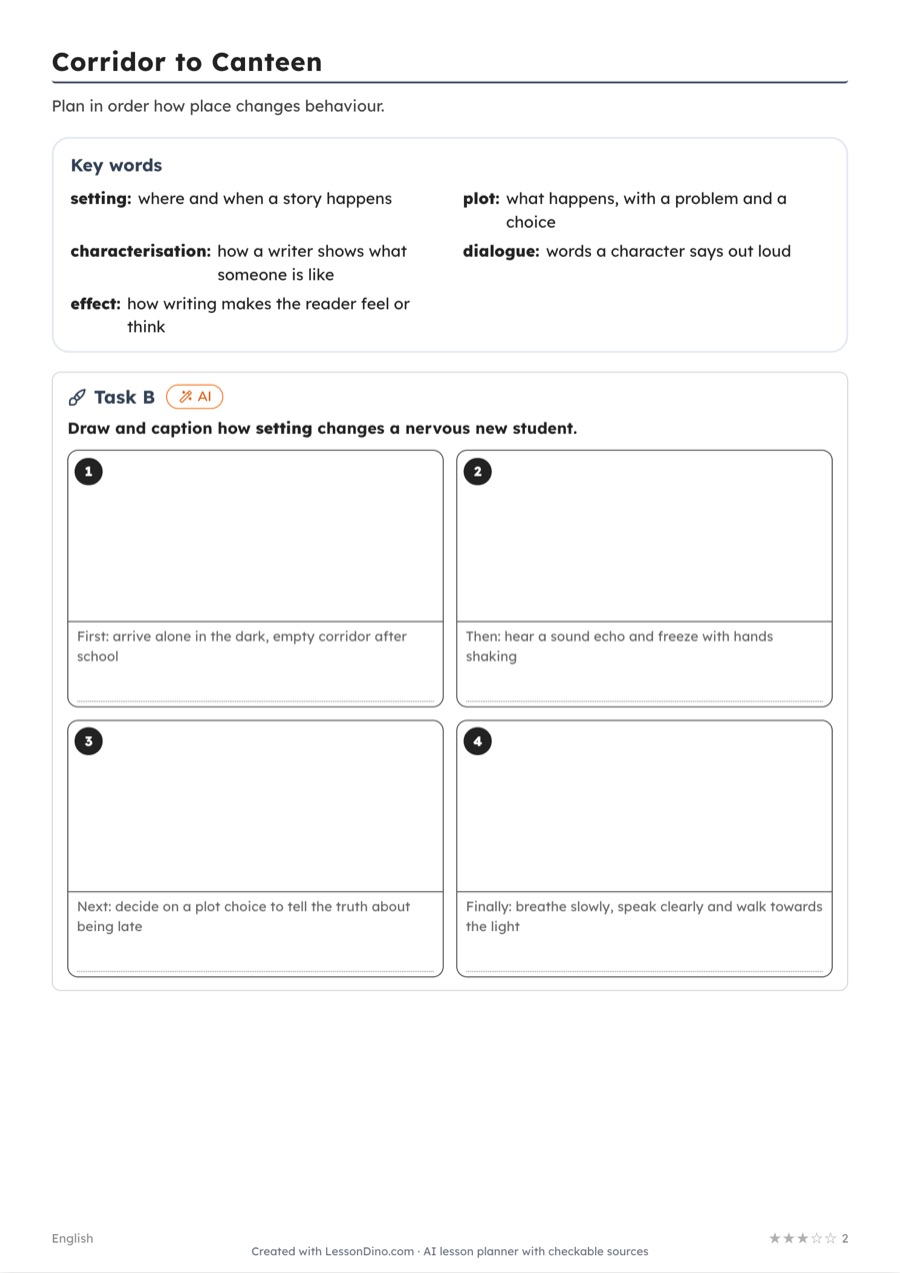
Corridor to Canteen
Plan in order how place changes behaviour.
| Word | Meaning |
|---|---|
| setting | where and when a story happens |
| plot | what happens, with a problem and a choice |
| characterisation | how a writer shows what someone is like |
| dialogue | words a character says out loud |
| effect | how writing makes the reader feel or think |
Draw and caption how setting changes a nervous new student.
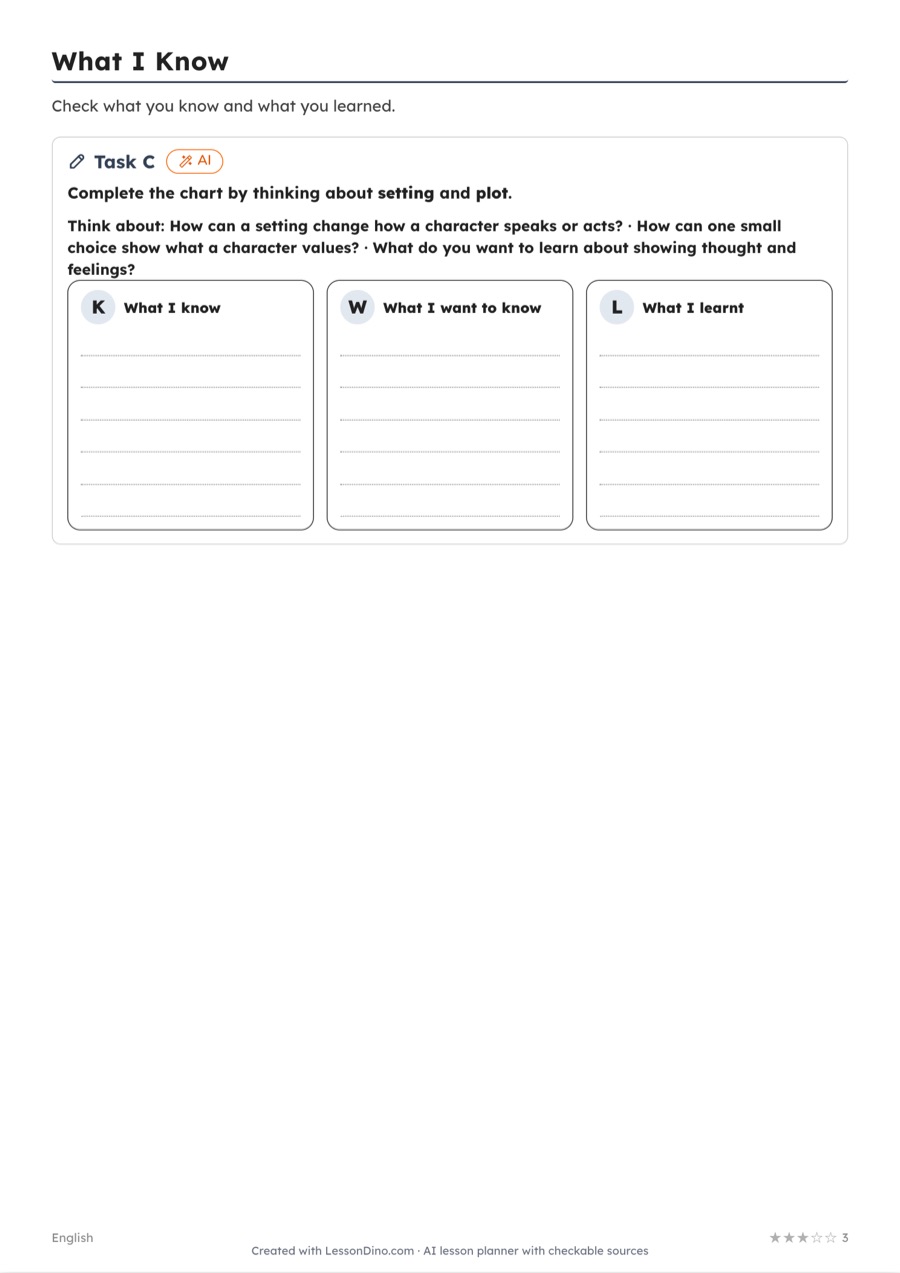
What I Know
Check what you know and what you learned.
Complete the chart by thinking about setting and plot.
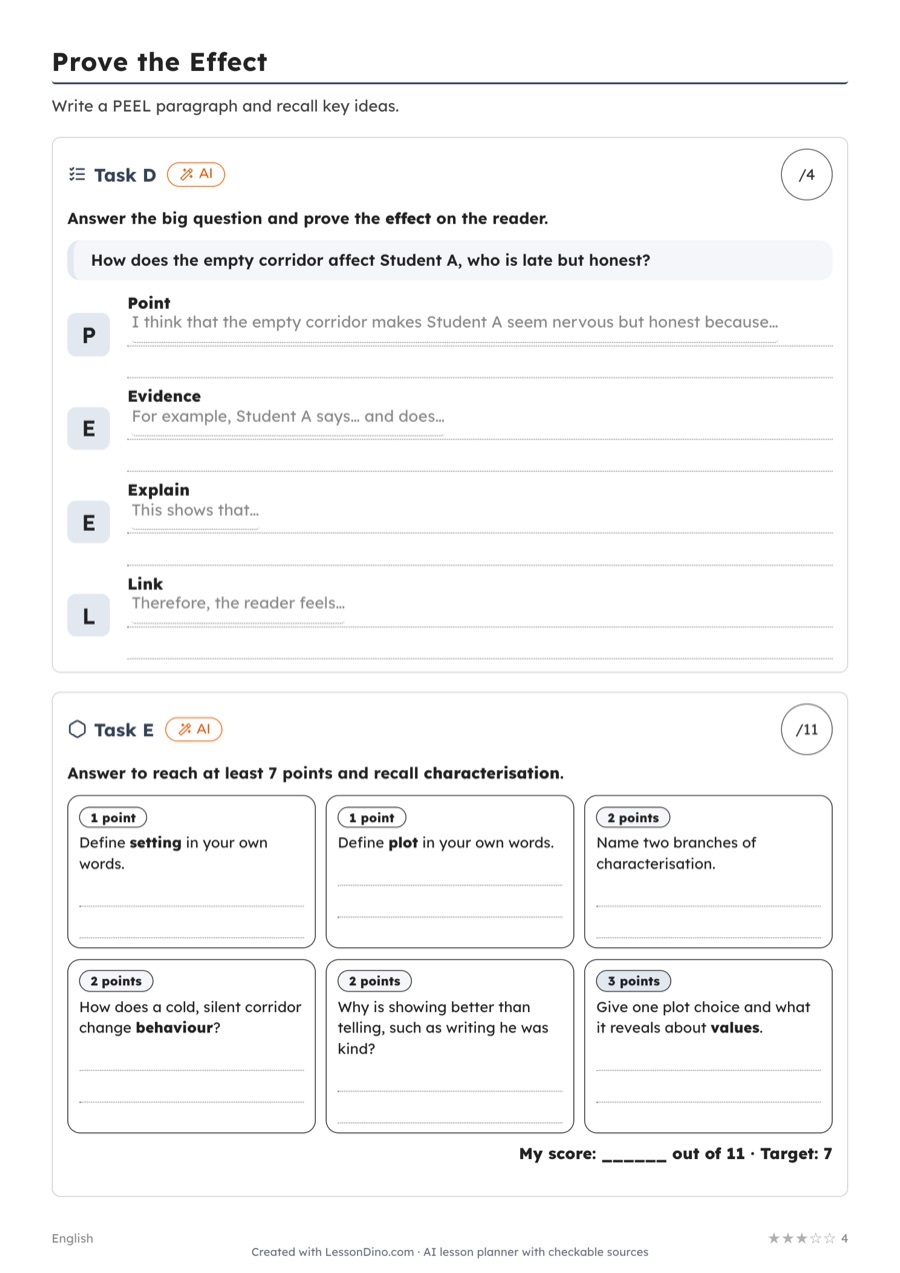
Prove the Effect
Write a PEEL paragraph and recall key ideas.
Answer the big question and prove the effect on the reader.
Answer to reach at least 7 points and recall characterisation.
- Define setting in your own words.
- Define plot in your own words.
- Name two branches of characterisation.
- How does a cold, silent corridor change behaviour?
- Why is showing better than telling, such as writing he was kind?
- Give one plot choice and what it reveals about values.
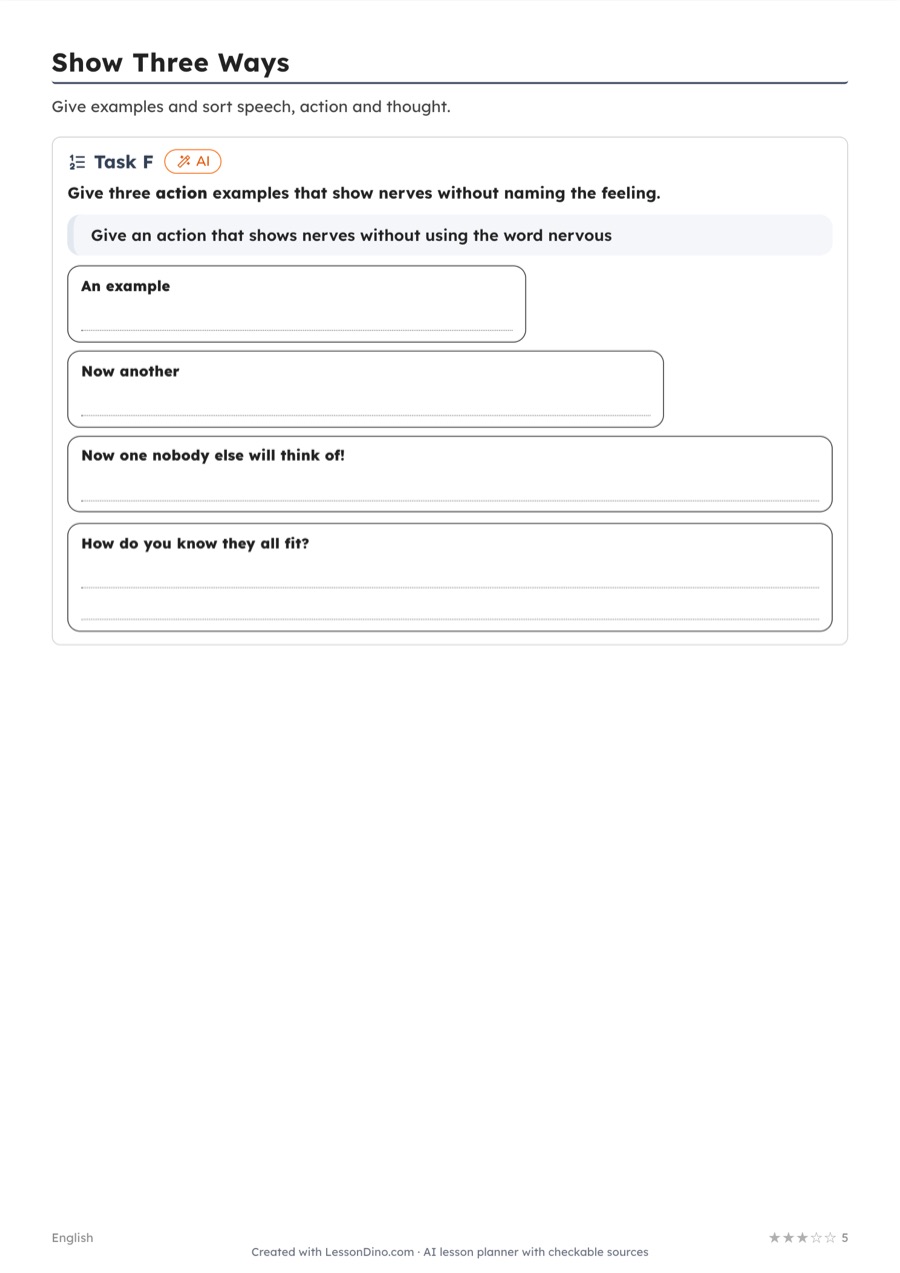
Show Three Ways
Give examples and sort speech, action and thought.
Give three action examples that show nerves without naming the feeling.
Page 6
Colour each box by speech, action or thought.
Answers
Show the answers
- Define setting in your own words. Where and when a story happens.
- Define plot in your own words. What happens, especially a problem and a choice.
- Name two branches of characterisation. Any two from appearance, actions, speech, thoughts, how others react, setting clues.
- How does a cold, silent corridor change behaviour? It makes a character whisper, walk slowly, grip hands and think worried thoughts.
- Why is showing better than telling, such as writing he was kind? Showing with speech, action and thought gives proof and creates a stronger effect.
- Give one plot choice and what it reveals about values. Choosing to tell the truth about being late reveals honesty and courage.
The answer sheet is the last picture above.
Curriculum
studying setting, plot, and characterisation, and the effects of these
Made with Lesson Dino's AI on 19 October 2026. AI can make mistakes, so check the answers and facts against the sources before you teach.