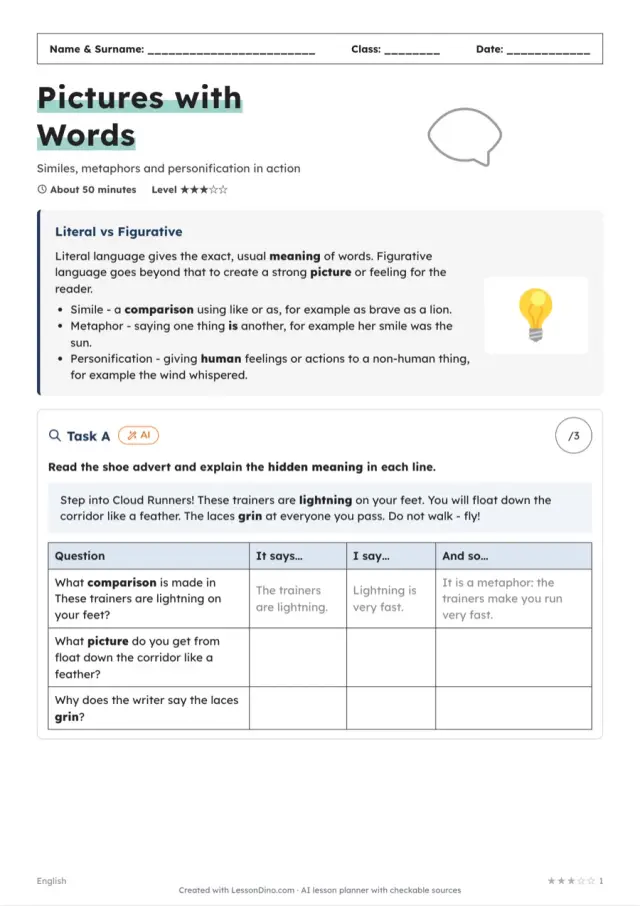
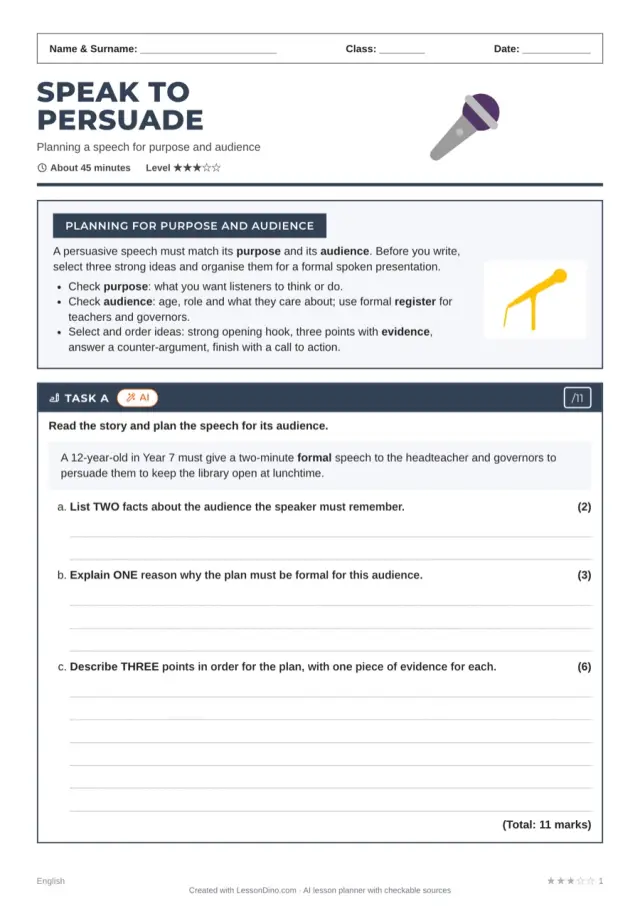
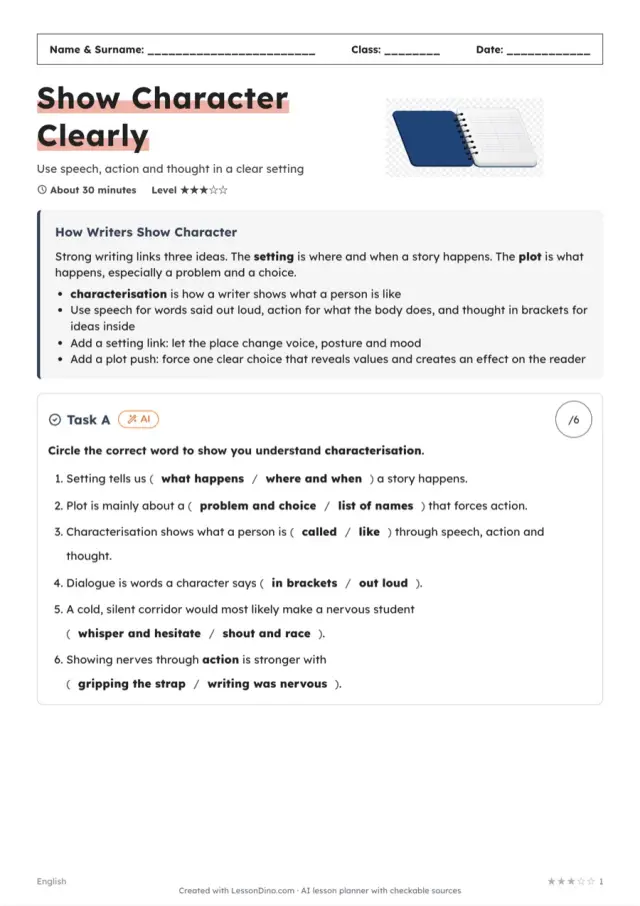
The worksheet
About this worksheet
Students learn to spot poetic conventions and explain their effects. They analyse The Empty House and link imagery to mood. This Year 7 English worksheet gives students (ages 11–12) six pages of practice on analysing a poem, part of the reading unit. It goes with our free Analysing a poem lesson, which has the slides and a timed lesson plan.
What it covers
By the end, students should be able to:
- Students will recognise similes, metaphors, personification, stanzas and sound devices.
- Students will explain how word choice and imagery shape mood using poem evidence.
How to use it
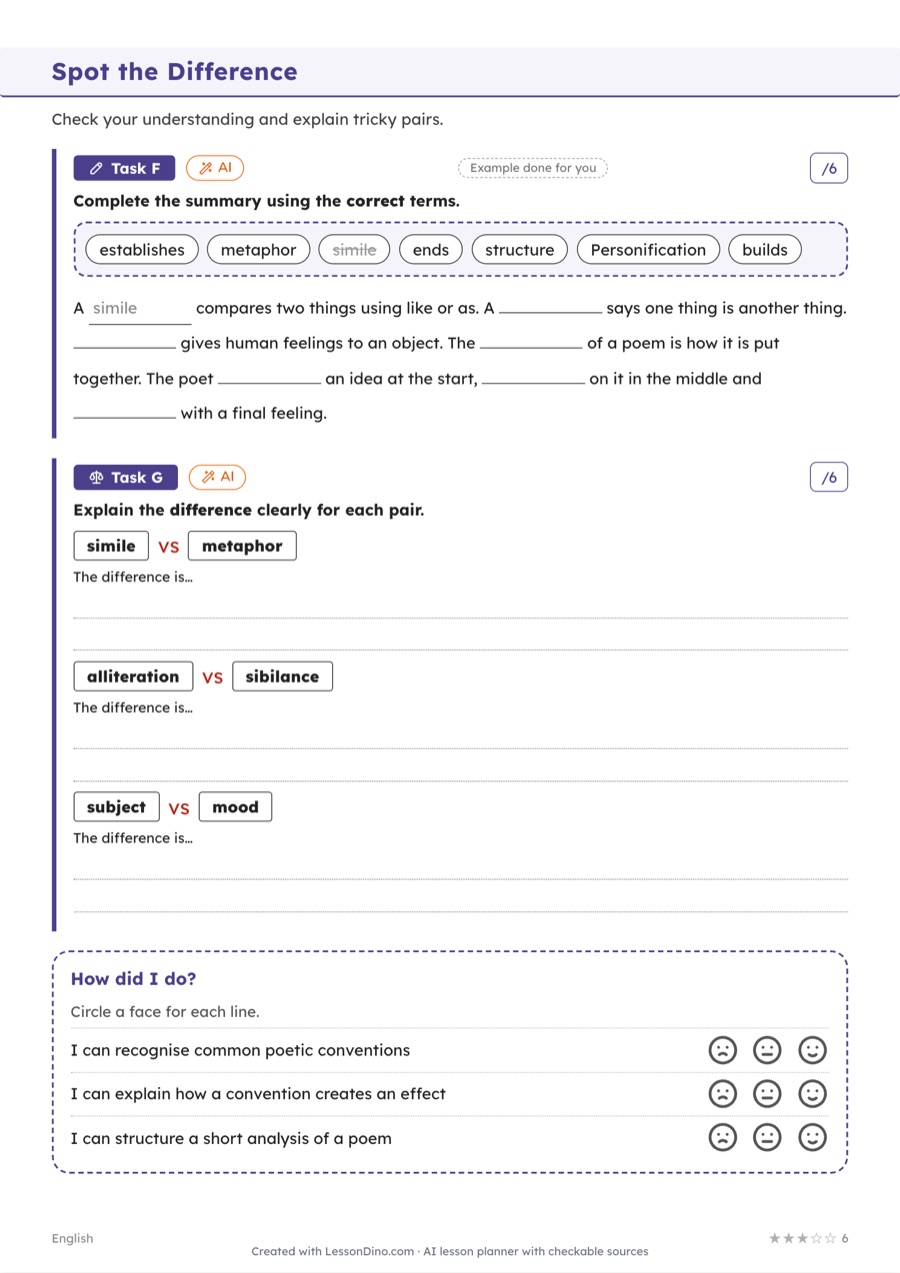
- Plenary (15 minutes): Ask pairs to complete Worksheet Task F summary by filling blanks with correct terms.
- Support: Pre-highlight like, as and human actions in Stanza 1 so signals are visual.
- Stretch: Rewrite one simile as a metaphor and argue which image feels stronger.
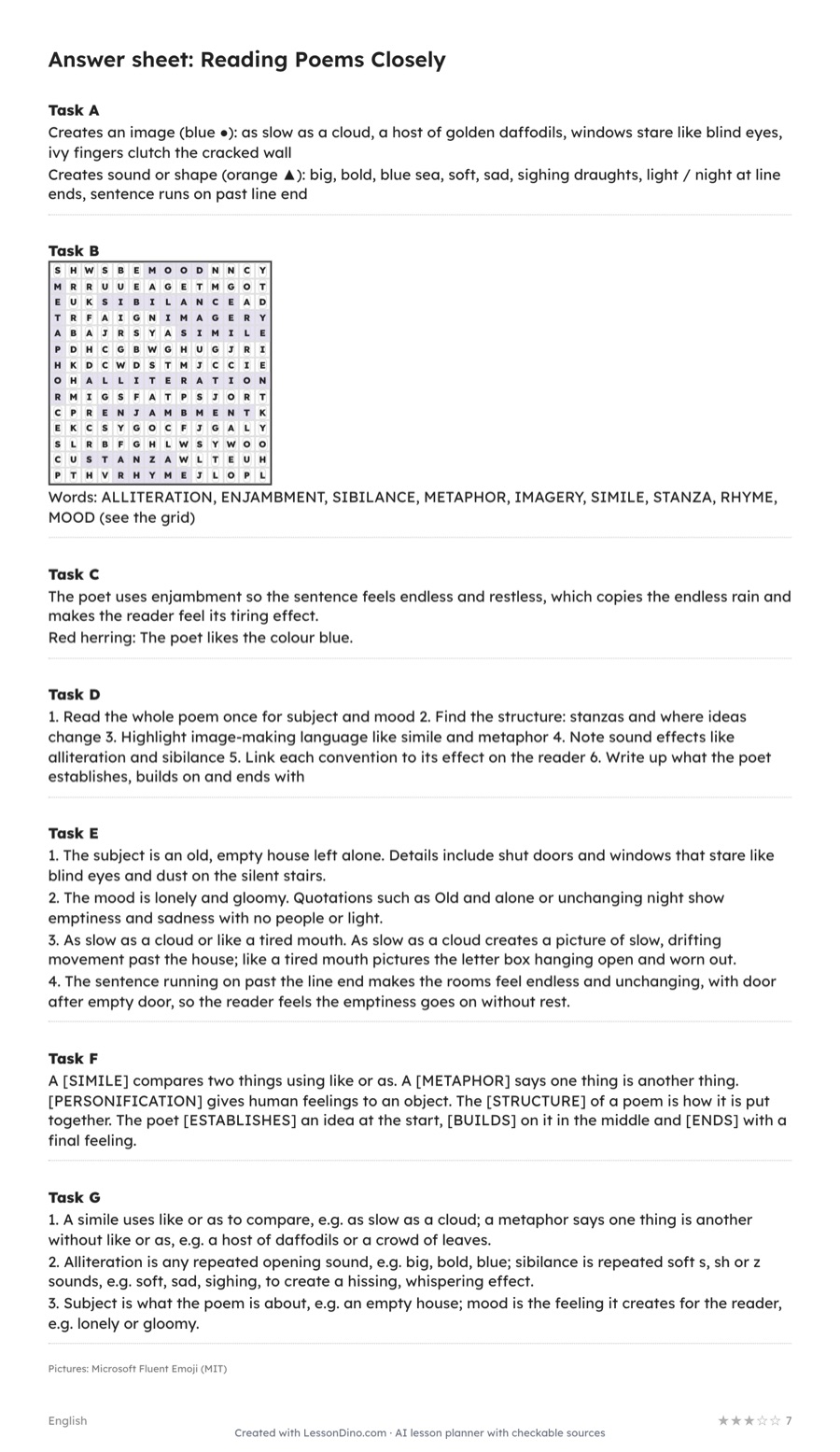
- The answer sheet is the last page, so you can print it on its own or let students check their own work.
Key vocabulary
- simile: a comparison that uses the words like or as
- metaphor: describing one thing as if it is another thing
- personification: describing a thing as if it were alive
- stanza: a set of lines grouped together in a poem
- mood: the overall feeling a poem gives, such as gloomy or joyful
Mistakes to watch for
- Calling any comparison a simile, even without like or as. Check for like or as first; if one thing is called another, name it metaphor.
- Thinking free verse must rhyme. Remind that free verse does not rhyme or have regular rhythm; rhyme is a choice.
- Naming the device without explaining effect on mood. Insist on feels... because... linked to positive or negative language and images.
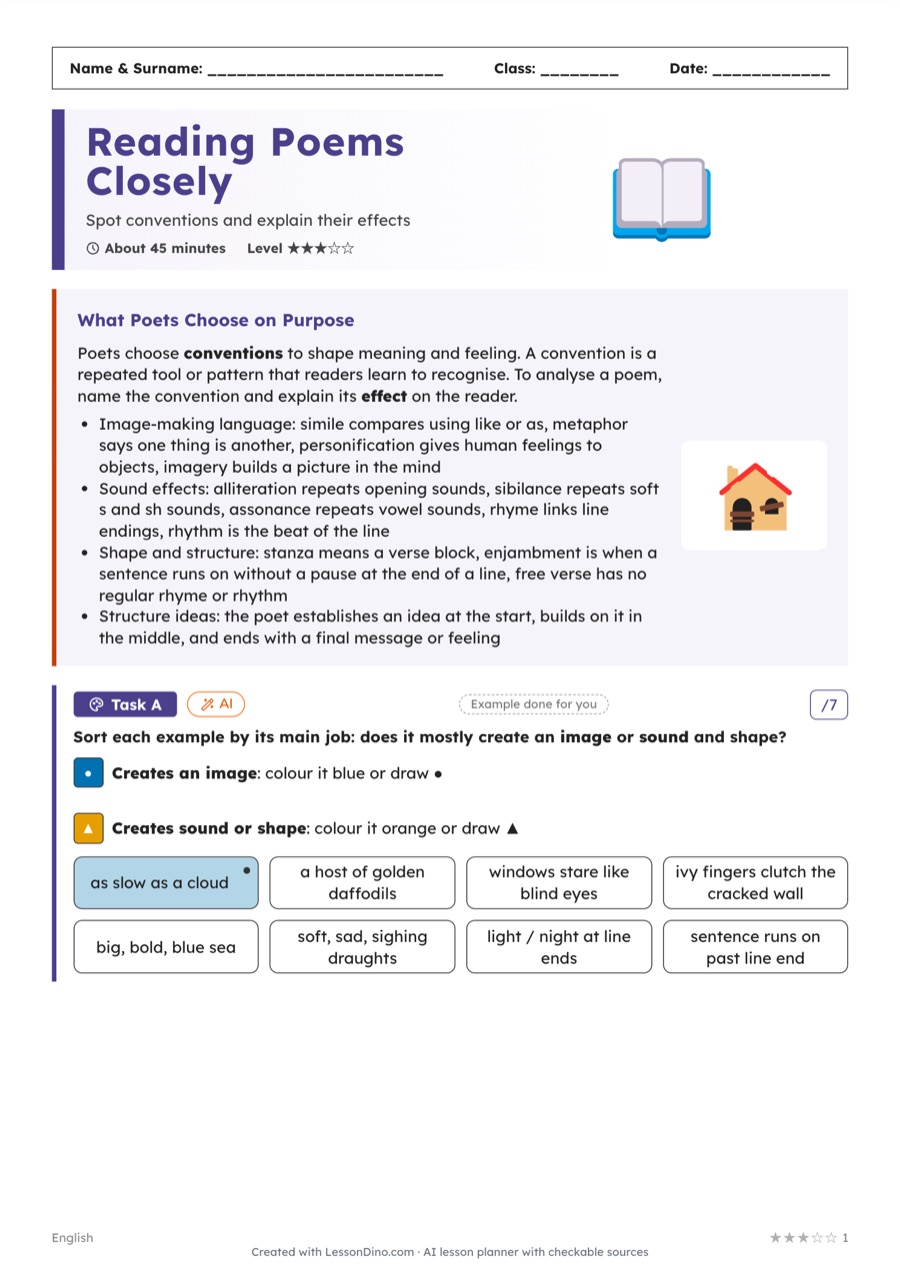
What's on the worksheet
Poetic Conventions Toolkit
Learn the tools poets use, then sort examples into groups.
What Poets Choose on Purpose
- Poets choose conventions to shape meaning and feeling. A convention is a repeated tool or pattern that readers learn to recognise. To analyse a poem, name the convention and explain its effect on the reader.
- Image-making language: simile compares using like or as, metaphor says one thing is another, personification gives human feelings to objects, imagery builds a picture in the mind
- Sound effects: alliteration repeats opening sounds, sibilance repeats soft s and sh sounds, assonance repeats vowel sounds, rhyme links line endings, rhythm is the beat of the line
- Shape and structure: stanza means a verse block, enjambment is when a sentence runs on without a pause at the end of a line, free verse has no regular rhyme or rhythm
- Structure ideas: the poet establishes an idea at the start, builds on it in the middle, and ends with a final message or feeling
Sort each example by its main job: does it mostly create an image or sound and shape?
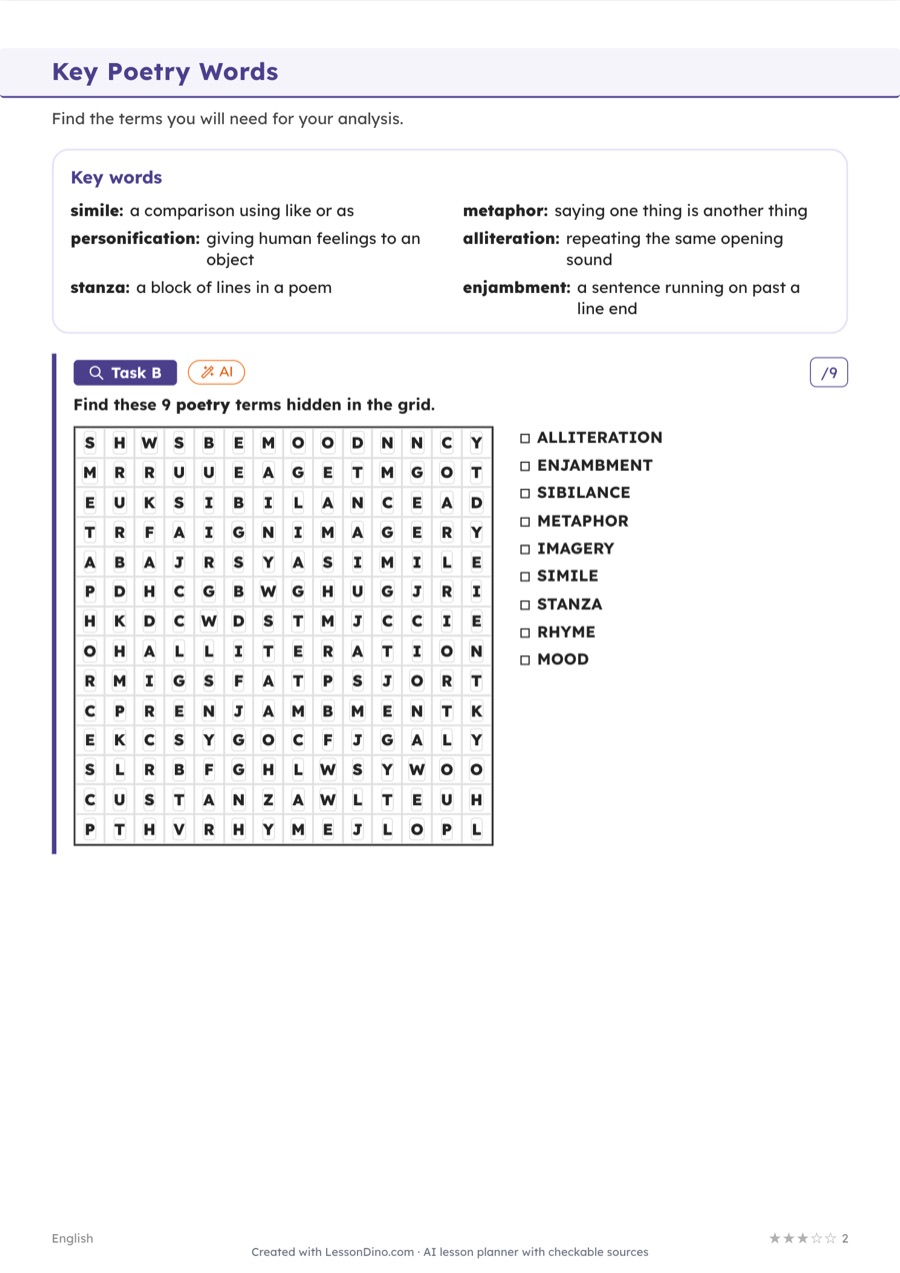
Key Poetry Words
Find the terms you will need for your analysis.
| Word | Meaning |
|---|---|
| simile | a comparison using like or as |
| metaphor | saying one thing is another thing |
| personification | giving human feelings to an object |
| alliteration | repeating the same opening sound |
| stanza | a block of lines in a poem |
| enjambment | a sentence running on past a line end |
Find these 9 poetry terms hidden in the grid.
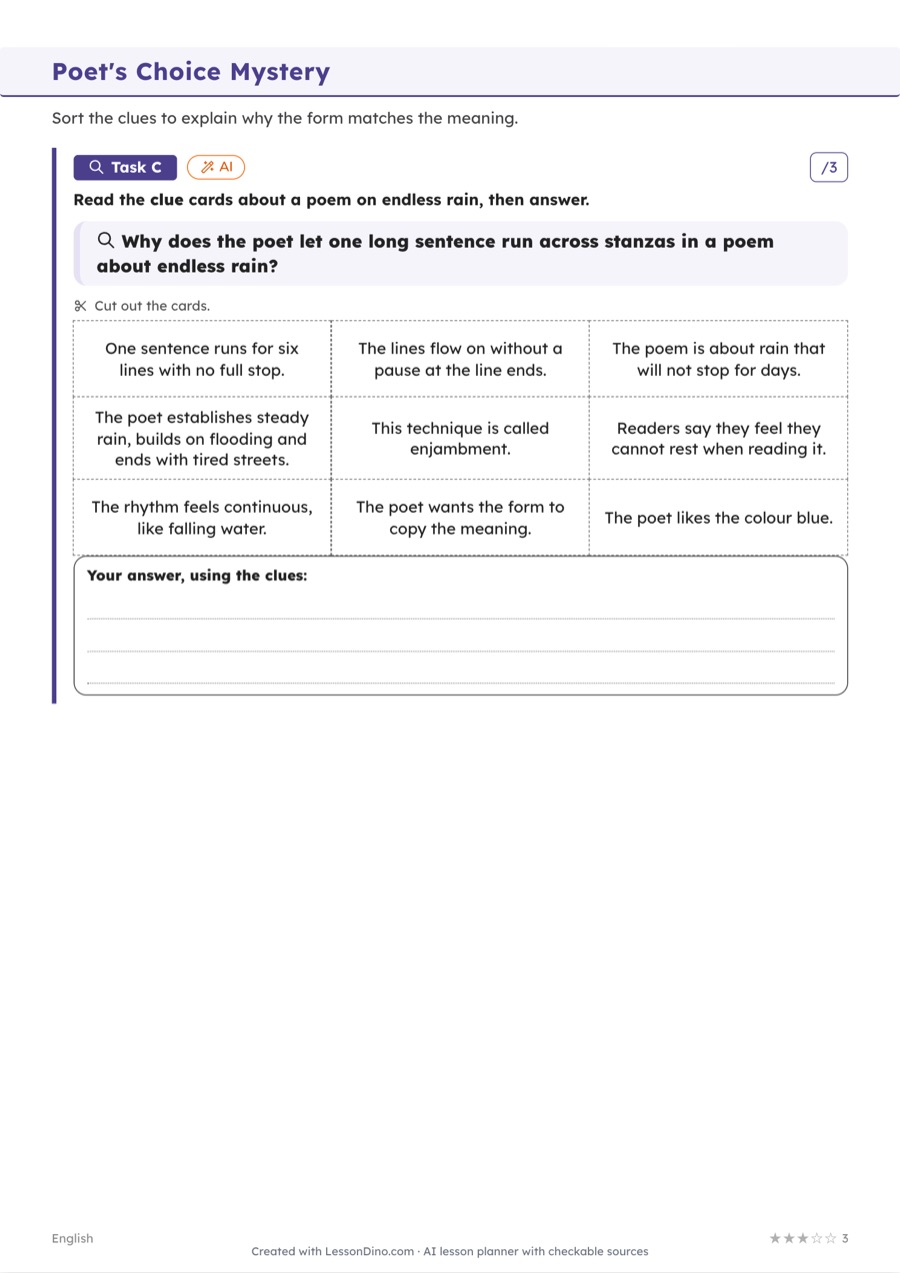
Poet's Choice Mystery
Sort the clues to explain why the form matches the meaning.
Read the clue cards about a poem on endless rain, then answer.
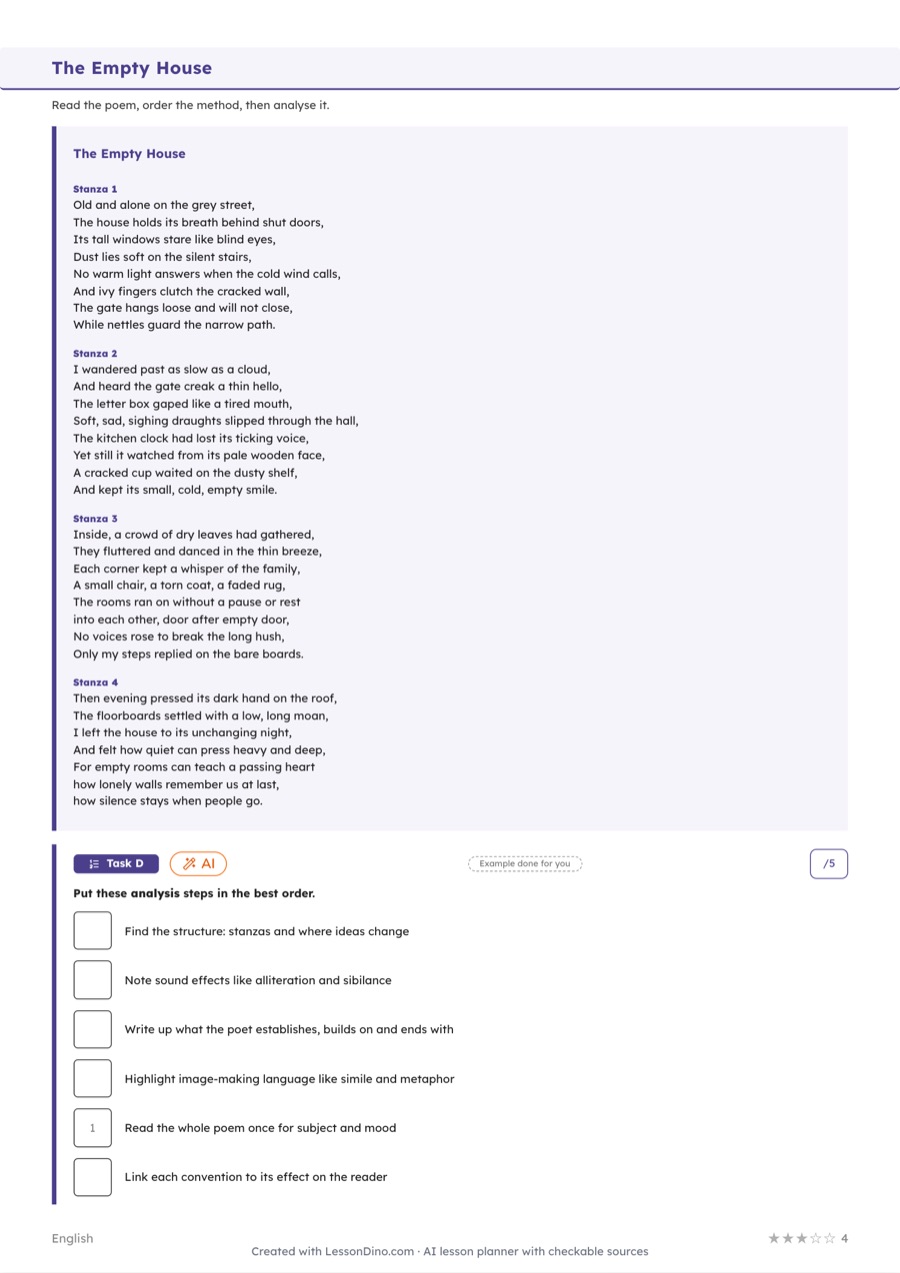
The Empty House
Read the poem, order the method, then analyse it.
The Empty House
Put these analysis steps in the best order.
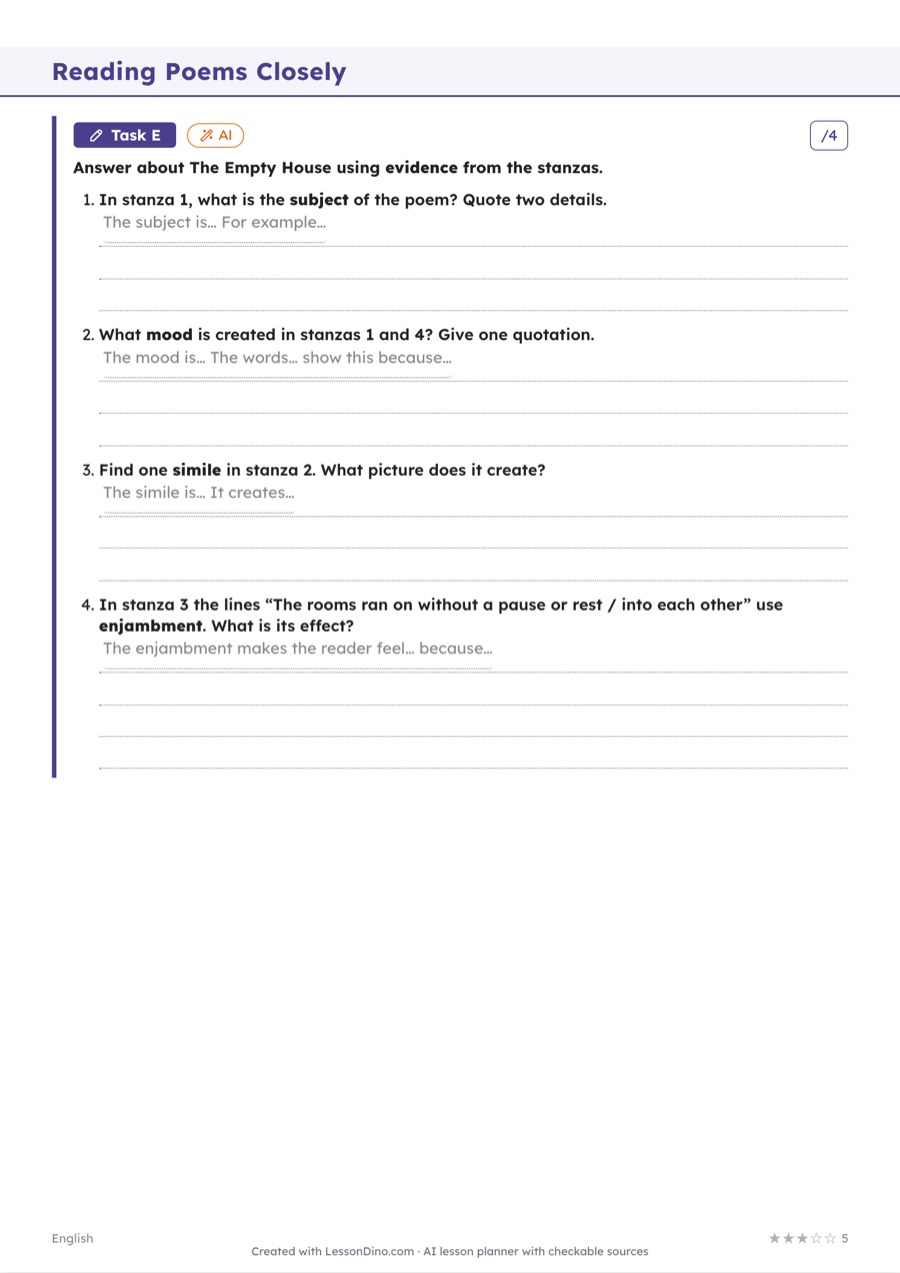
Page 5
Answer about The Empty House using evidence from the stanzas.
- In stanza 1, what is the subject of the poem? Quote two details.
- What mood is created in stanzas 1 and 4? Give one quotation.
- Find one simile in stanza 2. What picture does it create?
- In stanza 3 the lines “The rooms ran on without a pause or rest / into each other” use enjambment. What is its effect?
Spot the Difference
Check your understanding and explain tricky pairs.
Complete the summary using the correct terms.
- A [[simile]] compares two things using like or as. A [[metaphor]] says one thing is another thing. [[Personification]] gives human feelings to an object. The [[structure]] of a poem is how it is put together. The poet [[establishes]] an idea at the start, [[builds]] on it in the middle and [[ends]] with a final feeling.
Explain the difference clearly for each pair.
Answers
Show the answers
- In stanza 1, what is the subject of the poem? Quote two details. The subject is an old, empty house left alone. Details include shut doors and windows that stare like blind eyes and dust on the silent stairs.
- What mood is created in stanzas 1 and 4? Give one quotation. The mood is lonely and gloomy. Quotations such as Old and alone or unchanging night show emptiness and sadness with no people or light.
- Find one simile in stanza 2. What picture does it create? As slow as a cloud or like a tired mouth. As slow as a cloud creates a picture of slow, drifting movement past the house; like a tired mouth pictures the letter box hanging open and worn out.
- In stanza 3 the lines “The rooms ran on without a pause or rest / into each other” use enjambment. What is its effect? The sentence running on past the line end makes the rooms feel endless and unchanging, with door after empty door, so the reader feels the emptiness goes on without rest.
The answer sheet is the last picture above.
Curriculum
recognising a range of poetic conventions and understanding how these have been used
Made with Lesson Dino's AI on 19 October 2026. AI can make mistakes, so check the answers and facts against the sources before you teach.