The worksheet
About this worksheet
Students learn how similes, metaphors and personification present feeling. They spot the devices and explain the mood they create. This Year 7 English worksheet gives students (ages 11–12) five pages of practice on similes, metaphors and personification, part of the reading unit. It goes with our free Similes, metaphors and personification lesson, which has the slides and a timed lesson plan.
What it covers
By the end, students should be able to:
- Students will identify simile, metaphor and personification in short extracts.
- Students will explain how figurative language presents meaning and feeling.
- Students will choose vocabulary to create a clear feeling for the reader.
How to use it
- Use it for practice after the teaching part of the lesson, once students have seen the worked examples on the slides.
- Support: Give a choice of three mood words per extract to pick from, with sentence starters for the explanation.
- Stretch: Ask students to suggest a different image for the same line that would change the mood from cheerful to gloomy, keeping the same type.
- The answer sheet is the last page, so you can print it on its own or let students check their own work.
Key vocabulary
- simile: a comparison that uses like or as to show likeness, as in A is like B
- metaphor: saying one thing is another thing to give strong feeling, as in A is B
- personification: giving human actions or feelings to a thing that is not human
- figurative language: words used past their plain meanings to make pictures and stir feelings
- literal language: using words with their plain, exact, agreed meanings
- vocabulary choice: the words a writer picks to shape what readers picture and feel
Mistakes to watch for
- Mixing simile and metaphor, calling every comparison a simile. Use the test: likeness as A is like B needs like or as, identity as A is B uses is or was.
- Thinking personification is just any description of a thing. Check for human action: it must attach a human aspect to a nonhuman thing, like sighed, argued, stared.
- Taking figurative lines literally. Ask: could it really be true? Figurative deviates from plain meanings to create effect.
What's on the worksheet
Say It With Pictures
Learn what figurative language does and read between the lines.
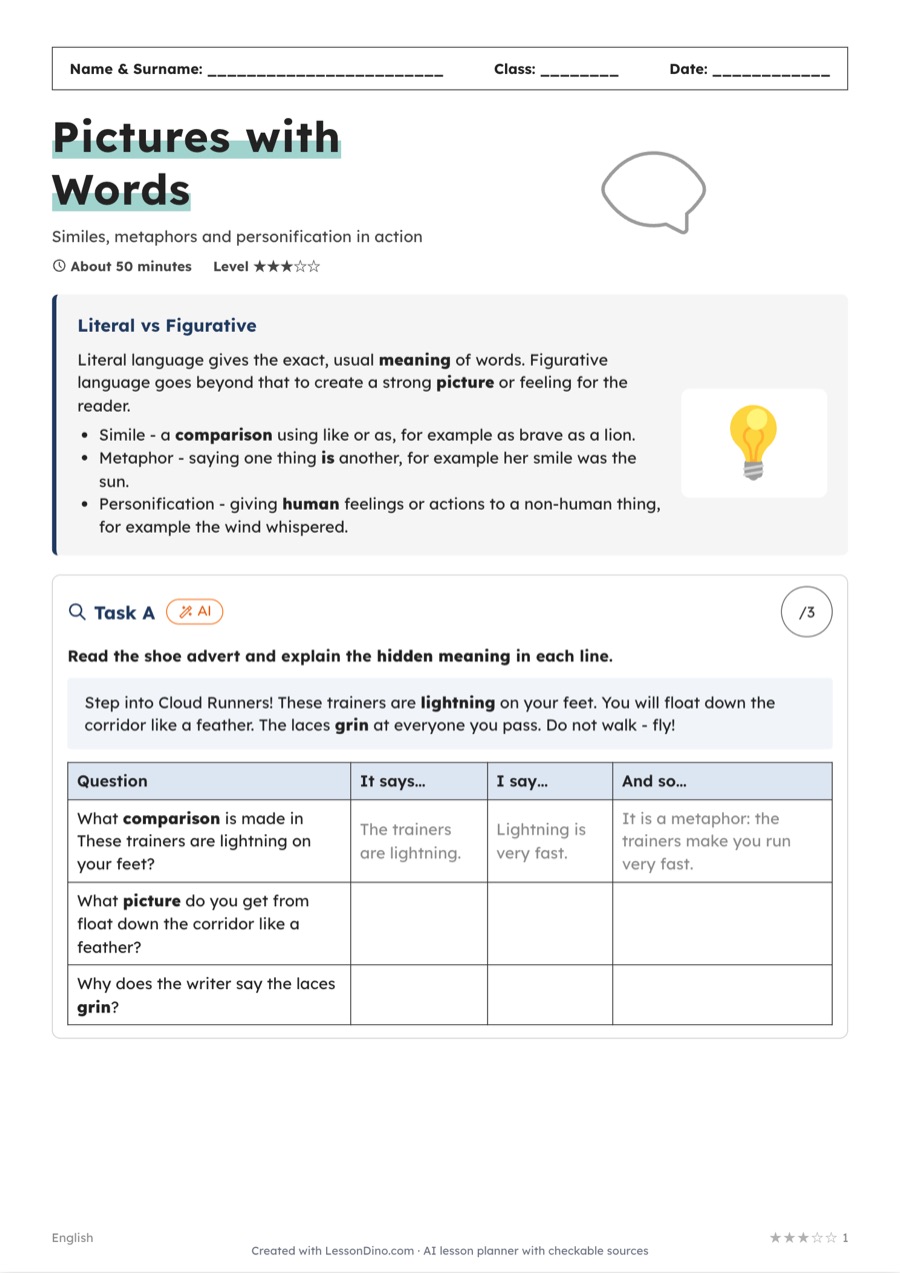
Literal vs Figurative
- Literal language gives the exact, usual meaning of words. Figurative language goes beyond that to create a strong picture or feeling for the reader.
- Simile - a comparison using like or as, for example as brave as a lion.
- Metaphor - saying one thing is another, for example her smile was the sun.
- Personification - giving human feelings or actions to a non-human thing, for example the wind whispered.
Read the shoe advert and explain the hidden meaning in each line.
- Step into Cloud Runners! These trainers are lightning on your feet. You will float down the corridor like a feather. The laces grin at everyone you pass. Do not walk - fly!
- What comparison is made in These trainers are lightning on your feet?
- What picture do you get from float down the corridor like a feather?
- Why does the writer say the laces grin?
Pairs That Stick
Cut, flip and match each technique to its meaning and example.
| Word | Meaning |
|---|---|
| simile | comparison using like or as |
| metaphor | saying something is something else |
| personification | giving human qualities to a thing |
| literal | meaning exactly what it says |
| figurative | language that paints a picture |
| image | picture created in the reader's mind |
Cut out the cards and find each matching pair of term and meaning.
Think and Summarise
Organise your notes to show how word choice shapes meaning.
Use the cues to make brief notes while you discuss examples, then summarise.
Find the Match
Match each example sentence to the technique it shows.
Match each sentence to its correct label by writing the number in the circle.
Label and Complete
Label the techniques in pictures, then finish the writer's paragraph.
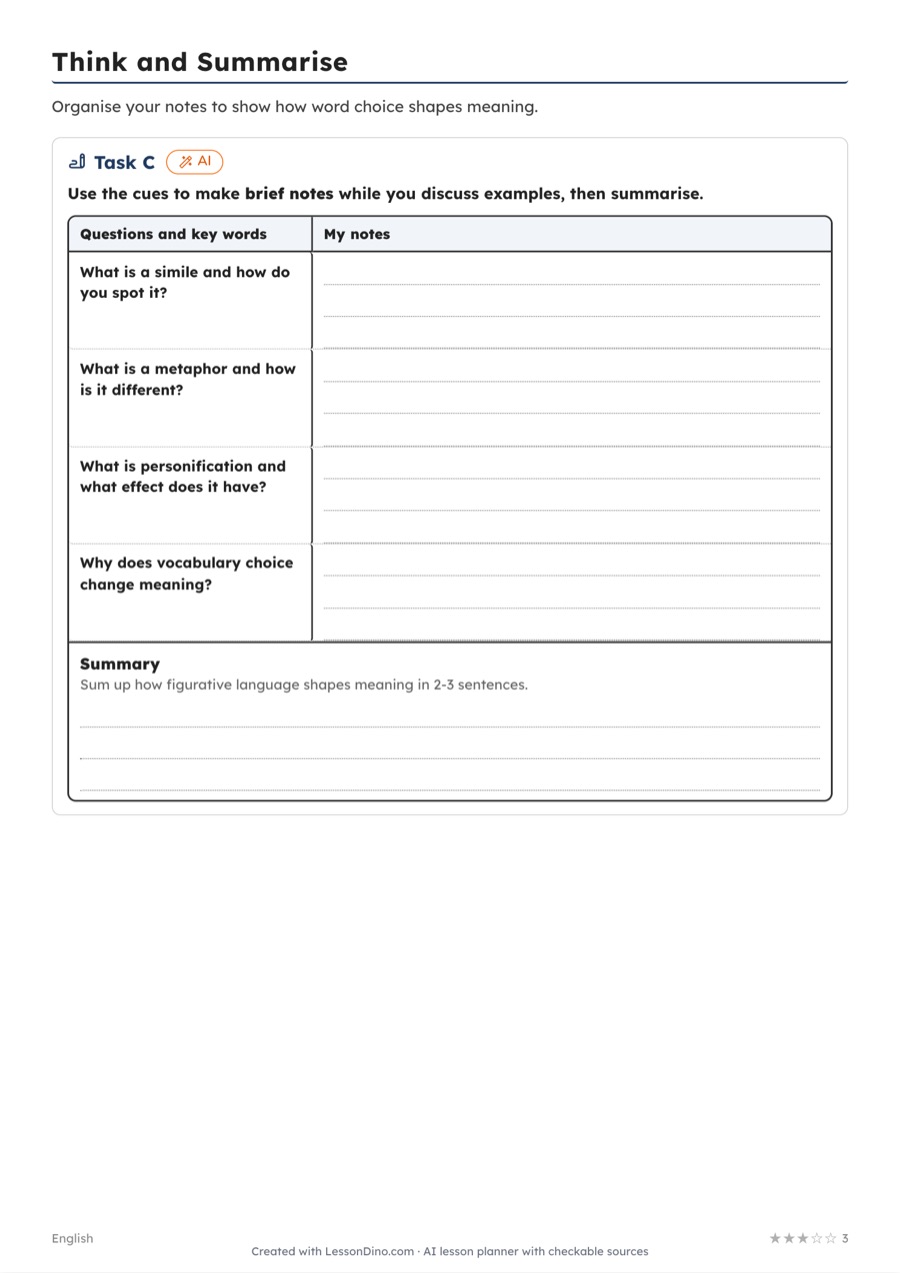
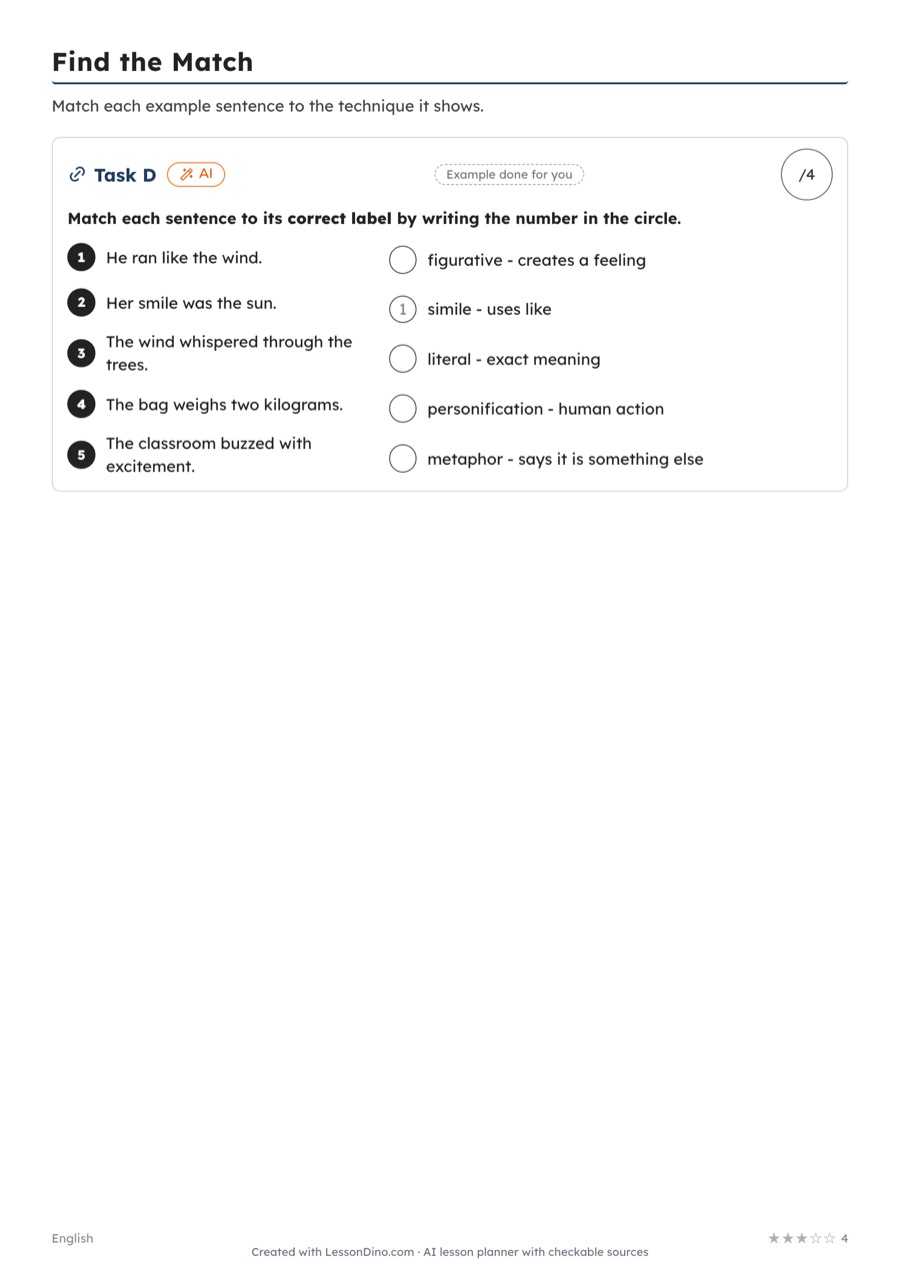
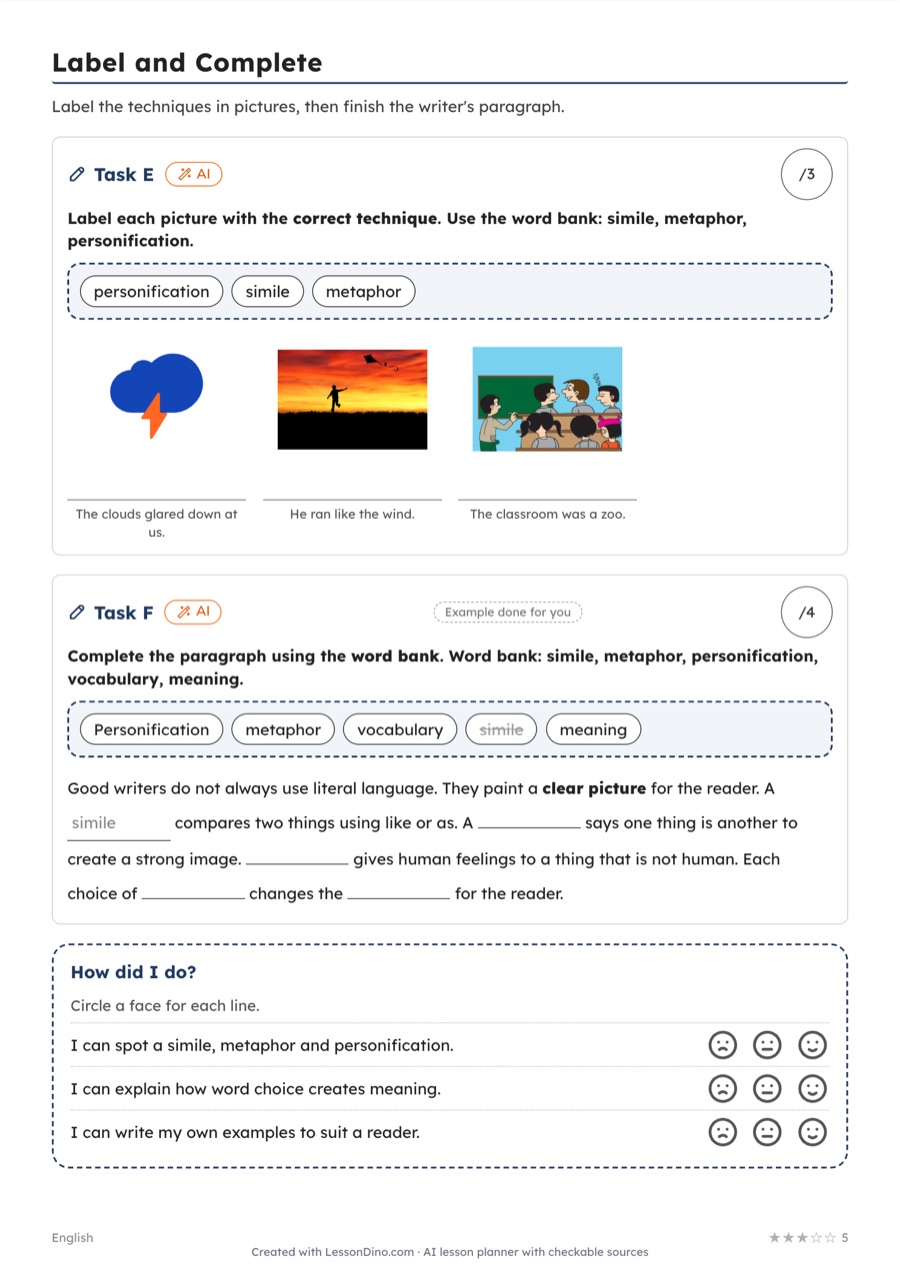
Label each picture with the correct technique. Use the word bank: simile, metaphor, personification.
Complete the paragraph using the word bank. Word bank: simile, metaphor, personification, vocabulary, meaning.
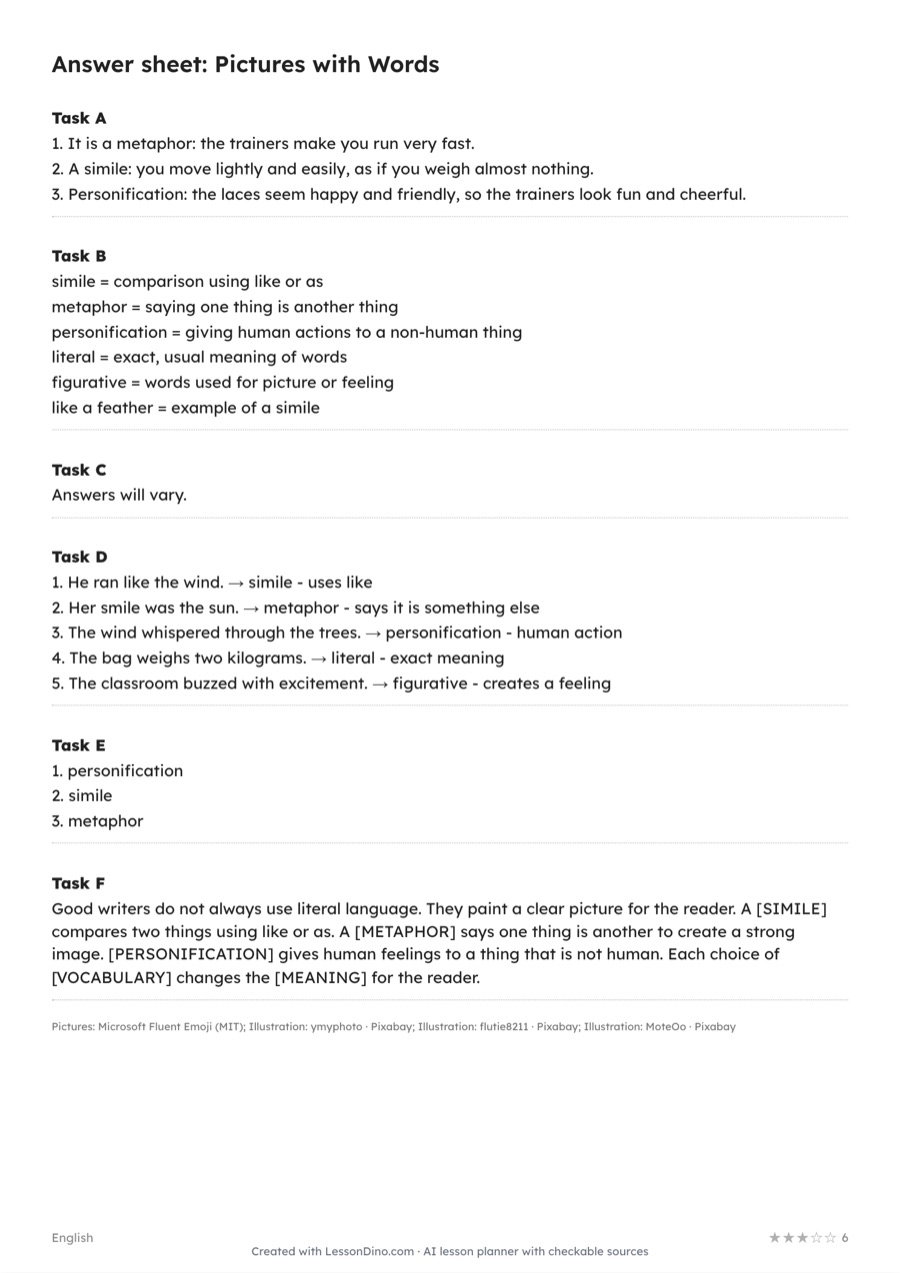
- Good writers do not always use literal language. They paint a clear picture for the reader. A [[simile]] compares two things using like or as. A [[metaphor]] says one thing is another to create a strong image. [[Personification]] gives human feelings to a thing that is not human. Each choice of [[vocabulary]] changes the [[meaning]] for the reader.
Answers
Show the answers
The answers are on the answer sheet, the last picture above.
Curriculum
knowing how language, including figurative language, vocabulary choice, grammar, text structure and organisational features, presents meaning
Made with Lesson Dino's AI on 19 October 2026. AI can make mistakes, so check the answers and facts against the sources before you teach.