Slides
Lesson plan
Poem Detectives: Conventions and Mood
Students learn to spot poetic conventions and explain their effects. They analyse The Empty House and link imagery to mood.
Objectives
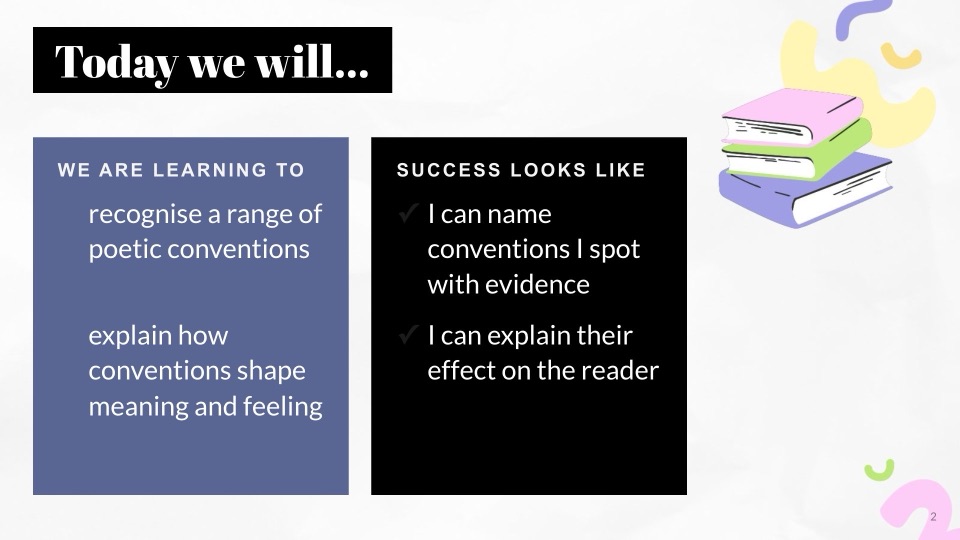
- Students will recognise similes, metaphors, personification, stanzas and sound devices.
- Students will explain how word choice and imagery shape mood using poem evidence.
Success criteria
- I can name conventions I spot with evidence from the poem.
- I can explain their effect on feeling using because sentences.
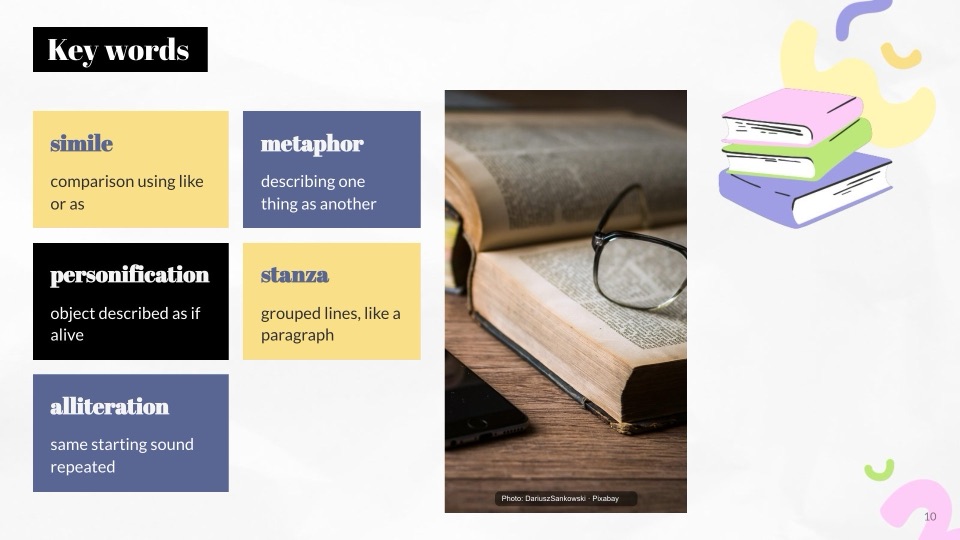
Key words
| Word | Meaning |
|---|---|
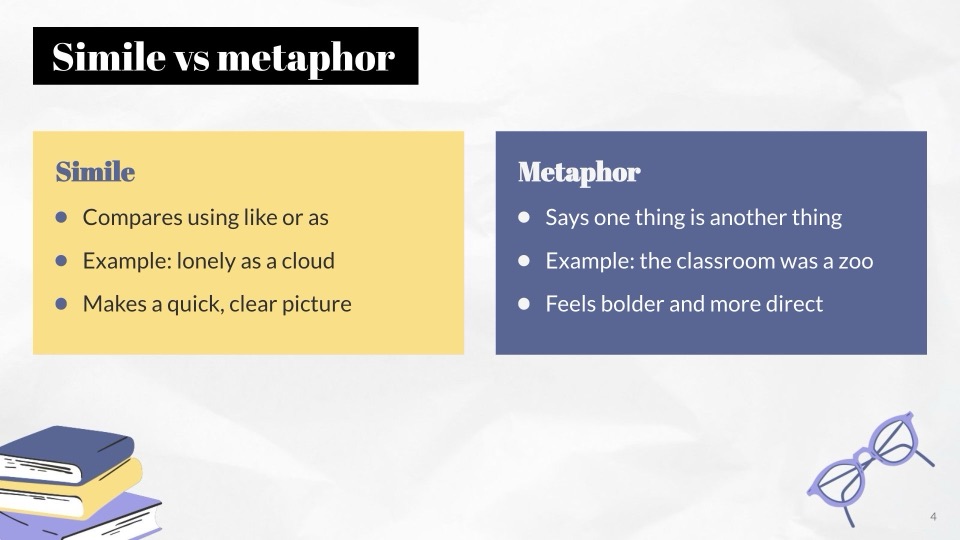
| simile | a comparison that uses the words like or as |
| metaphor | describing one thing as if it is another thing |
| personification | describing a thing as if it were alive |
| stanza | a set of lines grouped together in a poem |
| mood | the overall feeling a poem gives, such as gloomy or joyful |
Timed plan (60 minutes)
| Time | Stage | What happens |
|---|---|---|
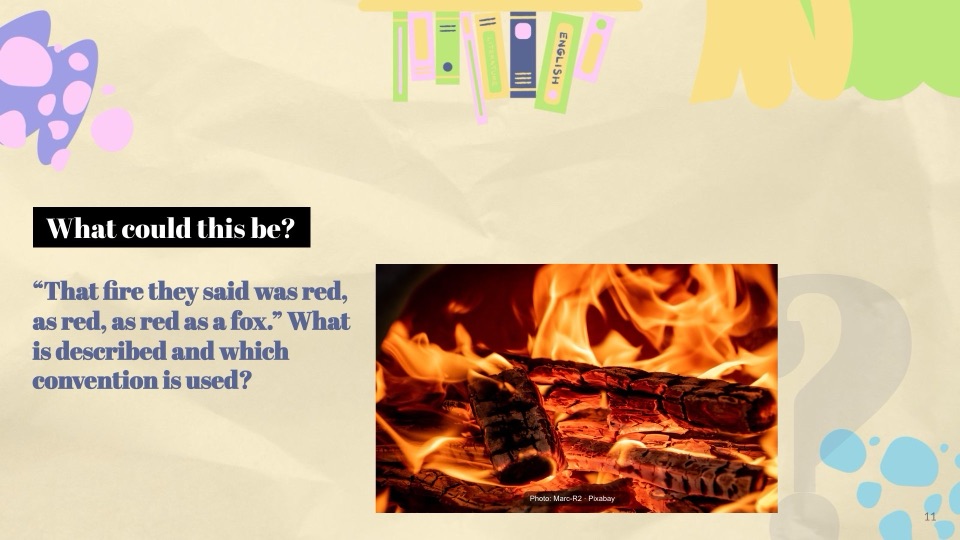
| 5 min | Starter | To hook interest and surface first ideas about imagery and mood. Display Slide 11 with the line about fire red as a fox. Say the hook and ask pairs to point on an imaginary thermometer from joyful to gloomy. Take three quick votes and ask what picture the comparison puts in their mind. Link answers to today's detective job: spot conventions and crack feeling. |
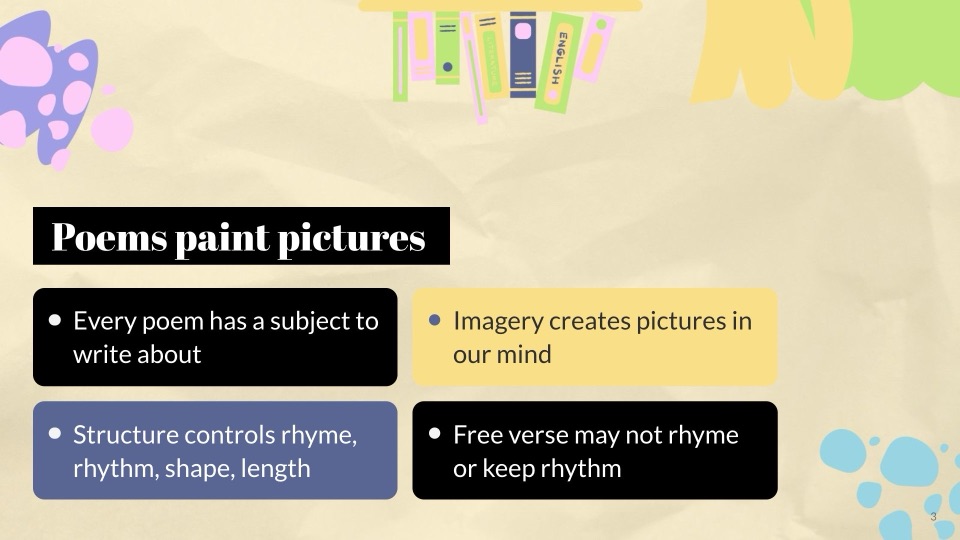
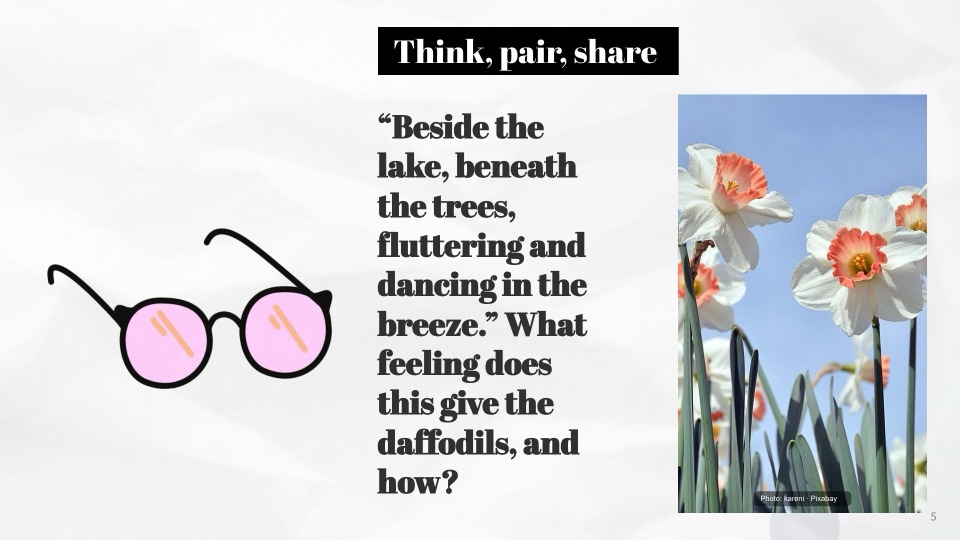
| 12 min | Teaching | To teach a range of conventions and model how they shape meaning and feeling. Use Slides 3-5 to recap simile, metaphor and personification with quick actions for each. Display Slide 10 key words and read each meaning together. Model analysis of Stanza 1 of The Empty House on the board using the because sentence. Think aloud about stanza and sound choices and how they link to mood. |
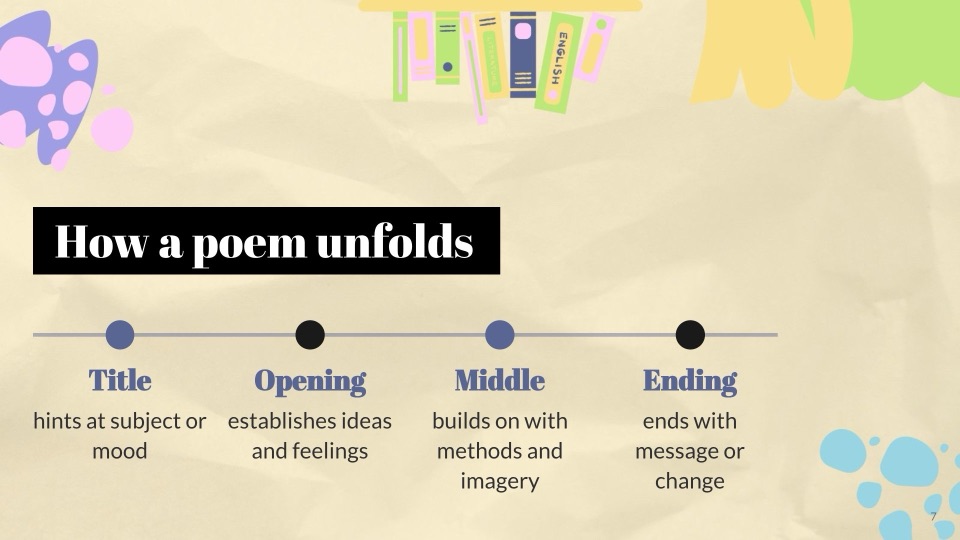
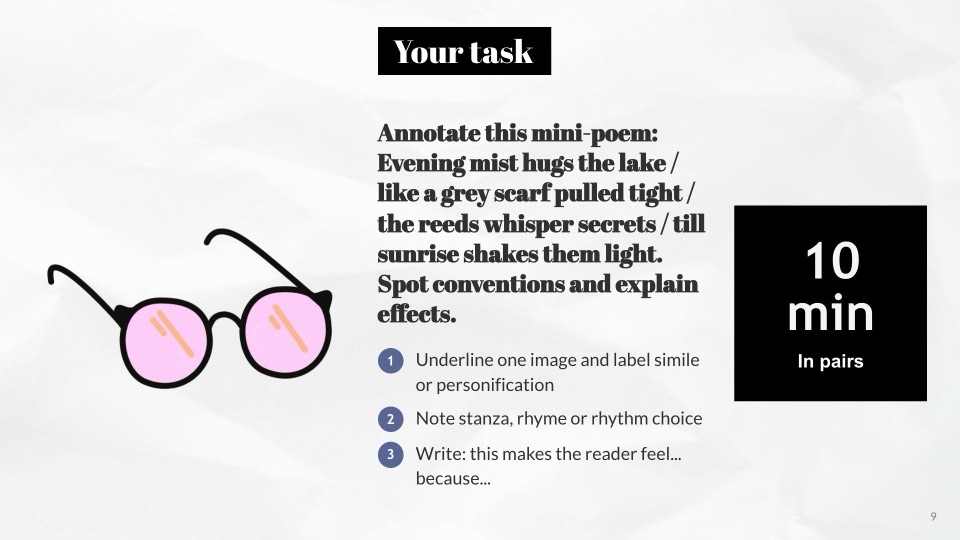
| 28 min | Main activity | Students will link word choice and imagery to mood. Give each pair Stanzas 1-3 of The Empty House, mood word cards and coloured pencils. Show Slide 7 timeline and Slide 9 task: underline one image, label the convention, note stanza choice, write feels... because... Model placing Stanza 1 on the joyful to gloomy thermometer and underlining positive or negative language. Time the work in three 8-minute bursts and circulate to prompt evidence and structure talk. |
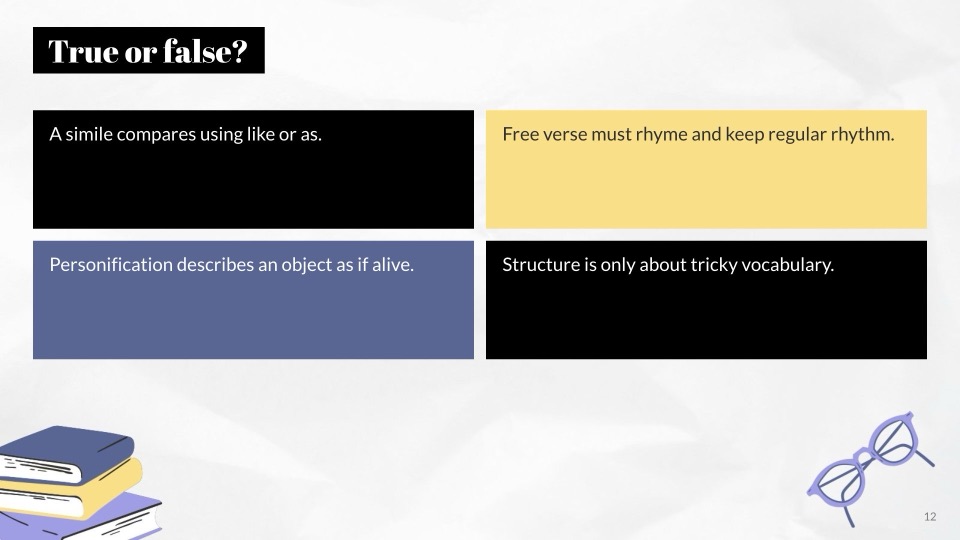
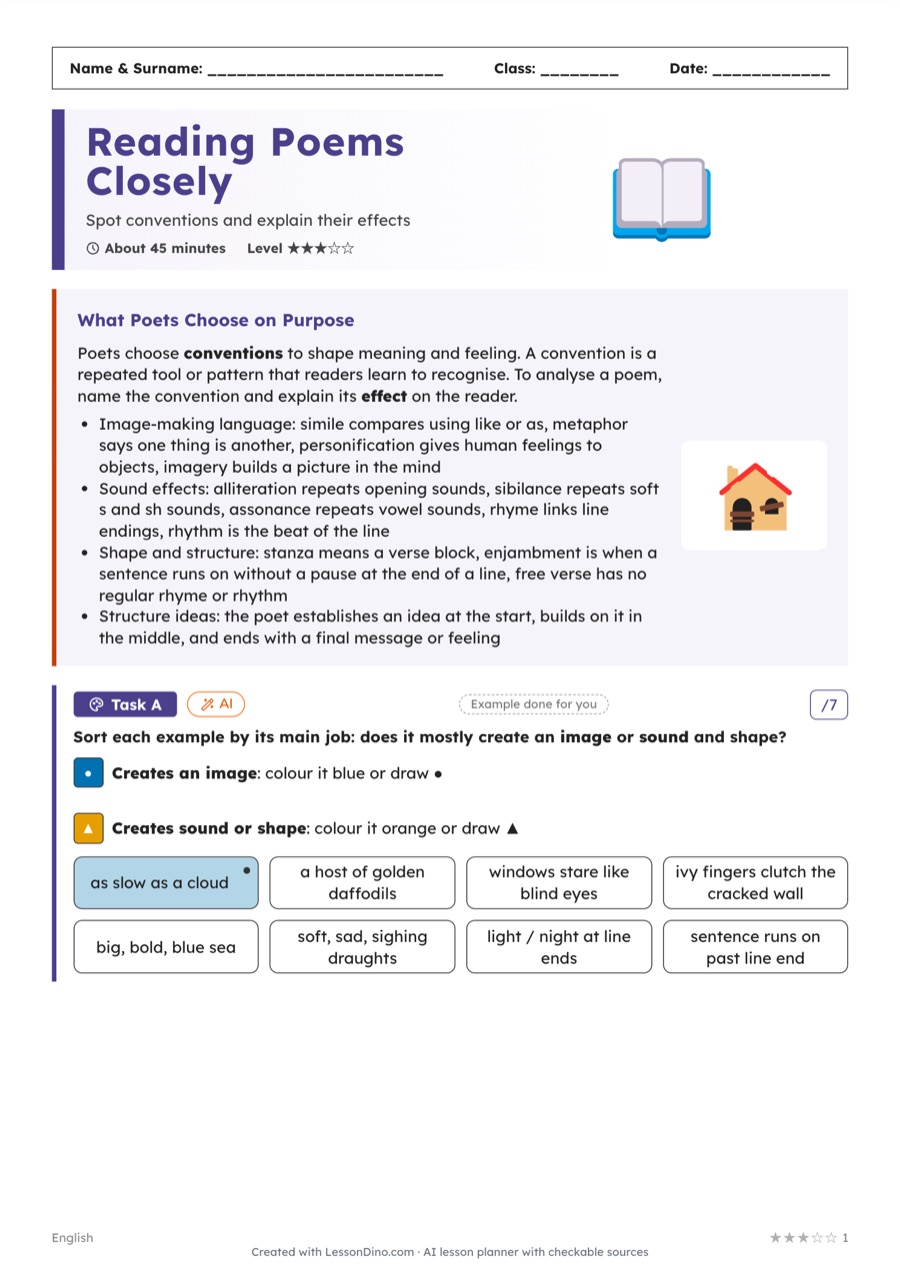
| 15 min | Plenary | To check secure naming of conventions and explanation of effect. Return to Slide 2 objectives and ask pairs to rate themselves against the two I can statements. Run Slide 12 true or false, correcting the idea that free verse must rhyme. Ask pairs to complete Worksheet Task F summary by filling blanks with correct terms. Take final answers and link back to analysing a poem. |
Common mistakes
- Calling any comparison a simile, even without like or as
How to spot it: Labels metaphor as simile despite no signal word
Check for like or as first; if one thing is called another, name it metaphor. - Thinking free verse must rhyme
How to spot it: Says a poem cannot be free verse because it does not rhyme
Remind that free verse does not rhyme or have regular rhythm; rhyme is a choice. - Naming the device without explaining effect on mood
How to spot it: Underlines simile but writes no feeling or because reason
Insist on feels... because... linked to positive or negative language and images.
Support
- Pre-highlight like, as and human actions in Stanza 1 so signals are visual
- Provide sentence starters: This is... It compares... It makes the reader feel... because...
Stretch
- Rewrite one simile as a metaphor and argue which image feels stronger
- Suggest where to add a stanza break in Stanza 3 and justify the change in emphasis
Check questions
- Name one simile from The Empty House and what it compares.
Answer: Its tall windows stare like blind eyes; windows compared to blind eyes. - Give one example of personification and its effect.
Answer: The gate creak a thin hello; makes the house seem lonely but alive. - Free verse must rhyme. True or false, and why?
Answer: False; free verse does not have to rhyme or keep regular rhythm.
Curriculum
recognising a range of poetic conventions and understanding how these have been used
Video clips
Clips on YouTube, from the start and end times we chose. Check each one before you show it.
-
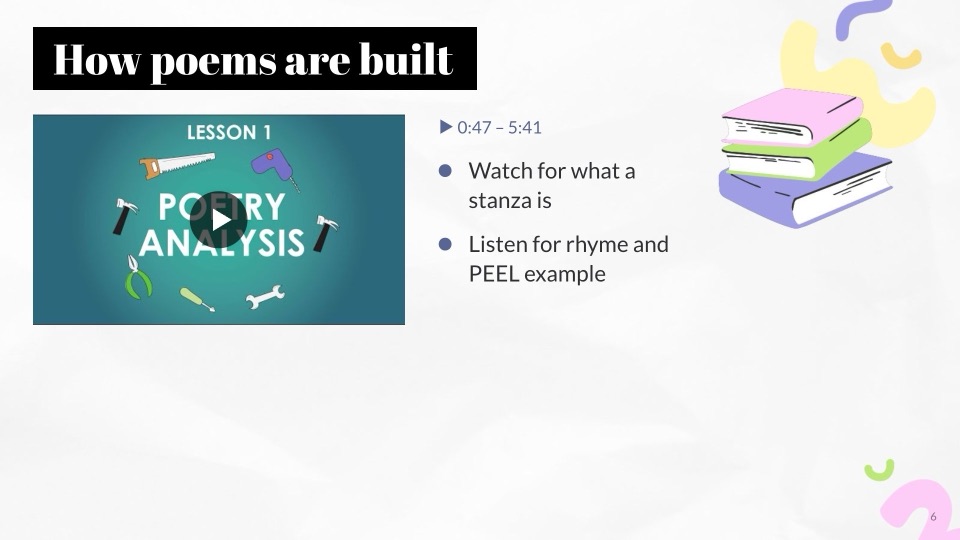
Form and stanzas from 0:47 to 5:41
Schooling Online: Poetry Analysis in Grades 7-8 - Schooling Online - Lesson 1
Made explicitly for Grades 7-8 and explains form, stanzas and rhyme with clear PEEL examples at the right pace and vocabulary for 11-12 year olds learning conventions.
-
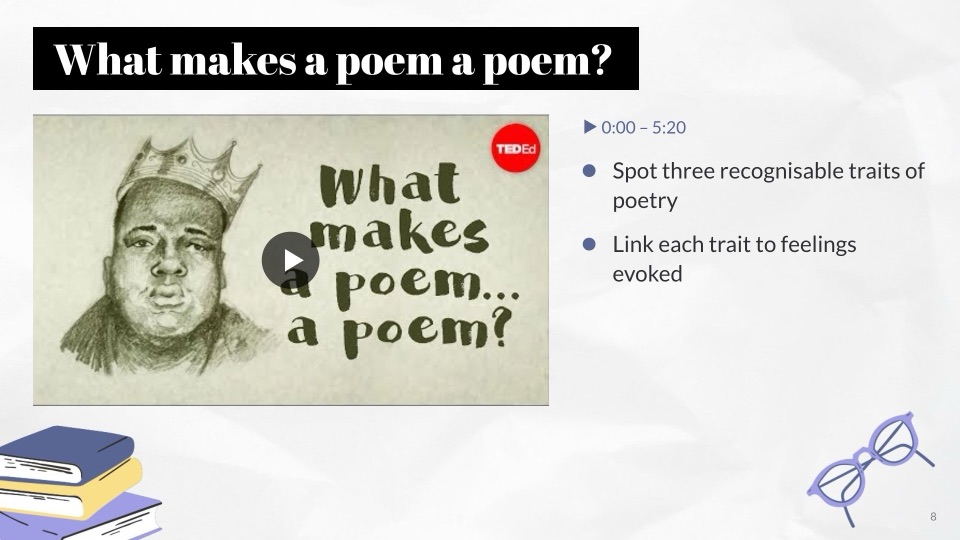
What makes a poem a poem from 0:00 to 5:20
TED-Ed: What makes a poem … a poem? - Melissa Kovacs
TED-Ed animation introduces three recognisable traits of poetry in simple language and a lively visual style that is perfect for Year 7.
Worksheet
Sources
- Year 7 English Curriculum Overview smrt.bristol.sch.uk
- National curriculum in England: English programmes of study assets.publishing.service.gov.uk
- Analysing a poem in detail in the Eduqas anthology thenational.academy
- Analysing poems - English - Learning with BBC Bitesize bbc.co.uk
- Analysing poems - Comparing unseen poems - WJEC - GCSE English ... - BBC bbc.co.uk
Picture credits
- Illustration: Kidaha · Pixabay
- Photo: kareni · Pixabay
- Photo: DariuszSankowski · Pixabay
- Photo: Marc-R2 · Pixabay
- Microsoft Fluent Emoji (MIT)
Made with Lesson Dino's AI on 19 October 2026. AI can make mistakes, so check facts against the sources before you teach.