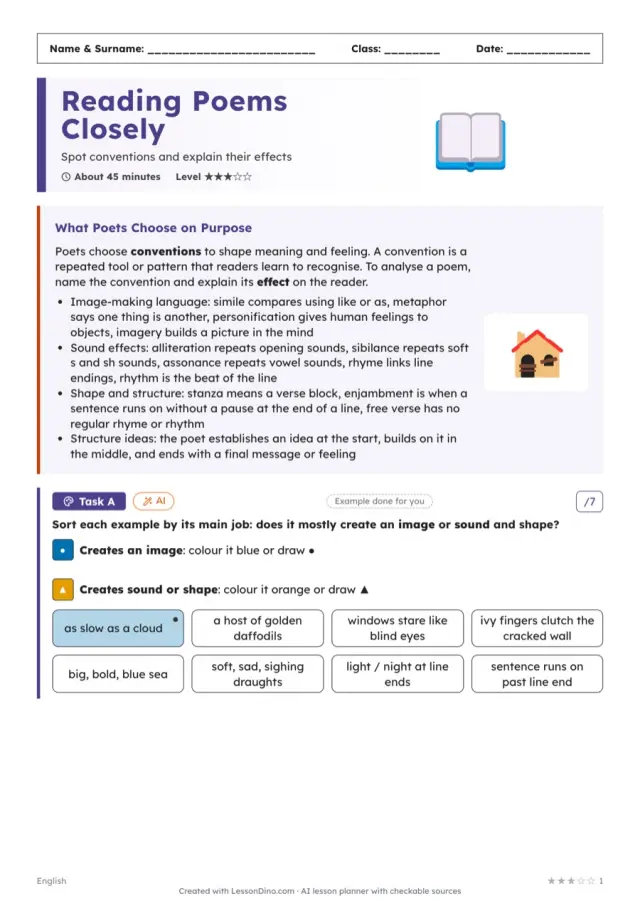
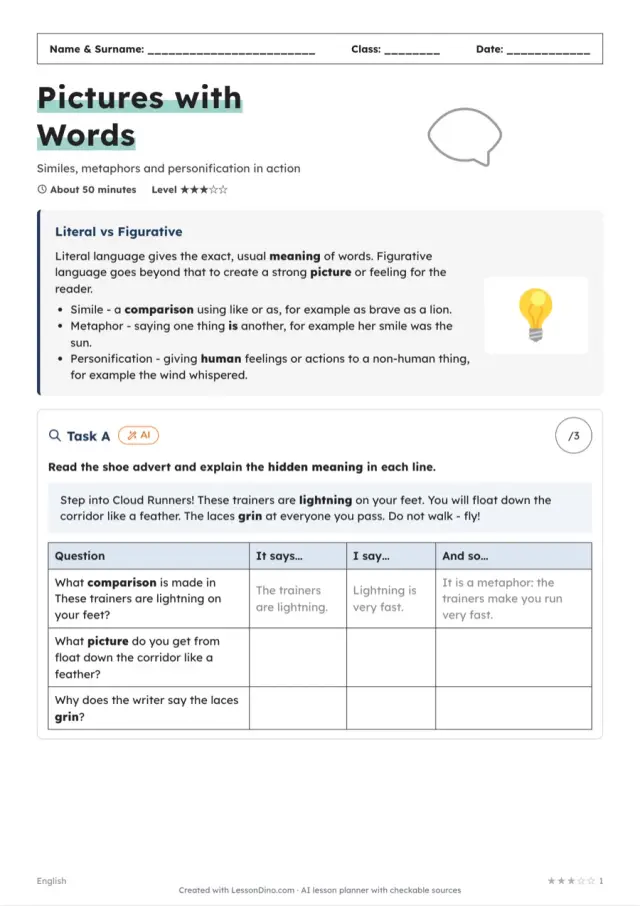
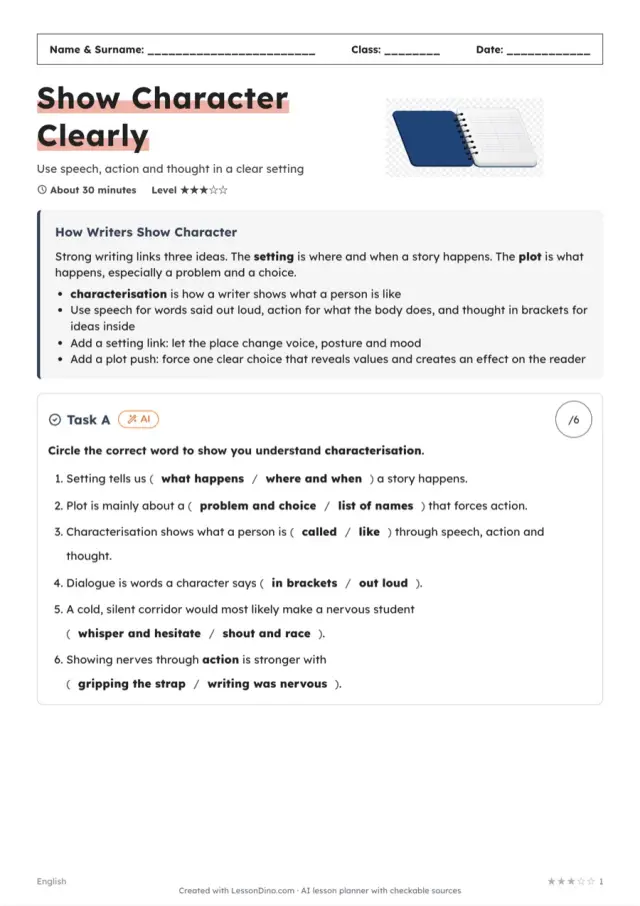
The worksheet
About this worksheet
Students learn to plan a formal speech for purpose and audience. They build a six-box debate plan and peer-check it. This Year 7 English worksheet gives students (ages 11–12) six pages of practice on writing a persuasive speech, part of the writing unit. It goes with our free Writing a persuasive speech lesson, which has the slides and a timed lesson plan.
What it covers
By the end, students should be able to:
- Students will adapt speech ideas and tone for different purpose and audience.
- Students will select strong evidence and clearly organise points for formal speeches.
- Students will plan clear formal opening, rebuttal and closing for debate.
How to use it
- Teaching (12 minutes): Hand out Worksheet Task D and model circling the more formal word in the first pair.
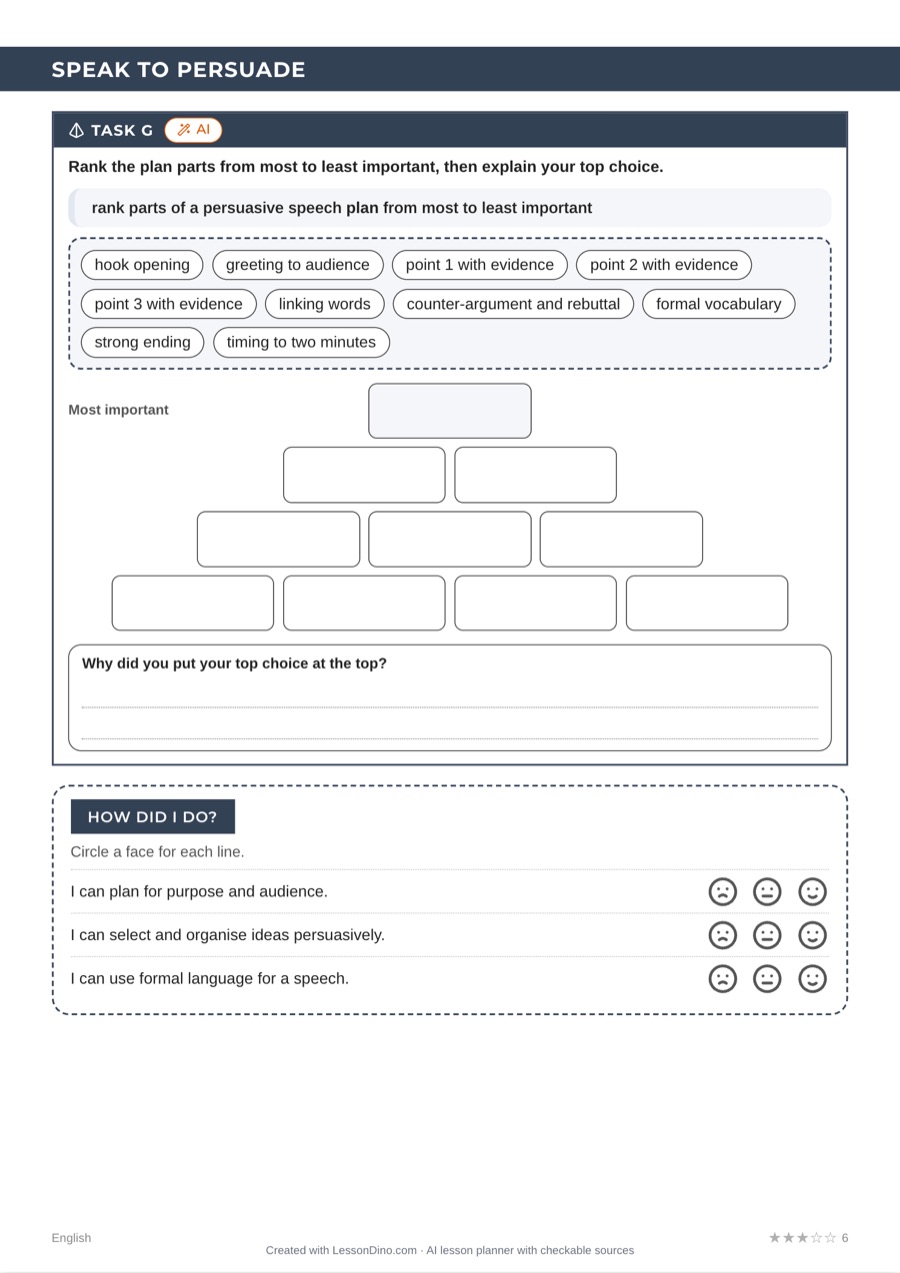
- Plenary (10 minutes): Hand out Worksheet Task G Ranking pyramid and ask students to rank plan parts.
- Support: Half-filled six-box plan and formal word bank on desks.
- Stretch: Label each box with repetition, rhetorical question or emotive language.
- The answer sheet is the last page, so you can print it on its own or let students check their own work.
Key vocabulary
- audience: the people who will listen to your speech
- purpose: the reason you speak and the change you want
- evidence: facts or examples that show a point is true
- organise: to put ideas in a clear order that is easy to follow
- rebuttal: an answer that shows why the opposite view is wrong
- formal: polite and serious, right for assembly or debate
Mistakes to watch for
- Using chatty slang in a formal assembly plan. Swap for I strongly believe, furthermore, I urge you and rehearse aloud.
- Listing funny but weak or off-topic evidence. Keep only three relevant facts that would persuade adults and bin the rest.
- Missing rebuttal or trailing closing with no action. Add counter plus rebuttal frame and finish: In conclusion... I urge you to...
What's on the worksheet
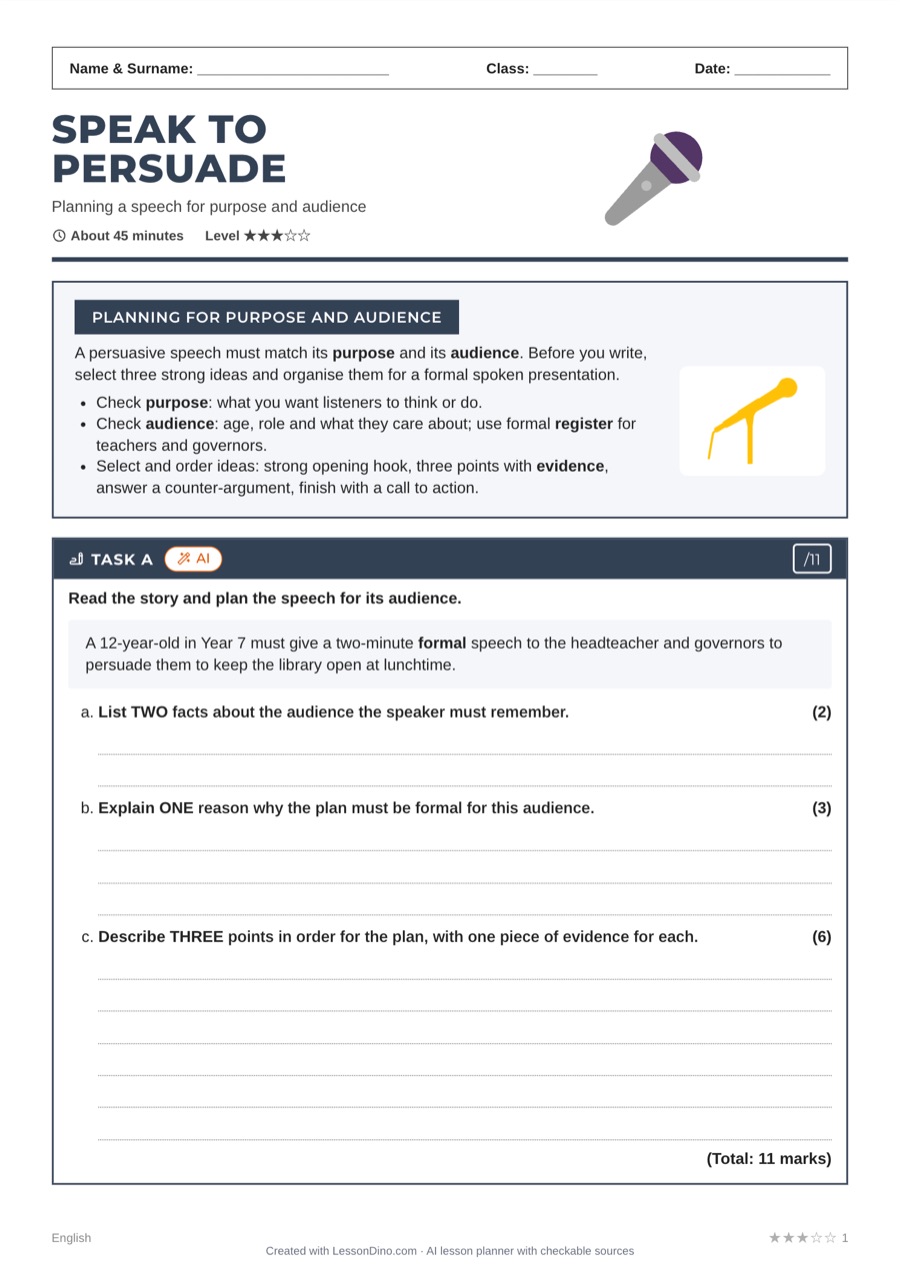
Plan Your Speech
Learn how to plan a formal speech that persuades.
Planning for Purpose and Audience
- A persuasive speech must match its purpose and its audience. Before you write, select three strong ideas and organise them for a formal spoken presentation.
- Check purpose: what you want listeners to think or do.
- Check audience: age, role and what they care about; use formal register for teachers and governors.
- Select and order ideas: strong opening hook, three points with evidence, answer a counter-argument, finish with a call to action.
Read the story and plan the speech for its audience.
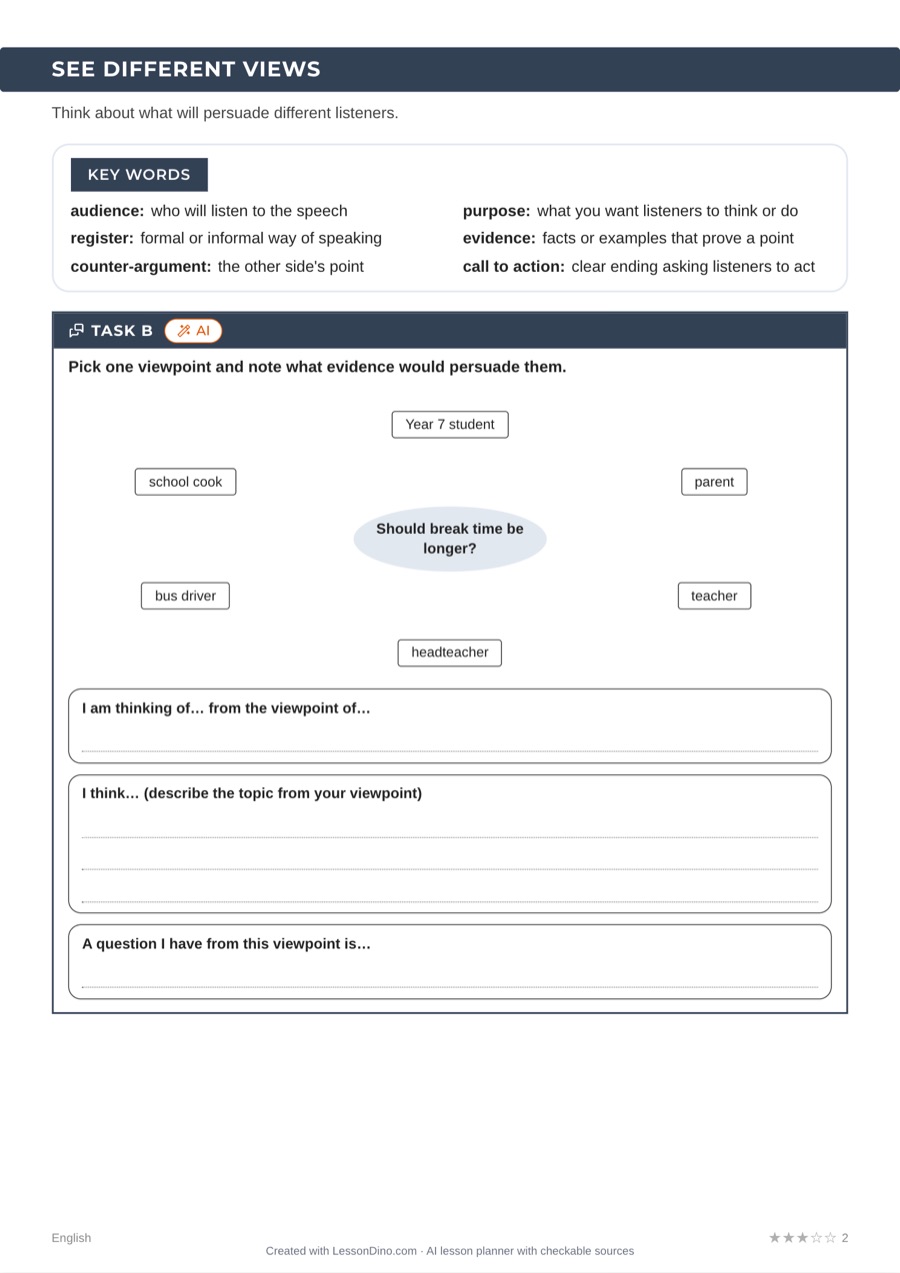
See Different Views
Think about what will persuade different listeners.
| Word | Meaning |
|---|---|
| audience | who will listen to the speech |
| purpose | what you want listeners to think or do |
| register | formal or informal way of speaking |
| evidence | facts or examples that prove a point |
| counter-argument | the other side's point |
| call to action | clear ending asking listeners to act |
Pick one viewpoint and note what evidence would persuade them.
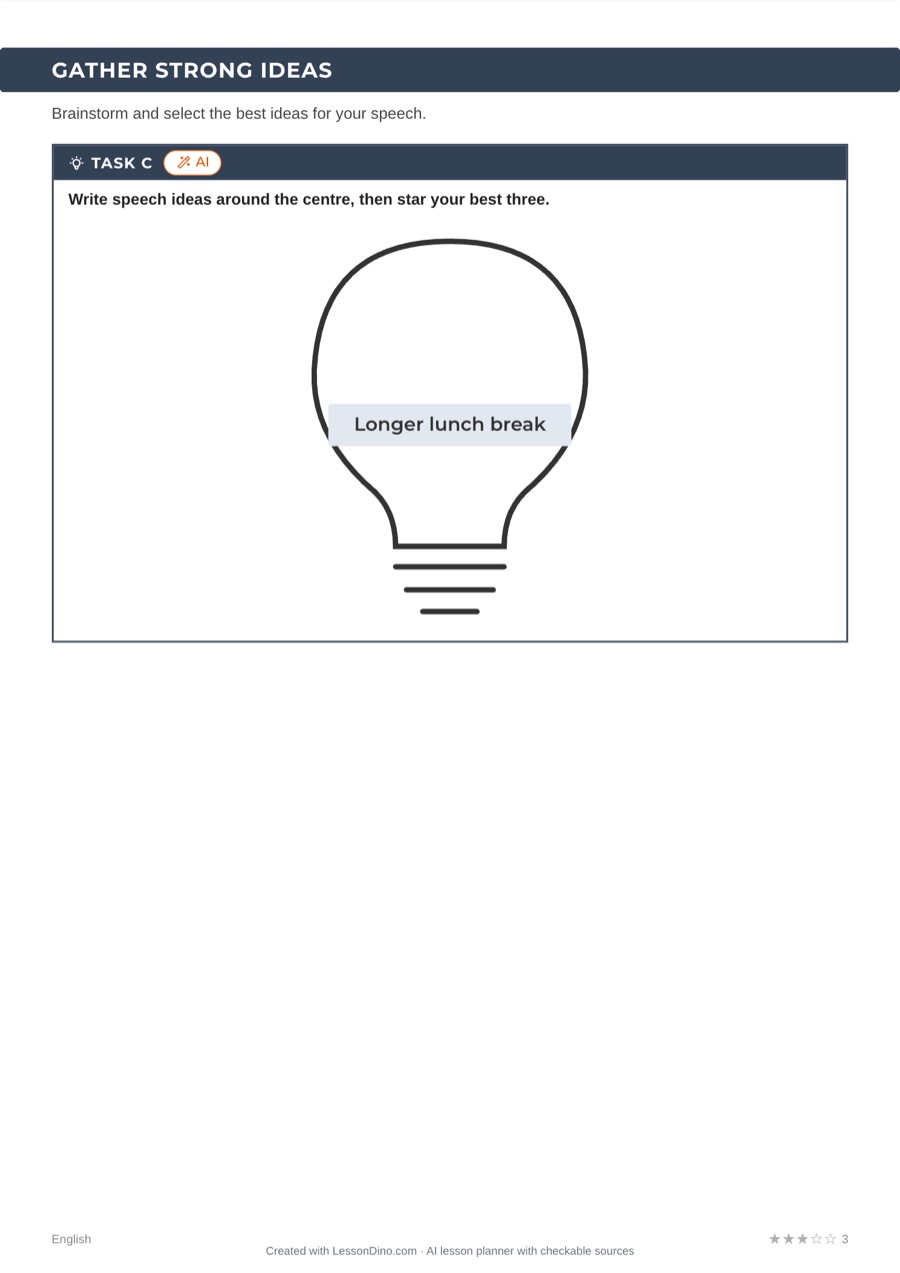
Gather Strong Ideas
Brainstorm and select the best ideas for your speech.
Write speech ideas around the centre, then star your best three.
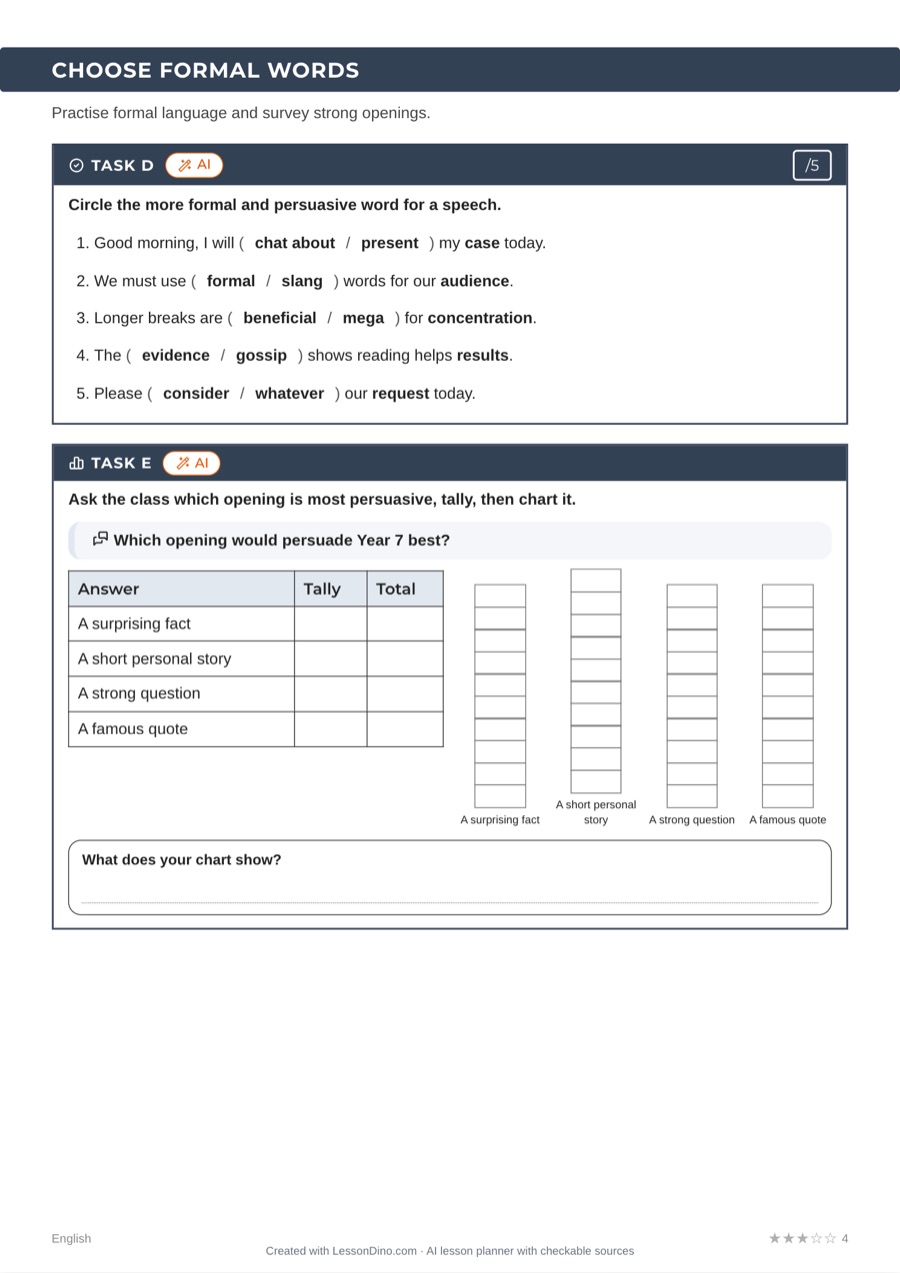
Choose Formal Words
Practise formal language and survey strong openings.
Circle the more formal and persuasive word for a speech.
Ask the class which opening is most persuasive, tally, then chart it.
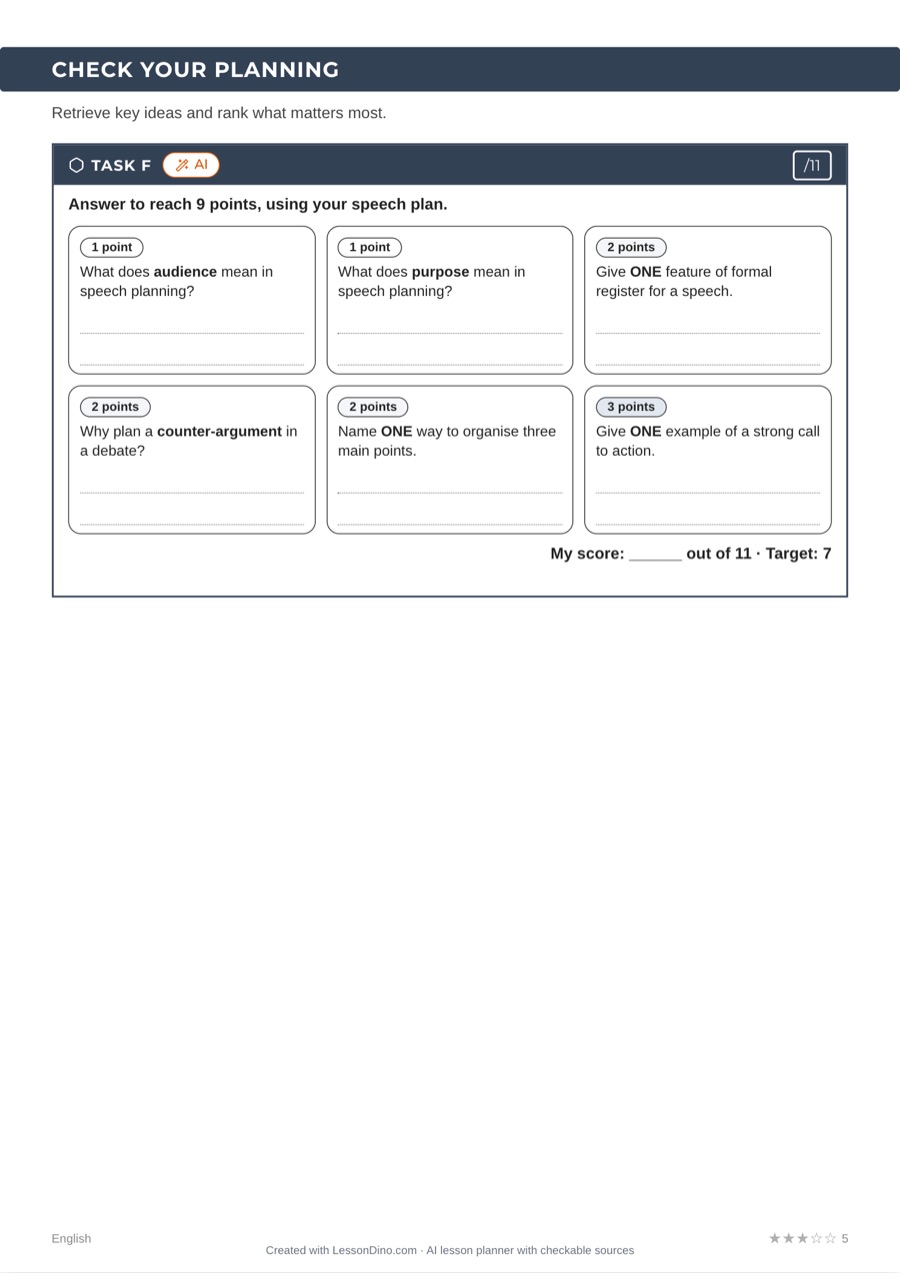
Check Your Planning
Retrieve key ideas and rank what matters most.
Answer to reach 9 points, using your speech plan.
- What does audience mean in speech planning?
- What does purpose mean in speech planning?
- Give ONE feature of formal register for a speech.
- Why plan a counter-argument in a debate?
- Name ONE way to organise three main points.
- Give ONE example of a strong call to action.
Page 6
Rank the plan parts from most to least important, then explain your top choice.
Answers
Show the answers
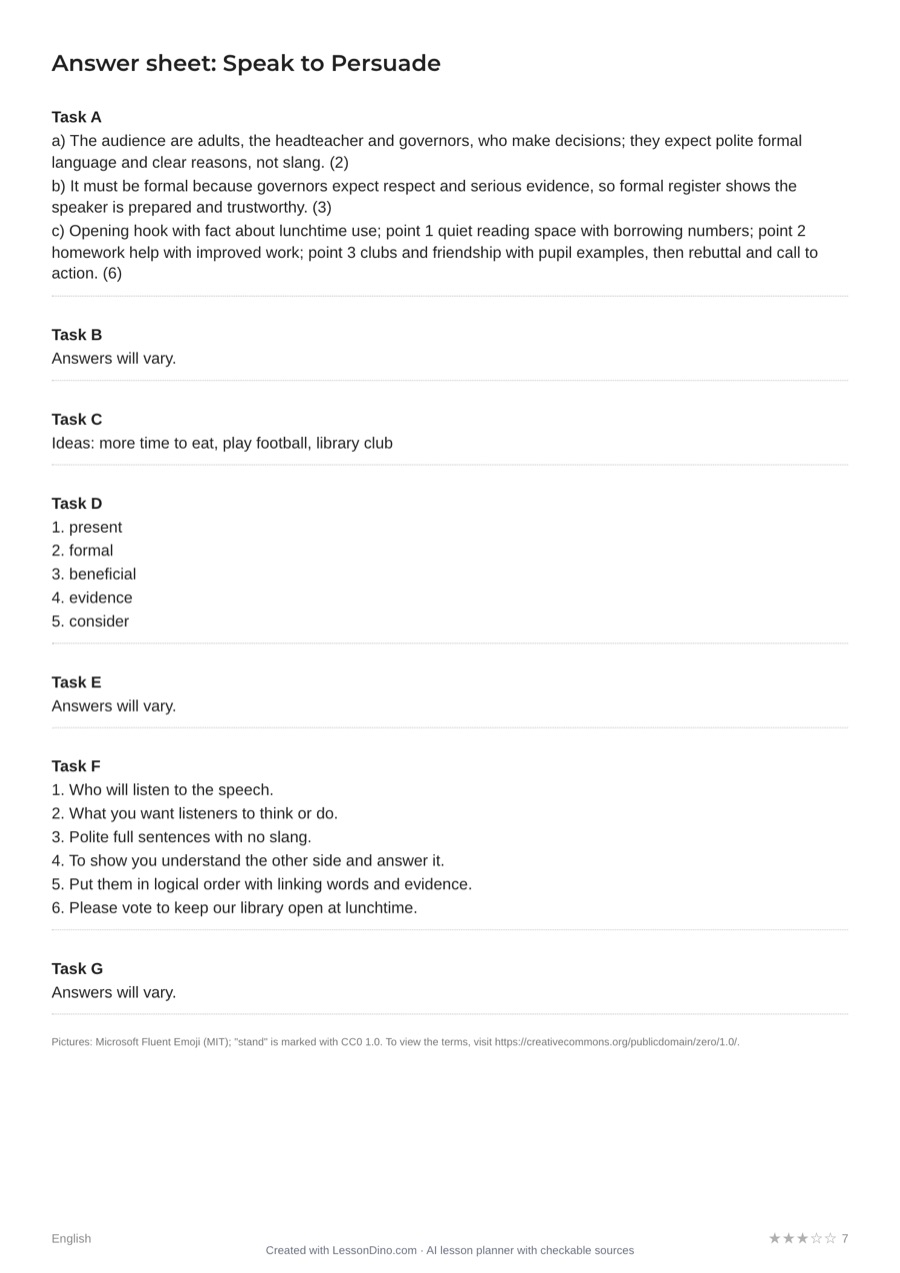
- List TWO facts about the audience the speaker must remember. The audience are adults, the headteacher and governors, who make decisions; they expect polite formal language and clear reasons, not slang.
- Explain ONE reason why the plan must be formal for this audience. It must be formal because governors expect respect and serious evidence, so formal register shows the speaker is prepared and trustworthy.
- Describe THREE points in order for the plan, with one piece of evidence for each. Opening hook with fact about lunchtime use; point 1 quiet reading space with borrowing numbers; point 2 homework help with improved work; point 3 clubs and friendship with pupil examples, then rebuttal and call to action.
- What does audience mean in speech planning? Who will listen to the speech.
- What does purpose mean in speech planning? What you want listeners to think or do.
- Give ONE feature of formal register for a speech. Polite full sentences with no slang.
- Why plan a counter-argument in a debate? To show you understand the other side and answer it.
- Name ONE way to organise three main points. Put them in logical order with linking words and evidence.
- Give ONE example of a strong call to action. Please vote to keep our library open at lunchtime.
The answer sheet is the last picture above.
Curriculum
planning for different purposes and audiences, including selecting and organising information and ideas effectively and persuasively for formal spoken presentations and debates
Made with Lesson Dino's AI on 19 October 2026. AI can make mistakes, so check the answers and facts against the sources before you teach.