Slides
Lesson plan
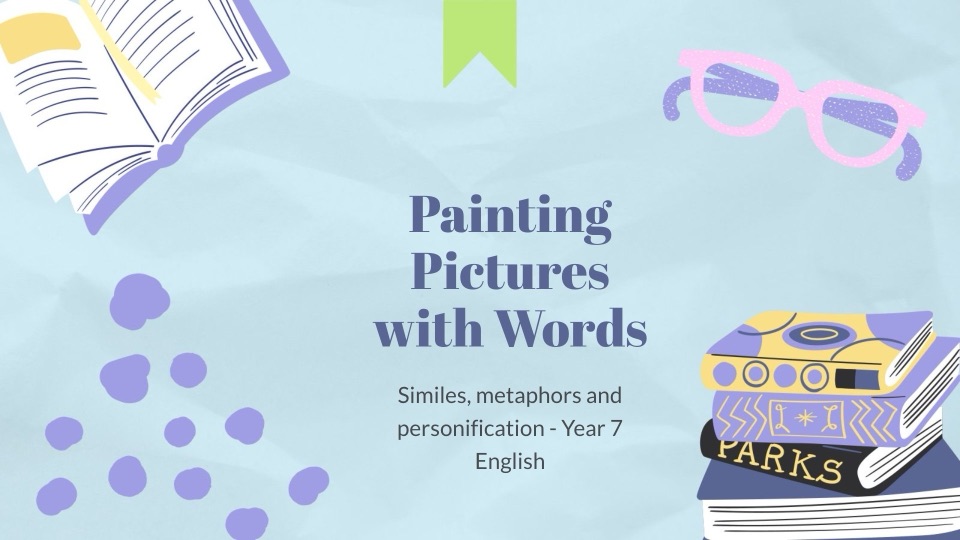
Painting Feelings with Similes and More
Students learn how similes, metaphors and personification present feeling. They spot the devices and explain the mood they create.
Objectives
- Students will identify simile, metaphor and personification in short extracts.
- Students will explain how figurative language presents meaning and feeling.
- Students will choose vocabulary to create a clear feeling for the reader.
Success criteria
- I can name the device used in a line.
- I can explain the picture and feeling it gives.
- I can improve a line to make the feeling stronger.
Key words
| Word | Meaning |
|---|---|
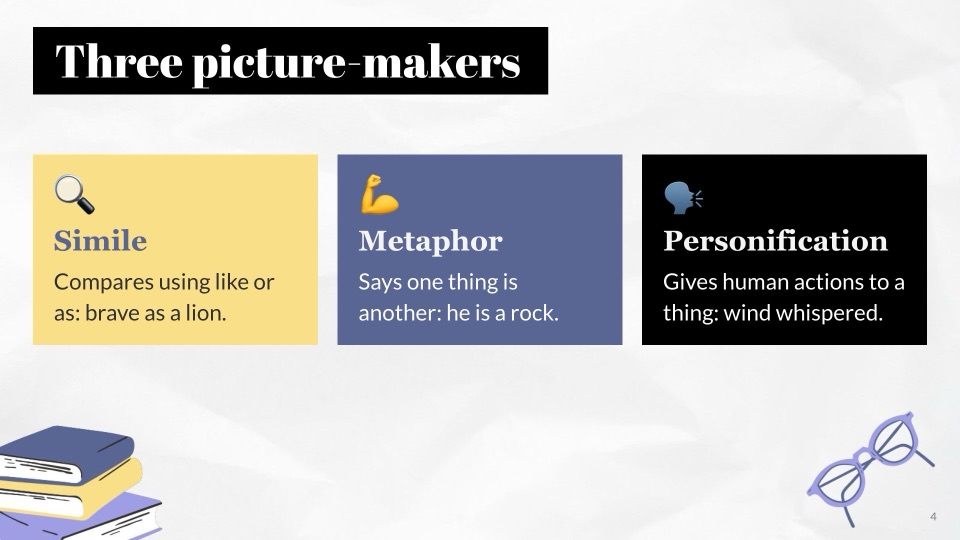
| simile | a comparison that uses like or as to show likeness, as in A is like B |
| metaphor | saying one thing is another thing to give strong feeling, as in A is B |
| personification | giving human actions or feelings to a thing that is not human |
| figurative language | words used past their plain meanings to make pictures and stir feelings |
| literal language | using words with their plain, exact, agreed meanings |
| vocabulary choice | the words a writer picks to shape what readers picture and feel |
Timed plan (60 minutes)
| Time | Stage | What happens |
|---|---|---|
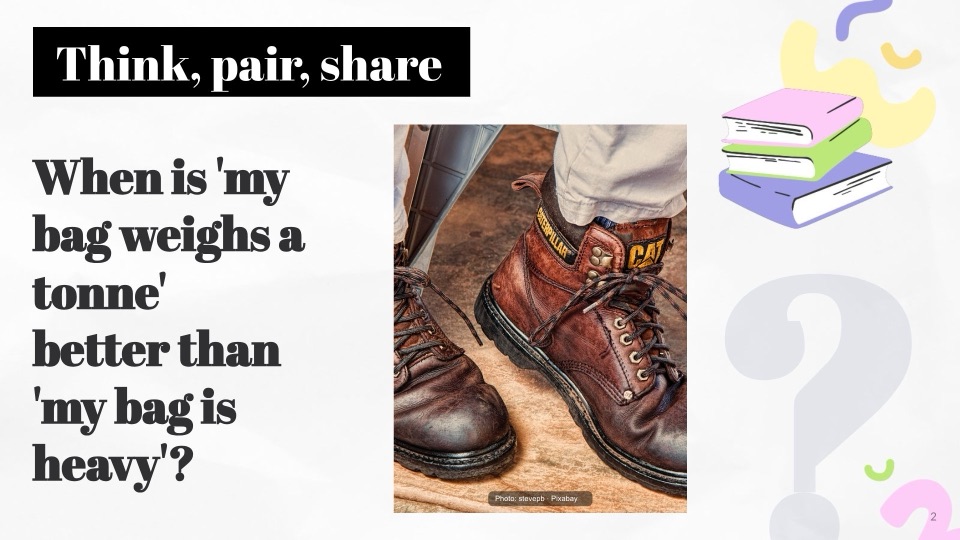
| 8 min | Starter | Recall literal and figurative difference and hook interest in feeling. Show Slide 2: When is 'my bag weighs a tonne' better than 'my bag is heavy'? Say the hook: Same grey morning. Three writers. One says the wind was loud. One says the wind argued with the windows. Which morning would you rather read about, and why? Talk through the two bag sentences with the class, explaining literal uses plain meanings and figurative stretches past them. Run think, pair, share for 2 minutes on what extra picture or feeling the tonne version adds. |
| 10 min | Teaching | Teach simile, metaphor and personification and their clue words. Show Slide 3 and read the fact that simile, metaphor and personification are three of eight types. Explain that writers stretch words past plain meanings to stir feelings and pictures. Show Slide 4 cards and teach the tests: simile shows likeness as A is like B, metaphor asserts identity as A is B. Teach personification as attaching a human aspect to a nonhuman thing, using Slide 4 examples. |
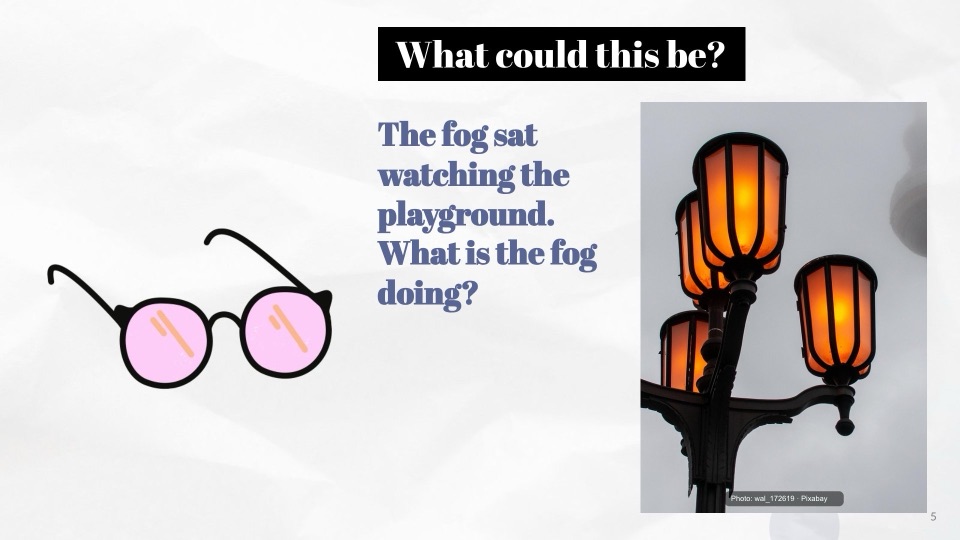
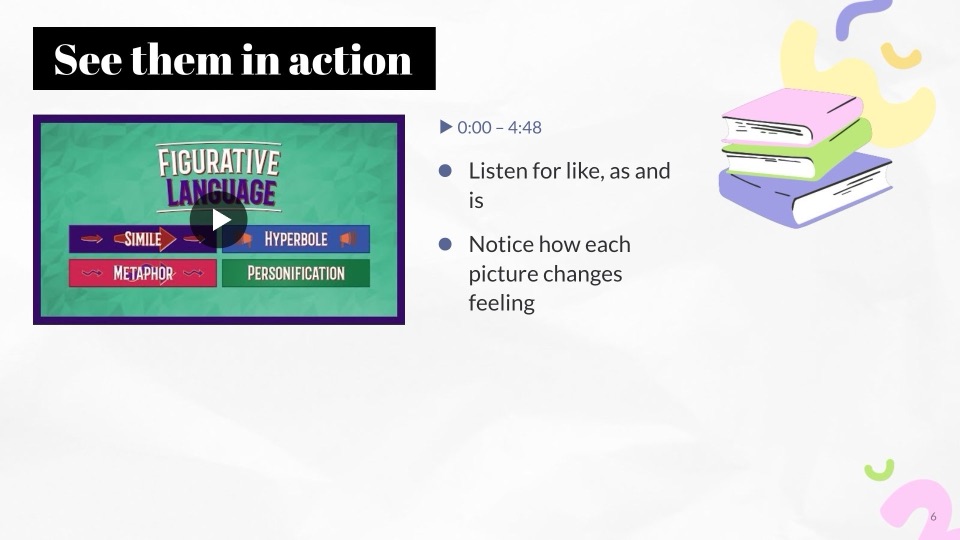
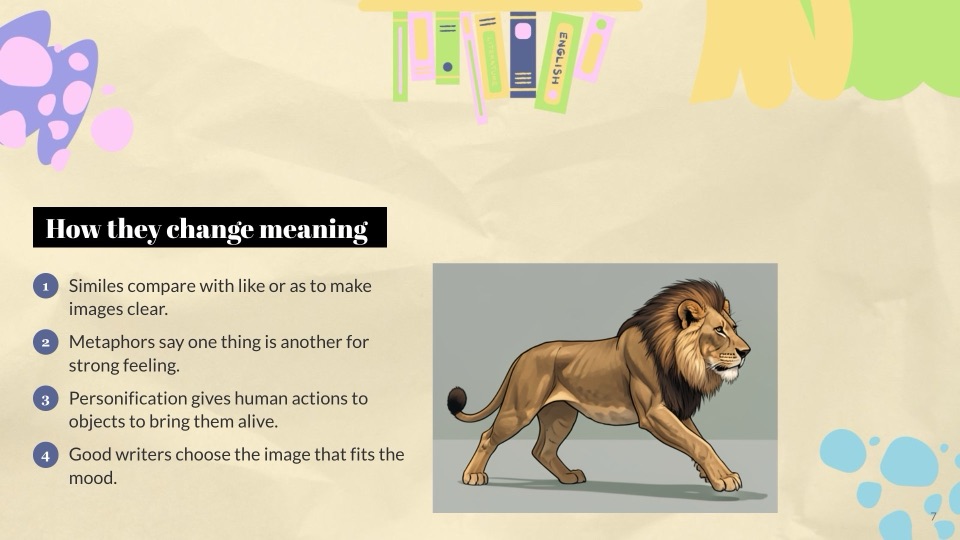
| 12 min | Guided practice | Practise spotting devices together and linking them to feeling. Show Slide 5 mystery: The fog sat watching the playground. Ask what the fog is doing. Play Video clip 1 (0:00-4:48) on Slide 6, asking pupils to listen for like, as and is. Pause twice to label one line together and name the feeling it creates. Show Slide 7 bullets to sum up how each device changes meaning. |
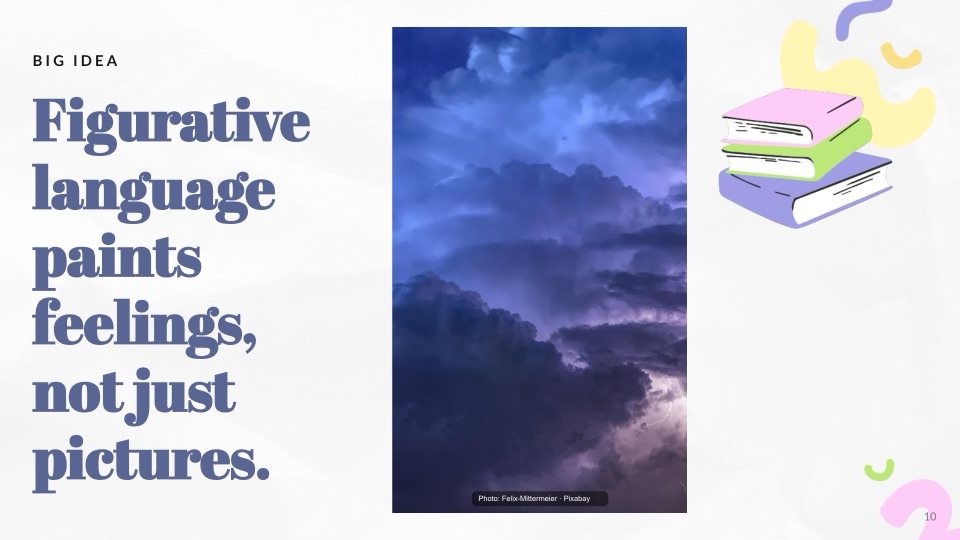
| 20 min | Main activity | Explain how figurative language presents meaning and feeling in groups. Show Slide 10: Figurative language paints feelings, not just pictures. Give each group three strips and highlighters. Read the three extracts aloud: 1. The wind argued with the windows all break time. It rattled the glass and refused to go quiet. 2. The empty corridor at lunch was like a desert. Our steps sounded loud and lonely. 3. My homework bag was a brick on my shoulder. It dragged me down the stairs. Model Extract 1: highlight argued and refused, label personification, think aloud about angry, restless mood. Set groups to highlight, label simile, metaphor or personification, and agree one sentence on what each makes the reader picture or feel. |
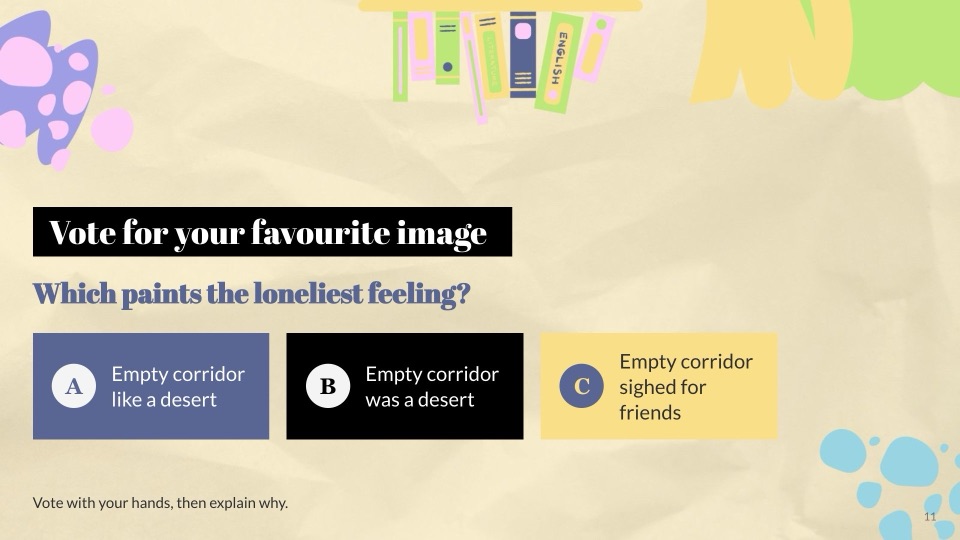
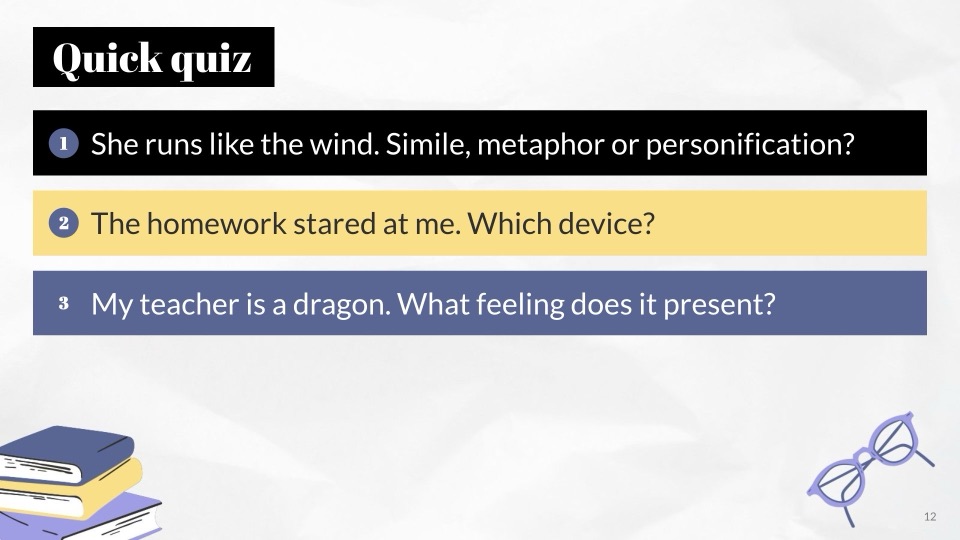
| 10 min | Plenary | Check who can identify devices and explain the feeling they paint. Show Slide 11 vote: Which paints the loneliest feeling? Empty corridor like a desert, Empty corridor was a desert, Empty corridor sighed for friends. Take a vote, then ask two pupils to justify using vocabulary choice and feeling. Show Slide 12 quiz to label She runs like the wind and The homework stared at me. Link back to success lines and set homework. |
Common mistakes
- Mixing simile and metaphor, calling every comparison a simile
How to spot it: Pupil labels He is a rock as simile despite no like or as
Use the test: likeness as A is like B needs like or as, identity as A is B uses is or was. - Thinking personification is just any description of a thing
How to spot it: Pupil labels The cold corridor as personification
Check for human action: it must attach a human aspect to a nonhuman thing, like sighed, argued, stared. - Taking figurative lines literally
How to spot it: Pupil says bag really weighs a tonne or homework really stares
Ask: could it really be true? Figurative deviates from plain meanings to create effect.
Support
- Give a choice of three mood words per extract to pick from, with sentence starters for the explanation
- Keep clue words like, as, is and human verbs highlighted on the board
- Offer a writing frame with the everyday subject filled in so pupils only add the image
Stretch
- Ask students to suggest a different image for the same line that would change the mood from cheerful to gloomy, keeping the same type
- Ask students to turn a simile into a metaphor and explain how the meaning gets stronger
- Ask students to reorder lines for best effect and explain how order changes mood
Check questions
- The classroom buzzed like a beehive. Simile, metaphor or personification?
Answer: Simile, uses like to compare. - The test was a monster waiting at my desk. Which device and what feeling?
Answer: Metaphor, A is B, paints fear, test feels scary and big. - The radiator groaned and refused to warm up. Which device and what does it present?
Answer: Personification, human actions groaned and refused, presents grumpy, tired mood.
Curriculum
knowing how language, including figurative language, vocabulary choice, grammar, text structure and organisational features, presents meaning
Video clips
Clips on YouTube, from the start and end times we chose. Check each one before you show it.
-
Simile, metaphor, personification and hyperbole from 0:00 to 4:48
Mineola Creative Content: Metaphor, Simile, Personification, Hyperbole | Figurative Language Lesson
Covers all three devices clearly and shows how they improve writing, with pace and vocabulary that suit 11-12-year-olds.
-
Simile, metaphor and personification explained from 0:00 to 2:49
Miguel Hernandez: Simile, Metaphor, and Personification EXPLAINED
Short, lively explanation with song examples that will engage Year 7 pupils aged 11-12.
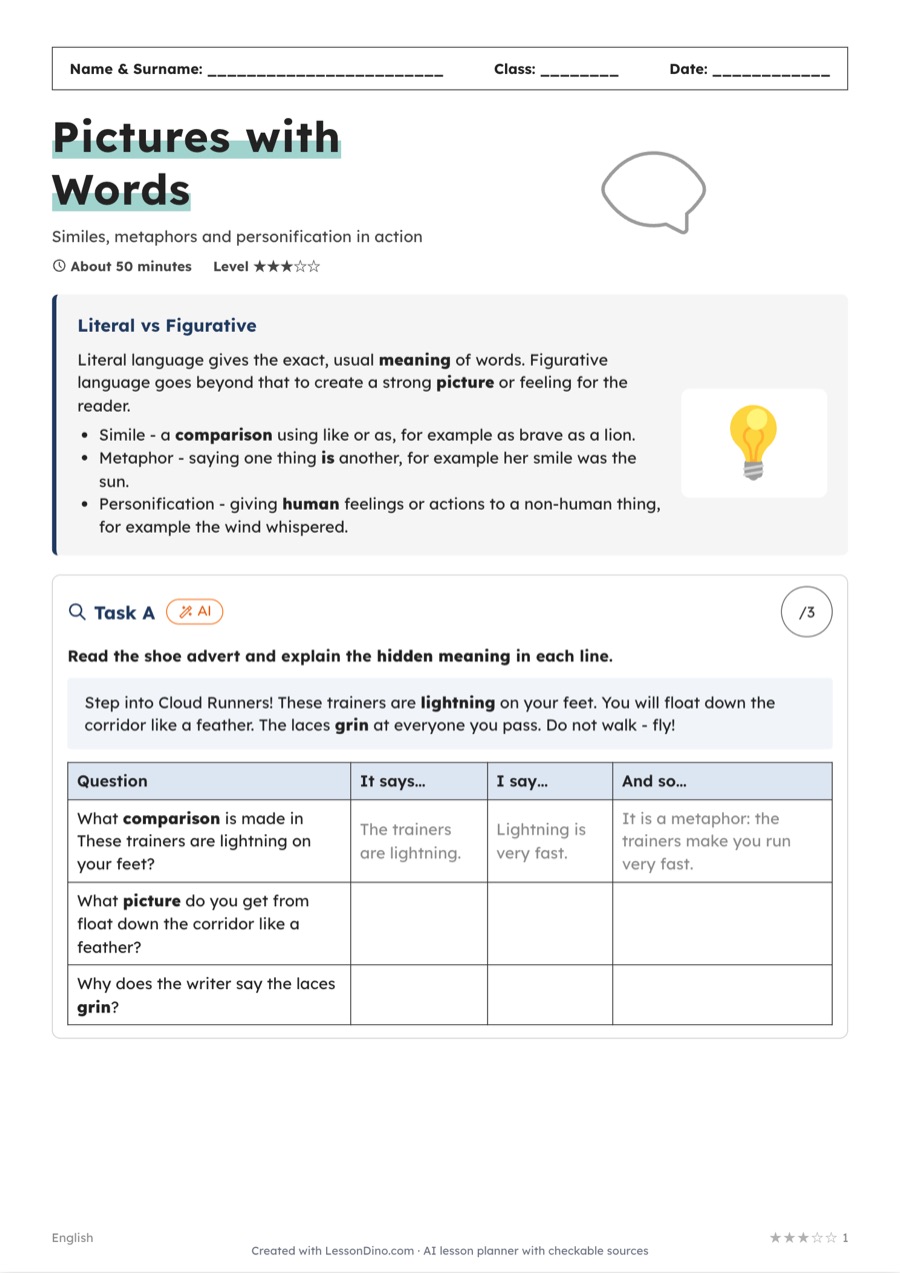
Worksheet
Sources
- Similes, Metaphors, and Personification | OER Commons oercommons.org
- Synecdoche Wikipedia
- Literal and figurative language Wikipedia
- Brian P. Cleary Wikipedia
Picture credits
Made with Lesson Dino's AI on 19 October 2026. AI can make mistakes, so check facts against the sources before you teach.