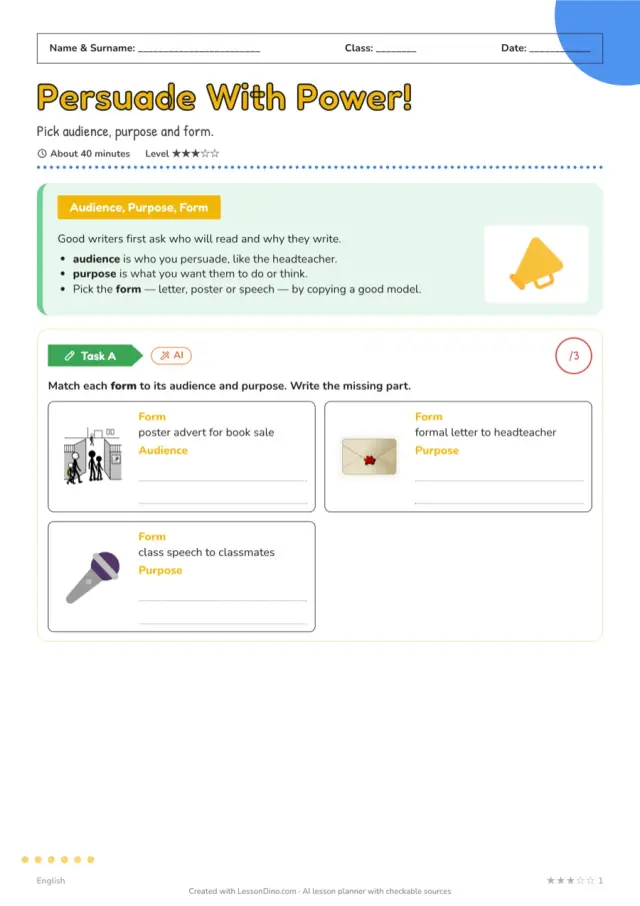
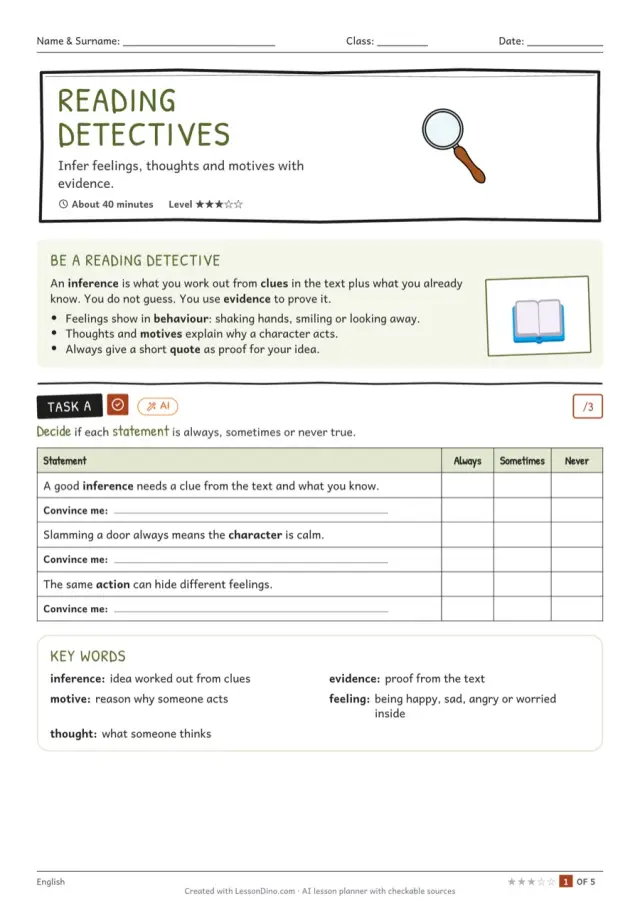
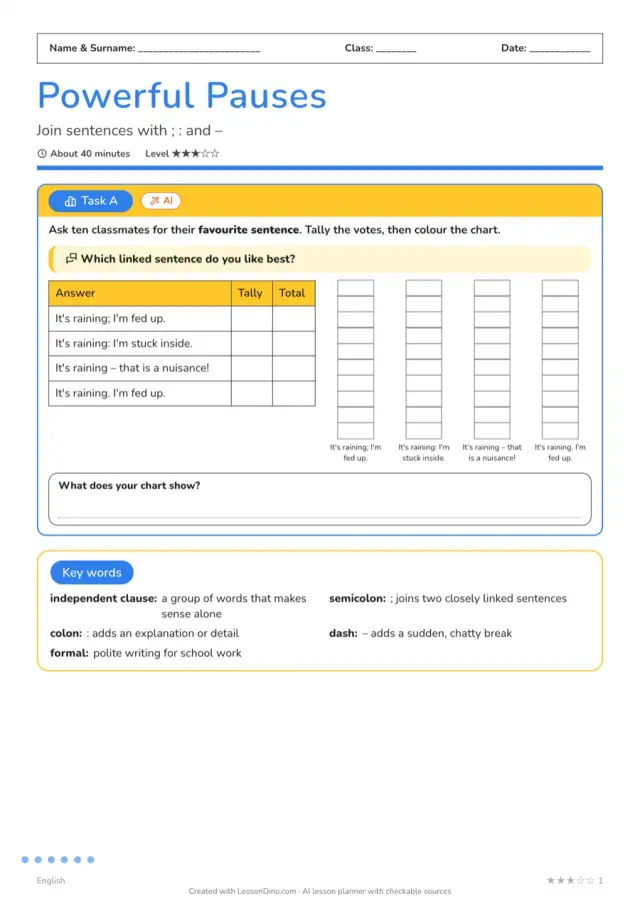
The worksheet
About this worksheet
Pupils learn how passive verbs move focus from doer to event. They compare versions and rewrite active sentences as passive. This Year 6 English worksheet gives students (ages 10–11) four pages of practice on the passive voice, part of the grammar and punctuation unit. It goes with our free The passive voice lesson, which has the slides and a timed lesson plan.
What it covers
By the end, students should be able to:
- Students will explain how passive moves focus from doer to what happened.
- Students will change active sentences into passive without changing the tense.
How to use it
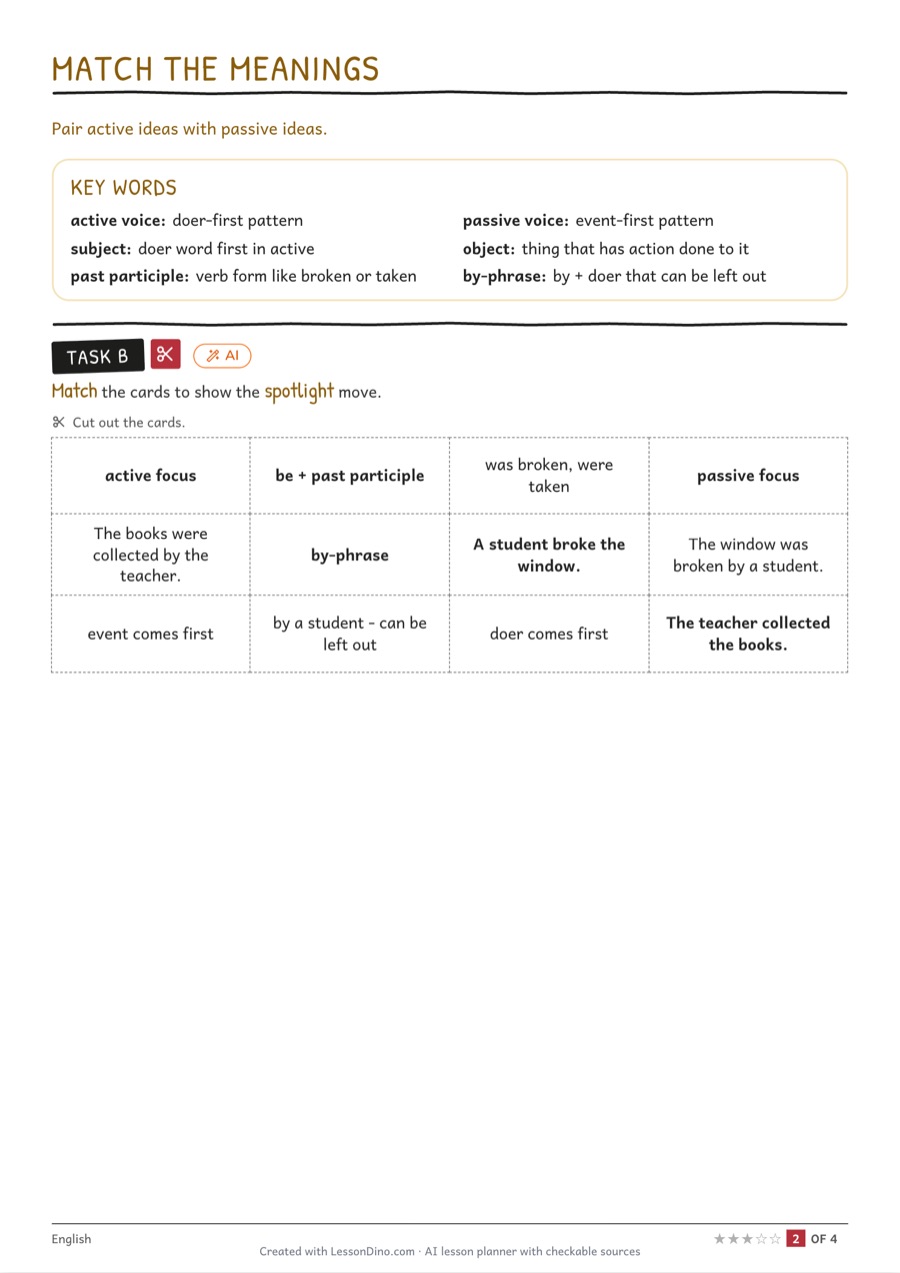
- Guided practice (15 minutes): Lead pairs to match Worksheet Task B cards to show the spotlight move.
- Support: Frame with droppable by-part: The window was broken (by me).
- Stretch: Rewrite hiding doer versus owning up with by me and explain effect.
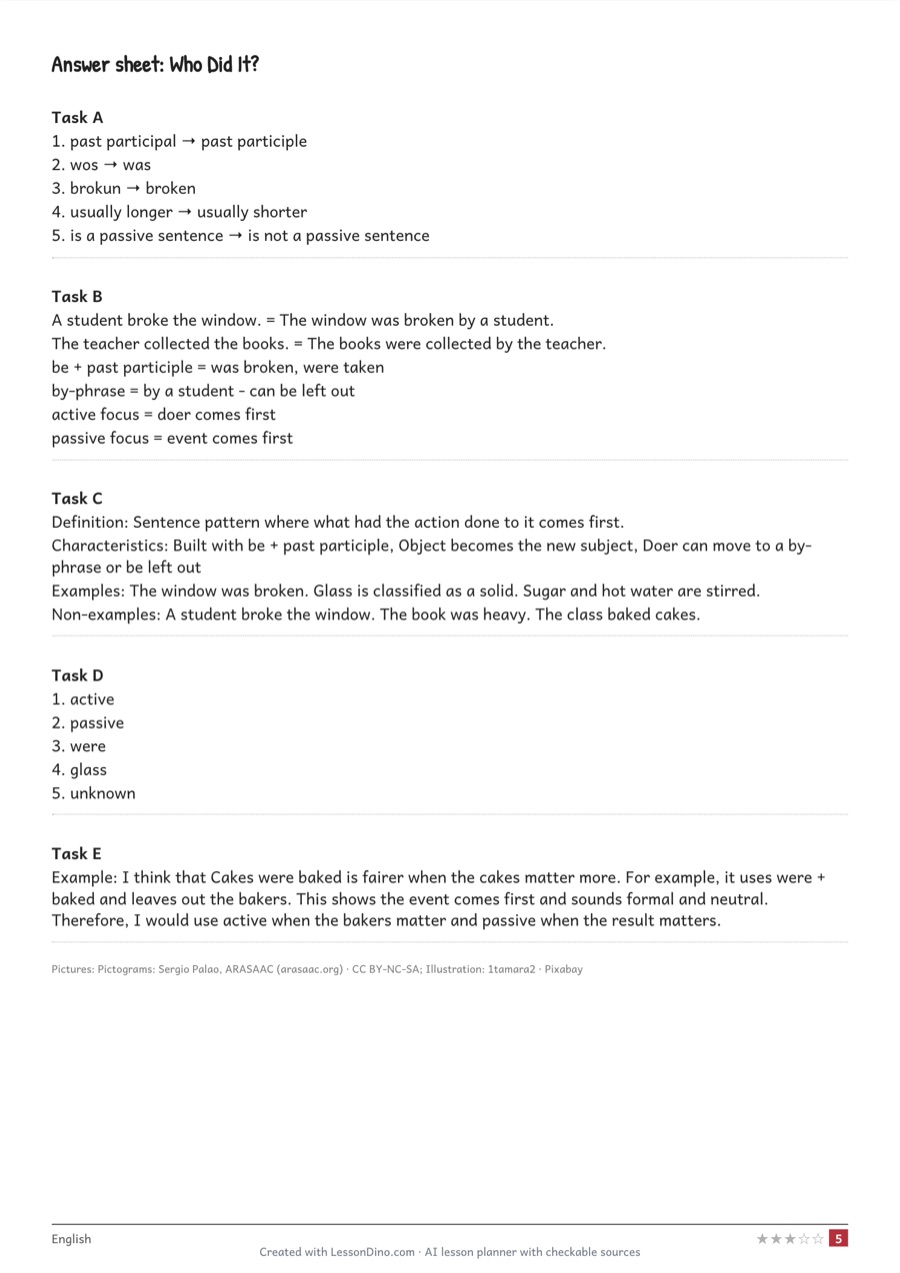
- The answer sheet is the last page, so you can print it on its own or let students check their own work.
Key vocabulary
- active voice: when the front person or thing does the action
- passive voice: when the front person or thing has the action done to it
- subject: the person or thing doing the main verb in an active sentence
- object: the person or thing that receives the action of the verb
- past participle: verb form like broken, taken or collected used with be
- by-phrase: optional group starting with by that names the doer
Mistakes to watch for
- Thinking any be verb means passive, e.g. The book was heavy. Check subject receives action, as in The book was dropped, not The book was heavy.
- Using past tense not participle, e.g. was broke. Swap to be + past participle like was broken, were taken.
What's on the worksheet
Spotlight on Sentences
Learn how passive verbs move focus from doer to event.
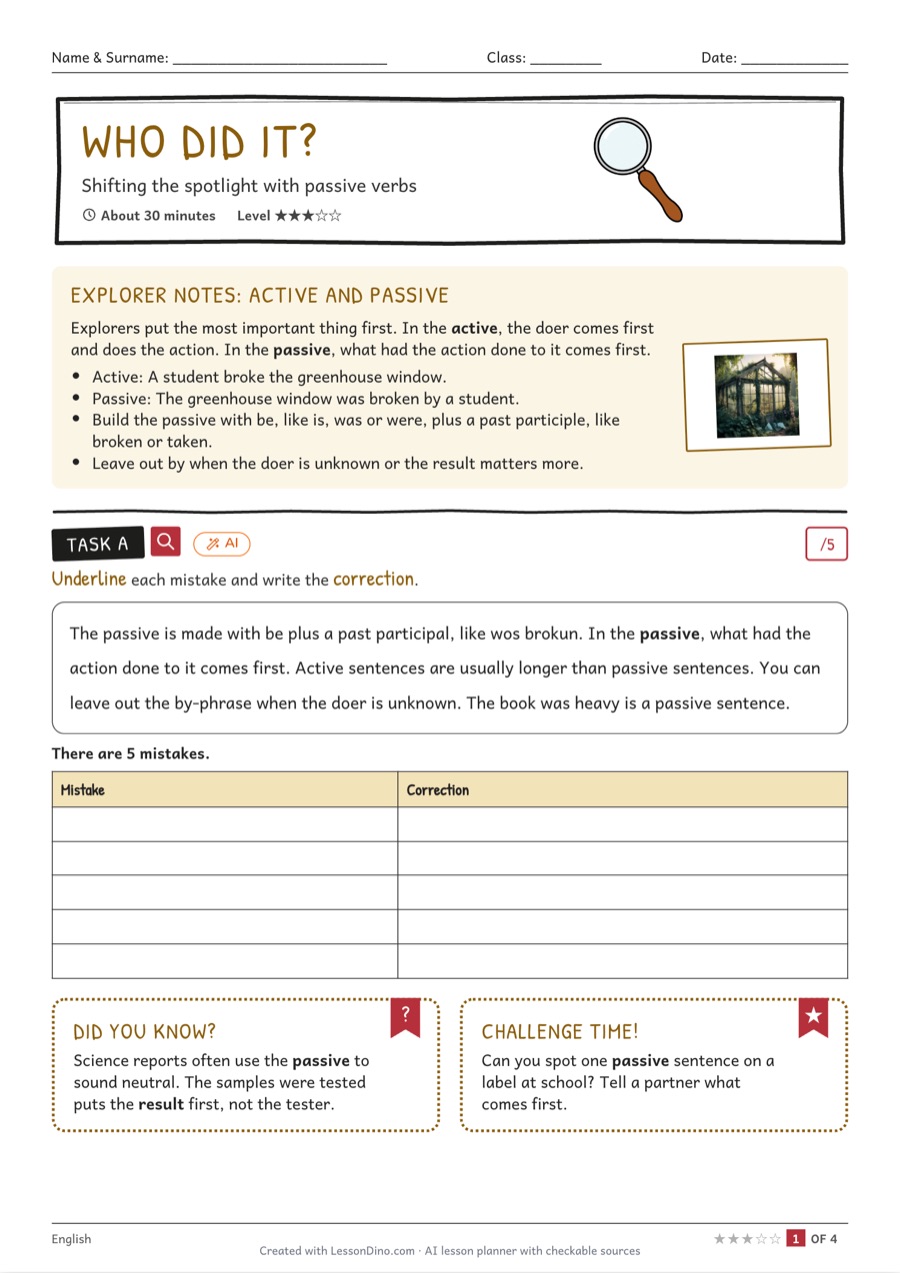
Explorer Notes: Active and Passive
- Explorers put the most important thing first. In the active, the doer comes first and does the action. In the passive, what had the action done to it comes first.
- Active: A student broke the greenhouse window.
- Passive: The greenhouse window was broken by a student.
- Build the passive with be, like is, was or were, plus a past participle, like broken or taken.
- Leave out by when the doer is unknown or the result matters more.
Underline each mistake and write the correction.
- The passive is made with be plus a past participal, like wos brokun. In the passive, what had the action done to it comes first. Active sentences are usually longer than passive sentences. You can leave out the by-phrase when the doer is unknown. The book was heavy is a passive sentence.
- Science reports often use the passive to sound neutral. The samples were tested puts the result first, not the tester.
- Can you spot one passive sentence on a label at school? Tell a partner what comes first.
Match the Meanings
Pair active ideas with passive ideas.
| Word | Meaning |
|---|---|
| active voice | doer-first pattern |
| passive voice | event-first pattern |
| subject | doer word first in active |
| object | thing that has action done to it |
| past participle | verb form like broken or taken |
| by-phrase | by + doer that can be left out |
Match the cards to show the spotlight move.
Word Explorer Map
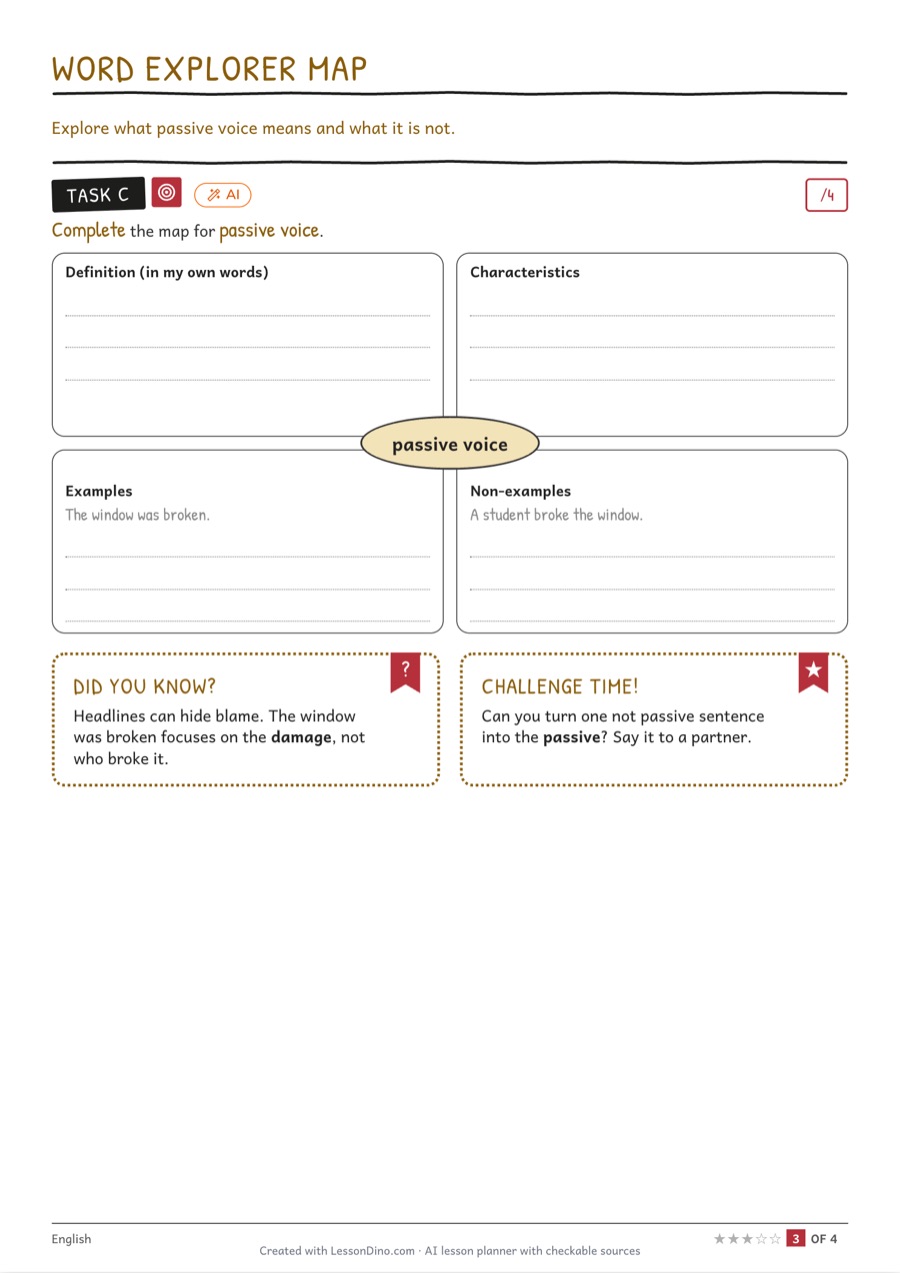
Explore what passive voice means and what it is not.
Complete the map for passive voice.
- Headlines can hide blame. The window was broken focuses on the damage, not who broke it.
- Can you turn one not passive sentence into the passive? Say it to a partner.
Choose Fair Words
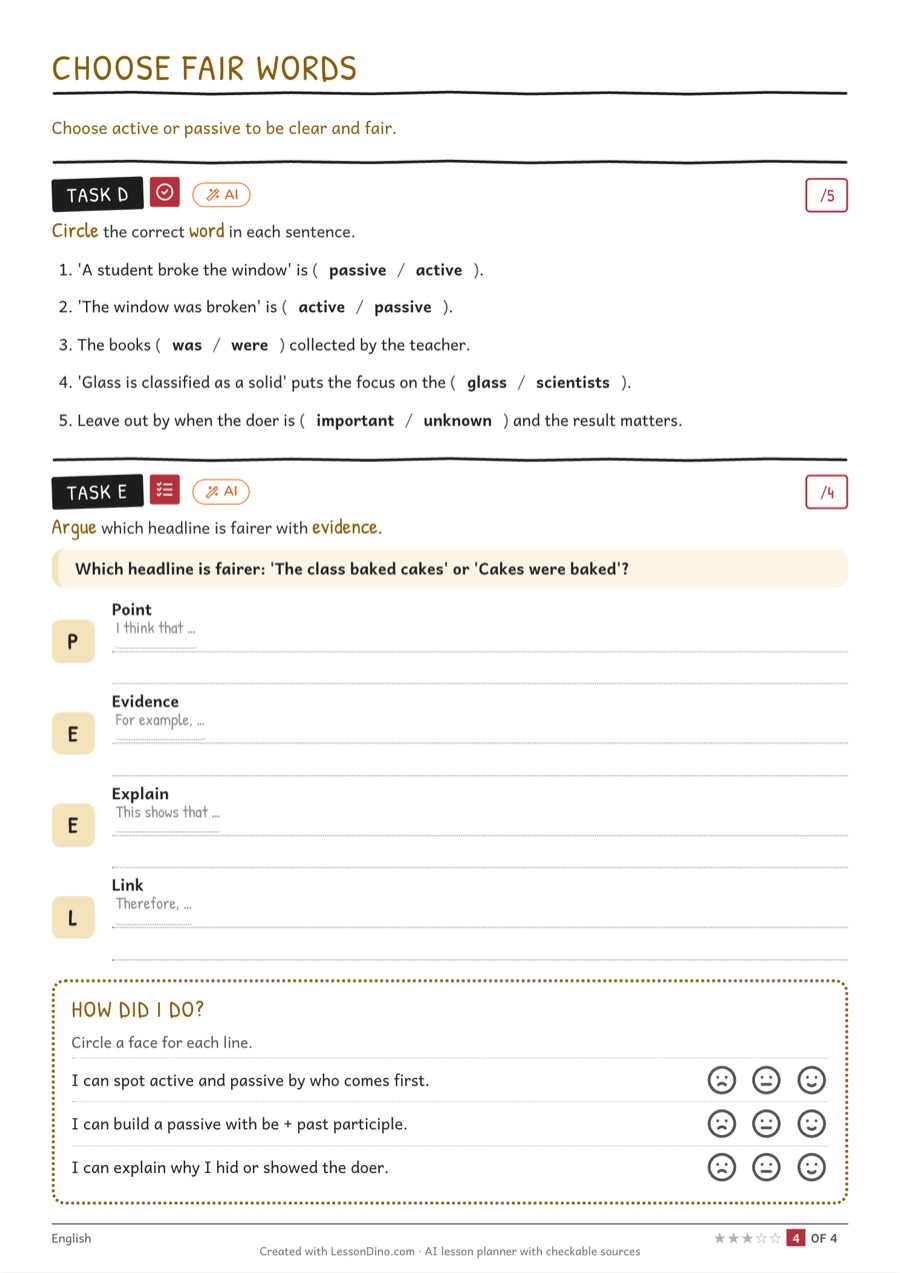
Choose active or passive to be clear and fair.
Circle the correct word in each sentence.
Argue which headline is fairer with evidence.
Answers
Show the answers
The answers are on the answer sheet, the last picture above.
Curriculum
using passive verbs to affect the presentation of information in a sentence
Made with Lesson Dino's AI on 17 October 2026. AI can make mistakes, so check the answers and facts against the sources before you teach.