The worksheet
About this worksheet
Pupils learn to join independent clauses with semicolons, colons and dashes. They build, compare and proofread joined sentences in pairs. This Year 6 English worksheet gives students (ages 10–11) four pages of practice on semicolons, colons and dashes, part of the writing - vocabulary, grammar and punctuation unit. It goes with our free Semicolons, colons and dashes lesson, which has the slides and a timed lesson plan.
What it covers
By the end, students should be able to:
- Students will join two independent clauses with a semicolon, colon or dash.
- Students will choose the mark to show equal link, explanation or chatty break.
- Students will proofread boundaries and explain why each mark was chosen.
How to use it
- Use it for practice after the teaching part of the lesson, once students have seen the worked examples on the slides.
- Support: Give pre-matched pairs using the same starter, so pupils only choose the mark.
- Stretch: Ask pupils to write the rule they used in one sentence: related, explains, or informal pause.
- The answer sheet is the last page, so you can print it on its own or let students check their own work.
Key vocabulary
- independent clause: a group of words that can stand alone as a sentence
- semicolon: the mark ; that links two close, equal complete thoughts
- colon: the mark : that tells the reader an explanation is coming next
- dash: the mark – that makes a casual, sudden break for surprise
- boundary: the place where one complete thought ends and the next begins
Mistakes to watch for
- Joining two full sentences with a comma instead of ; : or –. Split with a full stop to test each side stands alone, then rejoin with semicolon for a close link.
- Using a colon when the second part does not explain the first. Ask: does it explain? The phrase after a colon usually explains or expands on what came before. If not, use a semicolon.
- Putting ; : or – next to a fragment that cannot stand alone. Cover each side and check it has a subject and verb and makes sense alone. Fix the fragment first.
What's on the worksheet
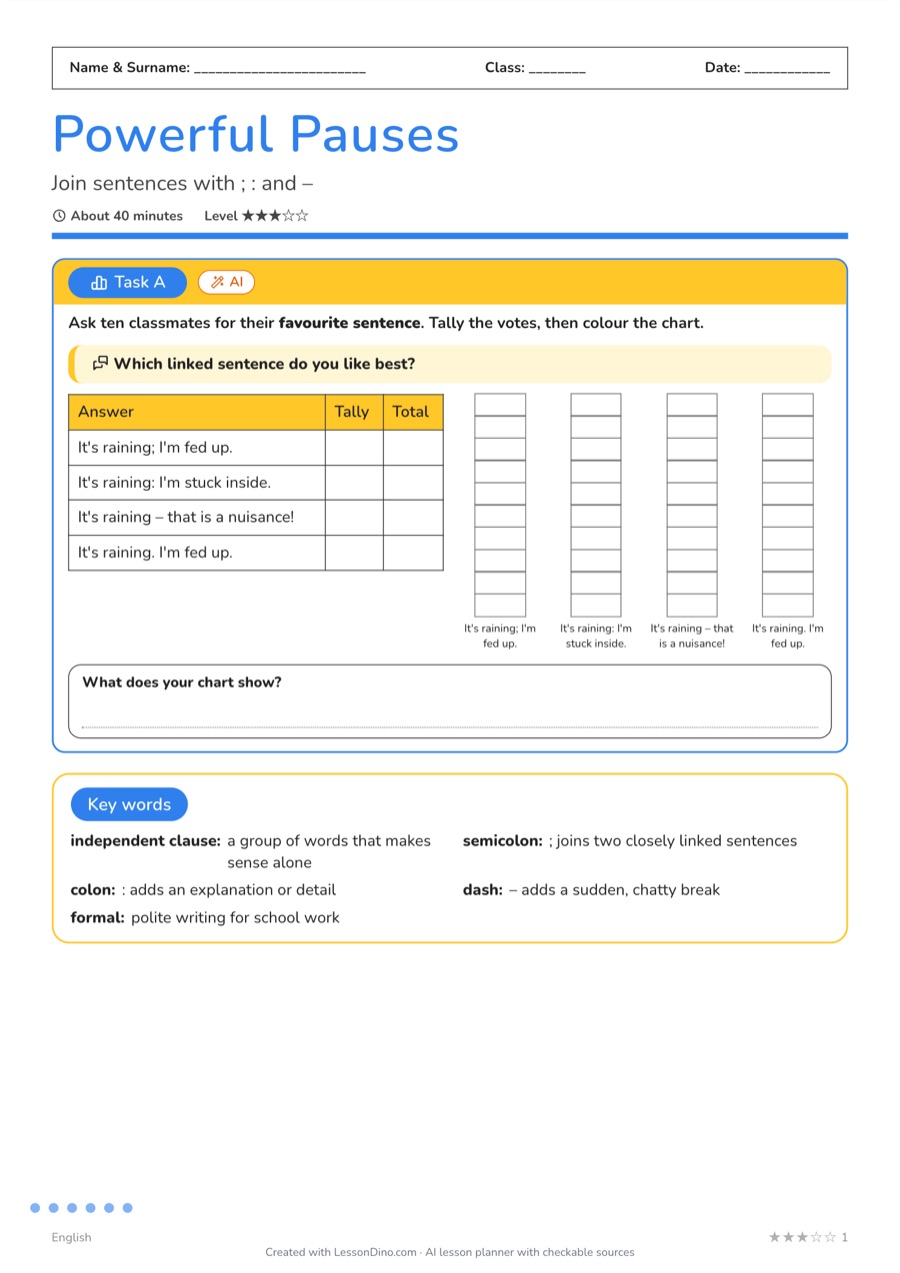
Link Two Sentences
Practise joining clauses with ; : and –.
Ask ten classmates for their favourite sentence. Tally the votes, then colour the chart.
| Word | Meaning |
|---|---|
| independent clause | a group of words that makes sense alone |
| semicolon | ; joins two closely linked sentences |
| colon | : adds an explanation or detail |
| dash | – adds a sudden, chatty break |
| formal | polite writing for school work |
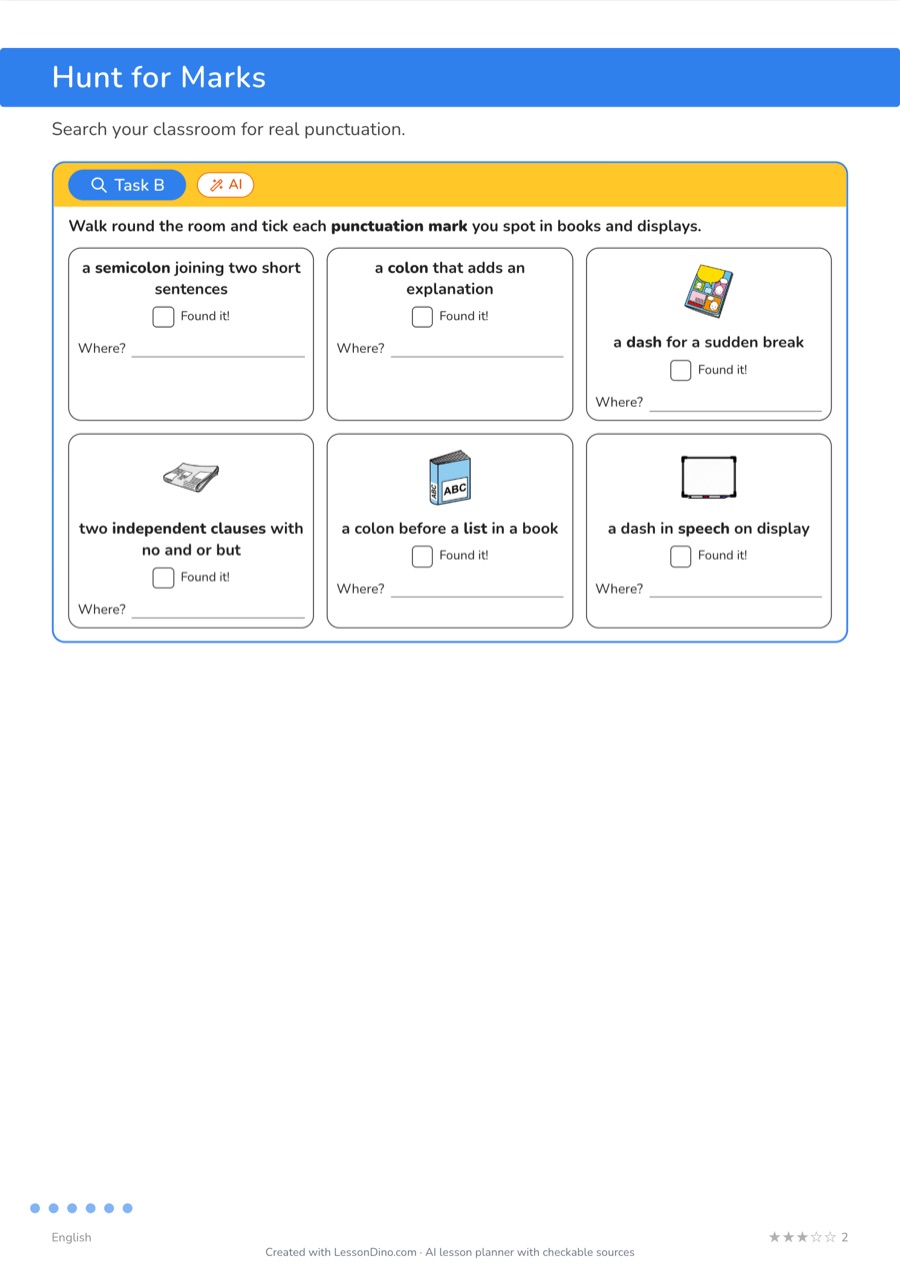
Hunt for Marks
Search your classroom for real punctuation.
Walk round the room and tick each punctuation mark you spot in books and displays.
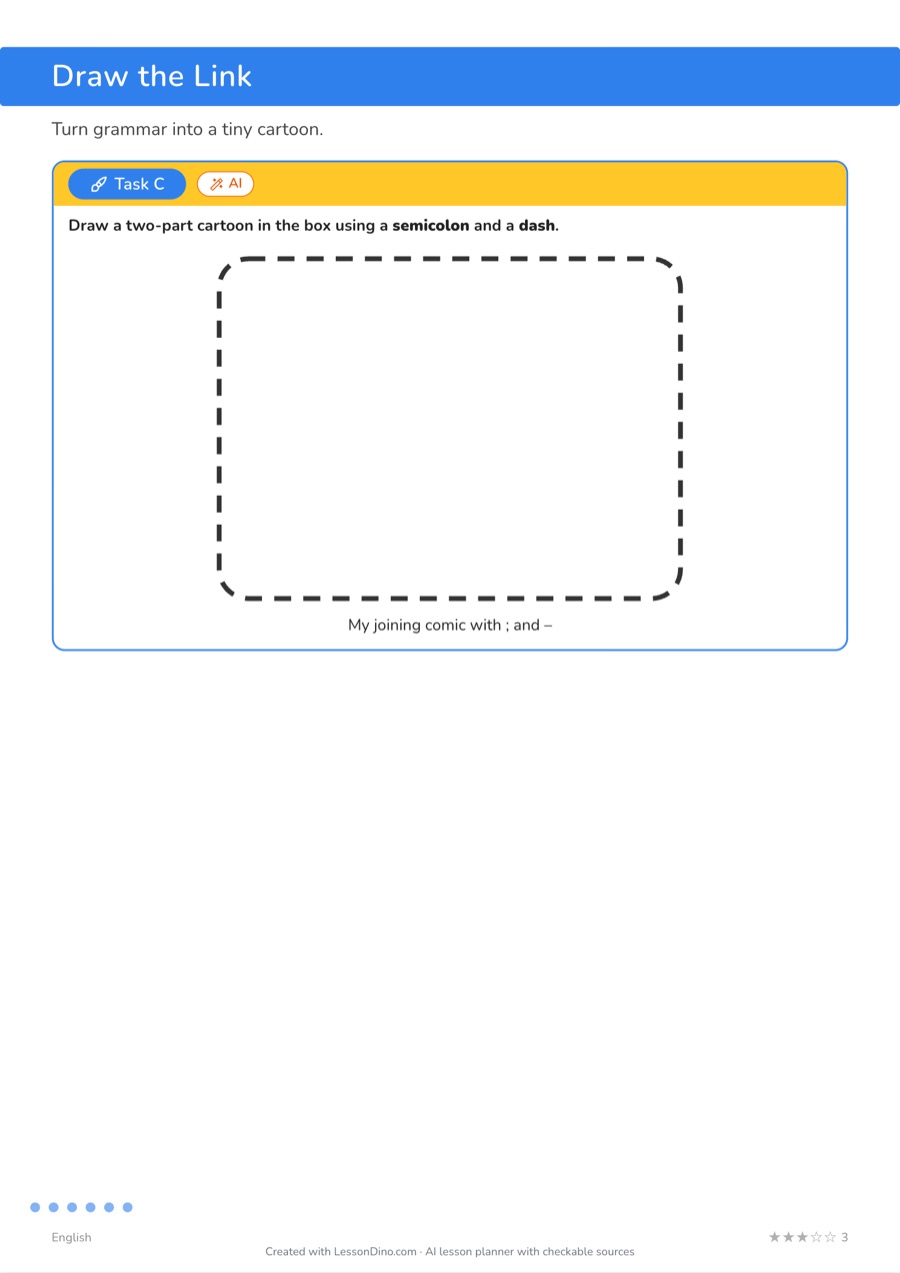
Draw the Link
Turn grammar into a tiny cartoon.
Draw a two-part cartoon in the box using a semicolon and a dash.
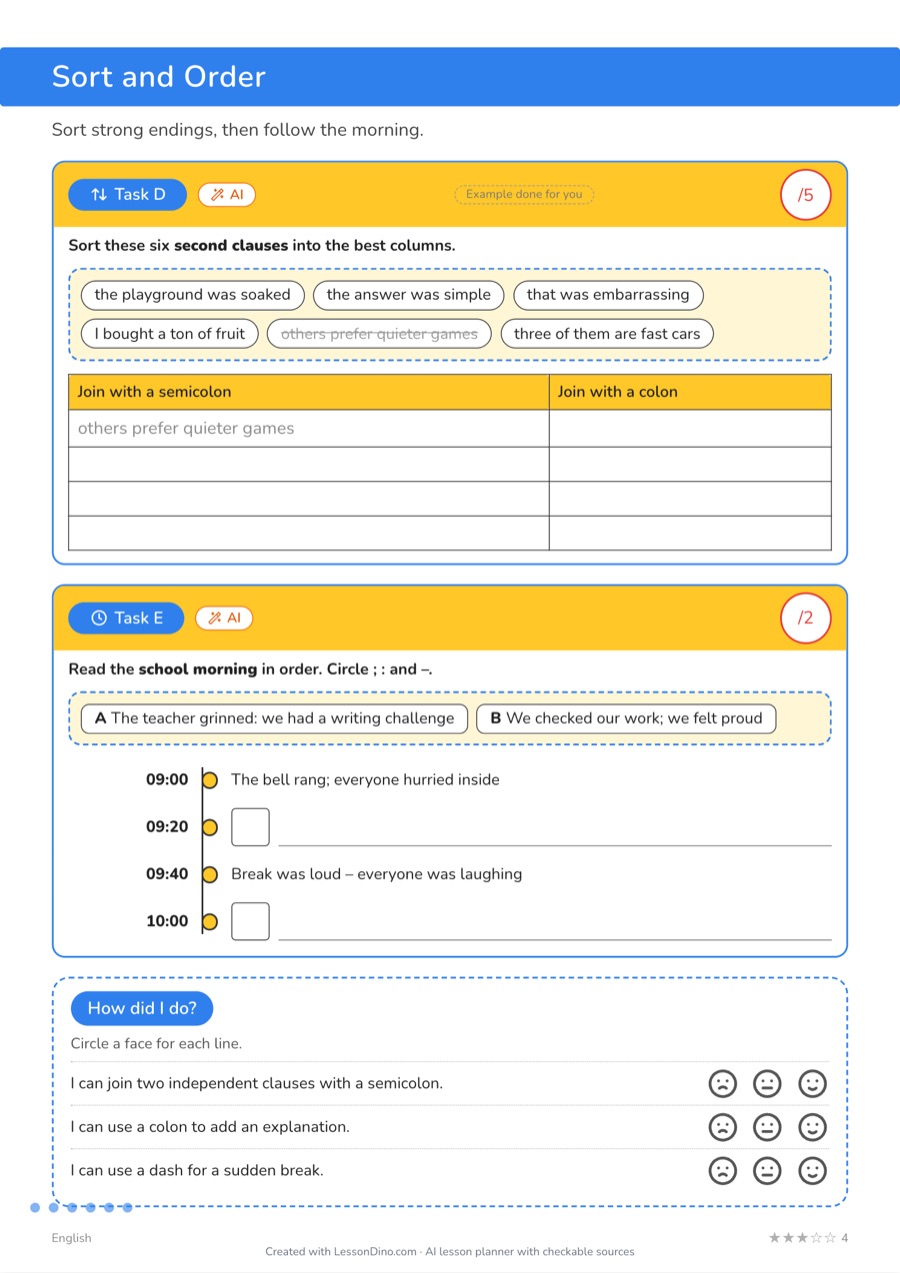
Sort and Order
Sort strong endings, then follow the morning.
Sort these six second clauses into the best columns.
Read the school morning in order. Circle ; : and –.
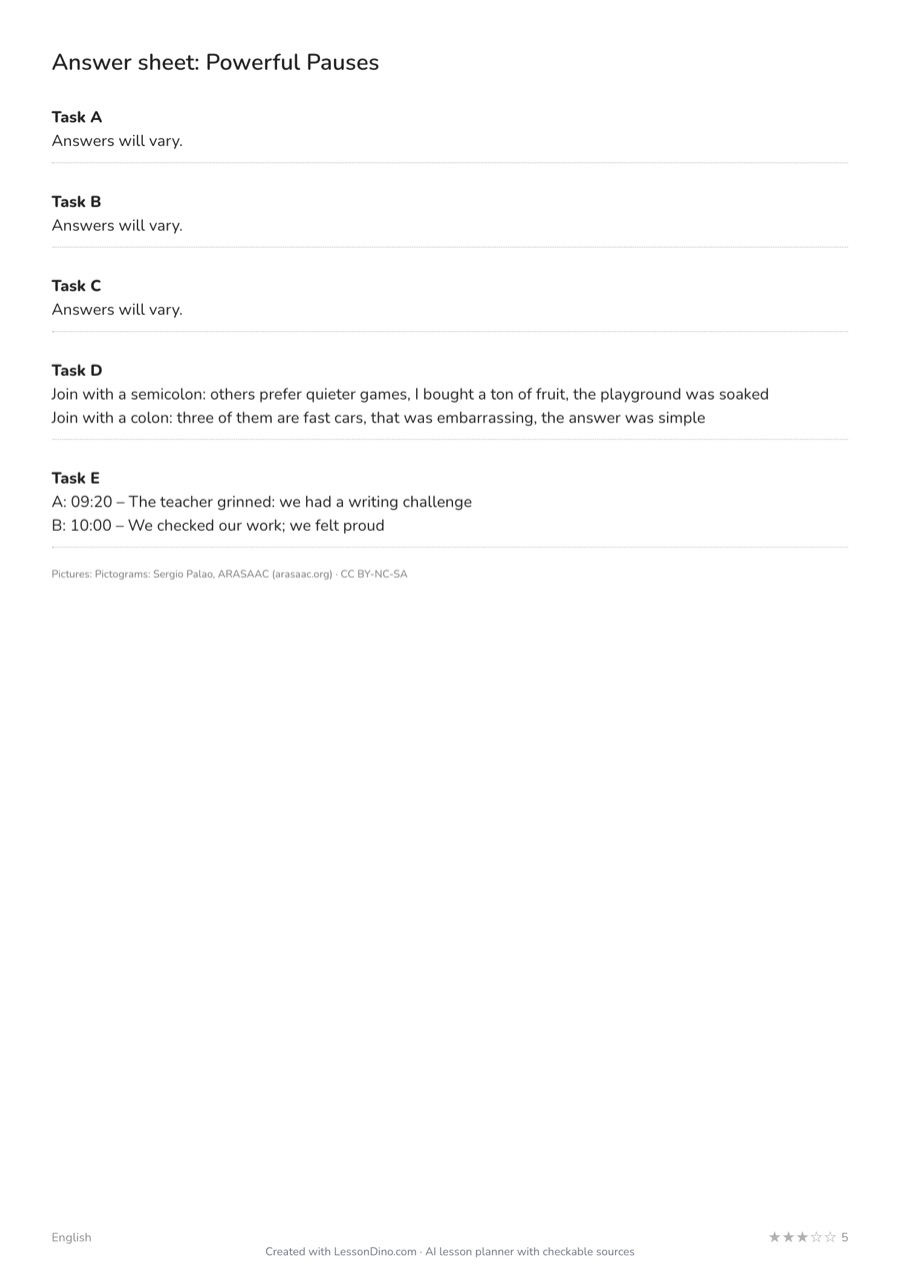
Answers
Show the answers
The answers are on the answer sheet, the last picture above.
Curriculum
using semicolons, colons or dashes to mark boundaries between independent clauses
Made with Lesson Dino's AI on 17 October 2026. AI can make mistakes, so check the answers and facts against the sources before you teach.