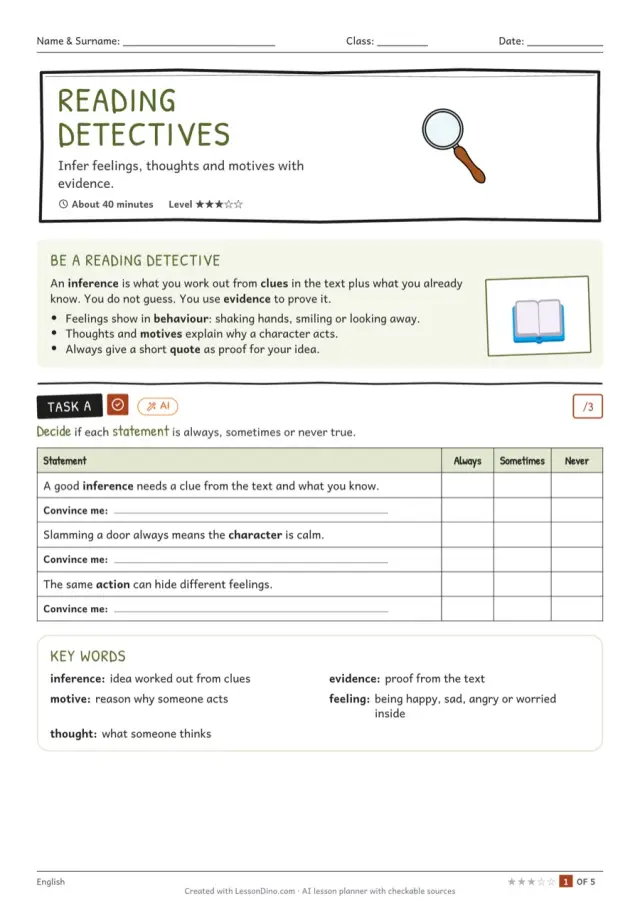
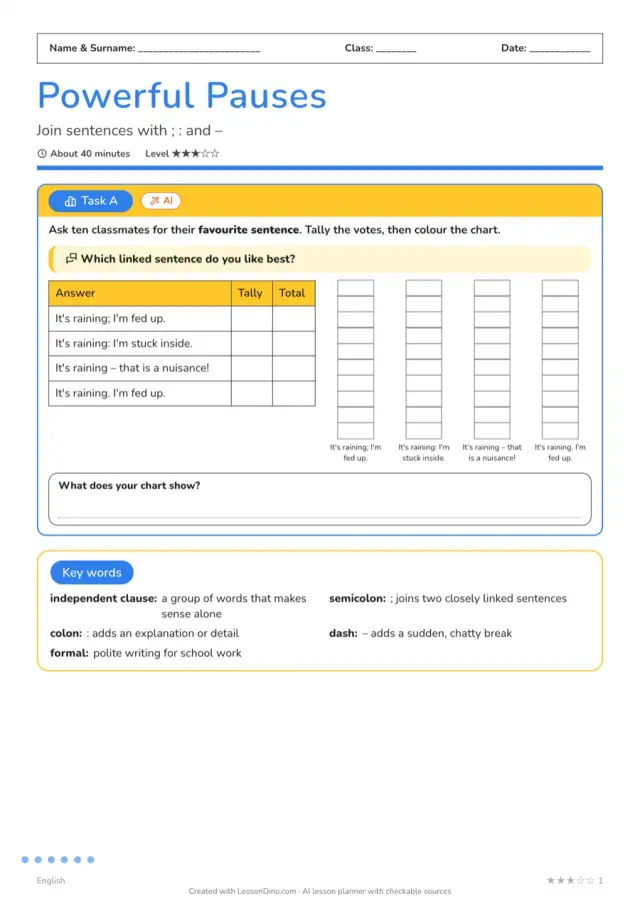
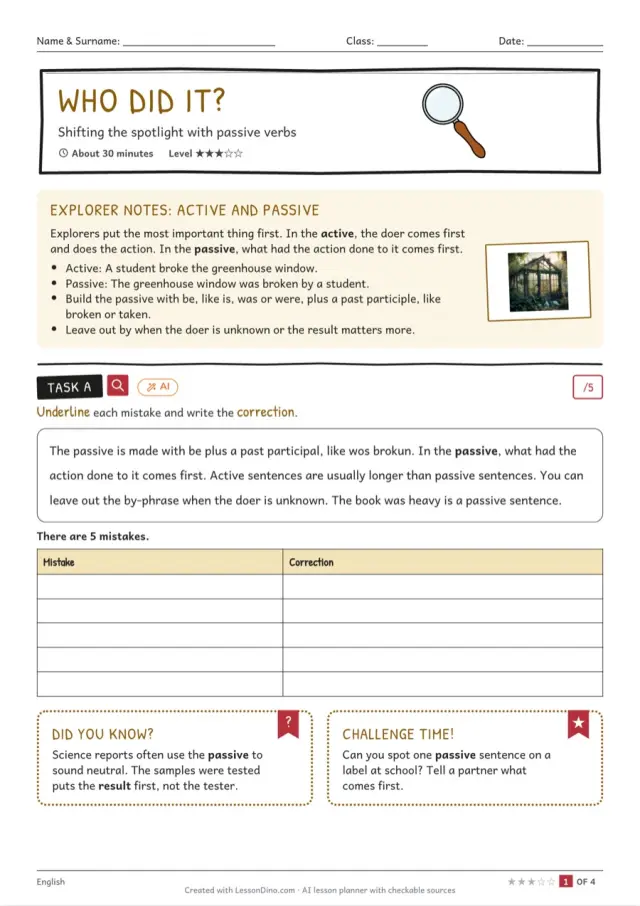
The worksheet
About this worksheet
Pupils learn to match persuasive writing to its reader and job. They plan a letter, poster or speech using a model text. This Year 6 English worksheet gives students (ages 10–11) five pages of practice on persuasive writing, part of the writing unit. It goes with our free Persuasive writing lesson, which has the slides and a timed lesson plan.
What it covers
By the end, students should be able to:
- Students will identify the audience and purpose before planning persuasive writing.
- Students will select the best persuasive form for the audience and purpose.
- Students will use a model text to plan structure, vocabulary and layout.
How to use it
- Model detectives (13 minutes): Give out Worksheet Task A and read the directions together.
- Support: Use frames, word banks of formal and friendly words, and a completed example plan to copy layout from.
- Stretch: Predict the audience objection and add a counter-argument with because.
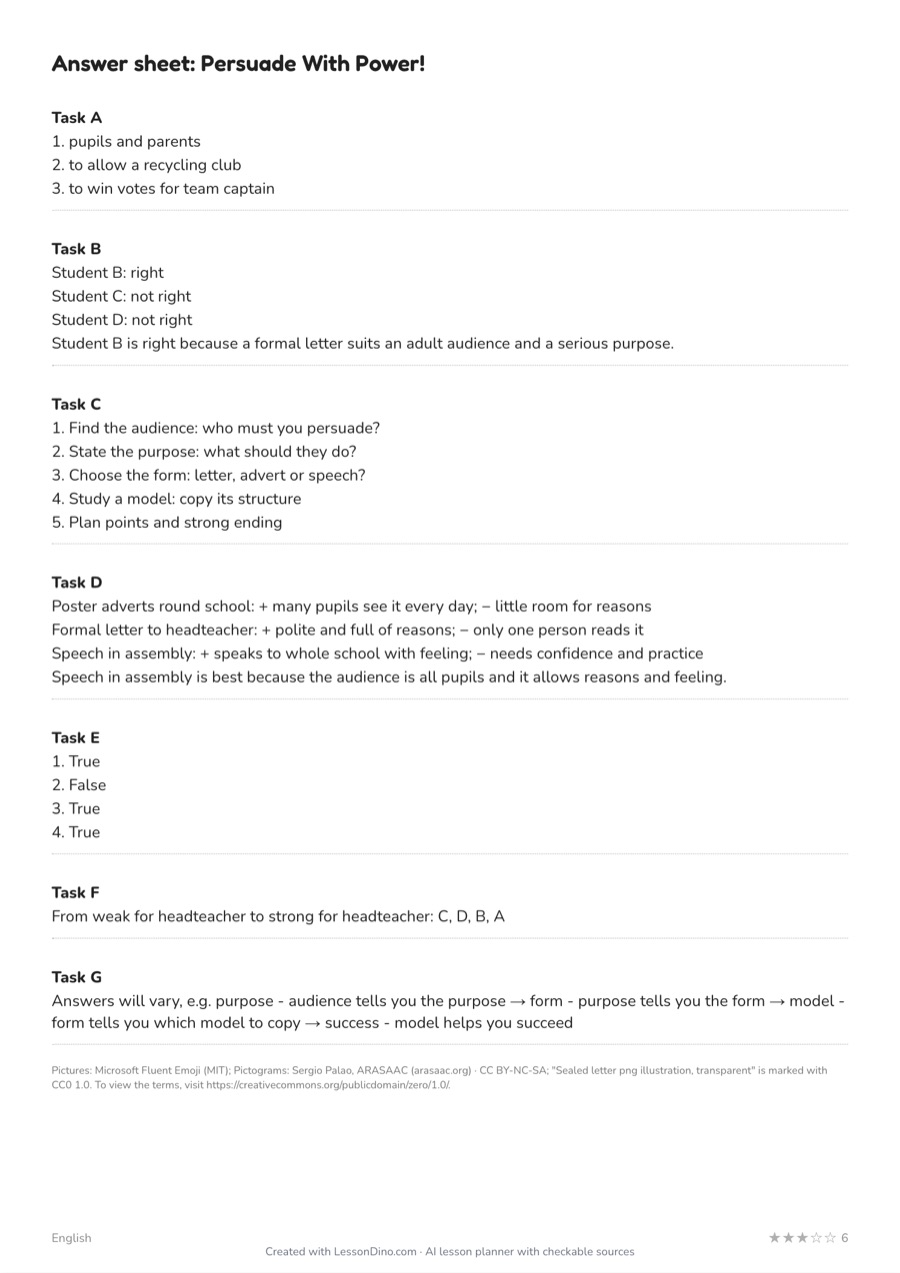
- The answer sheet is the last page, so you can print it on its own or let students check their own work.
Key vocabulary
- audience: the reader or readers your writing is trying to convince
- purpose: the job the writing must do and what you want the reader to think or do
- form: the type of writing you choose, such as a letter, poster or speech
- persuasive: trying to get someone to agree with you or to act
- model: a good example you copy the shape and word patterns from, not the words
Mistakes to watch for
- Writing the topic instead of the purpose, e.g. Our purpose is the playground. Rewrite as: Our purpose is to persuade the headteacher to agree to tidy the playground.
- Choosing any form without linking it to the reader, e.g. poster for the headteacher. Ask: Who decides? Match form to reader, e.g. letter for formal decision, poster for many pupils.
- Copying the model words instead of the pattern. Cover the model and keep only the bones: opener question, two because reasons, please ending.
What's on the worksheet
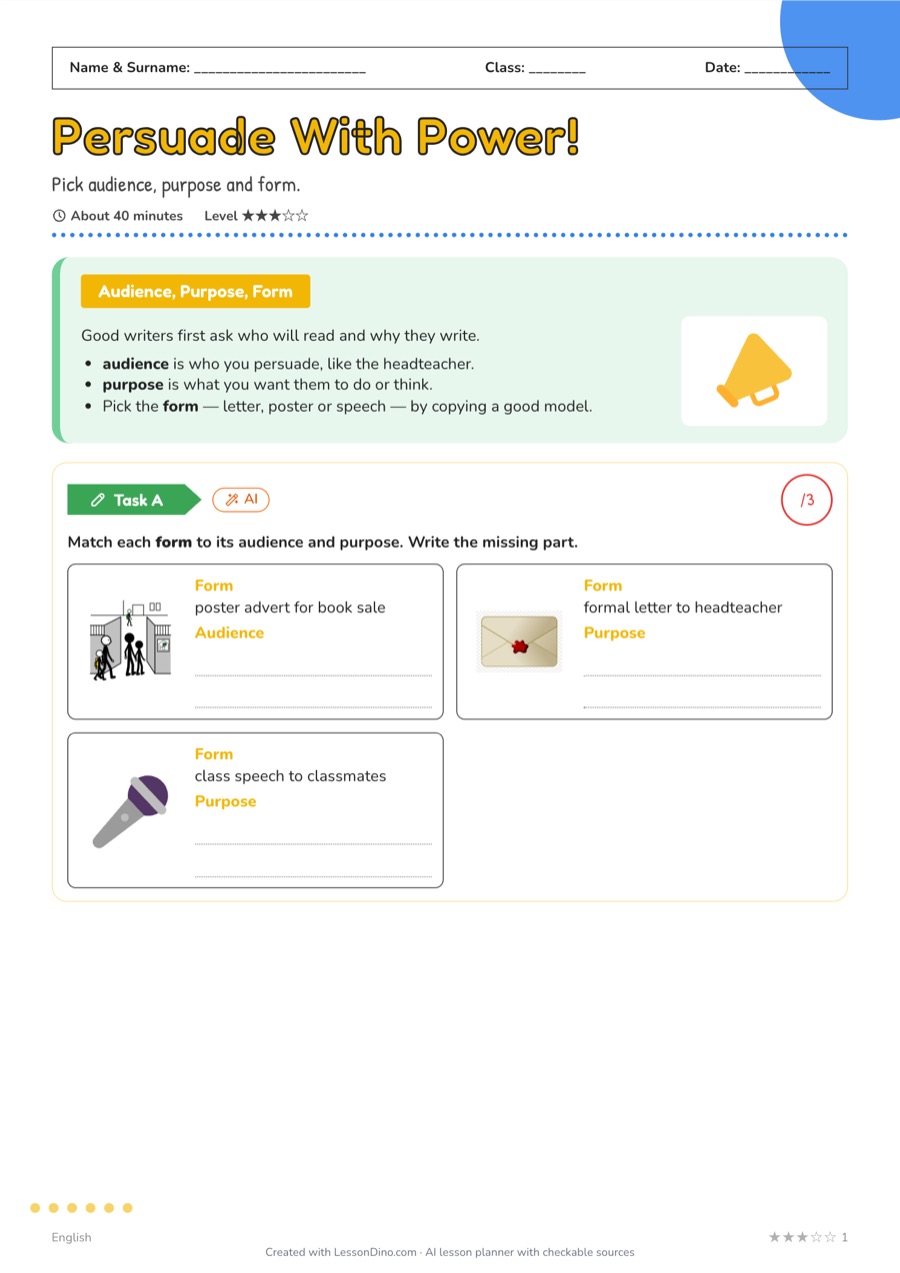
Know Your Reader
See how audience and purpose choose the form.
Audience, Purpose, Form
- Good writers first ask who will read and why they write.
- audience is who you persuade, like the headteacher.
- purpose is what you want them to do or think.
- Pick the form — letter, poster or speech — by copying a good model.
Match each form to its audience and purpose. Write the missing part.
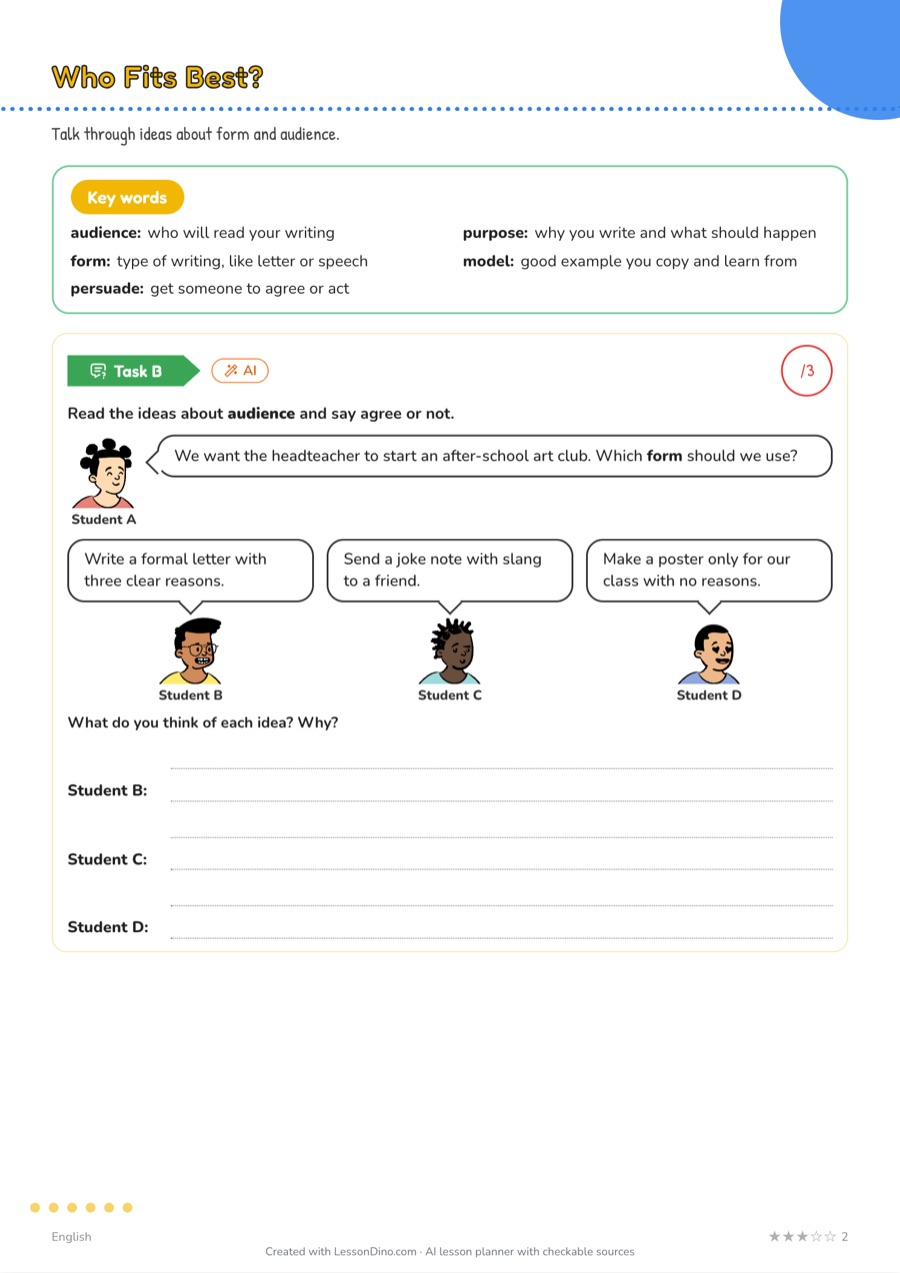
Who Fits Best?
Talk through ideas about form and audience.
| Word | Meaning |
|---|---|
| audience | who will read your writing |
| purpose | why you write and what should happen |
| form | type of writing, like letter or speech |
| model | good example you copy and learn from |
| persuade | get someone to agree or act |
Read the ideas about audience and say agree or not.
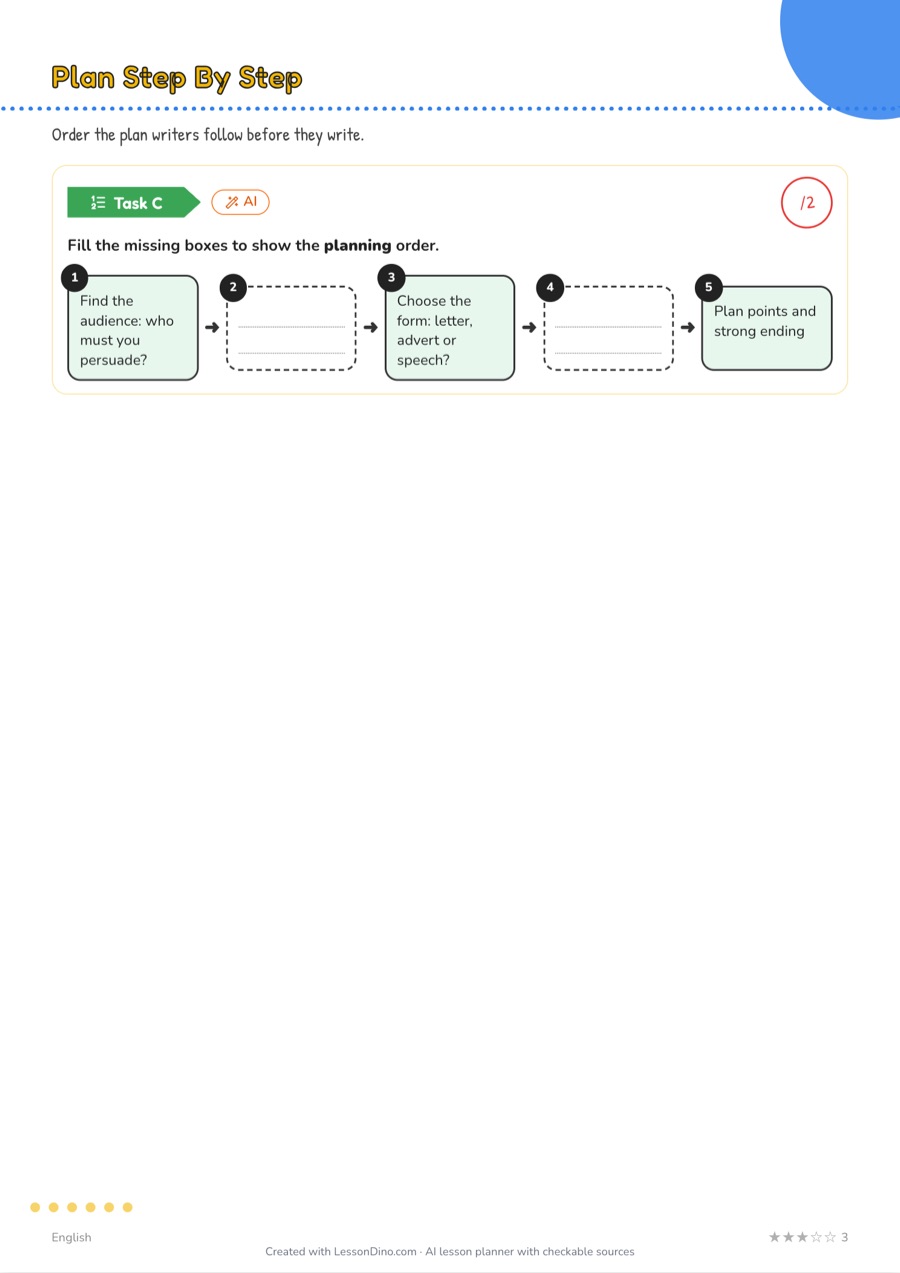
Plan Step By Step
Order the plan writers follow before they write.
Fill the missing boxes to show the planning order.
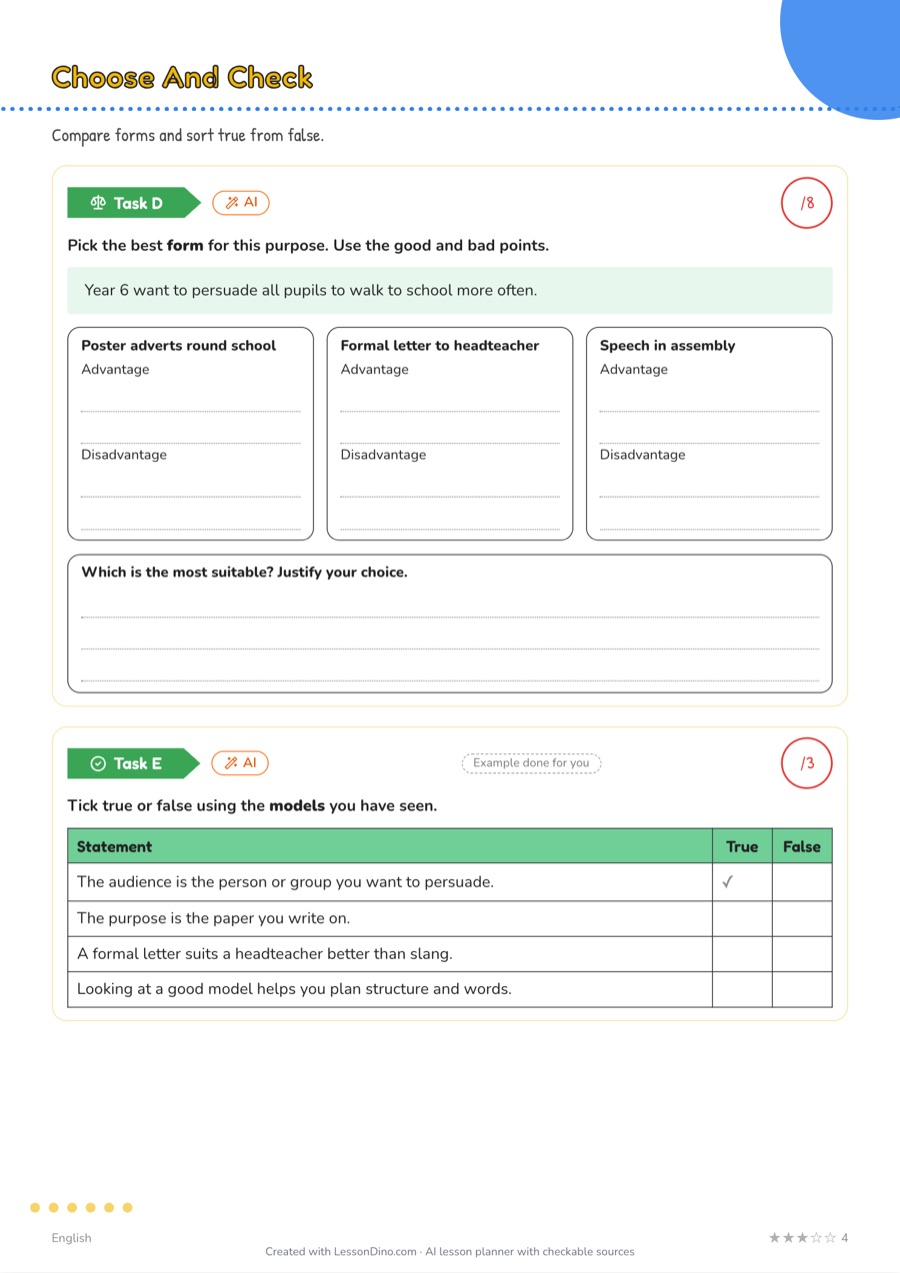
Choose And Check
Compare forms and sort true from false.
Pick the best form for this purpose. Use the good and bad points.
Tick true or false using the models you have seen.
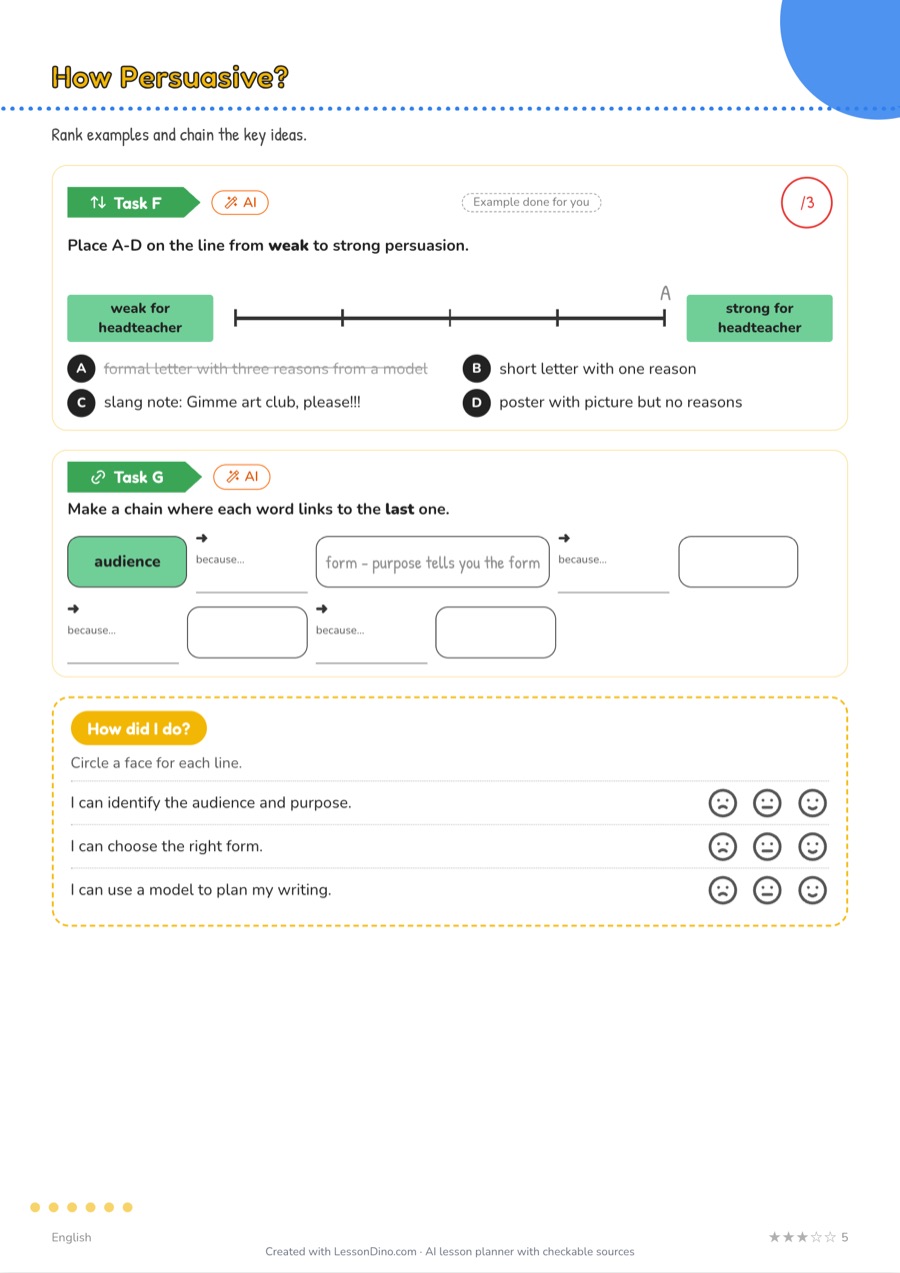
How Persuasive?
Rank examples and chain the key ideas.
Place A-D on the line from weak to strong persuasion.
Make a chain where each word links to the last one.
Answers
Show the answers
The answers are on the answer sheet, the last picture above.
Curriculum
identifying the audience for and purpose of the writing, selecting the appropriate form and using other similar writing as models for their own
Made with Lesson Dino's AI on 19 October 2026. AI can make mistakes, so check the answers and facts against the sources before you teach.