Slides
Lesson plan
Who Did It? Shifting the Spotlight with Passive
Pupils learn how passive verbs move focus from doer to event. They compare versions and rewrite active sentences as passive.
Objectives
- Students will explain how passive moves focus from doer to what happened.
- Students will change active sentences into passive without changing the tense.
Success criteria
- I can spot who is in the spotlight in active and passive.
- I can rewrite an active sentence as passive with be + past participle.
- I can choose passive to hide the doer or sound formal.
Key words
| Word | Meaning |
|---|---|
| active voice | when the front person or thing does the action |
| passive voice | when the front person or thing has the action done to it |
| subject | the person or thing doing the main verb in an active sentence |
| object | the person or thing that receives the action of the verb |
| past participle | verb form like broken, taken or collected used with be |
| by-phrase | optional group starting with by that names the doer |
Timed plan (60 minutes)
| Time | Stage | What happens |
|---|---|---|
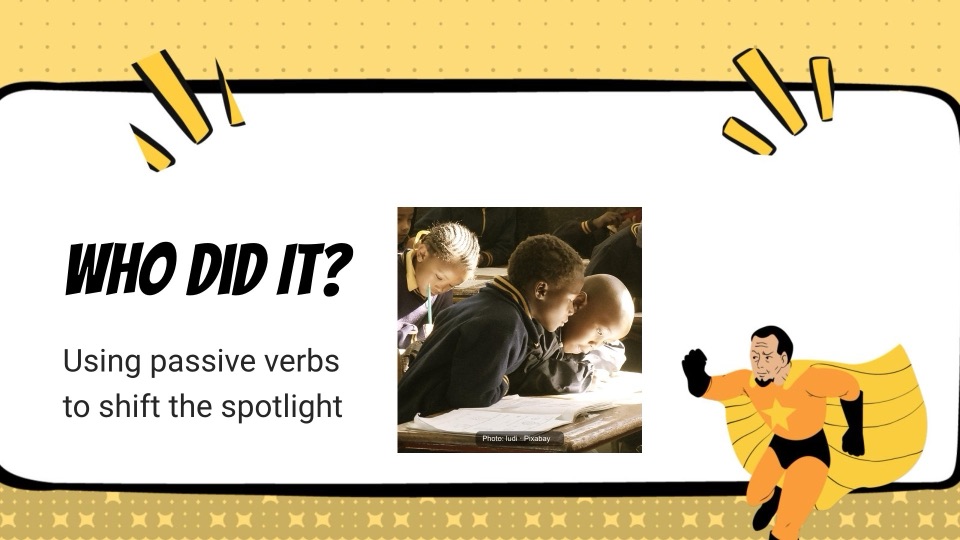
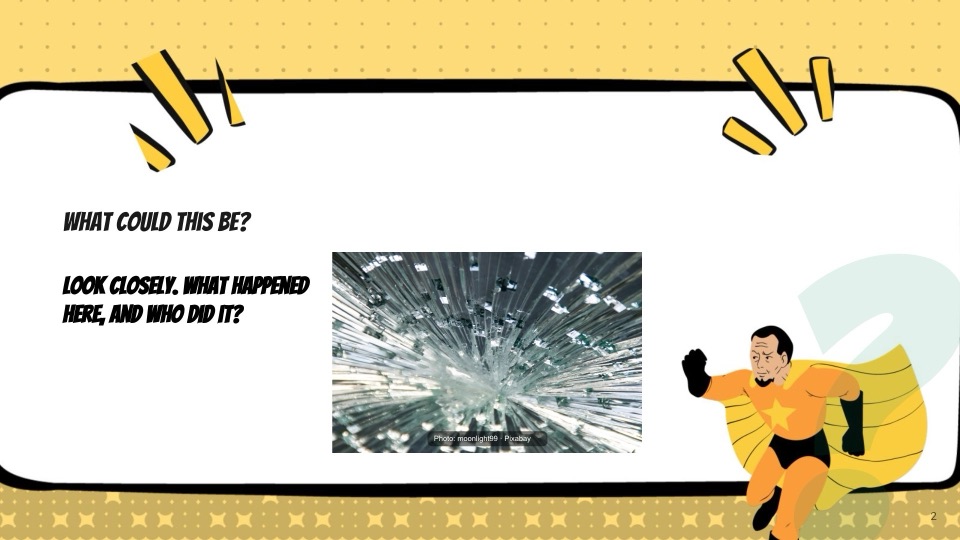
| 10 min | Starter | To hook pupils and surface how word order changes blame. Say the hook and show Slide 1: Who Did It? Show Slide 2 with the mystery: The window was broken - we do not know who did it! Ask pairs to discuss what happened and who did it. Take a vote on which sentence admits blame and which focuses on the window. |
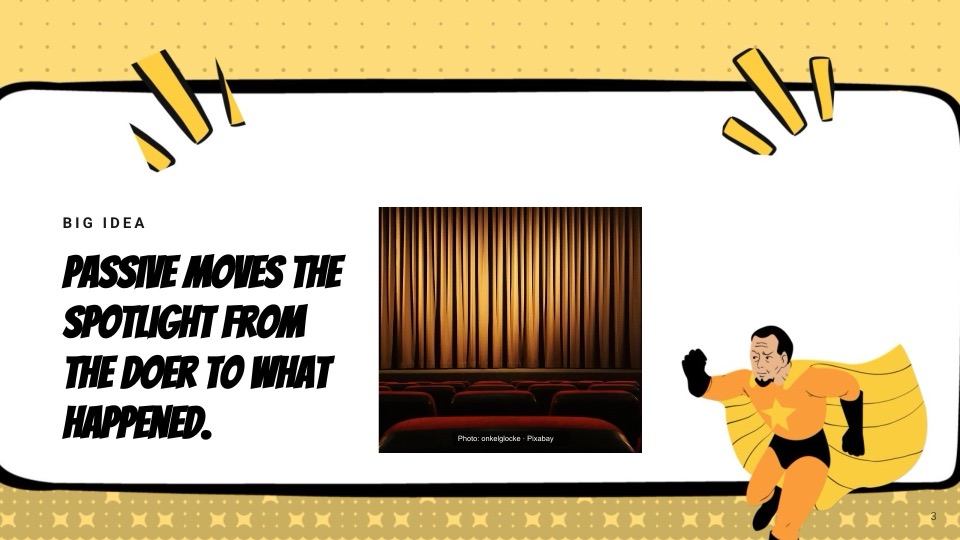
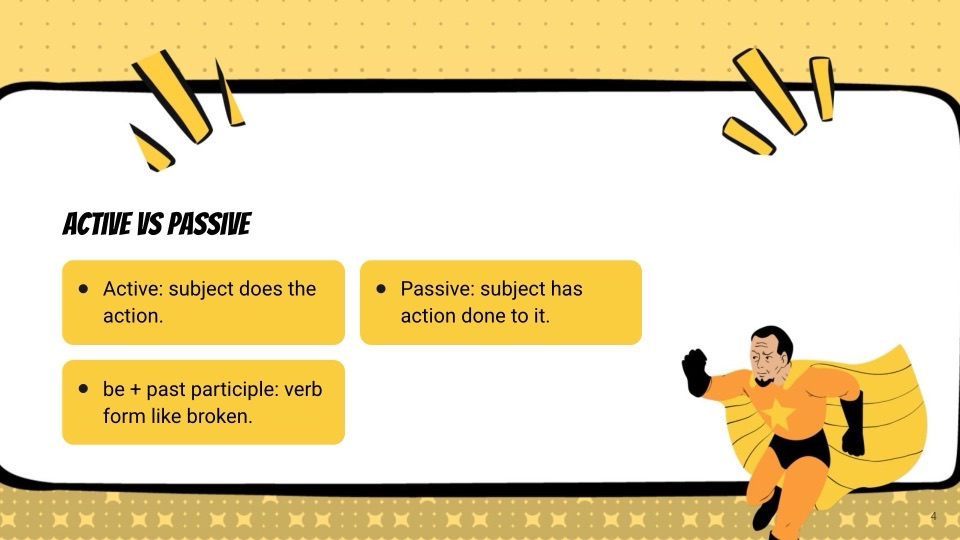
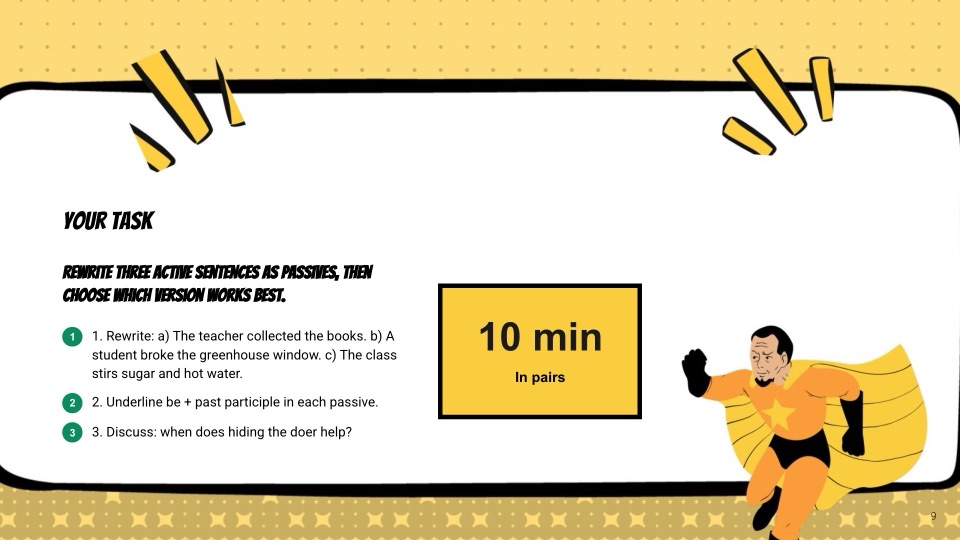
| 10 min | Teaching | To explain active and passive patterns clearly with a worked model. Show Slide 3 big idea: Passive moves the spotlight from the doer to what happened. Show Slide 4 bullets: Active: subject does the action, Passive: subject has action done to it. Model the build: passive is made of the right form of be + past participle. Compare I broke the window in the greenhouse versus The window in the greenhouse was broken (by me). |
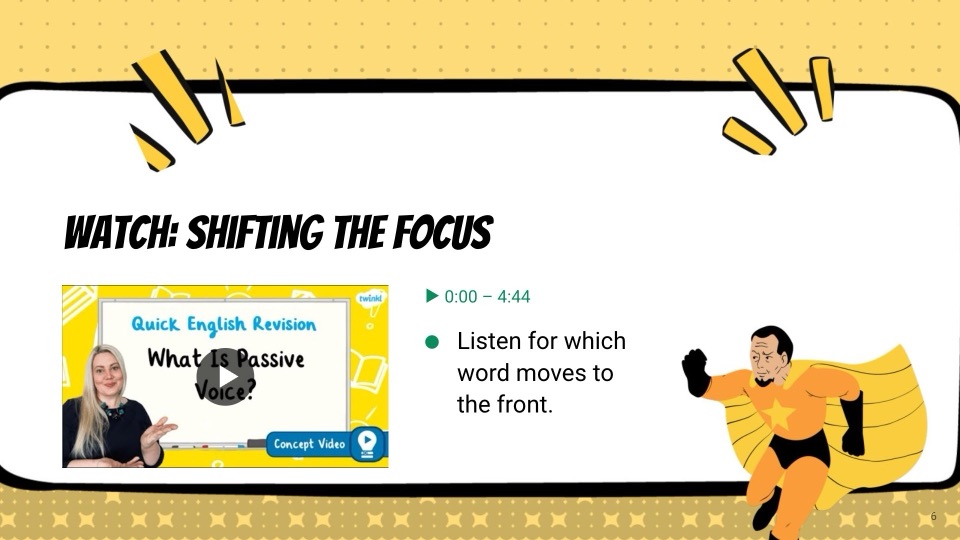
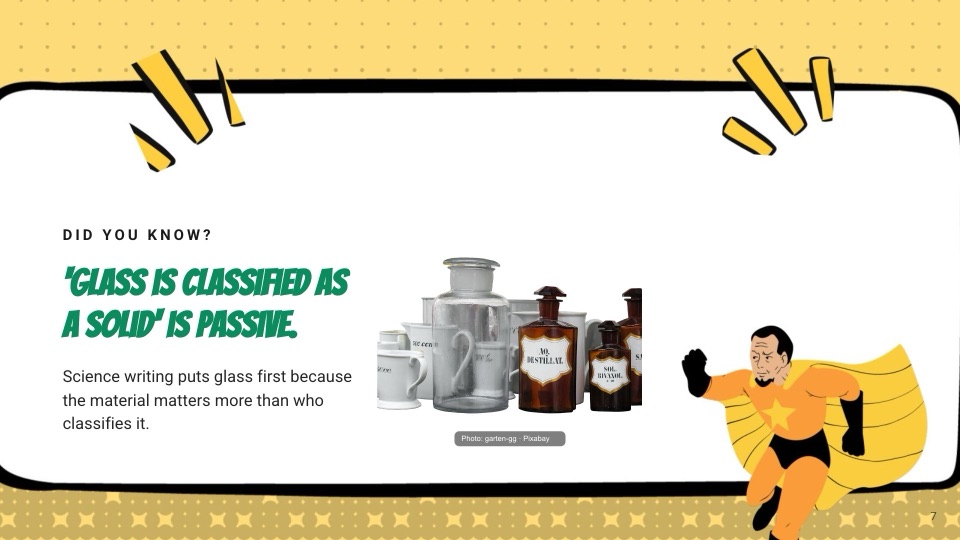
| 15 min | Guided practice | To practise flipping active to passive together without changing tense. Play Video clip 1 (0:00–4:44) on Slide 6 and ask pupils to listen for which word moves to the front. Show Slide 7 fact: 'Glass is classified as a solid' is passive. Model The teacher collected the books -> The books were collected by the teacher. Lead pairs to match Worksheet Task B cards to show the spotlight move. |
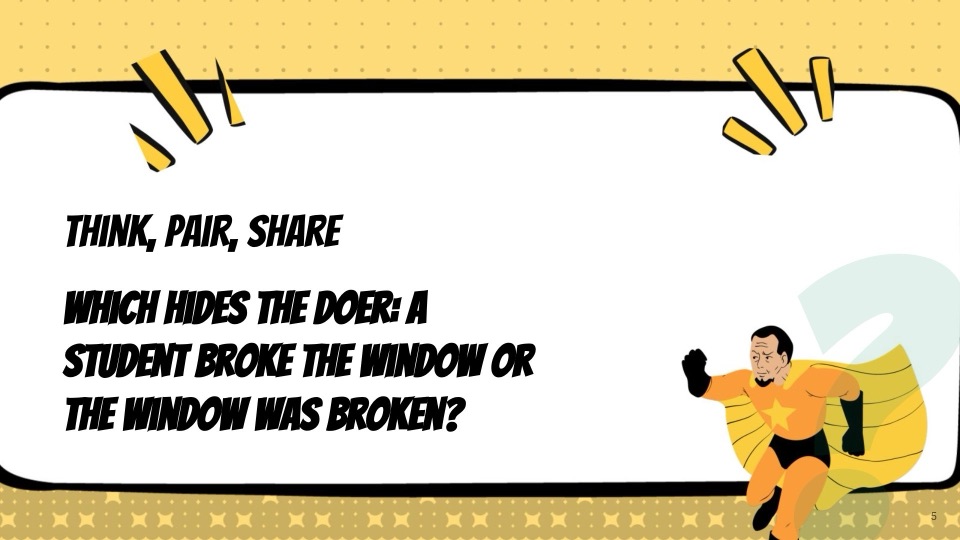
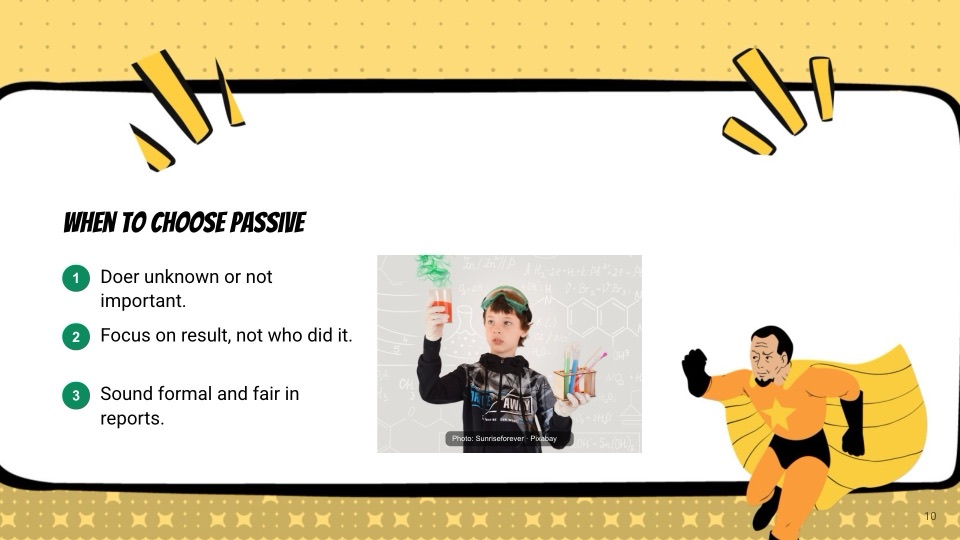
| 15 min | Main activity | To explain how passive can hide the doer and change blame. Keep the whiteboard pair on show for The Broken Greenhouse Window. Show Slide 5 question: Which hides the doer: A student broke the window or The window was broken? Ask pairs to say both aloud, then vote which focuses on the window and which admits blame. Show Slide 10 bullets about when to choose passive for unknown doer and formal reports. |
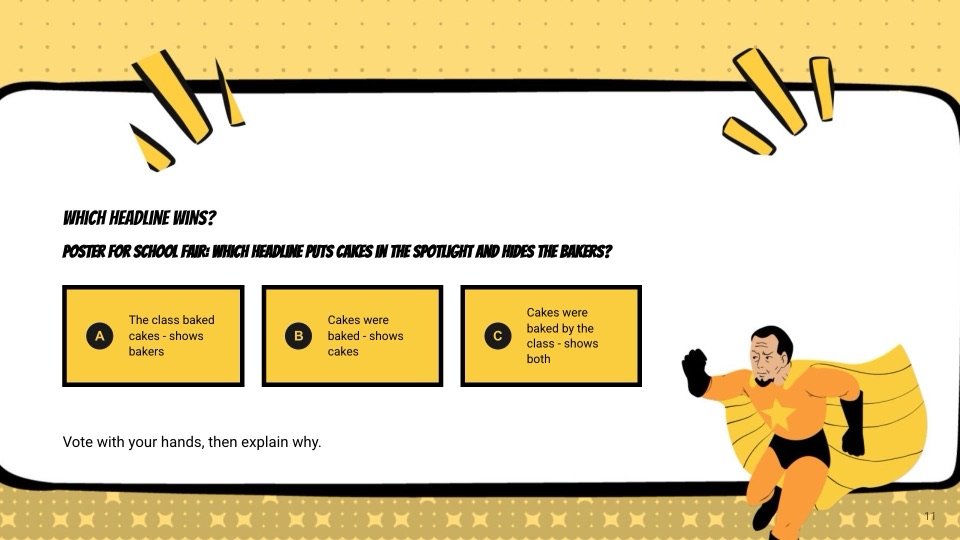
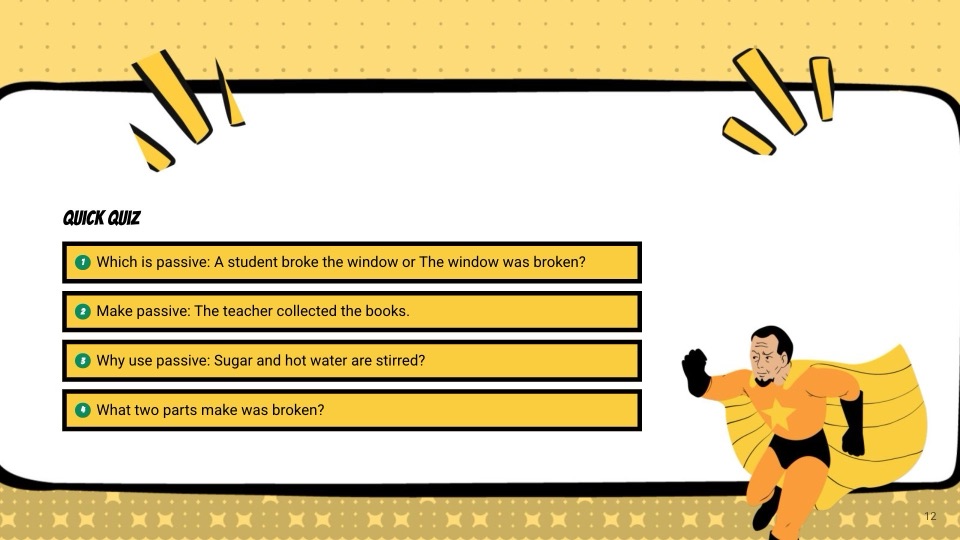
| 10 min | Plenary | To choose the best voice for purpose and check learning. Show Slide 11 vote with The class baked cakes - shows bakers, Cakes were baked - shows cakes, Cakes were baked by the class - shows both. Ask pairs to choose a poster headline and justify fair or sneaky effect. Show Slide 12 quick quiz on The window was broken and The books were collected by the teacher. Link back to success criteria and set homework. |
Common mistakes
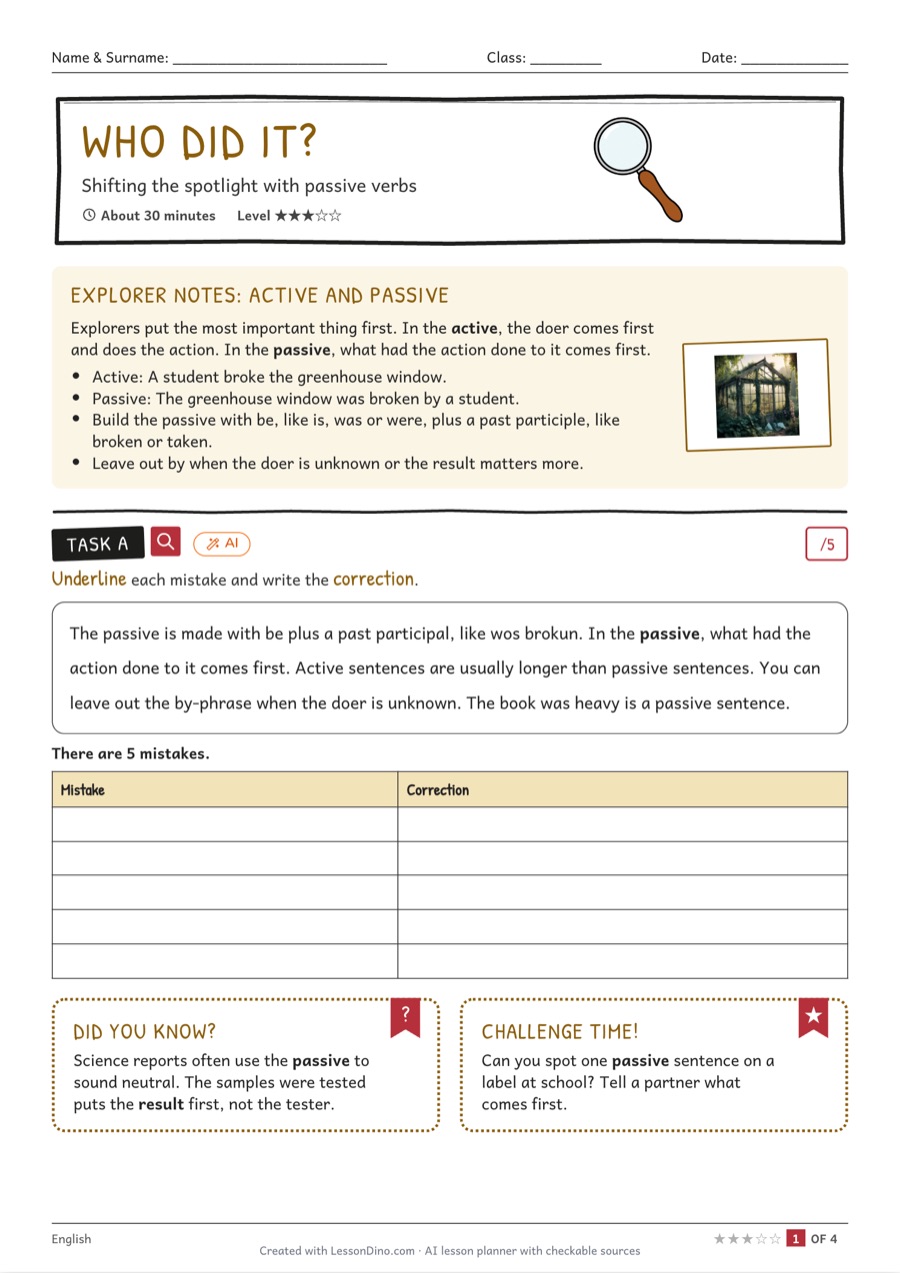
- Thinking any be verb means passive, e.g. The book was heavy.
How to spot it: Pupil underlines was heavy as passive.
Check subject receives action, as in The book was dropped, not The book was heavy. - Using past tense not participle, e.g. was broke.
How to spot it: Verb after was looks like simple past.
Swap to be + past participle like was broken, were taken.
Support
- Frame with droppable by-part: The window was broken (by me).
- Be helper strip and participle bank: taken, broken, collected, eaten.
Stretch
- Rewrite hiding doer versus owning up with by me and explain effect.
- Try present perfect and future passives has been cleaned and will be locked.
Check questions
- Which is passive: A student broke the window or The window was broken?
Answer: The window was broken. - Make passive: The teacher collected the books.
Answer: The books were collected by the teacher. - When would you choose passive?
Answer: When doer unknown or not important, to focus on result or sound formal.
Curriculum
using passive verbs to affect the presentation of information in a sentence
Video clips
Clips on YouTube, from the start and end times we chose. Check each one before you show it.
-
What is Passive Voice? KS2 from 0:00 to 4:44
Twinkl Educational Publishing: What is Passive Voice? | KS2 English Concept for Kids
Made specifically for KS2 pupils so language and pace are perfect for 10-11-year-olds learning how passive shifts focus.
-
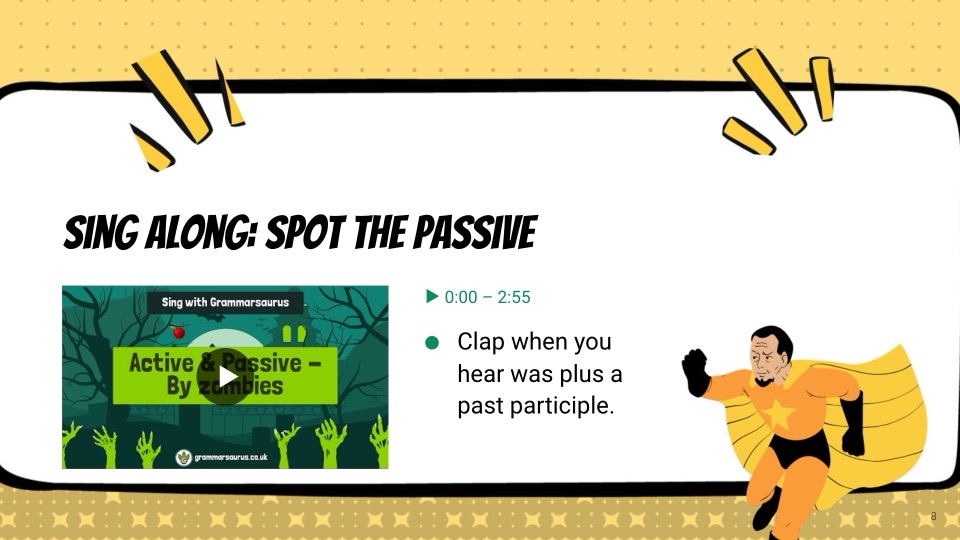
Active and Passive zombie song from 0:00 to 2:55
Grammarsaurus: Sing with Grammarsaurus - Active and Passive (By zombies)
Made by a primary grammar channel as a song that engages 10-11-year-olds while contrasting active and passive sentences.
Worksheet
Sources
- glossary gov.uk
- Year 6 English Curriculum lenham.kent.sch.uk
- How to use the active or passive voice - BBC Bitesize bbc.co.uk
- What are the active and passive voice? - KS2 English - BBC ... bbc.co.uk
- Passive voice | EF United Kingdom ef.co.uk
- The Passive Voice, Complete Guide | ELS elitelanguage.co.uk
- The Passive Voice - How do we form it? - English with Natalie learn-english.uk
- Passive voice | British Council - TeachingEnglish africa.teachingenglish.org.uk
- Voice (grammar) Facts for Kids kids.kiddle.co
- Using the active and passive voice - Oak National Academy thenational.academy
- Passive voice | EF United States ef.edu
- Active and passive voice - LearnEnglish - British Council learnenglish.britishcouncil.org
- What is Passive Voice? Definition, Examples of Passive Sentences in Writing writingexplained.org
- Active and Passive Voice Made Easy for Kids kidsworldfun.com
- Understanding Passive Voice for Kids / Learning Corner learningcorner.co
- Active and Passive Voice for Kids: Rules & Examples | Tiny Steps tinystepslearning.com
- What Is Passive Voice? Definition and Examples - K12 Leaning Hub learninghub.com
- Active vs. Passive Voice: What's the difference? - Merriam-Webster merriam-webster.com
- How to Use the Passive Voice Properly - 7ESL 7esl.com
- Passive voice | EF Global Site (English) ef.com
- Active and Passive Voice - English Grammar vocaberry.com
- Active And Passive Voice Rules And Examples - Vedantu vedantu.com
- Spanish Passive Voice prod19.123teachme.com
- Passive Voice - My Lingua Academy myenglishteacher.co.uk
Picture credits
- Photo: ludi · Pixabay
- Photo: moonlight99 · Pixabay
- Photo: onkelglocke · Pixabay
- Photo: garten-gg · Pixabay
- Photo: Sunriseforever · Pixabay
- Pictograms: Sergio Palao, ARASAAC (arasaac.org) · CC BY-NC-SA
- Illustration: 1tamara2 · Pixabay
Made with Lesson Dino's AI on 17 October 2026. AI can make mistakes, so check facts against the sources before you teach.