Slides
Lesson plan
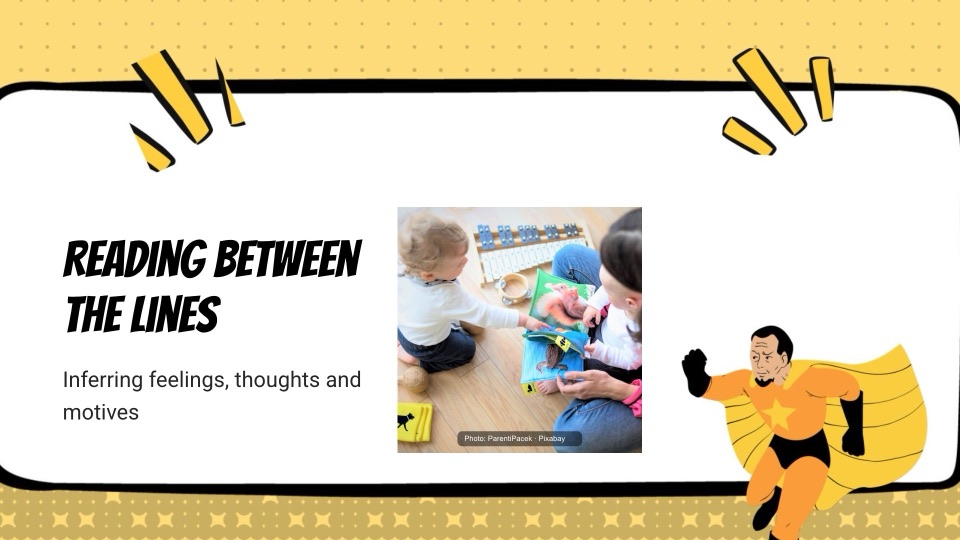
Reading Between the Lines: Feelings and Motives
Pupils learn to infer feelings, thoughts and motives from actions. They match impressions to evidence and justify ideas with quotations.
Objectives
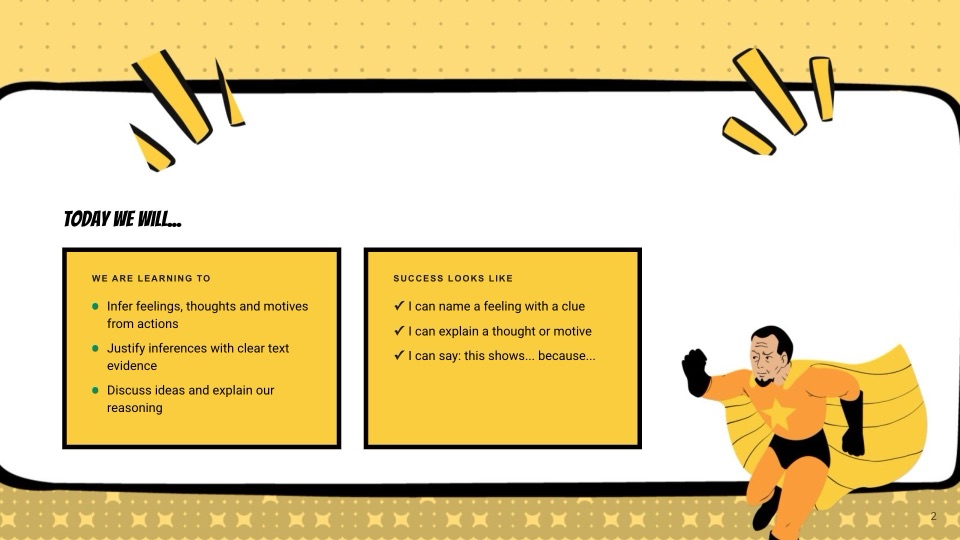
- Students will infer feelings, thoughts and motives from what is said and done.
- Students will justify inferences with precise text evidence and clear reasoning.
Success criteria
- I can name a feeling, thought or motive from actions and dialogue.
- I can prove my idea with evidence using because and suggests.
Key words
| Word | Meaning |
|---|---|
| inference | reading between the lines to work out hidden information using clues |
| evidence | exact words or actions from the text that prove an idea |
| motive | the reason why someone does something |
| impression | a one-word idea about how a character feels, for example sad or nervous |
| suggests | shows that something is true without saying it directly |
Timed plan (60 minutes)
| Time | Stage | What happens |
|---|---|---|
| 8 min | Starter | To excite pupils about detective reading and recall what inference means. Show Slides 1–2 and share objectives: infer feelings, thoughts and motives and justify with evidence. Say the hook: One side says how they feel. The other side proves it. Can you pair them up? Act out two quick clues: walking with red eyes, wet cheeks and head down, then pacing up and down while looking at a watch. Ask pairs to write one feeling word on mini-whiteboards plus the action that proves it. |
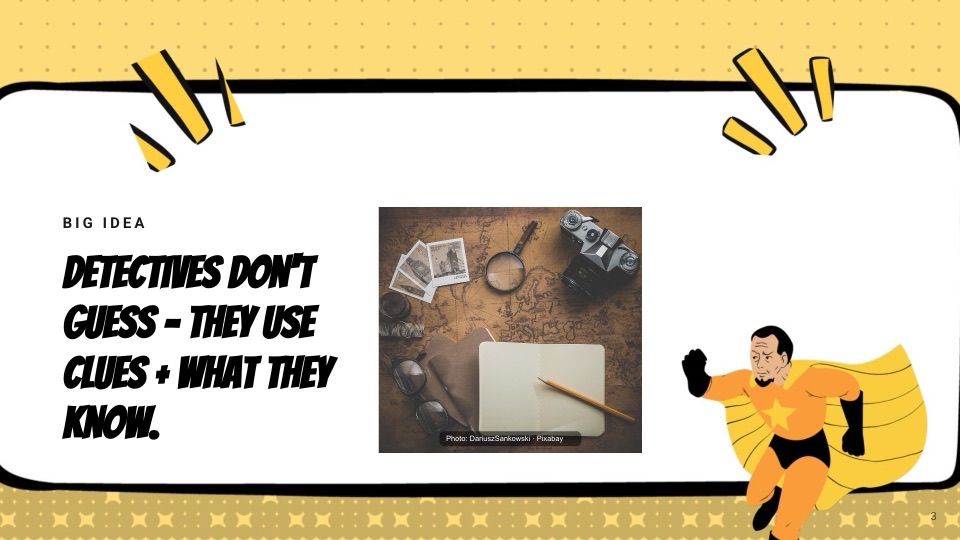
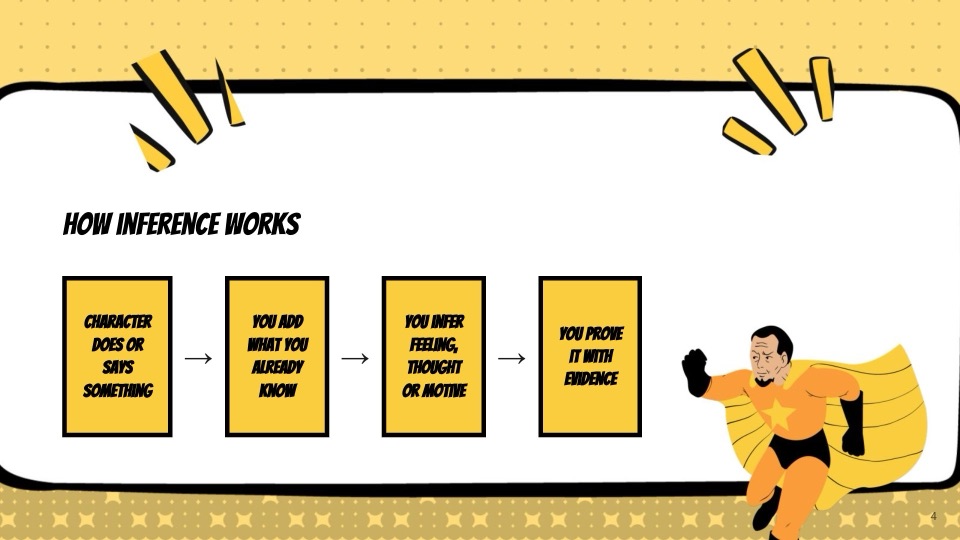
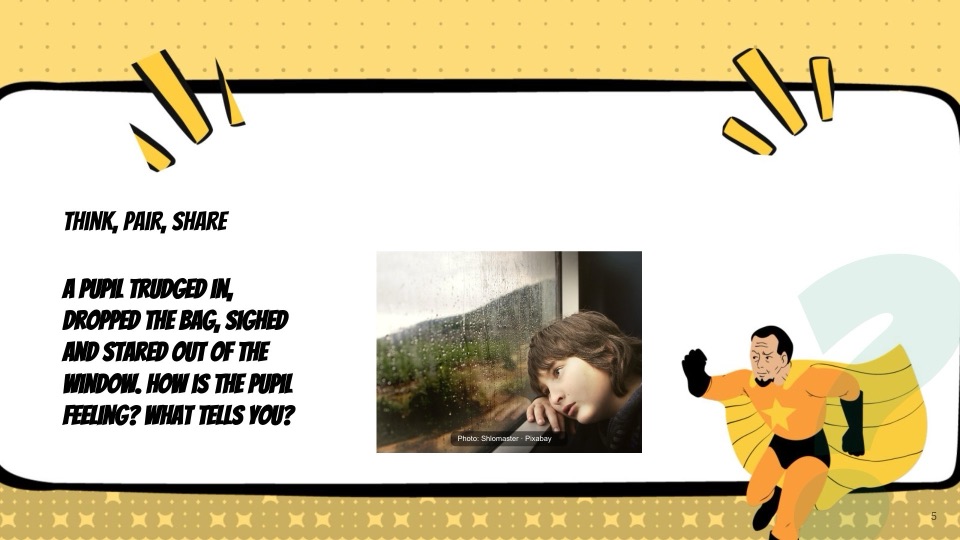
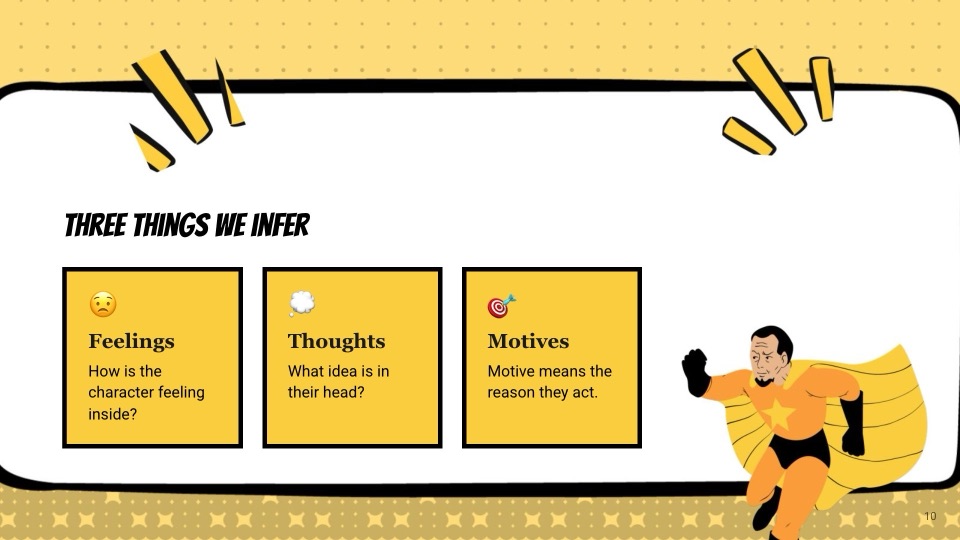
| 12 min | Teaching | To model how to combine action clues with background knowledge to infer. Show Slide 3: Detectives don't guess - they use clues + what they know, and Slide 4 chain: does or says, add what you know, infer, prove. Show Slide 5 question: A pupil trudged in, dropped the bag, sighed and stared out of the window. Model thinking aloud. Show Slide 10 Three things we infer: feelings, thoughts and motives, where motive means the reason they act. Explain that good readers use previous knowledge plus information from the text to draw conclusions and make judgements. |
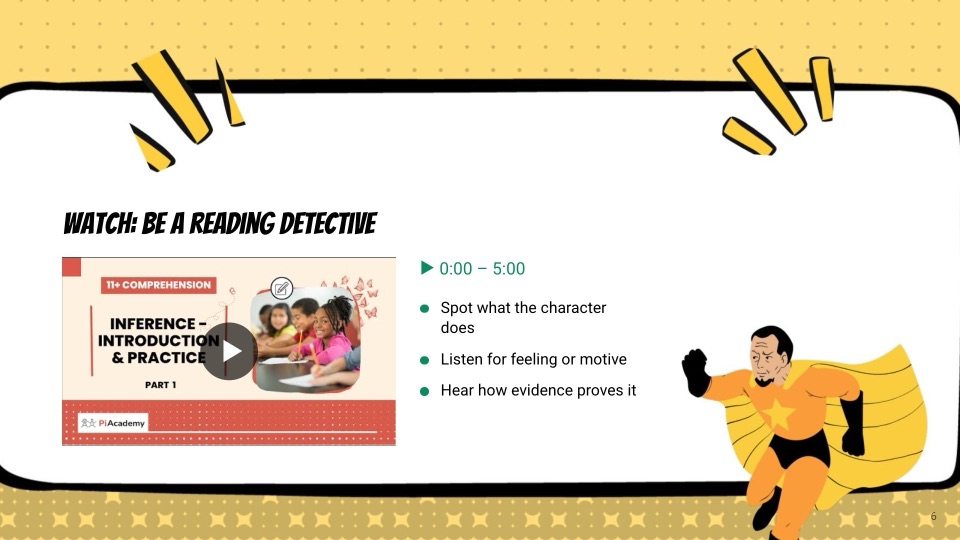
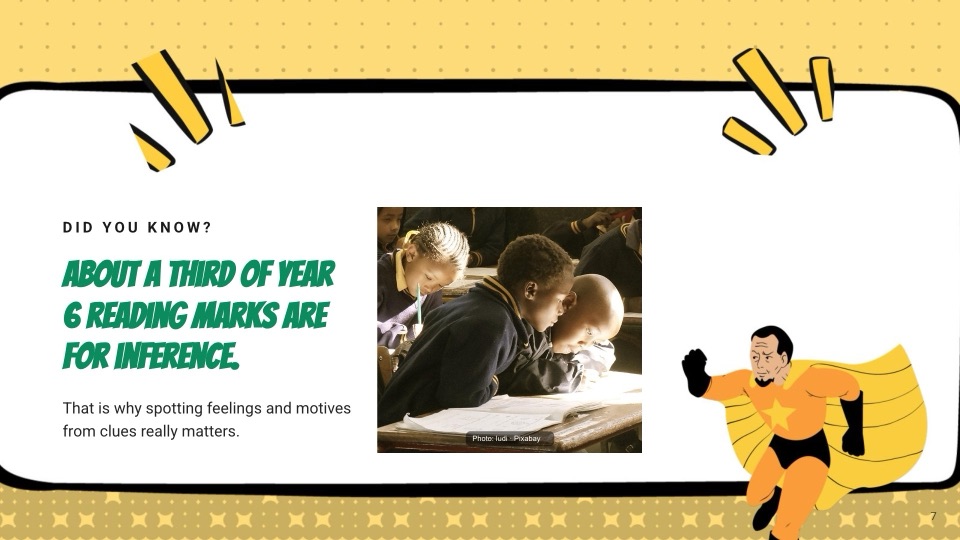
| 12 min | Guided practice | To see how detectives spot actions and link clues to evidence. Show Slide 6 Watch: Be a reading detective and play Video clip 1 (0:00–5:00) without interruption. Pause and list on board: Spot what the character does, listen for feeling or motive, hear how evidence proves it. Show Slide 7 fact and explain that of the 50 marks in the Year 6 reading paper, 30–35 per cent involve inference. Model linking one video clue to experience and saying it in your own words as a one-word impression plus proof. |
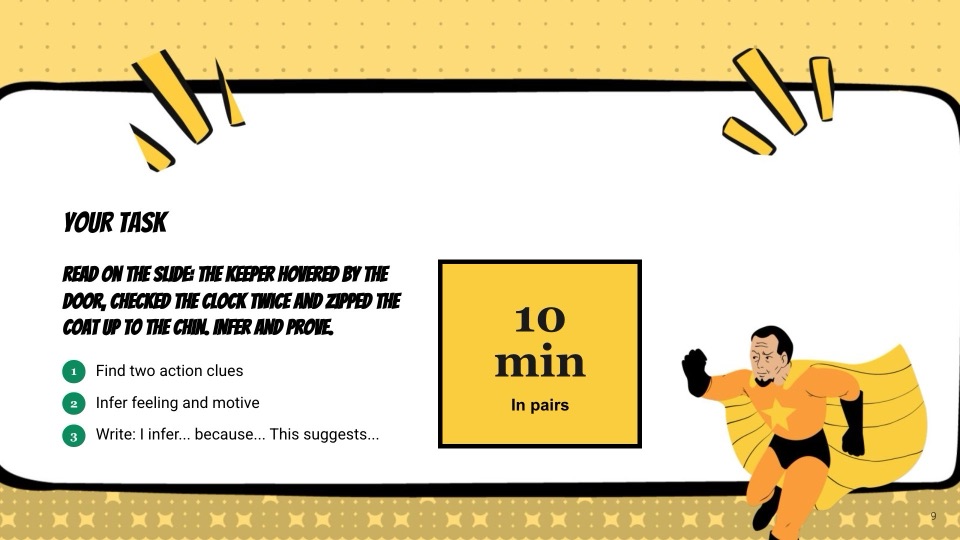
| 18 min | Main activity | To match impressions of feelings and motives to exact text evidence. Hand out sorting mats labelled Impression and Evidence from the text, impression cards and evidence strips from the passages. Direct pairs to read Paragraphs 1–3 of Passage 'The Empty Seat' and Paragraphs 1–3 of Passage 'Help in the Rain', highlighting action clues. Remind them that this suggests simply means this shows that or this means and to be active readers who want to make sense of the text. Circulate, asking pairs to read one matched pair aloud using: I infer... because... This suggests... |
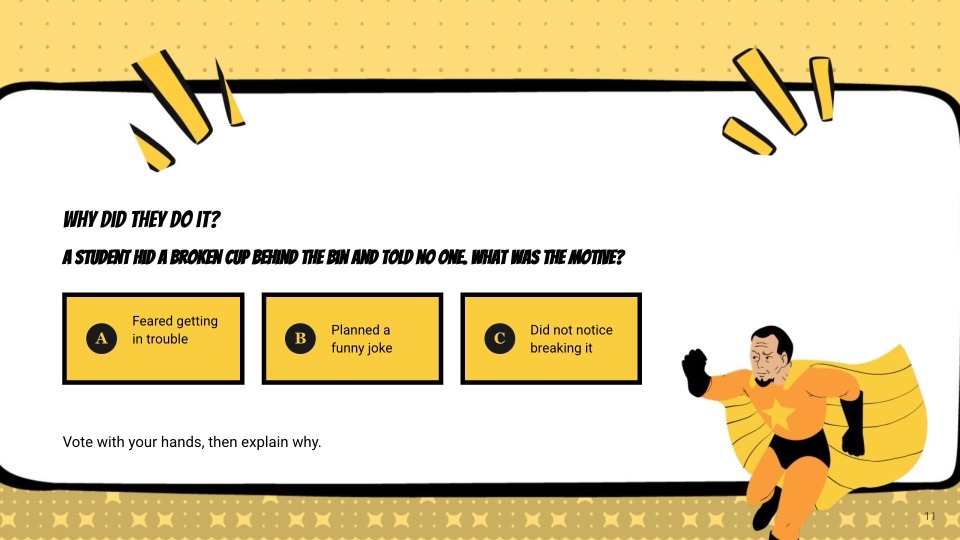
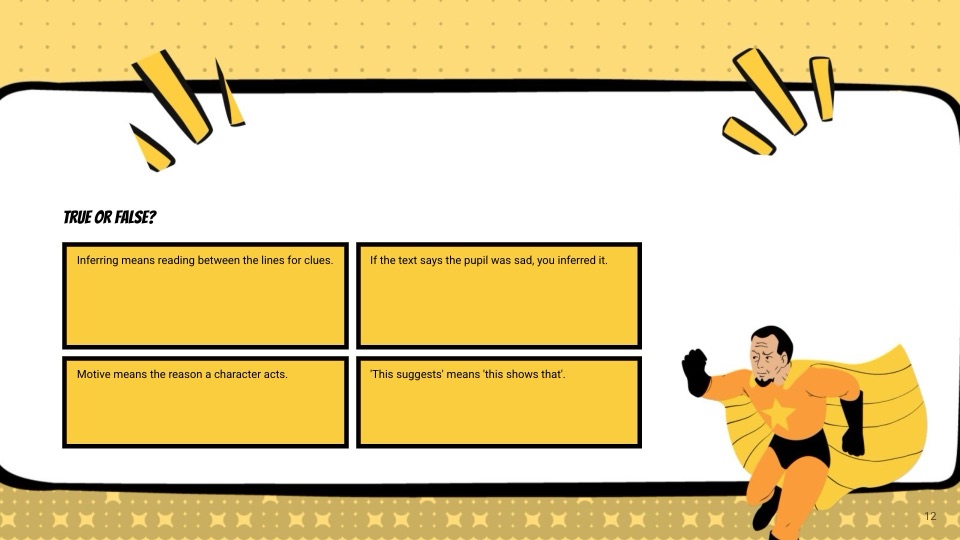
| 10 min | Plenary | To check understanding of motives and clear up inference mistakes. Show Slide 11 vote: A student hid a broken cup behind the bin and told no one. Vote for feared getting in trouble, planned a funny joke, did not notice breaking it. Ask voters to point to the action that suggests their motive and challenge views courteously with clear reasoning. Show Slide 12 True or false: inferring means reading between the lines; you use clues plus what you know; if the text says sad you inferred it. Link back to objectives and praise precise because and suggests sentences. |
Common mistakes
- Saying a stated feeling is an inference, for example the text says sad so I inferred sad.
How to spot it: Answer repeats the exact feeling word from the text with no extra clue.
Teach that inference is reading between the lines for hidden information; if stated it is retrieval, inference needs an action clue plus proof. - Giving an impression with no evidence or vague evidence like because they were upset.
How to spot it: Because sentence has no quotation or action from the text.
Insist on point plus proof using quotations for illustration; model I infer... because the text says... This suggests... - Mixing up thought and motive, for example saying the motive is sad.
How to spot it: Motive answer names a feeling not a reason for acting.
Recall motive means the reason they act; ask Why did they do it and link to what was said and done.
Support
- Feelings word bank with happy, anxious, excited, angry, sad and sentence starters throughout.
- Pre-highlighted key action words and limited three-pair sort for pupils who find it hard.
Stretch
- Add second possible motive and argue which evidence fits best.
- Write new show-not-tell evidence without naming the feeling for partners to infer.
Check questions
- A pupil folded their arms and stared at the ground, tapping one foot fast. What do you infer and what proves it?
Answer: Angry, embarrassed or upset; because folded arms, staring down and fast foot tapping suggests tension. - The student took the heavy bag with both hands without being asked. What was the motive and evidence?
Answer: Kind motive to help; without being asked took one bag with both hands and walked slowly beside the neighbour. - What does the question phrase this suggests mean?
Answer: This shows that or this means; give impression plus text proof.
Curriculum
drawing inferences such as inferring characters’ feelings, thoughts and motives from their actions, and justifying inferences with evidence
Video clips
Clips on YouTube, from the start and end times we chose. Check each one before you show it.
-
11+ inference introduction and practice from 0:00 to 5:00
PiAcademy: Inference - Introduction & Practice - Part 1 | 11+ Comprehension | PiAcademy
Directly models inferring characters' feelings, thoughts and motives with evidence at exactly Year 6 age 10-11 level.
-
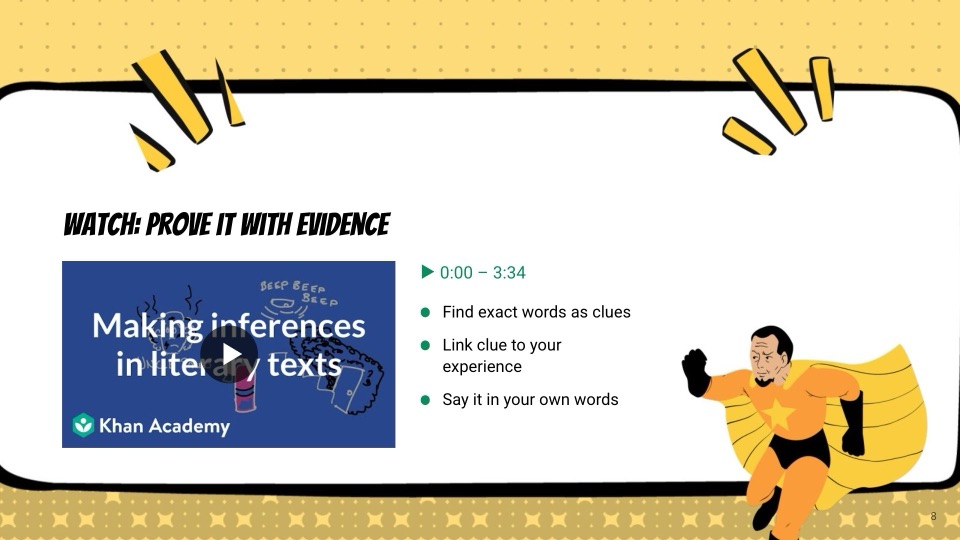
Making inferences in Year 5-6 reading from 0:00 to 3:34
Khan Academy: Making inferences in literary texts | Reading | Khan Academy
Made for 10-11-year-olds and shows how to justify inferences with evidence from the story.
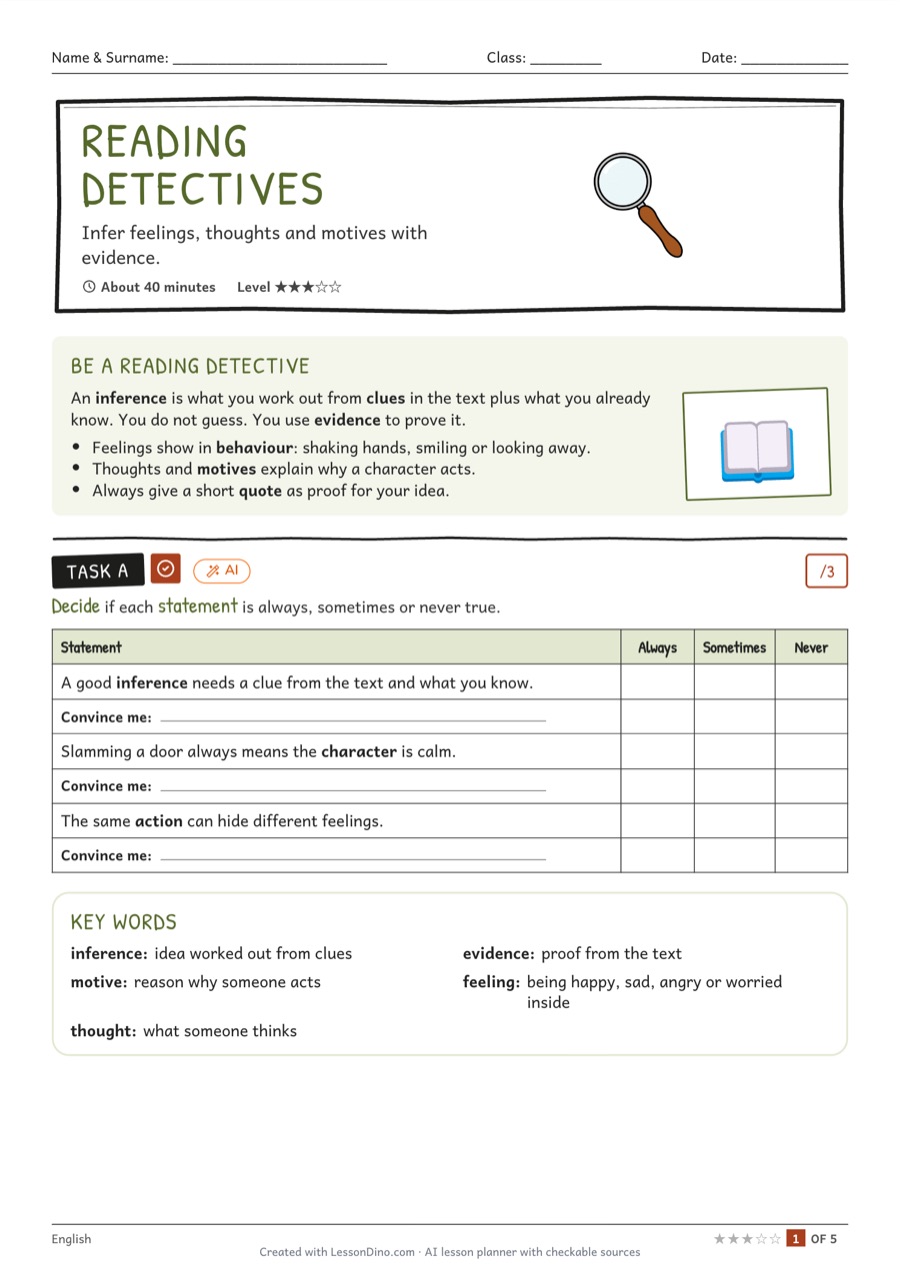
Worksheet
Sources
- National curriculum in England: English programmes of study assets.publishing.service.gov.uk
- Year 6 English Curriculum lenham.kent.sch.uk
- Effective Teaching of Inference Skills for Reading nfer.ac.uk
- Comprehension - KS2 English - BBC Bitesize bbc.co.uk
- What is inference? - BBC Bitesize bbc.co.uk
- Comprehension Primary Resources | National Geographic Kids natgeokids.com
- What is Inference? Helping Young Readers Become Critical Thinkers phonics.org
- Inference in reading comprehension - Bedrock Learning bedrocklearning.org
- Reading comprehension Year 6 – Inference practice questions - Teachwire teachwire.net
Picture credits
- Photo: ParentiPacek · Pixabay
- Photo: DariuszSankowski · Pixabay
- Photo: Shlomaster · Pixabay
- Photo: ludi · Pixabay
- Microsoft Fluent Emoji (MIT)
- Pictograms: Sergio Palao, ARASAAC (arasaac.org) · CC BY-NC-SA
Made with Lesson Dino's AI on 17 October 2026. AI can make mistakes, so check facts against the sources before you teach.