The worksheet
About this worksheet
Pupils learn to add information about a noun with relative clauses. They write and solve classroom object riddles using different relative pronouns. This Year 5 English worksheet gives students (ages 9–10) six pages of practice on relative clauses, part of the grammar and punctuation unit. It goes with our free Relative clauses lesson, which has the slides and a timed lesson plan.
What it covers
By the end, students should be able to:
- Students will use who, which, where, when, whose and that to describe a noun.
- Students will join two ideas into one clear sentence with a relative clause.
- Students will leave out that when the sentence still makes sense.
How to use it
- Use it for practice after the teaching part of the lesson, once students have seen the worked examples on the slides.
- Support: Clue mat and word bank with starters a tool which..., a box where..., a break when...
- Stretch: Write the same sentence with that and with who or which and explain if both sound right.
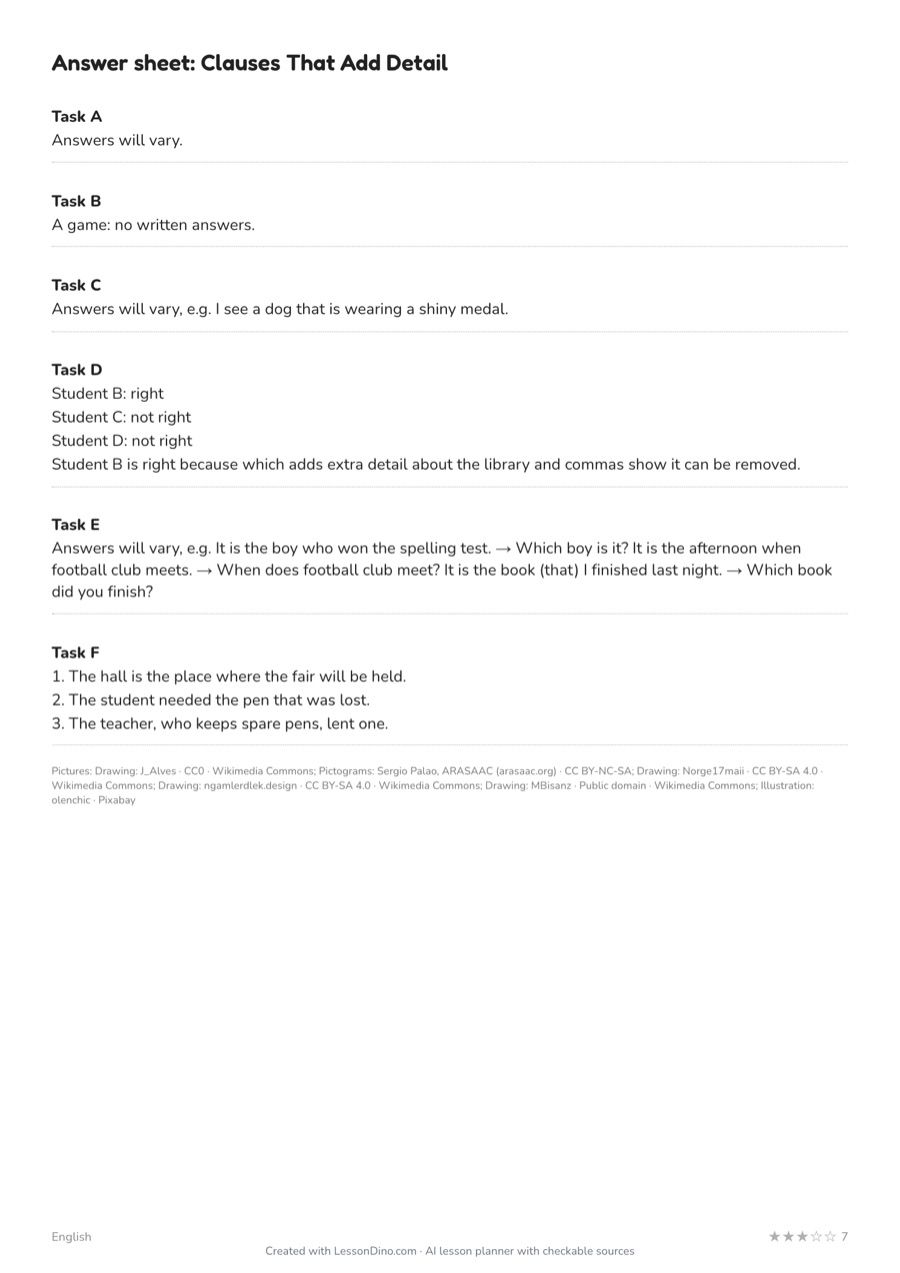
- The answer sheet is the last page, so you can print it on its own or let students check their own work.
Key vocabulary
- relative clause: extra words that tell more about a person, place or thing
- relative pronoun: linking word such as who or that that starts the extra words
- noun: a naming word for a person, place or thing
- where: linking word that gives more detail about a place
- omit: to leave out a word when the sentence still sounds right
Mistakes to watch for
- Using who for things or which for people. Recall who is used only with a person and which with a thing; swap and re-read.
- Leaving out a subject pronoun, e.g. the classmate helped me. Show omission works for object that, but subject who or that must be kept; test by putting that back.
- Using that inside commas for extra detail. Explain that is used only in restrictive clauses and is not preceded by a comma; change to which.
What's on the worksheet
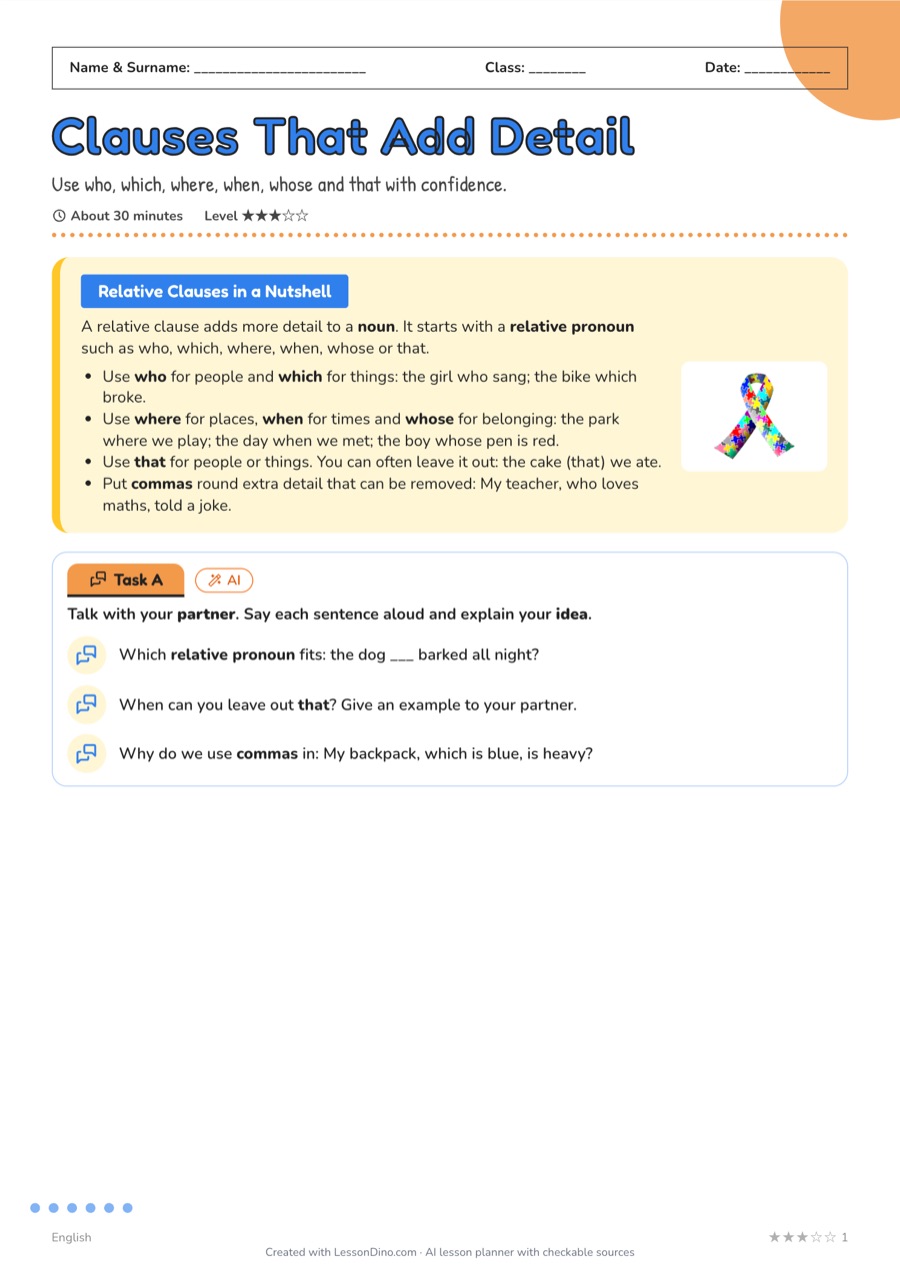
Meet Relative Clauses
Learn how extra clauses add detail to nouns.
Relative Clauses in a Nutshell
- A relative clause adds more detail to a noun. It starts with a relative pronoun such as who, which, where, when, whose or that.
- Use who for people and which for things: the girl who sang; the bike which broke.
- Use where for places, when for times and whose for belonging: the park where we play; the day when we met; the boy whose pen is red.
- Use that for people or things. You can often leave it out: the cake (that) we ate.
- Put commas round extra detail that can be removed: My teacher, who loves maths, told a joke.
Talk with your partner. Say each sentence aloud and explain your idea.
- Which relative pronoun fits: the dog ___ barked all night?
- When can you leave out that? Give an example to your partner.
- Why do we use commas in: My backpack, which is blue, is heavy?
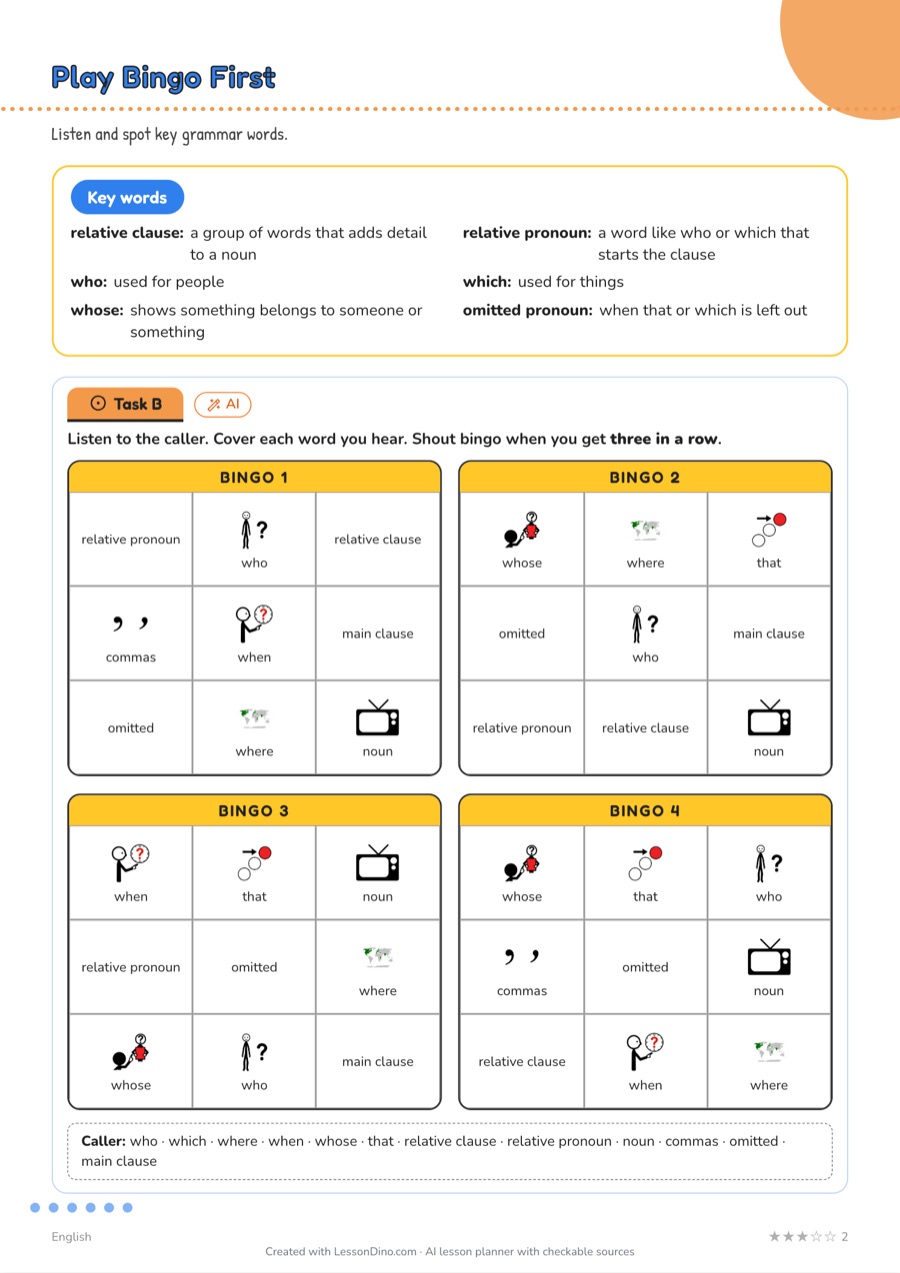
Play Bingo First
Listen and spot key grammar words.
| Word | Meaning |
|---|---|
| relative clause | a group of words that adds detail to a noun |
| relative pronoun | a word like who or which that starts the clause |
| who | used for people |
| which | used for things |
| whose | shows something belongs to someone or something |
| omitted pronoun | when that or which is left out |
Listen to the caller. Cover each word you hear. Shout bingo when you get three in a row.
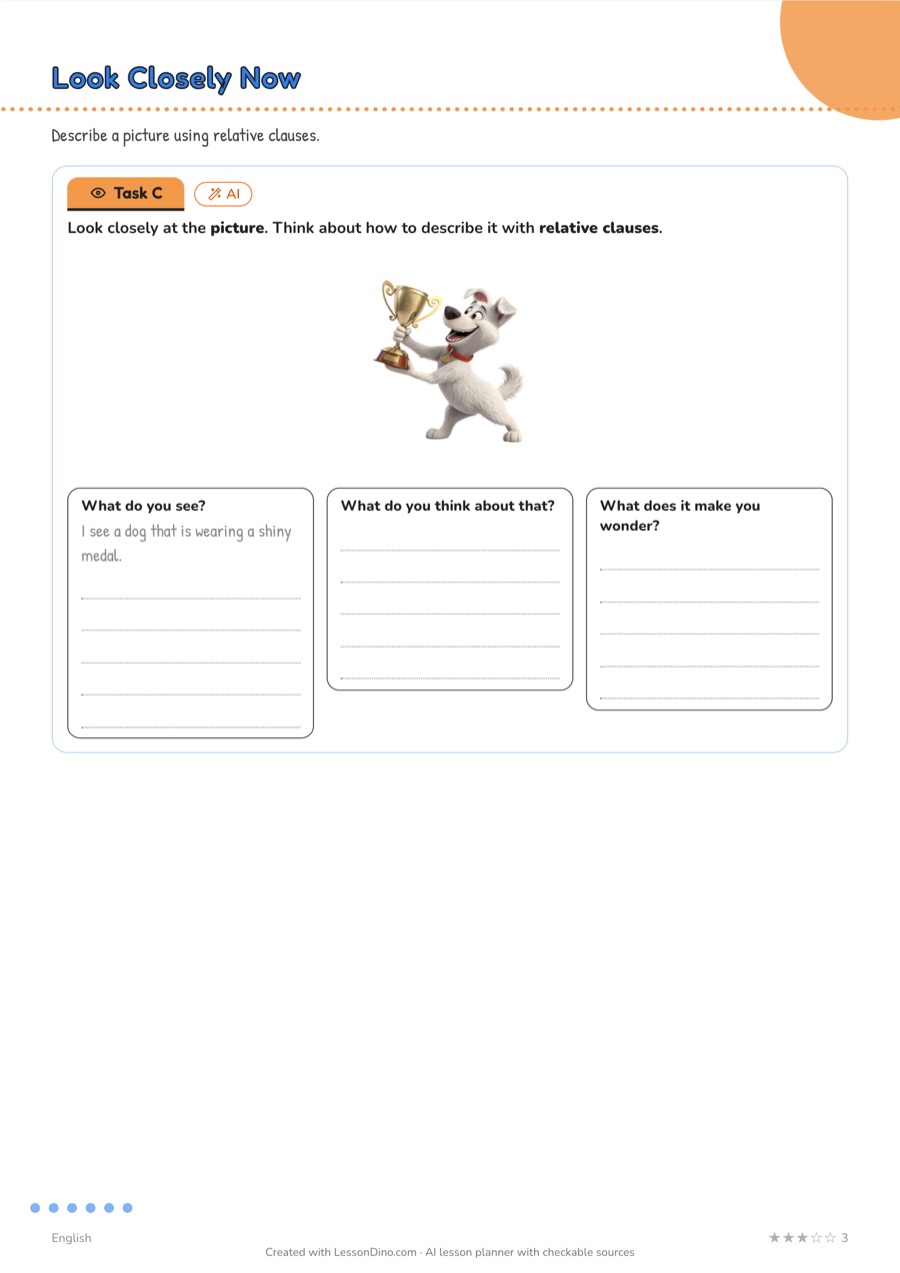
Look Closely Now
Describe a picture using relative clauses.
Look closely at the picture. Think about how to describe it with relative clauses.
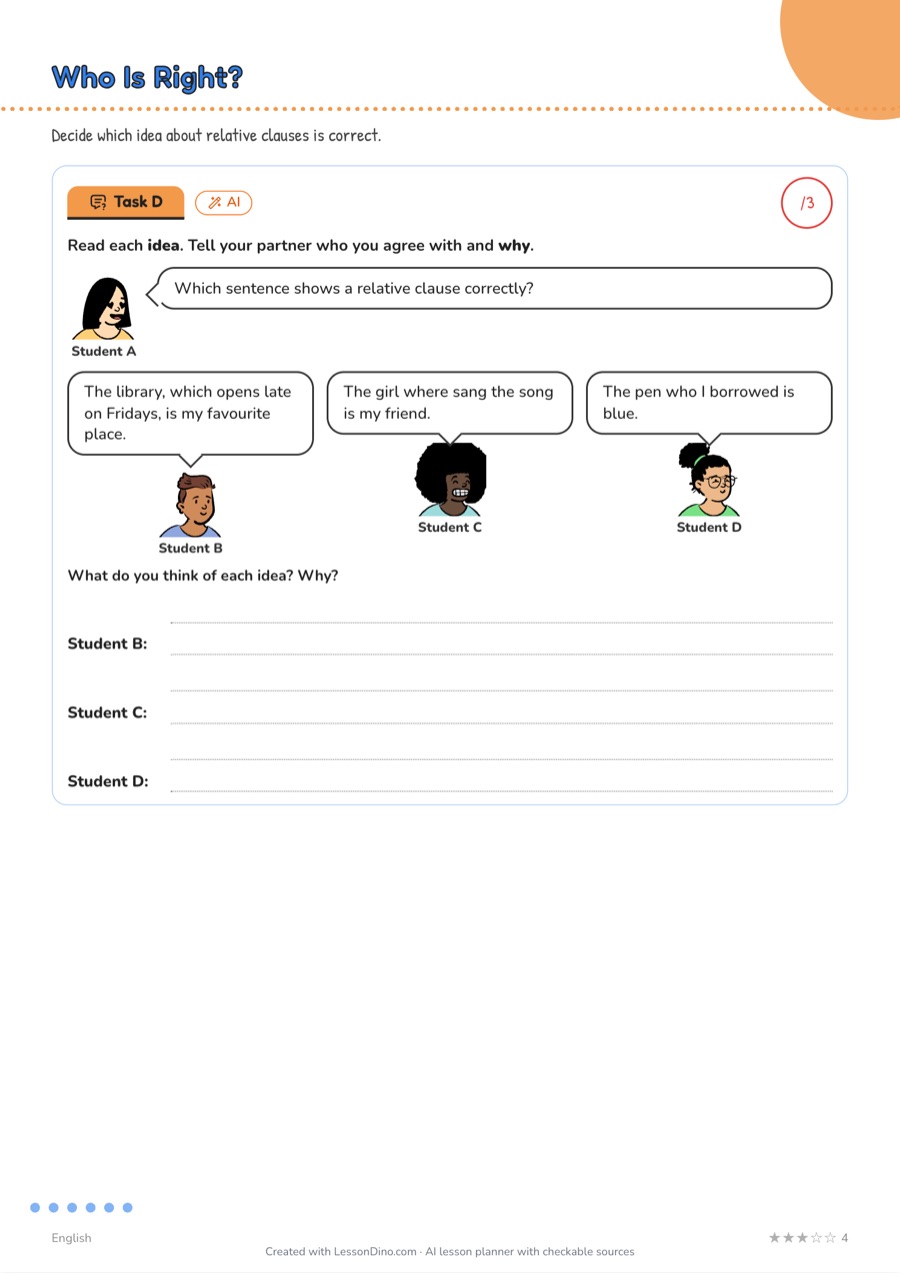
Who Is Right?
Decide which idea about relative clauses is correct.
Read each idea. Tell your partner who you agree with and why.
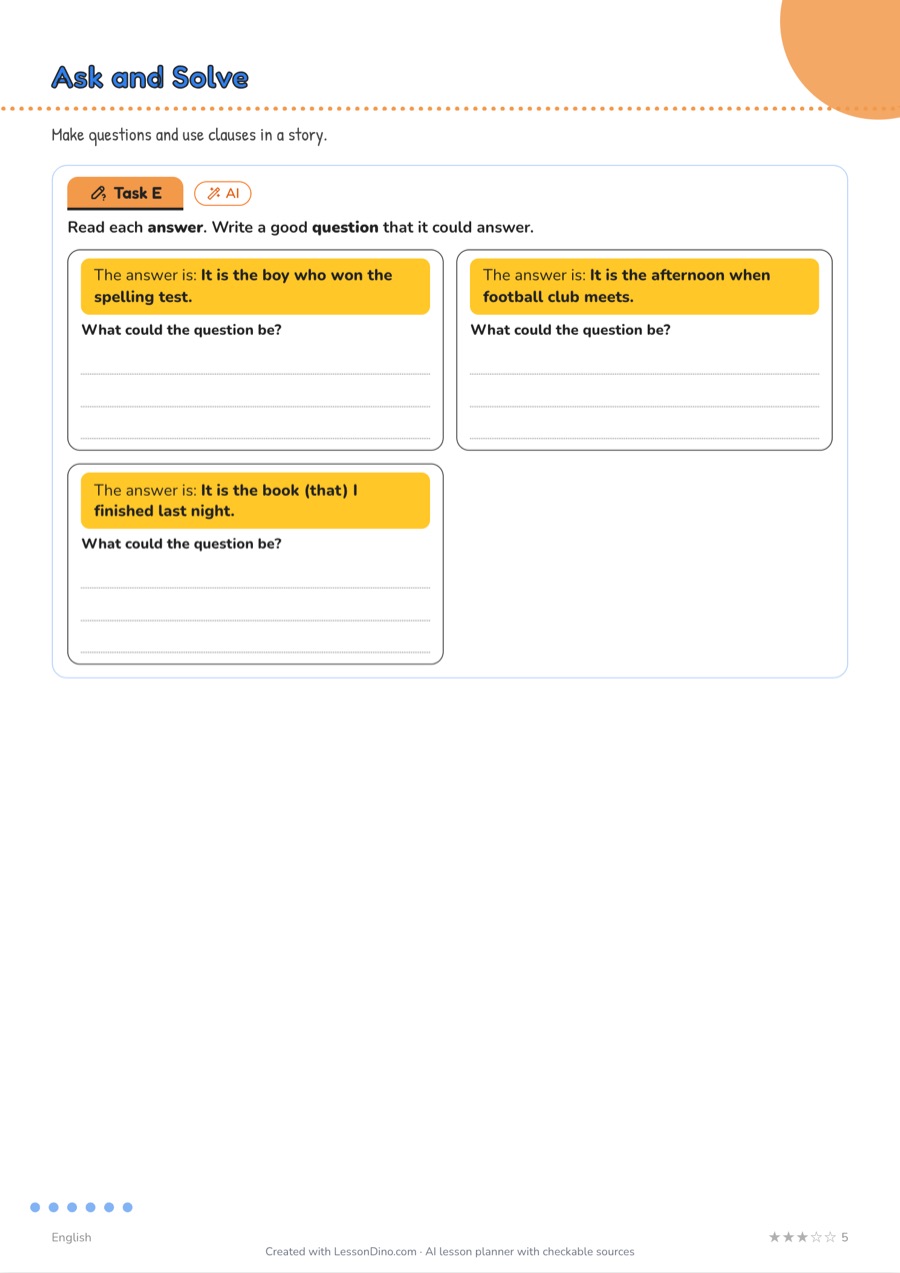
Ask and Solve
Make questions and use clauses in a story.
Read each answer. Write a good question that it could answer.
Page 6
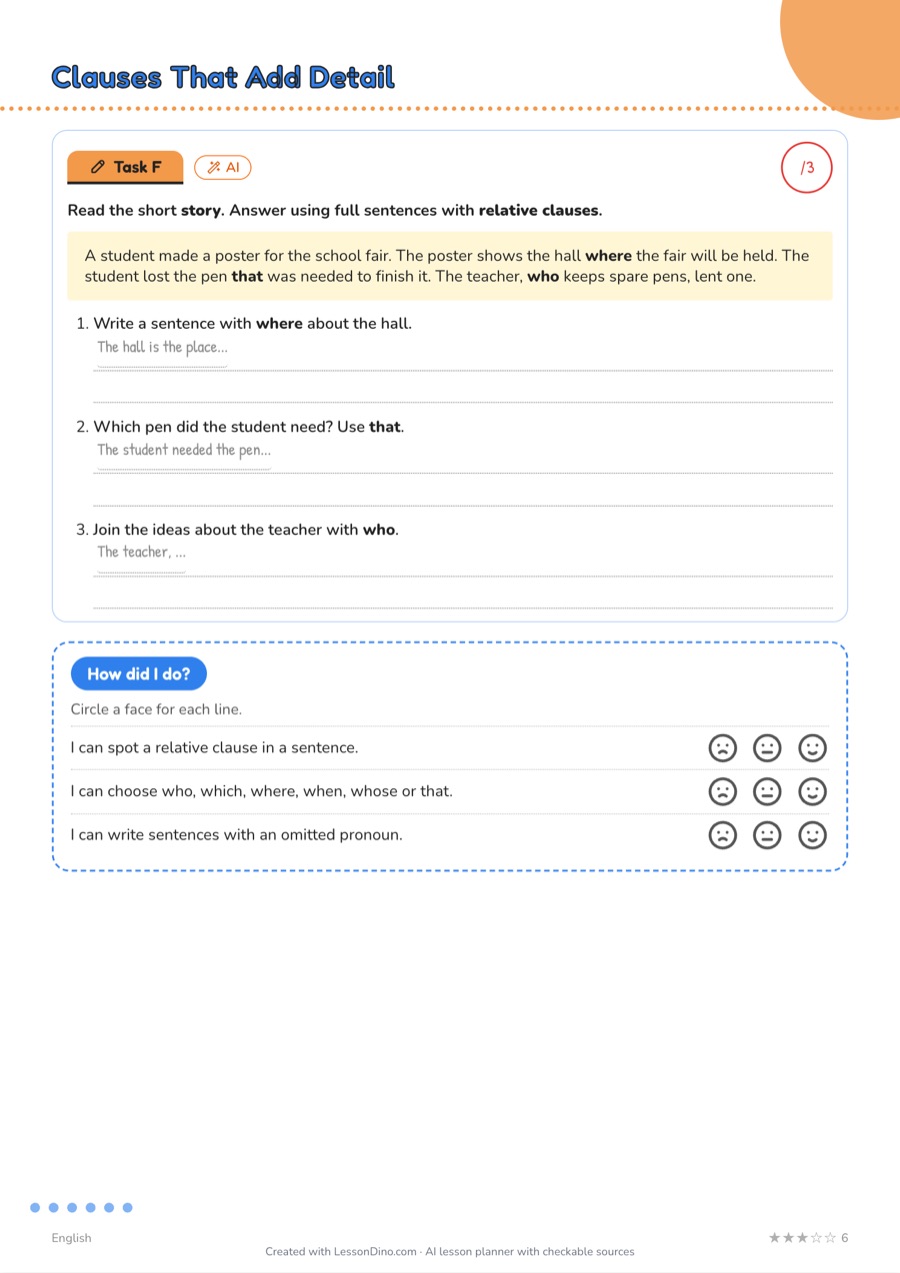
Read the short story. Answer using full sentences with relative clauses.
- Write a sentence with where about the hall.
- Which pen did the student need? Use that.
- Join the ideas about the teacher with who.
Answers
Show the answers
- Write a sentence with where about the hall. The hall is the place where the fair will be held.
- Which pen did the student need? Use that. The student needed the pen that was lost.
- Join the ideas about the teacher with who. The teacher, who keeps spare pens, lent one.
The answer sheet is the last picture above.
Curriculum
using relative clauses beginning with who, which, where, when, whose, that or with an implied (ie omitted) relative pronoun
Made with Lesson Dino's AI on 17 October 2026. AI can make mistakes, so check the answers and facts against the sources before you teach.