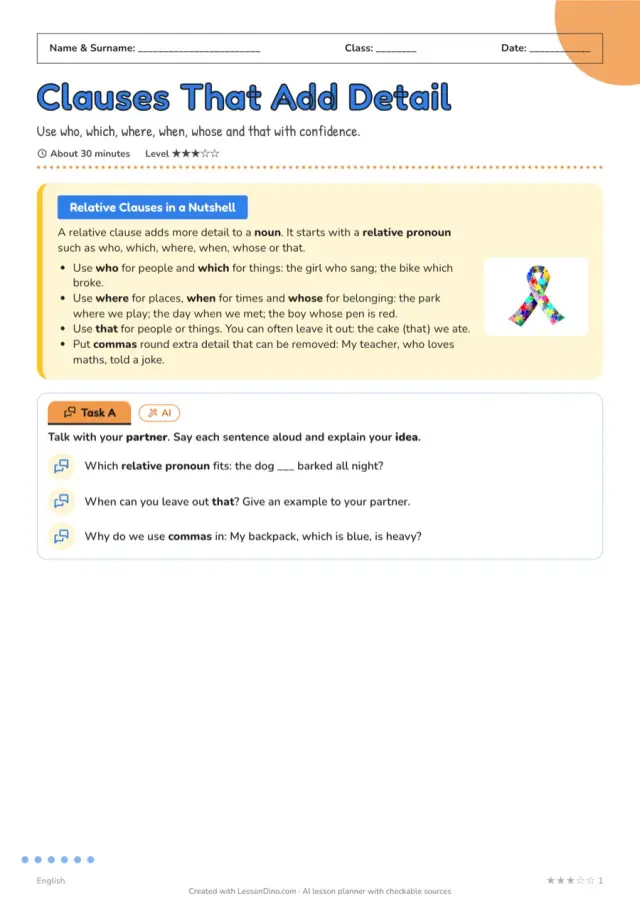
The worksheet
About this worksheet
Pupils learn to show how sure they are with modal verbs and adverbs. They order words on a washing line and write ranked predictions. This Year 5 English worksheet gives students (ages 9–10) six pages of practice on modal verbs, part of the writing - vocabulary, grammar and punctuation unit. It goes with our free Modal verbs lesson, which has the slides and a timed lesson plan.
What it covers
By the end, students should be able to:
- Students will use modal verbs to show degrees of possibility.
- Students will use adverbs to show how sure they are.
- Students will choose stronger or weaker words on purpose.
How to use it
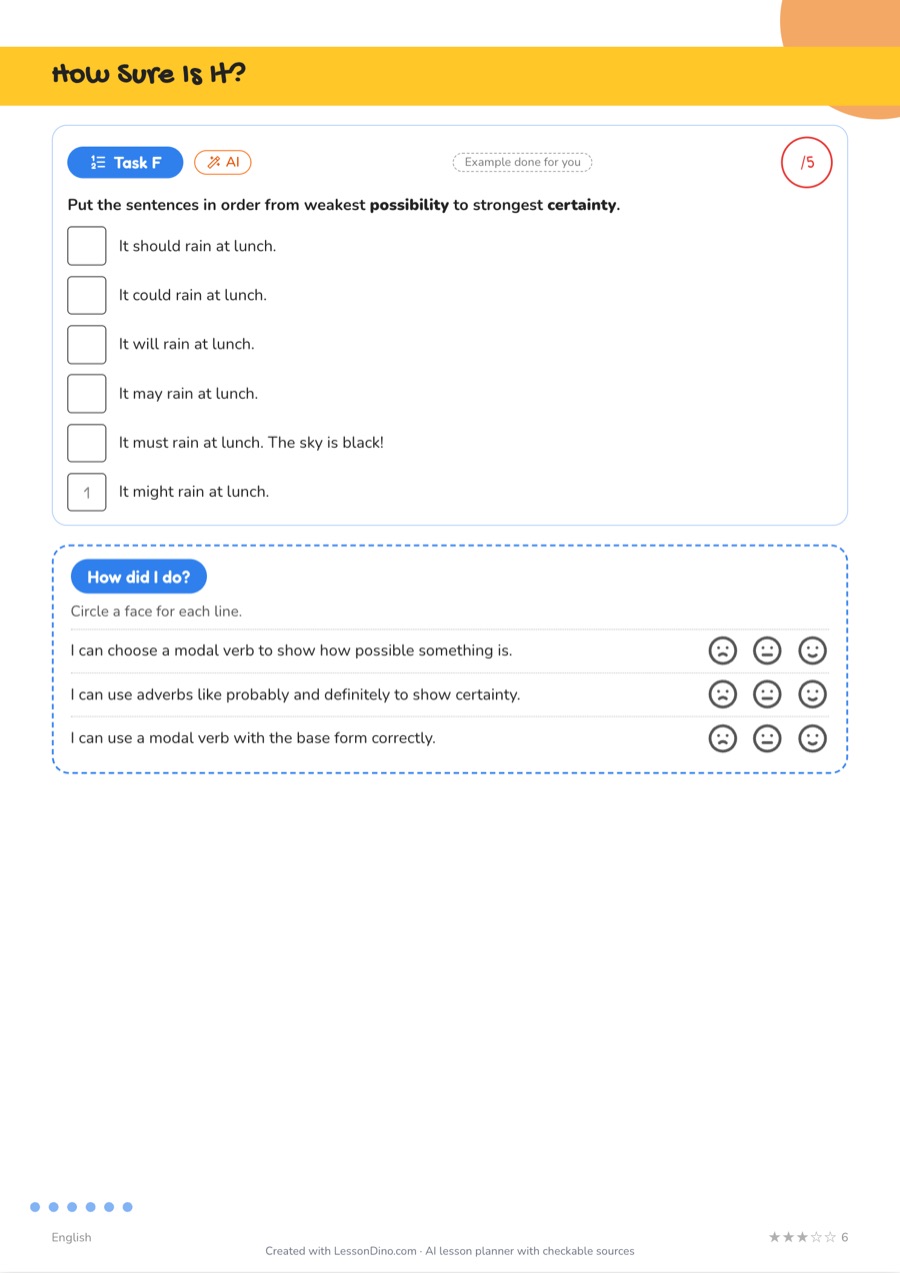
- Main activity (20 minutes): Hand out Worksheet Task F; pairs cut or number the sentences from weakest possibility to strongest certainty to check the line.
- Support: Use partly finished washing line with will at certain end and might in middle so pupils only place must, should, could and may.
- Stretch: Add certainly, probably, maybe and definitely to sentences and explain how the adverb changes degree even when modal stays same.
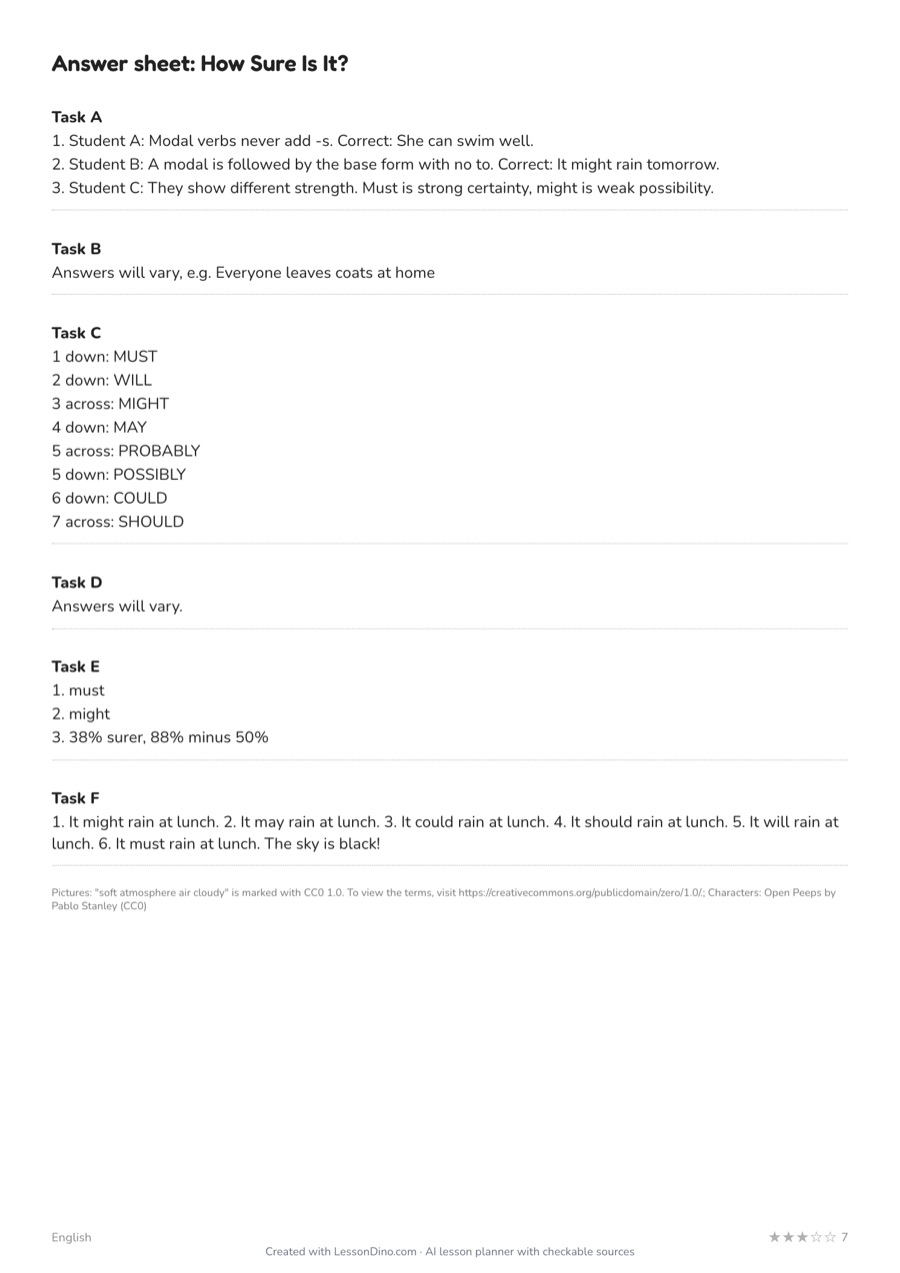
- The answer sheet is the last page, so you can print it on its own or let students check their own work.
Key vocabulary
- modal verb: a little helper that goes with an action to show how likely or needed it is
- adverb: a describing word that says more about how surely something happens
- possibility: how likely it is that something will happen
- certain: very sure, with almost no doubt
- impossible: something that cannot happen or be true
- base form: the simplest form of an action, with no extra ending added
Mistakes to watch for
- Adding to, -s, -ed or -ing after a modal, for example She must to finish or He cans swim. Put the base form straight after with no to: She must finish, He can swim, because a modal verb is always followed directly by the base form and core modals do not normally take -s.
- Stacking two modals, for example She might could go. Keep only the one that matches meaning, for example She might go, because use only one modal verb per verb phrase in standard English.
- Treating should and must as equal, or might as certain. Teach must is a lot more forceful than should, which sounds more like advice; will shows certain or extremely likely while may and might express less certainty.
What's on the worksheet
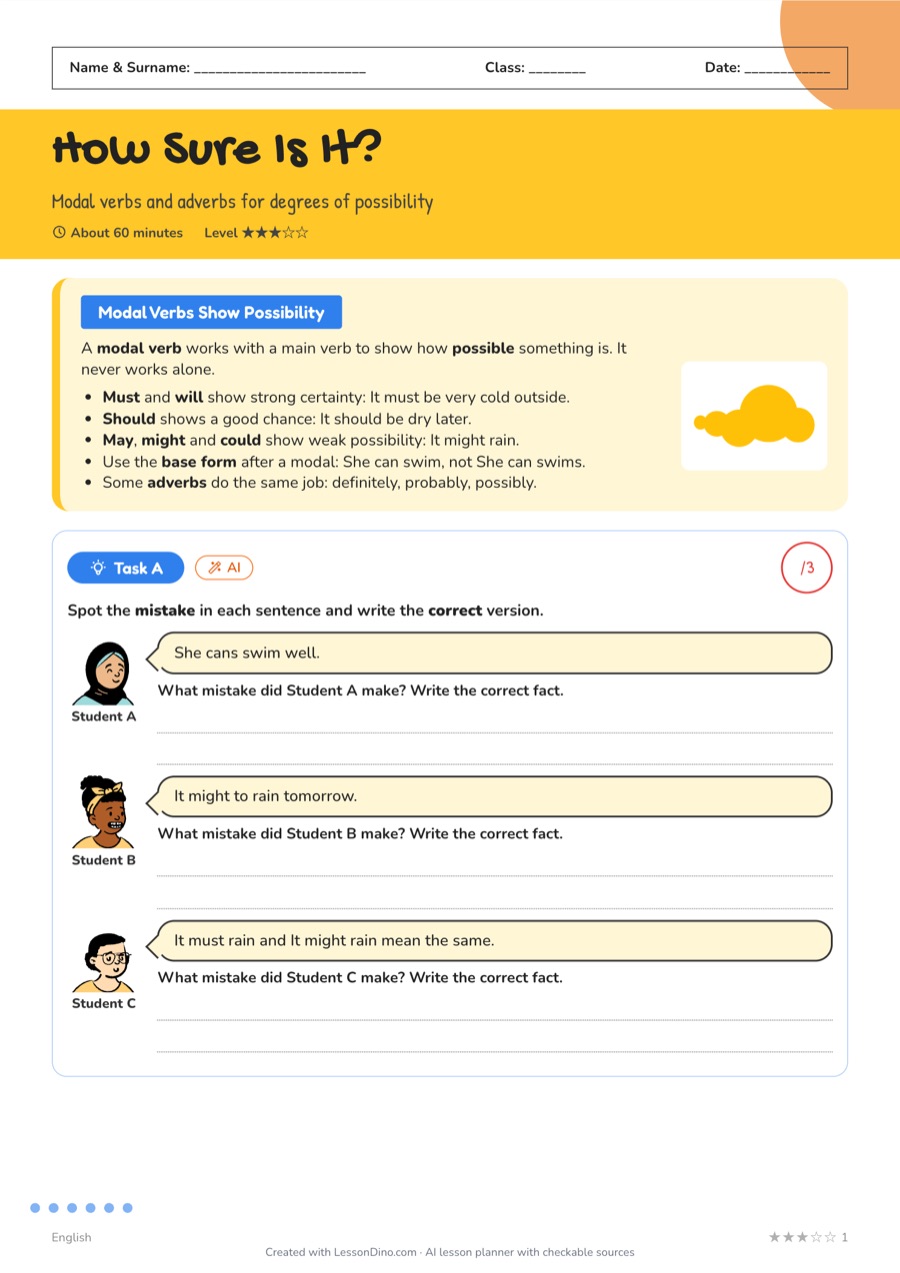
How Sure Are You?
Learn how modals and adverbs show degrees of possibility.
Modal Verbs Show Possibility
- A modal verb works with a main verb to show how possible something is. It never works alone.
- Must and will show strong certainty: It must be very cold outside.
- Should shows a good chance: It should be dry later.
- May, might and could show weak possibility: It might rain.
- Use the base form after a modal: She can swim, not She can swims.
- Some adverbs do the same job: definitely, probably, possibly.
Spot the mistake in each sentence and write the correct version.
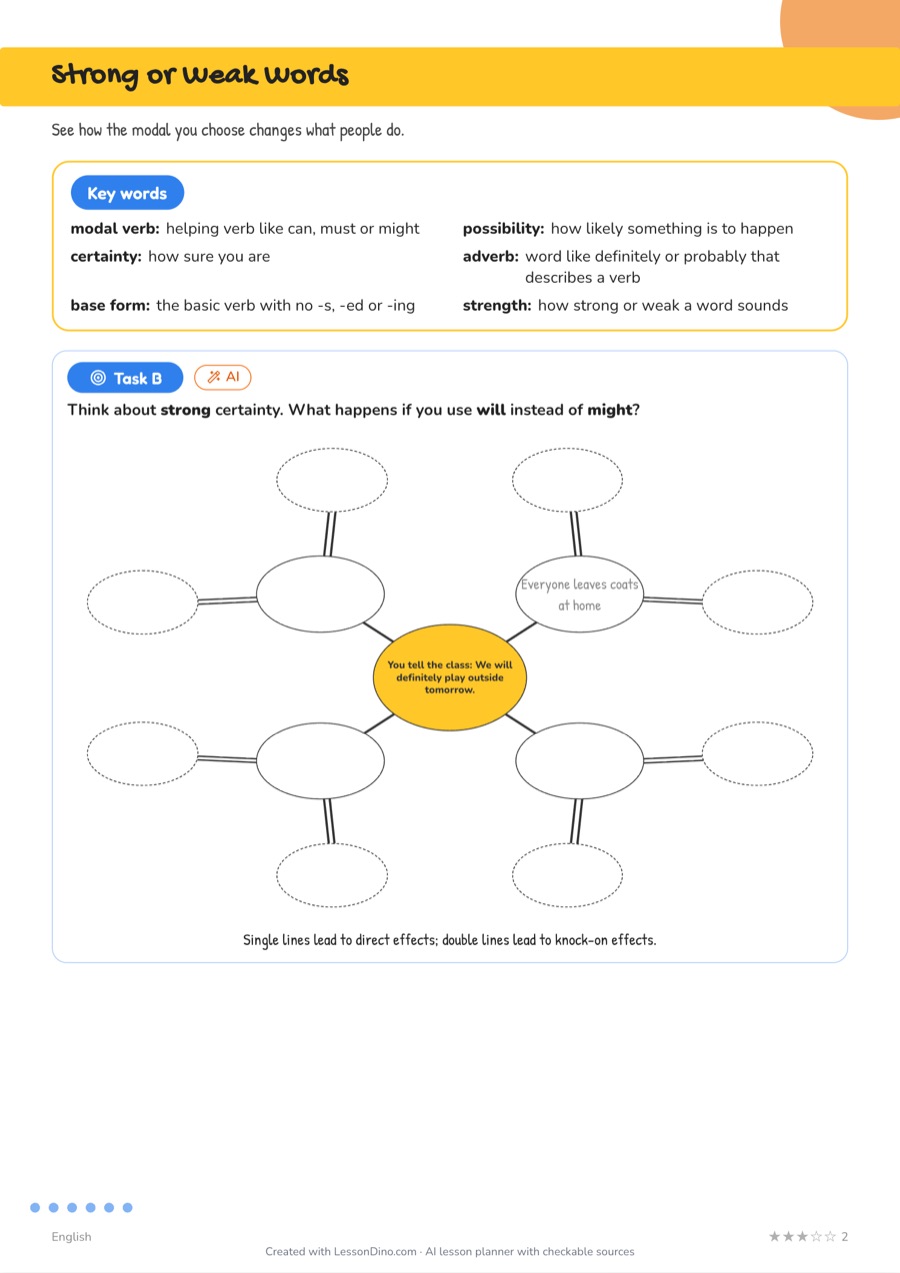
Strong or Weak Words
See how the modal you choose changes what people do.
| Word | Meaning |
|---|---|
| modal verb | helping verb like can, must or might |
| possibility | how likely something is to happen |
| certainty | how sure you are |
| adverb | word like definitely or probably that describes a verb |
| base form | the basic verb with no -s, -ed or -ing |
| strength | how strong or weak a word sounds |
Think about strong certainty. What happens if you use will instead of might?
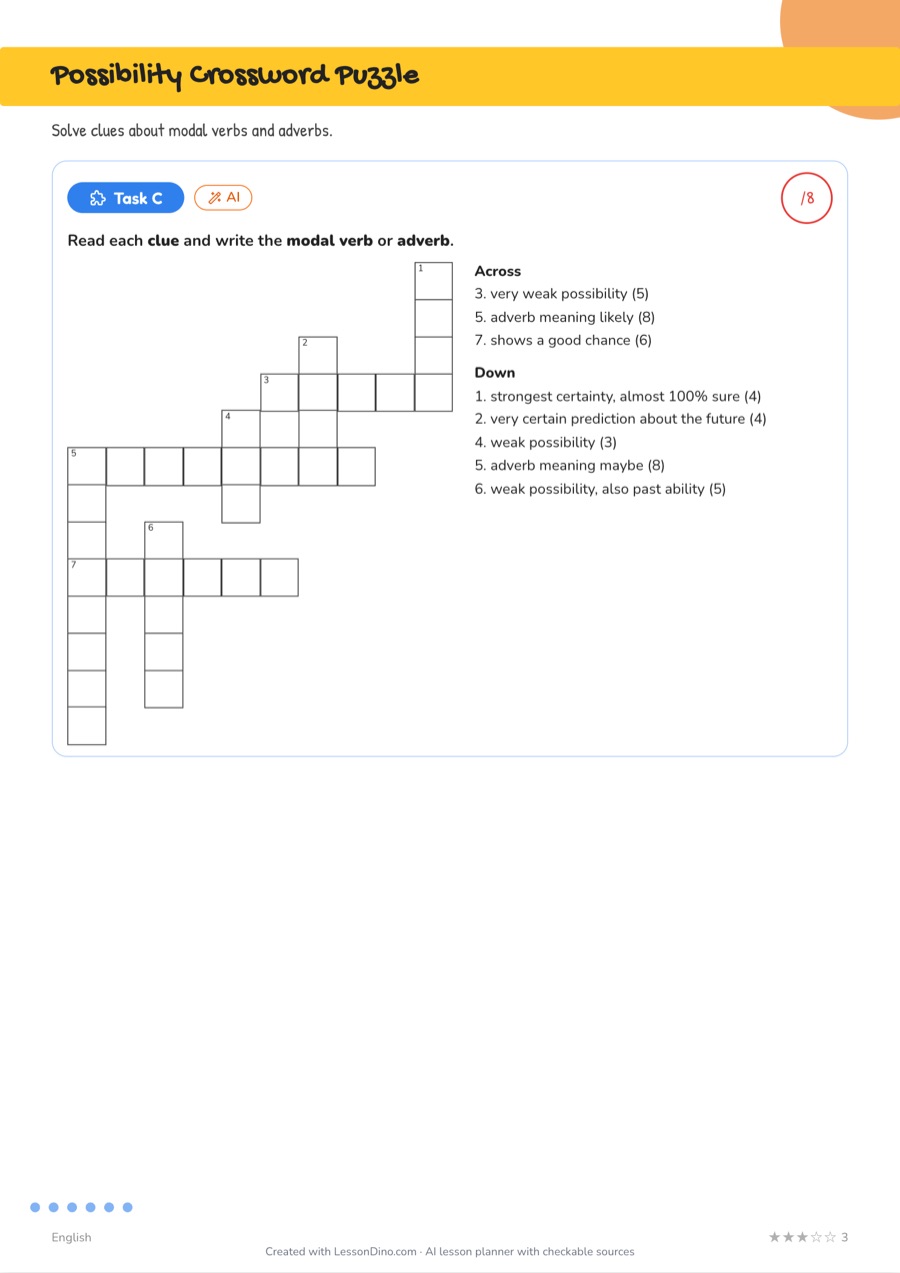
Possibility Crossword Puzzle
Solve clues about modal verbs and adverbs.
Read each clue and write the modal verb or adverb.
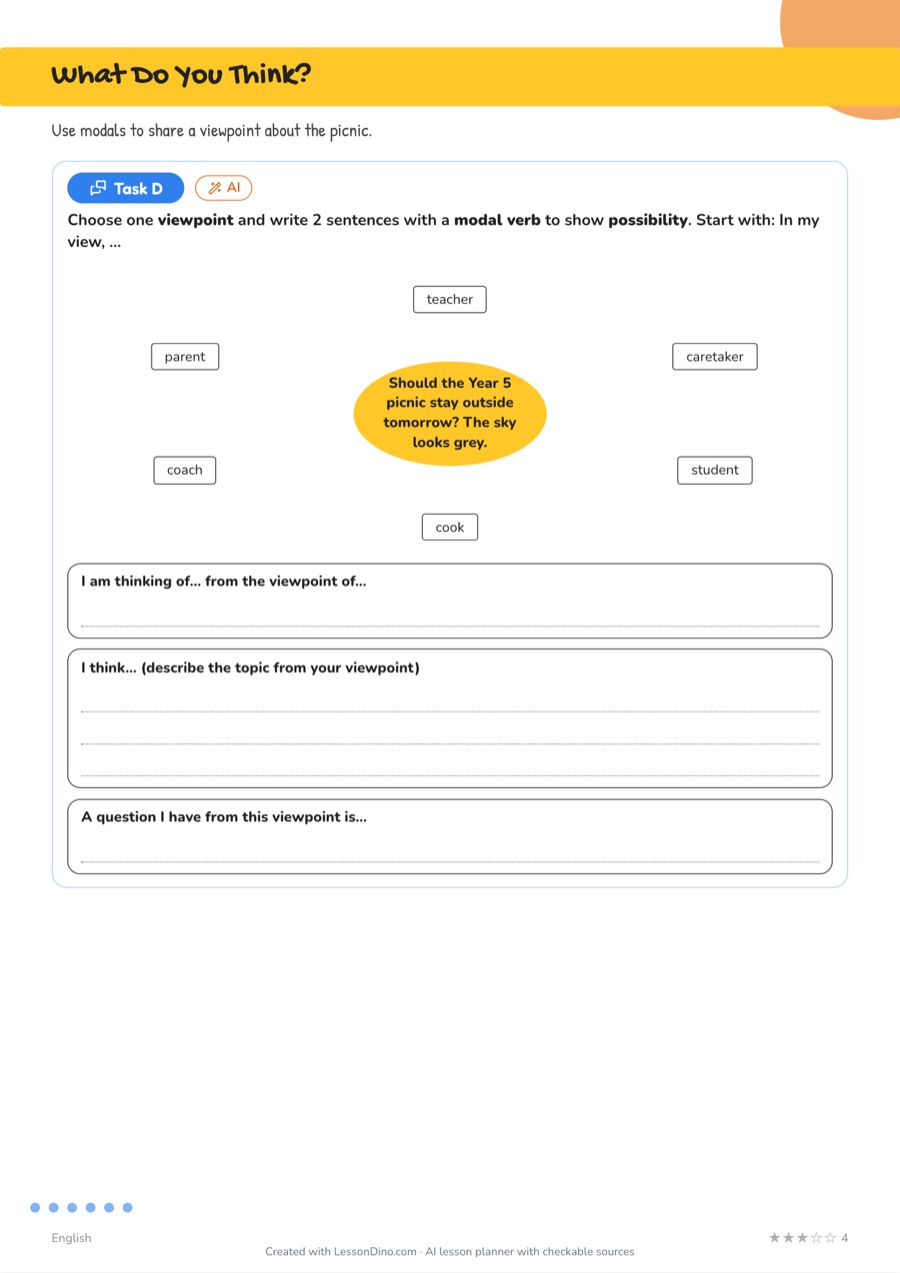
What Do You Think?
Use modals to share a viewpoint about the picnic.
Choose one viewpoint and write 2 sentences with a modal verb to show possibility. Start with: In my view, ...
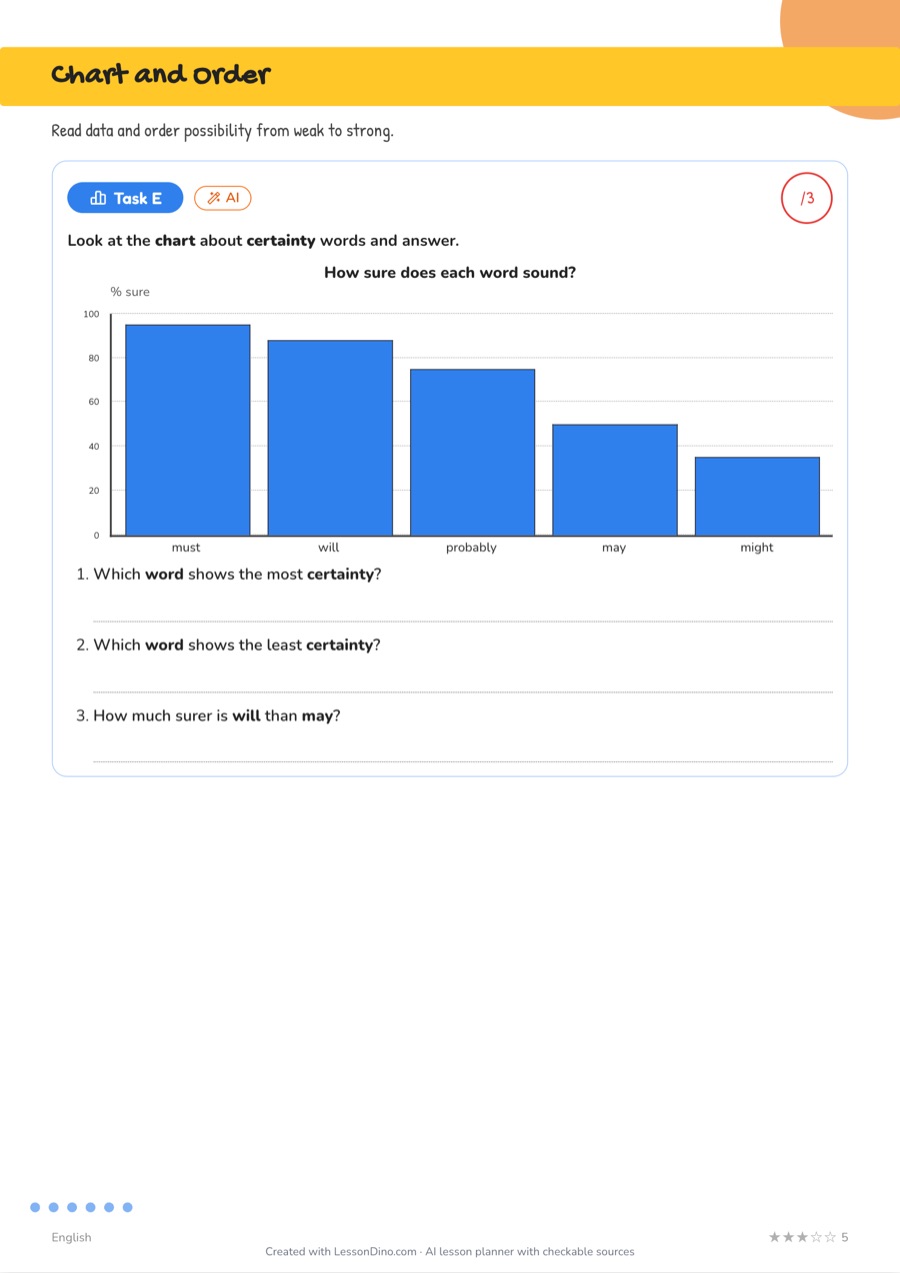
Chart and Order
Read data and order possibility from weak to strong.
Look at the chart about certainty words and answer.
- Which word shows the most certainty?
- Which word shows the least certainty?
- How much surer is will than may?
Page 6
Put the sentences in order from weakest possibility to strongest certainty.
Answers
Show the answers
- Which word shows the most certainty? must
- Which word shows the least certainty? might
- How much surer is will than may? 38% surer, 88% minus 50%
The answer sheet is the last picture above.
Curriculum
using modal verbs or adverbs to indicate degrees of possibility
Made with Lesson Dino's AI on 17 October 2026. AI can make mistakes, so check the answers and facts against the sources before you teach.