The worksheet
About this worksheet
Pupils learn to start sentences big and finish them neatly. They sort telling, asking and shouting voices and write tidy sentences. This Year 1 English worksheet gives students (ages 5–6) five pages of practice on capital letters and full stops, part of the grammar and punctuation unit. It goes with our free Capital letters and full stops lesson, which has the slides and a timed lesson plan.
What it covers
By the end, students should be able to:
- Students will start each sentence with a capital letter, including I.
- Students will end telling sentences with a full stop.
- Students will choose a question mark for asks and exclamation for shouts.
How to use it
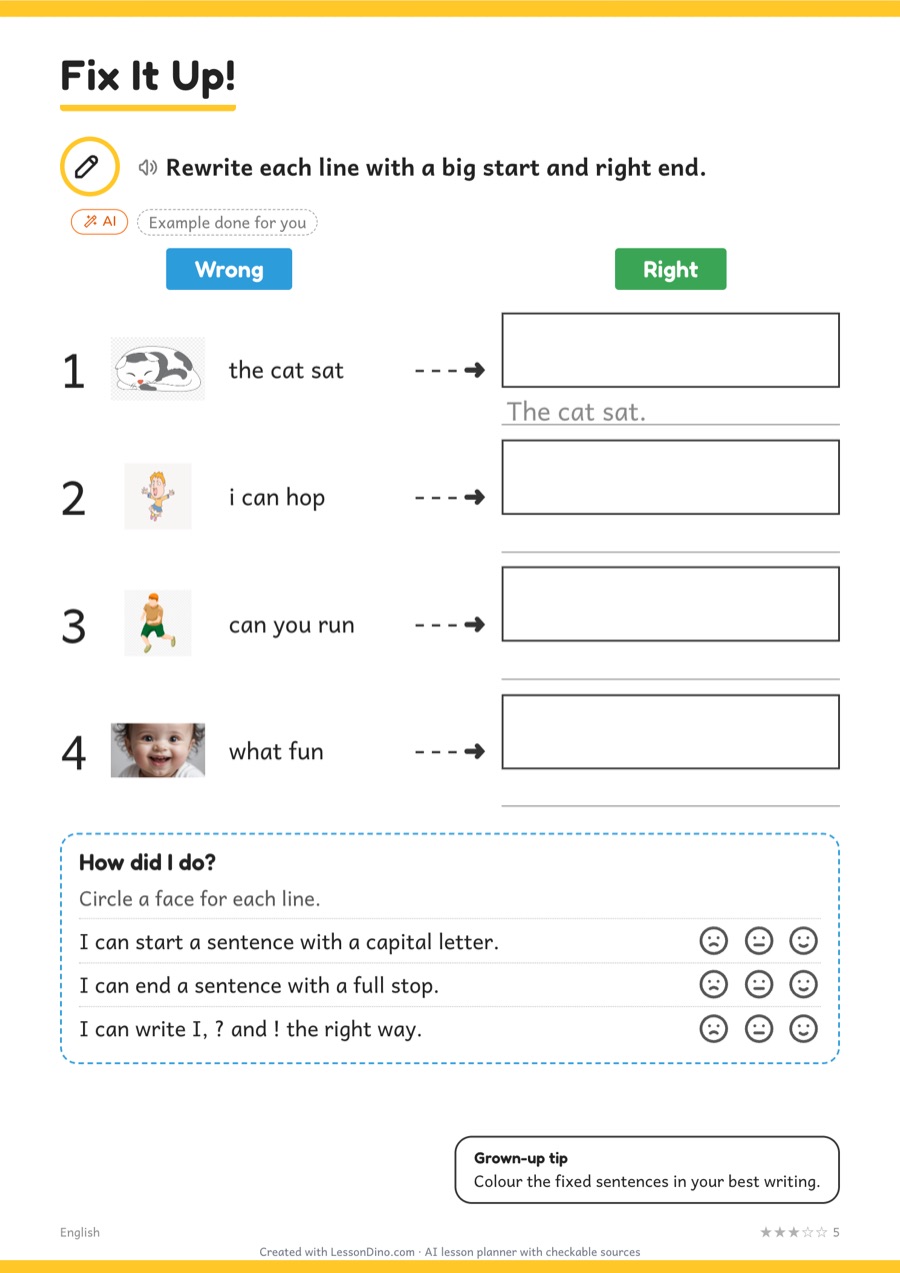
- Main activity (25 minutes): Hand out Worksheet page 5 Swap it: Rewrite each line with a big start and right end. Model first line on whiteboard with spaces between words.
- Support: Repeat sentences twice with big voice and face clues, and work on only two or three words at a time.
- Stretch: Ask pupils to say and write their own asking sentence with ? and shouting sentence with !.
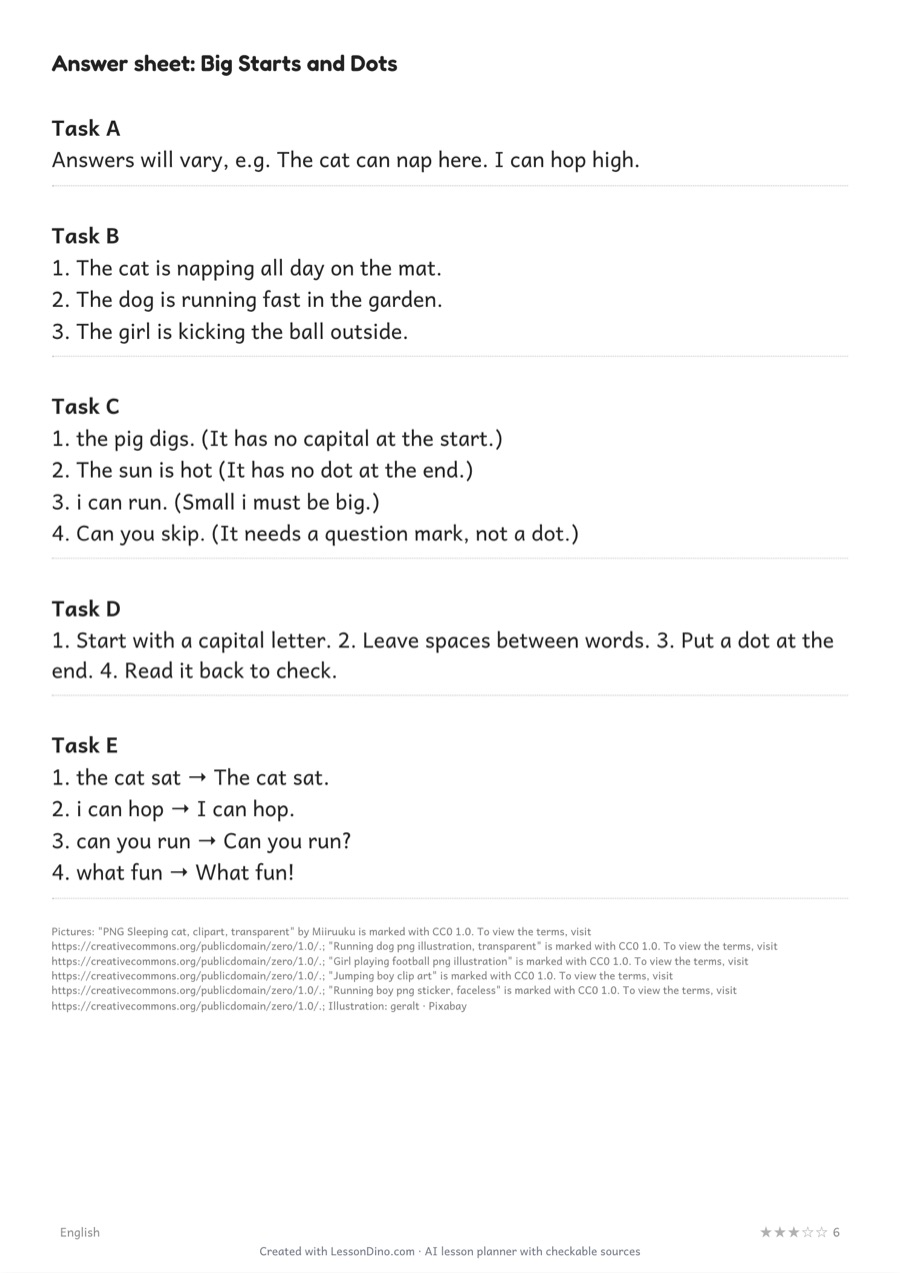
- The answer sheet is the last page, so you can print it on its own or let students check their own work.
Key vocabulary
- capital letter: big tall shape written at the start of a thought
- full stop: tiny dot at the finish that shows the thought is done
- question mark: curly shape at the finish that shows an ask
- exclamation mark: tall shape at the finish that shows a shout or big feeling
- sentence: set of words said or written as one whole thought
Mistakes to watch for
- Little first letter, such as the dog runs. Grow it tall. Capital letters go at the start of a sentence. Cover and copy The.
- No end mark or wrong mark, such as I can hop with no dot. Read to the end and stamp the stop. Full stops go at the end of a sentence. Ask: telling, asking or shouting?
- Little i for me in the middle. Rub and make big I. The personal pronoun I is always a capital. Keep an I card to copy.
What's on the worksheet
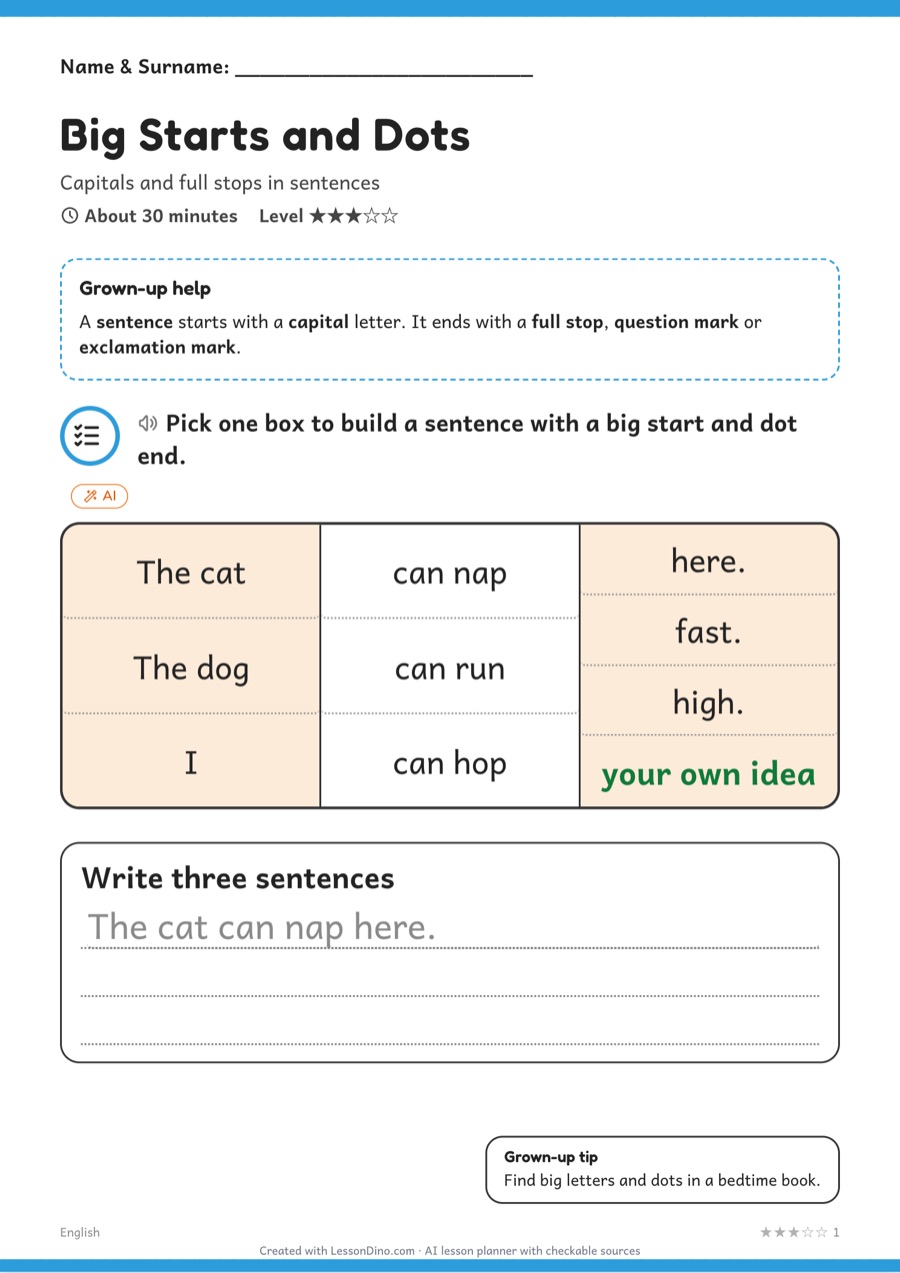
Build a Sentence!
Grown-up help
- A sentence starts with a capital letter. It ends with a full stop, question mark or exclamation mark.
Pick one box to build a sentence with a big start and dot end.
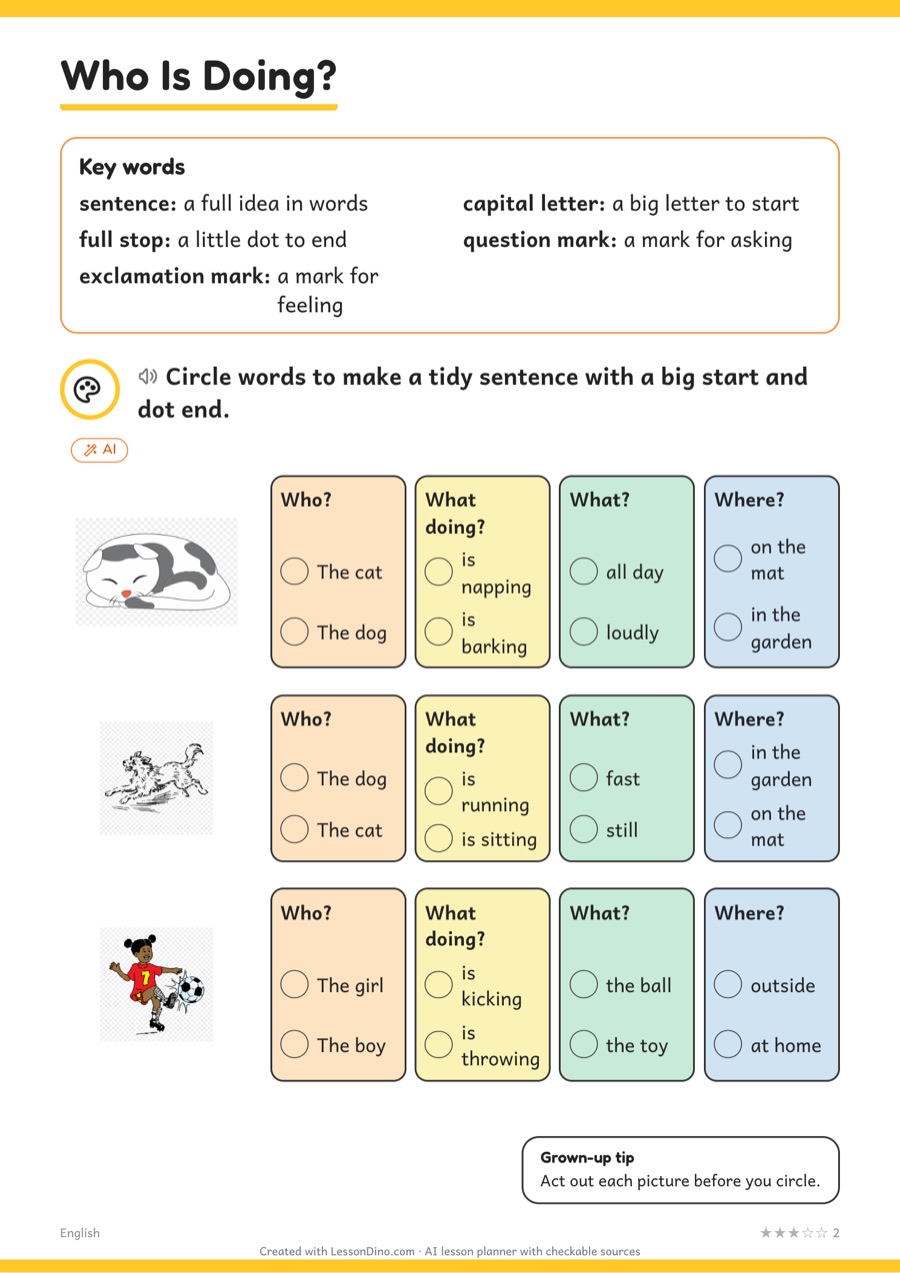
Who Is Doing?
| Word | Meaning |
|---|---|
| sentence | a full idea in words |
| capital letter | a big letter to start |
| full stop | a little dot to end |
| question mark | a mark for asking |
| exclamation mark | a mark for feeling |
Circle words to make a tidy sentence with a big start and dot end.
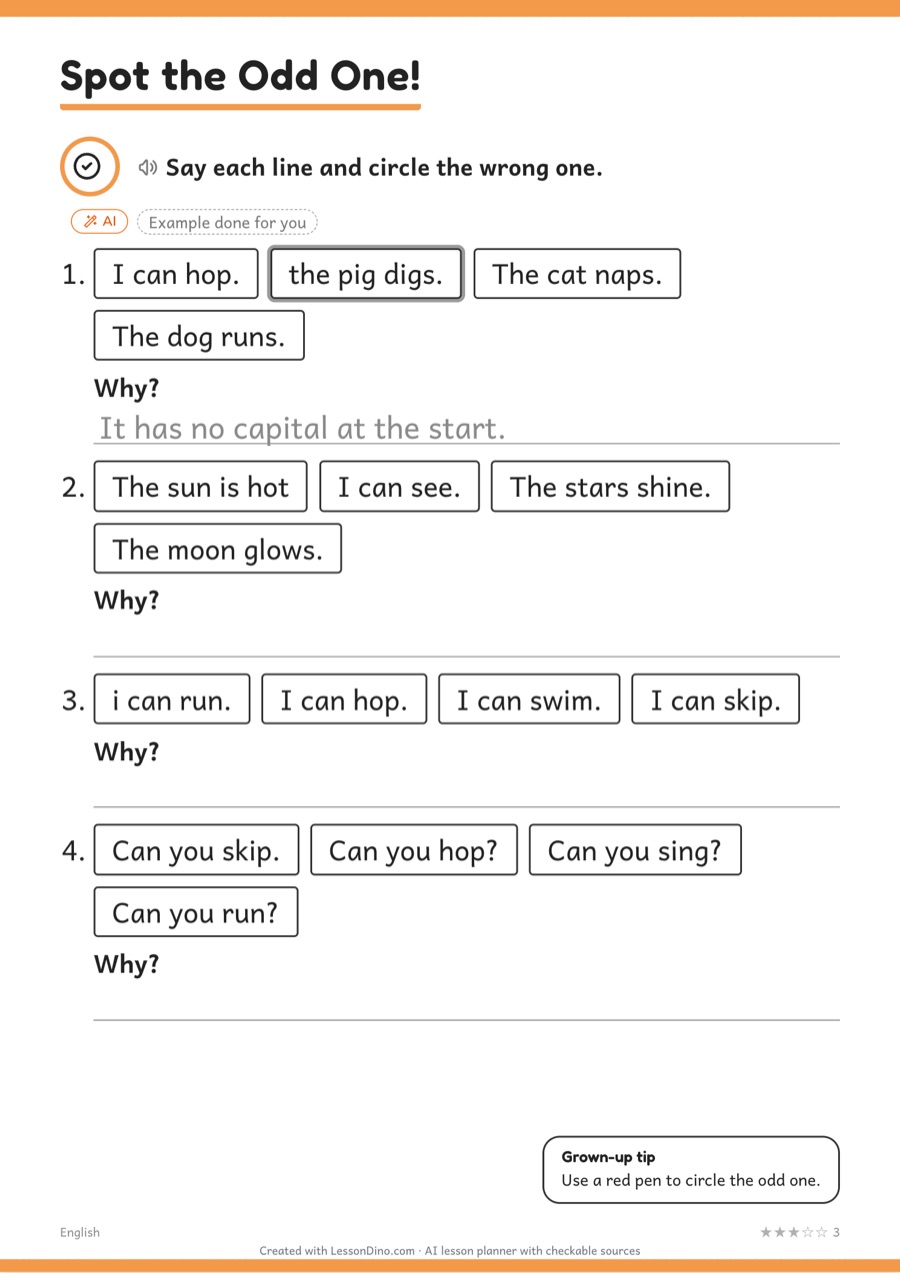
Spot the Odd One!
Say each line and circle the wrong one.
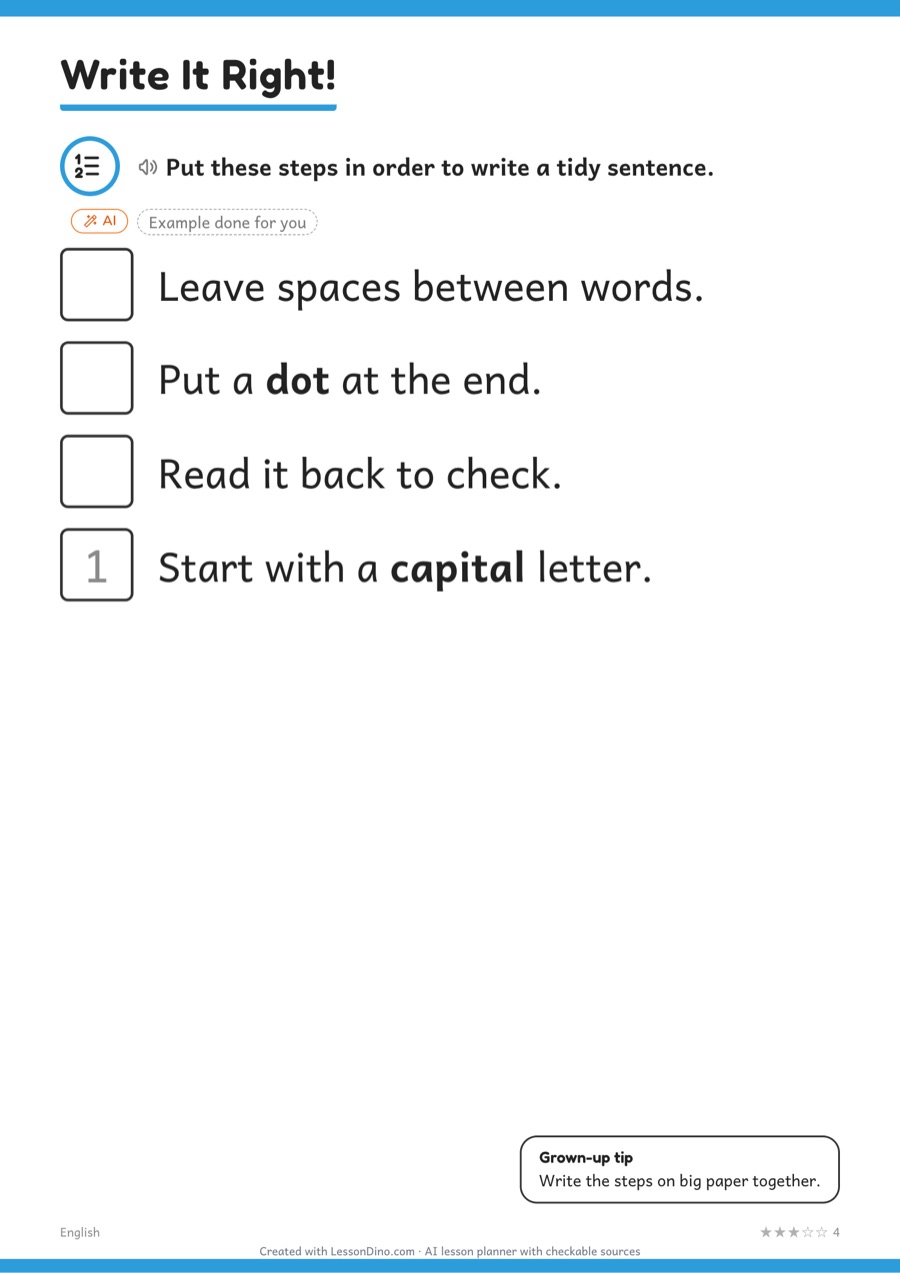
Write It Right!
Put these steps in order to write a tidy sentence.
Fix It Up!
Rewrite each line with a big start and right end.
Answers
Show the answers
The answers are on the answer sheet, the last picture above.
Curriculum
beginning to punctuate sentences using a capital letter and a full stop, question mark or exclamation mark
Made with Lesson Dino's AI on 17 October 2026. AI can make mistakes, so check the answers and facts against the sources before you teach.