The worksheet
About this worksheet
Pupils learn to show time and cause with joining words. They build longer sentences with strips, cards and writing. This Year 3 English worksheet gives students (ages 7–8) five pages of practice on conjunctions, part of the grammar and punctuation unit. It goes with our free Conjunctions lesson, which has the slides and a timed lesson plan.
What it covers
By the end, students should be able to:
- Students will use time conjunctions when, before, after and while to join clauses.
- Students will use because, so and therefore to explain cause and result clearly.
- Students will use adverbs and prepositions such as then, during and in for time.
How to use it
- Practice (15 minutes): Model one Worksheet Task A item: read both ideas, try two words, pick and say why it fits.
- Support: Give word banks with when, before, after, while and picture clauses to choose from.
- Stretch: Add a second time linker to grow the same idea into two sentences.
- The answer sheet is the last page, so you can print it on its own or let students check their own work.
Key vocabulary
- conjunction: a joining word that links two words or ideas together
- adverb: a word that tells when or why, like then and therefore, and can make relations between words clear
- preposition: a word that sits before a thing to show time or place, like during and in, and can describe relations of time
- when: a joining word that tells at what moment something happens
- because: a joining word that tells the reason why something happens
Mistakes to watch for
- Calling then a joining conjunction. Show then is an adverb that shows order, not a conjunction; use and or when to join, keep then to order: First we ran and then we hid.
- Using because of before a full clause with a verb. Remind because joins a clause with a verb, because of sits before a thing: because it rained or because of the rain.
- Picking a time word for a cause link. Ask when or why: if it answers why, use because or so to express cause; keep when, before, after, while for time.
What's on the worksheet
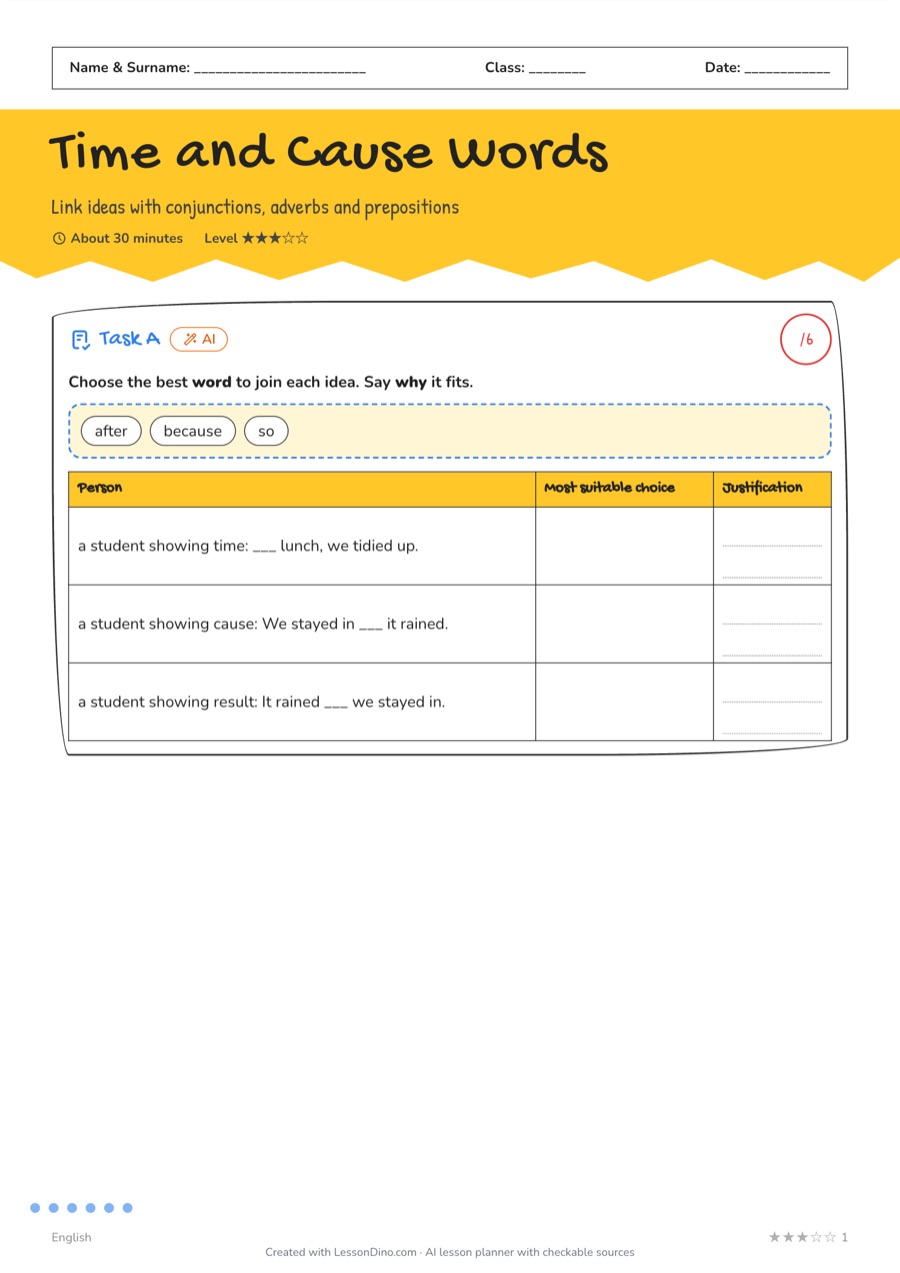
Joining Ideas Together
Learn how words show time and cause.
Choose the best word to join each idea. Say why it fits.
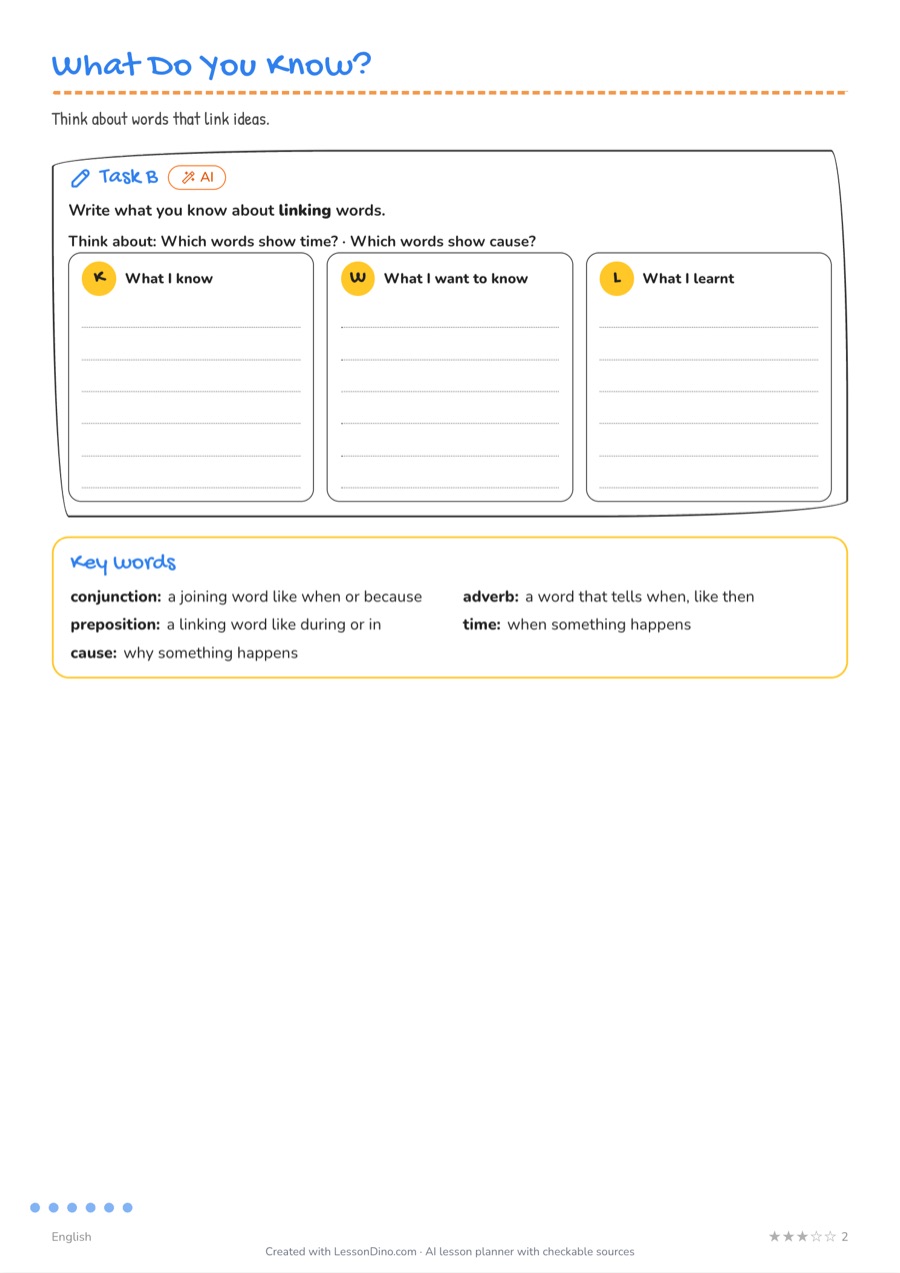
What Do You Know?
Think about words that link ideas.
Write what you know about linking words.
| Word | Meaning |
|---|---|
| conjunction | a joining word like when or because |
| adverb | a word that tells when, like then |
| preposition | a linking word like during or in |
| time | when something happens |
| cause | why something happens |
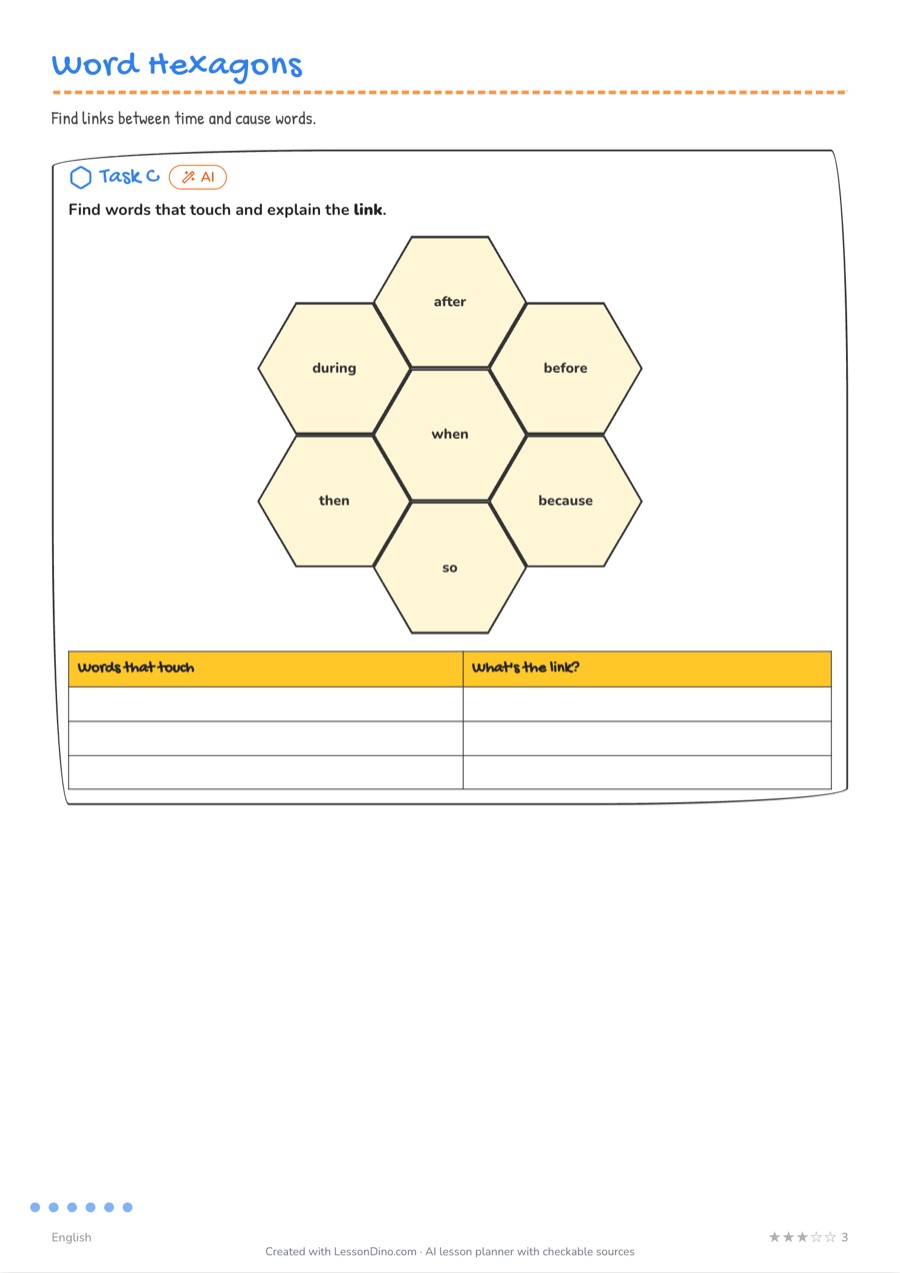
Word Hexagons
Find links between time and cause words.
Find words that touch and explain the link.
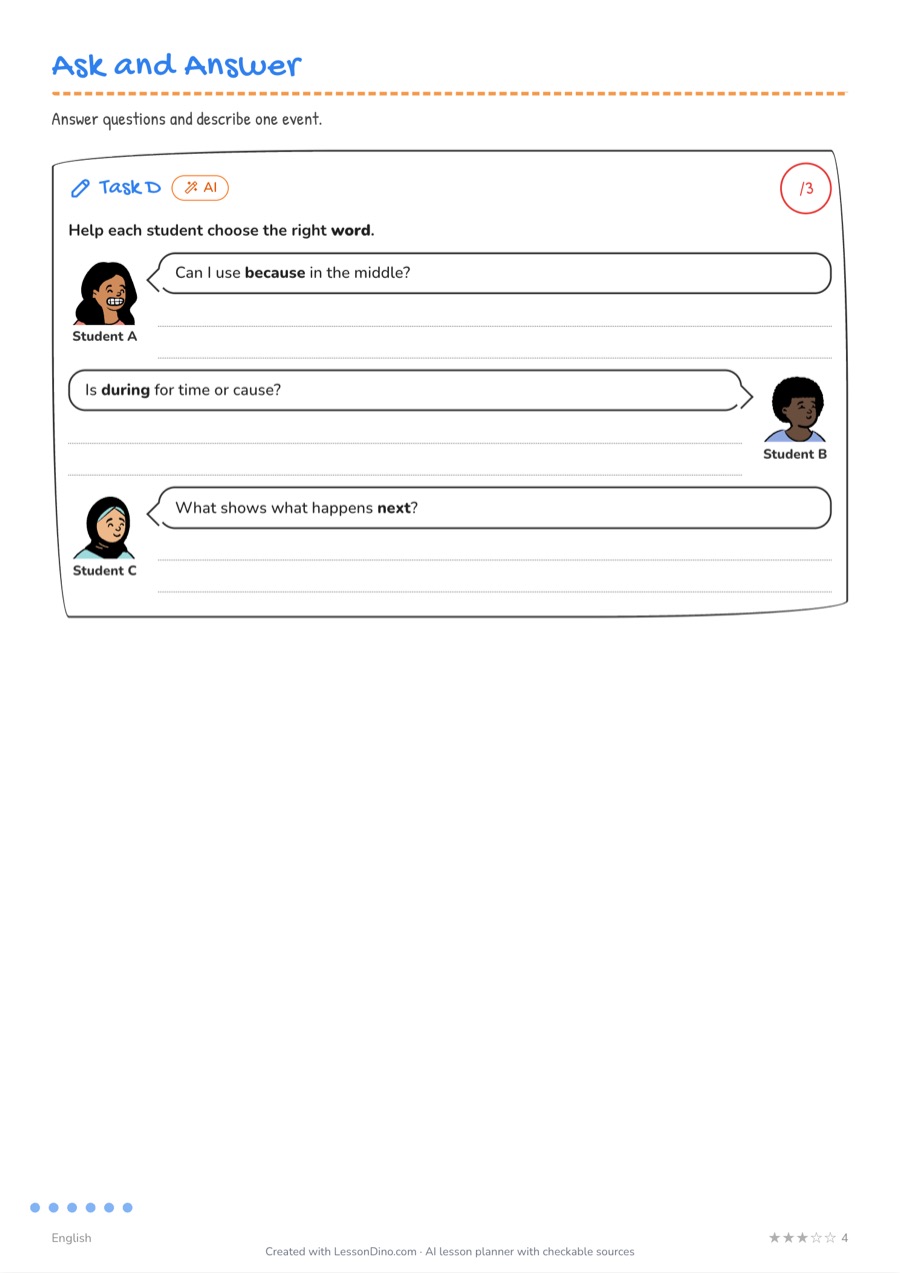
Ask and Answer
Answer questions and describe one event.
Help each student choose the right word.
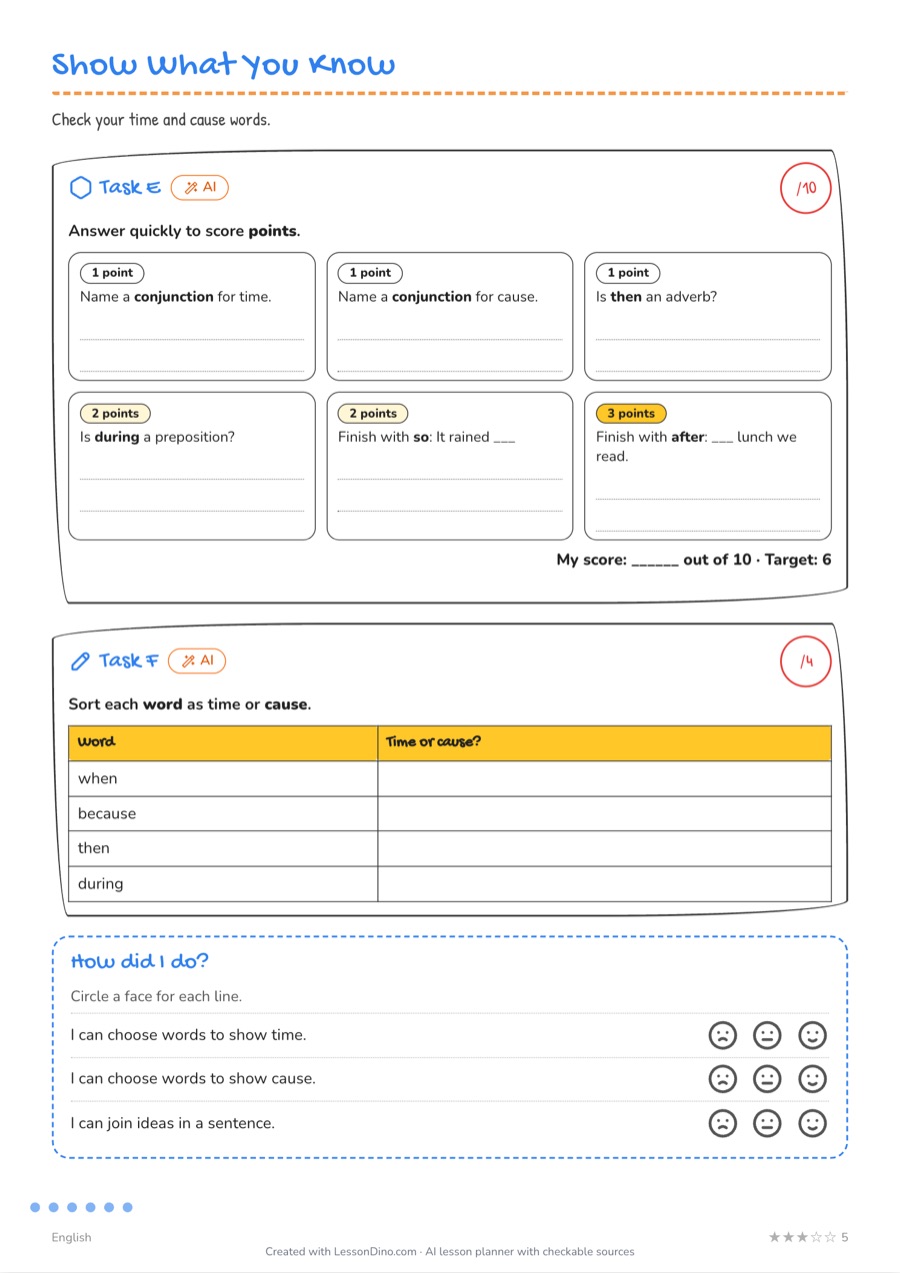
Show What You Know
Check your time and cause words.
Answer quickly to score points.
- Name a conjunction for time.
- Name a conjunction for cause.
- Is then an adverb?
- Is during a preposition?
- Finish with so: It rained ___
- Finish with after: ___ lunch we read.
Sort each word as time or cause.
Answers
Show the answers
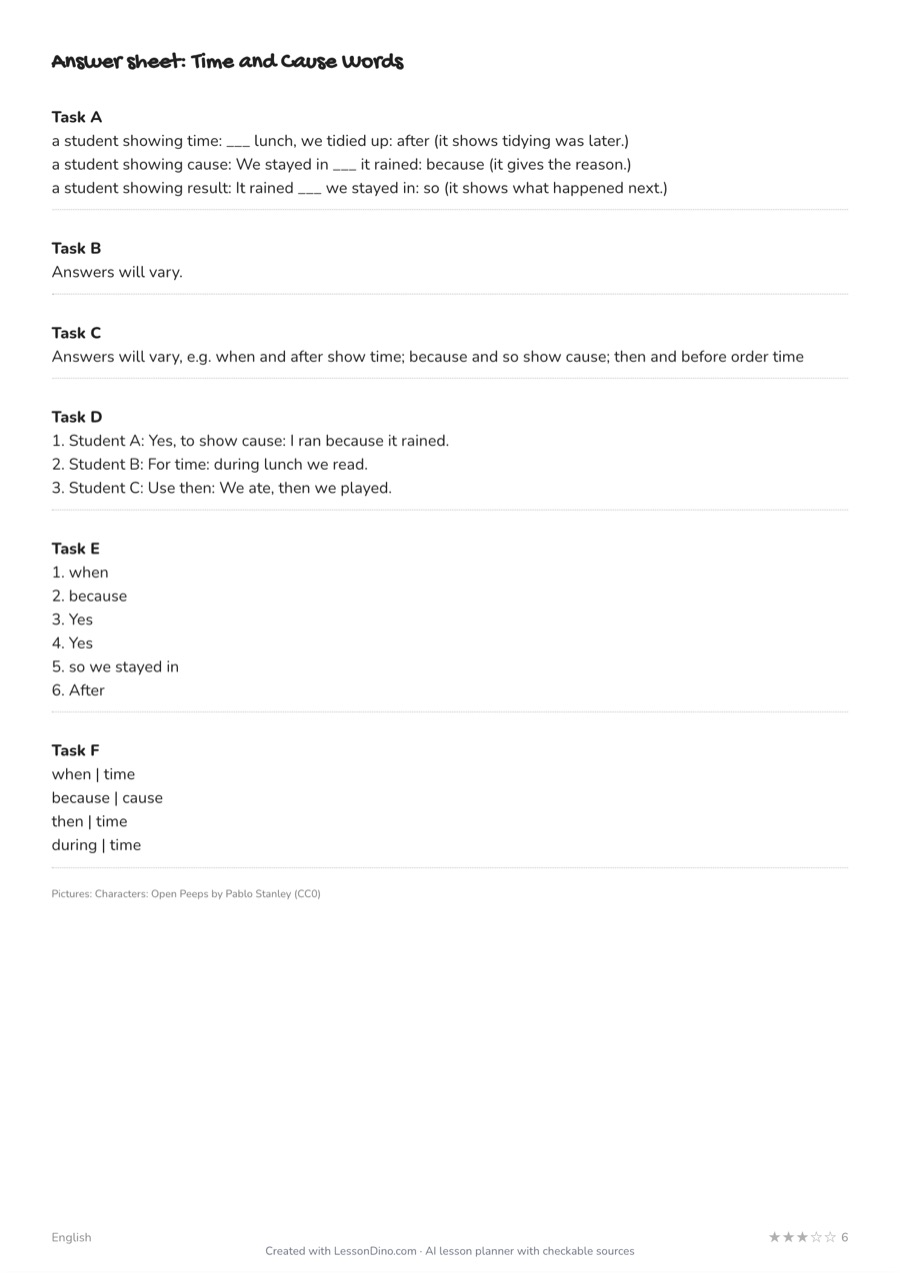
- Name a conjunction for time. when
- Name a conjunction for cause. because
- Is then an adverb? Yes
- Is during a preposition? Yes
- Finish with so: It rained ___ so we stayed in
- Finish with after: ___ lunch we read. After
The answer sheet is the last picture above.
Curriculum
using conjunctions, adverbs and prepositions to express time and cause
Made with Lesson Dino's AI on 17 October 2026. AI can make mistakes, so check the answers and facts against the sources before you teach.