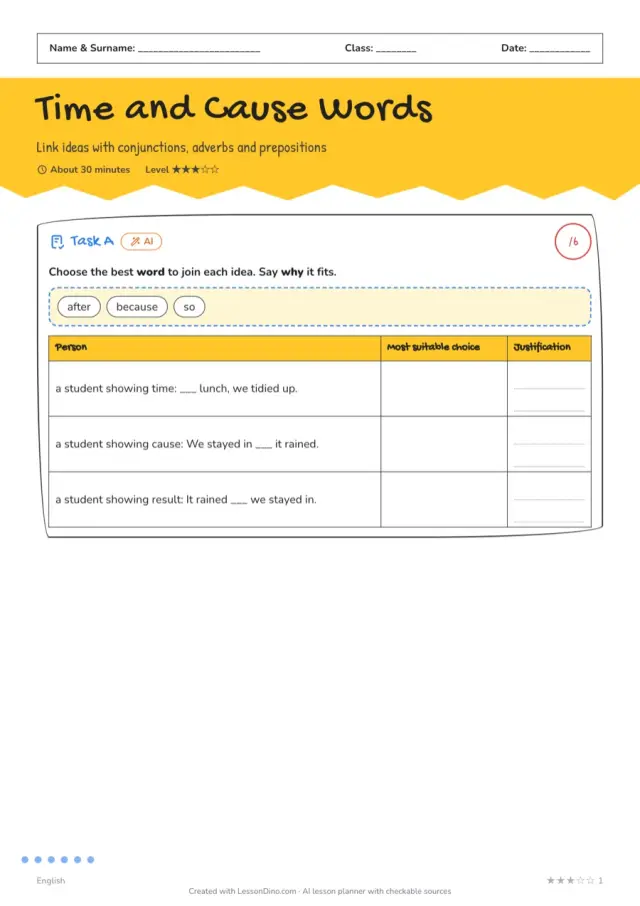
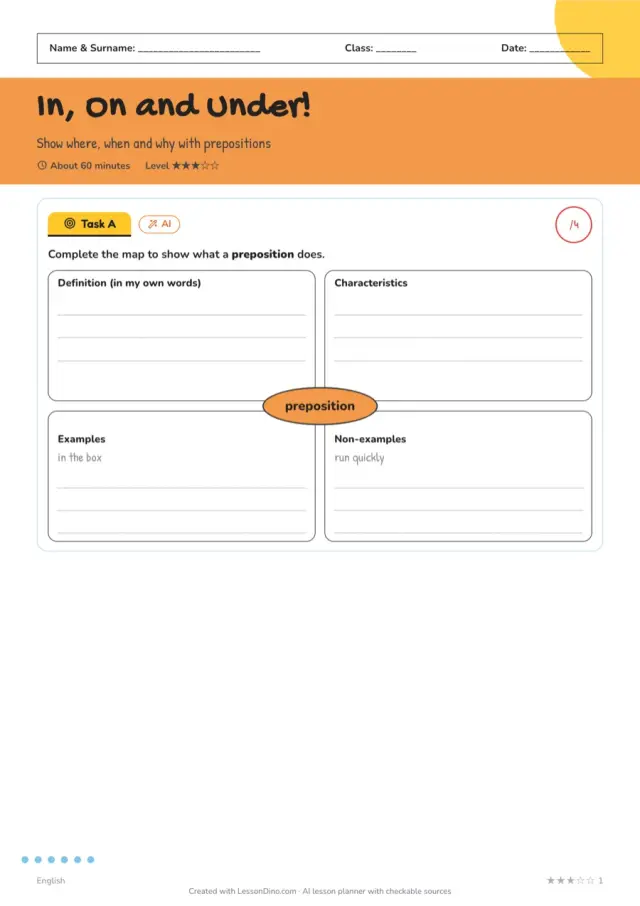
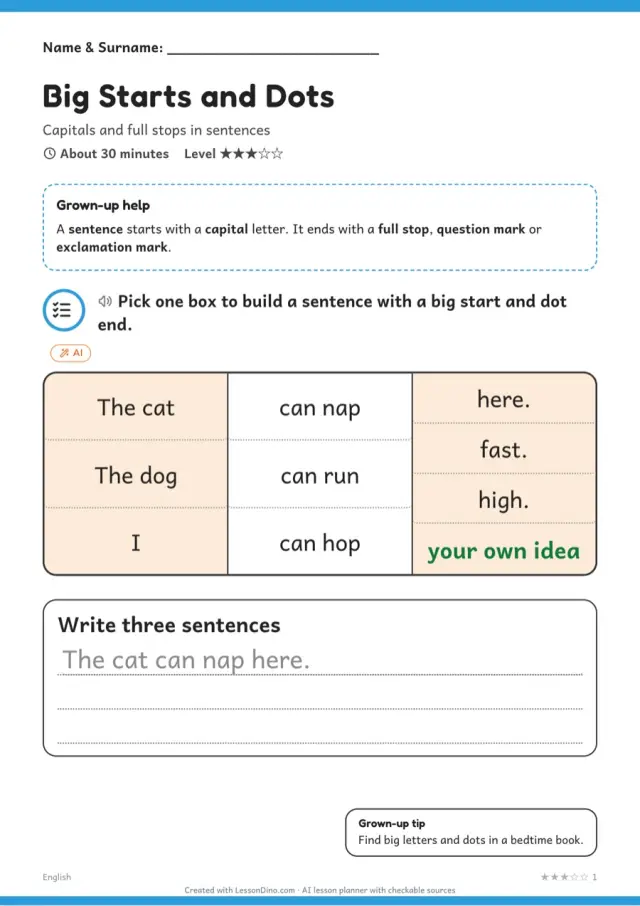
The worksheet
About this worksheet
Pupils learn to spot a fronted adverbial and put a comma after it. They match starters to main clauses and arrest the missing comma. This Year 3 English worksheet gives students (ages 7–8) six pages of practice on fronted adverbials, part of the writing - vocabulary, grammar and punctuation unit. It goes with our free Fronted adverbials lesson, which has the slides and a timed lesson plan.
What it covers
By the end, students should be able to:
- Students will spot fronted adverbials that tell when, where or how.
- Students will put a comma straight after a fronted adverbial.
- Students will read sentences aloud pausing where the comma sits.
How to use it
- Plenary (10 minutes): Hand out Worksheet Task F and do True or false together for comma rule.
- Support: Give three ready-made pairs with the fronted adverbial already underlined so pupils only choose the comma place.
- Stretch: Pupils swap the main clause to make a sillier sentence but keep the same starter and comma.
- The answer sheet is the last page, so you can print it on its own or let students check their own work.
Key vocabulary
- fronted adverbial: words at the start of a sentence that give more news about the action
- comma: little curl mark that tells the reader to take a short stop
- when: tells about the time something happens
- where: tells about the place something happens
- how: tells about the way something happens
Mistakes to watch for
- Leaving out the comma after the starter. Underline the starter and add the comma immediately after it, then reread with a pause.
- Putting the comma in the wrong gap. Cover the starter with a finger, put the comma at its end, check it sits right after the whole starter.
- Thinking no comma is needed because the back version has none. Show both orders: at the back we need no comma, but at the front we do, so add it after fronting.
What's on the worksheet
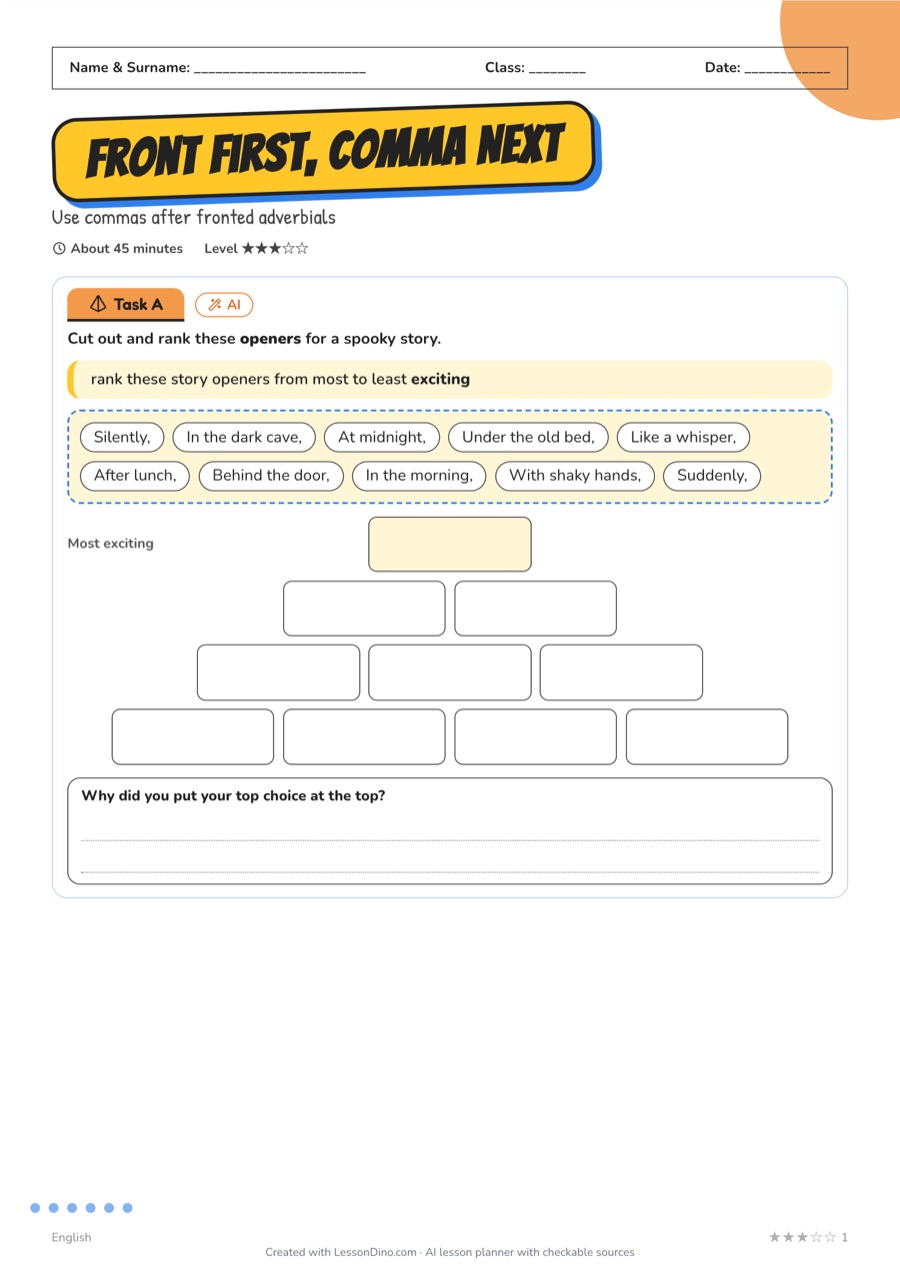
Front Goes First
Learn what a fronted adverbial is and where the comma goes.
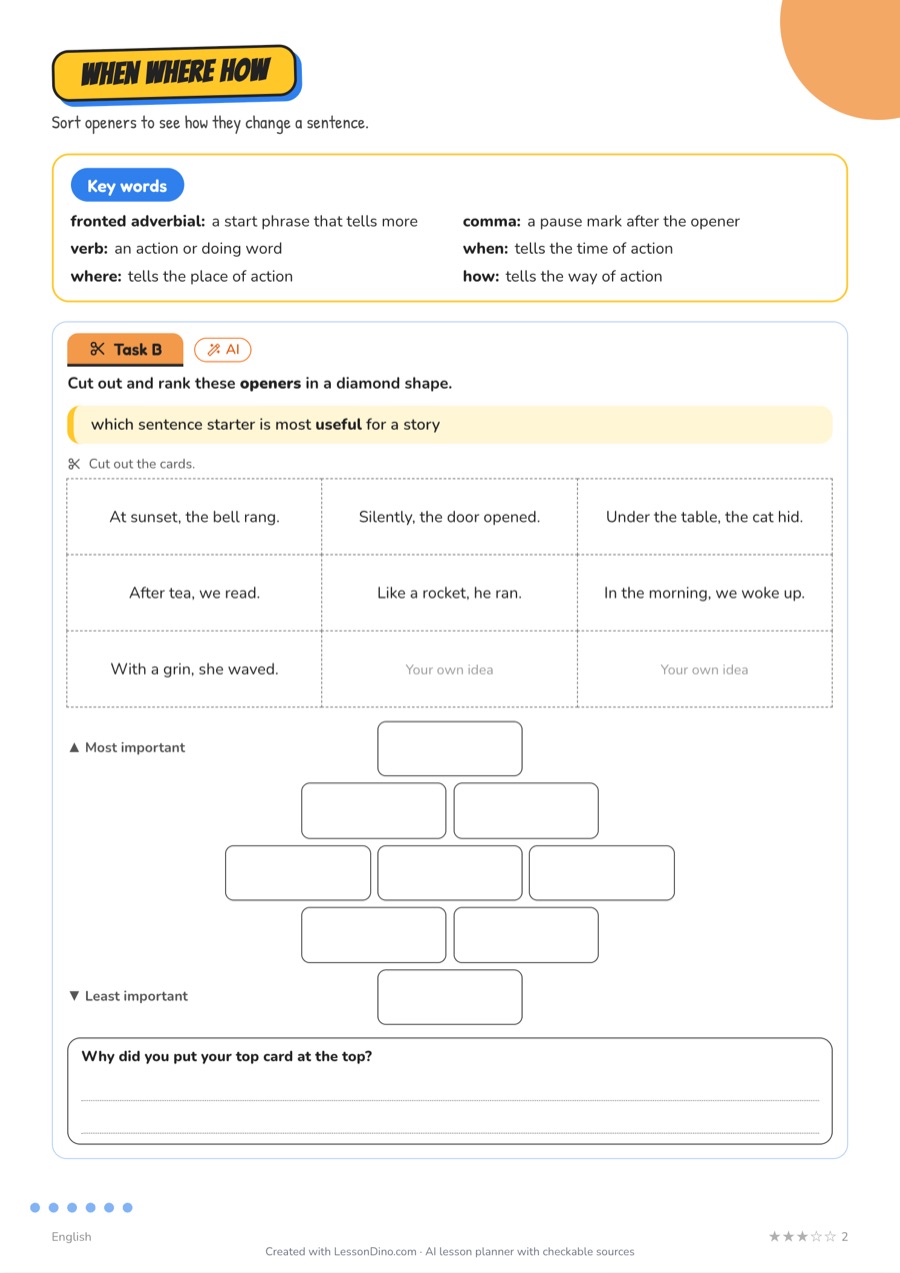
Cut out and rank these openers for a spooky story.
When Where How
Sort openers to see how they change a sentence.
| Word | Meaning |
|---|---|
| fronted adverbial | a start phrase that tells more |
| comma | a pause mark after the opener |
| verb | an action or doing word |
| when | tells the time of action |
| where | tells the place of action |
| how | tells the way of action |
Cut out and rank these openers in a diamond shape.
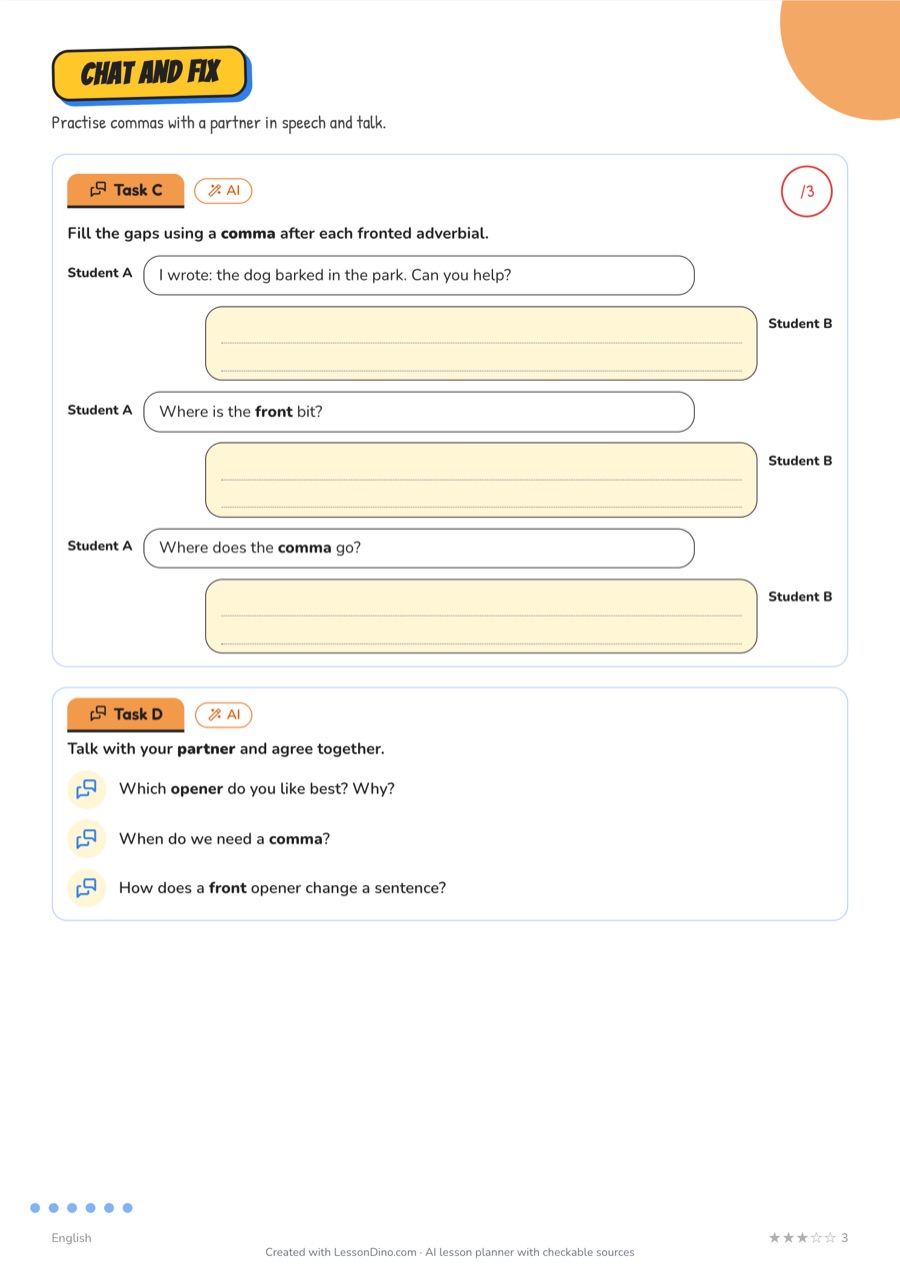
Chat and Fix
Practise commas with a partner in speech and talk.
Fill the gaps using a comma after each fronted adverbial.
Talk with your partner and agree together.
- Which opener do you like best? Why?
- When do we need a comma?
- How does a front opener change a sentence?
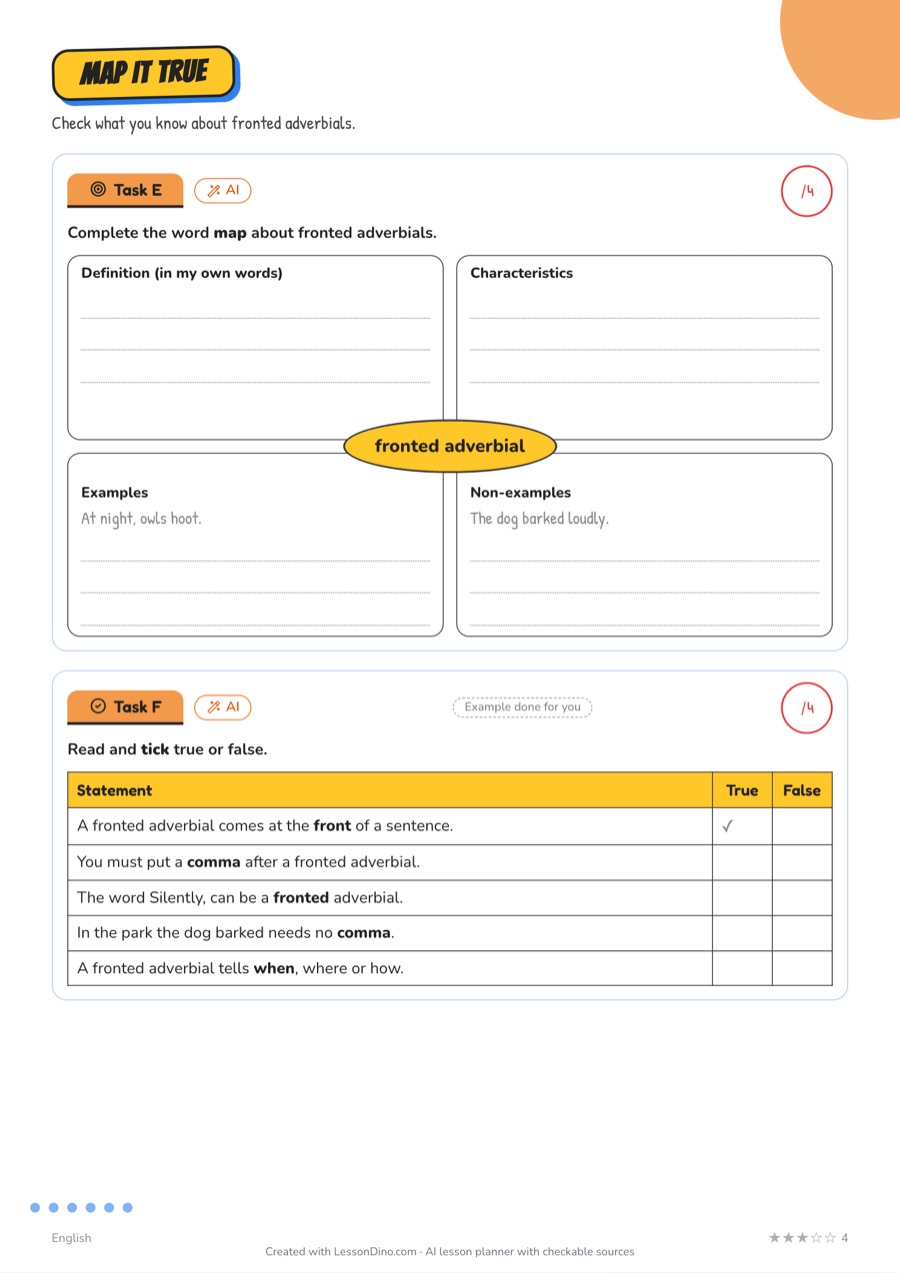
Map It True
Check what you know about fronted adverbials.
Complete the word map about fronted adverbials.
Read and tick true or false.
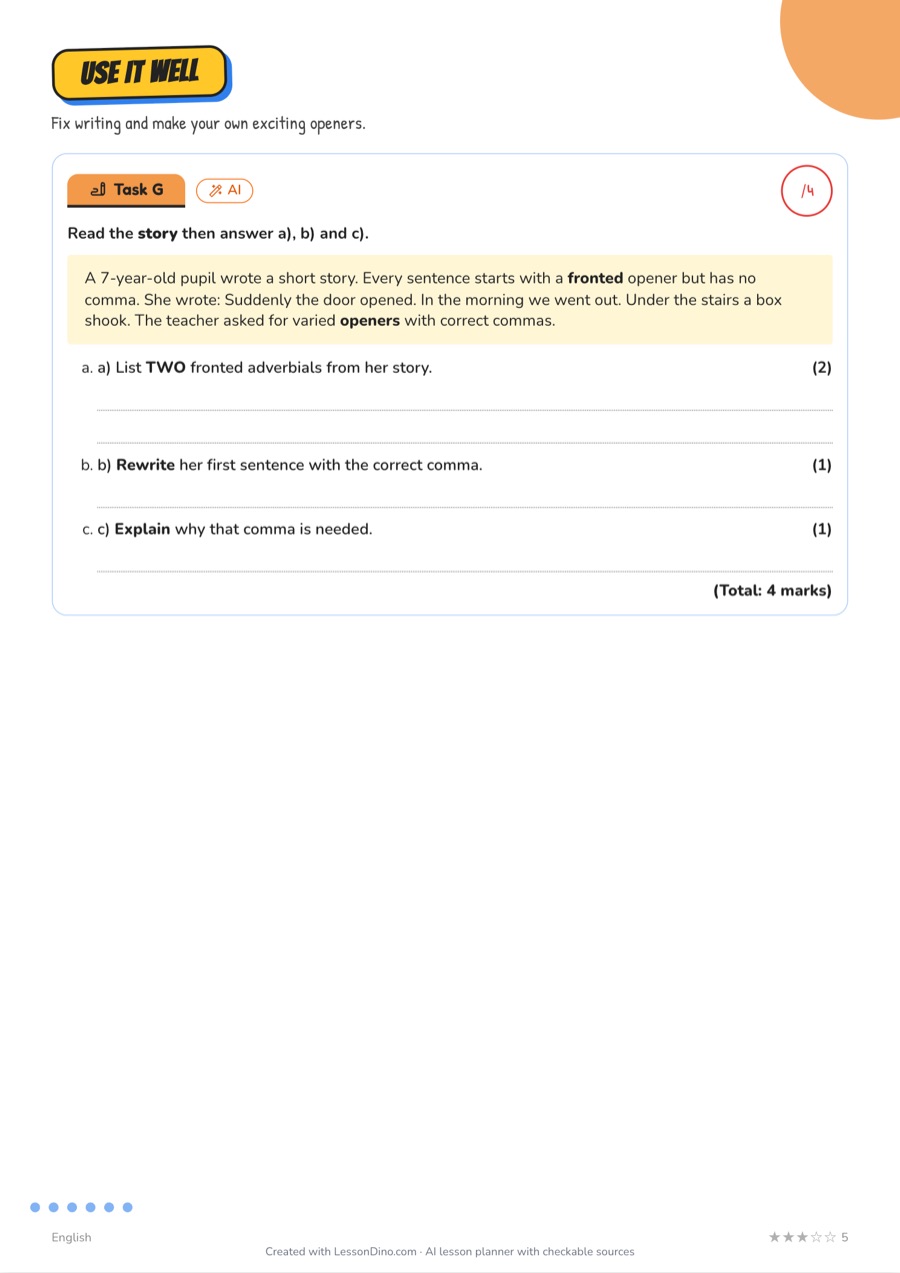
Use It Well
Fix writing and make your own exciting openers.
Read the story then answer a), b) and c).
Page 6
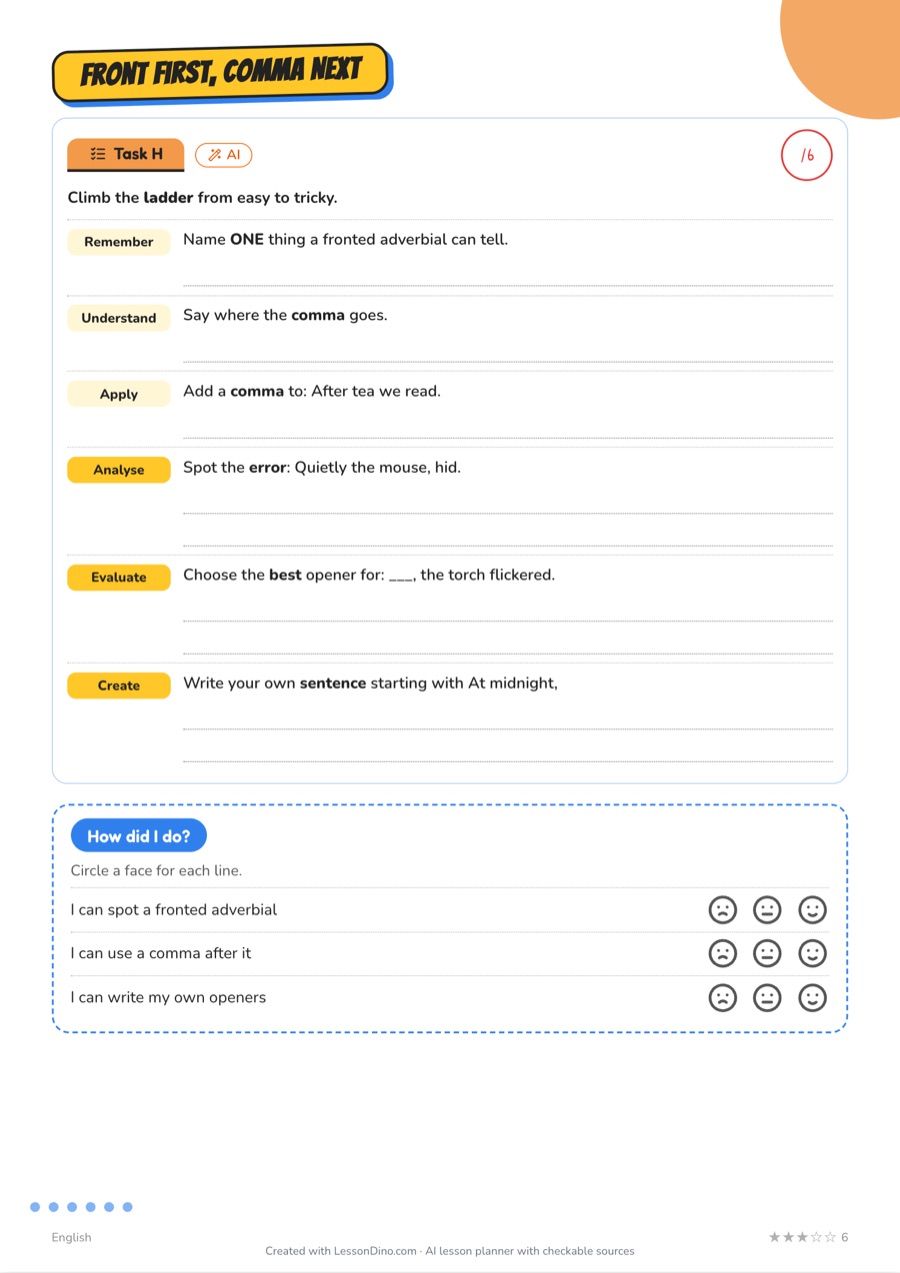
Climb the ladder from easy to tricky.
- Name ONE thing a fronted adverbial can tell.
- Say where the comma goes.
- Add a comma to: After tea we read.
- Spot the error: Quietly the mouse, hid.
- Choose the best opener for: ___, the torch flickered.
- Write your own sentence starting with At midnight,
Answers
Show the answers
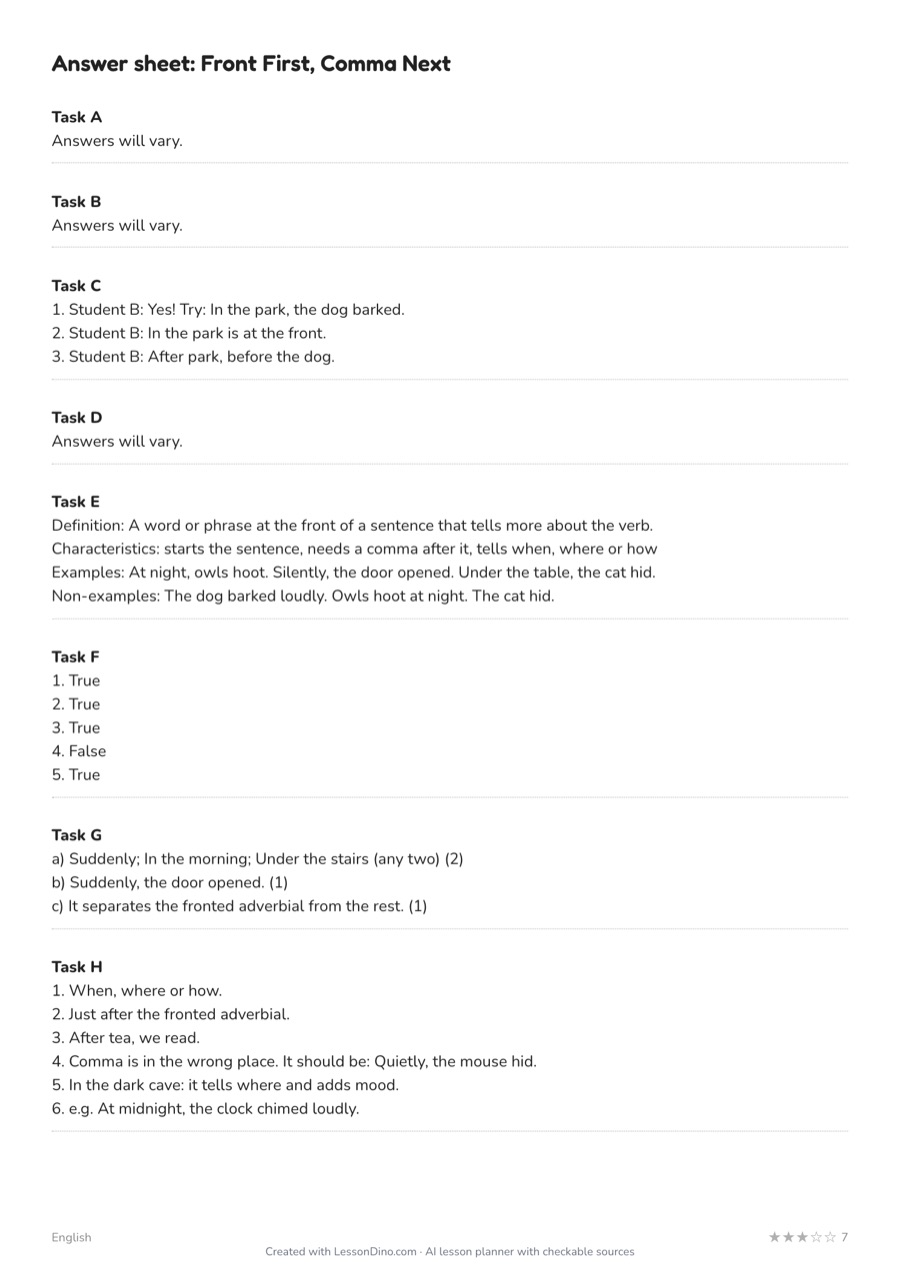
- a) List TWO fronted adverbials from her story. Suddenly; In the morning; Under the stairs (any two)
- b) Rewrite her first sentence with the correct comma. Suddenly, the door opened.
- c) Explain why that comma is needed. It separates the fronted adverbial from the rest.
- Name ONE thing a fronted adverbial can tell. When, where or how.
- Say where the comma goes. Just after the fronted adverbial.
- Add a comma to: After tea we read. After tea, we read.
- Spot the error: Quietly the mouse, hid. Comma is in the wrong place. It should be: Quietly, the mouse hid.
- Choose the best opener for: ___, the torch flickered. In the dark cave: it tells where and adds mood.
- Write your own sentence starting with At midnight, e.g. At midnight, the clock chimed loudly.
The answer sheet is the last picture above.
Curriculum
indicate grammatical and other features by: using commas after fronted adverbials
Made with Lesson Dino's AI on 17 October 2026. AI can make mistakes, so check the answers and facts against the sources before you teach.