Slides
Lesson plan
Riddle Clues With Who, Which and That
Pupils learn to add information about a noun with relative clauses. They write and solve classroom object riddles using different relative pronouns.
Objectives
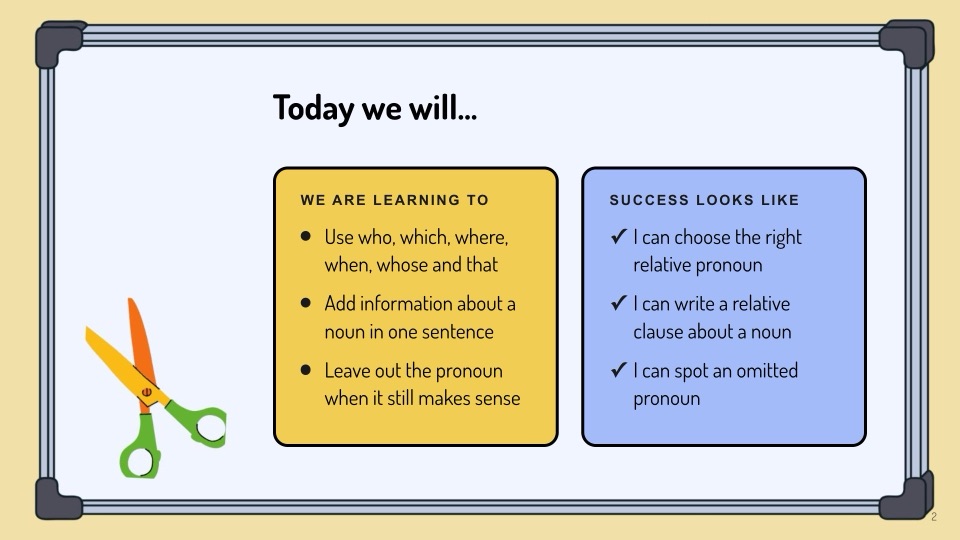
- Students will use who, which, where, when, whose and that to describe a noun.
- Students will join two ideas into one clear sentence with a relative clause.
- Students will leave out that when the sentence still makes sense.
Success criteria
- I can choose who, which, where, when, whose or that for a noun.
- I can write a relative clause that tells more about a noun.
- I can spot when that is missing but still understood.
Key words
| Word | Meaning |
|---|---|
| relative clause | extra words that tell more about a person, place or thing |
| relative pronoun | linking word such as who or that that starts the extra words |
| noun | a naming word for a person, place or thing |
| where | linking word that gives more detail about a place |
| omit | to leave out a word when the sentence still sounds right |
Timed plan (60 minutes)
| Time | Stage | What happens |
|---|---|---|
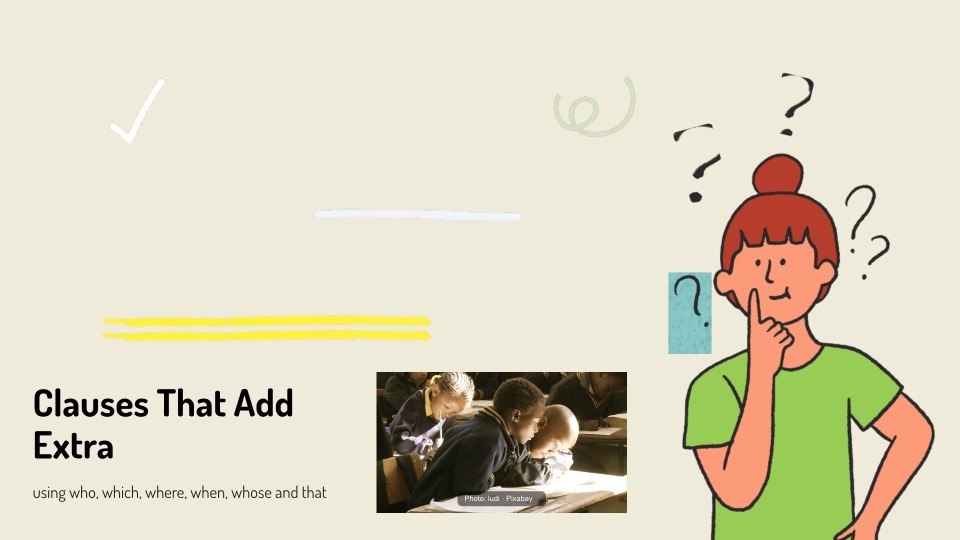
| 7 min | Starter | To hook pupils with a riddle and share the lesson goal of describing nouns. Show Slide 1 Clauses That Add Extra and Slide 2 Today we will… objectives. Say the hook riddle: I am thinking of something in this room where we keep the books. It has a lid whose colour is red. What is it? Take 3 guesses and point to the book corner box. Explain today pupils will write riddles that describe classroom objects with relative clauses. |
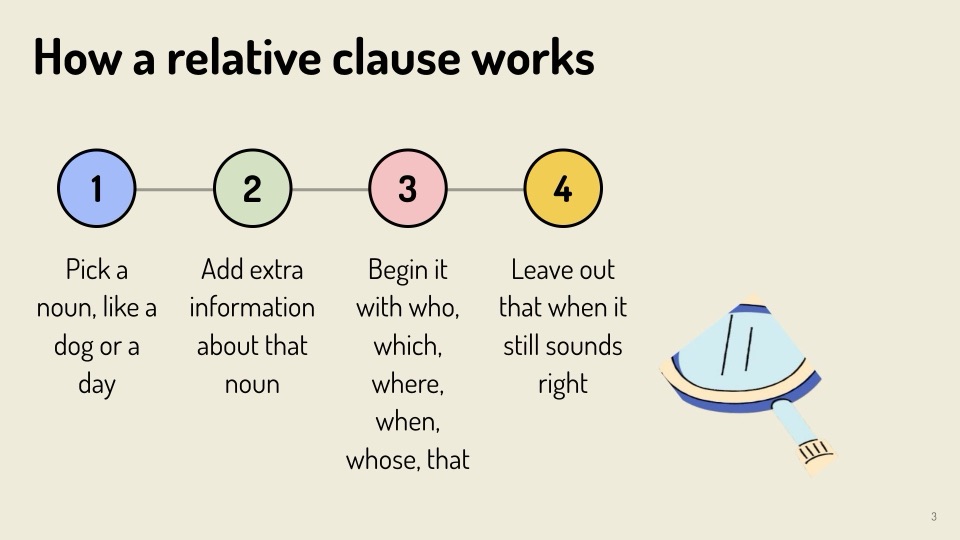
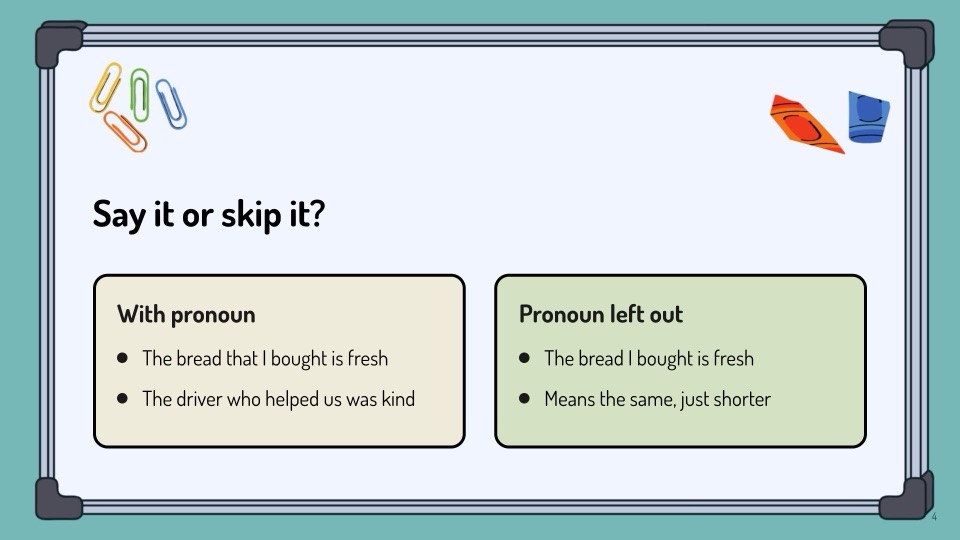
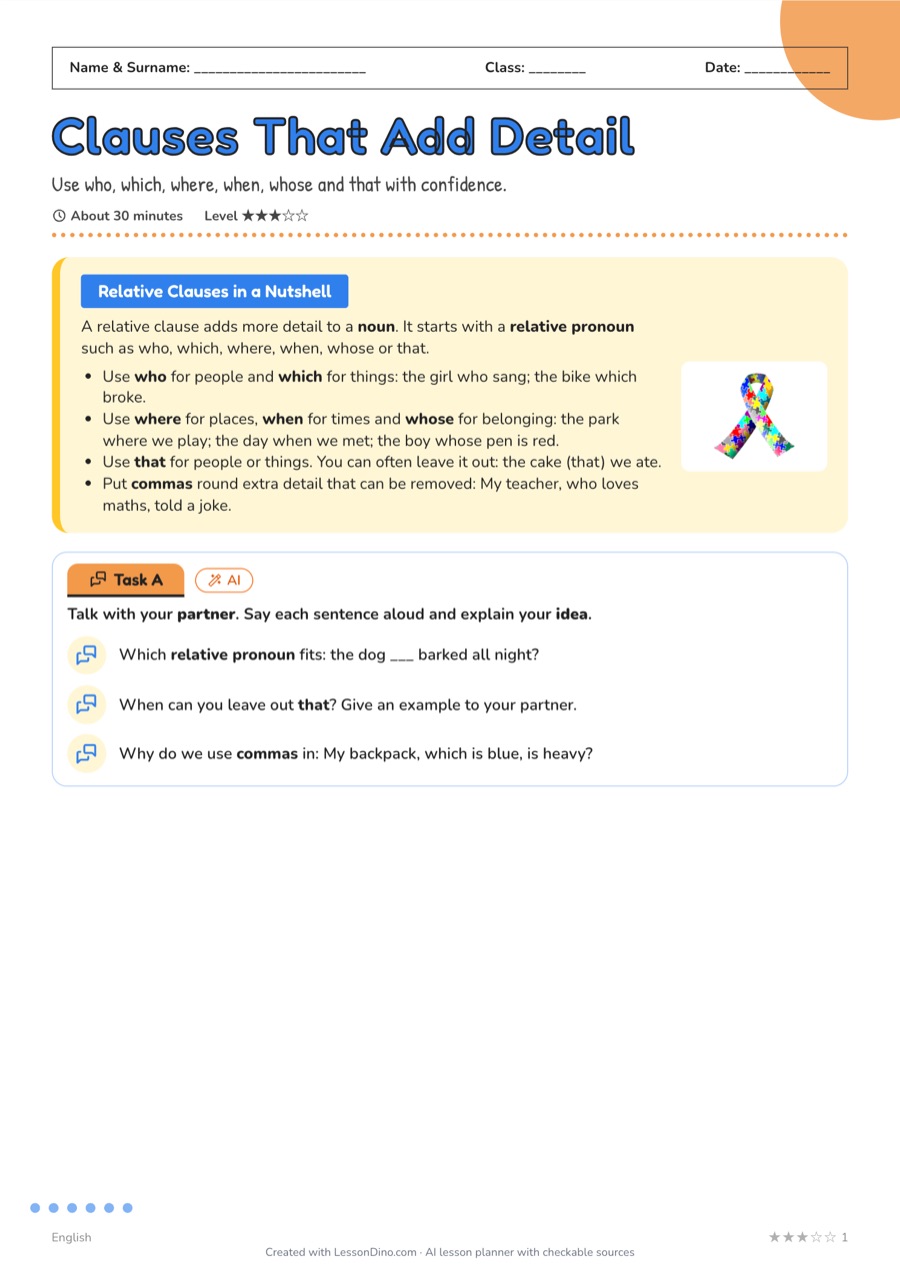
| 13 min | Teaching | To explain how who, which, where, when, whose and that start a clause about a noun. Show Slide 3 How a relative clause works steps and read the steps together. Explain that a relative clause is a special type of subordinate clause that modifies a noun, often using who or that to refer back to that noun. Model who for a person, which for a thing, and that for either a person or thing, plus where for place, when for time and whose for possession. Show Slide 4 Say it or skip it? compare The bread that I bought is fresh with The bread I bought is fresh. |
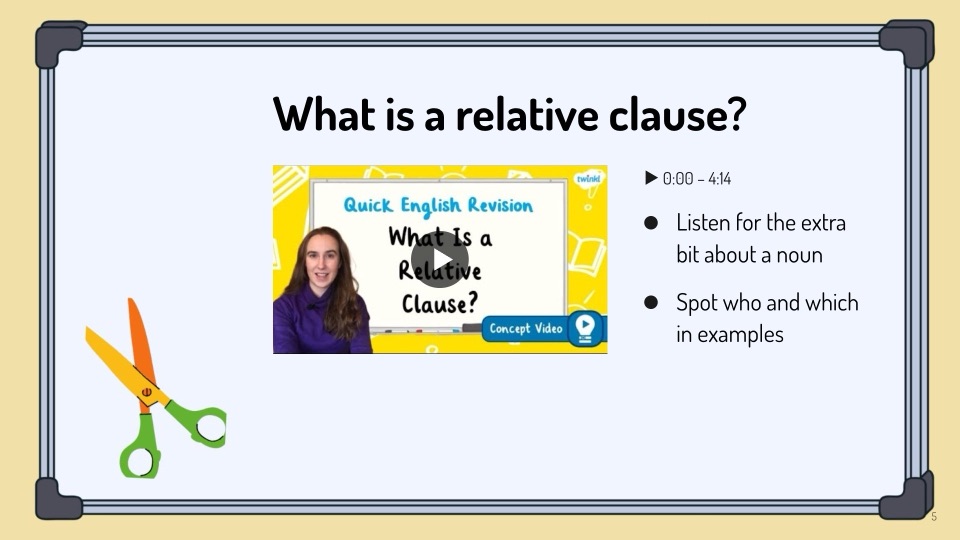
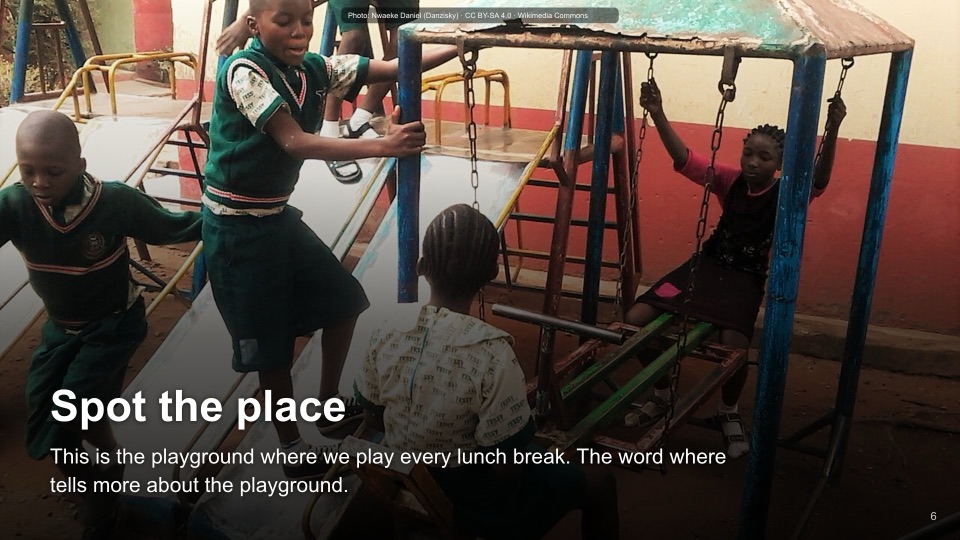
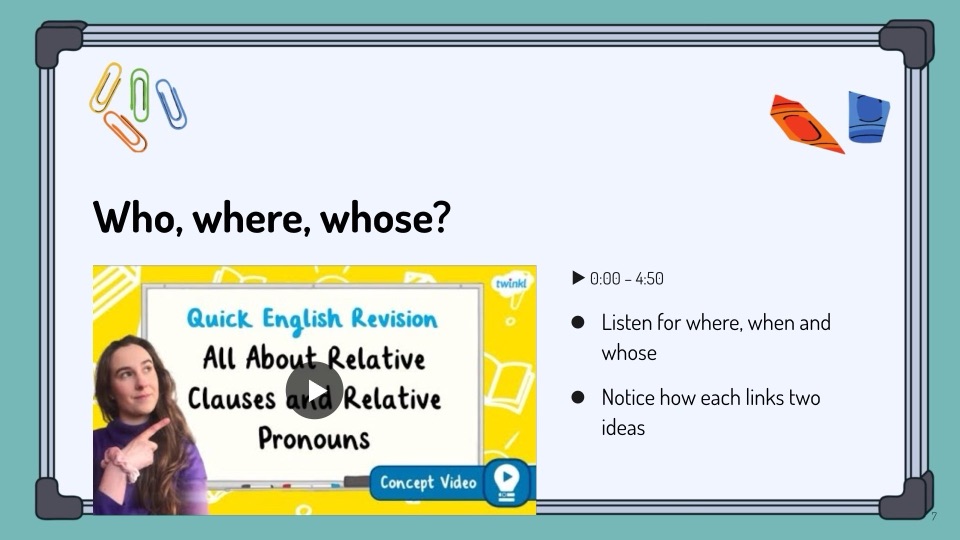
| 12 min | Guided practice | To spot relative clauses together and practise choosing the right pronoun. Play Slide 5 What is a relative clause? video and ask pupils to listen for the extra bit about a noun and spot who and which. Pause and list two examples heard on the board with the clause underlined. Show Slide 6 Spot the place photo: This is the playground where we play every lunch break. |
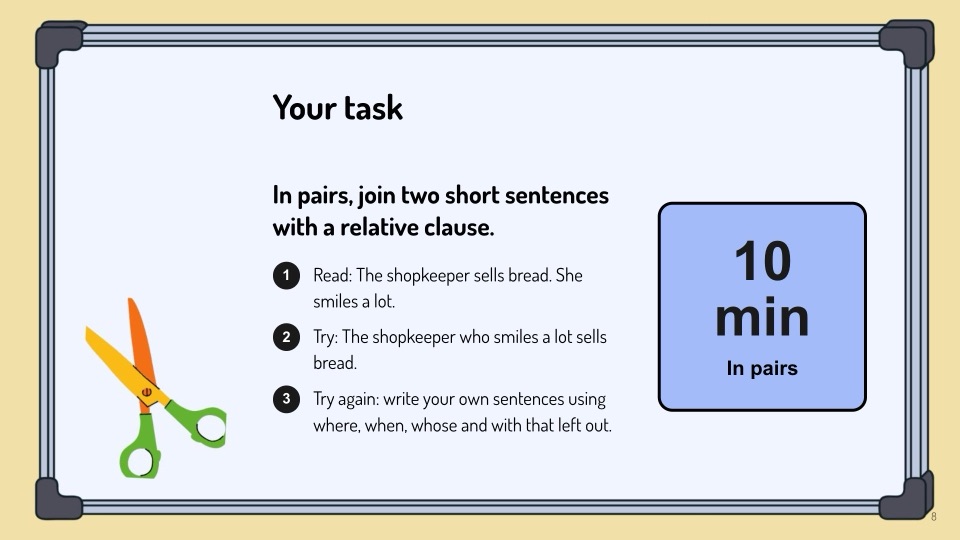
| 20 min | Main activity | To write three riddles that describe classroom objects with different relative clauses. Show Slide 8 Your task activity. Read: The shopkeeper sells bread. She smiles a lot. Model: The shopkeeper who smiles a lot sells bread. Hand out riddle frames, coloured pencils and an object from the bag to each pair. Remind pupils to write three clues, each with a different pronoun from who, which, where, when, whose or that, pointing to the noun each clause modifies. Circulate, prompt omitted form and collect riddles for guessing. |
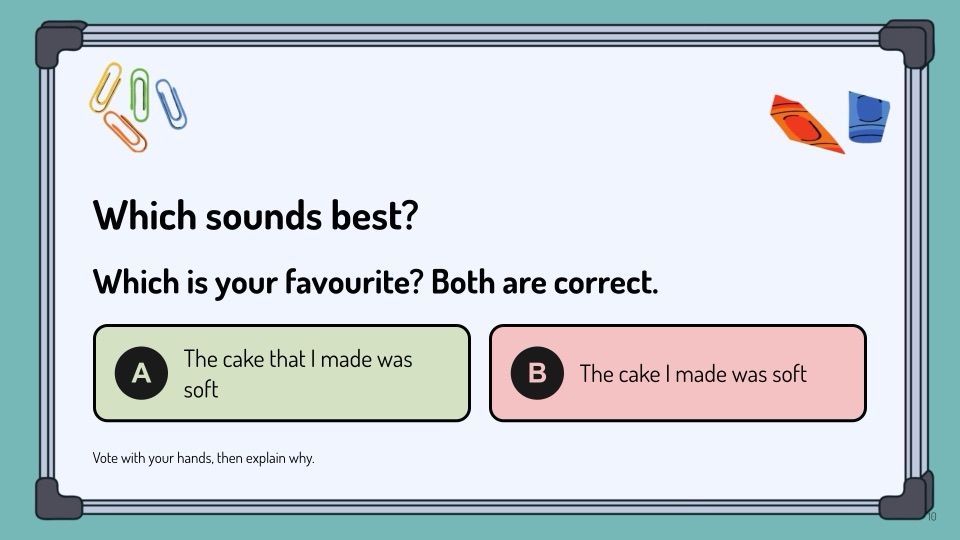
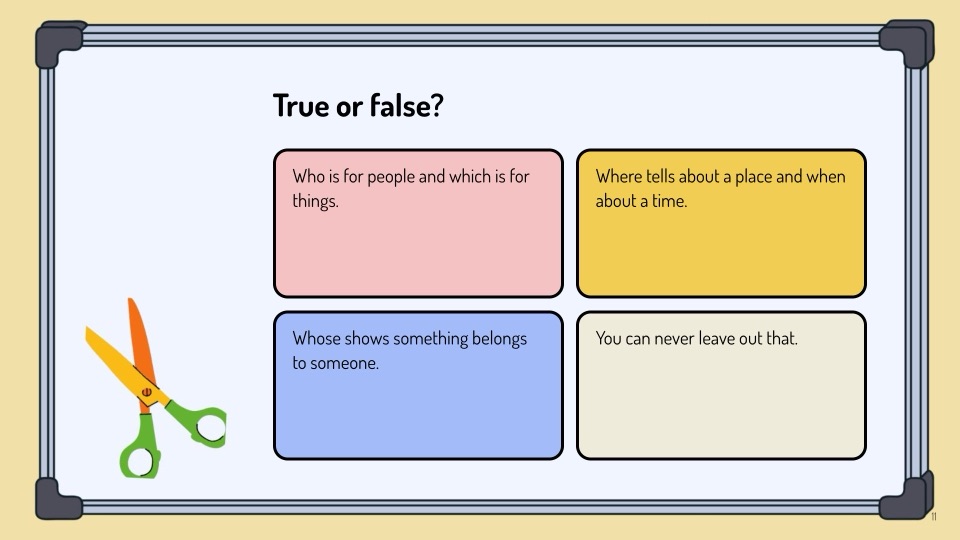
| 8 min | Plenary | To check choices of who, which, where, when, whose and omitted that. Show Slide 9 Big idea statement: A relative clause tells more about a noun. Show Slide 10 Which sounds best? vote: The cake that I made was soft and The cake I made was soft. Vote and confirm both are correct. Show Slide 11 True or false? Read: Who is for people and which is for things. Where tells about a place and when about a time. |
Common mistakes
- Using who for things or which for people
How to spot it: Hear It is a box who keeps books
Recall who is used only with a person and which with a thing; swap and re-read - Leaving out a subject pronoun, e.g. the classmate helped me
How to spot it: Two nouns together with no verb link and meaning breaks
Show omission works for object that, but subject who or that must be kept; test by putting that back - Using that inside commas for extra detail
How to spot it: See My coat, that has buttons, is missing
Explain that is used only in restrictive clauses and is not preceded by a comma; change to which
Support
- Clue mat and word bank with starters a tool which..., a box where..., a break when...
- Pre-printed frames with commas in place and choice of who, which or that to circle
- Paired working and visual objects to point to while saying clauses
Stretch
- Write the same sentence with that and with who or which and explain if both sound right
- Include one riddle with an omitted pronoun, such as the pen a student lent me
- Try omitting a subject who and discuss why it must be kept
Check questions
- Choose: This is the shelf ___ we put our trays.
Answer: where, for a place - Choose: This is the classmate ___ umbrella was left behind.
Answer: whose, for possession - Which is correct: The pen that I borrowed / The pen I borrowed? Why?
Answer: Both, that can be omitted and implied
Curriculum
using relative clauses beginning with who, which, where, when, whose, that or with an implied (ie omitted) relative pronoun
Video clips
Clips on YouTube, from the start and end times we chose. Check each one before you show it.
-
What is a relative clause from 0:00 to 4:14
Twinkl Educational Publishing: What Is a Relative Clause? | KS2 English Concept for Kids
Made for KS2 pupils aged 9-10 and clearly explains relative clauses with simple vocabulary and pace.
-
Relative clauses and pronouns from 0:00 to 4:50
Twinkl Educational Publishing: What Are Relative Clauses and Relative Pronouns? | KS2 English Concept for Kids
Made for KS2 pupils aged 9-10 and directly teaches who, which, where, when, whose and that with clear examples.
Worksheet
Sources
- Year 5 Curriculum plan 2023 24 1 queenshill.norfolk.sch.uk
- glossary gov.uk
- relative clauses allsaints.wakefield.sch.uk
- Relative clauses | EF United Kingdom ef.co.uk
- Non-defining relative clauses | EF United Kingdom ef.co.uk
- English relative clauses - Wikipedia en.wikipedia.org
- relative clauses centros.edu.xunta.gal
- Relative Construction | English Grammar Studies novakidschool.com
Picture credits
- Photo: ludi · Pixabay
- Photo: Nwaeke Daniel (Danzisky) · CC BY-SA 4.0 · Wikimedia Commons
- Photo: ParentiPacek · Pixabay
- Drawing: J_Alves · CC0 · Wikimedia Commons
- Pictograms: Sergio Palao, ARASAAC (arasaac.org) · CC BY-NC-SA
- Drawing: Norge17maii · CC BY-SA 4.0 · Wikimedia Commons
- Drawing: ngamlerdlek.design · CC BY-SA 4.0 · Wikimedia Commons
- Drawing: MBisanz · Public domain · Wikimedia Commons
- Illustration: olenchic · Pixabay
Made with Lesson Dino's AI on 17 October 2026. AI can make mistakes, so check facts against the sources before you teach.