The worksheet
About this worksheet
Pupils learn to find the thread across paragraphs and group details. They shrink a text about hedgehogs onto one paper strip. This Year 5 English worksheet gives students (ages 9–10) six pages of practice on summarising main ideas, part of the reading - comprehension unit. It goes with our free Summarising main ideas lesson, which has the slides and a timed lesson plan.
What it covers
By the end, students should be able to:
- Students will summarise the main ideas drawn from more than one paragraph.
- Students will identify key details that support the main ideas across paragraphs.
How to use it
- Use it for practice after the teaching part of the lesson, once students have seen the worked examples on the slides.
- Support: Give texts where thread words are already highlighted and topic sentences underlined.
- Stretch: Add which key detail best supports each part of the summary.
- The answer sheet is the last page, so you can print it on its own or let students check their own work.
Key vocabulary
- summarise: to make a text much shorter, keeping only the most important points
- main idea: what the whole piece of writing is mostly about, the thread every sentence serves
- key detail: an important fact or example that shows the point is true
- paragraph: a group of sentences about one part of a longer text
Mistakes to watch for
- Copying whole sentences or writing everything instead of shrinking. Cover the text and retell in 1-2 own-word sentences; check it sums up in a few words, not the whole story.
- Choosing the loudest detail as the main idea, e.g. only slug pellets. Ask what every sentence serves; fold roads, fences and pellets into human obstacles and add but help is growing.
- Writing a vague theme that is too broad, e.g. about animals. Add the thread + turn + one grouped detail, using topic sentences to locate each paragraph point.
What's on the worksheet
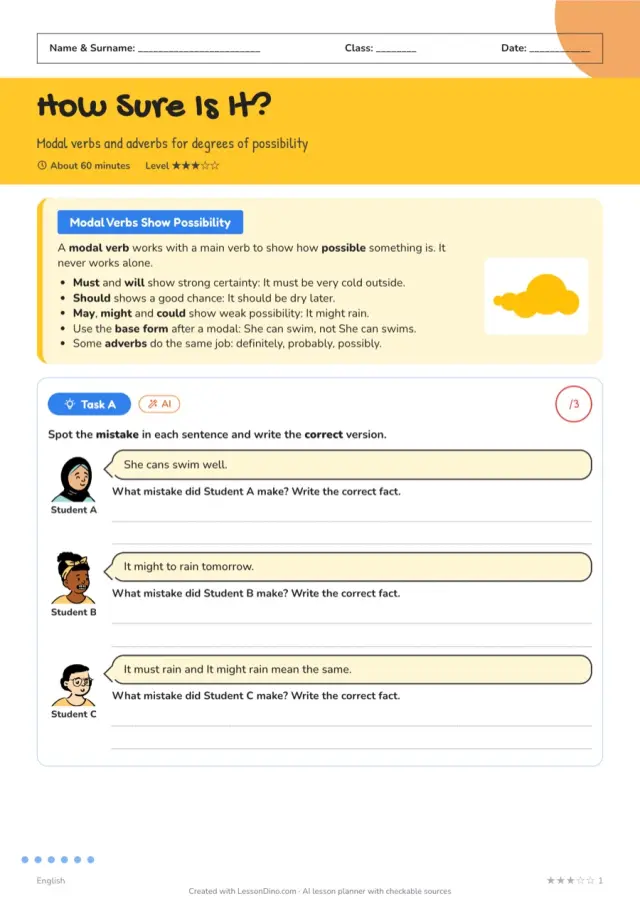
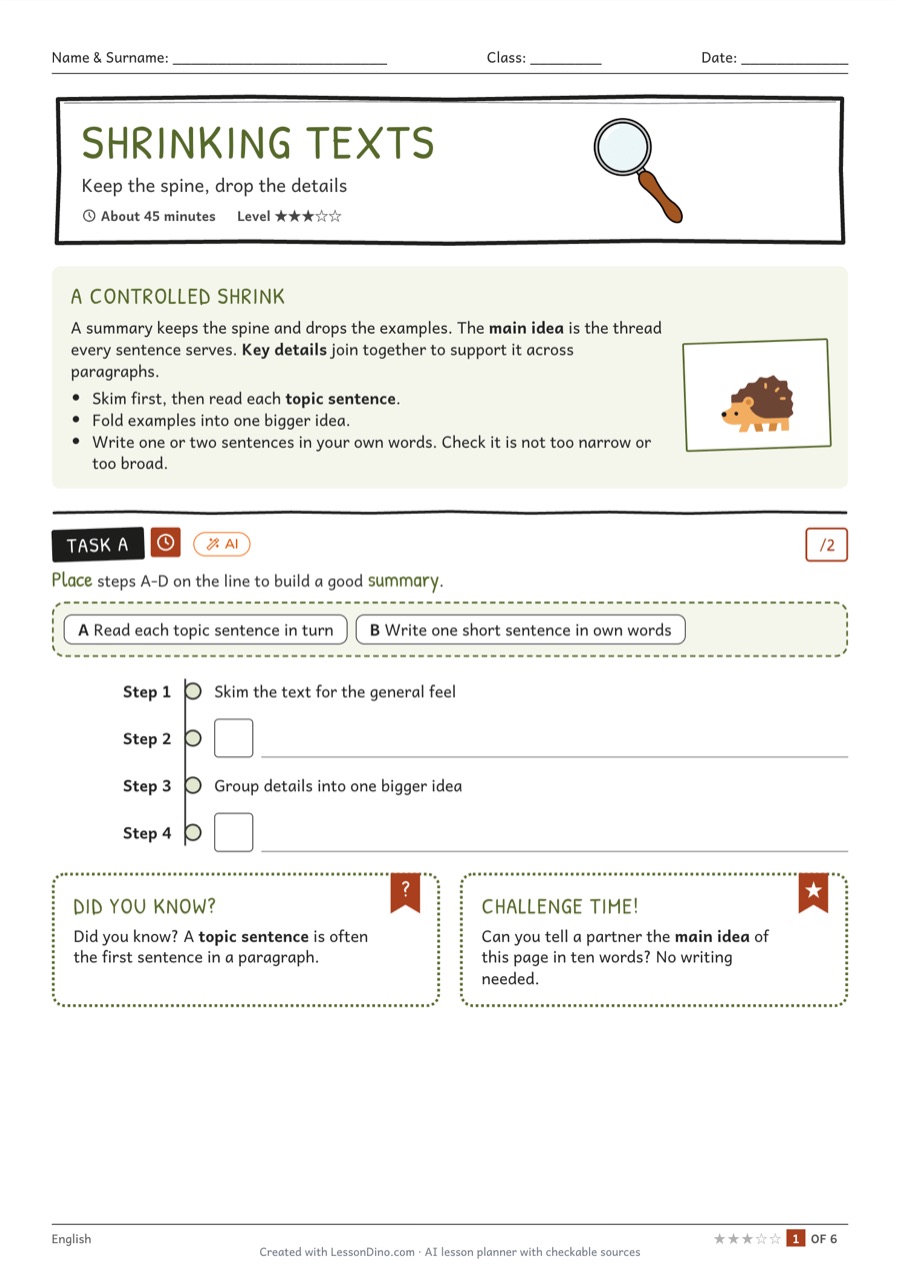
Keep the Spine
See what a summary keeps and drops.
A Controlled Shrink
- A summary keeps the spine and drops the examples. The main idea is the thread every sentence serves. Key details join together to support it across paragraphs.
- Skim first, then read each topic sentence.
- Fold examples into one bigger idea.
- Write one or two sentences in your own words. Check it is not too narrow or too broad.
Place steps A-D on the line to build a good summary.
- Did you know? A topic sentence is often the first sentence in a paragraph.
- Can you tell a partner the main idea of this page in ten words? No writing needed.
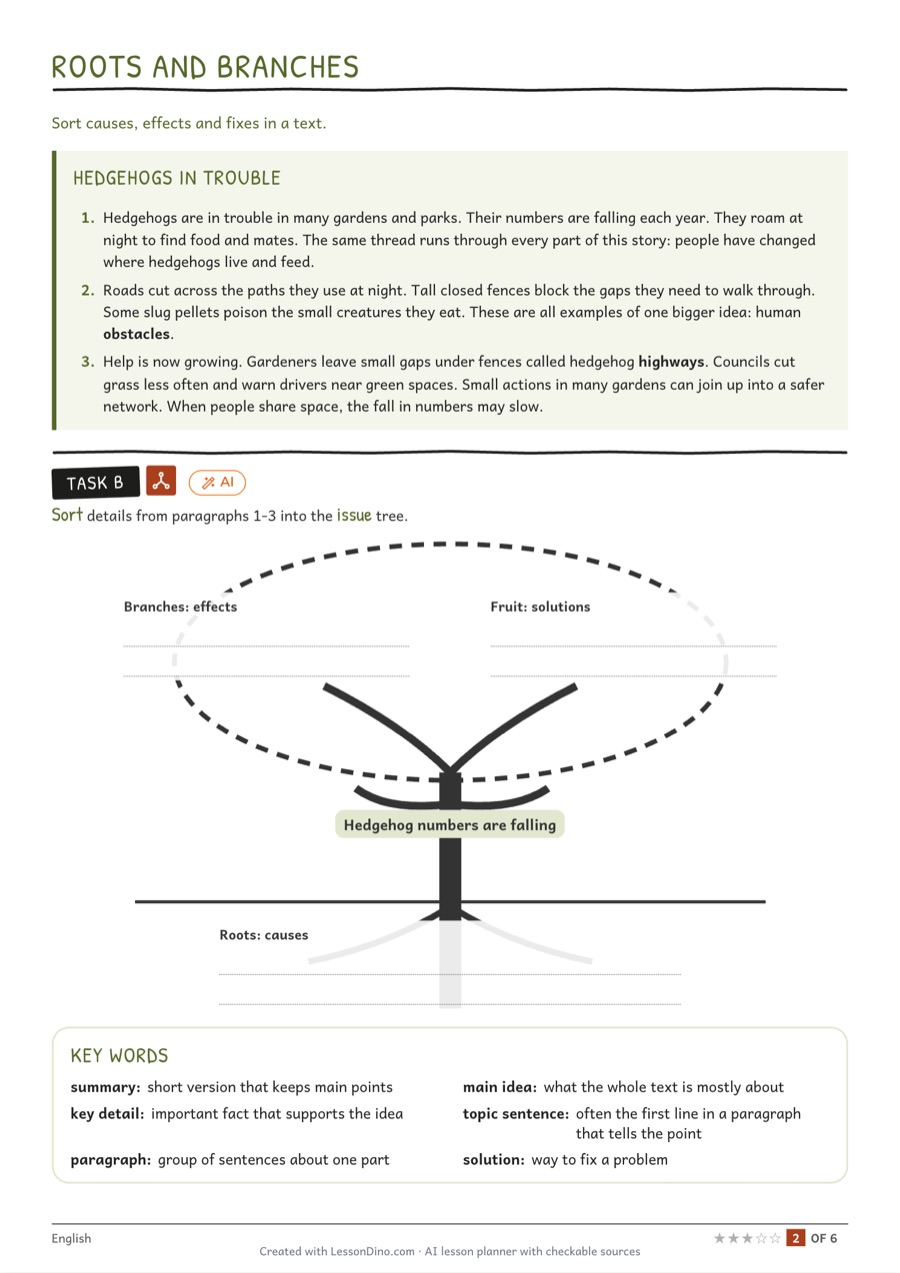
Roots and Branches
Sort causes, effects and fixes in a text.
Hedgehogs in Trouble
Sort details from paragraphs 1-3 into the issue tree.
| Word | Meaning |
|---|---|
| summary | short version that keeps main points |
| main idea | what the whole text is mostly about |
| key detail | important fact that supports the idea |
| topic sentence | often the first line in a paragraph that tells the point |
| paragraph | group of sentences about one part |
| solution | way to fix a problem |
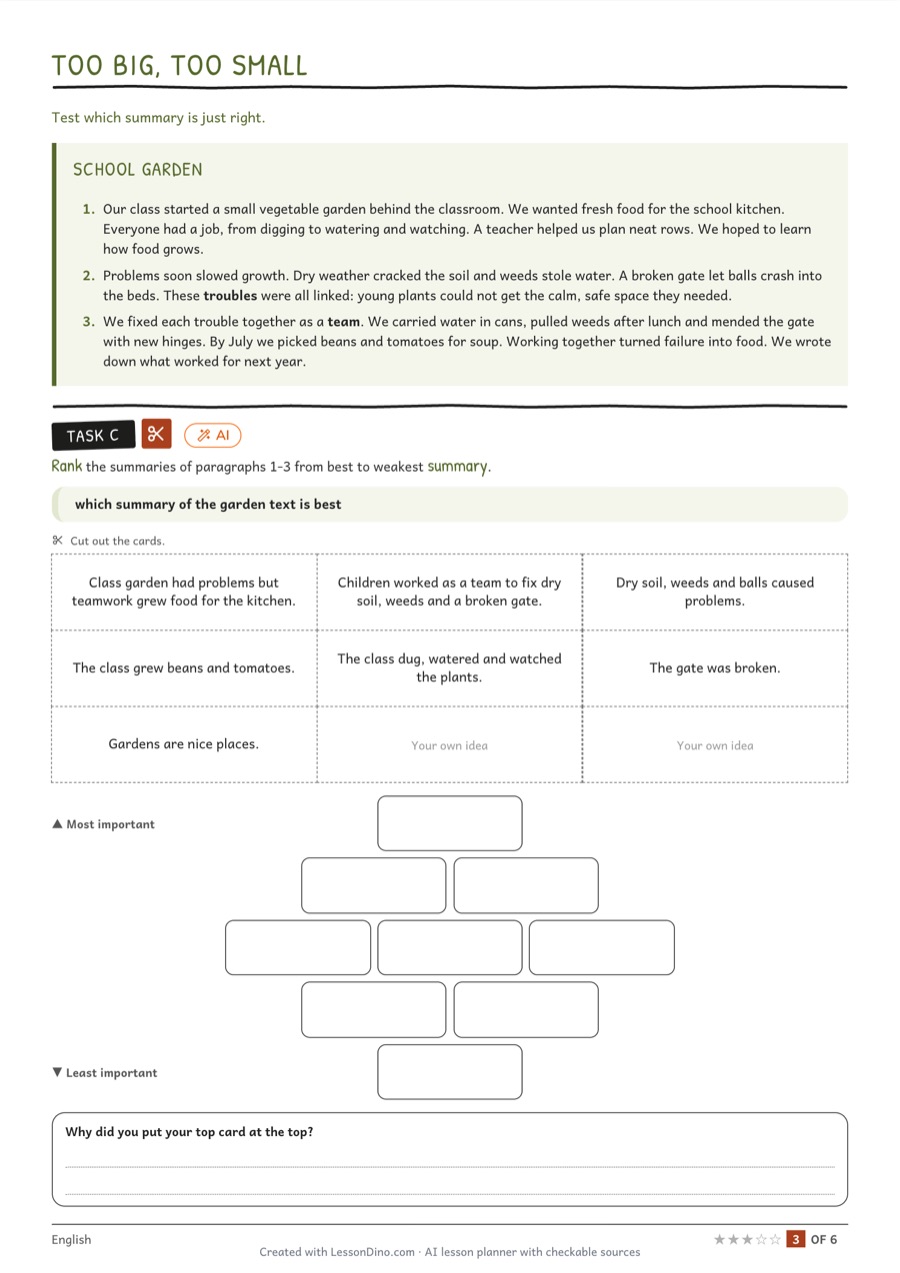
Too Big, Too Small
Test which summary is just right.
School Garden
Rank the summaries of paragraphs 1-3 from best to weakest summary.
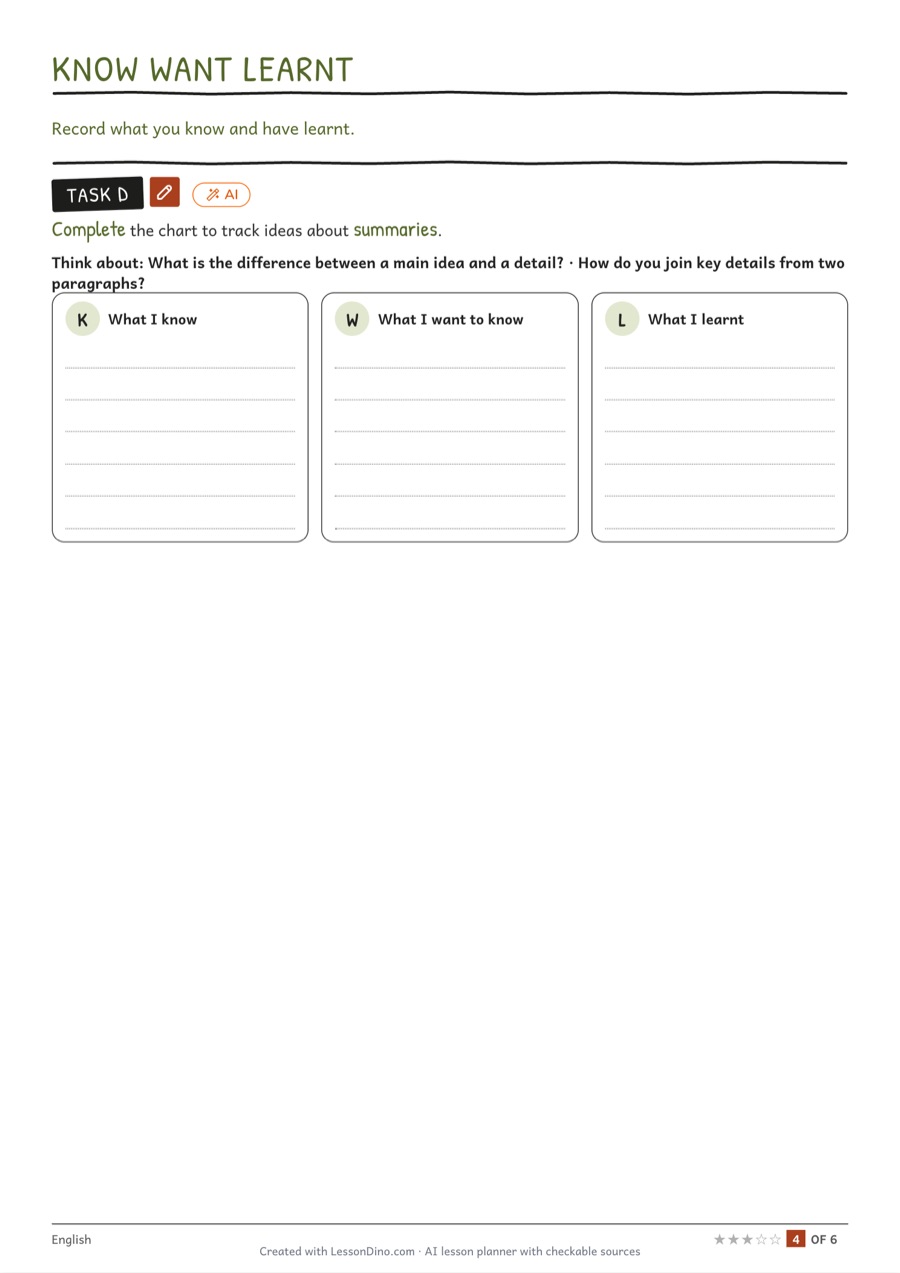
Know Want Learnt
Record what you know and have learnt.
Complete the chart to track ideas about summaries.
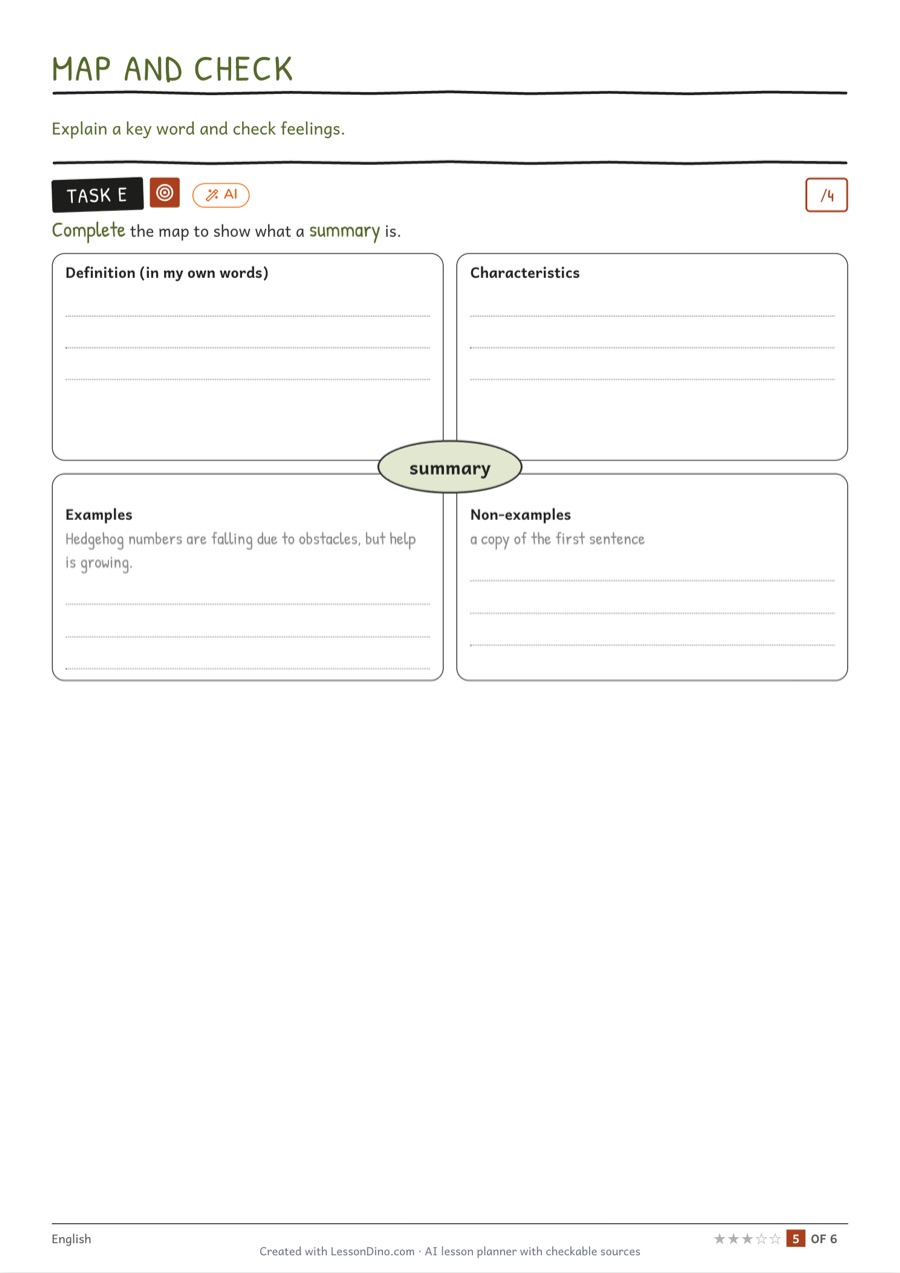
Map and Check
Explain a key word and check feelings.
Complete the map to show what a summary is.
Page 6
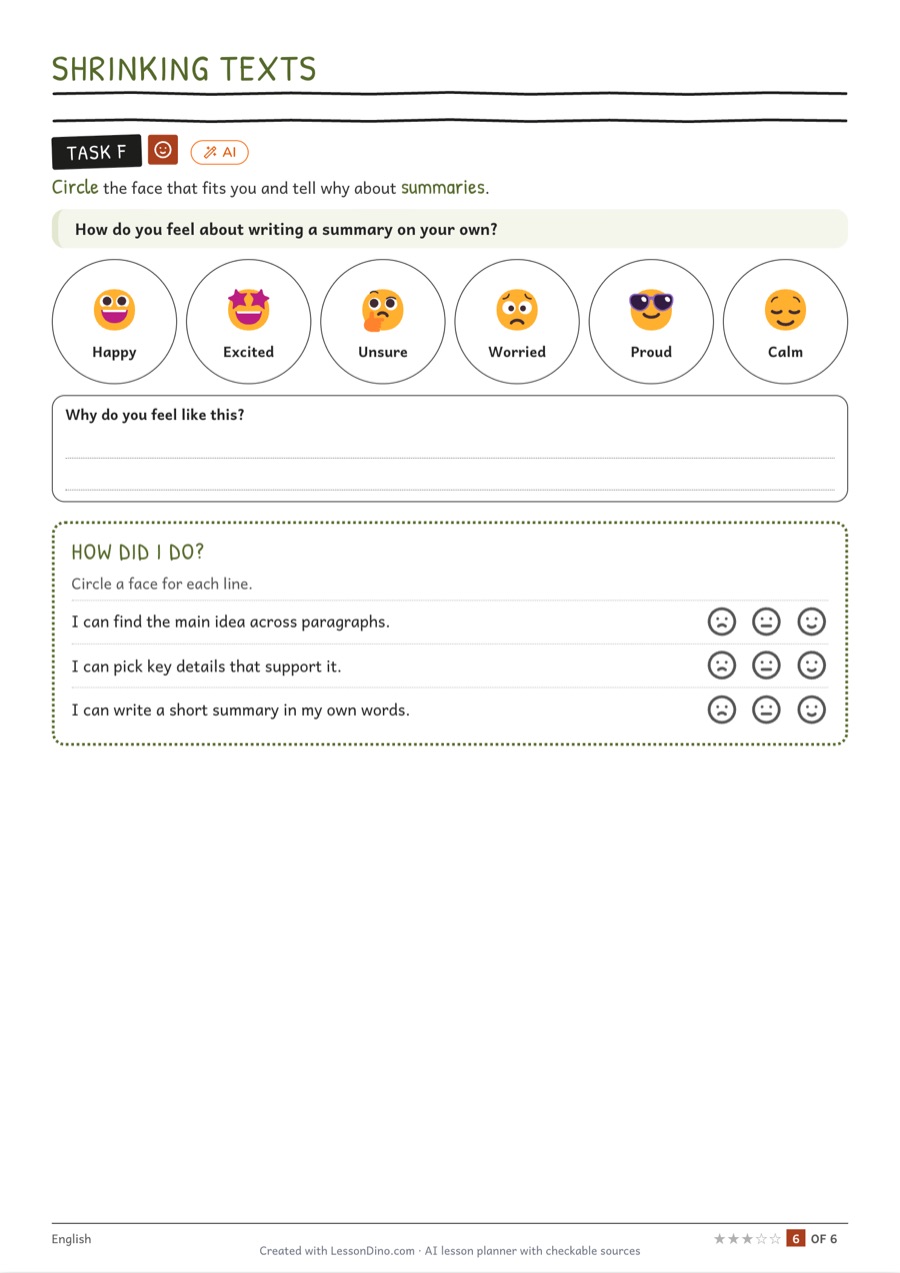
Circle the face that fits you and tell why about summaries.
Answers
Show the answers
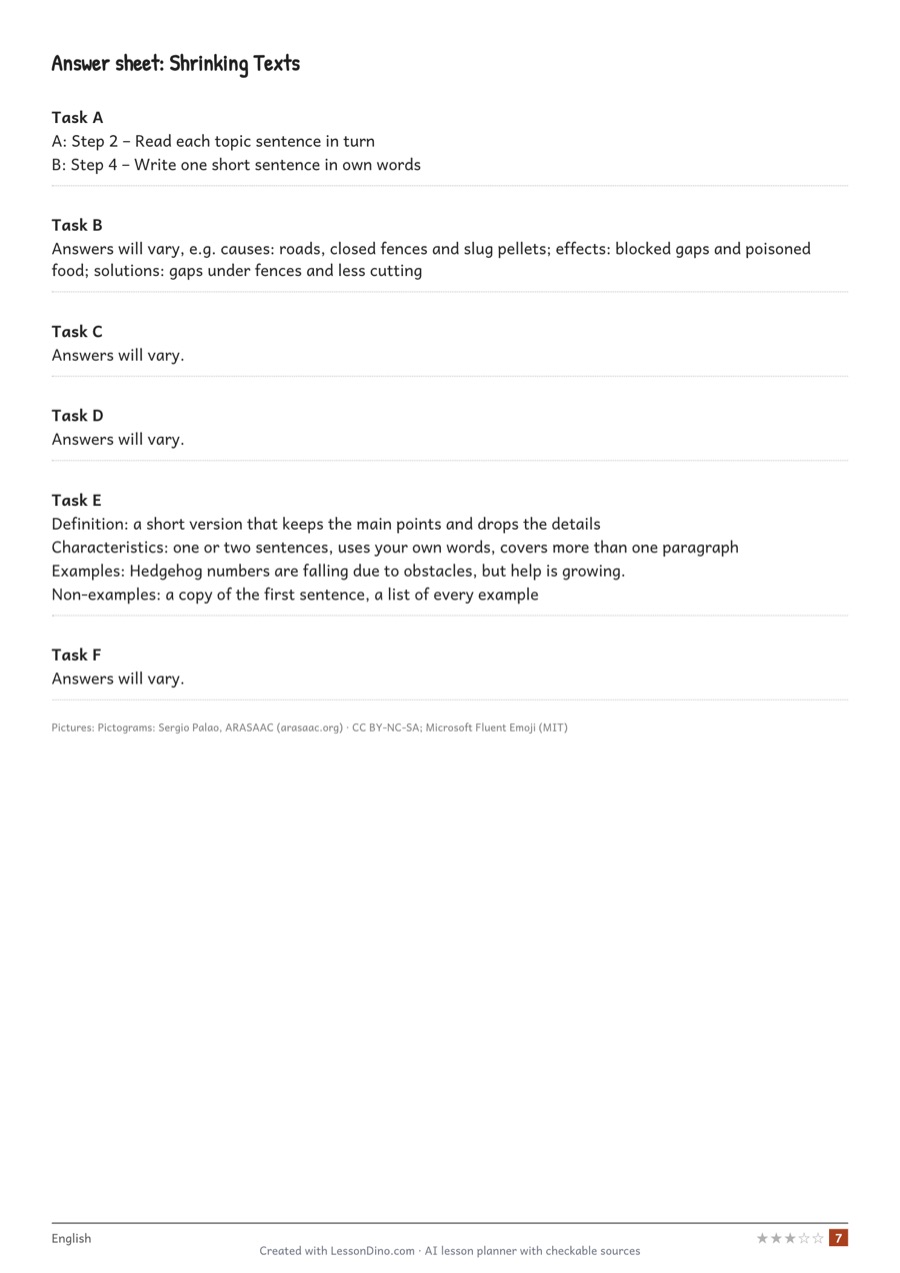
The answers are on the answer sheet, the last picture above.
Curriculum
summarising the main ideas drawn from more than 1 paragraph, identifying key details that support the main ideas
Made with Lesson Dino's AI on 17 October 2026. AI can make mistakes, so check the answers and facts against the sources before you teach.