The worksheet
About this worksheet
Pupils learn the basic parts of the digestive system and what each part does. They act out the journey of food from mouth to anus. This Year 4 Science worksheet gives students (ages 8–9) five pages of practice on the digestive system, part of the animals, including humans unit. It goes with our free The digestive system lesson, which has the slides and a timed lesson plan.
What it covers
By the end, students should be able to:
- Students will name the basic parts of the digestive system in order.
- Students will describe in simple words what each digestive part does to food.
How to use it
- Plenary (15 minutes): Give out Worksheet Task G and let pupils fill each missing job in a few words.
- Support: Use role cards with pictures and one sentence to read aloud.
- Stretch: Run the human chain faster without cards in the correct order.
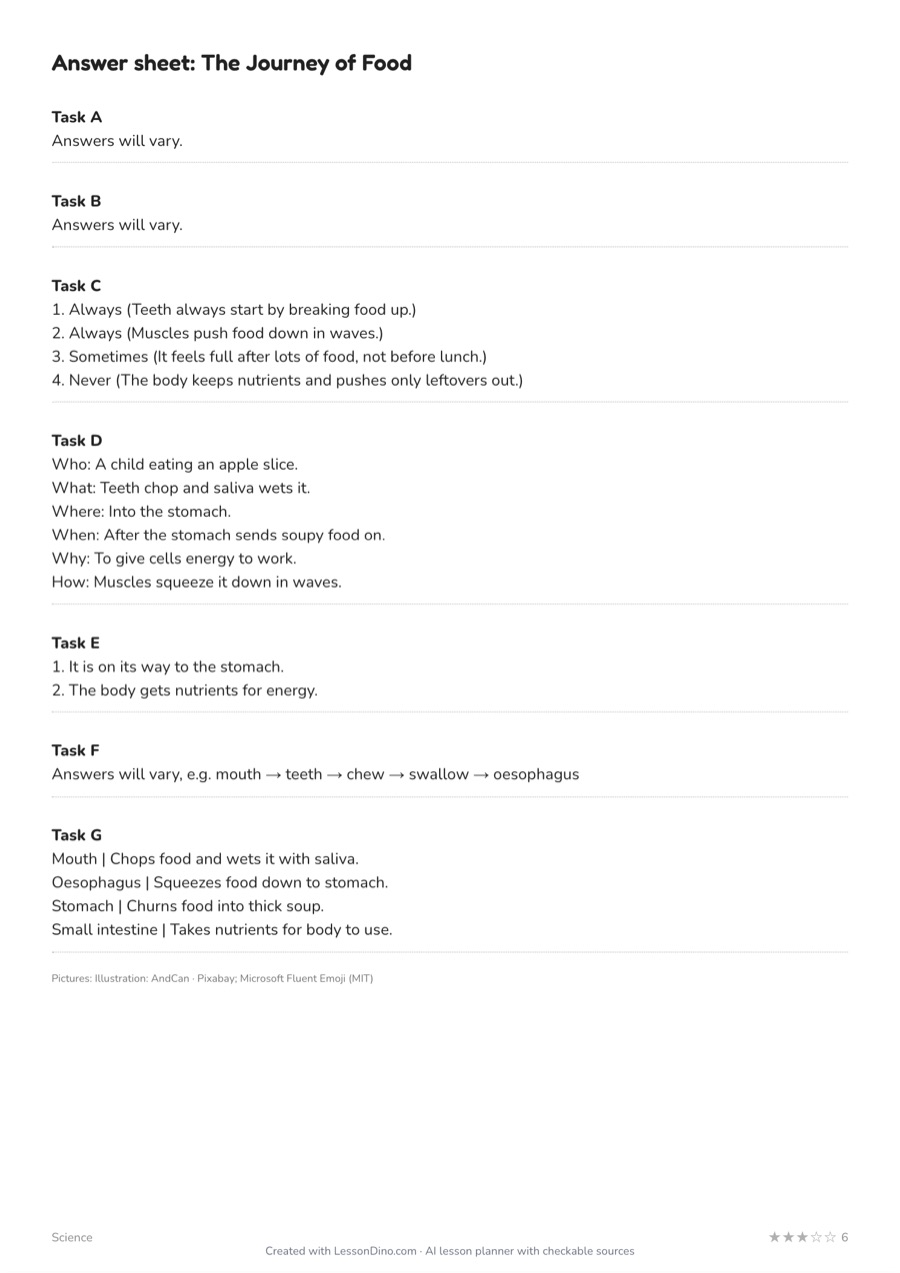
- The answer sheet is the last page, so you can print it on its own or let students check their own work.
Key vocabulary
- mouth: opening where teeth cut food and spit wets it for swallowing
- oesophagus: muscular food tube in the chest that squeezes food down to the stomach
- stomach: stretchy bag that mixes food into thick soup
- small intestine: long twisty tube that takes goodness from food into the blood
- large intestine: wider tube that dries leftovers and packs them into poo
Mistakes to watch for
- Food just falls down to the stomach by gravity. Remind them you can swallow upside down; waves of muscle squeezes called peristalsis force food down the oesophagus to the stomach. Practise the squeeze move.
- Mixing up oesophagus and stomach jobs. Contrast tube that squeezes with bag that churns; oesophagus squeezes food down, stomach churns and intestines break food down.
- Thinking all food becomes poo. Sort goodness and waste: nutrients give cells energy and are absorbed, only waste parts leave as faeces through the anus.
What's on the worksheet
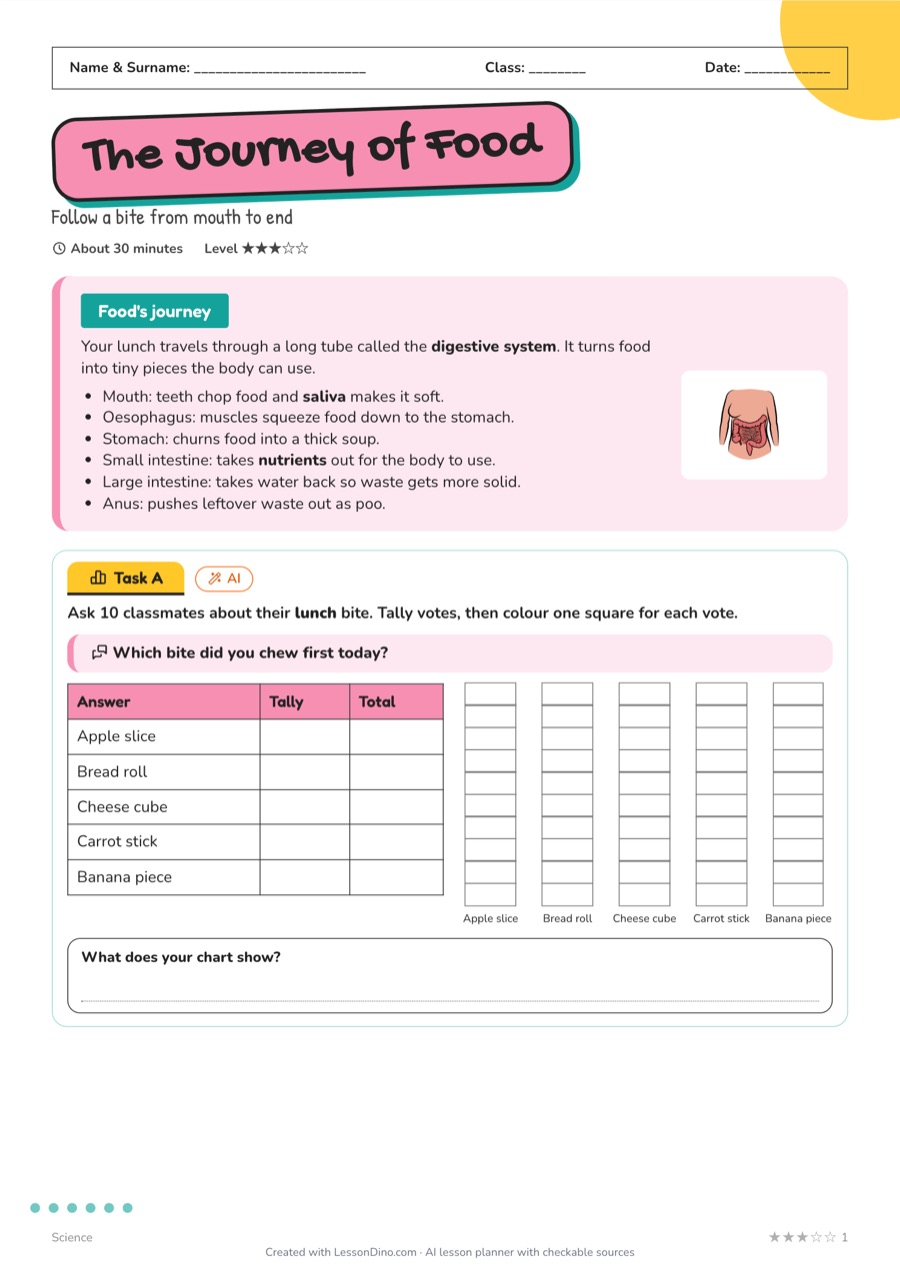
Food's Amazing Journey
Learn the parts and what each one does.
Food's journey
- Your lunch travels through a long tube called the digestive system. It turns food into tiny pieces the body can use.
- Mouth: teeth chop food and saliva makes it soft.
- Oesophagus: muscles squeeze food down to the stomach.
- Stomach: churns food into a thick soup.
- Small intestine: takes nutrients out for the body to use.
- Large intestine: takes water back so waste gets more solid.
- Anus: pushes leftover waste out as poo.
Ask 10 classmates about their lunch bite. Tally votes, then colour one square for each vote.
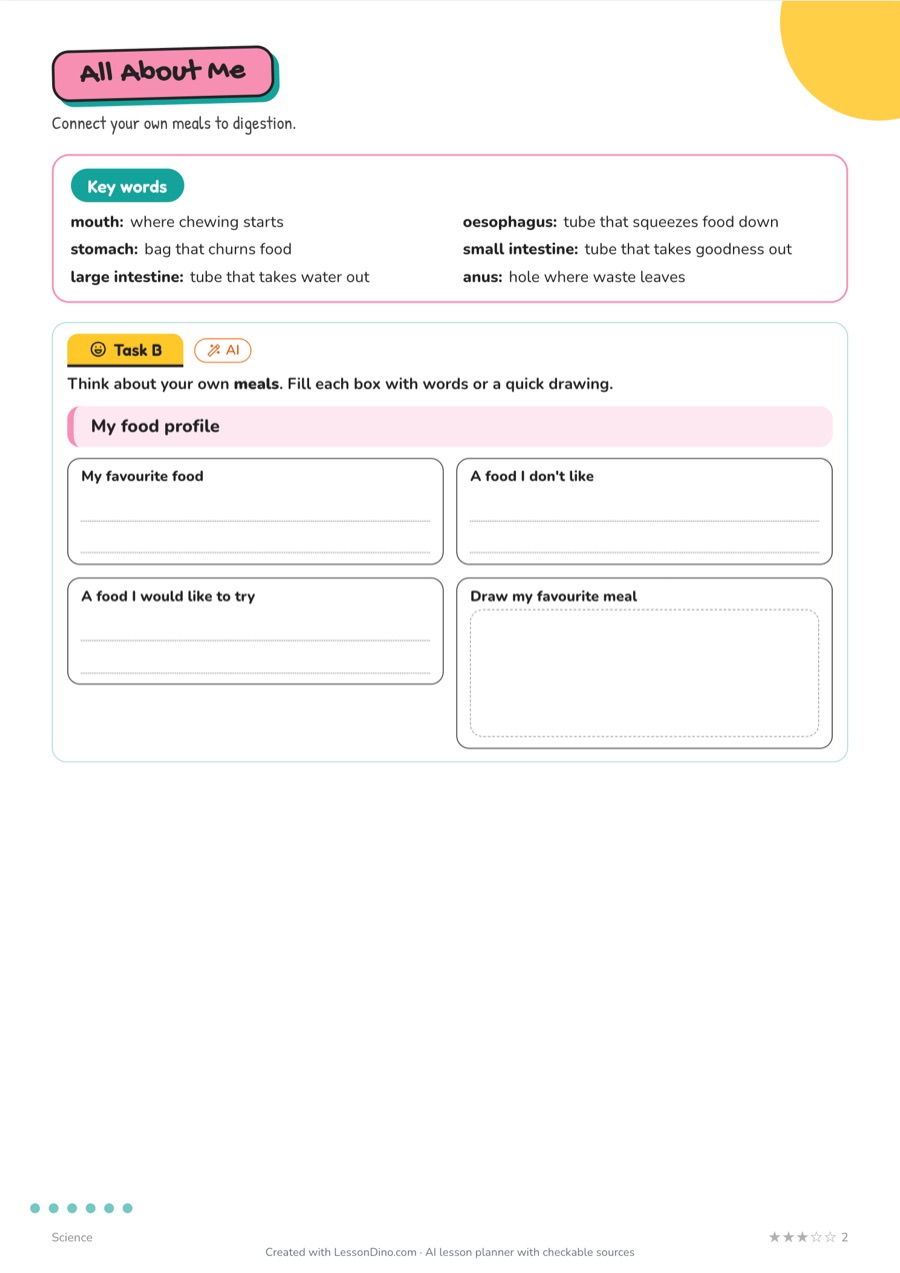
All About Me
Connect your own meals to digestion.
| Word | Meaning |
|---|---|
| mouth | where chewing starts |
| oesophagus | tube that squeezes food down |
| stomach | bag that churns food |
| small intestine | tube that takes goodness out |
| large intestine | tube that takes water out |
| anus | hole where waste leaves |
Think about your own meals. Fill each box with words or a quick drawing.
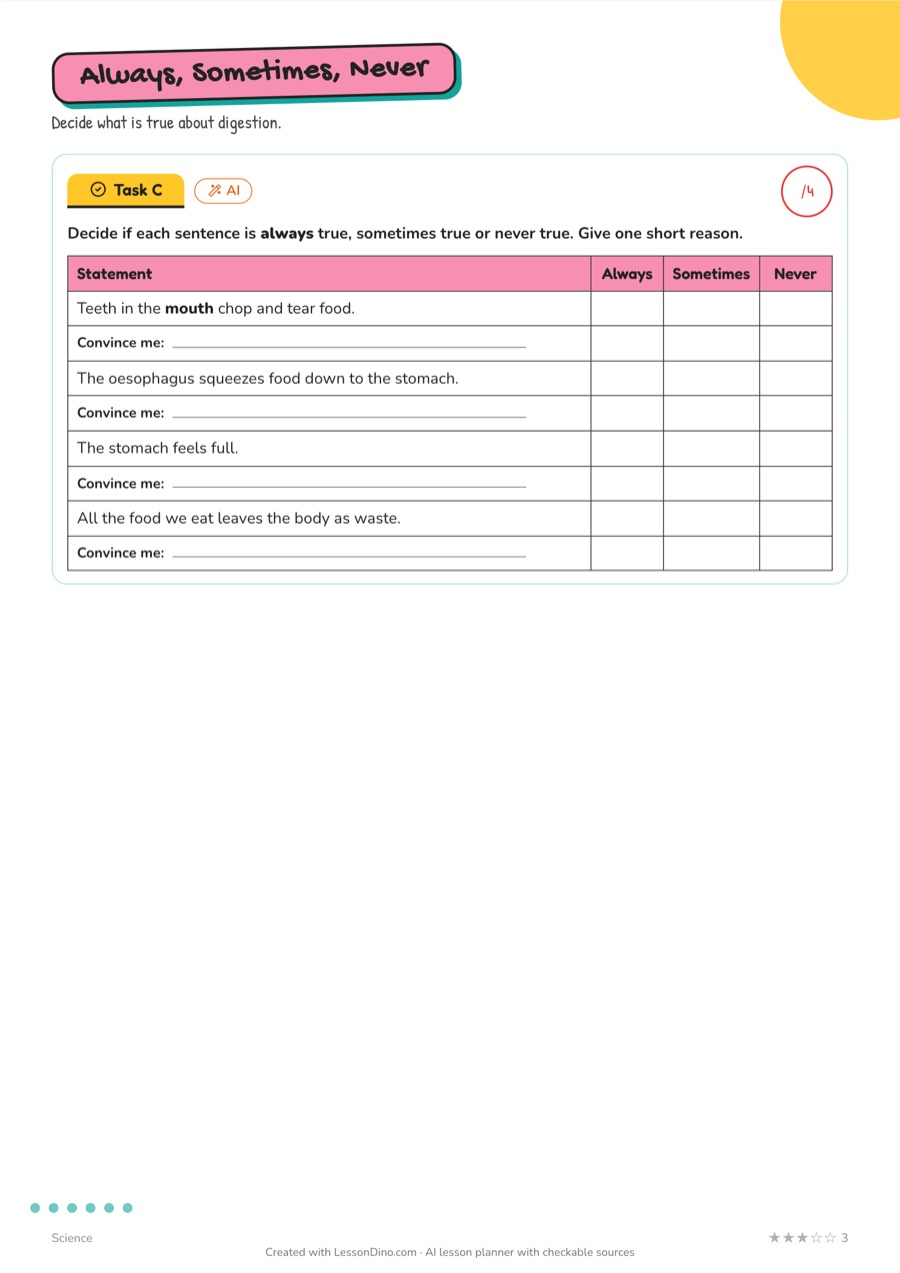
Always, Sometimes, Never
Decide what is true about digestion.
Decide if each sentence is always true, sometimes true or never true. Give one short reason.
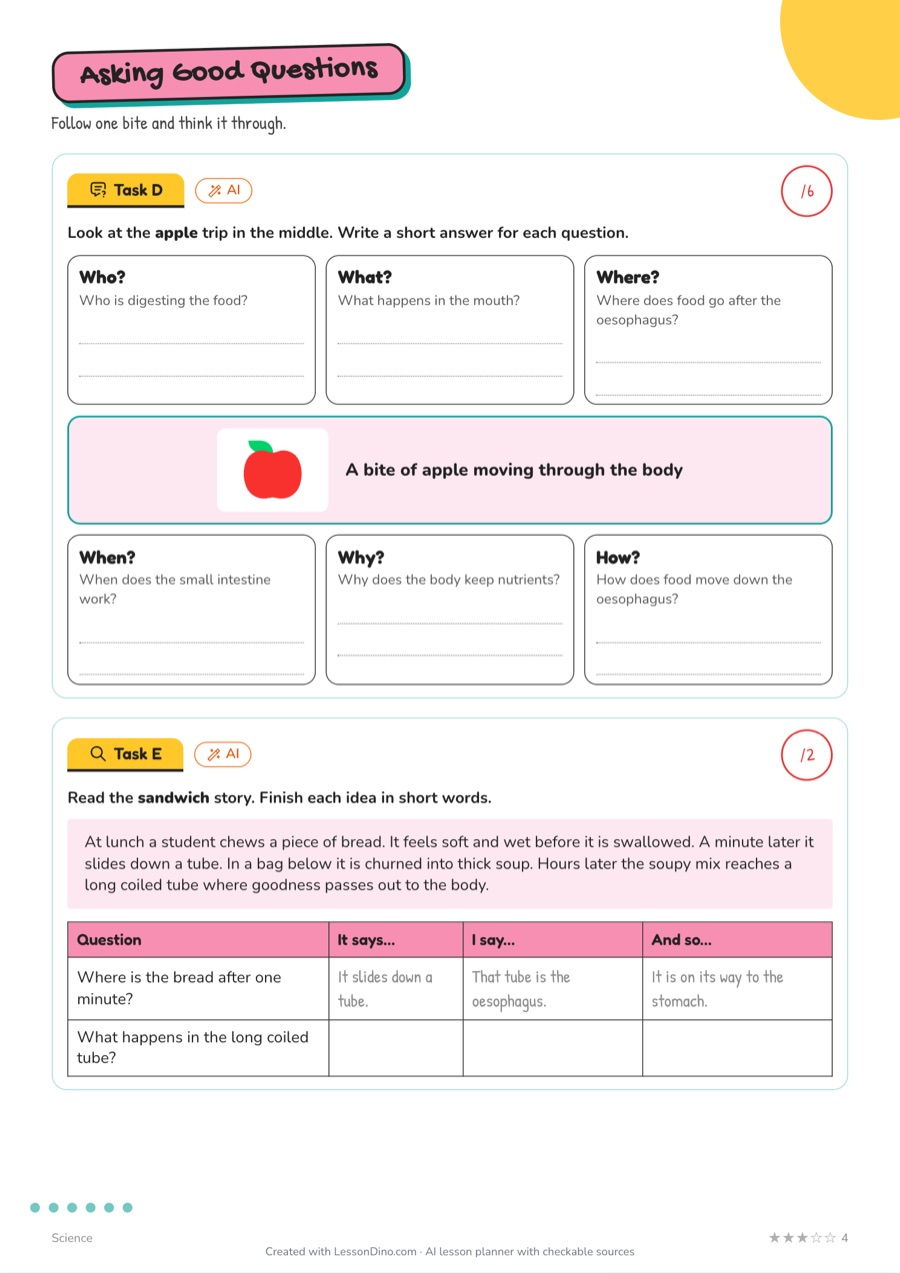
Asking Good Questions
Follow one bite and think it through.
Look at the apple trip in the middle. Write a short answer for each question.
Read the sandwich story. Finish each idea in short words.
- At lunch a student chews a piece of bread. It feels soft and wet before it is swallowed. A minute later it slides down a tube. In a bag below it is churned into thick soup. Hours later the soupy mix reaches a long coiled tube where goodness passes out to the body.
- Where is the bread after one minute?
- What happens in the long coiled tube?
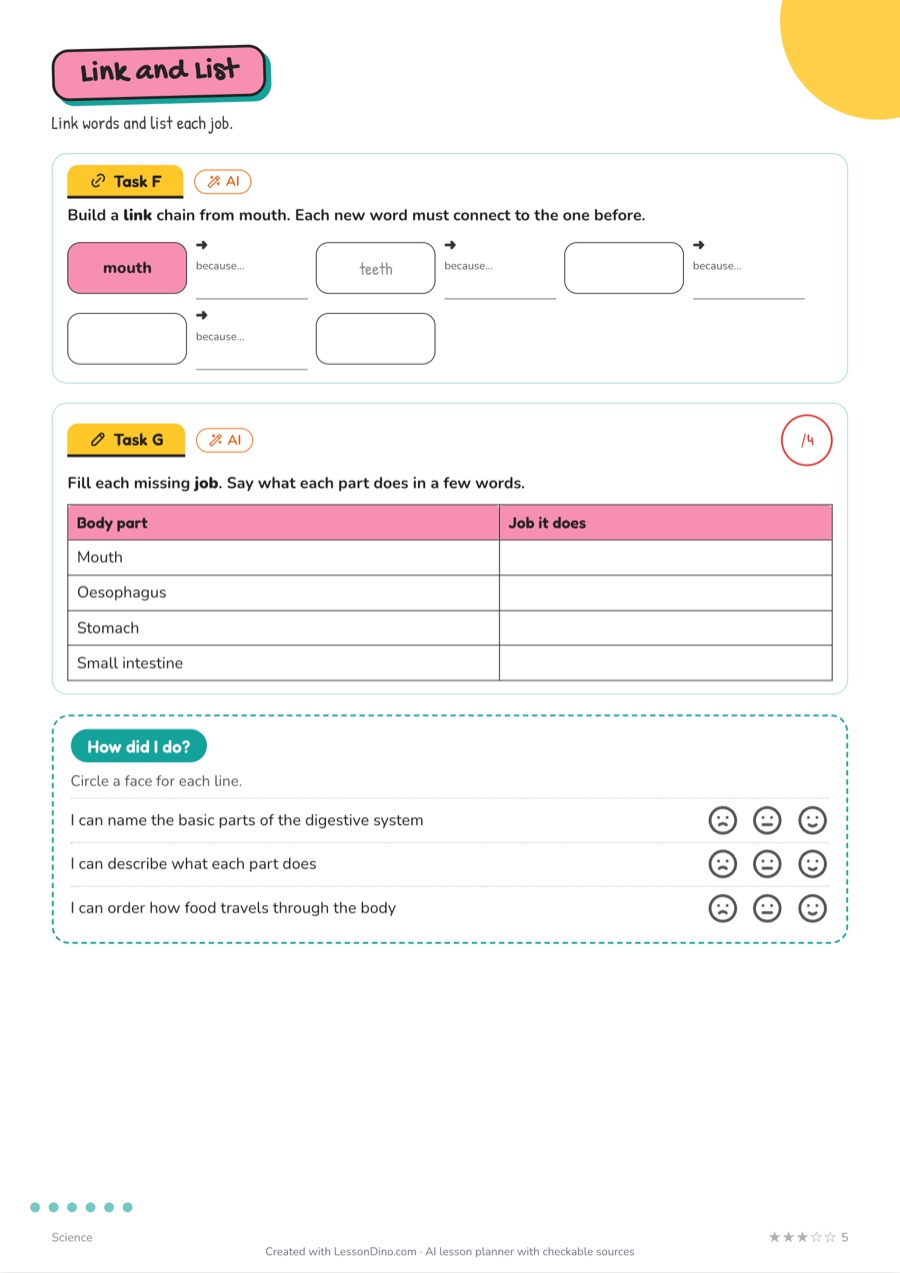
Link and List
Link words and list each job.
Build a link chain from mouth. Each new word must connect to the one before.
Fill each missing job. Say what each part does in a few words.
Answers
Show the answers
The answers are on the answer sheet, the last picture above.
Curriculum
describe the simple functions of the basic parts of the digestive system in humans
Made with Lesson Dino's AI on 17 October 2026. AI can make mistakes, so check the answers and facts against the sources before you teach.