The worksheet
About this worksheet
Pupils learn how to tell solids, liquids and gases apart. They run, sort and explain which hoop each material belongs in. This Year 4 Science worksheet gives students (ages 8–9) six pages of practice on states of matter. It goes with our free States of matter lesson, which has the slides and a timed lesson plan.
What it covers
By the end, students should be able to:
- Students will compare everyday materials by shape, flow and spreading out.
- Students will group materials as solids, liquids or gases with reasons.
How to use it
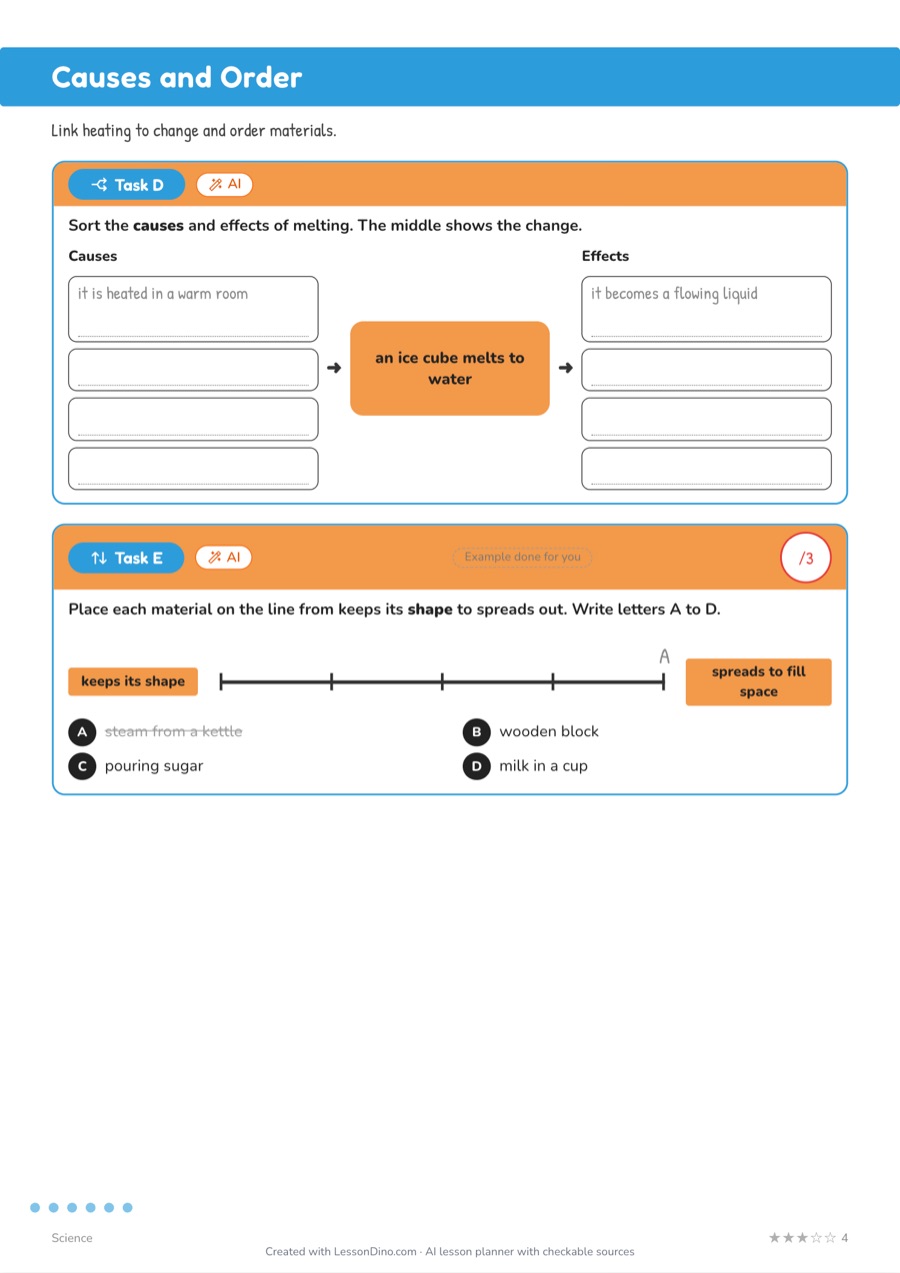
- Tricky sort (10 minutes): Hand out Worksheet Task E and ask pairs to place each material on the line from keeps its shape to spreads out.
- Support: Use picture cards with tick list tests and word bank pile, pool, flow, keep shape.
- Stretch: Add sugar, salt, flour and sand cards to defend as solids that pour.
- The answer sheet is the last page, so you can print it on its own or let students check their own work.
Key vocabulary
- solid: something that keeps its own shape and can be picked up and held
- liquid: something that flows and takes the shape of its tub or cup
- gas: something that spreads out to fill all the space around it
- container: a tub, bottle or other holder that keeps things inside
Mistakes to watch for
- Thinking anything that can be poured is a liquid, such as sugar, salt, flour or sand. Compare pile and pool: solids hold their shape and liquids form a pool not a pile. Show that even though they can be poured, sugar, salt and flour are all solids and each grain keeps shape.
- Thinking gases are nothing because they cannot be seen. Feel air escaping and show it fills and takes the balloon shape. Stress that gases spread out and change shape and volume to fill the container and escape from an unsealed container.
- Mixing up shape change and amount of space for liquids. Pour 200 ml between tubs to show level changes but amount stays. Repeat that even when liquids change shape, they always take up the same amount of space, as do solids.
What's on the worksheet
Solid, Liquid, Gas
Learn the three states and how to group them.
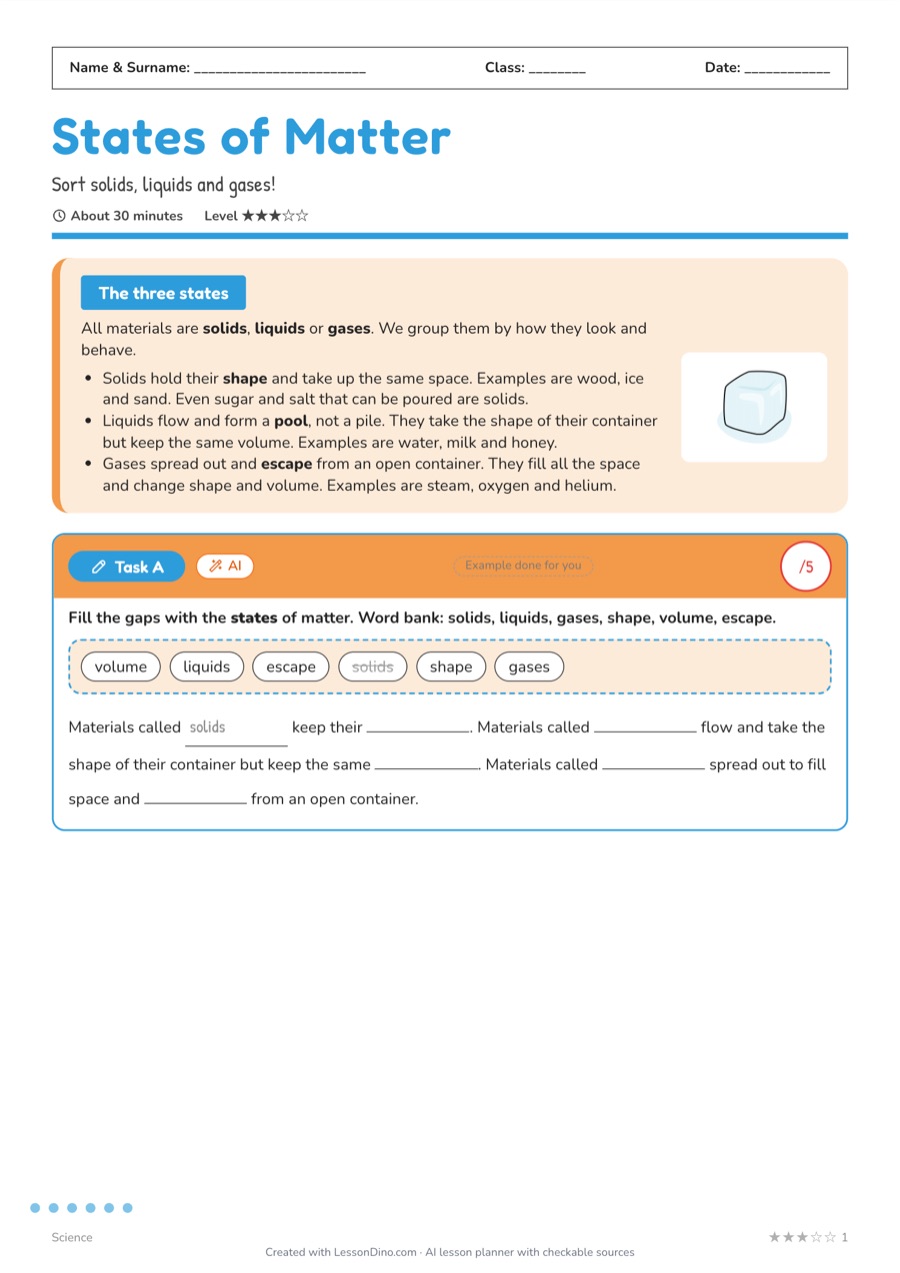
The three states
- All materials are solids, liquids or gases. We group them by how they look and behave.
- Solids hold their shape and take up the same space. Examples are wood, ice and sand. Even sugar and salt that can be poured are solids.
- Liquids flow and form a pool, not a pile. They take the shape of their container but keep the same volume. Examples are water, milk and honey.
- Gases spread out and escape from an open container. They fill all the space and change shape and volume. Examples are steam, oxygen and helium.
Fill the gaps with the states of matter. Word bank: solids, liquids, gases, shape, volume, escape.
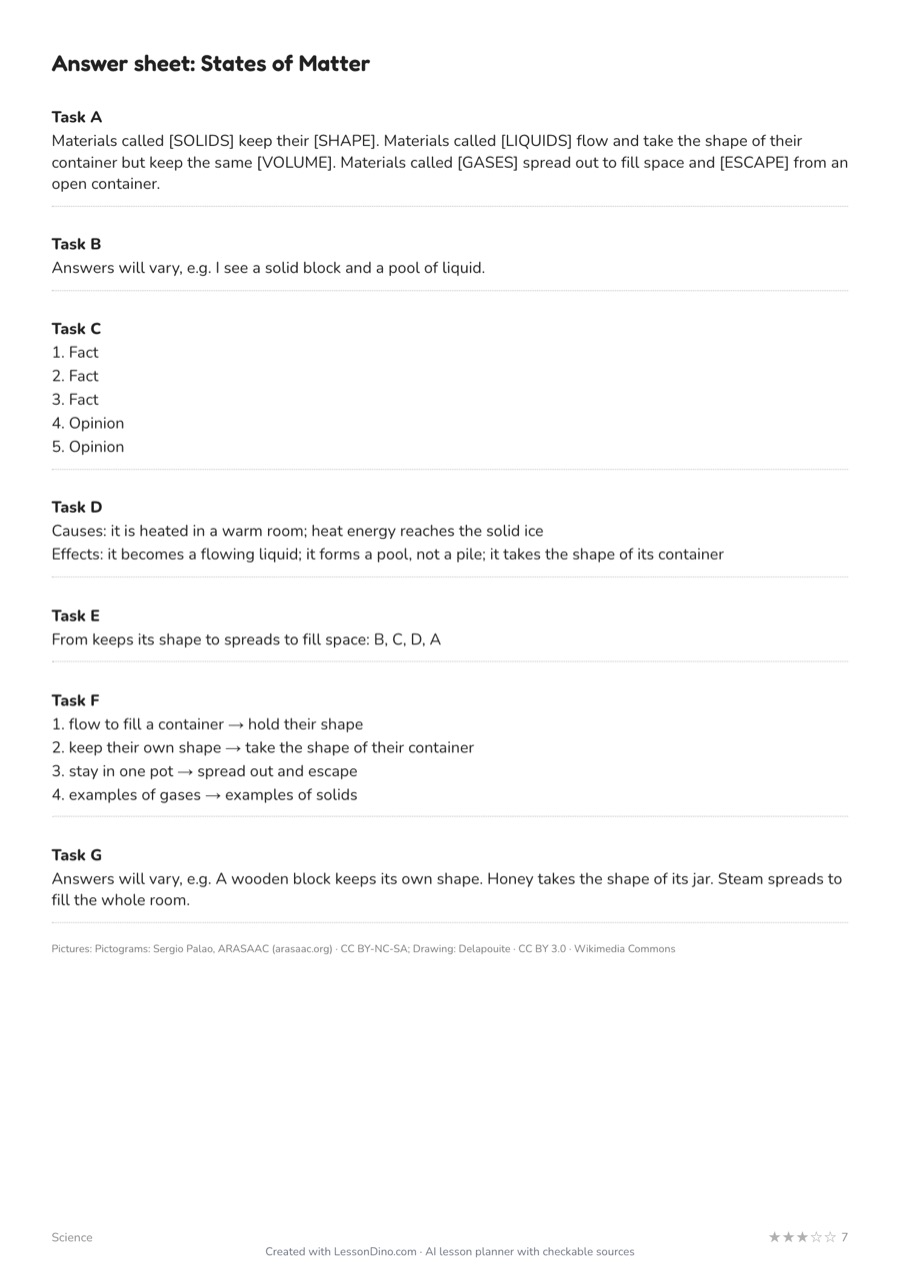
- Materials called [[solids]] keep their [[shape]]. Materials called [[liquids]] flow and take the shape of their container but keep the same [[volume]]. Materials called [[gases]] spread out to fill space and [[escape]] from an open container.
Look Closely
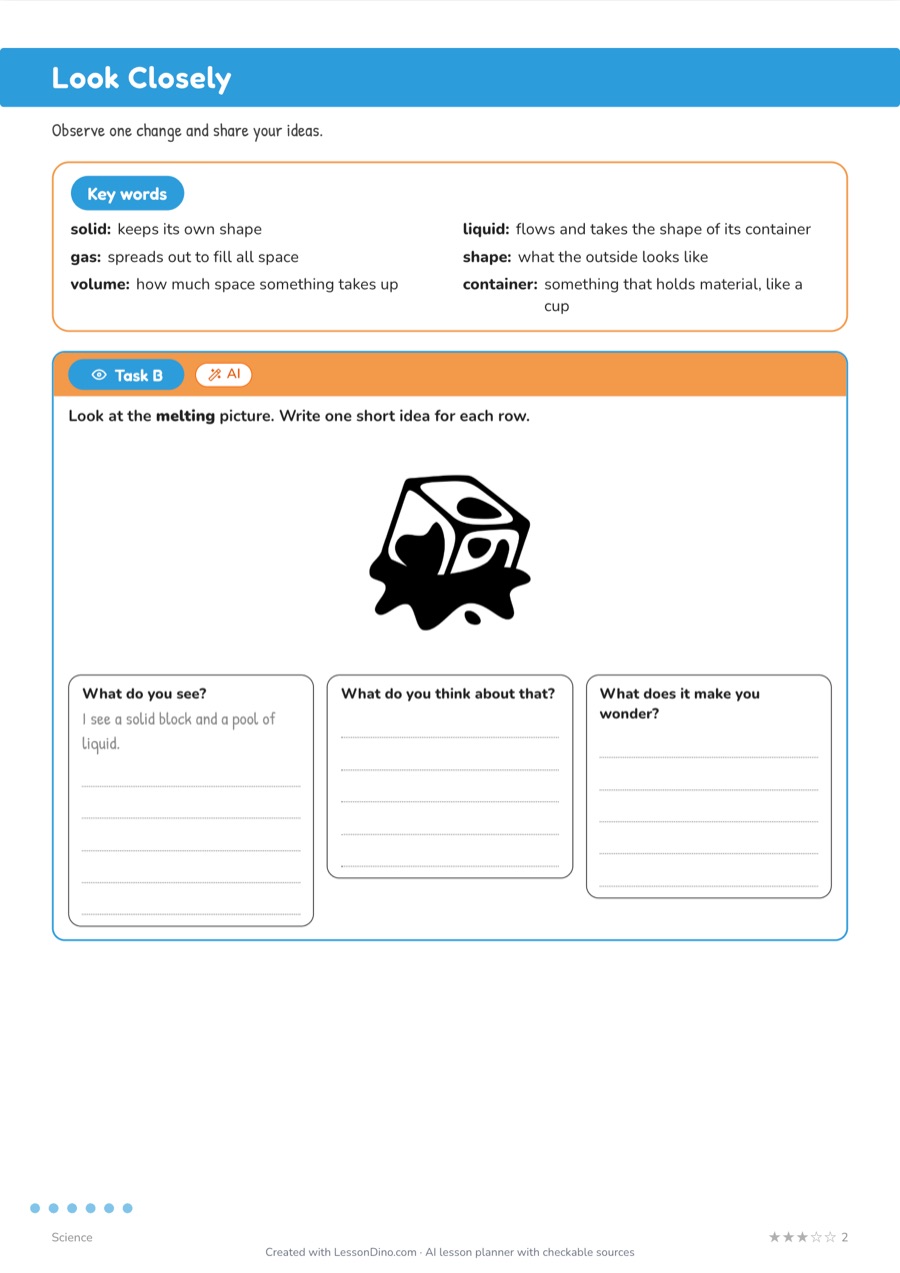
Observe one change and share your ideas.
| Word | Meaning |
|---|---|
| solid | keeps its own shape |
| liquid | flows and takes the shape of its container |
| gas | spreads out to fill all space |
| shape | what the outside looks like |
| volume | how much space something takes up |
| container | something that holds material, like a cup |
Look at the melting picture. Write one short idea for each row.
Fact or Opinion
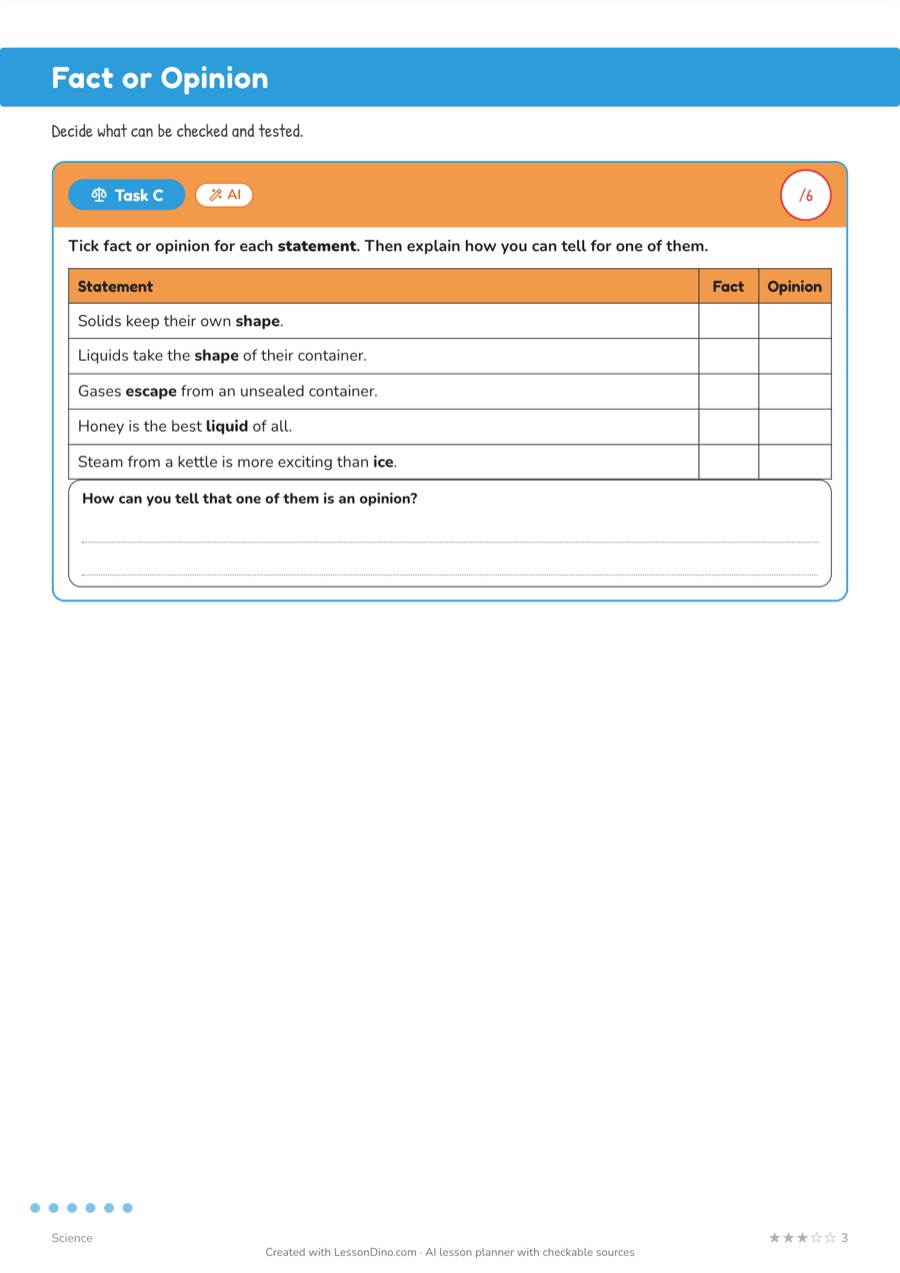
Decide what can be checked and tested.
Tick fact or opinion for each statement. Then explain how you can tell for one of them.
Causes and Order
Link heating to change and order materials.
Sort the causes and effects of melting. The middle shows the change.
Place each material on the line from keeps its shape to spreads out. Write letters A to D.
Fix and Build
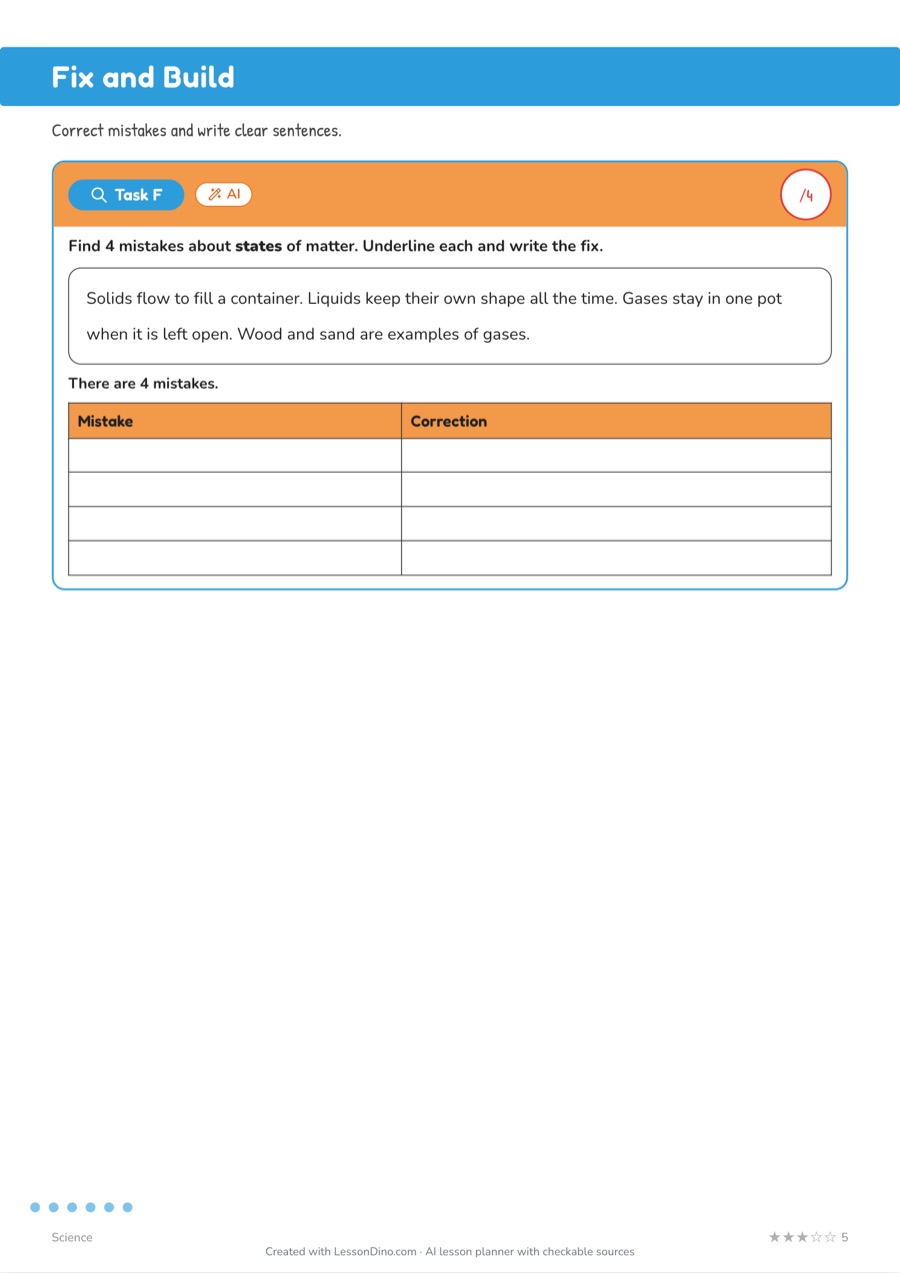
Correct mistakes and write clear sentences.
Find 4 mistakes about states of matter. Underline each and write the fix.
- Solids flow to fill a container. Liquids keep their own shape all the time. Gases stay in one pot when it is left open. Wood and sand are examples of gases.
Page 6
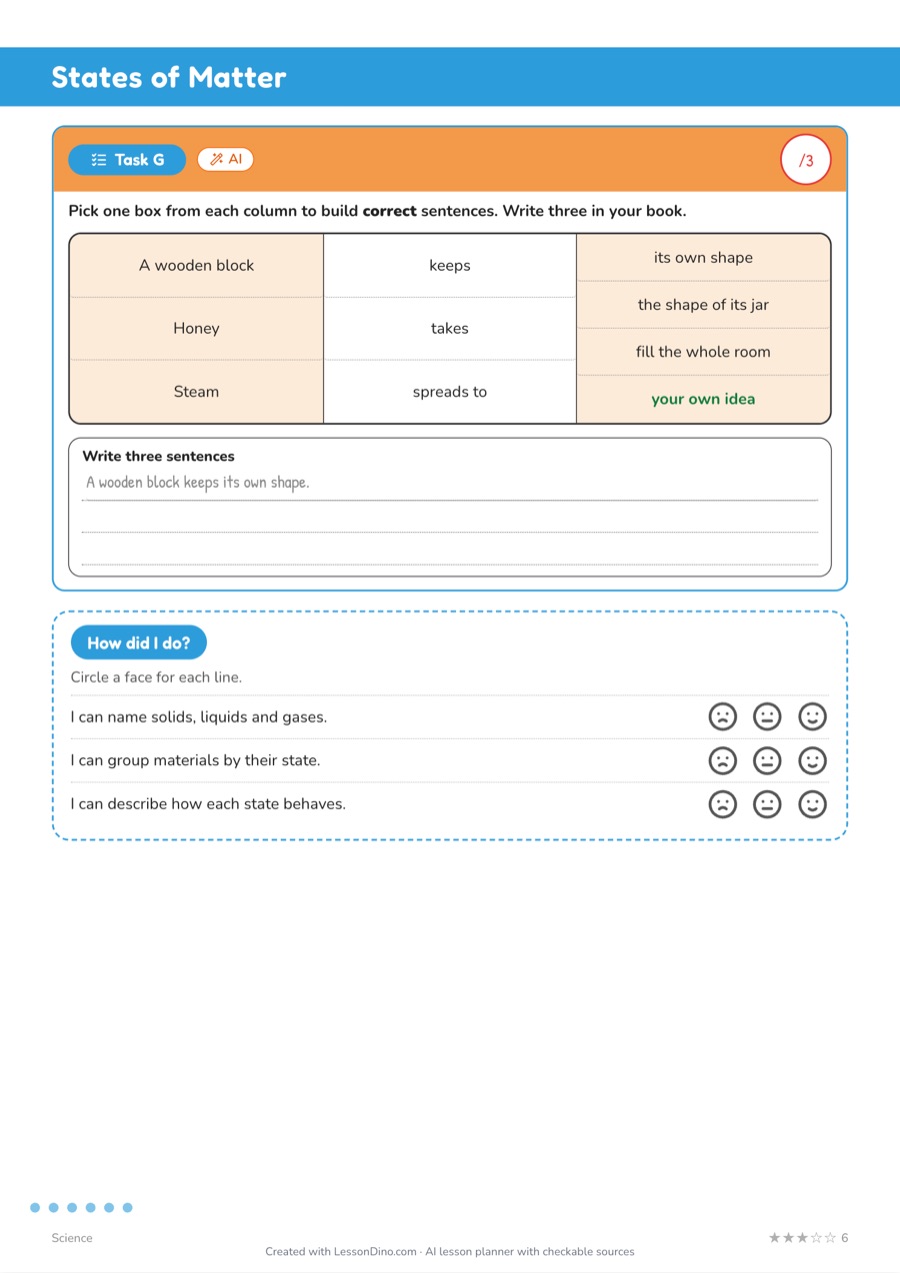
Pick one box from each column to build correct sentences. Write three in your book.
Answers
Show the answers
The answers are on the answer sheet, the last picture above.
Curriculum
compare and group materials together, according to whether they are solids, liquids or gases
Made with Lesson Dino's AI on 17 October 2026. AI can make mistakes, so check the answers and facts against the sources before you teach.