The worksheet
About this worksheet
Pupils learn that every sound starts with something vibrating. They watch, feel and draw what shook to make drum, bell and clap sounds. This Year 4 Science worksheet gives students (ages 8–9) five pages of practice on how sounds are made, part of the sound unit. It goes with our free How sounds are made lesson, which has the slides and a timed lesson plan.
What it covers
By the end, students should be able to:
- Students will identify how sounds are made by something vibrating.
- Students will label the vibrating part that made a sound.
How to use it
- Use it for practice after the teaching part of the lesson, once students have seen the worked examples on the slides.
- Support: Provide outlines of a drum, bell and hands so pupils only add wobble lines.
- Stretch: Add a second picture showing the same object still and silent with no wobble lines.
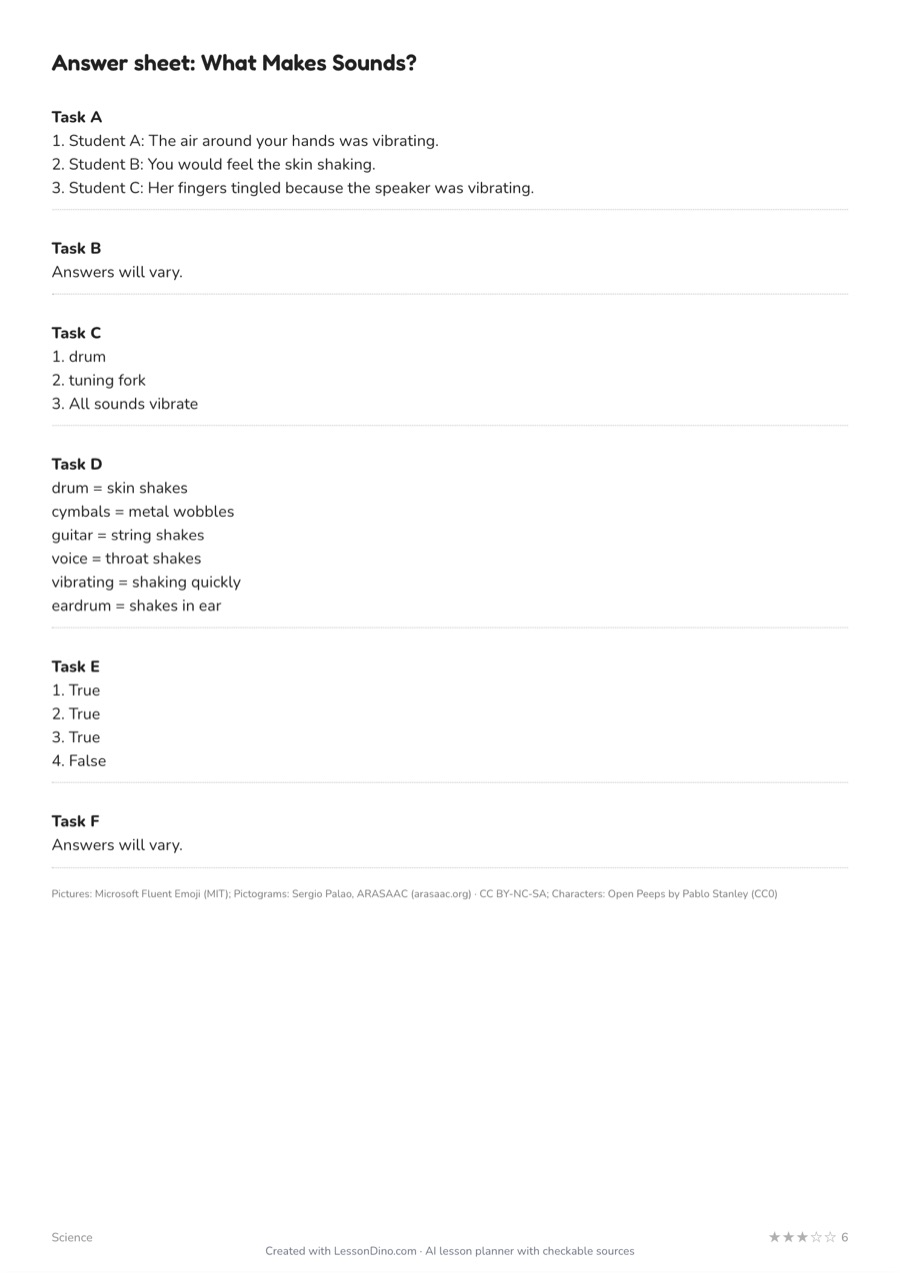
- The answer sheet is the last page, so you can print it on its own or let students check their own work.
Key vocabulary
- vibrate: to shake very quickly back and forth
- vibration: the fast shaking that starts a sound
- sound: what you hear when something shakes fast
- source: the place or thing where a sound starts
Mistakes to watch for
- Sound can happen with nothing moving. Clap again slowly and hold the bell still, then ring it. Show hands meeting shakes the air and every sound starts with something vibrating, so no shake means no sound.
- Only big or loud makers vibrate. Let pupils feel the throat buzz when humming and watch a soft tap wobble. Explain people can make very complex sounds for speech and even small fast shakes count as vibration.
- Sound carries on after shaking stops. Ring the bell, then touch it still to stop the wobble and hear the sound stop. Explain sound waves move away from where they came from, but no new sound is made once vibration stops.
What's on the worksheet
Shake Makes Sound
Learn what starts every sound.
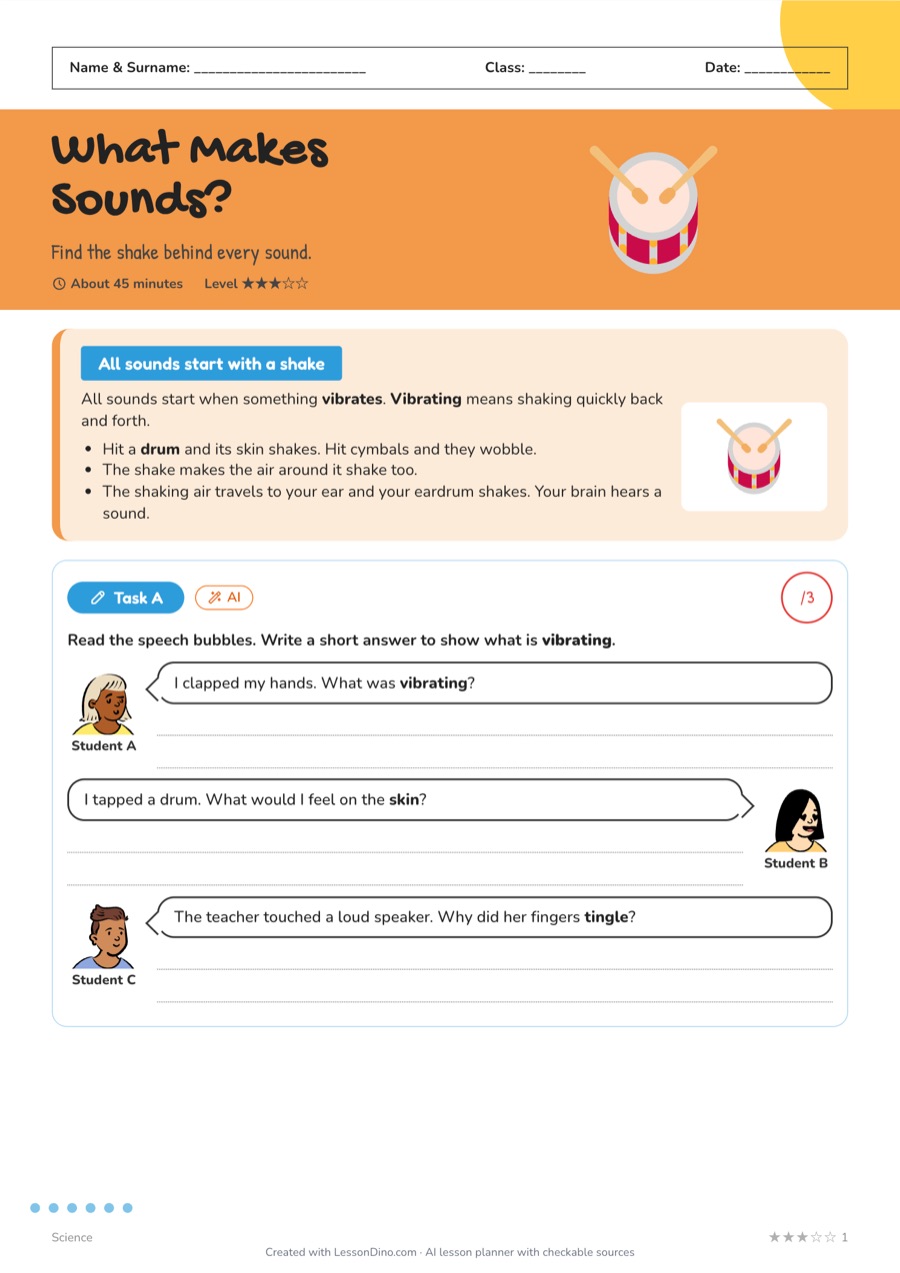
All sounds start with a shake
- All sounds start when something vibrates. Vibrating means shaking quickly back and forth.
- Hit a drum and its skin shakes. Hit cymbals and they wobble.
- The shake makes the air around it shake too.
- The shaking air travels to your ear and your eardrum shakes. Your brain hears a sound.
Read the speech bubbles. Write a short answer to show what is vibrating.
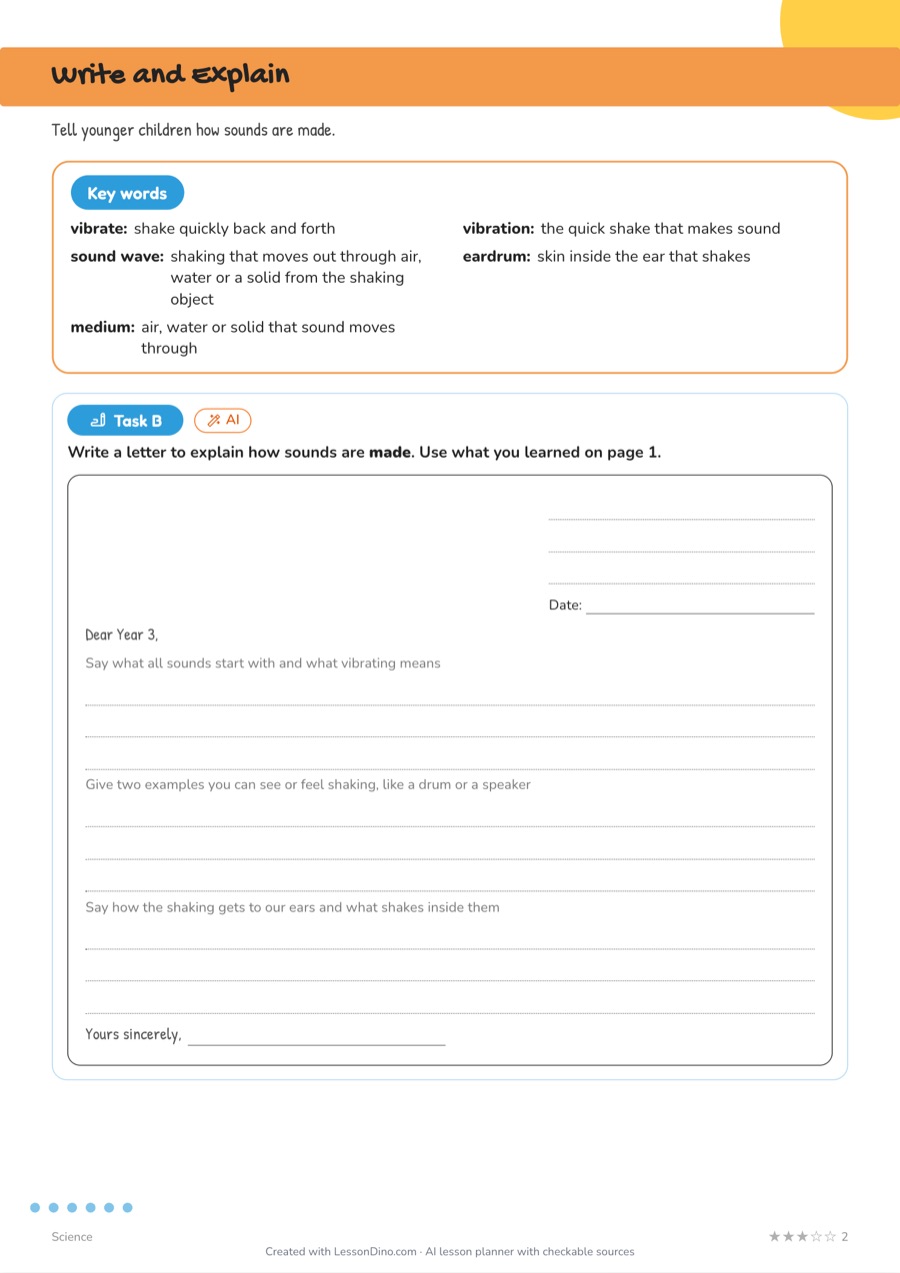
Write and Explain
Tell younger children how sounds are made.
| Word | Meaning |
|---|---|
| vibrate | shake quickly back and forth |
| vibration | the quick shake that makes sound |
| sound wave | shaking that moves out through air, water or a solid from the shaking object |
| eardrum | skin inside the ear that shakes |
| medium | air, water or solid that sound moves through |
Write a letter to explain how sounds are made. Use what you learned on page 1.
Page 3
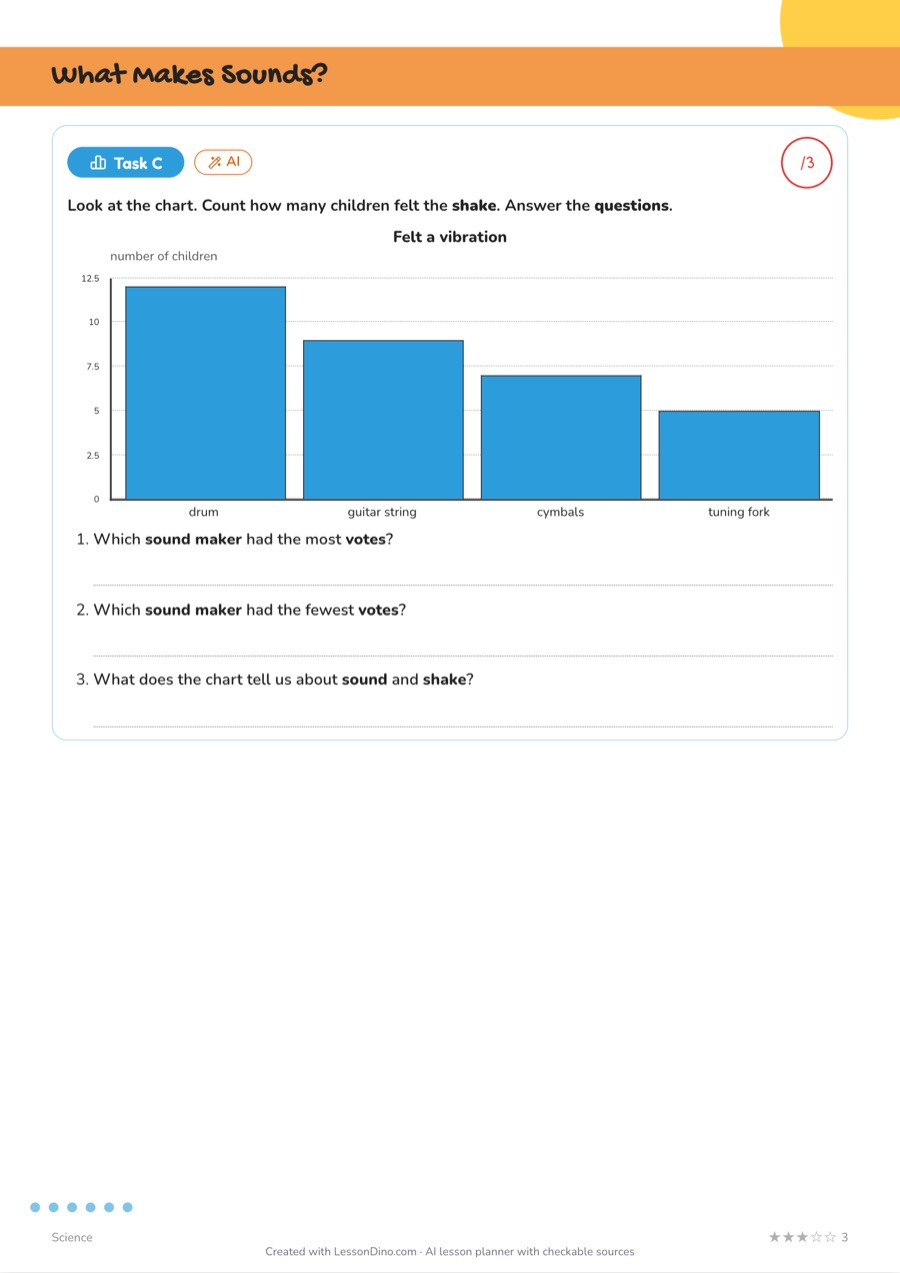
Look at the chart. Count how many children felt the shake. Answer the questions.
- Which sound maker had the most votes?
- Which sound maker had the fewest votes?
- What does the chart tell us about sound and shake?
Page 4
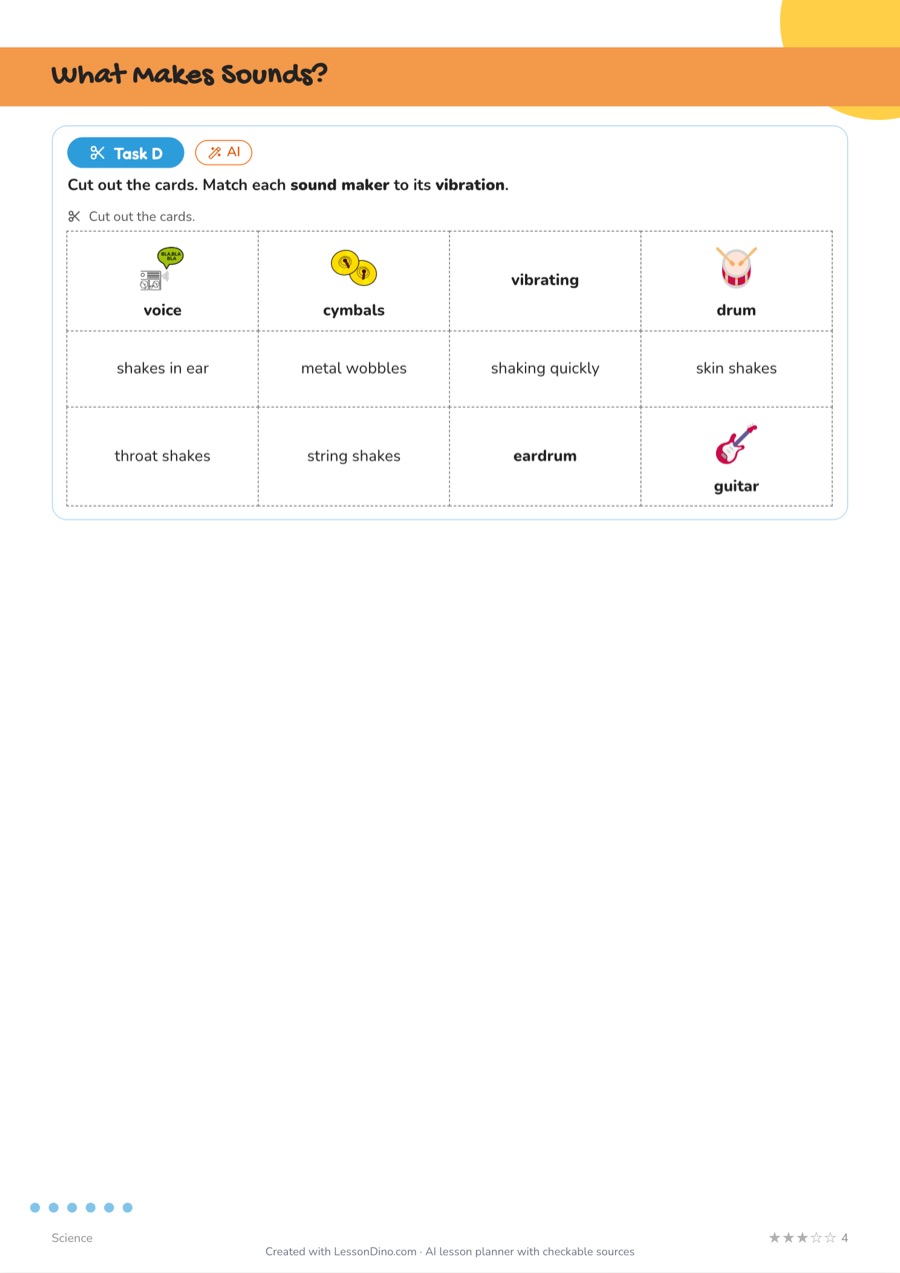
Cut out the cards. Match each sound maker to its vibration.
Page 5
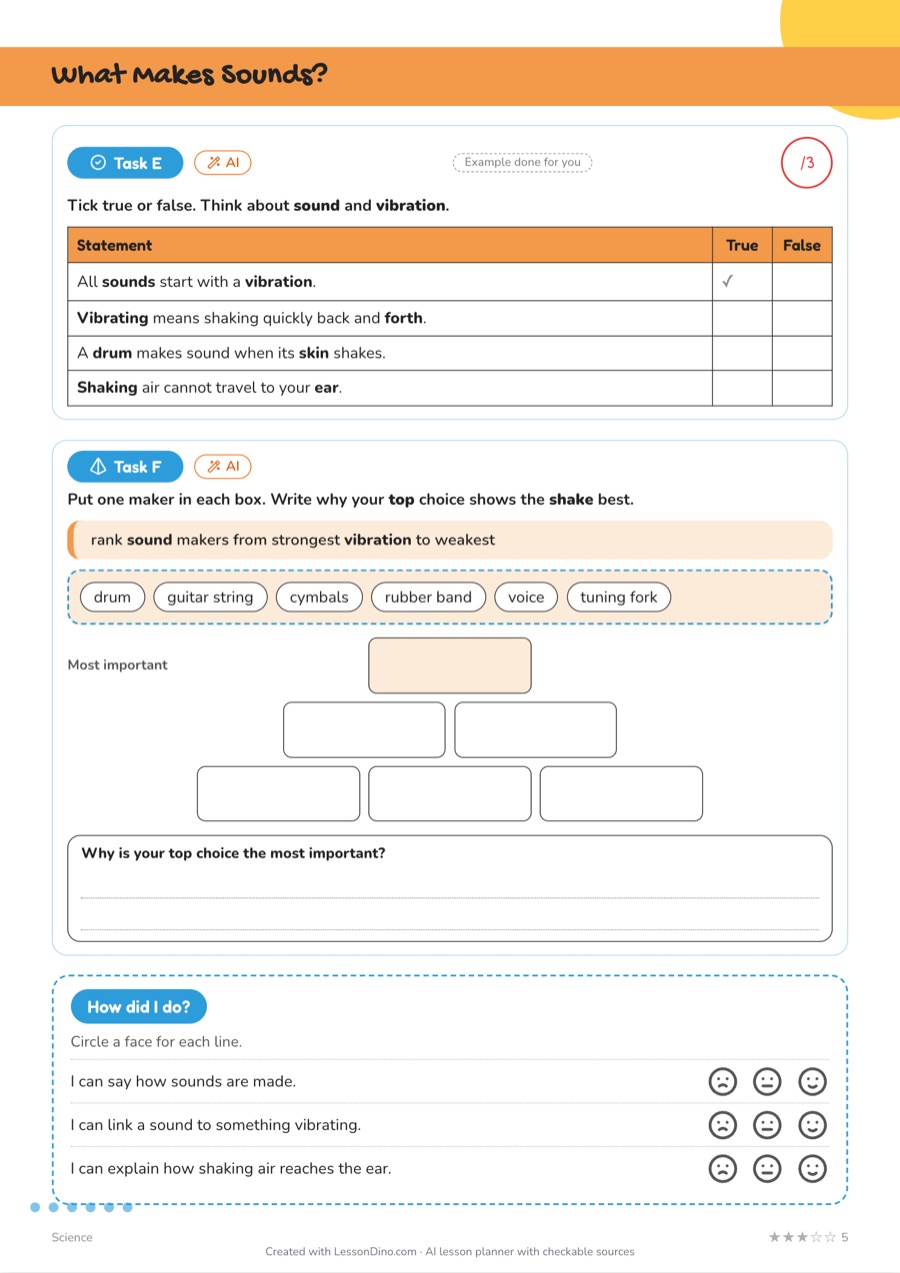
Tick true or false. Think about sound and vibration.
Put one maker in each box. Write why your top choice shows the shake best.
Answers
Show the answers
- Which sound maker had the most votes? drum
- Which sound maker had the fewest votes? tuning fork
- What does the chart tell us about sound and shake? All sounds vibrate
The answer sheet is the last picture above.
Curriculum
identify how sounds are made, associating some of them with something vibrating
Made with Lesson Dino's AI on 17 October 2026. AI can make mistakes, so check the answers and facts against the sources before you teach.