Slides
Lesson plan
From Light to Sound: Building Series Circuits
Pupils learn the parts of a simple series circuit and what each part does. They build a bulb circuit, then swap the bulb for a buzzer and test a switch.
Objectives
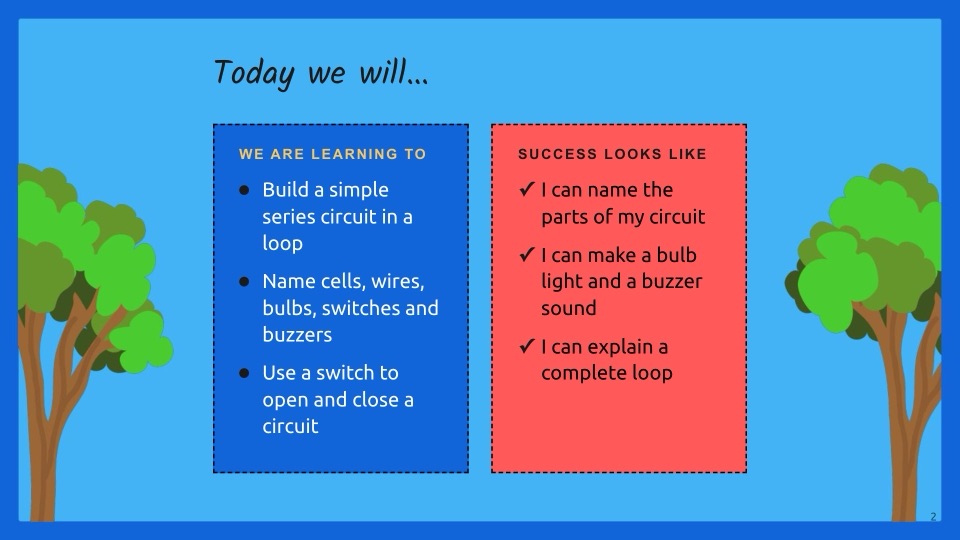
- Students will build a simple series circuit with cell, wires, bulb and switch.
- Students will name cells, wires, bulbs, switches and buzzers and say their jobs.
- Students will swap a bulb for a buzzer and use a switch to open and close circuit.
Success criteria
- I can build a complete loop that lights a bulb or sounds a buzzer.
- I can name cells, wires, bulbs, switches and buzzers and their jobs.
- I can use a switch to open and close my circuit correctly.
Key words
| Word | Meaning |
|---|---|
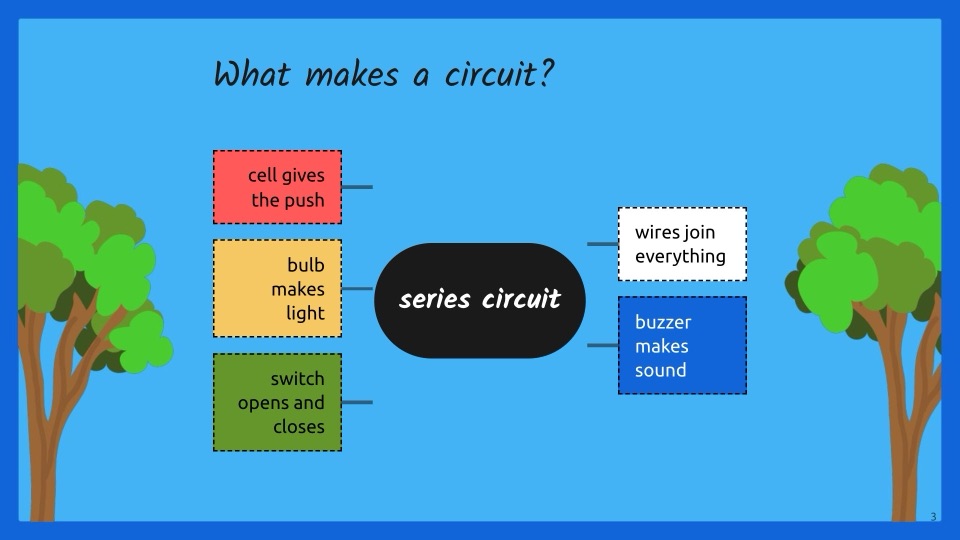
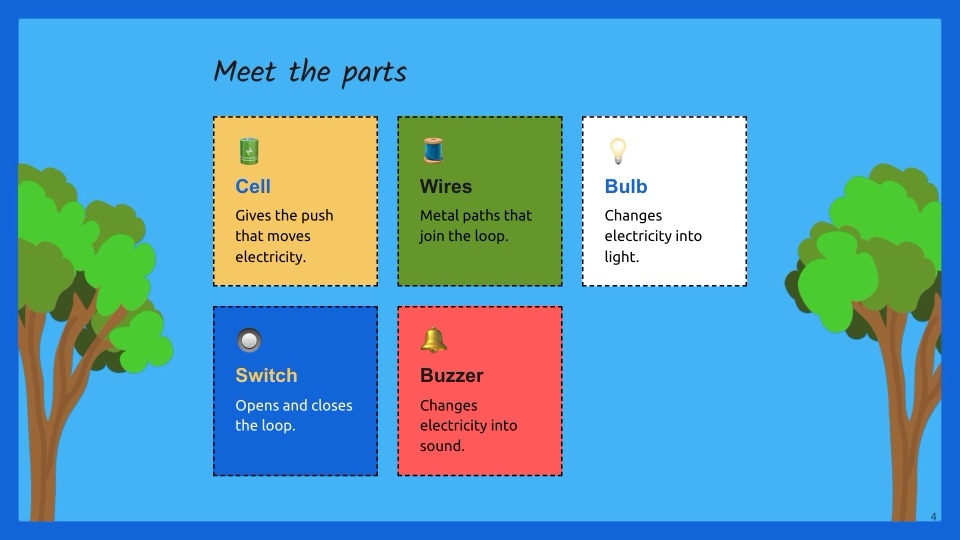
| cell | a small power unit that gives the push to move electricity |
| wire | a metal path covered in plastic that joins the loop together |
| bulb | a part that changes electricity into light |
| switch | a part that opens a gap or closes the join to turn things on or off |
| buzzer | a part that changes electricity into sound |
Timed plan (60 minutes)
| Time | Stage | What happens |
|---|---|---|
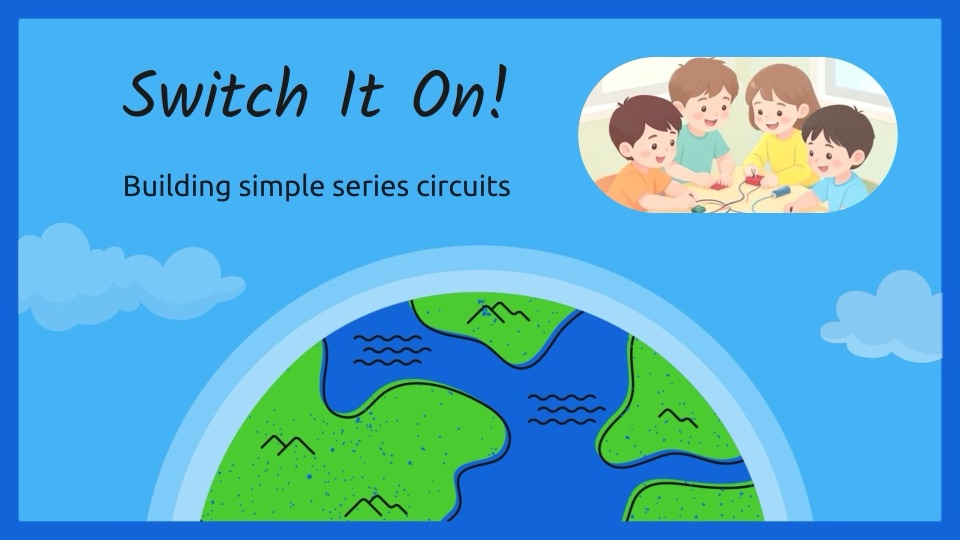
| 5 min | Starter | To hook pupils with the sound challenge and set out what they will build. Hold up a cell, wires and a bulb and say the hook: I love lights, but I need a warning sound. Can you change my light circuit into a sound circuit? Show Slide 1 title and Slide 2 objectives and read them with the class. Ask pairs to name one thing that runs on electricity and how they know. Take 3 quick answers and link them to needing a power source and a loop. |
| 10 min | Teaching | To name cells, wires, bulbs, switches and buzzers and say what each part does. Show each real part with Slide 3 and Slide 4 and name it with the class. Explain the job of each part in simple words and have pupils repeat the name and job. Hold up cell and wire together and explain the cell gives the push and wires join everything in one loop. Show bulb, buzzer and switch and explain bulb makes light, buzzer makes sound and switch opens and closes. |
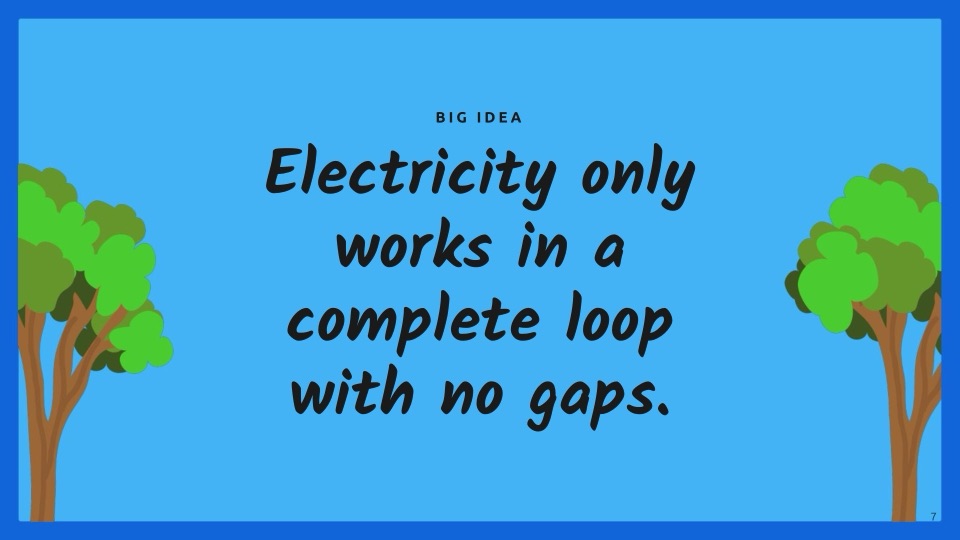
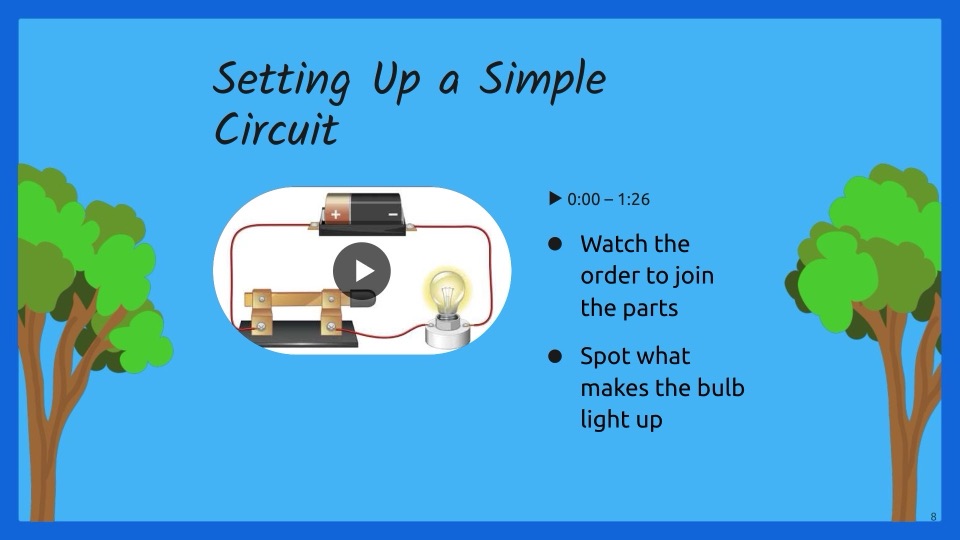
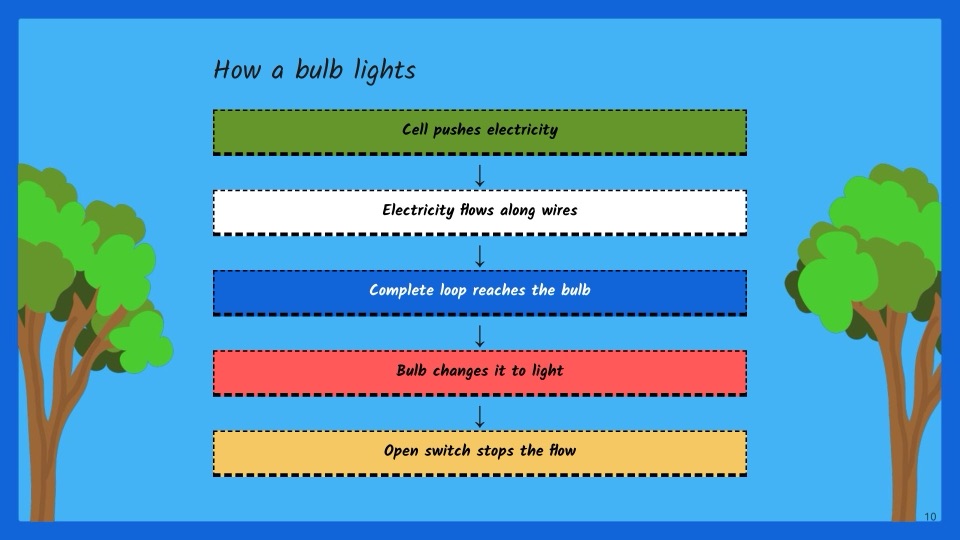
| 10 min | Modelling | To show that electricity only works in a complete loop and a switch controls it. Show Slide 7 and build one demo circuit with cell, two wires and bulb in front of the class. Play Video clip 2 (0:00-1:26) on slide 8 to show the order to join the parts and what makes the bulb light up. Flick the demo switch off and on to show an open switch breaks the circuit and a closed switch lets power flow. Point out the single path for electric current to flow, which is called a series circuit. |
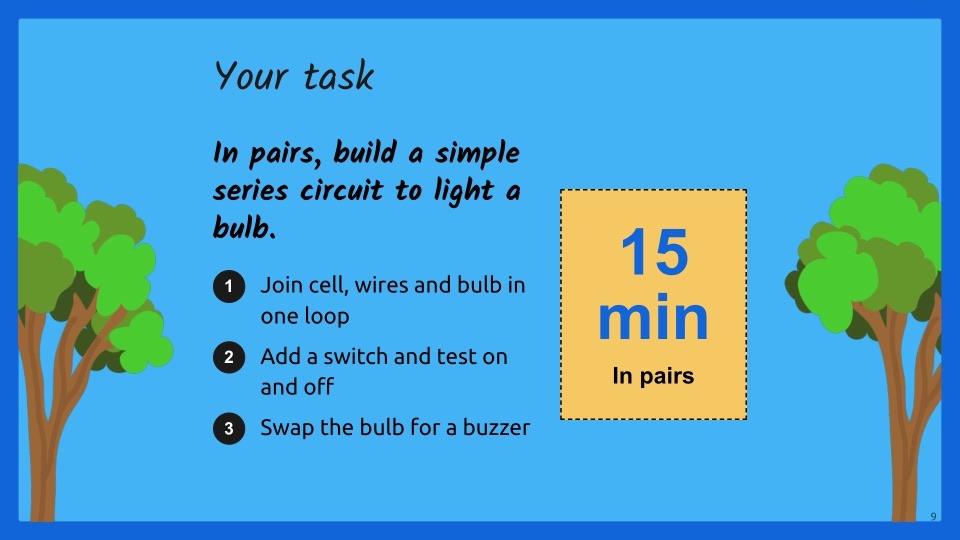
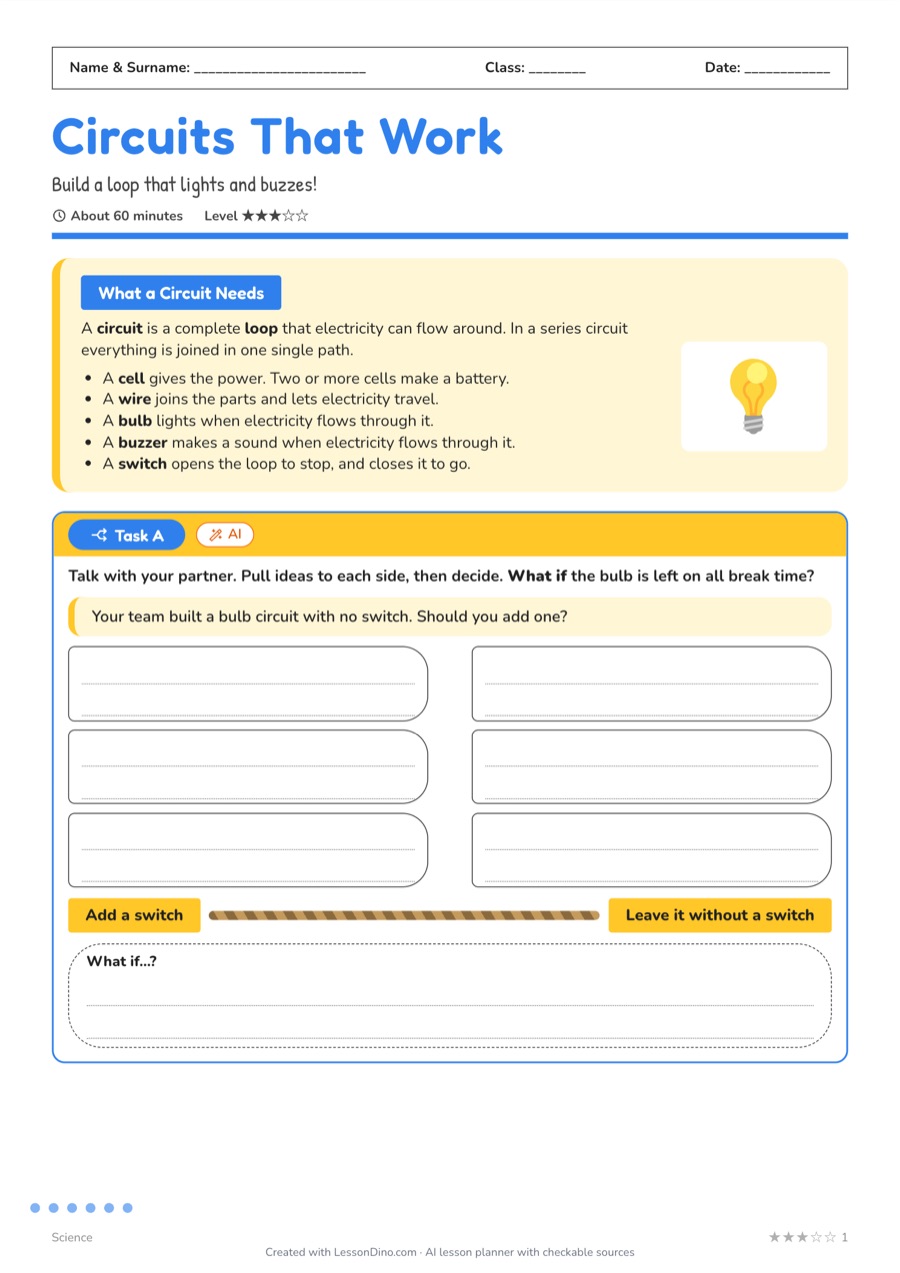
| 25 min | Main activity | To build a working series circuit, test a switch, then swap the bulb for a buzzer. Show Slide 9 task and model building a bulb loop, then adding a switch, then swapping the bulb for a buzzer. Give out kits and Worksheet Task B and tell pairs to join cell, wires and bulb in one loop until the bulb lights. Tell pairs to add a switch, test on and off three times, then try different components including a buzzer. Stop the class halfway to fix loose clips and remind them to draw their circuit as a pictorial picture, not with symbols. |
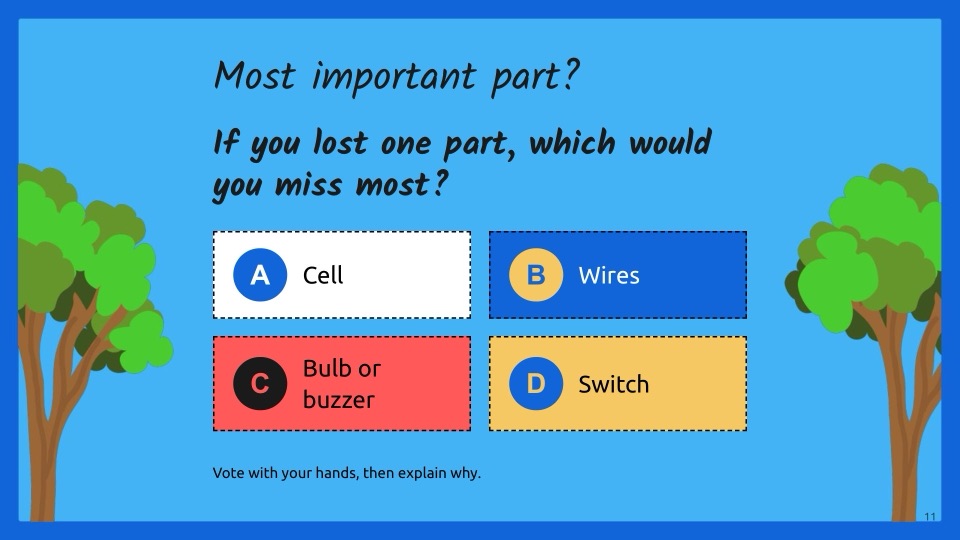
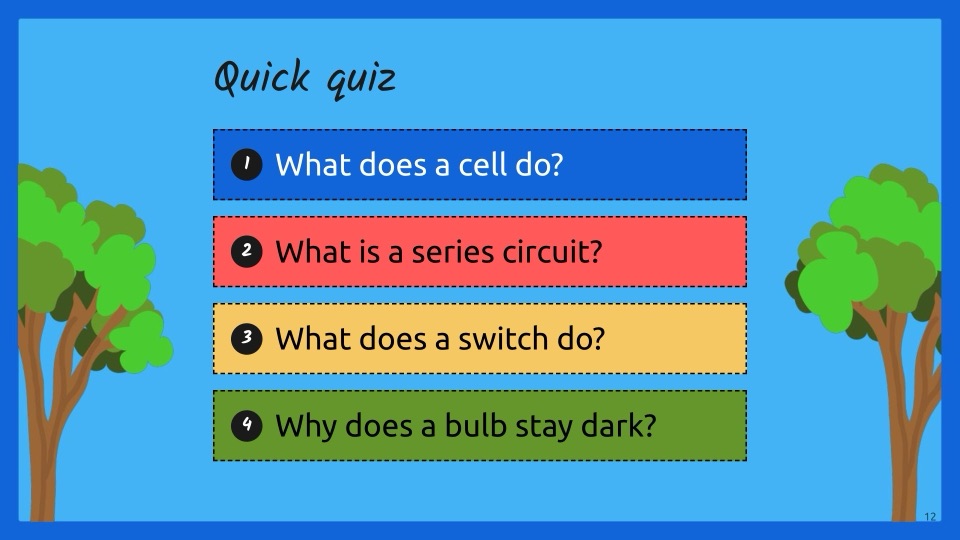
| 10 min | Plenary | To check pupils can name parts and explain the switch and complete loop. Ask pairs to lay out cell, wire, bulb, switch and buzzer and say name and job for each. Do Worksheet Task F matching together: read each part and match it to what it does. Use Slide 11 vote and Slide 12 quiz to check cell, series circuit and switch ideas. |
Common mistakes
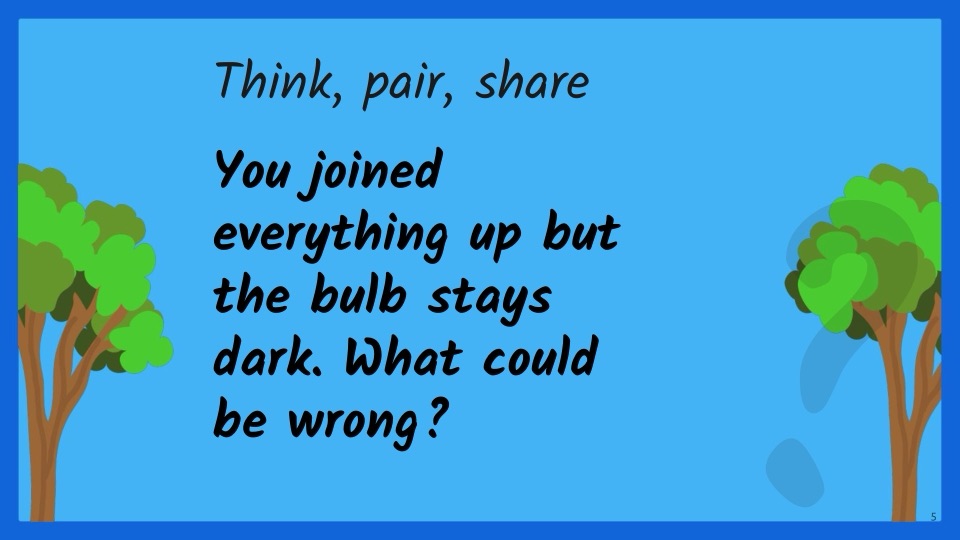
- Pupils leave a gap but expect the bulb to light.
How to spot it: Bulb stays dark even though cell and bulb are on the table.
Trace the loop with a finger and close any gap, because the lamp only lights as part of a complete loop with a battery. - Pupils think an open switch means on.
How to spot it: They say on when the switch makes a gap.
Practise flicking: open makes a gap so off, closed joins the loop so on, because a switch opens and closes a circuit. - Pupils mix up cell and battery words.
How to spot it: They call one cell a battery.
Show one cell and two cells together: a single battery is actually called a cell; a battery is made of two or more cells.
Support
- Leave one working bulb circuit made up as a model, so students can copy the wire connections exactly before swapping.
- Use colour-coded trays, picture labels and a word bank with cell, wire, bulb, switch, buzzer for matching and drawing.
Stretch
- Ask students to try a circuit with a bulb and a buzzer together and describe what happens to each.
- Challenge pupils to explain how to fix an incomplete circuit using the fewest changes and to rebuild the loop in a different order.
Check questions
- Name the five parts in your circuit and say the job of the buzzer.
Answer: Cell, wires, bulb, switch, buzzer; buzzer makes a sound. - Your bulb is dark. Give one gap that could cause it.
Answer: Open switch, missing wire or loose connection breaking the loop. - What happens when you close the switch in a complete loop?
Answer: Electricity flows round the loop and the bulb lights or buzzer sounds.
Curriculum
construct a simple series electrical circuit, identifying and naming its basic parts, including cells, wires, bulbs, switches and buzzers
Video clips
Clips on YouTube, from the start and end times we chose. Check each one before you show it.
-
Setting Up a Simple Circuit from 0:00 to 1:26
Next Generation Science: Setting Up a Simple Circuit
Shows a simple build step by step in a way that suits 8-9-year-olds and matches making a series circuit.
-
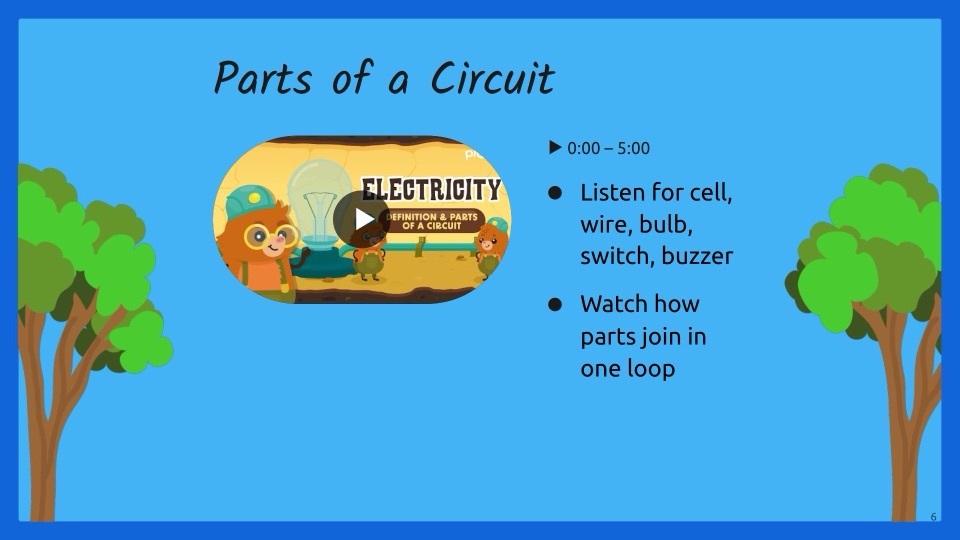
Parts of a Circuit from 0:00 to 5:00
The Pique Lab: Electricity Definition & Parts Of A Circuit | Primary School Science Animation
Primary-school animation made for 8-9-year-olds that clearly identifies and names each basic part.
Worksheet
Sources
- Science Curriculum Year 4 queenshill.norfolk.sch.uk
- National curriculum in England: science programmes of study gov.uk
- Electrical circuits - BBC Bitesize bbc.co.uk
- What are electrical circuits? - KS2 Science curriculum - BBC bbc.co.uk
- Electrical circuit Facts for Kids kids.kiddle.co
- Physics for Kids: Electronic Circuits - Ducksters ducksters.com
- electric circuit - Students | Britannica Kids | Homework Help kids.britannica.com
- Electrical wiring in the United Kingdom - Wikipedia en.wikipedia.org
- knowledge organiser electrical circuits primarysite-prod-sorted.s3.amazonaws.com
- Kids Science Projects and Experiments: Electric Circuit - Ducksters ducksters.com
- Electricity and Circuits | K-12 Engineering sites.udel.edu
Picture credits
- AI illustration · Cloudflare
- Microsoft Fluent Emoji (MIT)
Made with Lesson Dino's AI on 17 October 2026. AI can make mistakes, so check facts against the sources before you teach.