The worksheet
About this worksheet
Students learn what phrases and clauses do in general and in specific sentences. They discuss jobs, build sentences, and explain each added part. This Grade 7 ELA worksheet gives students (ages 12–13) five pages of practice on phrases and clauses, part of the language unit. It goes with our free Phrases and clauses lesson, which has the slides and a timed lesson plan.
What it covers
By the end, students should be able to:
- Students will explain how different phrases and clauses work in sentences generally.
- Students will identify phrases and clauses and explain their job in specific sentences.
- Students will expand plain sentences with phrases and clauses to add clear detail.
How to use it
- Main activity (18 minutes): Put groups of three and hand out Worksheet Task A. Direct groups to then complete Worksheet Task A to build three sentences and label phrase and clause.
- Support: Provide two everyday sentences with the phrase or clause already underlined and a where, when, why, which-one word bank.
- Stretch: Have students rewrite the same sentence by moving the phrase or clause and explain how the emphasis changes.
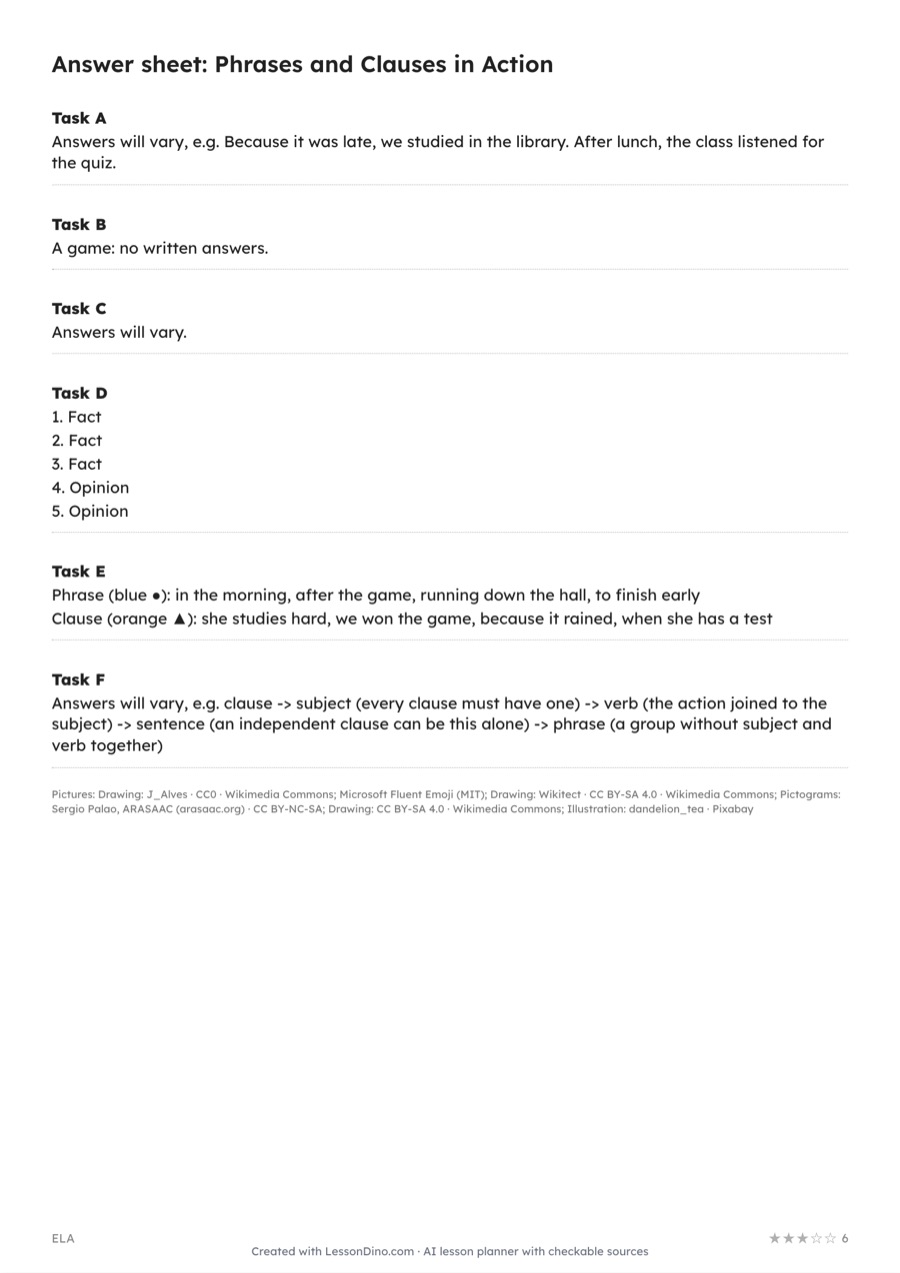
- The answer sheet is the last page, so you can print it on its own or let students check their own work.
Key vocabulary
- phrase: a group of words that works as one part of a sentence
- clause: a group of words with a doer and an action word together
- independent clause: a doer-plus-action group that makes a full thought alone
- dependent clause: a doer-plus-action group that cannot stand alone and needs another part
Mistakes to watch for
- Thinking a long word group must be a clause. Underline doer and action. No subject plus verb together means phrase, not clause.
- Thinking a dependent clause can stand alone as a sentence. Ask then what? Show it depends on an independent clause to make sense.
What's on the worksheet
Sentence Building Blocks
Learn what phrases and clauses do, then build sentences.
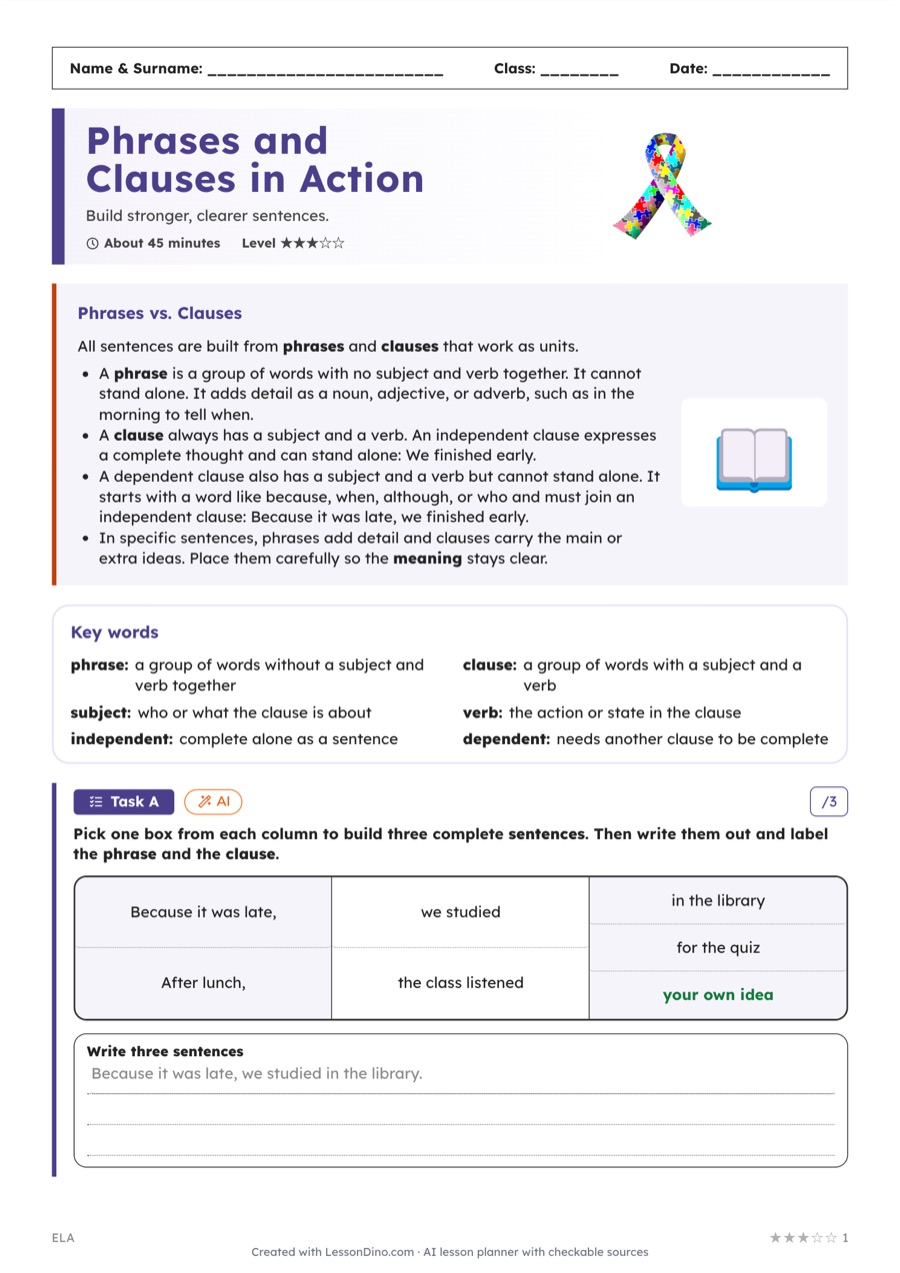
Phrases vs. Clauses
- All sentences are built from phrases and clauses that work as units.
- A phrase is a group of words with no subject and verb together. It cannot stand alone. It adds detail as a noun, adjective, or adverb, such as in the morning to tell when.
- A clause always has a subject and a verb. An independent clause expresses a complete thought and can stand alone: We finished early.
- A dependent clause also has a subject and a verb but cannot stand alone. It starts with a word like because, when, although, or who and must join an independent clause: Because it was late, we finished early.
- In specific sentences, phrases add detail and clauses carry the main or extra ideas. Place them carefully so the meaning stays clear.
| Word | Meaning |
|---|---|
| phrase | a group of words without a subject and verb together |
| clause | a group of words with a subject and a verb |
| subject | who or what the clause is about |
| verb | the action or state in the clause |
| independent | complete alone as a sentence |
| dependent | needs another clause to be complete |
Pick one box from each column to build three complete sentences. Then write them out and label the phrase and the clause.
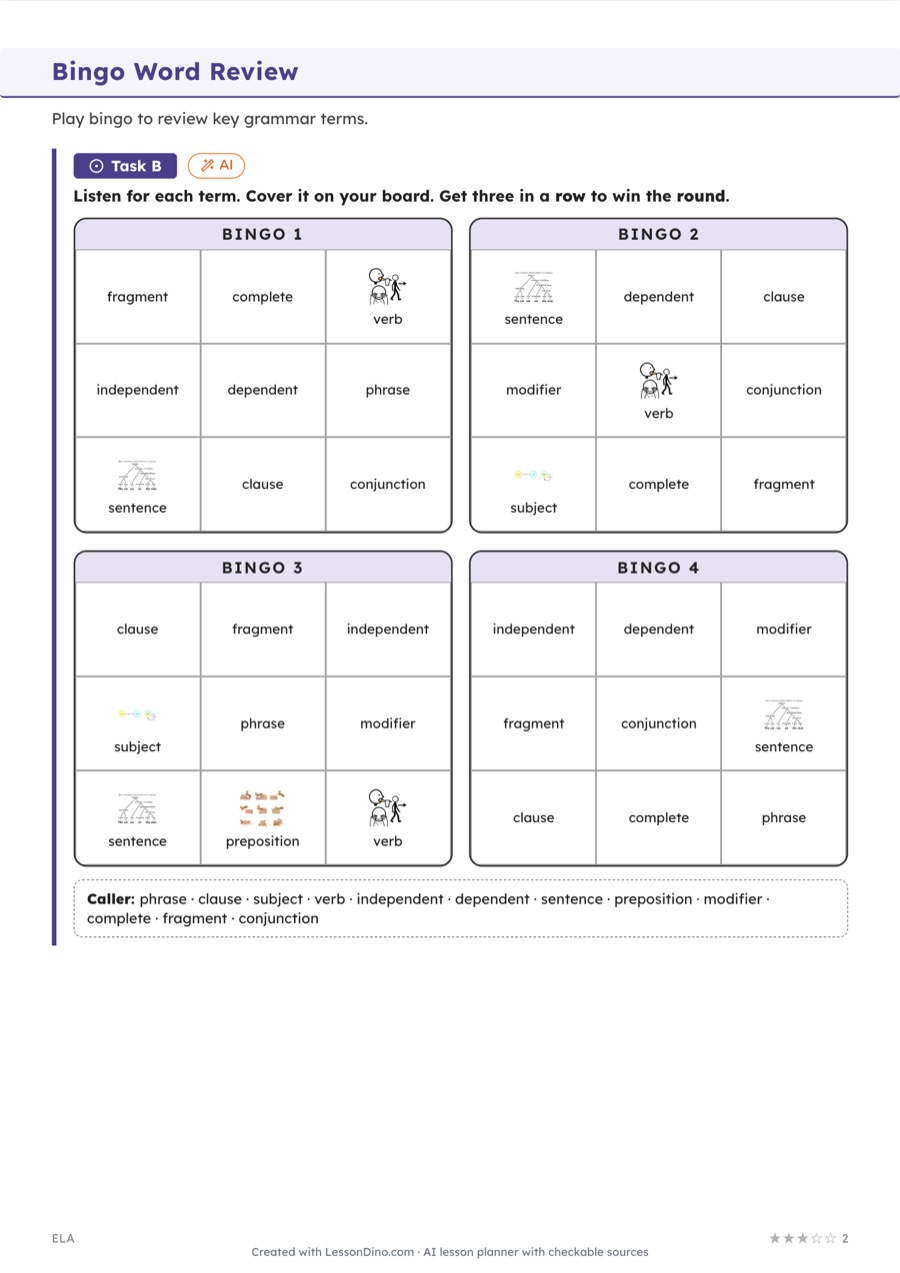
Bingo Word Review
Play bingo to review key grammar terms.
Listen for each term. Cover it on your board. Get three in a row to win the round.
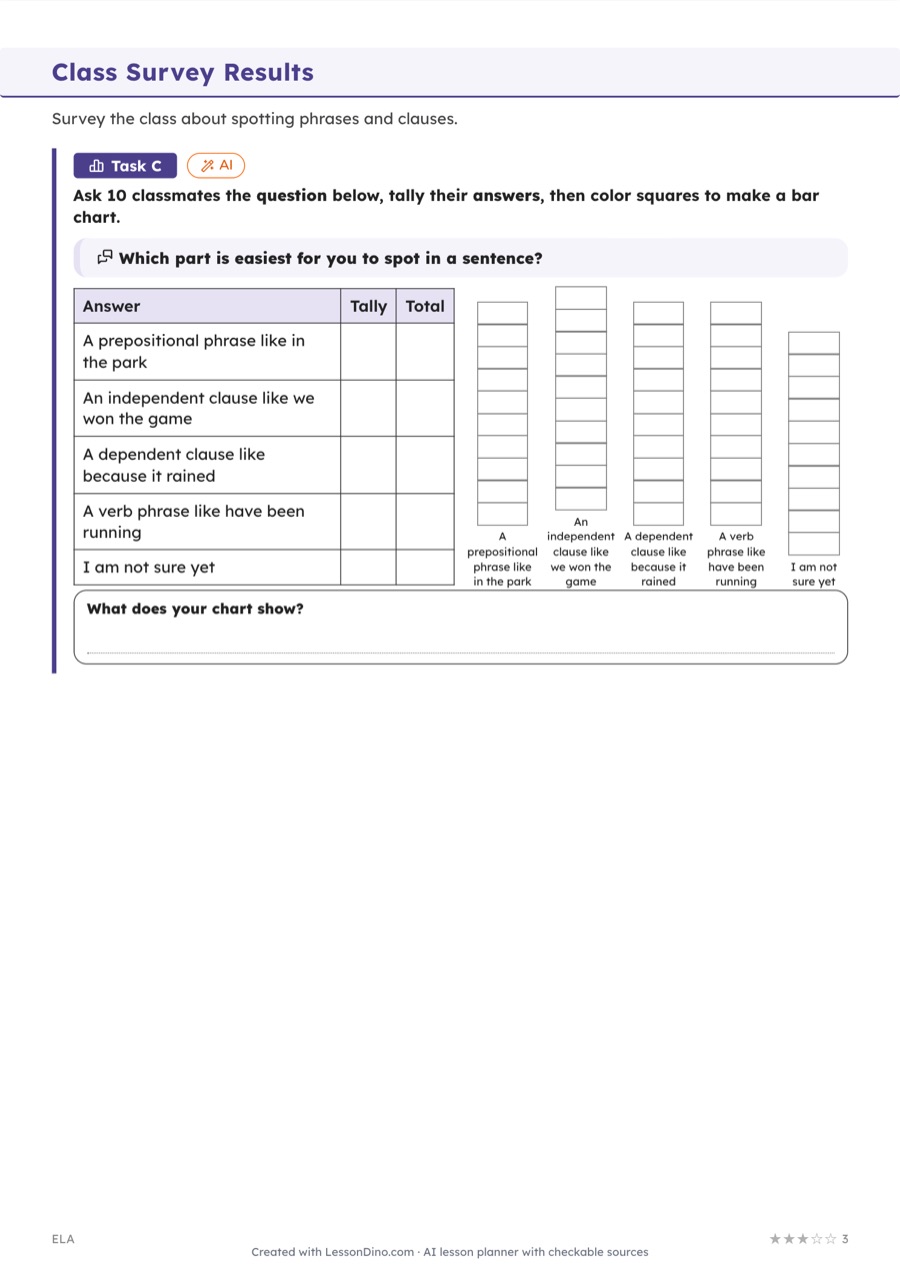
Class Survey Results
Survey the class about spotting phrases and clauses.
Ask 10 classmates the question below, tally their answers, then color squares to make a bar chart.
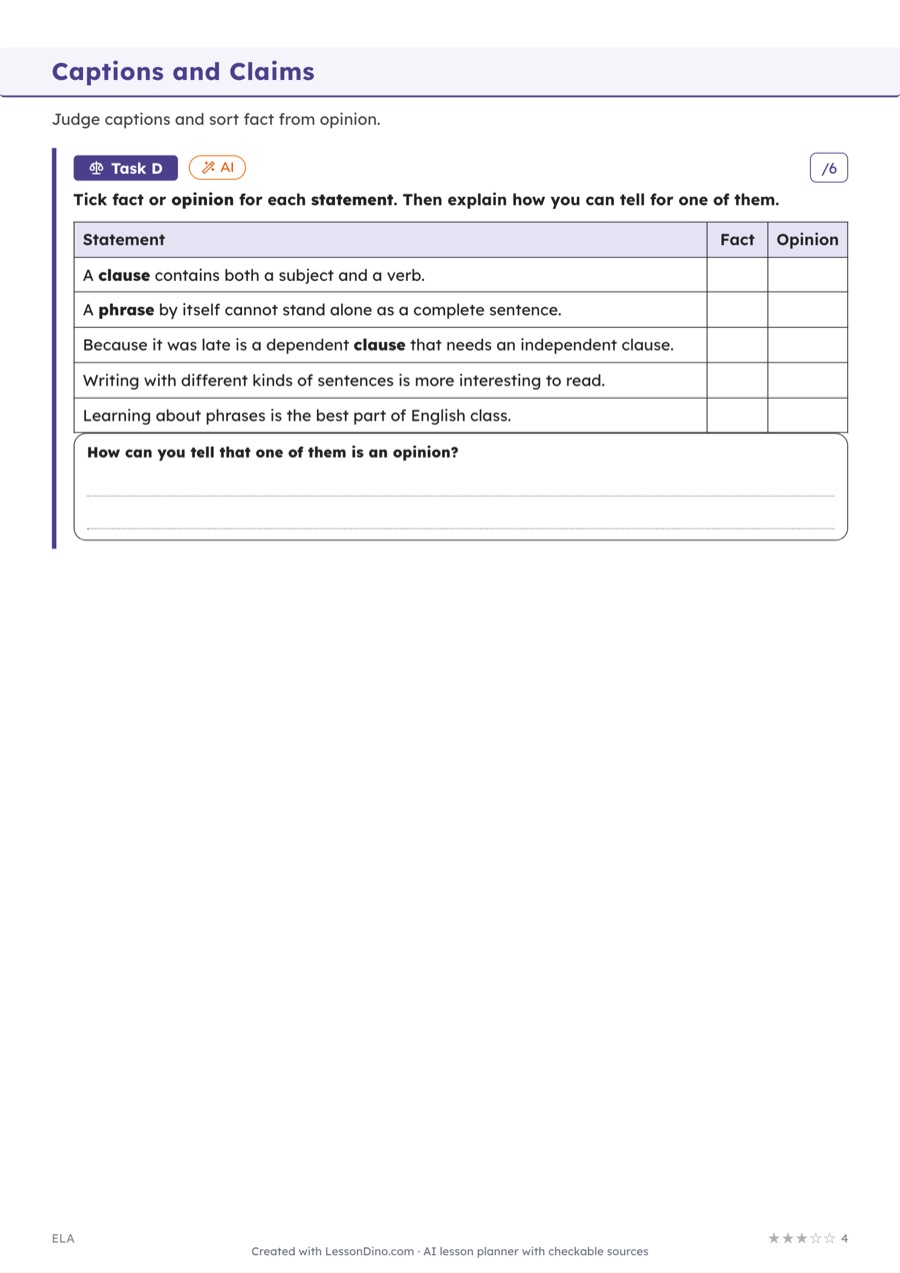
Captions and Claims
Judge captions and sort fact from opinion.
Tick fact or opinion for each statement. Then explain how you can tell for one of them.
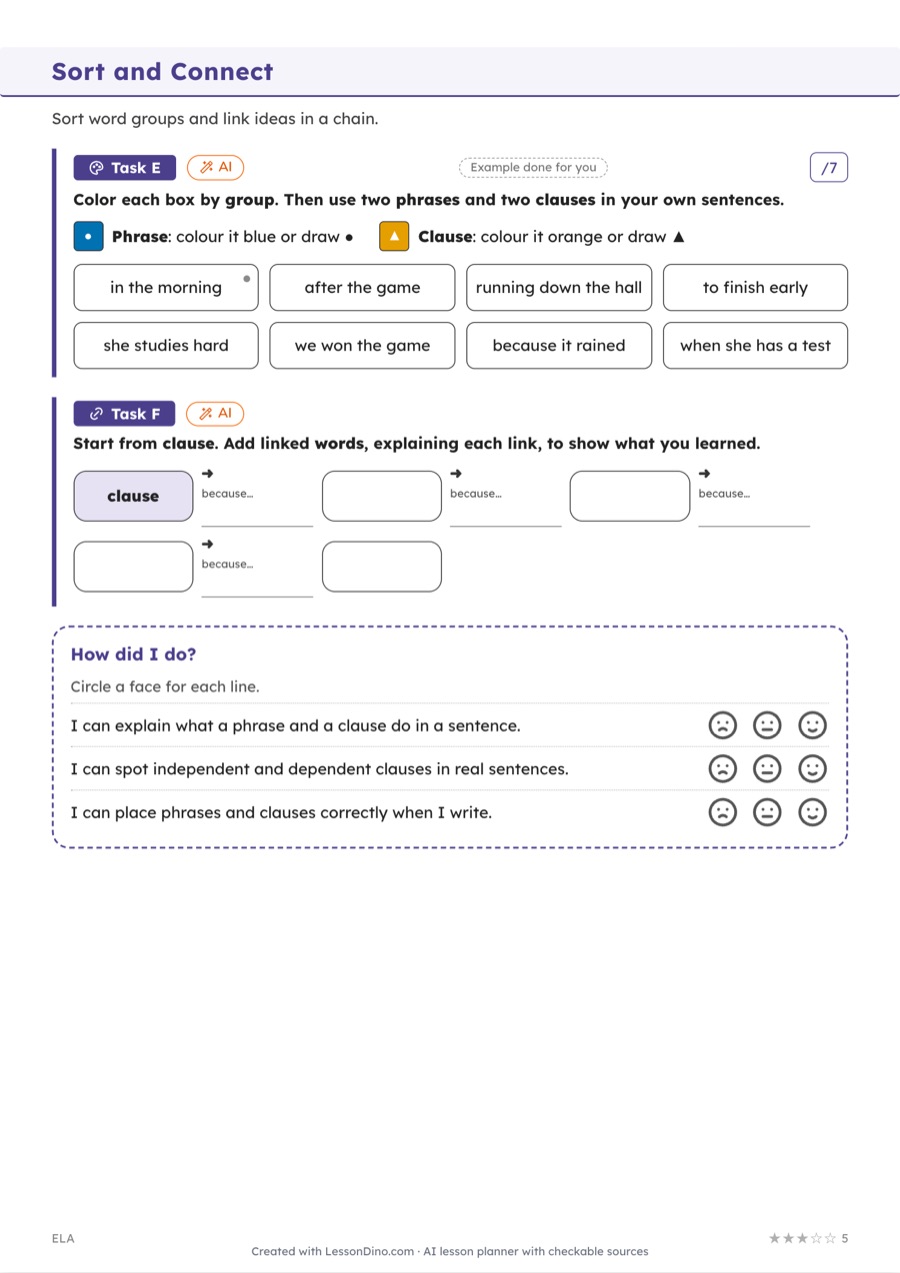
Sort and Connect
Sort word groups and link ideas in a chain.
Color each box by group. Then use two phrases and two clauses in your own sentences.
Start from clause. Add linked words, explaining each link, to show what you learned.
Answers
Show the answers
The answers are on the answer sheet, the last picture above.
Curriculum
Explain the function of phrases and clauses in general and their function in specific sentences.
Made with Lesson Dino's AI on 16 October 2026. AI can make mistakes, so check the answers and facts against the sources before you teach.