The worksheet
About this worksheet
Students learn how weathering breaks rock and erosion moves it. They test two soil hills to measure how grass changes erosion. This Grade 4 Science worksheet gives students (ages 9–10) four pages of practice on weathering and erosion, part of the earth's systems unit. It goes with our free Weathering and erosion lesson, which has the slides and a timed lesson plan.
What it covers
By the end, students should be able to:
- Students will explain weathering as breaking apart and erosion as moving away.
- Students will measure how grass changes the rate of erosion by water.
- Students will use observations and measurements as evidence for erosion rate.
How to use it
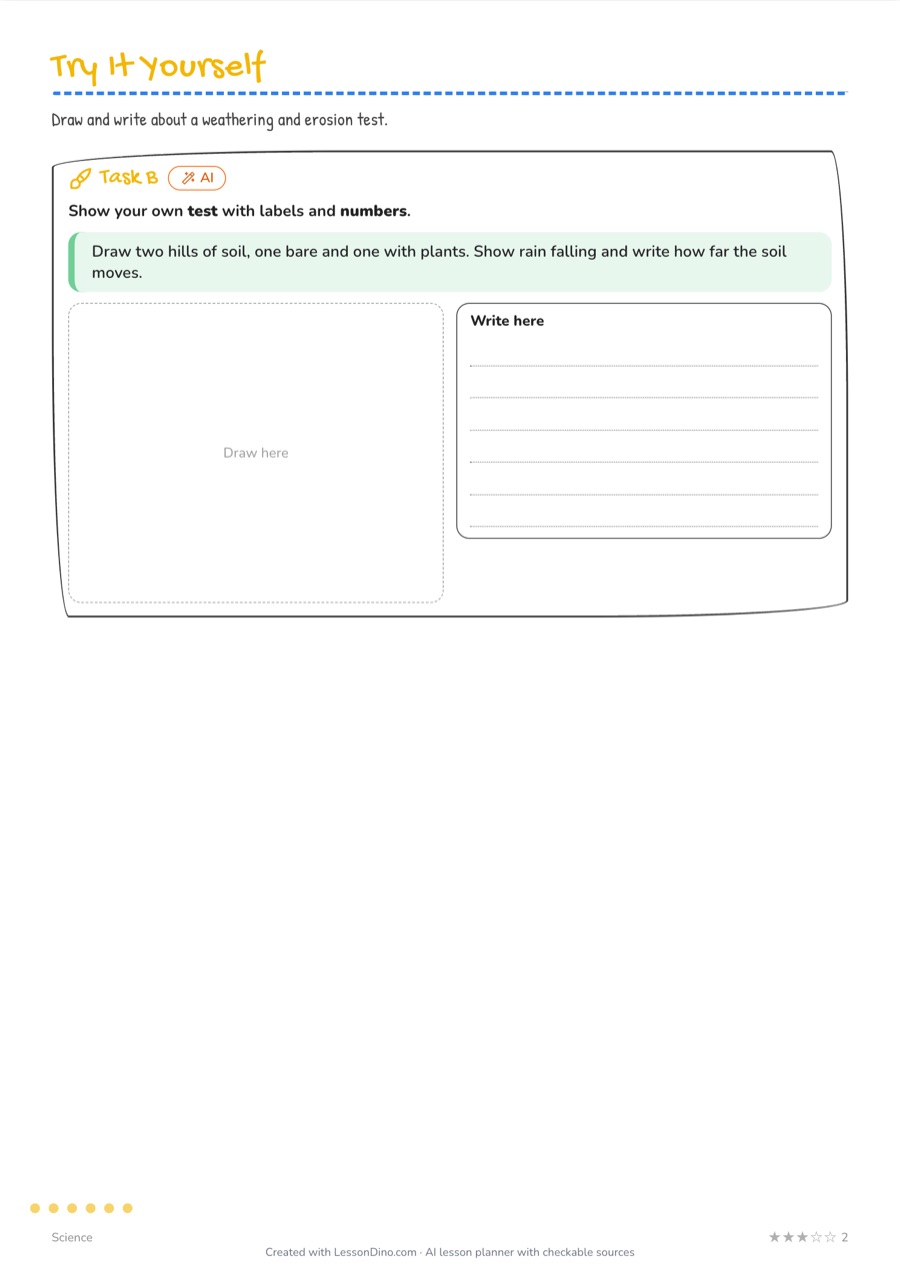
- Main activity (20 minutes): Hand out pans, cups, rulers, trays and Worksheet Task B. Show Slide 9 task steps.
- Support: Use collection cups marked in inches and a simple chart for muddy or clear.
- Stretch: Have students test pouring from higher up and compare the measurements.
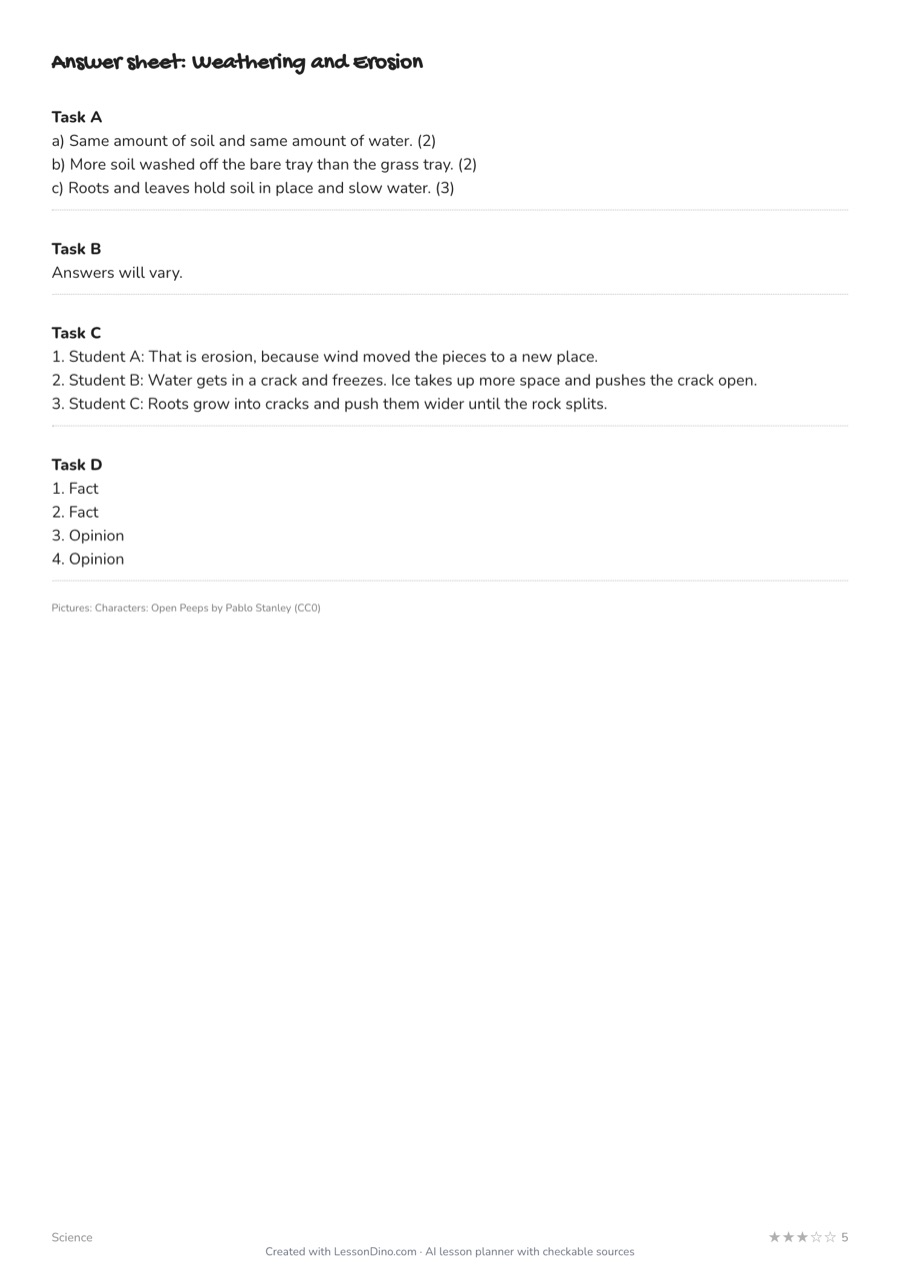
- The answer sheet is the last page, so you can print it on its own or let students check their own work.
Key vocabulary
- weathering: breaking of stone into smaller bits right where it sits
- erosion: carrying of broken stone and soil away to a new spot
- sediment: tiny bits of broken rock and soil that water or wind can carry
- vegetation: plants such as grass that can hold soil in place
- glacier: huge slow river of ice that scrapes land and pushes rock along
Mistakes to watch for
- Mixing up weathering and erosion as the same process. Restate that weathering breaks apart at its location while erosion transports it away, sort two photos again.
- Thinking grass stops all erosion so no measurement is needed. Check tray closely; planting grass holds soil in place but some fine grains still move, so measure inches to prove rate.
- Measuring from the wrong start point each time. Always start ruler zero at hill edge and read to farthest sediment; liquid water is the main mover to watch, so keep pour height same.
What's on the worksheet
Rocks Break and Move
Learn what breaks rock and what moves it.
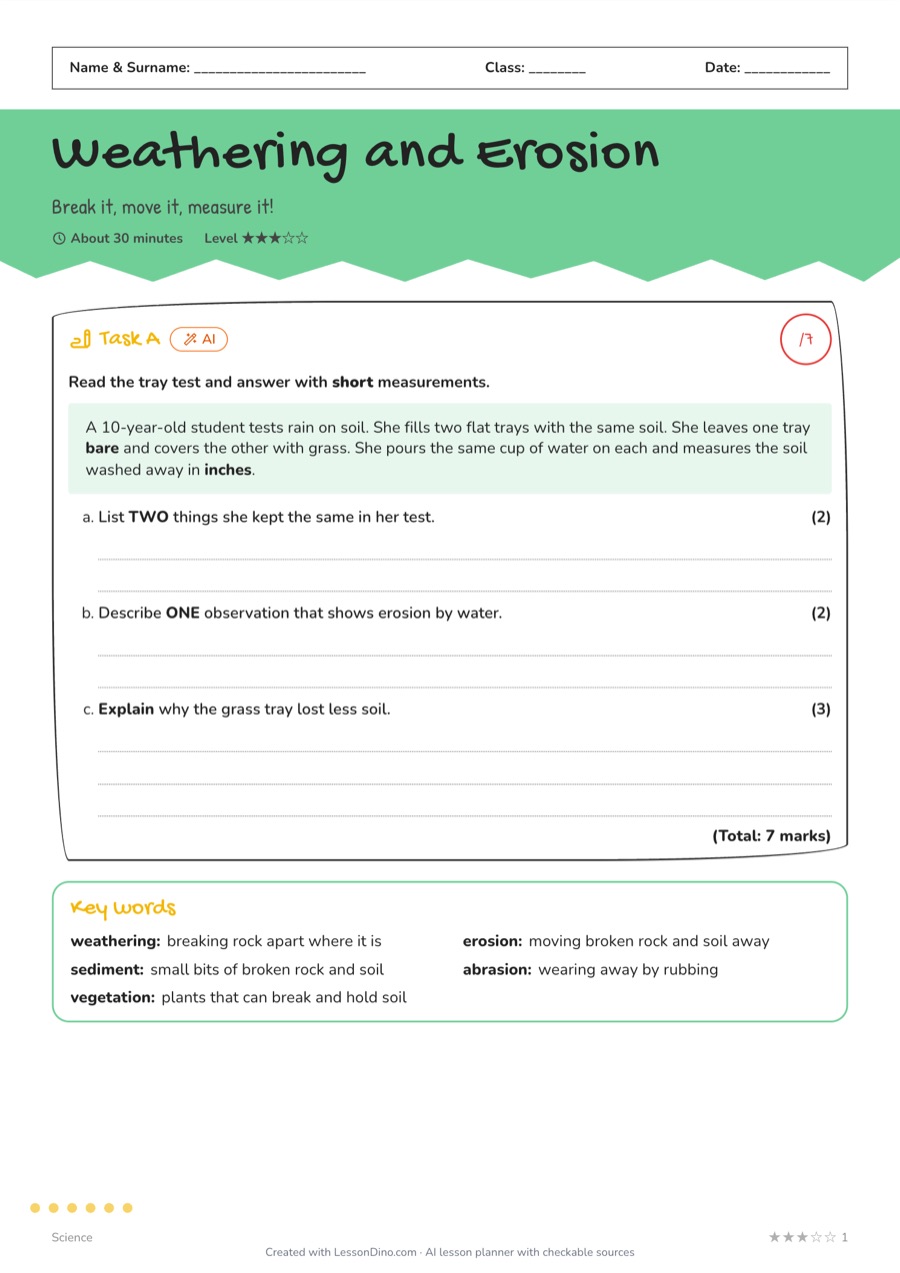
Read the tray test and answer with short measurements.
| Word | Meaning |
|---|---|
| weathering | breaking rock apart where it is |
| erosion | moving broken rock and soil away |
| sediment | small bits of broken rock and soil |
| abrasion | wearing away by rubbing |
| vegetation | plants that can break and hold soil |
Try It Yourself
Draw and write about a weathering and erosion test.
Show your own test with labels and numbers.
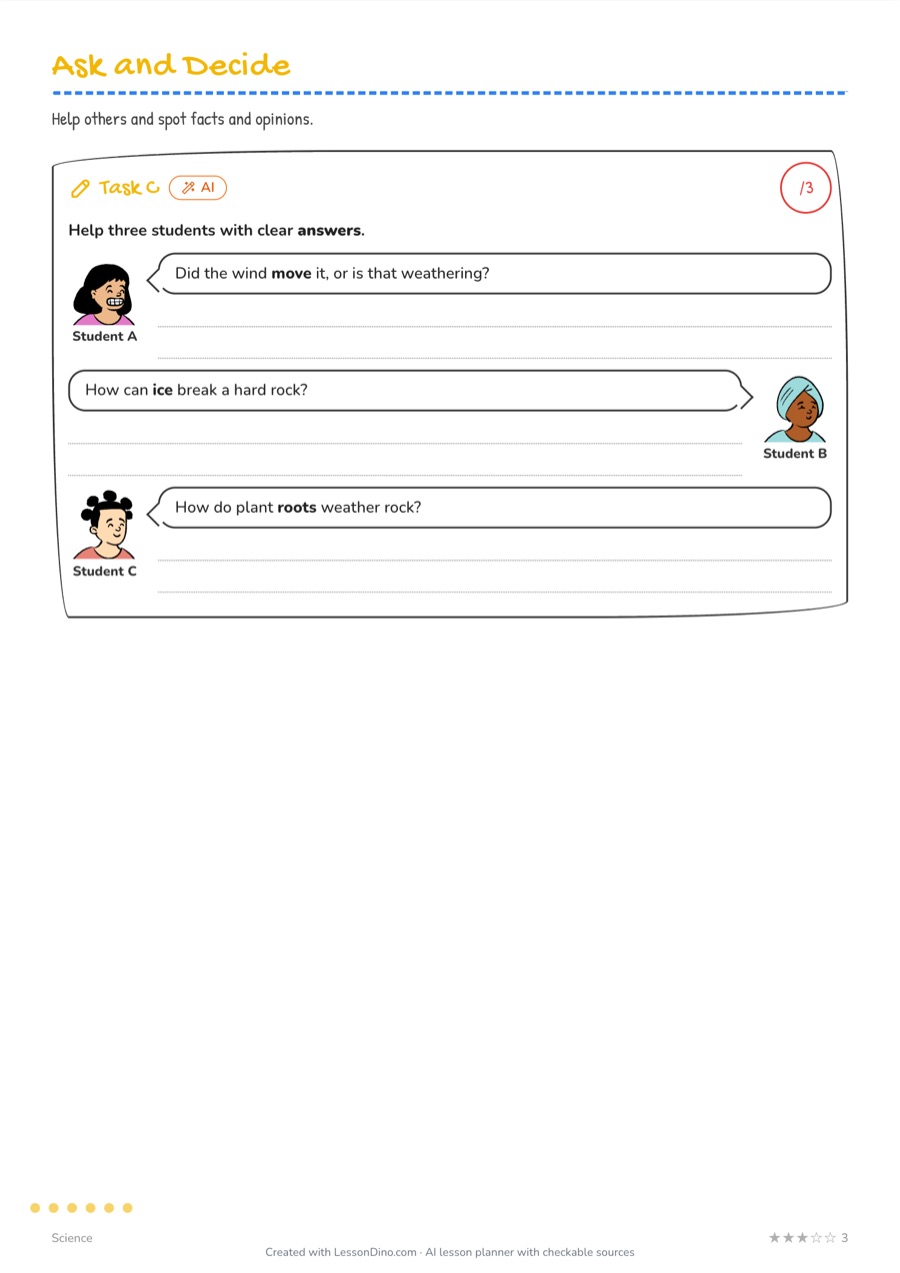
Ask and Decide
Help others and spot facts and opinions.
Help three students with clear answers.
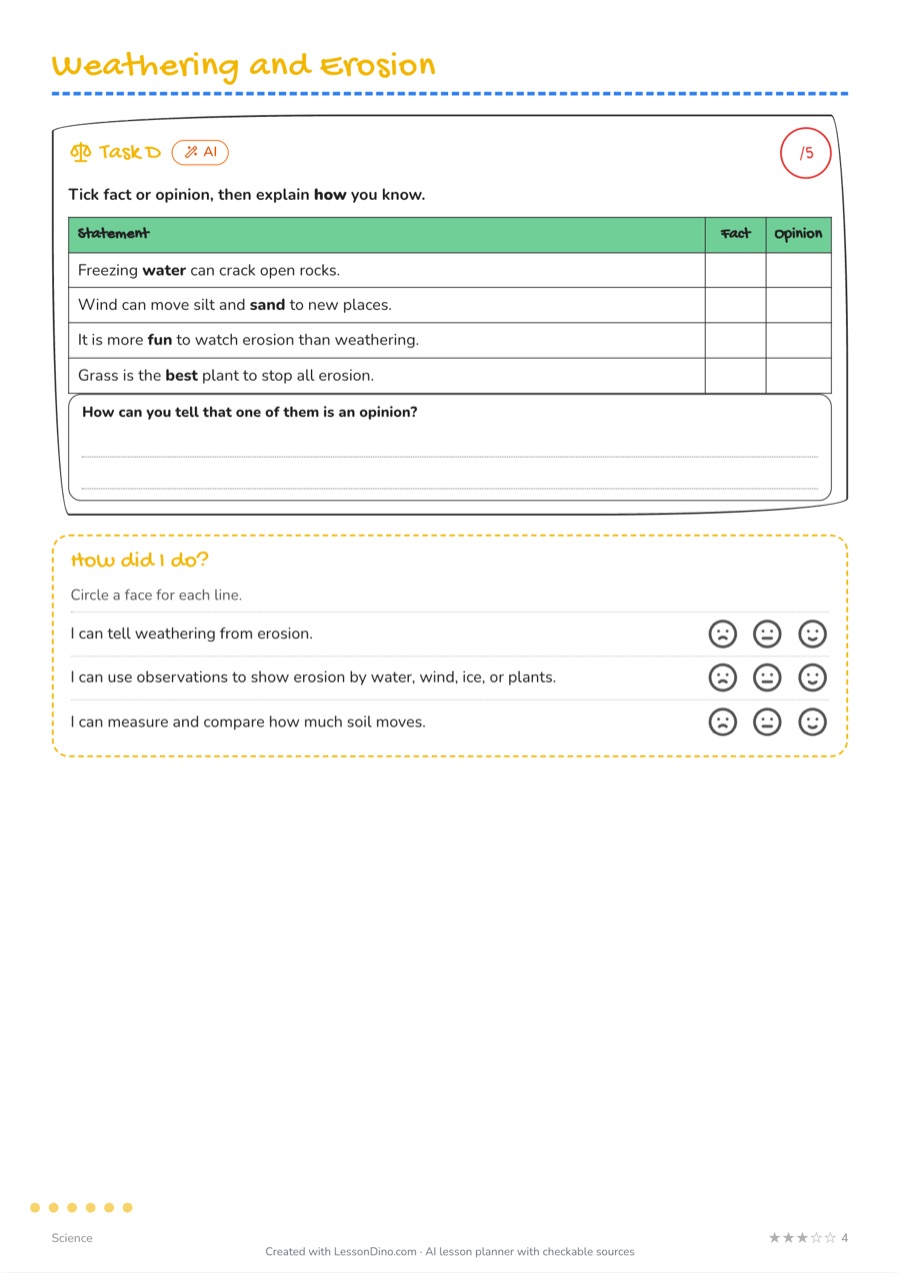
Page 4
Tick fact or opinion, then explain how you know.
Answers
Show the answers
- List TWO things she kept the same in her test. Same amount of soil and same amount of water.
- Describe ONE observation that shows erosion by water. More soil washed off the bare tray than the grass tray.
- Explain why the grass tray lost less soil. Roots and leaves hold soil in place and slow water.
The answer sheet is the last picture above.
Curriculum
Make observations and/or measurements to provide evidence of the effects of weathering or the rate of erosion by water, ice, wind, or vegetation.
Made with Lesson Dino's AI on 16 October 2026. AI can make mistakes, so check the answers and facts against the sources before you teach.