The worksheet
About this worksheet
Students learn sound, light, heat, and electric current carry energy. They observe transfers and draw the path energy takes. This Grade 4 Science worksheet gives students (ages 9–10) six pages of practice on energy transfer, part of the energy unit. It goes with our free Energy transfer lesson, which has the slides and a timed lesson plan.
What it covers
By the end, students should be able to:
- Students will observe that sound, light, heat, and current transfer energy place to place.
- Students will use observations as evidence to explain where energy started and ended.
How to use it
- Plenary (8 minutes): Do Worksheet Task G Matching: match each word to its meaning by writing the number in the circle.
- Support: Use pre-made shaker, drum, and pre-drawn comic panels so focus is on watching rice jump and labeling arrow.
- Stretch: Compare soft and loud shakes from 3 feet away and test flashlight 3 feet closer and farther to describe spot change.
- The answer sheet is the last page, so you can print it on its own or let students check their own work.
Key vocabulary
- energy: power that can make things move, warm up, or glow
- transfer: movement of something from one place to another place
- sound: what ears hear when air shakes and makes things shake
- light: brightness that lets eyes see and can warm skin
- heat: warmth that moves from a warmer thing to a cooler thing
- electric current: moving power in wires that can light a bulb
Mistakes to watch for
- Thinking energy disappears when bulb goes out or sound stops. Trace where it went: bulb cools, sound shook air and tissue. Energy transfer is movement from one place to another.
- Mixing heat and temperature – cold moves into warm object. Restate heat is transfer due to difference in temperature and flows hotter to colder; cold feeling is warmth leaving hand.
- Thinking light needs air to travel like sound does. Compare: sound travels in waves through air and water, light can travel even with no air and warms from far; sun warmth traveled 93 million miles.
What's on the worksheet
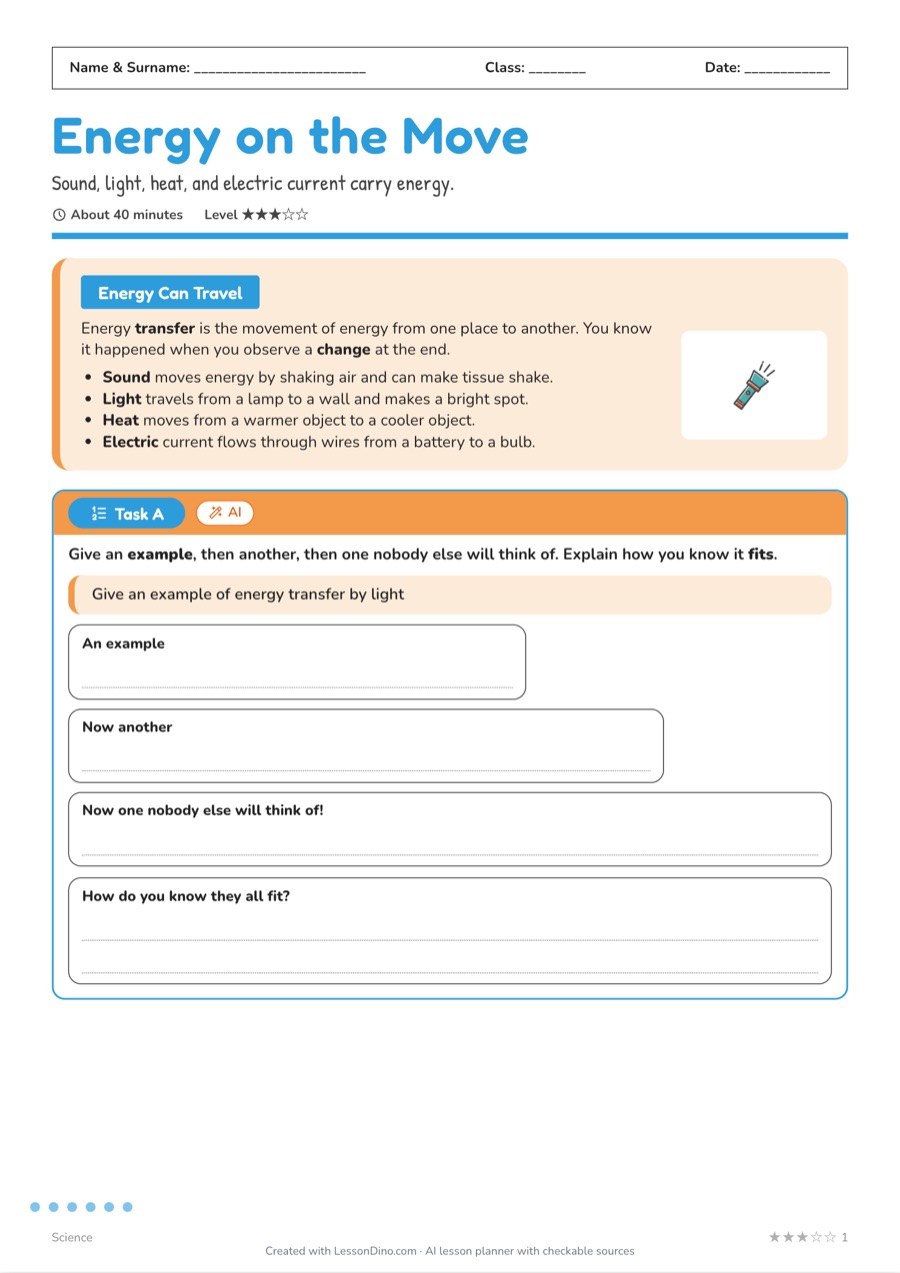
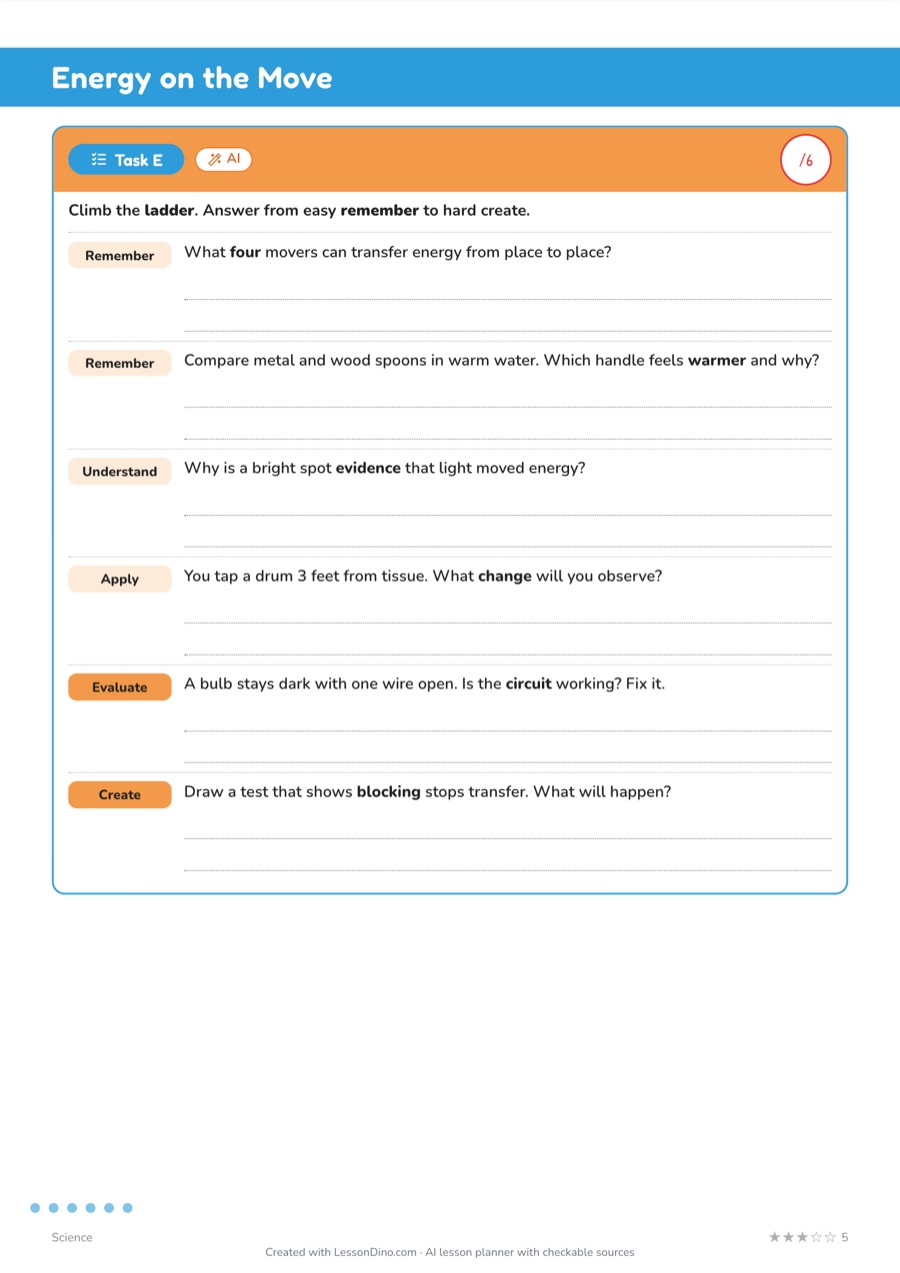
Energy on the Move
Learn how energy travels and give your own examples.
Energy Can Travel
- Energy transfer is the movement of energy from one place to another. You know it happened when you observe a change at the end.
- Sound moves energy by shaking air and can make tissue shake.
- Light travels from a lamp to a wall and makes a bright spot.
- Heat moves from a warmer object to a cooler object.
- Electric current flows through wires from a battery to a bulb.
Give an example, then another, then one nobody else will think of. Explain how you know it fits.
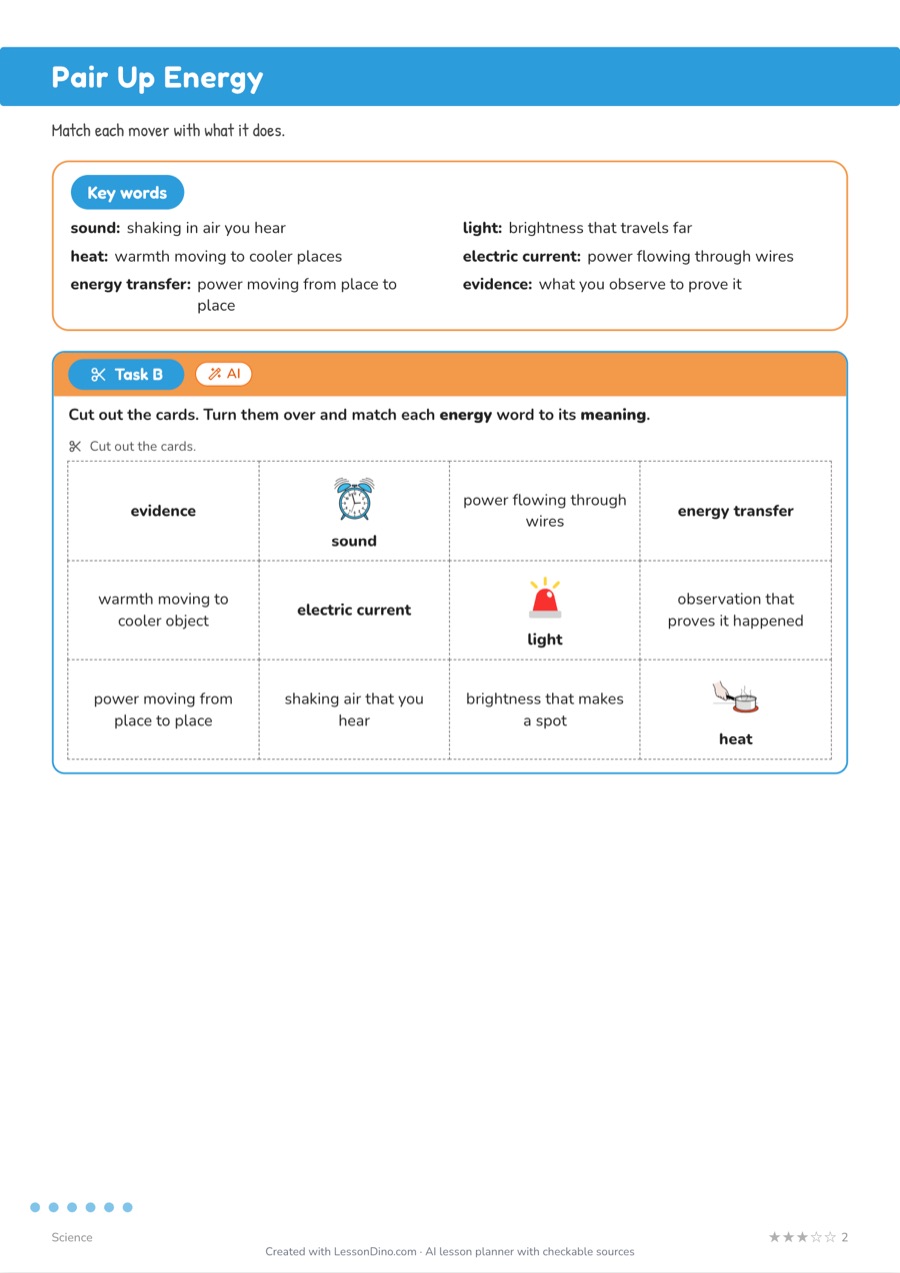
Pair Up Energy
Match each mover with what it does.
| Word | Meaning |
|---|---|
| sound | shaking in air you hear |
| light | brightness that travels far |
| heat | warmth moving to cooler places |
| electric current | power flowing through wires |
| energy transfer | power moving from place to place |
| evidence | what you observe to prove it |
Cut out the cards. Turn them over and match each energy word to its meaning.
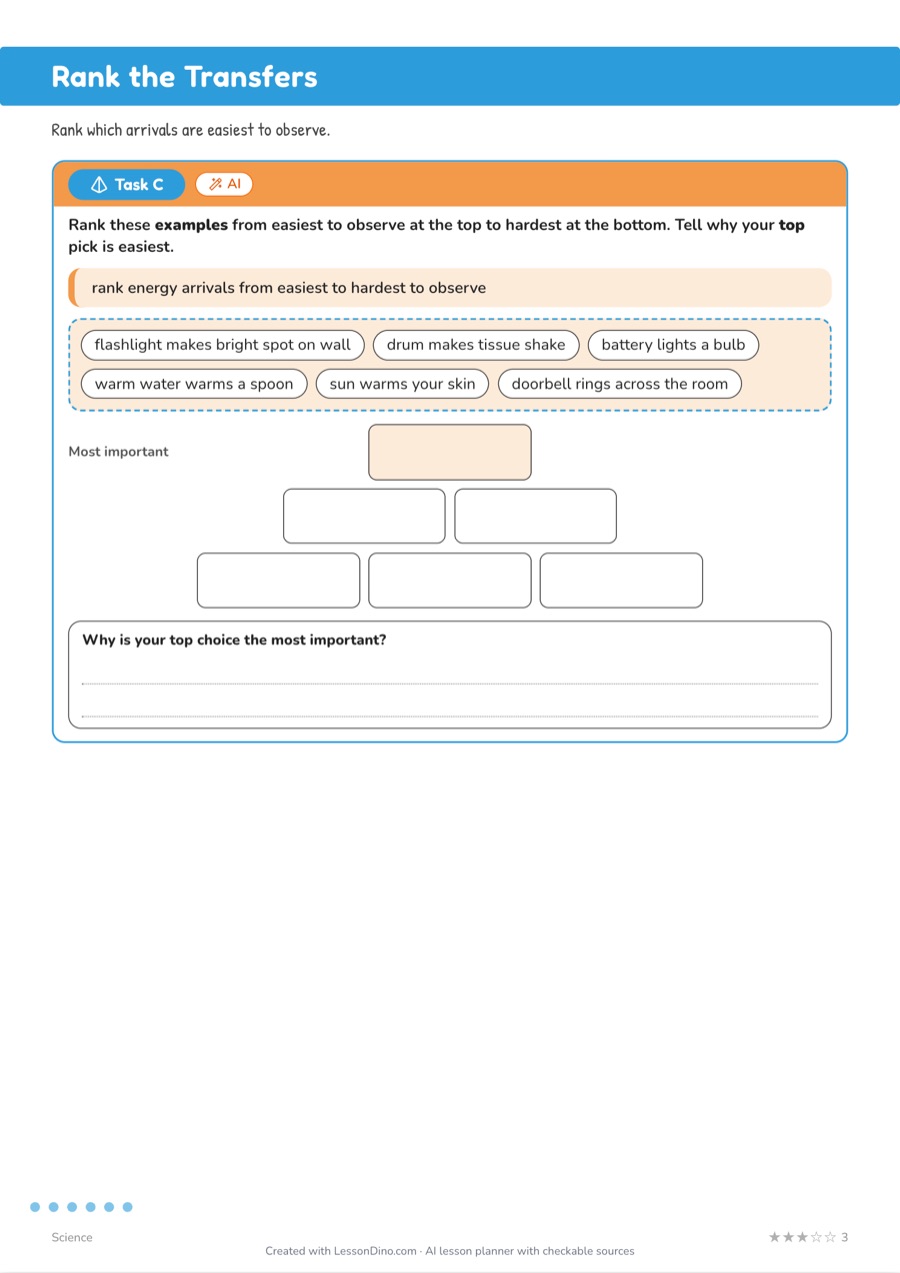
Rank the Transfers
Rank which arrivals are easiest to observe.
Rank these examples from easiest to observe at the top to hardest at the bottom. Tell why your top pick is easiest.
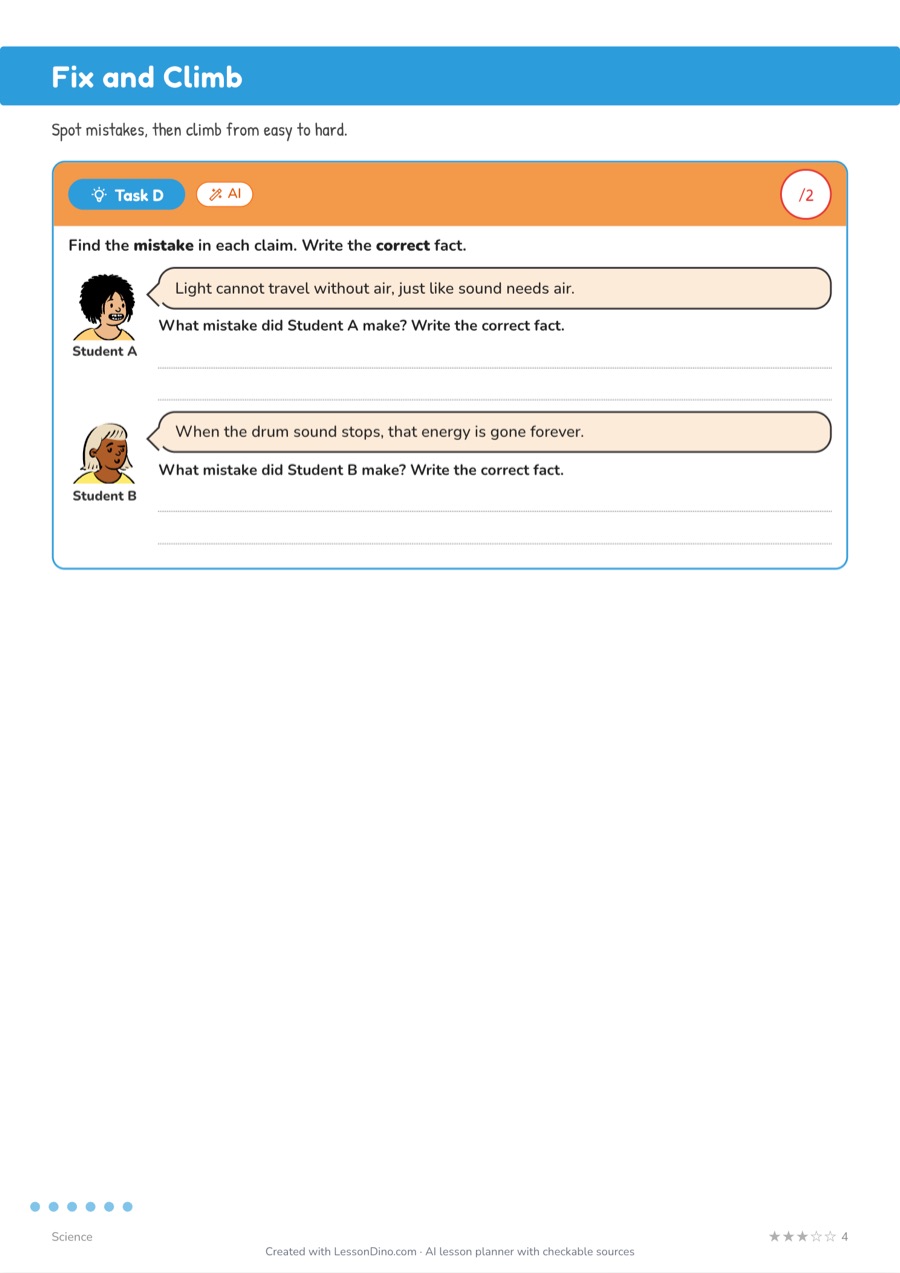
Fix and Climb
Spot mistakes, then climb from easy to hard.
Find the mistake in each claim. Write the correct fact.
Page 5
Climb the ladder. Answer from easy remember to hard create.
- What four movers can transfer energy from place to place?
- Compare metal and wood spoons in warm water. Which handle feels warmer and why?
- Why is a bright spot evidence that light moved energy?
- You tap a drum 3 feet from tissue. What change will you observe?
- A bulb stays dark with one wire open. Is the circuit working? Fix it.
- Draw a test that shows blocking stops transfer. What will happen?
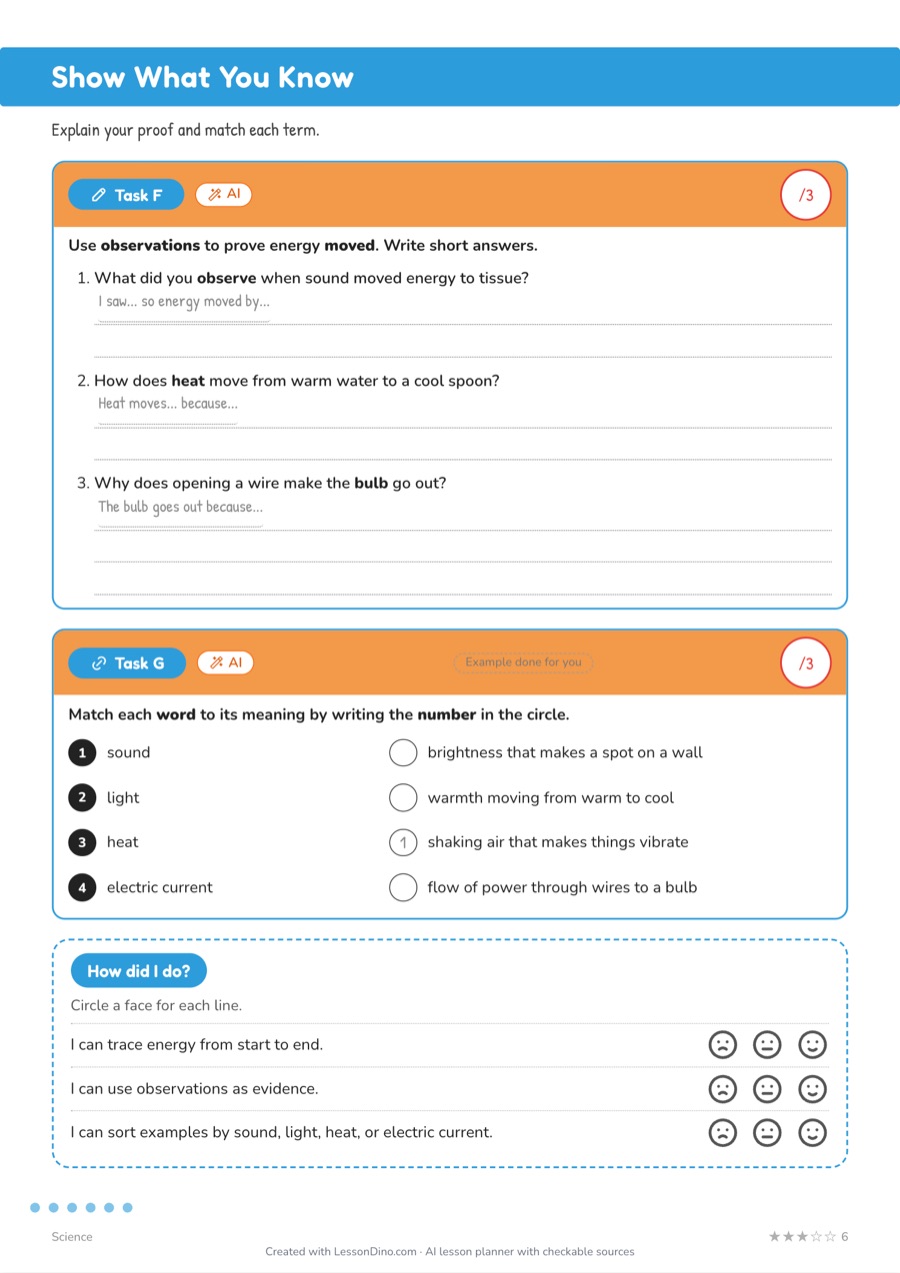
Show What You Know
Explain your proof and match each term.
Use observations to prove energy moved. Write short answers.
- What did you observe when sound moved energy to tissue?
- How does heat move from warm water to a cool spoon?
- Why does opening a wire make the bulb go out?
Match each word to its meaning by writing the number in the circle.
Answers
Show the answers
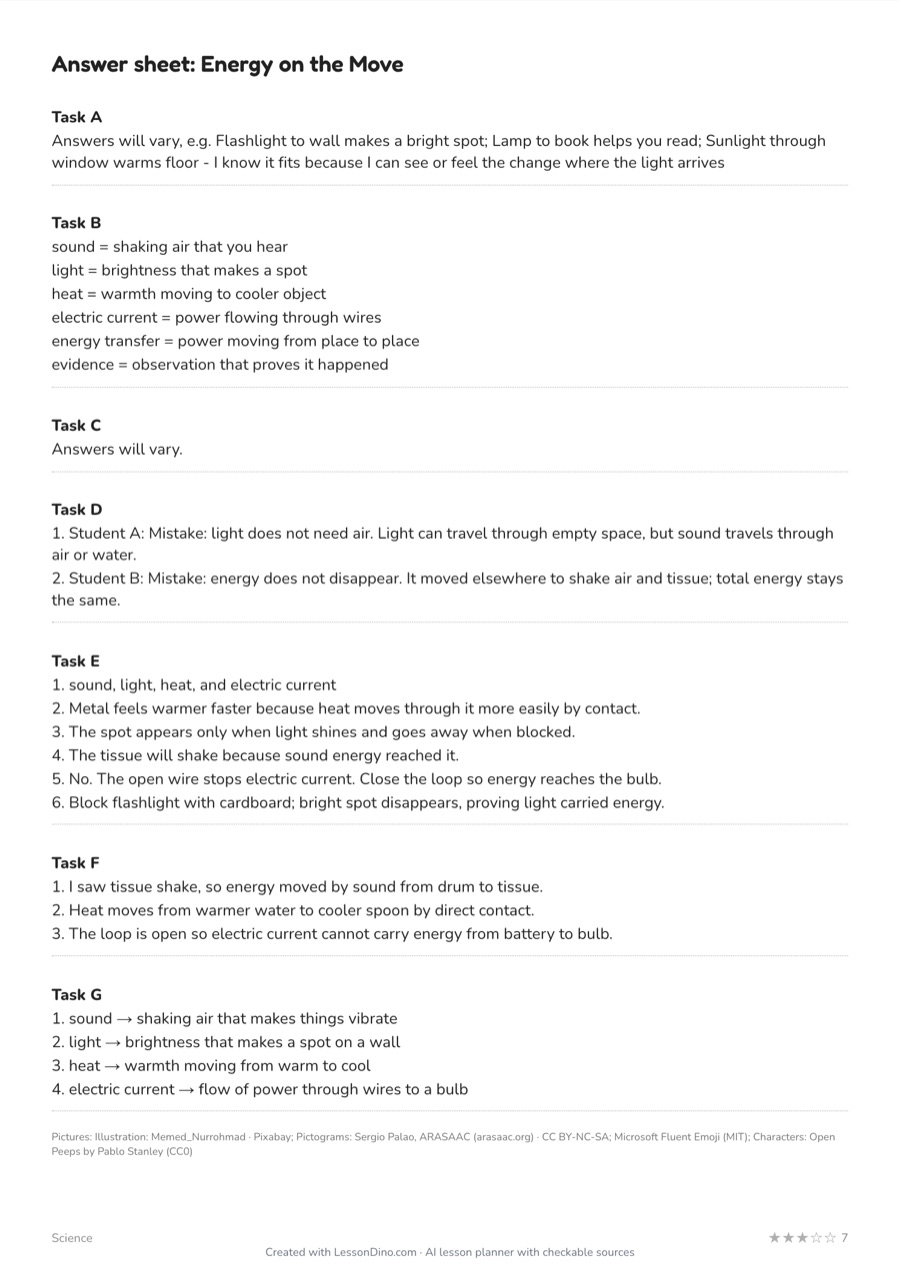
- What four movers can transfer energy from place to place? sound, light, heat, and electric current
- Compare metal and wood spoons in warm water. Which handle feels warmer and why? Metal feels warmer faster because heat moves through it more easily by contact.
- Why is a bright spot evidence that light moved energy? The spot appears only when light shines and goes away when blocked.
- You tap a drum 3 feet from tissue. What change will you observe? The tissue will shake because sound energy reached it.
- A bulb stays dark with one wire open. Is the circuit working? Fix it. No. The open wire stops electric current. Close the loop so energy reaches the bulb.
- Draw a test that shows blocking stops transfer. What will happen? Block flashlight with cardboard; bright spot disappears, proving light carried energy.
- What did you observe when sound moved energy to tissue? I saw tissue shake, so energy moved by sound from drum to tissue.
- How does heat move from warm water to a cool spoon? Heat moves from warmer water to cooler spoon by direct contact.
- Why does opening a wire make the bulb go out? The loop is open so electric current cannot carry energy from battery to bulb.
The answer sheet is the last picture above.
Curriculum
Make observations to provide evidence that energy can be transferred from place to place by sound, light, heat, and electric currents.
Made with Lesson Dino's AI on 17 October 2026. AI can make mistakes, so check the answers and facts against the sources before you teach.