The worksheet
About this worksheet
Students learn how rock layers and fossils show how land changes. They draw a 3-layer cliff and use it to tell the Earth story. This Grade 4 Science worksheet gives students (ages 9–10) four pages of practice on rock layers and fossils, part of the earth's place in the universe unit. It goes with our free Rock layers and fossils lesson, which has the slides and a timed lesson plan.
What it covers
By the end, students should be able to:
- Students will order flat rock layers from oldest at bottom to youngest at top.
- Students will tell water or land habitats from shells, plants and footprints in rock.
- Students will explain landscape change using layer and fossil patterns as evidence.
How to use it
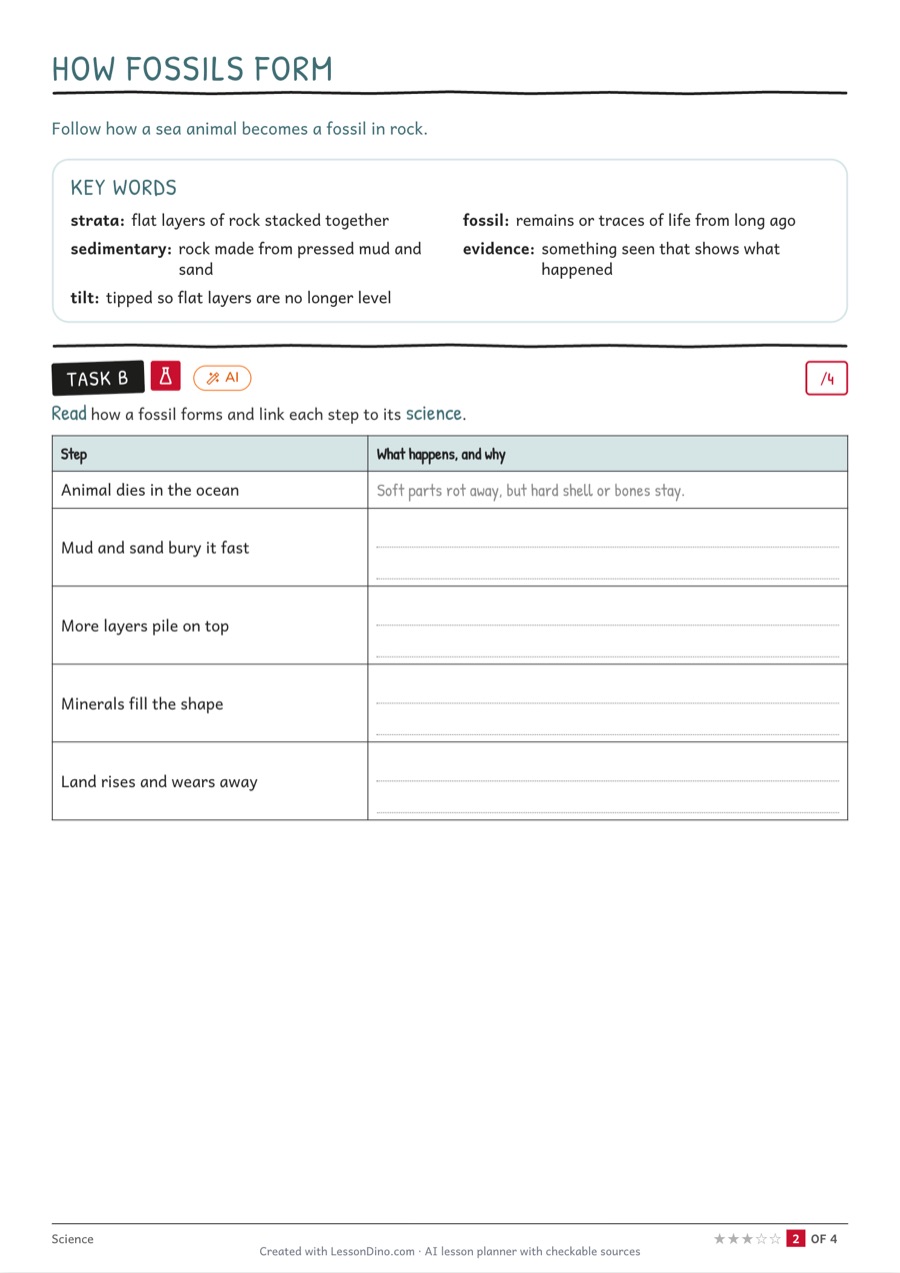
- Teaching (15 minutes): Show Slide 10 steps Animal dies and sinks to bottom, Quick burial in mud or sand, More layers pile on and press, Bone turns to rock fossil. Explain quick burial matters because sediment in water covers sea creatures quickly with mud and sand and most fossils are found in sedimentary rock such as shale, limestone, and sandstone. Then start Worksheet Task B in pairs to link each fossil-formation step to its science.
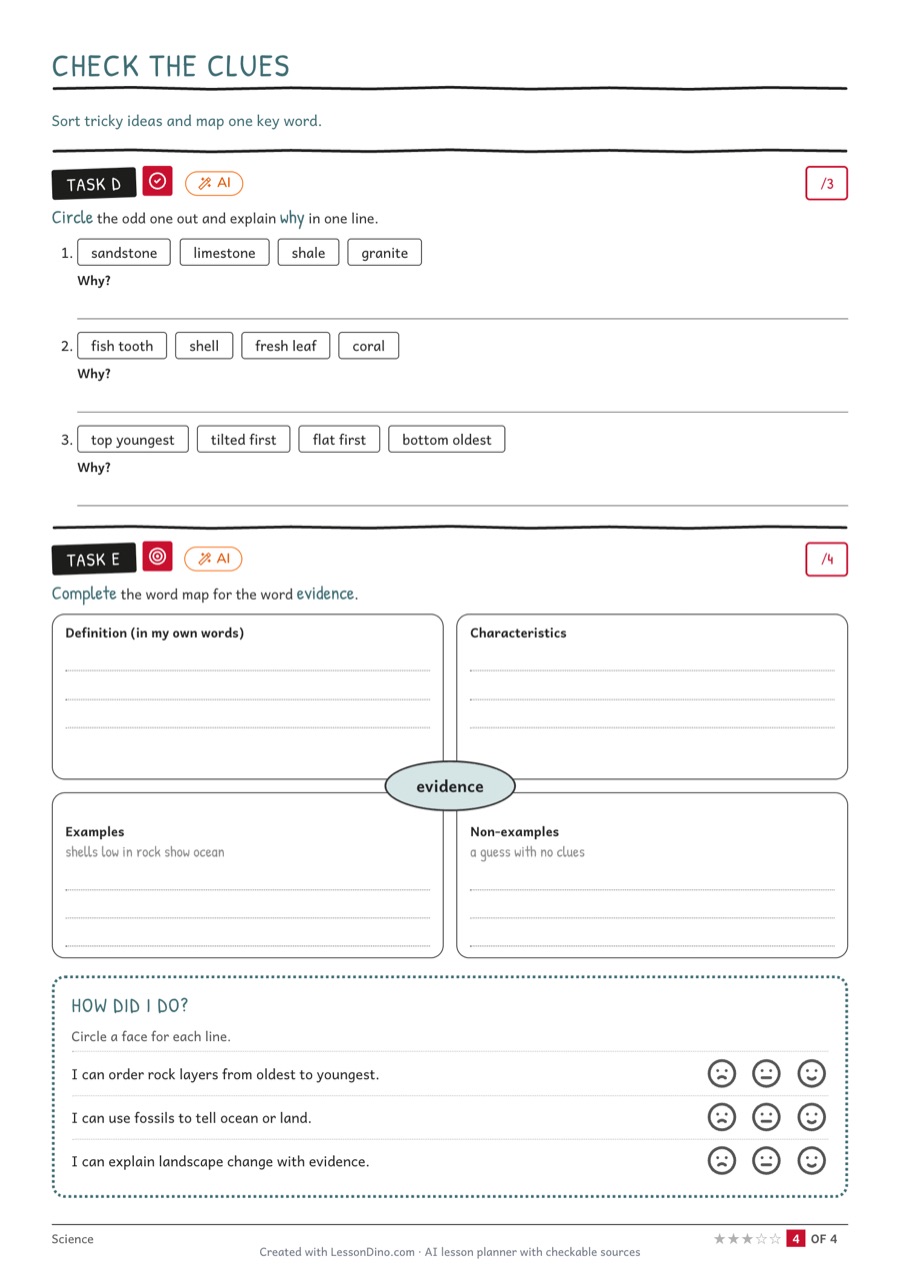
- Plenary (12 minutes): Hand out Worksheet Task D Odd one out for pairs to circle and write one line why.
- Support: Three-box template with bottom box labeled oldest to color inside.
- Stretch: Add a crack or tilt to one side and explain what event happened last.
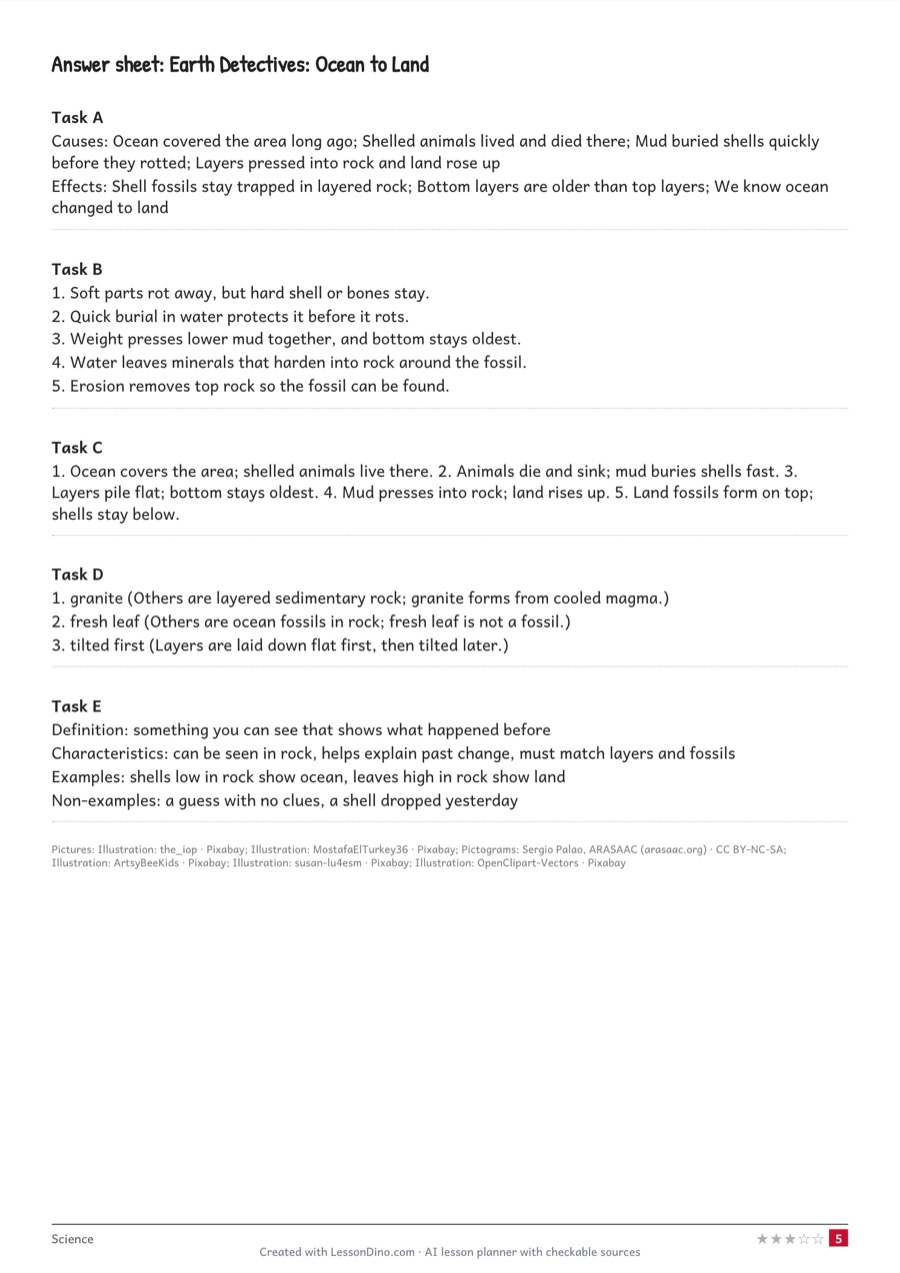
- The answer sheet is the last page, so you can print it on its own or let students check their own work.
Key vocabulary
- strata: flat bands of rock piled one on top of another
- sedimentary rock: hard material made when tiny bits of sand and mud press together in flat bands
- fossil: remains or marks of a plant or animal saved in rock
- evidence: clues you can see that help show what happened in the past
- environment: the water or land around where a plant or animal lived
Mistakes to watch for
- Top layers are oldest because they are on top. Retell pile rule: in any undisturbed stack the bottom bed is older than any bed on top. Have them point down for older.
- Any rock can hold fossils, even cooled lava rock. Remind most fossils are found in sedimentary rock such as shale, limestone, and sandstone, formed from pressed mud and sand.
- Tilted layers formed tilted. Remind most sediments were laid down horizontally, so tilt must happen after forming during mountain building.
What's on the worksheet
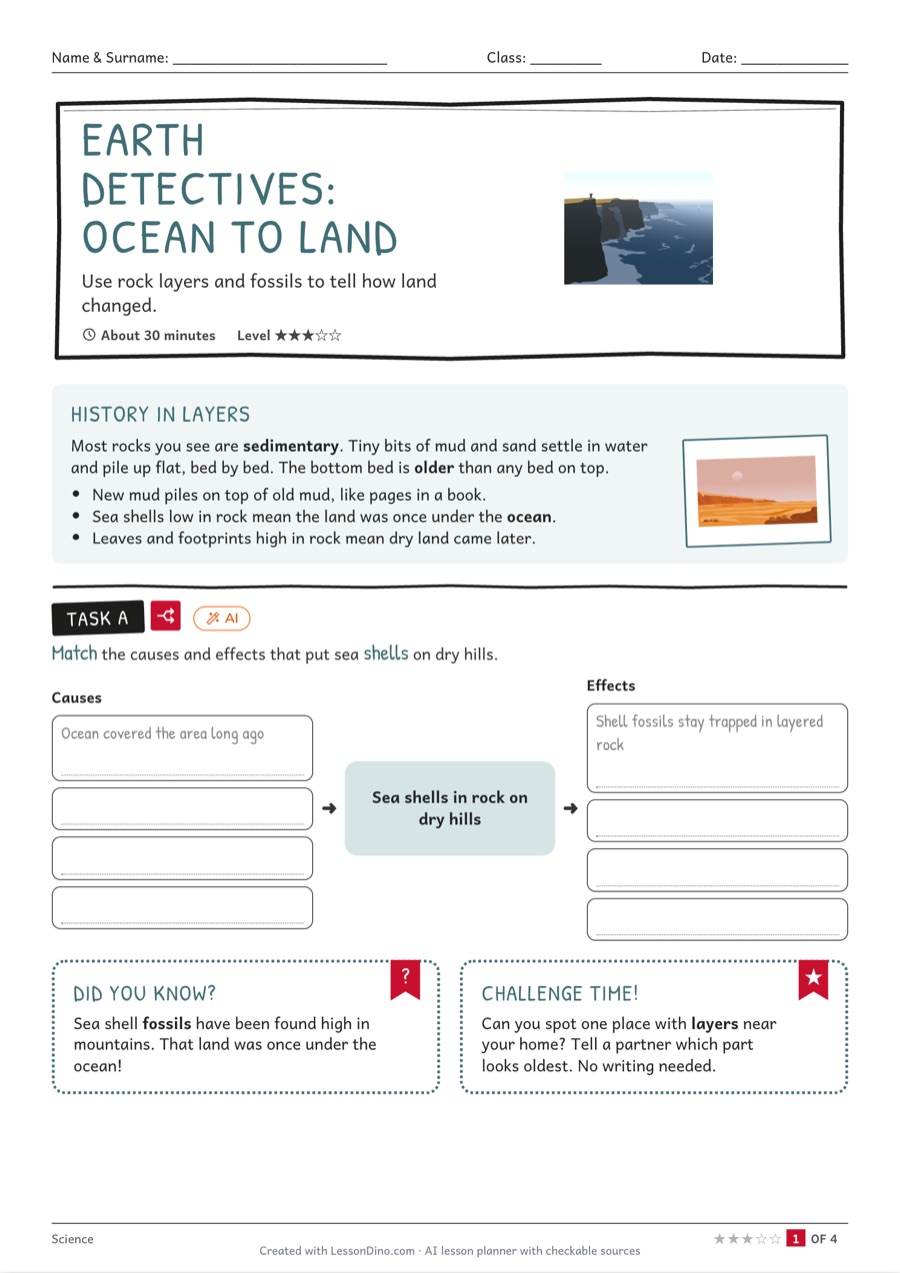
Rocks Record History
See how layers and fossils show change over time.
History in Layers
- Most rocks you see are sedimentary. Tiny bits of mud and sand settle in water and pile up flat, bed by bed. The bottom bed is older than any bed on top.
- New mud piles on top of old mud, like pages in a book.
- Sea shells low in rock mean the land was once under the ocean.
- Leaves and footprints high in rock mean dry land came later.
Match the causes and effects that put sea shells on dry hills.
- Sea shell fossils have been found high in mountains. That land was once under the ocean!
- Can you spot one place with layers near your home? Tell a partner which part looks oldest. No writing needed.
How Fossils Form
Follow how a sea animal becomes a fossil in rock.
| Word | Meaning |
|---|---|
| strata | flat layers of rock stacked together |
| fossil | remains or traces of life from long ago |
| sedimentary | rock made from pressed mud and sand |
| evidence | something seen that shows what happened |
| tilt | tipped so flat layers are no longer level |
Read how a fossil forms and link each step to its science.
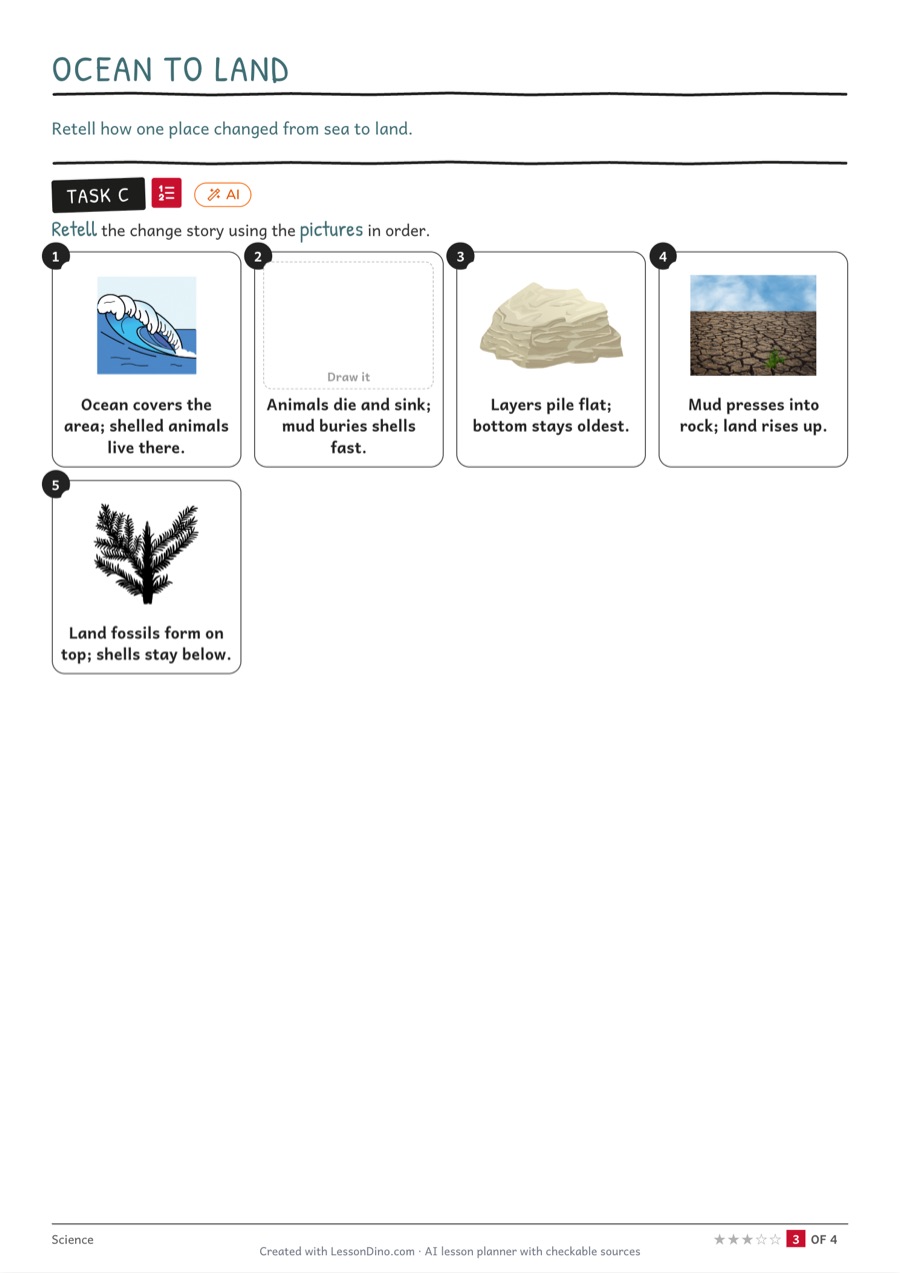
Ocean to Land
Retell how one place changed from sea to land.
Retell the change story using the pictures in order.
Check the Clues
Sort tricky ideas and map one key word.
Circle the odd one out and explain why in one line.
Complete the word map for the word evidence.
Answers
Show the answers
The answers are on the answer sheet, the last picture above.
Curriculum
Identify evidence from patterns in rock formations and fossils in rock layers to support an explanation for changes in a landscape over time.
Made with Lesson Dino's AI on 17 October 2026. AI can make mistakes, so check the answers and facts against the sources before you teach.