The worksheet
About this worksheet
Students learn how internal and external parts help plants and animals live and grow. They make an X-ray poster to argue their ideas with evidence. This Grade 4 Science worksheet gives students (ages 9–10) five pages of practice on plant and animal structures, part of the from molecules to organisms: structures and processes unit. It goes with our free Plant and animal structures lesson, which has the slides and a timed lesson plan.
What it covers
By the end, students should be able to:
- Students will identify external and internal structures of plants and animals.
- Students will explain how structures support survival, growth, behavior, and reproduction.
- Students will construct an argument using evidence from observations and diagrams.
How to use it
- Plenary (10 minutes): Hand out Worksheet Task H and have students match each structure to its job.
- Support: Provide sentence starters for claim and evidence and a labeled diagram showing xylem carrying water to leaves and phloem carrying sugar to other parts.
- Stretch: Have students add a counter-idea, such as what would happen without one structure, and rebut it with evidence.
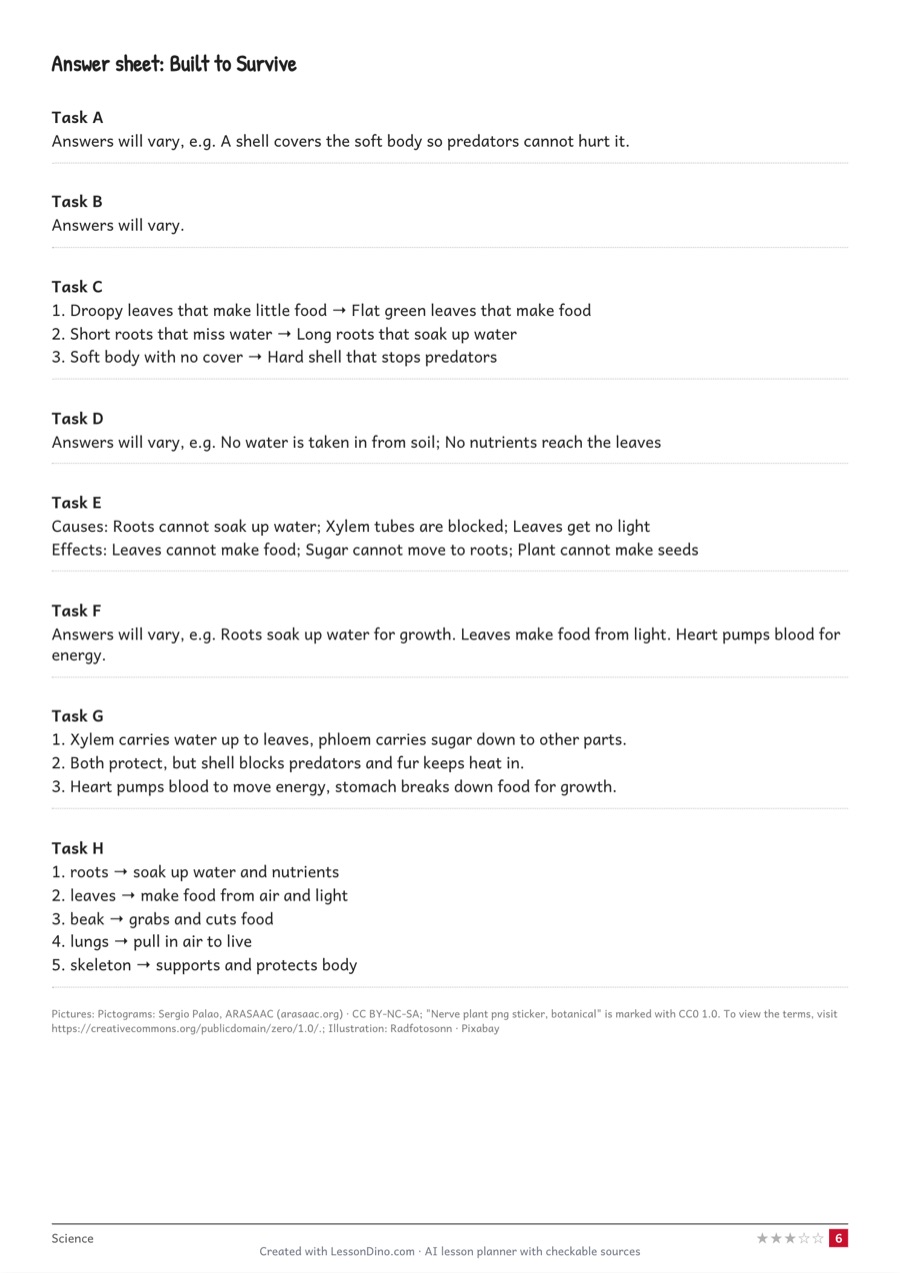
- The answer sheet is the last page, so you can print it on its own or let students check their own work.
Key vocabulary
- structure: a body part of a plant or animal
- function: the job a part does to help a living thing live
- xylem: tubes that carry water from roots up to leaves
- phloem: tubes that carry sugars made in leaves down to other parts
- evidence: what you see in observations or diagrams that proves an idea
Mistakes to watch for
- Thinking plants have no inside parts, only animals do. Show that a system of tubes called the xylem carries water up and the phloem carries sugars down inside the plant.
- Thinking one part works alone. Remind that all parts of the system for eating and digesting food must work together.
- Mixing up which tube moves water up and which moves sugar down. Point to the labeled diagram: xylem carries water from roots up to leaves and phloem carries sugars from leaves down.
What's on the worksheet
Parts With Jobs
Explore how structures help living things survive.
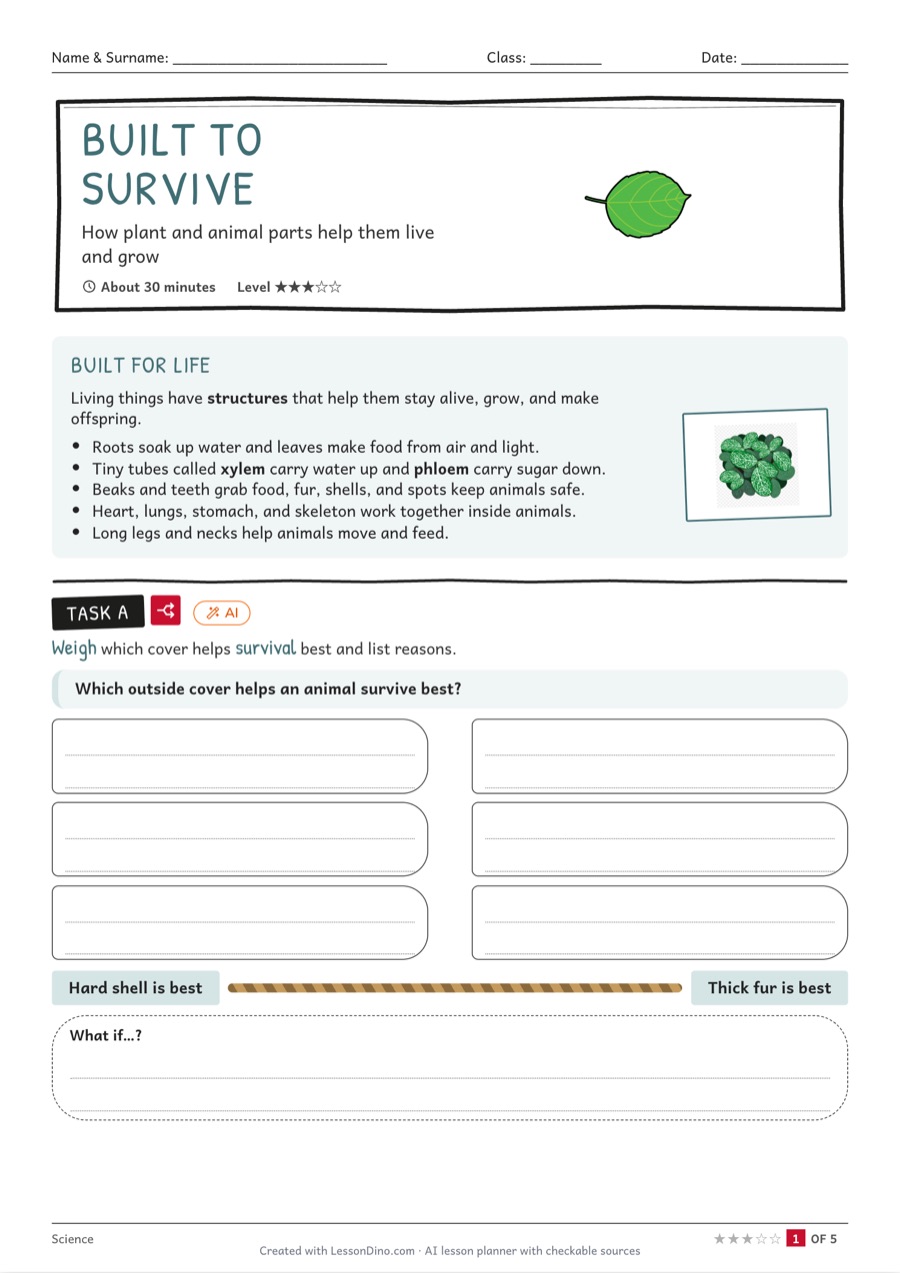
Built for Life
- Living things have structures that help them stay alive, grow, and make offspring.
- Roots soak up water and leaves make food from air and light.
- Tiny tubes called xylem carry water up and phloem carry sugar down.
- Beaks and teeth grab food, fur, shells, and spots keep animals safe.
- Heart, lungs, stomach, and skeleton work together inside animals.
- Long legs and necks help animals move and feed.
Weigh which cover helps survival best and list reasons.
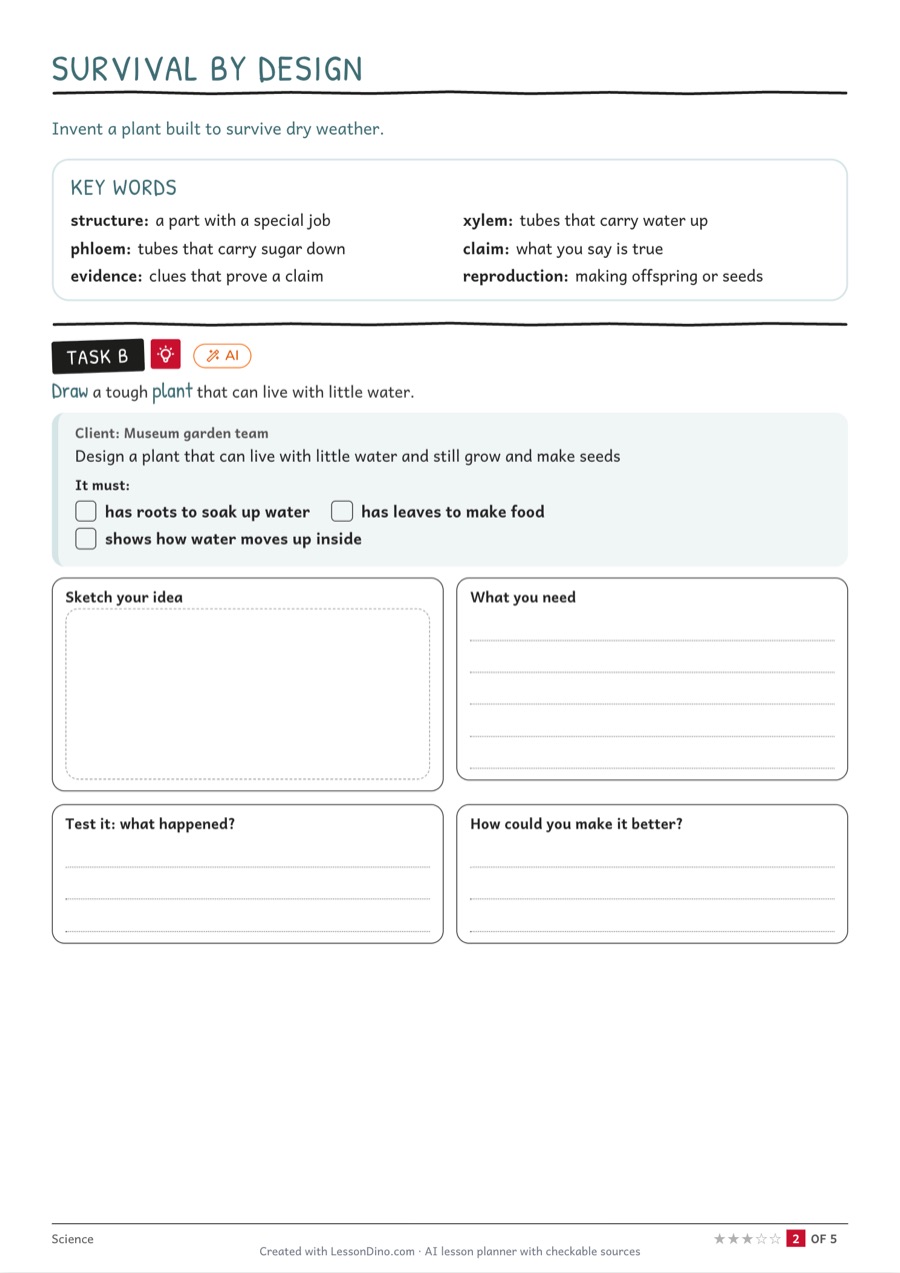
Survival by Design
Invent a plant built to survive dry weather.
| Word | Meaning |
|---|---|
| structure | a part with a special job |
| xylem | tubes that carry water up |
| phloem | tubes that carry sugar down |
| claim | what you say is true |
| evidence | clues that prove a claim |
| reproduction | making offspring or seeds |
Draw a tough plant that can live with little water.
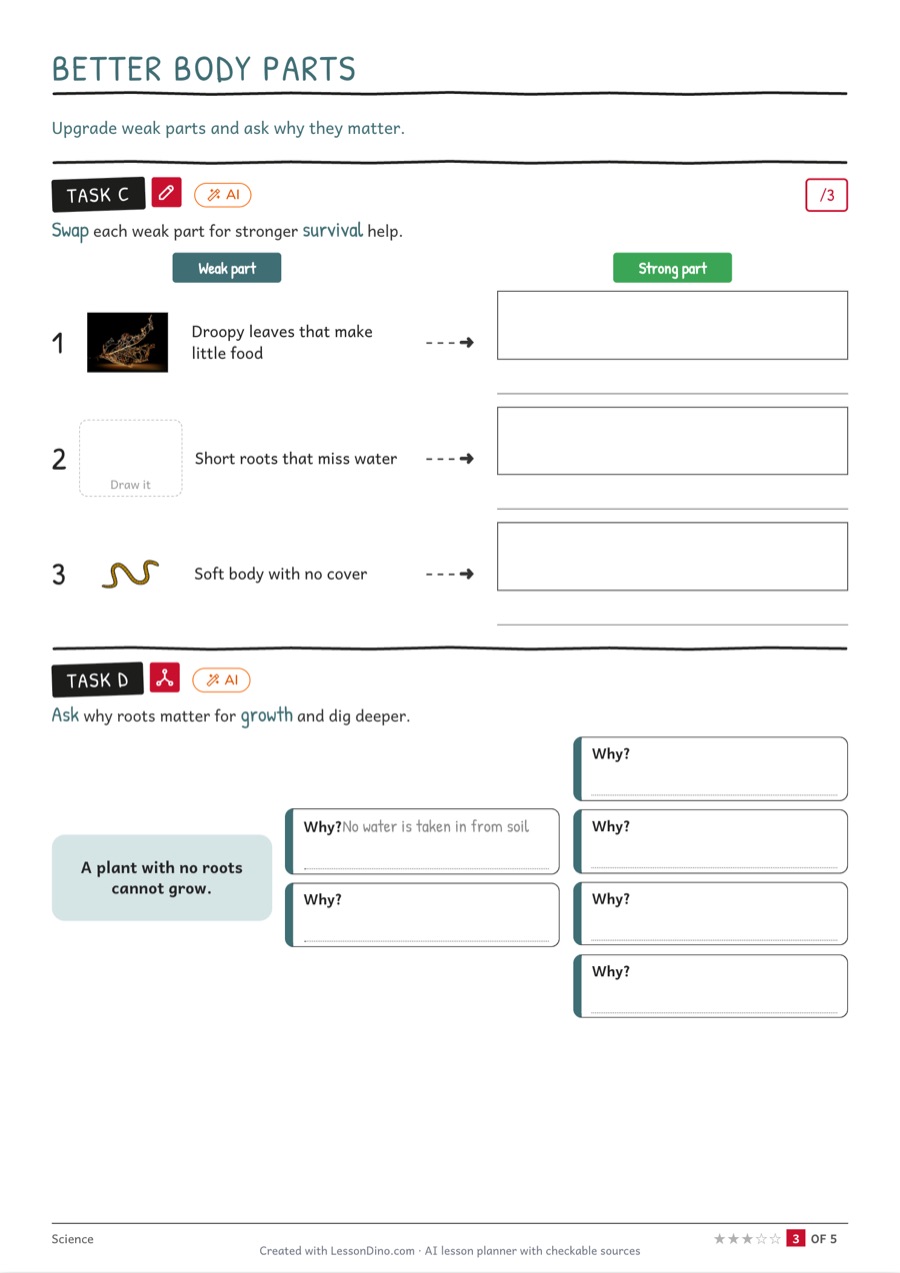
Better Body Parts
Upgrade weak parts and ask why they matter.
Swap each weak part for stronger survival help.
Ask why roots matter for growth and dig deeper.
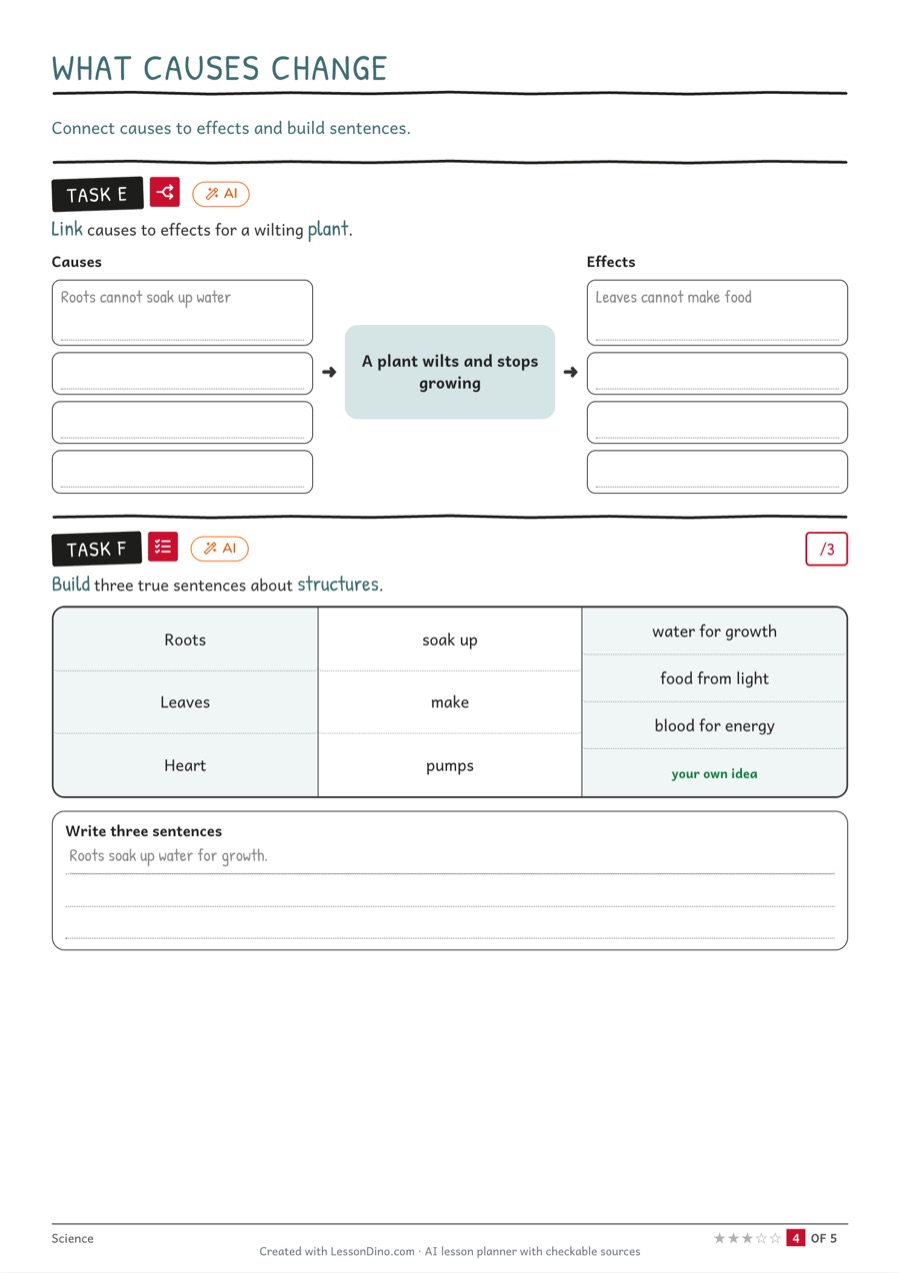
What Causes Change
Connect causes to effects and build sentences.
Link causes to effects for a wilting plant.
Build three true sentences about structures.
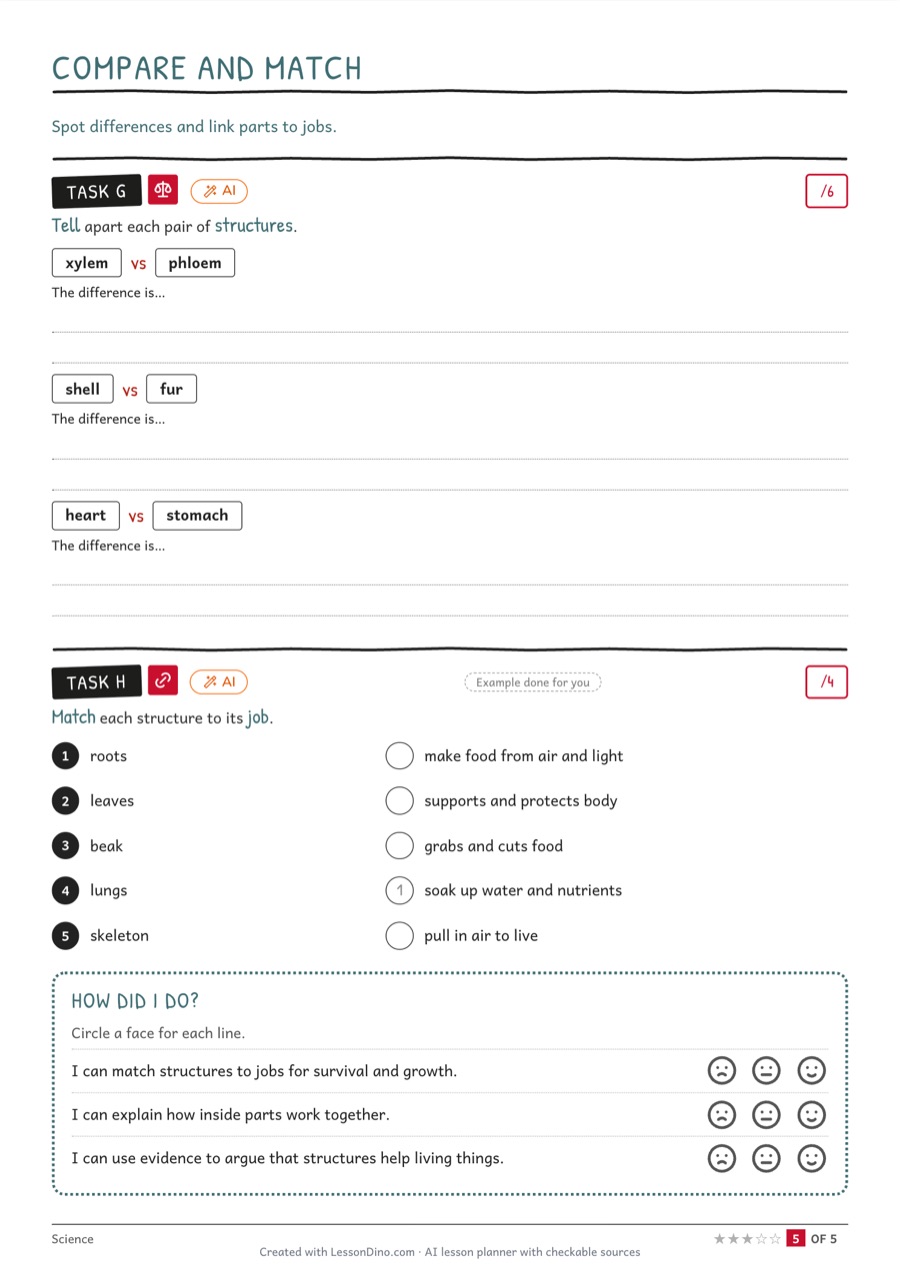
Compare and Match
Spot differences and link parts to jobs.
Tell apart each pair of structures.
Match each structure to its job.
Answers
Show the answers
The answers are on the answer sheet, the last picture above.
Curriculum
Construct an argument that plants and animals have internal and external structures that function to support survival, growth, behavior, and reproduction.
Made with Lesson Dino's AI on 17 October 2026. AI can make mistakes, so check the answers and facts against the sources before you teach.