Slides
Lesson plan
Explain It Clearly With a Paper Blueprint
Students learn to select, organize, and explain facts to examine a topic. They build a four-box paper blueprint for an informative text.
Objectives
- Students will plan selection and order of evidence before drafting.
- Students will organize facts into introduction, body groups, and conclusion.
- Students will analyze each fact by explaining what it shows readers.
Success criteria
- I can choose facts that stay on my topic.
- I can order facts into a clear beginning, middle, and end.
- I can explain what each fact shows the reader.
Key words
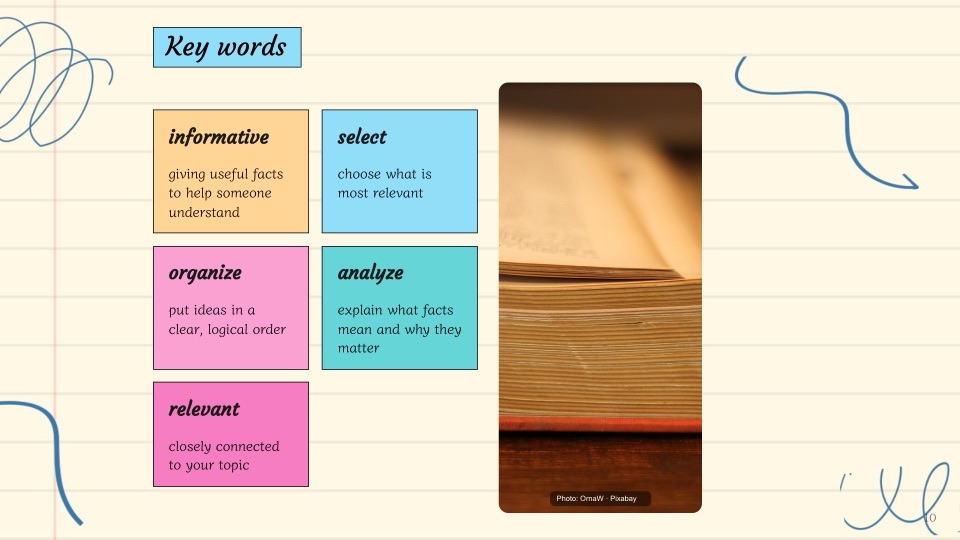
| Word | Meaning |
|---|---|
| informative | giving useful facts to help someone understand |
| select | choose what is most relevant |
| organize | put ideas in a clear, logical order |
| analyze | explain what facts show or why they matter |
Timed plan (60 minutes)
| Time | Stage | What happens |
|---|---|---|
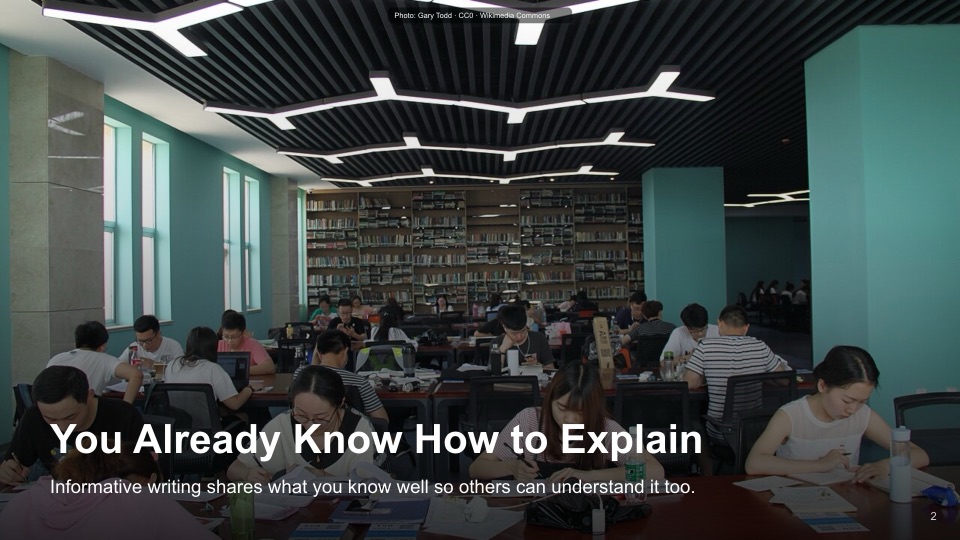
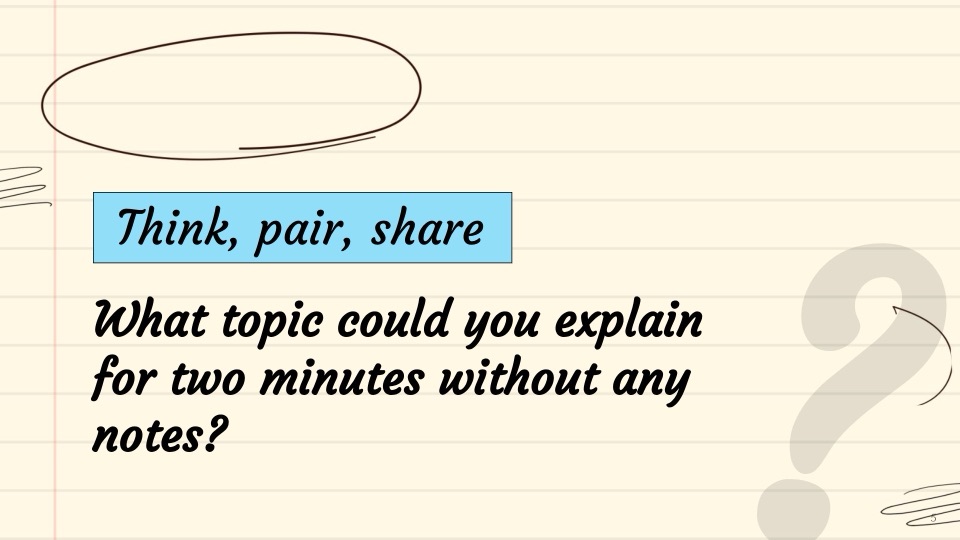
| 5 min | Starter | Activate what students can already explain and hook them with paper planning. Show Slide 1 title and Slide 2 photo and read its line aloud. Say the hook and hold up a folded lined-paper sheet. Show Slide 5 question and model a 20-second answer about a familiar topic. Direct partners to pitch two topics each and pick the narrower one. |
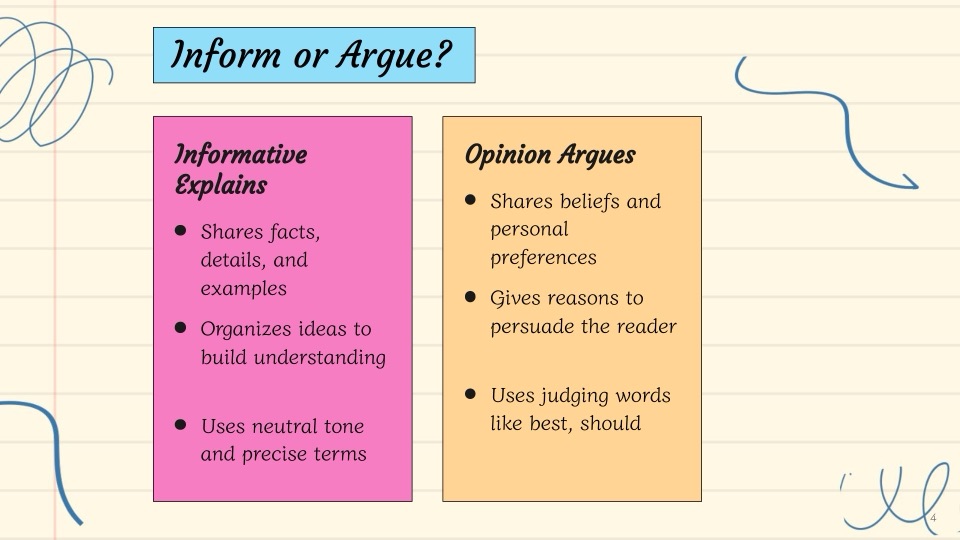
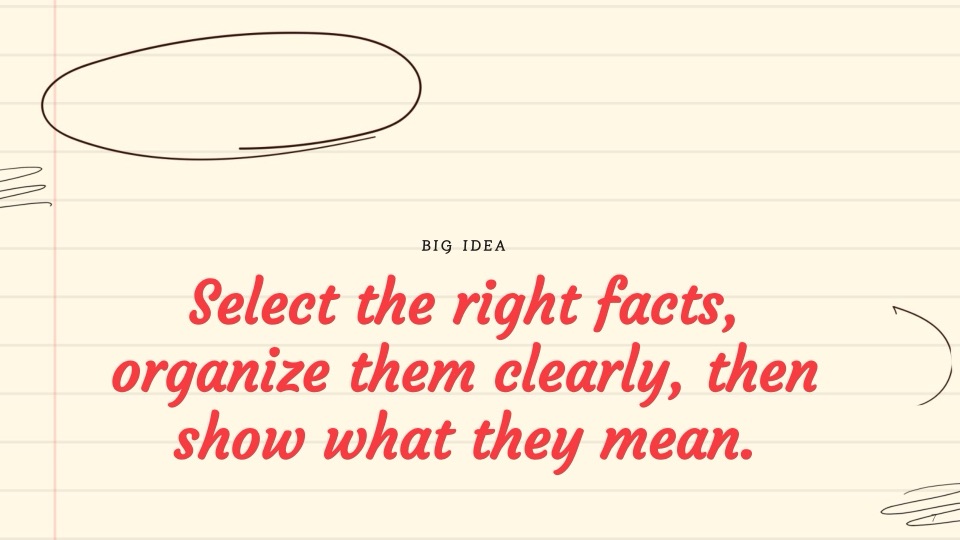
| 10 min | Teach - Inform or Argue | Show how informative writing selects, organizes, and analyzes facts instead of arguing. Show Slide 3 and read: Good explainers teach, they do not argue. Show Slide 4 compare chart and sort two sentences with the class into Informative or Opinion. Show Slide 7 statement and link it to thesis, fact groups, and conclusion. Preview the four-box blueprint: thesis, fact group 1, fact group 2, conclusion. |
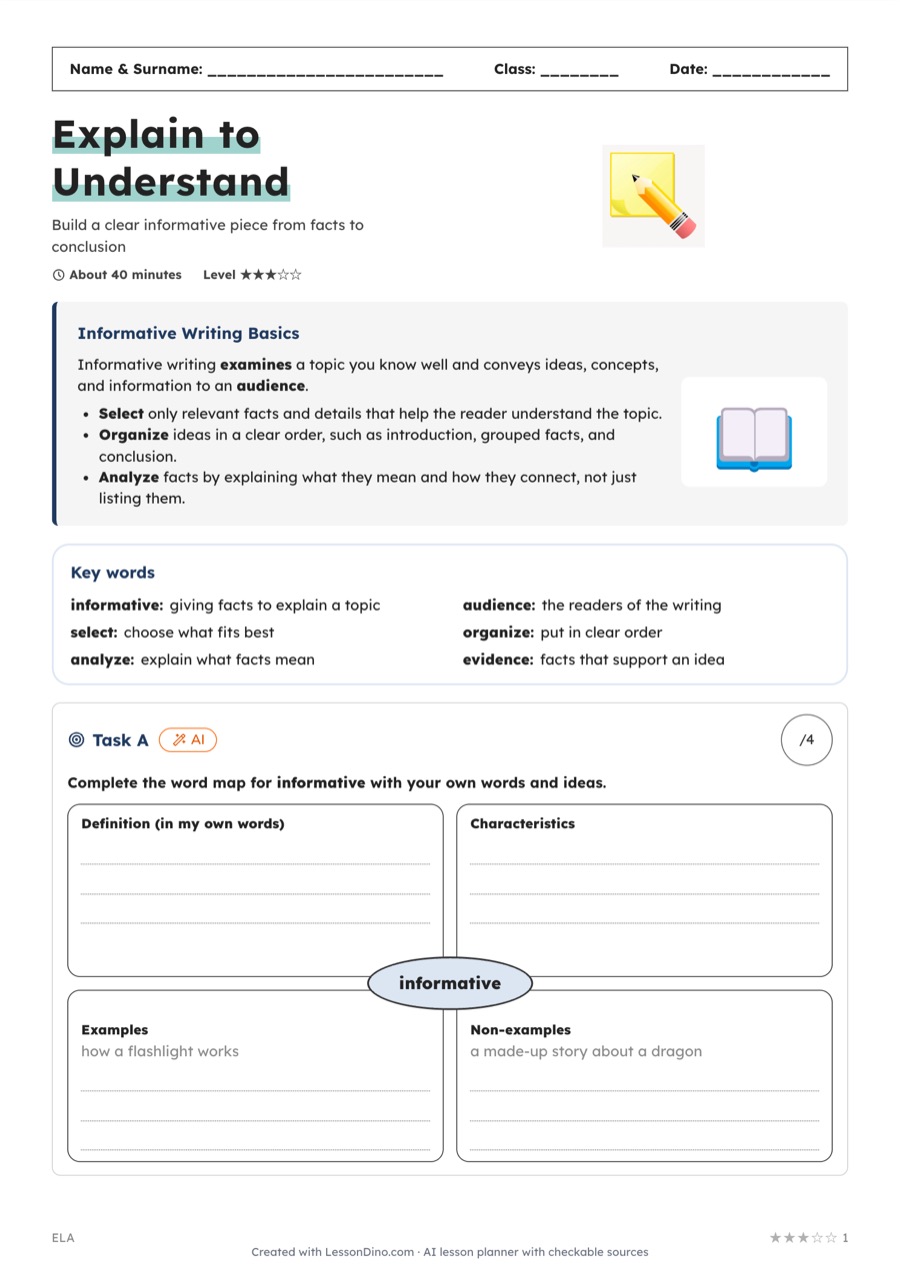
| 10 min | We Do - Keep It on Topic | Practice selecting only facts that examine the central topic. Hand out Worksheet Task E and display Slide 4 reminder about organizing ideas to build understanding. Model one item: check it against the topic sentence and mark informative or not informative. Circulate as pairs sort the rest and require a reason for each sort. Take quick feedback on one tricky item. |
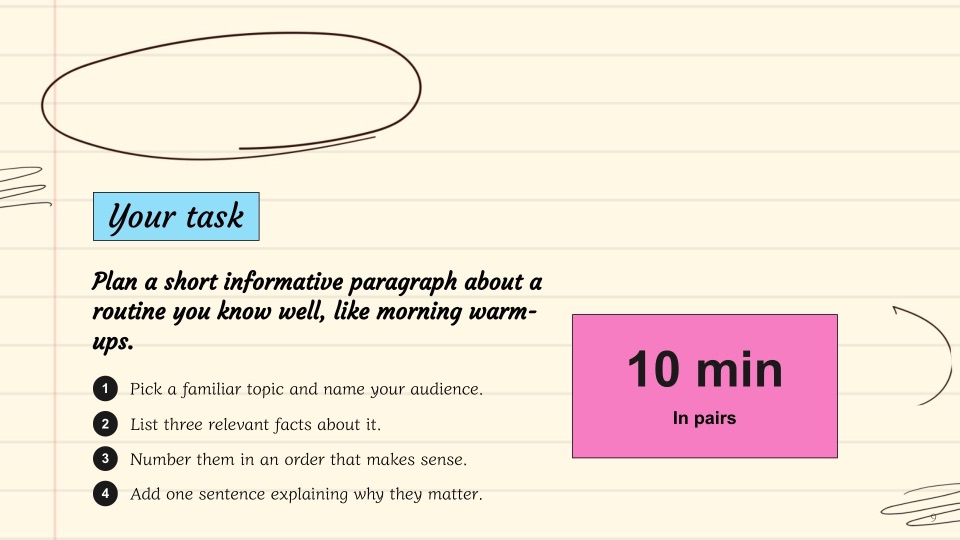
| 25 min | Main - Paper-Only Blueprint | Plan selection, organization, and analysis in a four-box blueprint before drafting. Show Slide 9 task and model folding lined paper into four labeled boxes: thesis, fact group 1, fact group 2, conclusion. Think aloud the worked backpack blueprint, writing two facts per body box plus This shows... lines. Give pairs the 8-statement fact bank and tell them to pick a familiar topic, name the audience, list facts, number them in order, and add analysis. Stop at 18 minutes for trade: partners circle the strongest evidence in each box and suggest order fixes. |
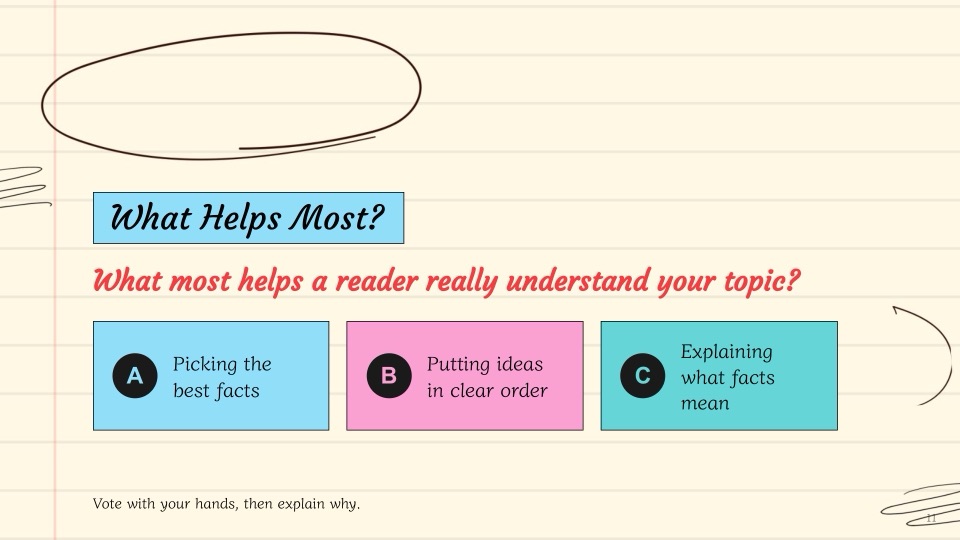
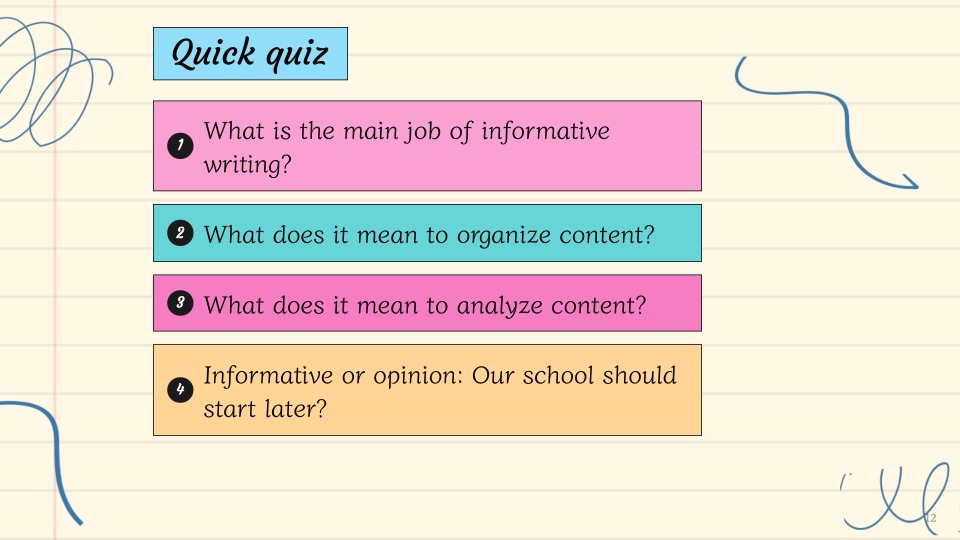
| 10 min | Plenary | Review what helps understanding most and check informative writing basics. Show Slide 11 vote: What most helps a reader really understand your topic? Take a class vote. Show Slide 12 quiz and hear answers for main job and organizing content. Hand out Worksheet Task F for 4-minute individual tick-the-best-answer check. Close by linking vote result to selection, organization, and analysis. |
Common mistakes
- Adding opinions like best or terrible instead of neutral facts
How to spot it: Hear judgment words or I think statements in blueprint facts
Swap for precise terms, for example most used or less effective, to keep explanatory voice - Listing facts without saying what they show
How to spot it: Body boxes have facts but no This shows... or This means... line
Add one analysis line per fact that explains its meaning for the audience - Including interesting but unrelated facts
How to spot it: Fact does not connect to thesis, such as game sales in a backpack explainer
Cut it or rewrite it so it directly examines the topic
Support
- Allow students to pull facts from a printed fact bank of 8 short statements.
- Provide half-finished template with boxes for thesis, fact groups, and conclusion plus analysis starters.
Stretch
- Have students write a counter-question a reader might ask and note where to answer it.
- Have students combine two fact-analysis pairs into one body paragraph with a transition.
Check questions
- What is the main job of informative writing?
Answer: To examine a topic and help readers understand ideas and information. - What does organizing facts mean?
Answer: Putting ideas in a clear, logical order. - What should you write after each fact?
Answer: One sentence explaining what the fact shows or means.
Curriculum
Write informative/explanatory texts to examine a topic and convey ideas, concepts, and information through the selection, organization, and analysis of relevant content.
Video clips
Clips on YouTube, from the start and end times we chose. Check each one before you show it.
-
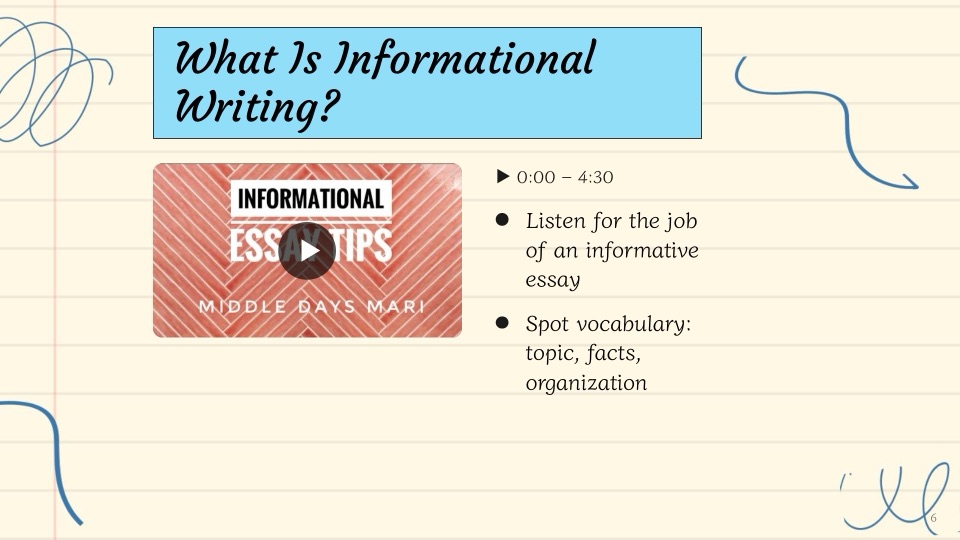
Middle-school informational essay overview from 0:00 to 4:30
Mari Devine: HOW TO WRITE AN INFORMATIONAL ESSAY - Middle School
Explicitly made for middle school and teaches informational essay basics with vocabulary and pace ideal for 13- to 14-year-olds.
-
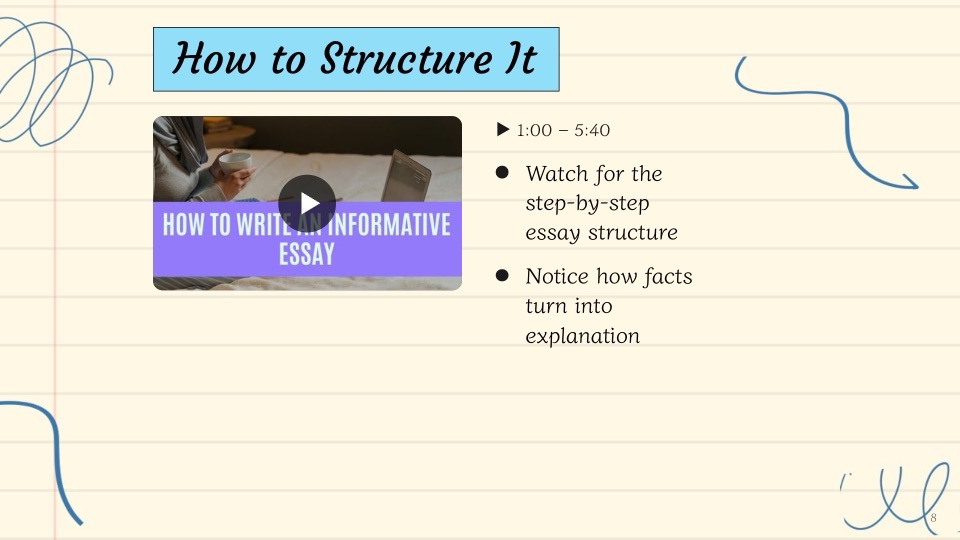
Easiest way to structure essay from 1:00 to 5:40
Mentority: How to Write an Informative Essay [Easiest Way]
Walks through how to write an informative essay step-by-step with tone and examples appropriate for 13- to 14-year-olds.
Worksheet
Sources
- NAEP - Writing 2007: Writing Sample Questions nationsreportcard.gov
- Darcy Pattison Wikipedia
Picture credits
Made with Lesson Dino's AI on 16 October 2026. AI can make mistakes, so check facts against the sources before you teach.