The worksheet
About this worksheet
Students learn to select, organize, and explain facts to examine a topic. They build a four-box paper blueprint for an informative text. This Grade 8 ELA worksheet gives students (ages 13–14) six pages of practice on informative writing, part of the writing unit. It goes with our free Informative writing lesson, which has the slides and a timed lesson plan.
What it covers
By the end, students should be able to:
- Students will plan selection and order of evidence before drafting.
- Students will organize facts into introduction, body groups, and conclusion.
- Students will analyze each fact by explaining what it shows readers.
How to use it
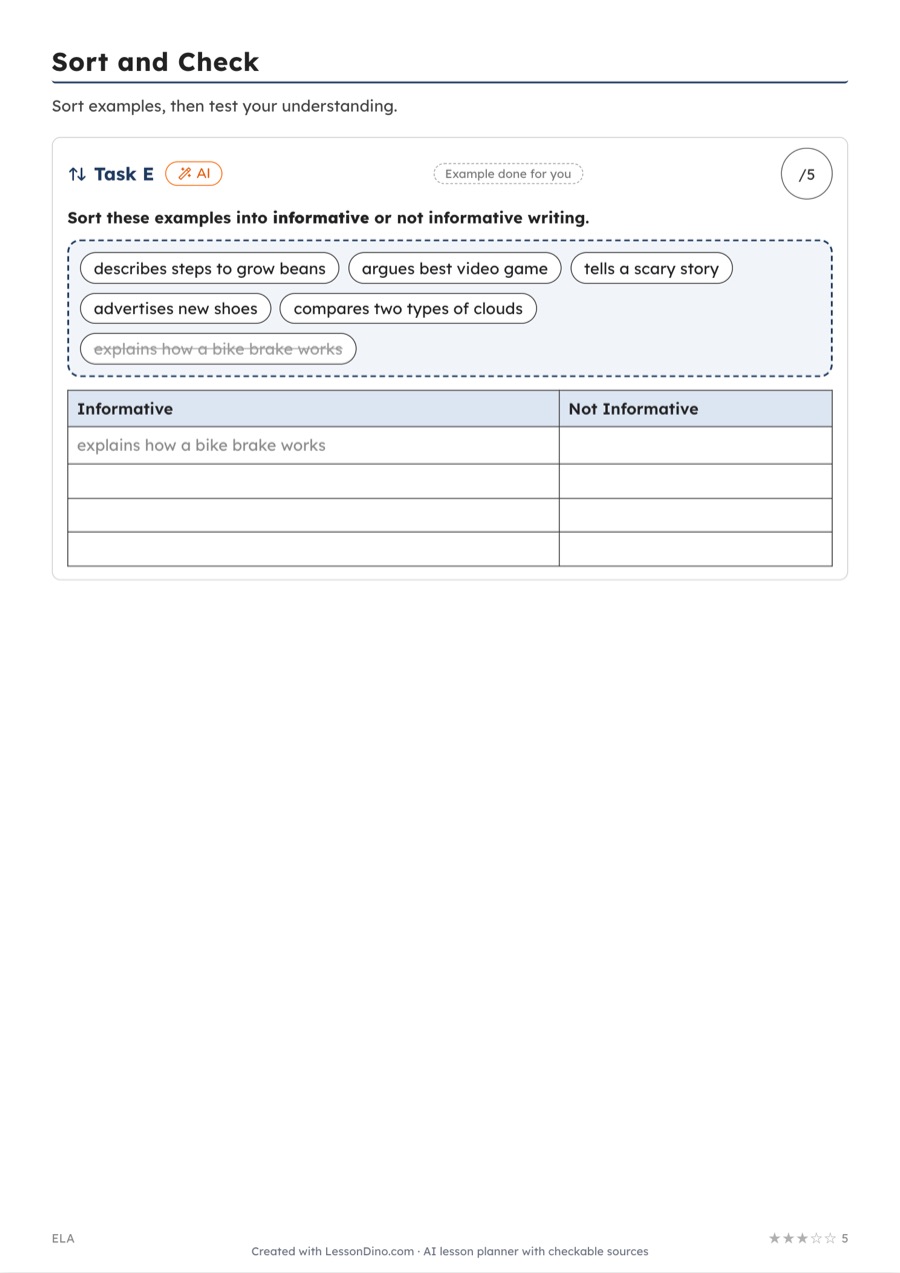
- We Do - Keep It on Topic (10 minutes): Hand out Worksheet Task E and display Slide 4 reminder about organizing ideas to build understanding.
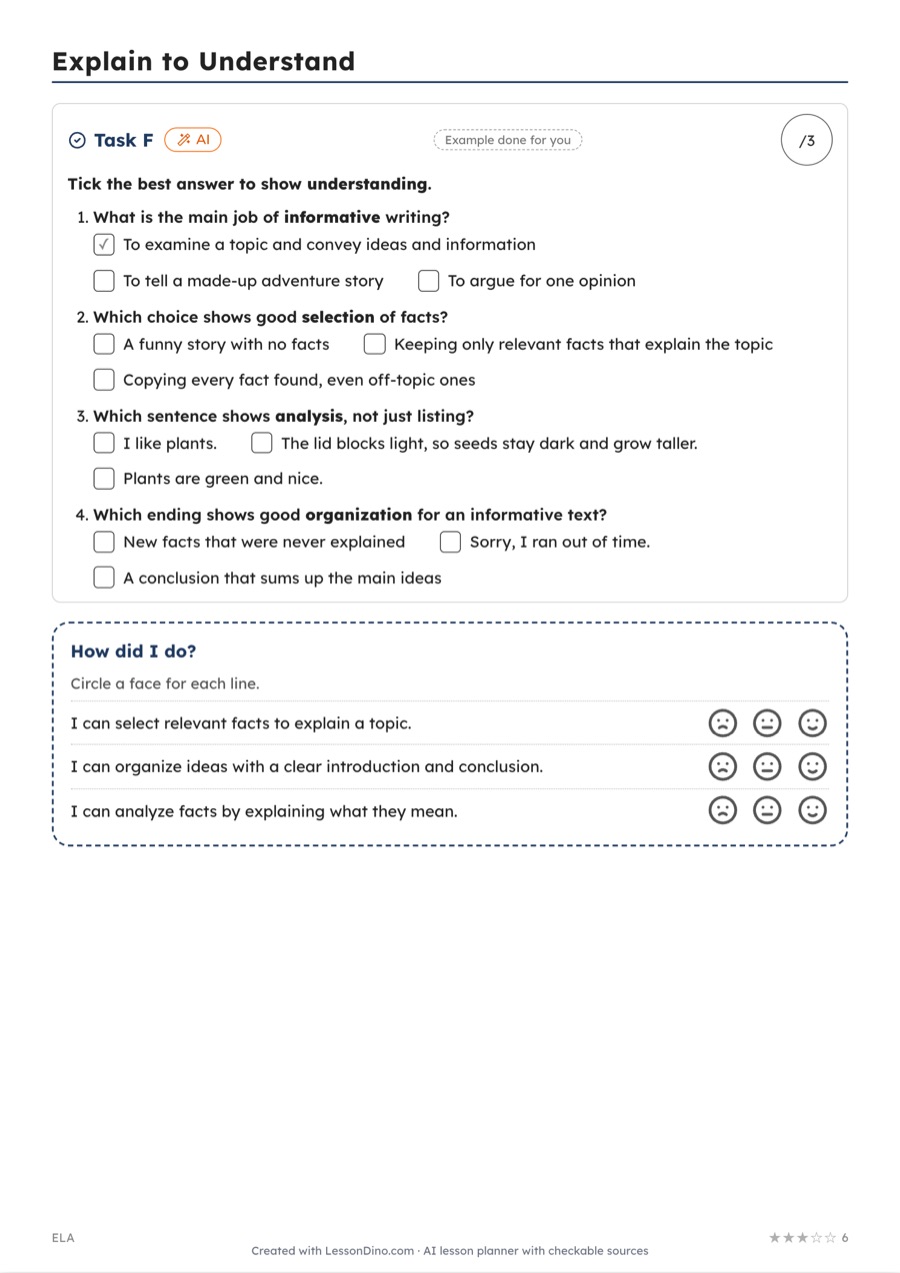
- Plenary (10 minutes): Hand out Worksheet Task F for 4-minute individual tick-the-best-answer check.
- Support: Allow students to pull facts from a printed fact bank of 8 short statements.
- Stretch: Have students write a counter-question a reader might ask and note where to answer it.
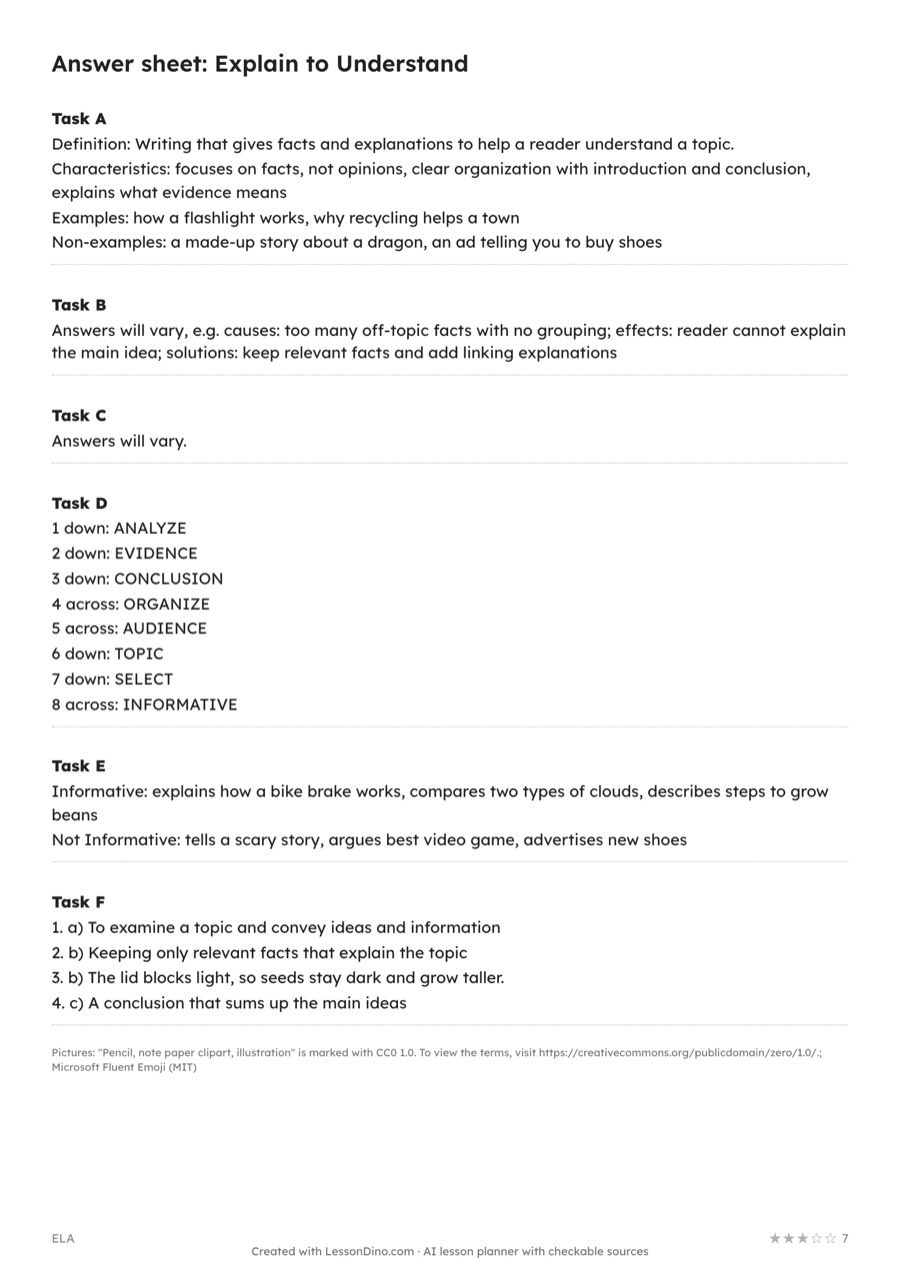
- The answer sheet is the last page, so you can print it on its own or let students check their own work.
Key vocabulary
- informative: giving useful facts to help someone understand
- select: choose what is most relevant
- organize: put ideas in a clear, logical order
- analyze: explain what facts show or why they matter
Mistakes to watch for
- Adding opinions like best or terrible instead of neutral facts. Swap for precise terms, for example most used or less effective, to keep explanatory voice.
- Listing facts without saying what they show. Add one analysis line per fact that explains its meaning for the audience.
- Including interesting but unrelated facts. Cut it or rewrite it so it directly examines the topic.
What's on the worksheet
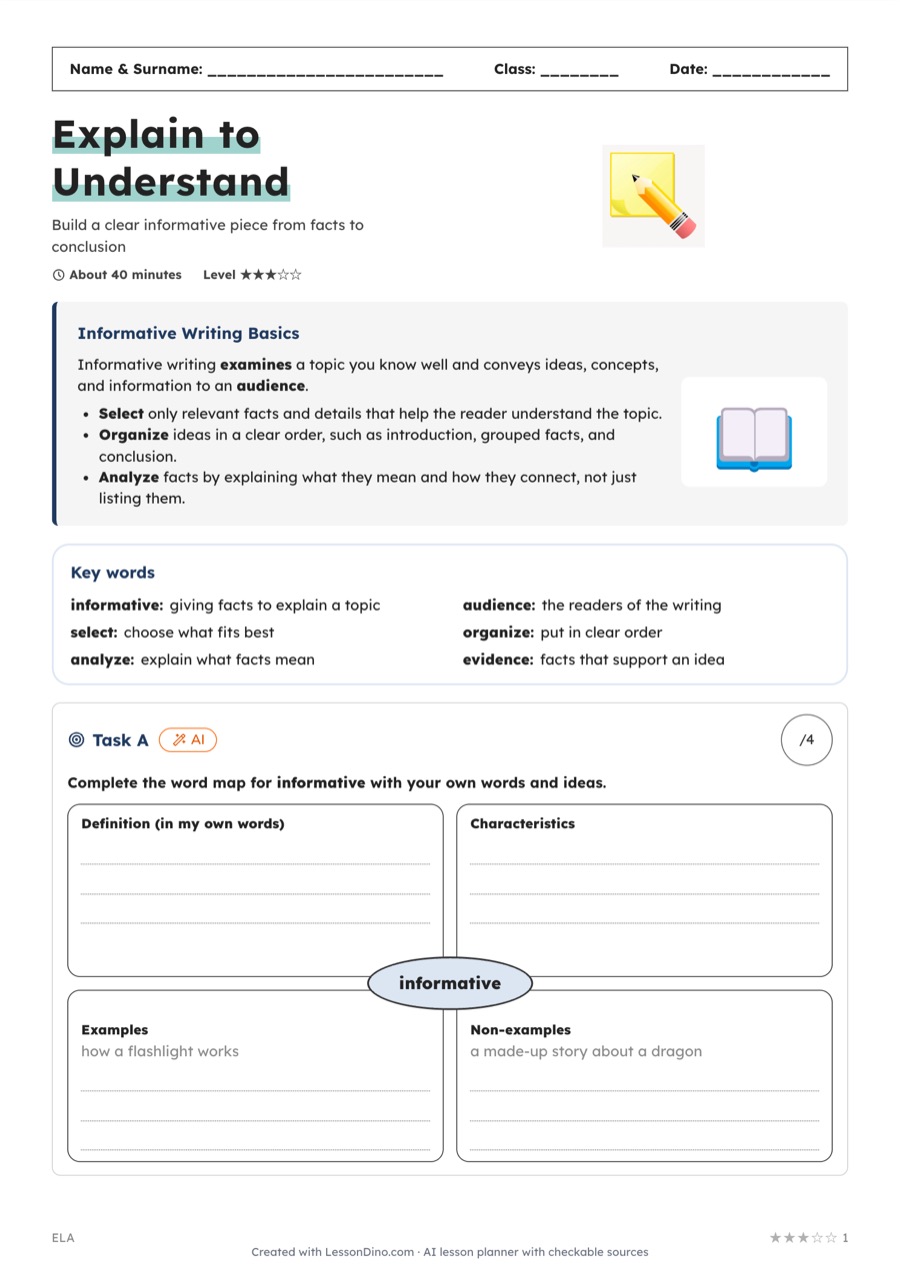
Inform Clearly
What informative writing does and how it works.
Informative Writing Basics
- Informative writing examines a topic you know well and conveys ideas, concepts, and information to an audience.
- Select only relevant facts and details that help the reader understand the topic.
- Organize ideas in a clear order, such as introduction, grouped facts, and conclusion.
- Analyze facts by explaining what they mean and how they connect, not just listing them.
| Word | Meaning |
|---|---|
| informative | giving facts to explain a topic |
| audience | the readers of the writing |
| select | choose what fits best |
| organize | put in clear order |
| analyze | explain what facts mean |
| evidence | facts that support an idea |
Complete the word map for informative with your own words and ideas.
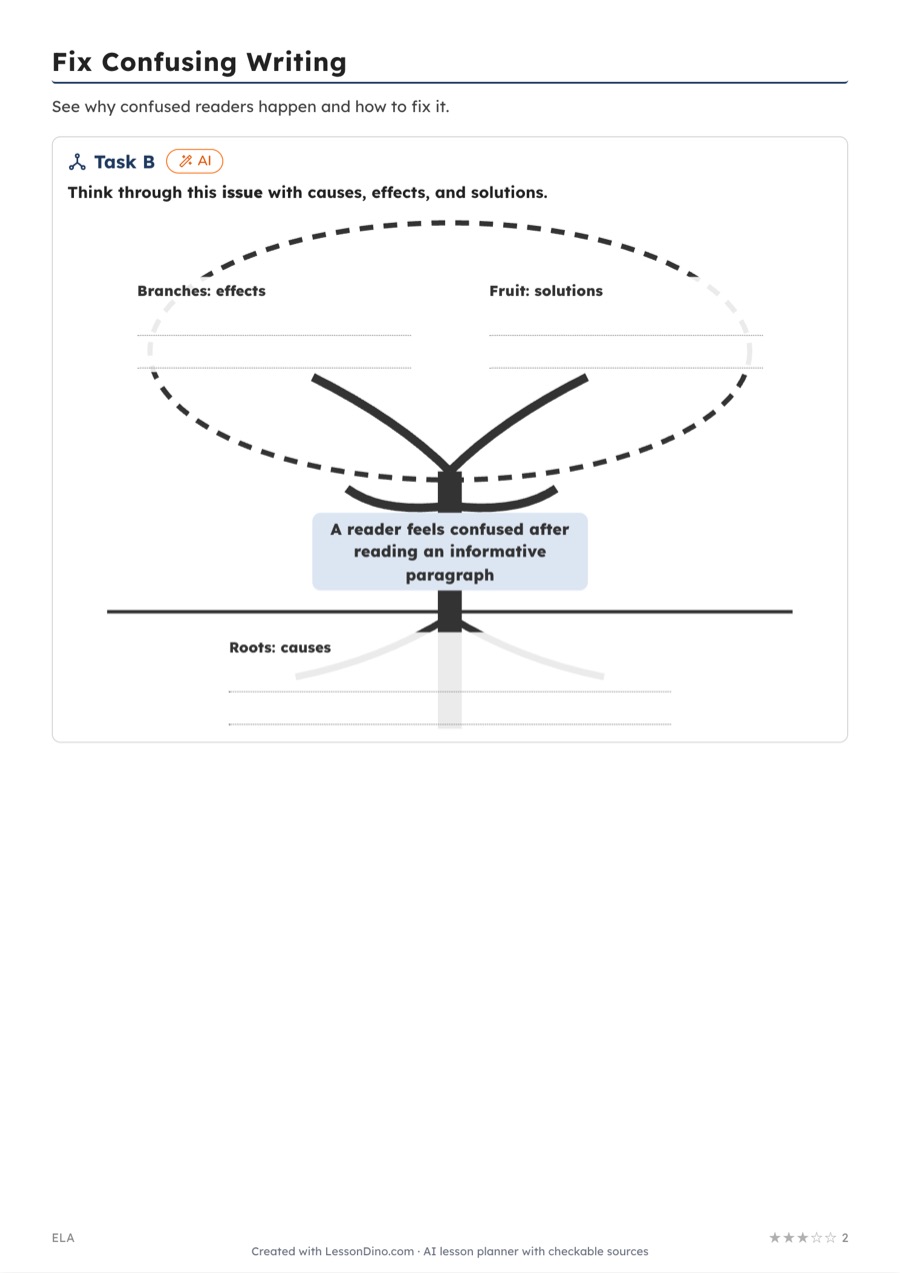
Fix Confusing Writing
See why confused readers happen and how to fix it.
Think through this issue with causes, effects, and solutions.
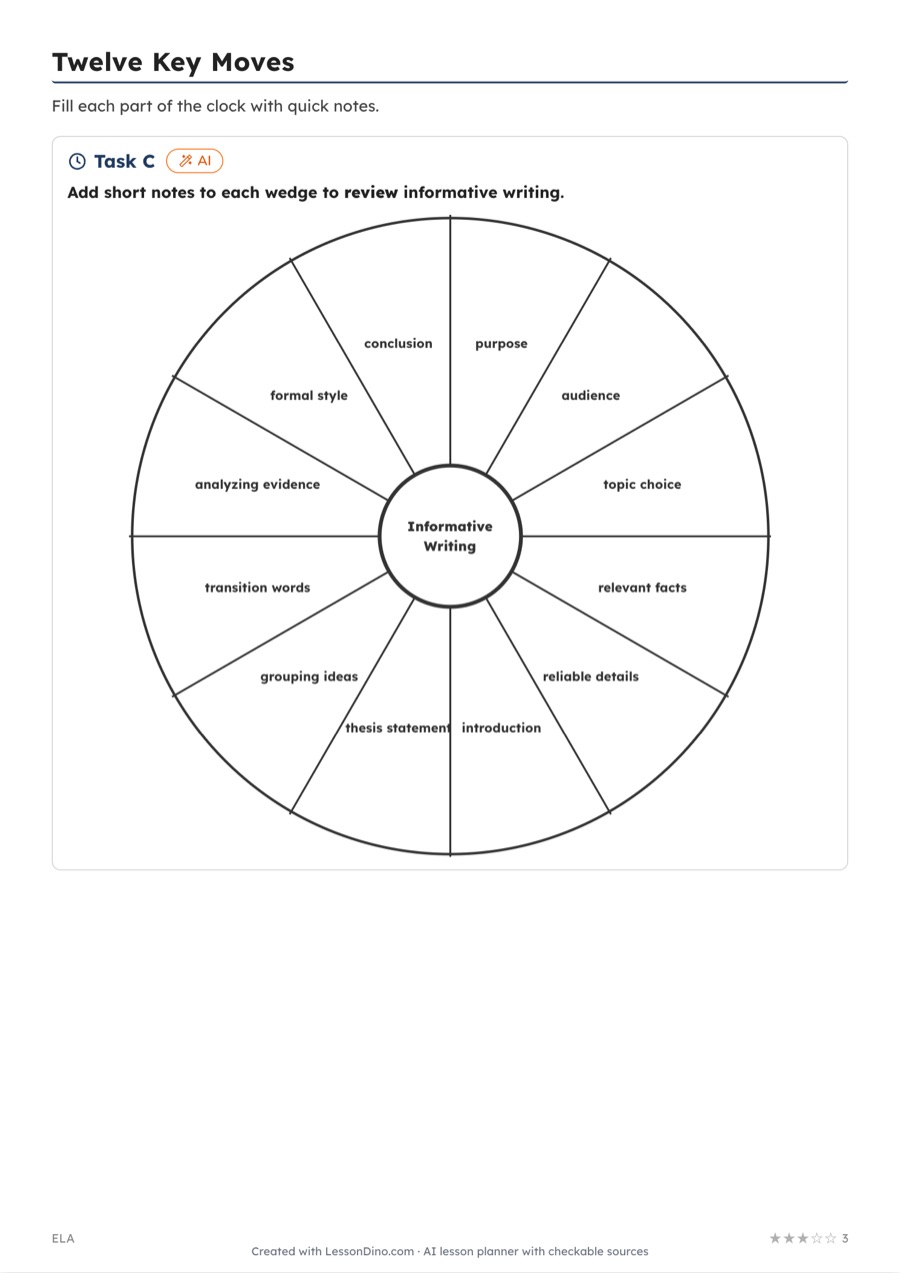
Twelve Key Moves
Fill each part of the clock with quick notes.
Add short notes to each wedge to review informative writing.
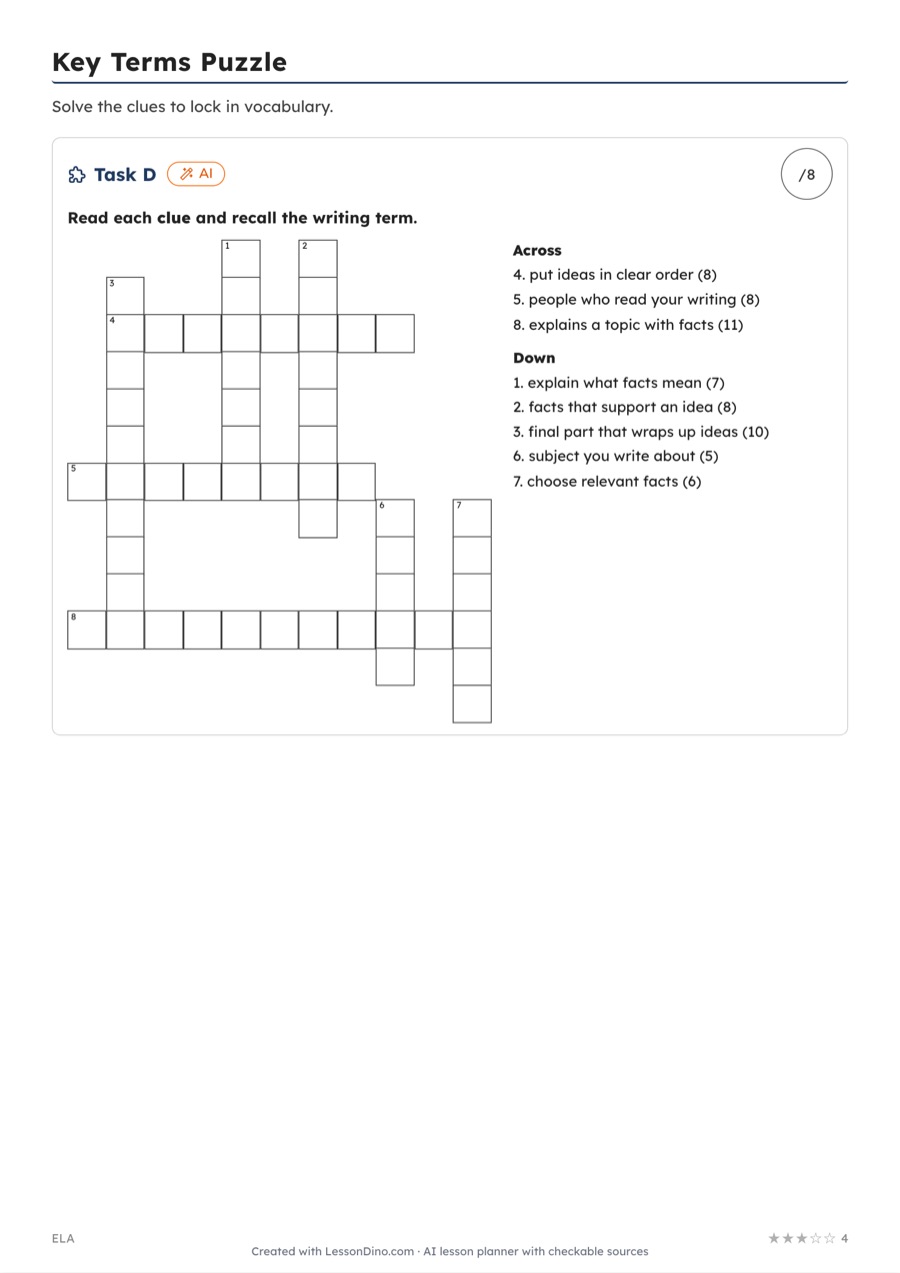
Key Terms Puzzle
Solve the clues to lock in vocabulary.
Read each clue and recall the writing term.
Sort and Check
Sort examples, then test your understanding.
Sort these examples into informative or not informative writing.
Page 6
Tick the best answer to show understanding.
- What is the main job of informative writing?
- Which choice shows good selection of facts?
- Which sentence shows analysis, not just listing?
- Which ending shows good organization for an informative text?
Answers
Show the answers
The answers are on the answer sheet, the last picture above.
Curriculum
Write informative/explanatory texts to examine a topic and convey ideas, concepts, and information through the selection, organization, and analysis of relevant content.
Made with Lesson Dino's AI on 16 October 2026. AI can make mistakes, so check the answers and facts against the sources before you teach.