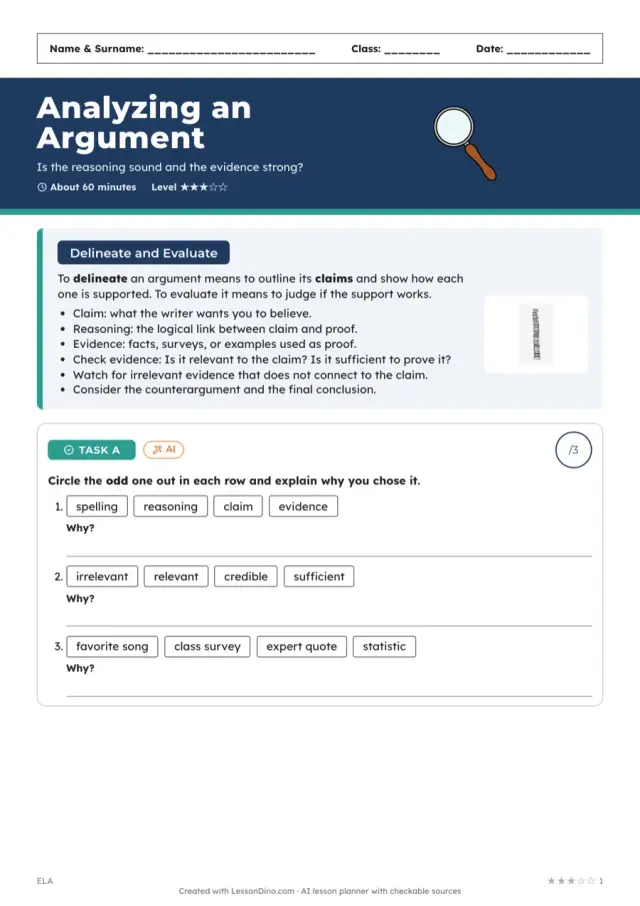
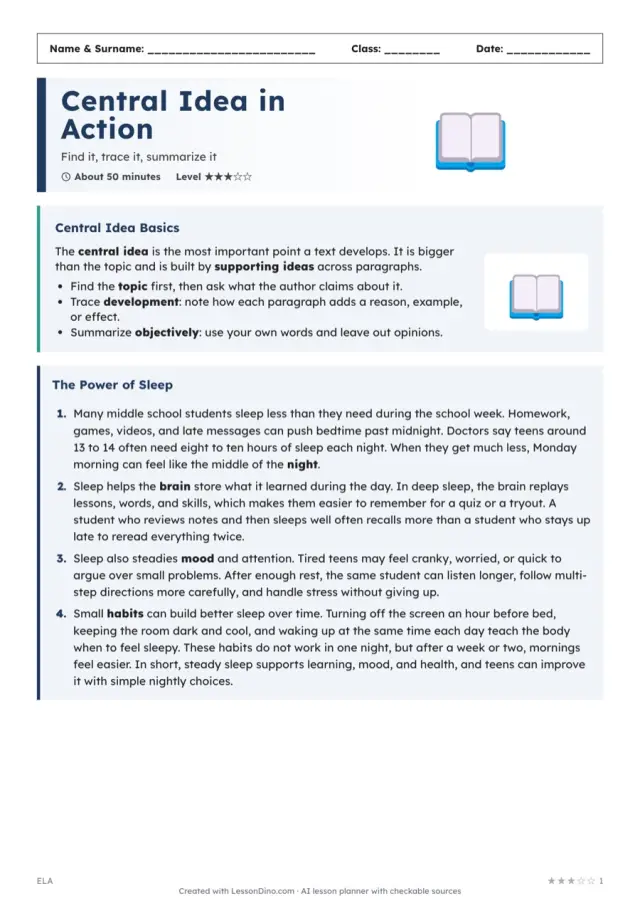
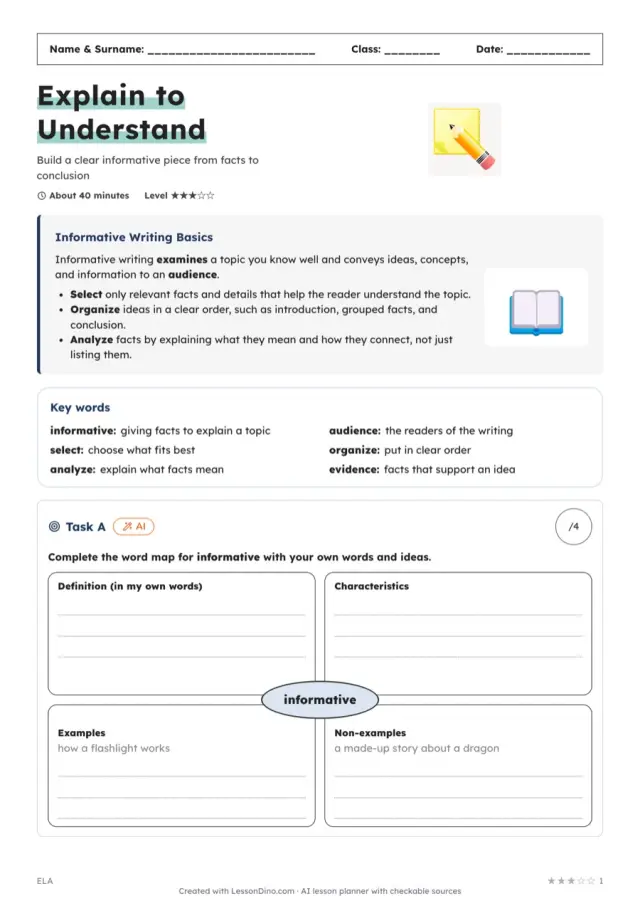
The worksheet
About this worksheet
Students learn to support a claim with clear reasons and relevant evidence. They build and write a stable point-evidence-explanation paragraph on paper. This Grade 8 ELA worksheet gives students (ages 13–14) five pages of practice on argument writing, part of the writing unit. It goes with our free Argument writing lesson, which has the slides and a timed lesson plan.
What it covers
By the end, students should be able to:
- Students will write a clear claim supported by two clear reasons.
- Students will choose relevant verifiable evidence to support each reason.
- Students will explain how each piece of evidence supports its reason.
How to use it
- Use it for practice after the teaching part of the lesson, once students have seen the worked examples on the slides.
- Support: Provide the supporting statement already written so students only add evidence and explanation.
- Stretch: Have students add a second piece of evidence and explain which one is stronger and why.
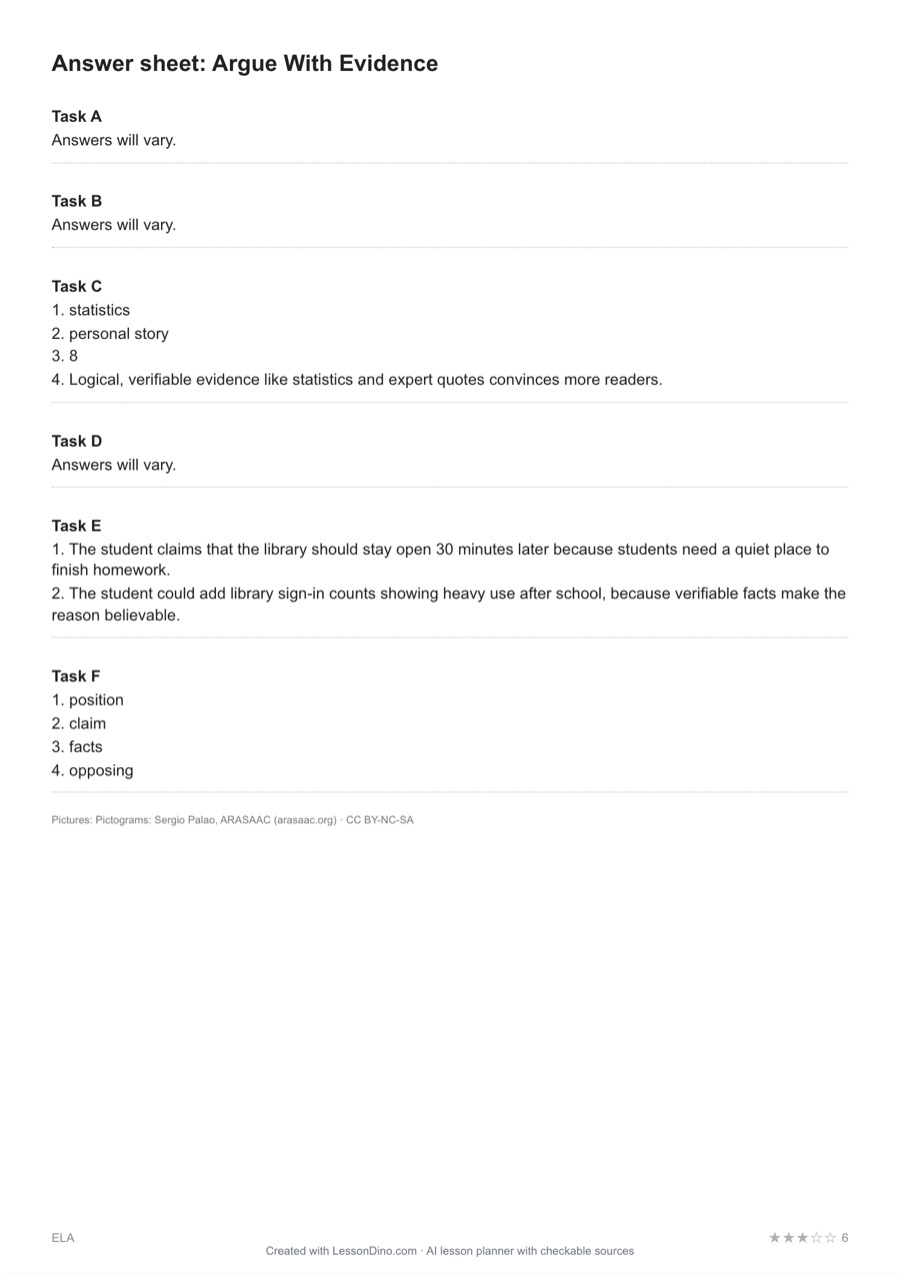
- The answer sheet is the last page, so you can print it on its own or let students check their own work.
Key vocabulary
- claim: the clear position you are trying to prove is true
- reason: a why that shows your position is true
- evidence: a checkable fact or example that proves a why
- thesis statement: one sentence at the start that gives your position plus your whys
- relevant: closely connected to the why it is meant to prove
Mistakes to watch for
- Writing a topic or title instead of an arguable thesis. Upgrade to specific claim plus reasons; a thesis is not a title and should be as specific as possible.
- Using persuasion-only tricks as evidence. Replace with logic and verifiable facts and explain the link; persuasion can use emotional appeal but argument needs checkable proof.
- Adding true but irrelevant facts. Cut or swap it; credible support must be applicable to that reason to back the claim.
What's on the worksheet
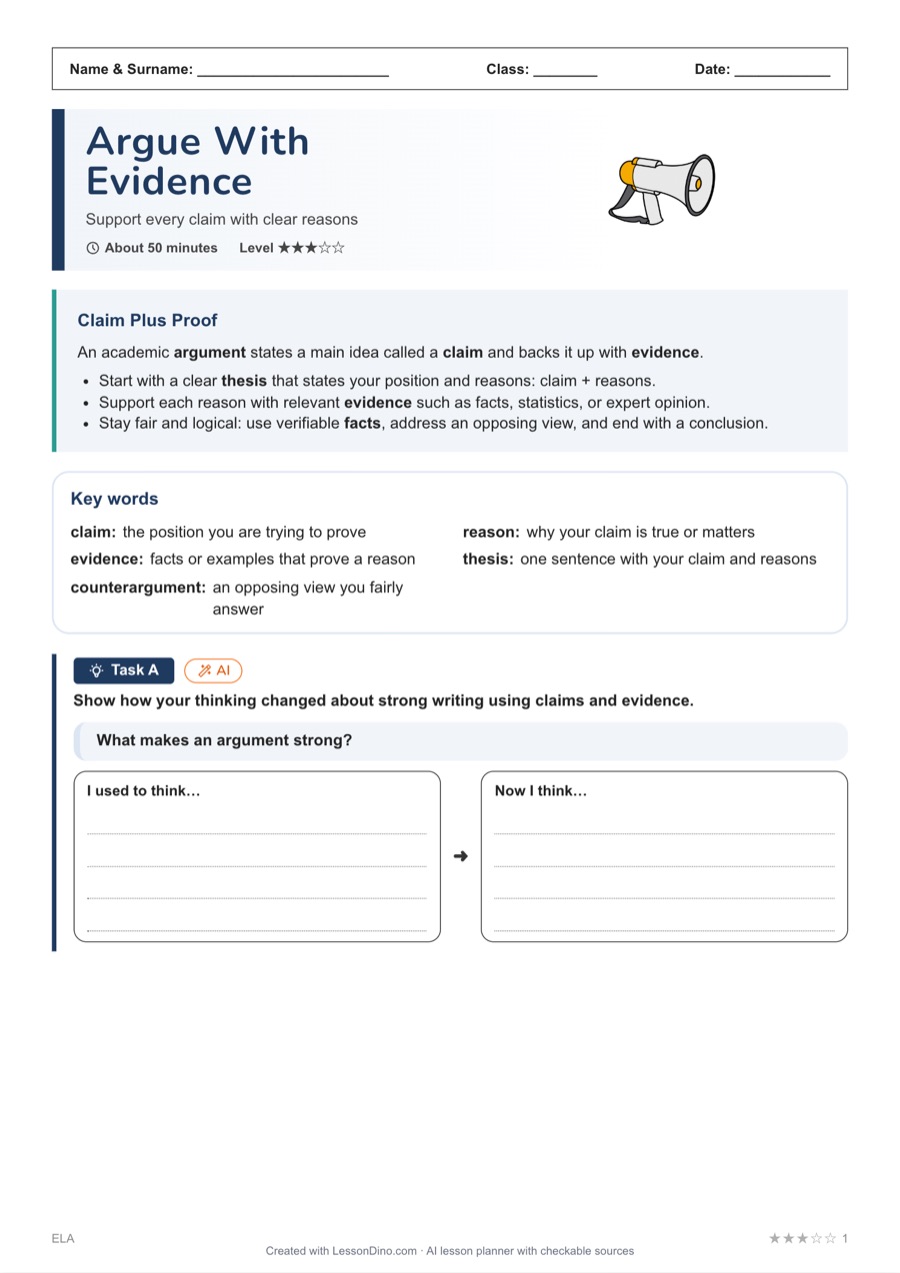
What Is Argument?
Learn what makes a written argument strong and fair.
Claim Plus Proof
- An academic argument states a main idea called a claim and backs it up with evidence.
- Start with a clear thesis that states your position and reasons: claim + reasons.
- Support each reason with relevant evidence such as facts, statistics, or expert opinion.
- Stay fair and logical: use verifiable facts, address an opposing view, and end with a conclusion.
| Word | Meaning |
|---|---|
| claim | the position you are trying to prove |
| reason | why your claim is true or matters |
| evidence | facts or examples that prove a reason |
| thesis | one sentence with your claim and reasons |
| counterargument | an opposing view you fairly answer |
Show how your thinking changed about strong writing using claims and evidence.
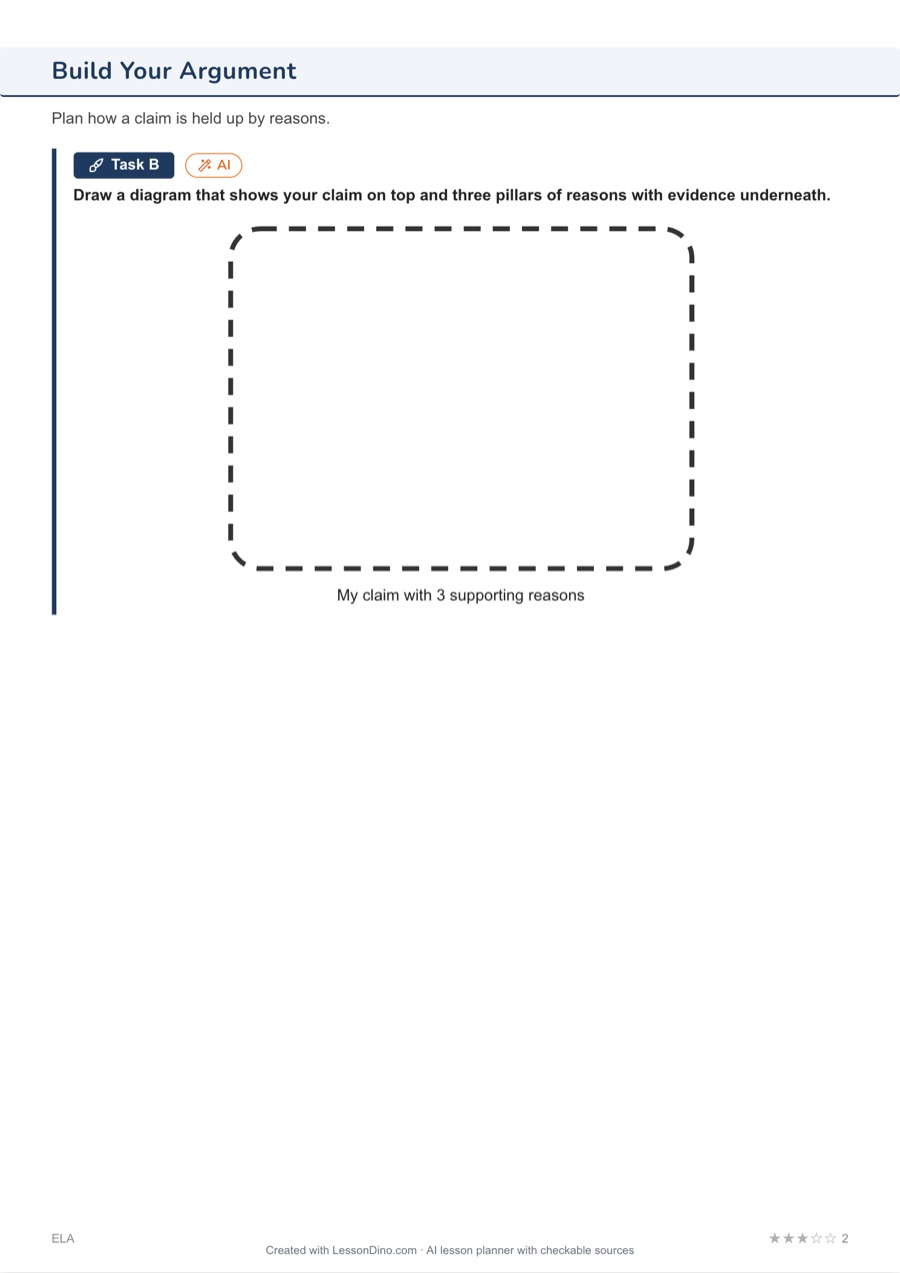
Build Your Argument
Plan how a claim is held up by reasons.
Draw a diagram that shows your claim on top and three pillars of reasons with evidence underneath.
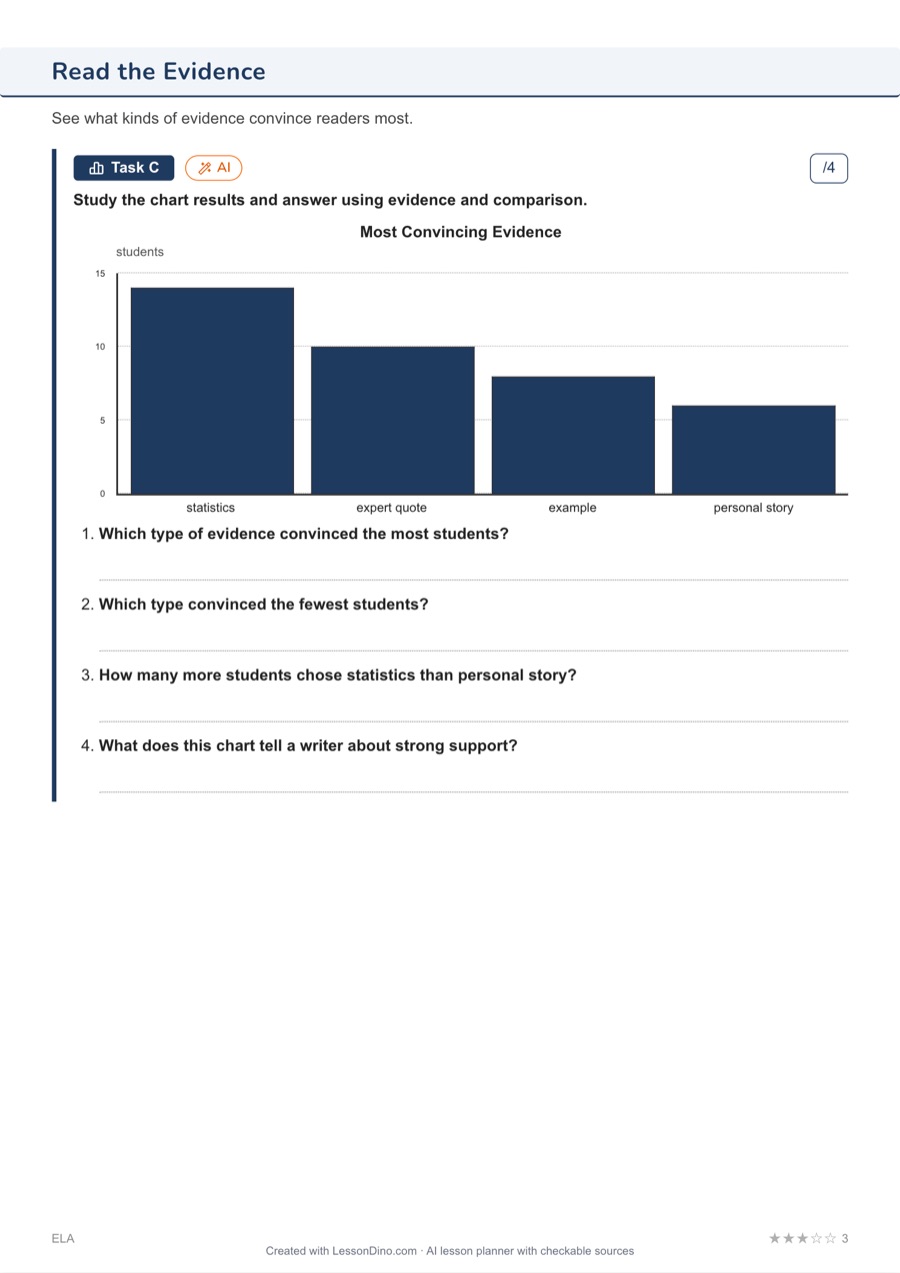
Read the Evidence
See what kinds of evidence convince readers most.
Study the chart results and answer using evidence and comparison.
- Which type of evidence convinced the most students?
- Which type convinced the fewest students?
- How many more students chose statistics than personal story?
- What does this chart tell a writer about strong support?
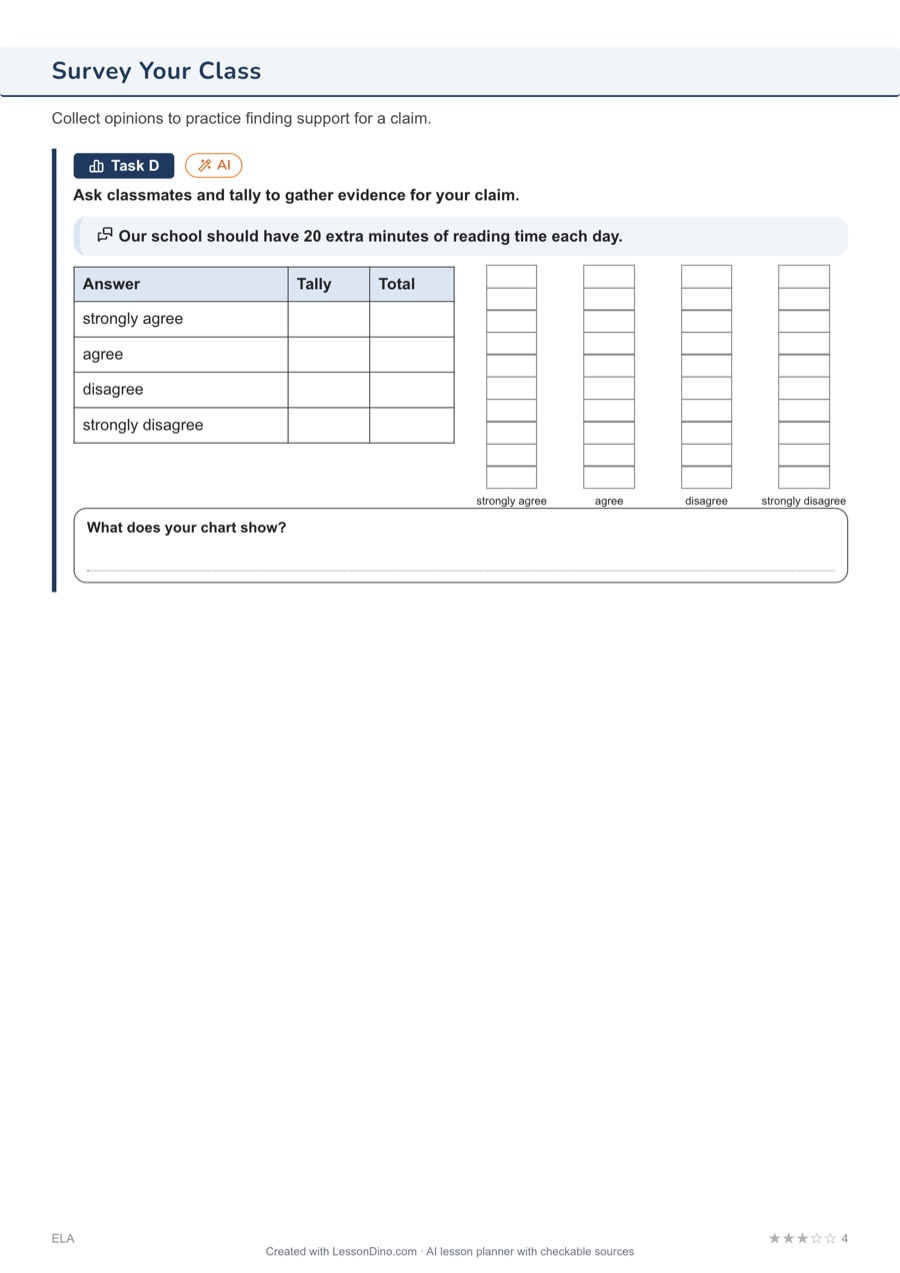
Survey Your Class
Collect opinions to practice finding support for a claim.
Ask classmates and tally to gather evidence for your claim.
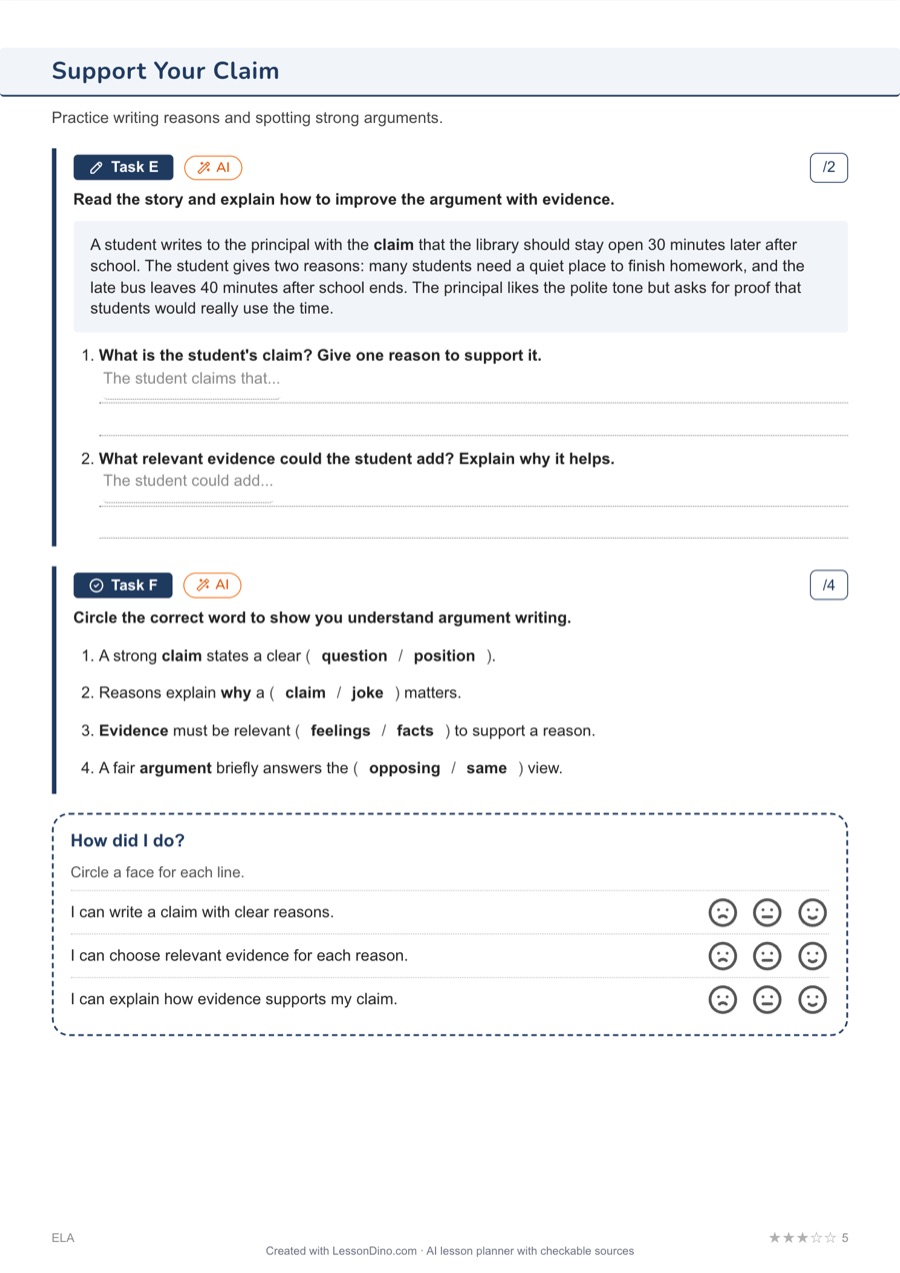
Support Your Claim
Practice writing reasons and spotting strong arguments.
Read the story and explain how to improve the argument with evidence.
- What is the student's claim? Give one reason to support it.
- What relevant evidence could the student add? Explain why it helps.
Circle the correct word to show you understand argument writing.
Answers
Show the answers
- Which type of evidence convinced the most students? statistics
- Which type convinced the fewest students? personal story
- How many more students chose statistics than personal story? 8
- What does this chart tell a writer about strong support? Logical, verifiable evidence like statistics and expert quotes convinces more readers.
- What is the student's claim? Give one reason to support it. The student claims that the library should stay open 30 minutes later because students need a quiet place to finish homework.
- What relevant evidence could the student add? Explain why it helps. The student could add library sign-in counts showing heavy use after school, because verifiable facts make the reason believable.
The answer sheet is the last picture above.
Curriculum
Write arguments to support claims with clear reasons and relevant evidence
Made with Lesson Dino's AI on 16 October 2026. AI can make mistakes, so check the answers and facts against the sources before you teach.