The worksheet
About this worksheet
Students learn to state a central idea and trace how it develops. They build a sticky-note map and write an objective summary. This Grade 8 ELA worksheet gives students (ages 13–14) seven pages of practice on reading comprehension: central idea, part of the reading informational text unit. It goes with our free Reading comprehension: central idea lesson, which has the slides and a timed lesson plan.
What it covers
By the end, students should be able to:
- Students will determine a central idea of informational text in one sentence.
- Students will analyze how supporting ideas develop the central idea across paragraphs.
- Students will provide an objective summary with no personal opinions.
How to use it
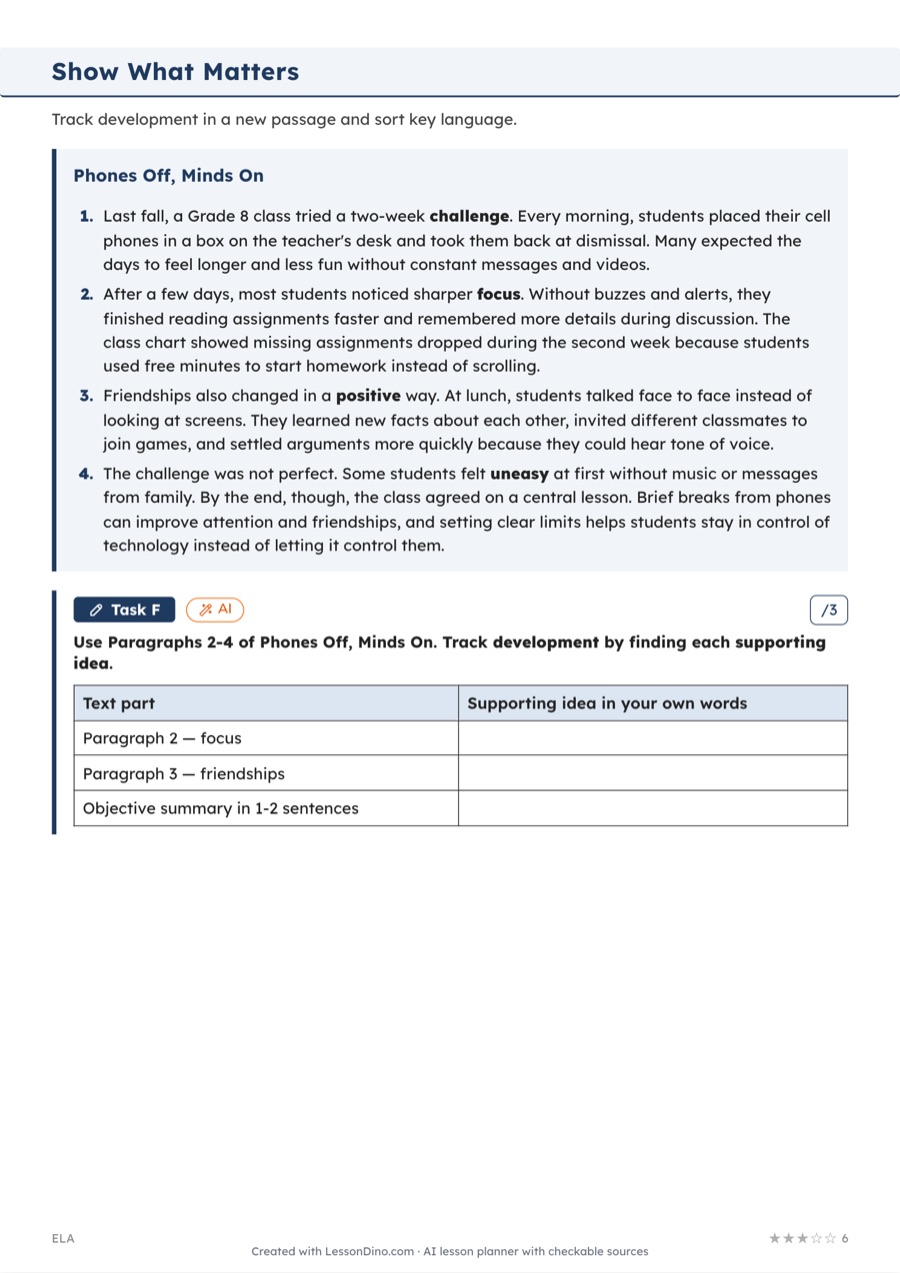
- Main activity (25 minutes): Circulate with Worksheet Task F prompts to track Paragraphs 2-4 and push groups to explain development.
- Support: Give a version with the first and last paragraph already labeled with their paragraph ideas.
- Stretch: Have students add a note for a paragraph where the central idea is sharpened or shifted, not just repeated.
- The answer sheet is the last page, so you can print it on its own or let students check their own work.
Key vocabulary
- topic: the subject of a text, often said in one or two words
- central idea: the most important point a text makes about its subject
- supporting idea: a reason, example, or fact that helps explain the most important point
- development: how the most important point grows clearer in the order sentences unfold ideas
- objective summary: a short retelling that gives only what the author says, with no personal views
Mistakes to watch for
- Writing the topic instead of the central idea. Require topic + point in a full sentence and check it against evidence across paragraphs.
- Listing details instead of showing development. Force because and for example arrows and ask where the idea is introduced, explained, and sharpened by paying attention to order ideas unfold.
- Adding opinions to the summary. Scrub to neutral verbs states, explains, shows, adds and keep only what the author says.
What's on the worksheet
Find Central Ideas
Learn what central idea is and judge one in a passage.
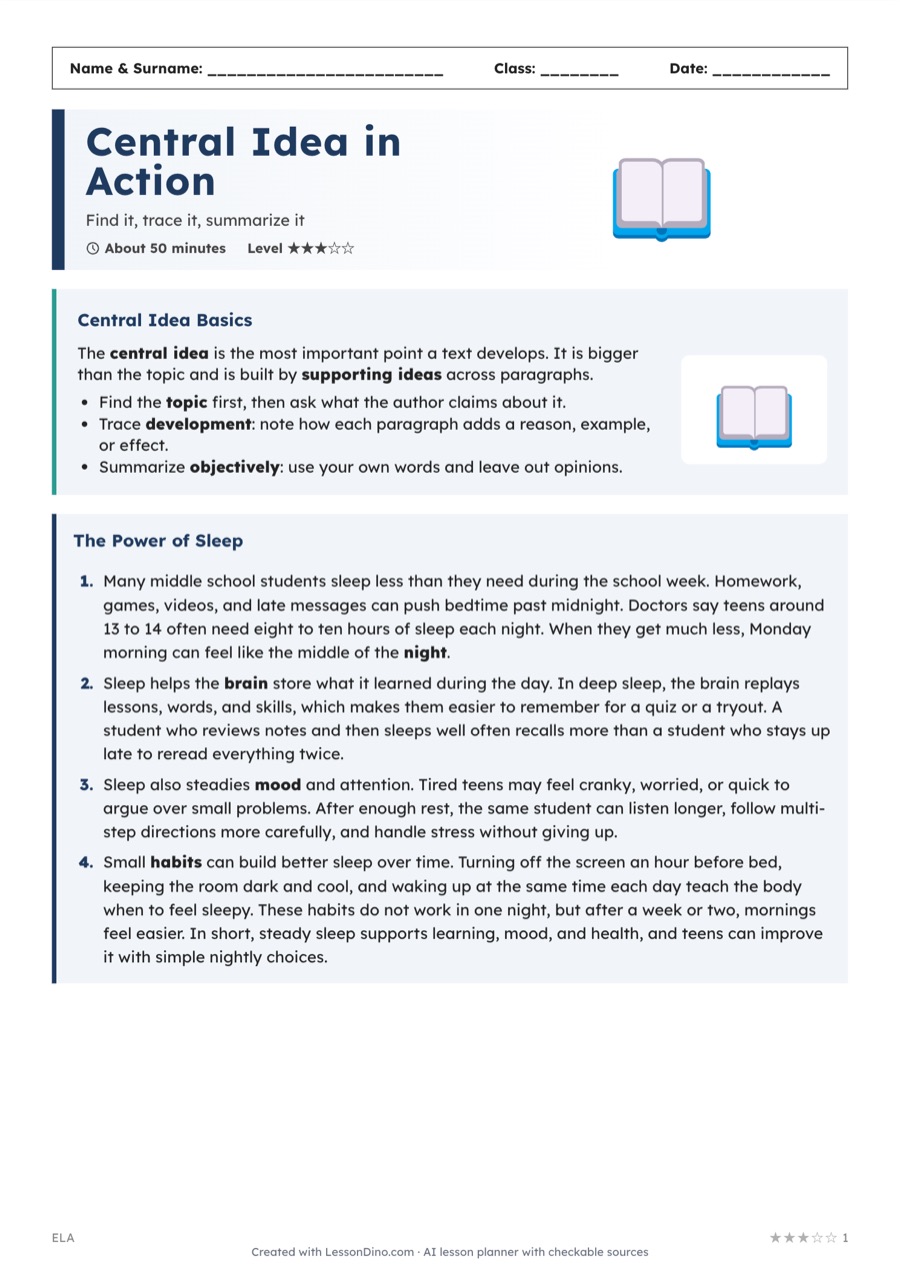
Central Idea Basics
- The central idea is the most important point a text develops. It is bigger than the topic and is built by supporting ideas across paragraphs.
- Find the topic first, then ask what the author claims about it.
- Trace development: note how each paragraph adds a reason, example, or effect.
- Summarize objectively: use your own words and leave out opinions.
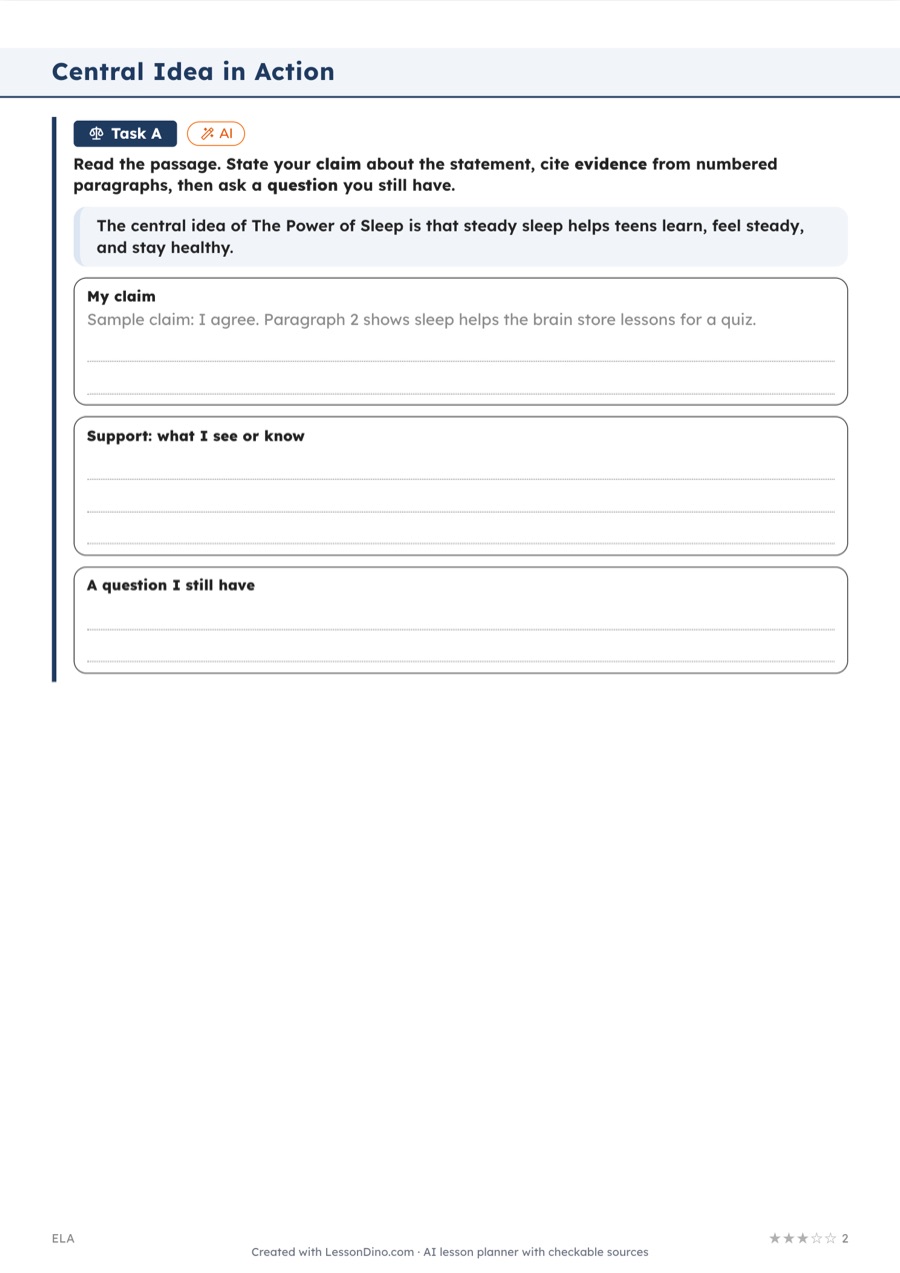
The Power of Sleep
Page 2
Read the passage. State your claim about the statement, cite evidence from numbered paragraphs, then ask a question you still have.
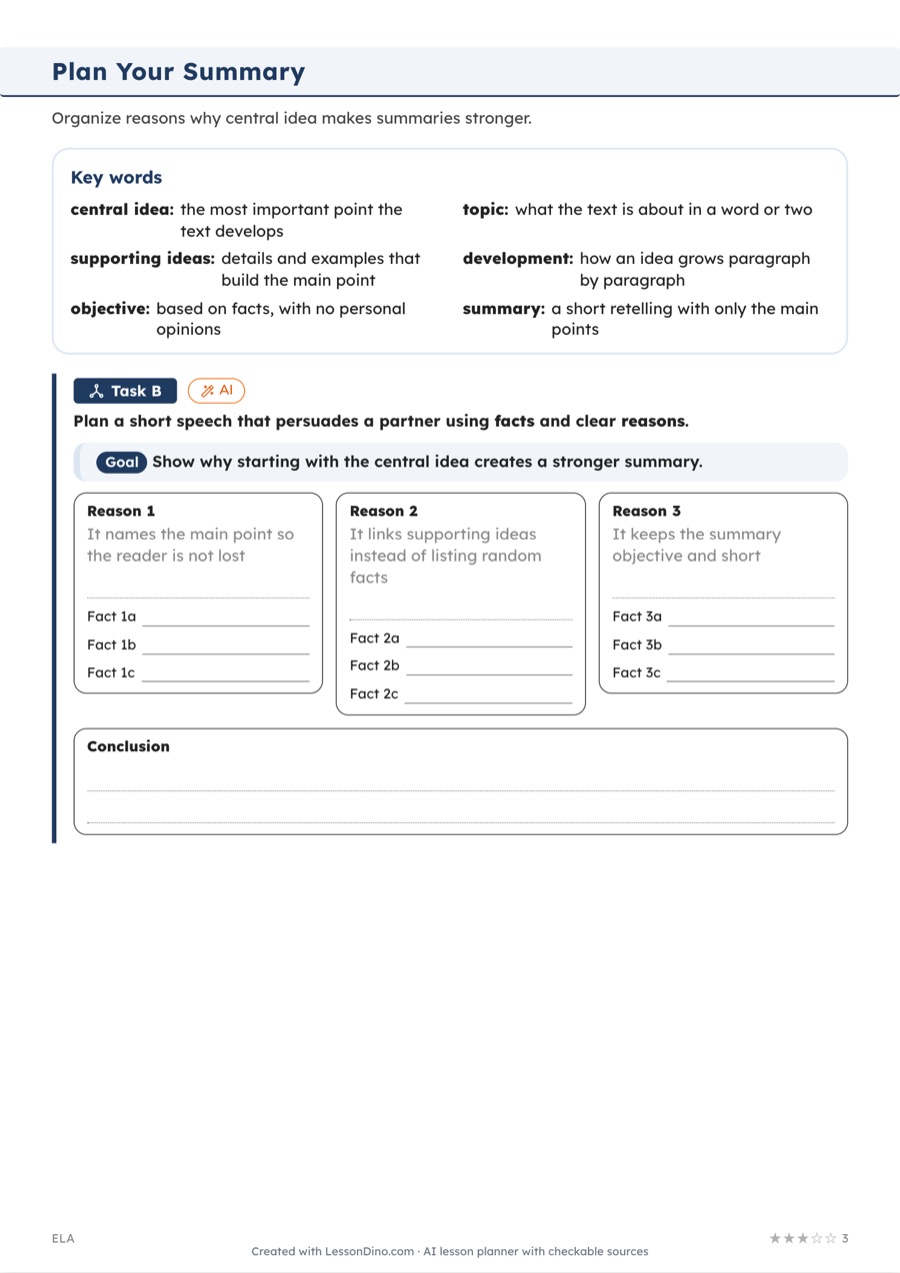
Plan Your Summary
Organize reasons why central idea makes summaries stronger.
| Word | Meaning |
|---|---|
| central idea | the most important point the text develops |
| topic | what the text is about in a word or two |
| supporting ideas | details and examples that build the main point |
| development | how an idea grows paragraph by paragraph |
| objective | based on facts, with no personal opinions |
| summary | a short retelling with only the main points |
Plan a short speech that persuades a partner using facts and clear reasons.
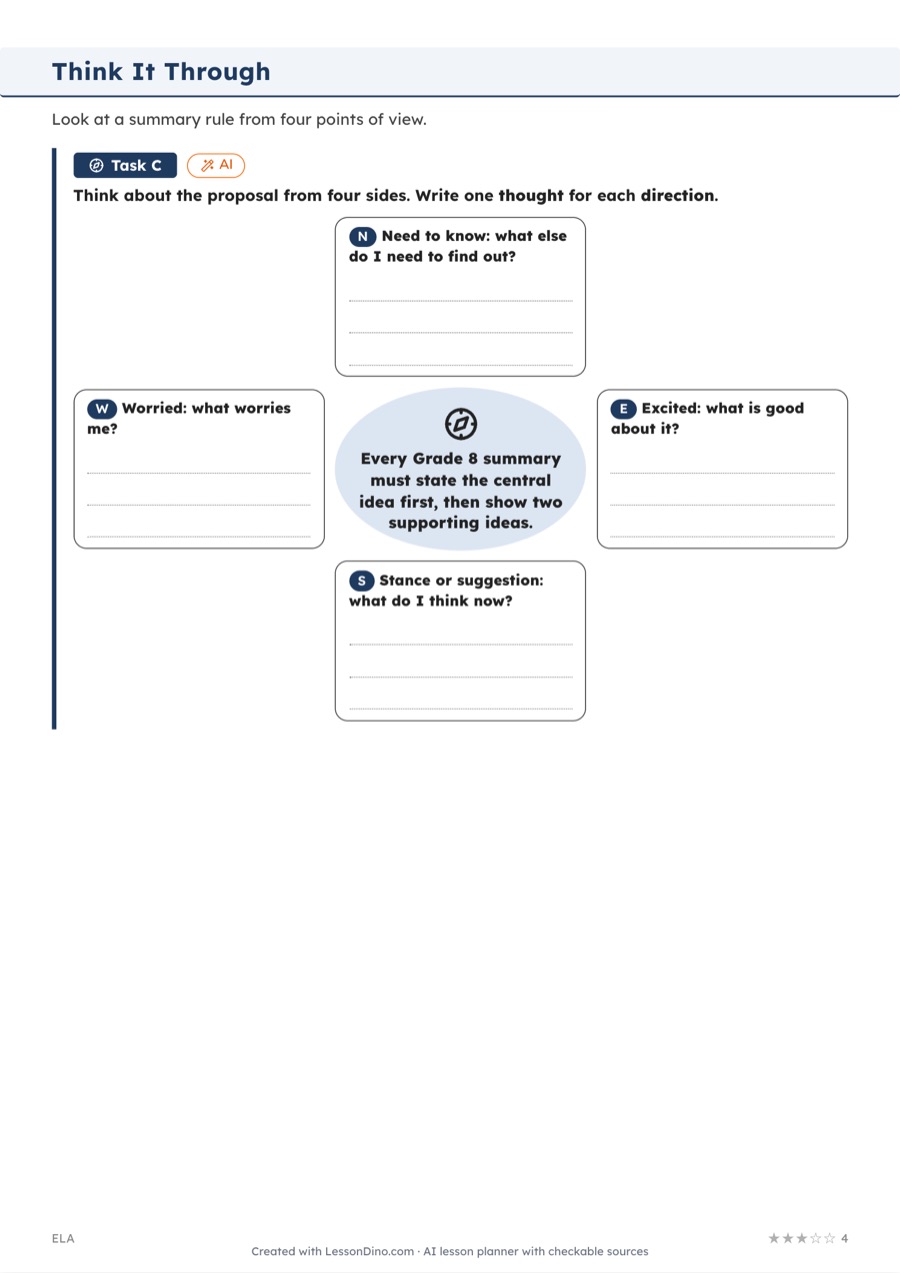
Think It Through
Look at a summary rule from four points of view.
Think about the proposal from four sides. Write one thought for each direction.
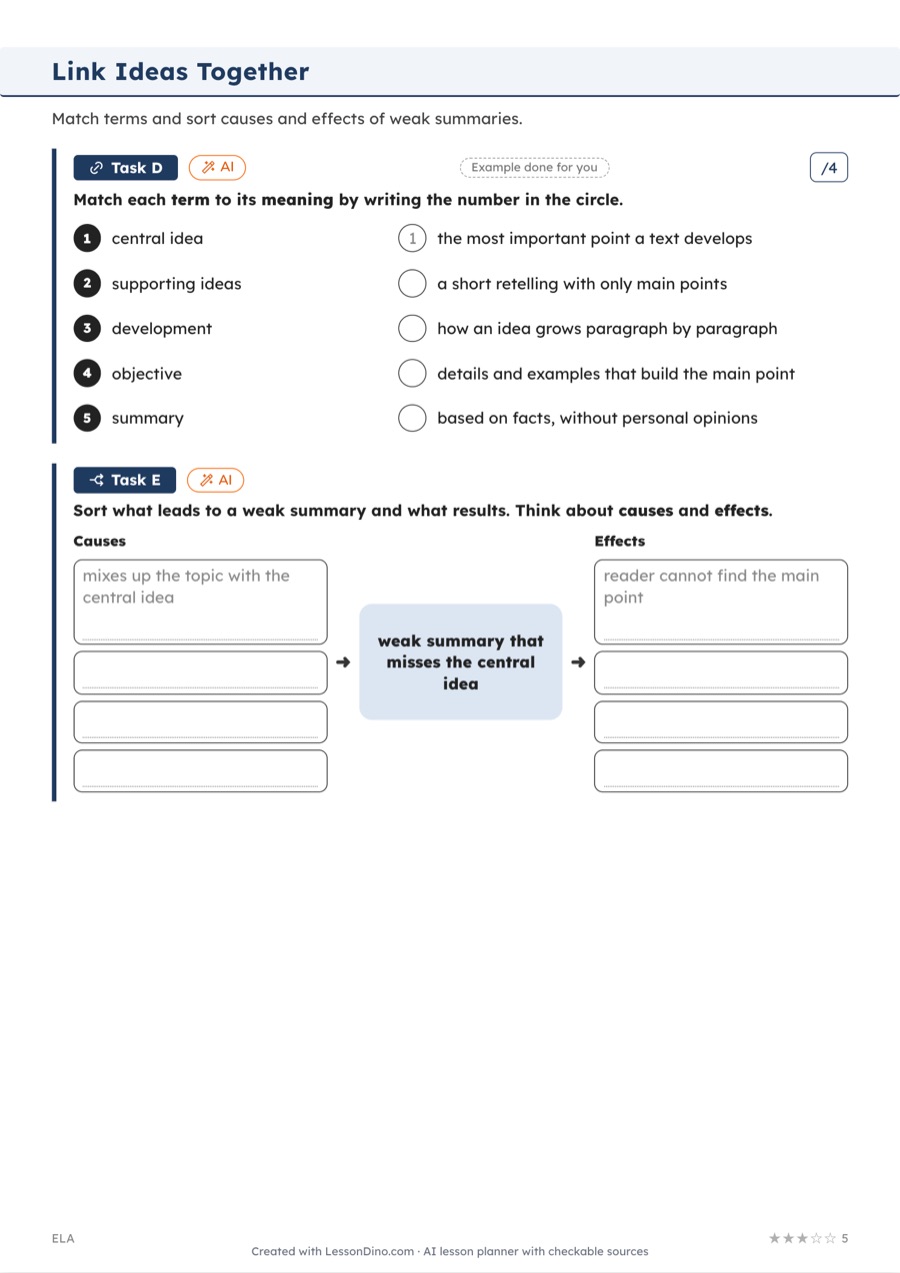
Link Ideas Together
Match terms and sort causes and effects of weak summaries.
Match each term to its meaning by writing the number in the circle.
Sort what leads to a weak summary and what results. Think about causes and effects.
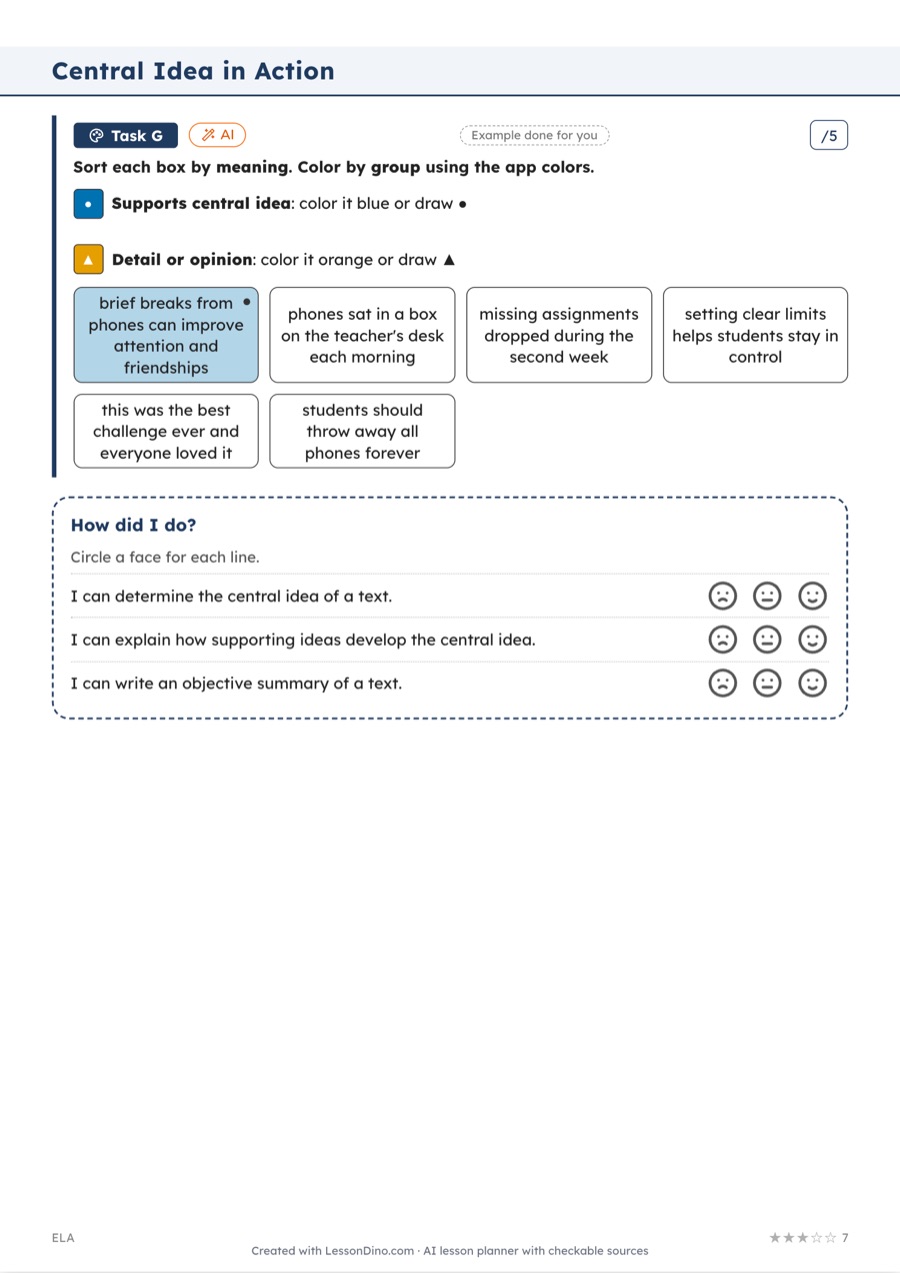
Show What Matters
Track development in a new passage and sort key language.
Phones Off, Minds On
Use Paragraphs 2-4 of Phones Off, Minds On. Track development by finding each supporting idea.
Page 7
Sort each box by meaning. Color by group using the app colors.
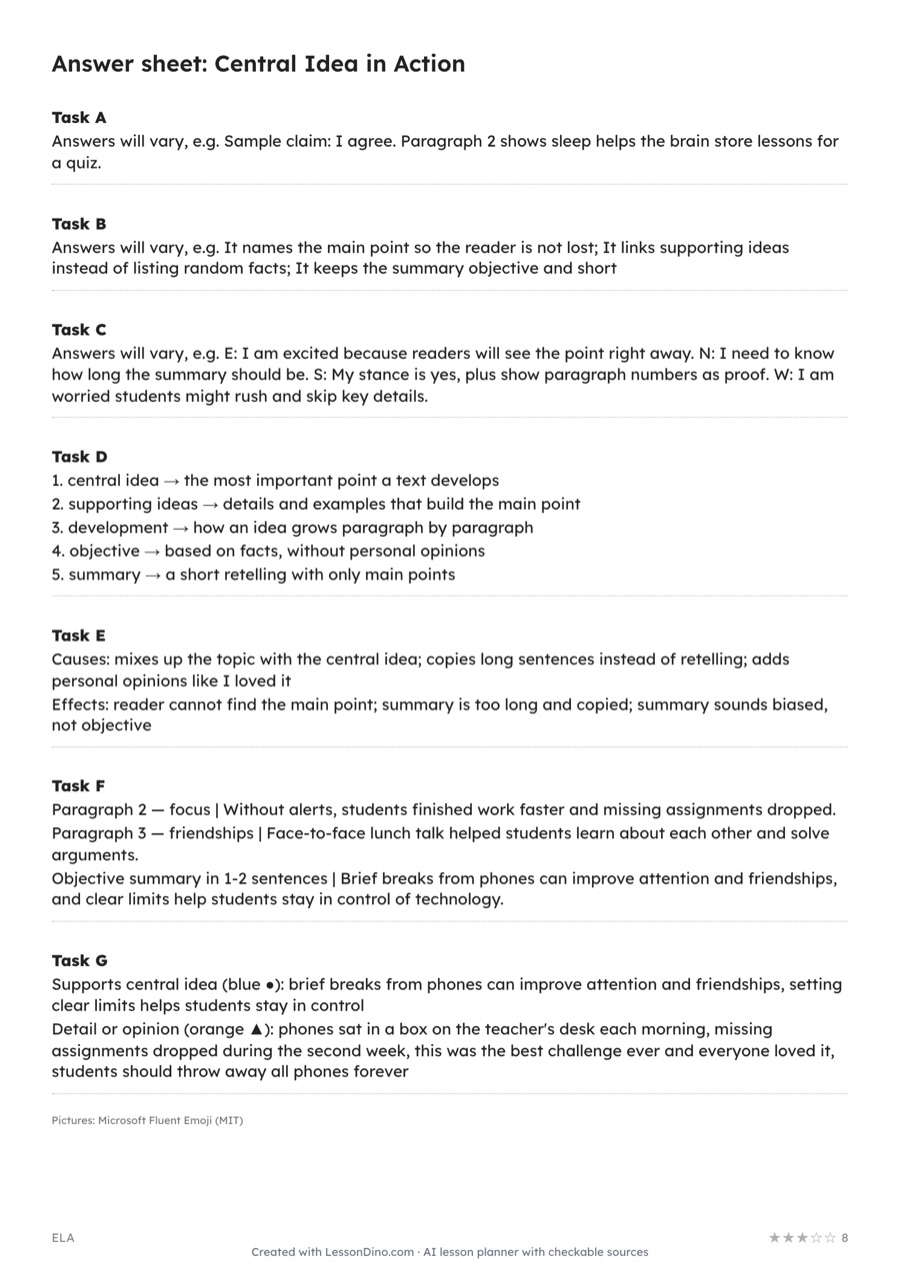
Answers
Show the answers
The answers are on the answer sheet, the last picture above.
Curriculum
Determine a central idea of a text and analyze its development over the course of the text, including its relationship to supporting ideas; provide an objective summary of the text.
Made with Lesson Dino's AI on 17 October 2026. AI can make mistakes, so check the answers and facts against the sources before you teach.