Slides
Lesson plan
Stack a Strong Argument Paragraph
Students learn to support a claim with clear reasons and relevant evidence. They build and write a stable point-evidence-explanation paragraph on paper.
Objectives
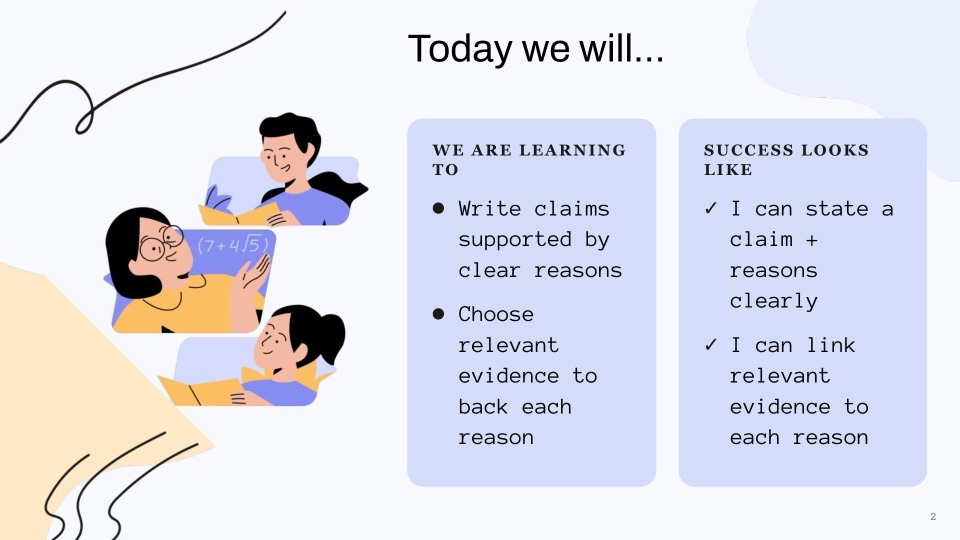
- Students will write a clear claim supported by two clear reasons.
- Students will choose relevant verifiable evidence to support each reason.
- Students will explain how each piece of evidence supports its reason.
Success criteria
- I can state a claim plus reasons clearly in one thesis sentence.
- I can link relevant verifiable evidence to each reason I give.
- I can explain in my own words how evidence proves my reason.
Key words
| Word | Meaning |
|---|---|
| claim | the clear position you are trying to prove is true |
| reason | a why that shows your position is true |
| evidence | a checkable fact or example that proves a why |
| thesis statement | one sentence at the start that gives your position plus your whys |
| relevant | closely connected to the why it is meant to prove |
Timed plan (60 minutes)
| Time | Stage | What happens |
|---|---|---|
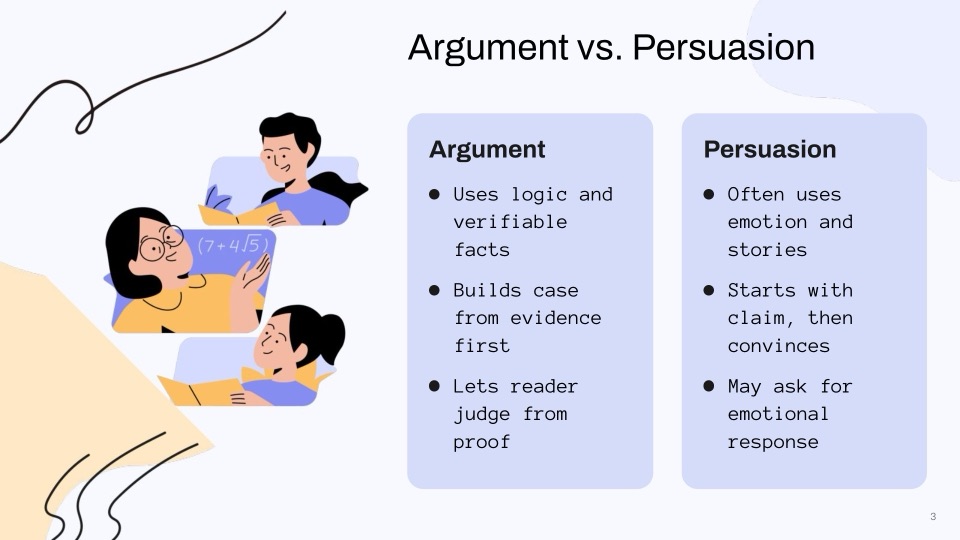
| 5 min | Starter | Activate ideas about proof versus opinion and hook students into paragraph stacking. Show Slide 1 and read the goal: support claims with clear reasons and relevant evidence. Say the hook and hold up a wobbly stack of papers to show a weak paragraph. Show Slide 3 and ask pairs to name one proof and one trick from everyday school talk. Take two quick answers and link them to today's paragraph stack work. |
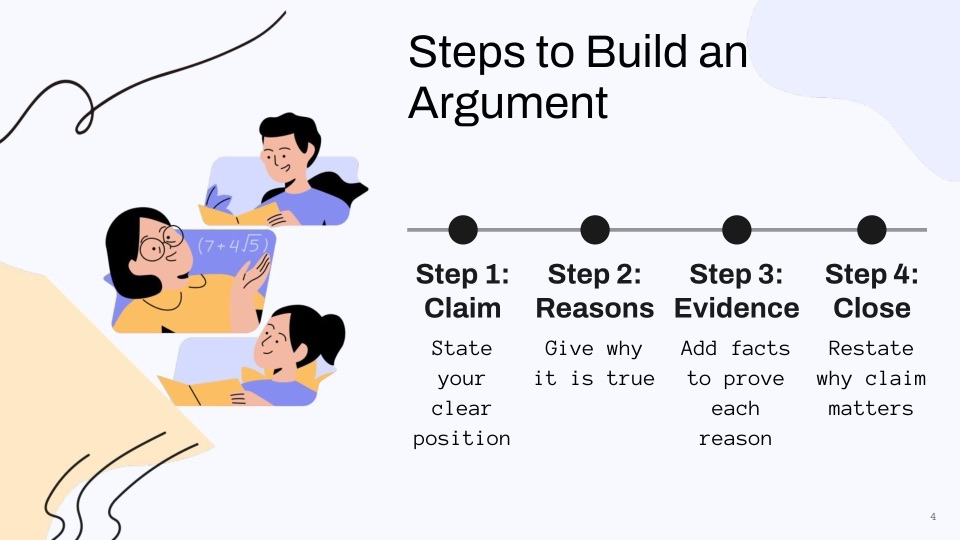
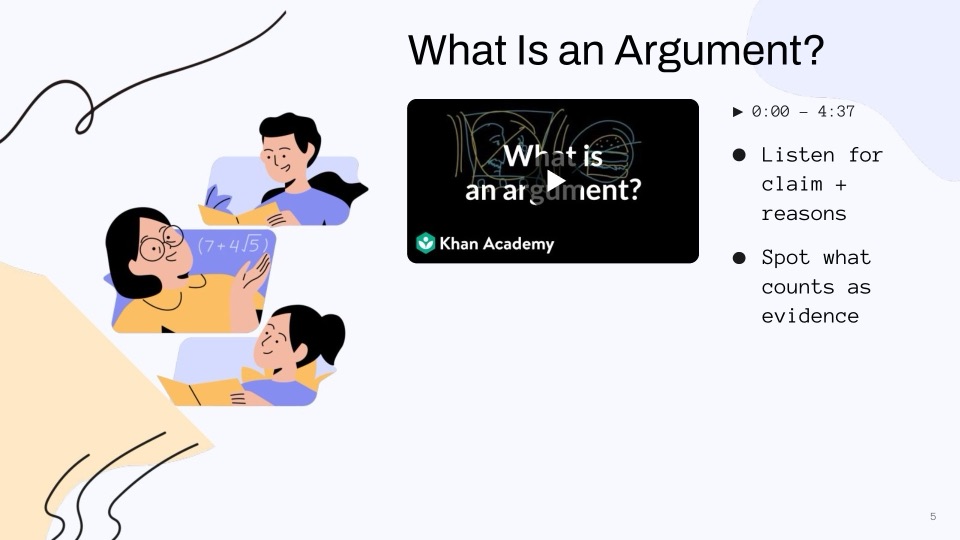
| 10 min | Teach Claims | Teach students to write a specific thesis as claim plus reasons. Show Slide 4 and walk through Step 1 Claim and Step 2 Reasons. Model turning the vague topic cell phones at lunch into a specific thesis on the board. Play Video clip 1 on Slide 5 and tell students to listen for claim plus reasons. Check what they heard and underline claim once and each reason twice. |
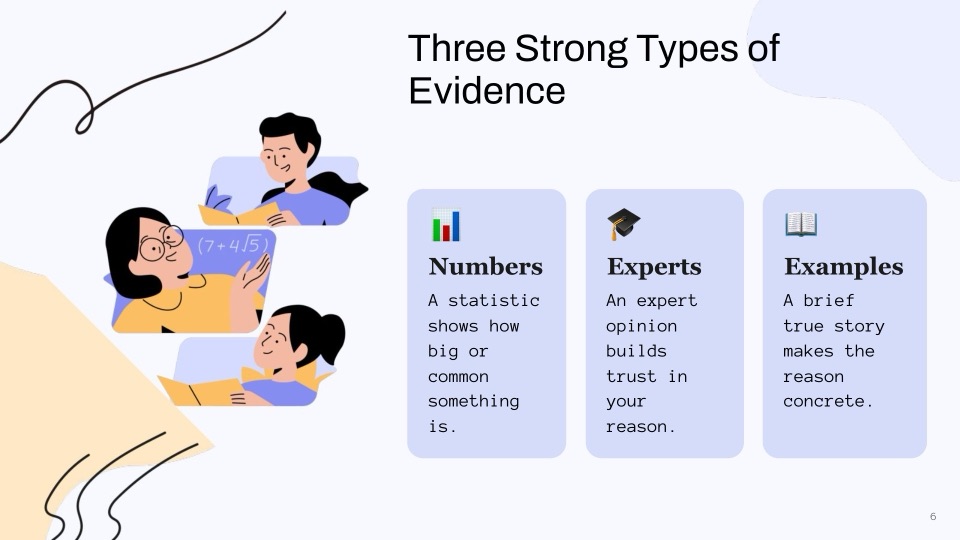
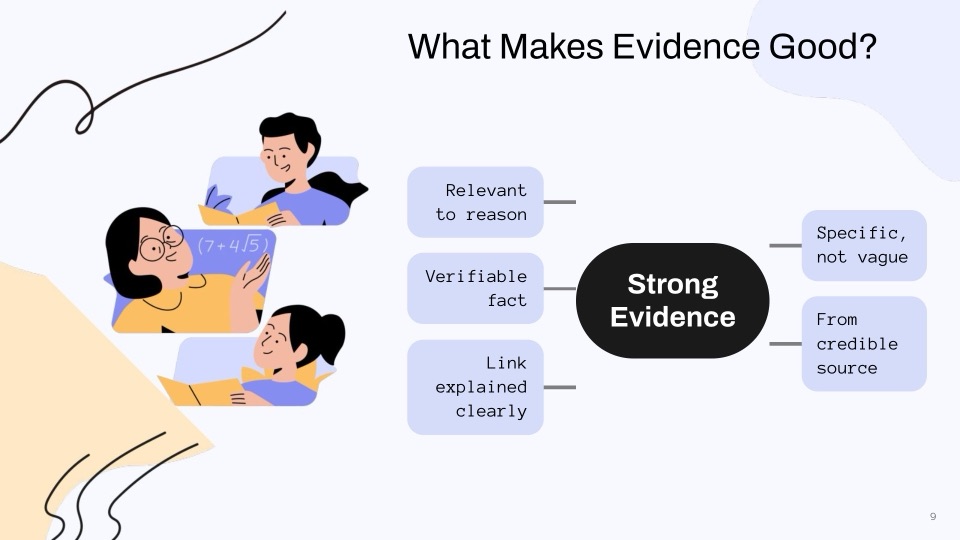
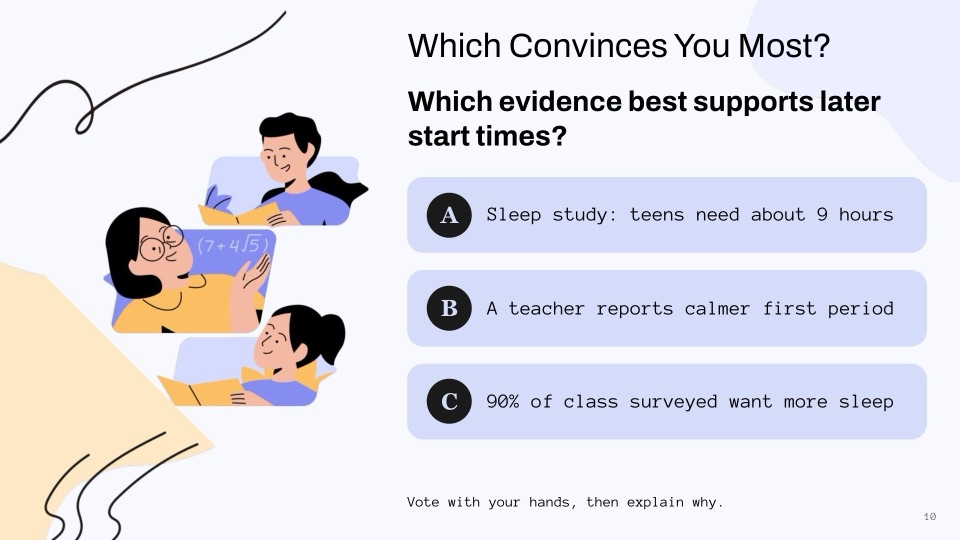
| 10 min | Teach Evidence | Teach students to pick relevant, verifiable evidence in three useful types. Show Slide 6 and explain numbers, experts, and brief true stories as three evidence types. Show Slide 9 and stress that strong evidence is relevant, specific, verifiable, and explained. Show Slide 10 vote on later start times and have students vote for best support. Confirm the winner and explain why the others are weaker for that reason. |
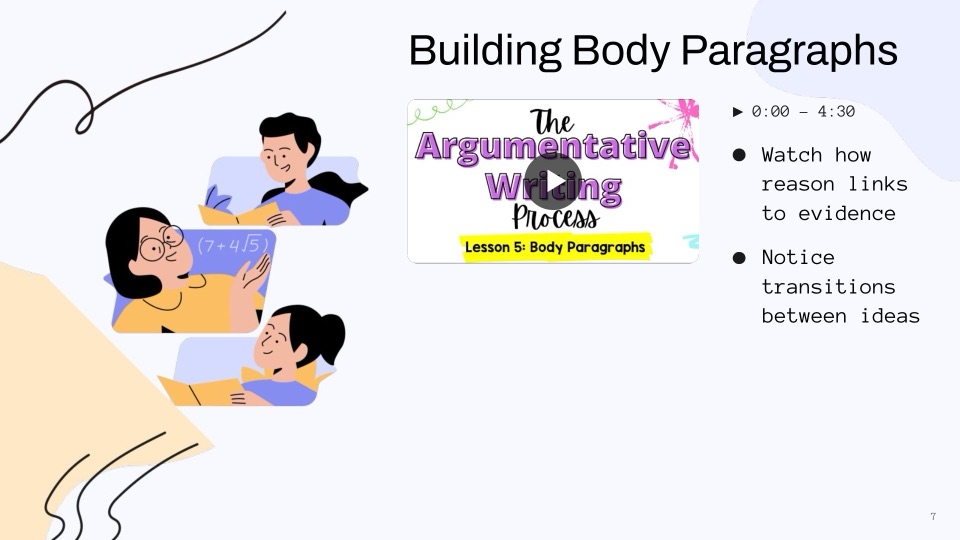
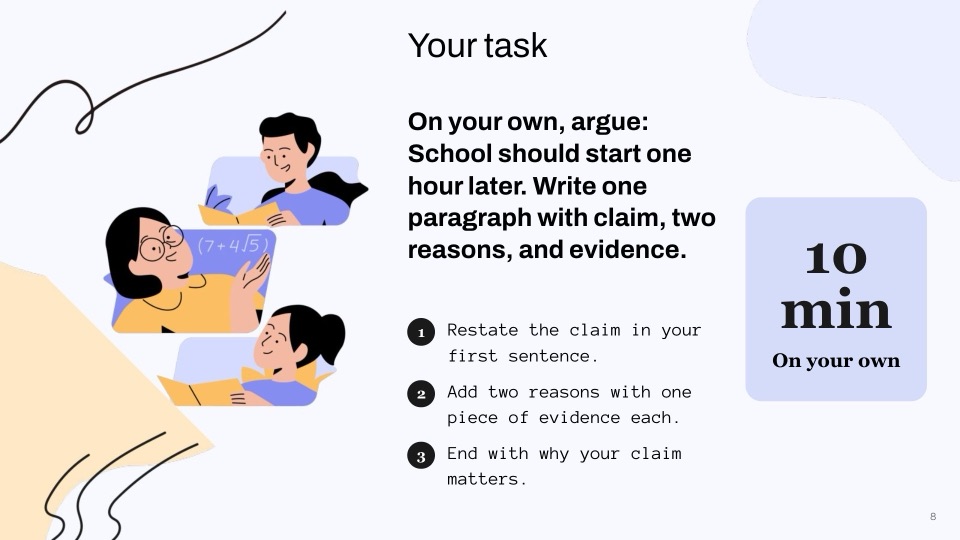
| 25 min | Main Activity | Build and write a stable body paragraph that links point, evidence, and explanation. Show Slide 7 and play Video clip 2 to model how a reason links to evidence with transitions. Hand out cut strips and demo ordering them into supporting statement, evidence, and explanation. Hand out the graphic organizer and Slide 8 task and set a 12-minute writing timer. Circulate, check P-E-X labels in margins, and prompt for how the evidence proves the point. |
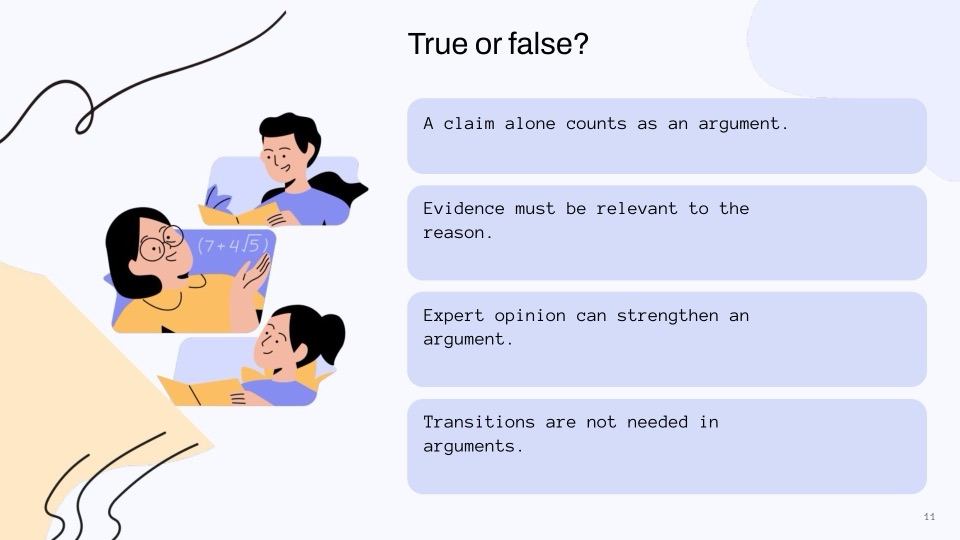
| 10 min | Plenary | Check understanding of claim plus reasons and relevant evidence against success criteria. Show Slide 11 true or false statements and take class votes. Ask students to fix each false idea using their paragraph as proof. Return to Slide 2 objectives and have students self-rate with fingers. Preview that a fair summary of the other side plus rebuttal builds trust. |
Common mistakes
- Writing a topic or title instead of an arguable thesis
How to spot it: Thesis has no position word like should and no because reasons
Upgrade to specific claim plus reasons; a thesis is not a title and should be as specific as possible. - Using persuasion-only tricks as evidence
How to spot it: Evidence is a vague story, threat, or unverifiable anecdote with strong feelings
Replace with logic and verifiable facts and explain the link; persuasion can use emotional appeal but argument needs checkable proof. - Adding true but irrelevant facts
How to spot it: Evidence is true but proves a different reason than the point sentence
Cut or swap it; credible support must be applicable to that reason to back the claim.
Support
- Provide the supporting statement already written so students only add evidence and explanation.
- Offer claim frames, word banks with should and because, and pre-marked strong evidence models.
Stretch
- Have students add a second piece of evidence and explain which one is stronger and why.
- Ask students to forecast reasons in order in the intro and add a next-step thought at the end.
Check questions
- Write a thesis as claim plus two reasons for limiting homework.
Answer: Clear position plus two becauses, for example: Grade 8 should limit homework because it cuts sleep and lowers focus. - Which is stronger evidence that teens need more sleep — A) Sleep study says teens need about 9 hours, B) A teacher reports a calmer first period, or C) 90% of class surveyed want more sleep — and why?
Answer: The sleep study about 9 hours, because it is specific, verifiable, and relevant to the reason. - What must you add after evidence in a body paragraph?
Answer: An explanation of how and why the evidence supports the point.
Curriculum
Write arguments to support claims with clear reasons and relevant evidence
Video clips
Clips on YouTube, from the start and end times we chose. Check each one before you show it.
-
What is an argument? from 0:00 to 4:37
Khan Academy: What is an argument? | Reading | Khan Academy
Explains claims, reasons, and evidence in clear language with a steady pace that suits 13-14-year-olds in Grade 8.
-
Body paragraphs with evidence from 0:00 to 4:30
Teaching Intentionally: Argumentative Writing Unit - Lesson 5: Body Paragraphs
Focuses directly on building body paragraphs with clear reasons and relevant evidence at a level that fits 13-14-year-olds.
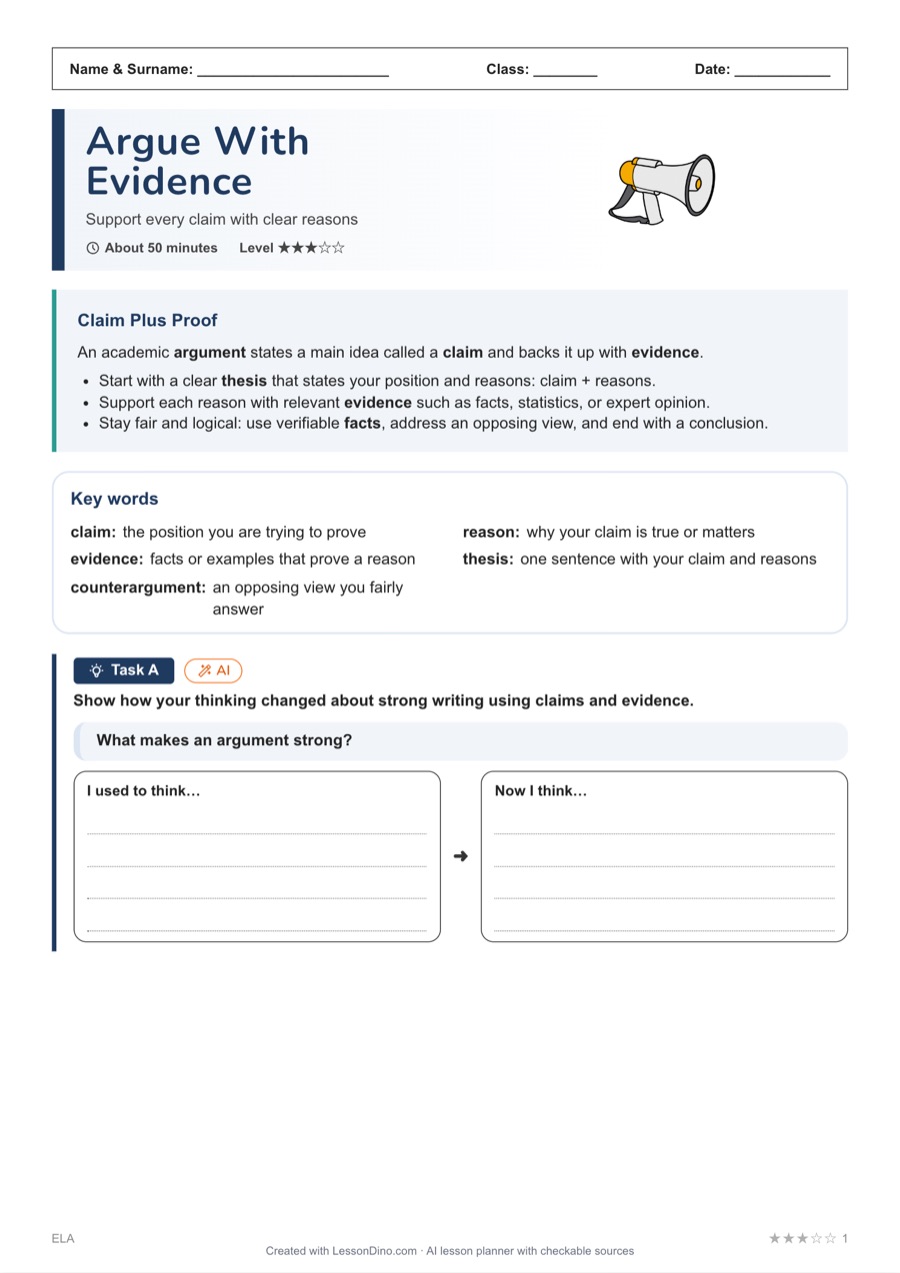
Worksheet
Sources
- How to Read the Standards thecorestandards.org
- English Language Arts cps.edu
- Argumentative Essays - Purdue OWL® - Purdue University owl.purdue.edu
- Argument – The Writing Center writingcenter.unc.edu
- Argument Papers - Purdue OWL® - Purdue University owl.purdue.edu
- Argumentative Writing and Using Evidence - San José State ... sjsu.edu
- University Writing Center: Argumentative Writing - JMU jmu.edu
- Guide to Writing an Argumentative Essay - germanna.edu germanna.edu
- Using single paragraph outlines to plan an effective argument thenational.academy
- Writing skills - persuade, argue and advise - BBC Bitesize bbc.co.uk
- How to build an argument for KS3 English students - BBC bbc.co.uk
- Academic writing en.wikipedia.org
- Strategies for Teaching Argument Writing - Edutopia edutopia.org
- Argumentative Writing worksheets | Worksheetzone worksheetzone.org
- ELA 9 : Argument writing - UnboundEd lessons.unbounded.org
- How to Teach Argument Writing Step-By-Step - ELA Buffet elabuffet.com
- Making a Claim: Teaching Students Argument Writing Through Close Reading - Pedagogue pedagogue.app
- Developing Evidence-Based Arguments from Texts | Read Write Think readwritethink.org
- Teach Argument Writing: Capture the Idea | eslwriting.org eslwriting.org
- Writing Arguments: Purposes of Argument | UMGC umgc.edu
- Writing Arguments: Steps to Writing an Argument - Develop ... umgc.edu
Picture credits
- Photo: andros1234 · Pixabay
- Pictograms: Sergio Palao, ARASAAC (arasaac.org) · CC BY-NC-SA
Made with Lesson Dino's AI on 16 October 2026. AI can make mistakes, so check facts against the sources before you teach.