The worksheet
About this worksheet
Students learn that living things changed over millions of years. They study fossil clues to infer what ancient life looked like. This Year 6 Science worksheet gives students (ages 10–11) six pages of practice on evolution and fossils, part of the evolution and inheritance unit. It goes with our free Evolution and fossils lesson, which has the slides and a timed lesson plan.
What it covers
By the end, students should be able to:
- Students will recognise living things changed over millions of years.
- Students will explain what fossils reveal about ancient living things.
- Students will describe in order how fossils form in rock.
How to use it
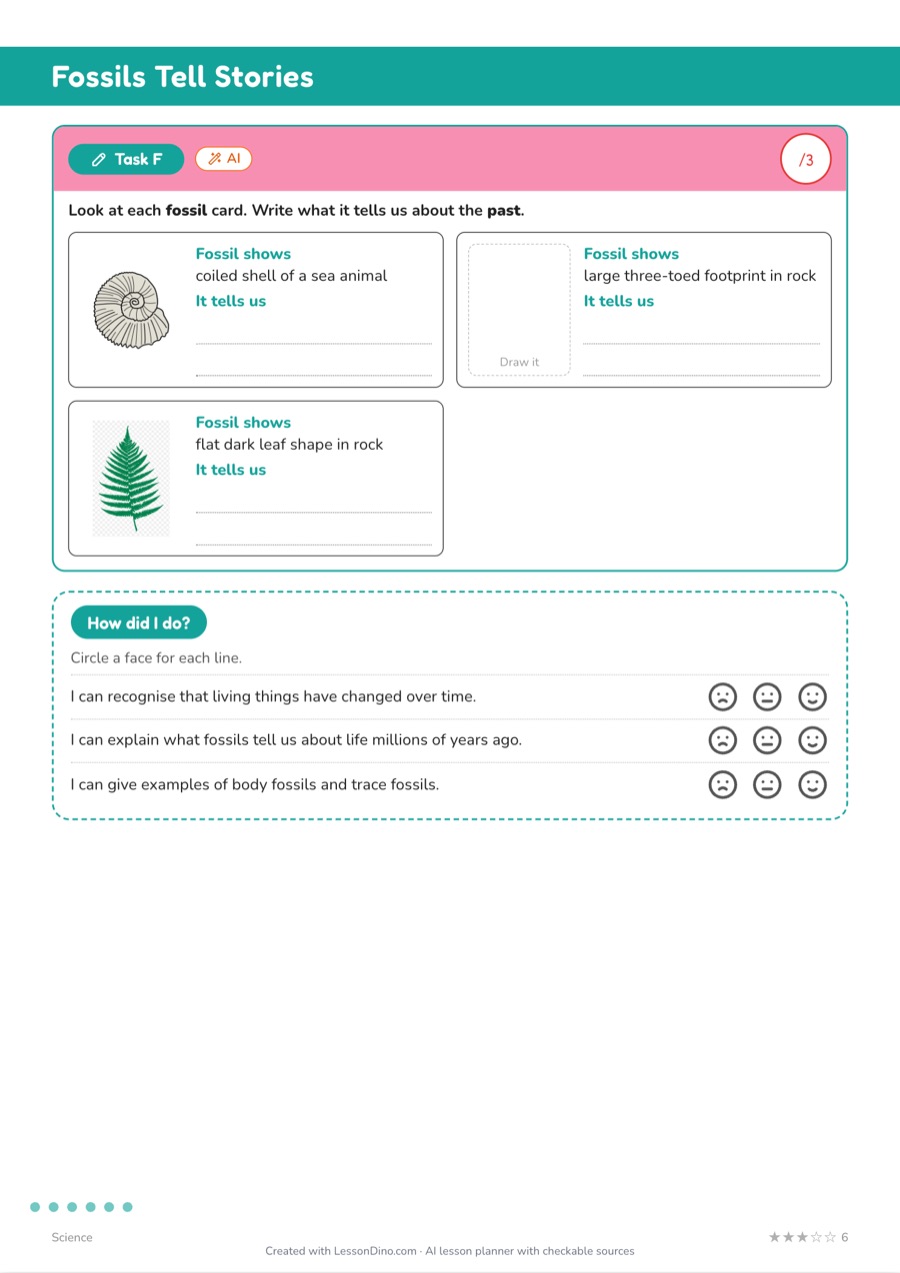
- Main activity (20 minutes): Give out Worksheet Task F and fossil photo cards and set the group task and time.
- Practice (10 minutes): Model the first two boxes of Worksheet Task A flow chart on the board.
- Support: Use picture prompts, word banks and clue questions about water or land and plant or animal.
- Stretch: Predict what a higher younger layer with a different fossil would tell us about age.
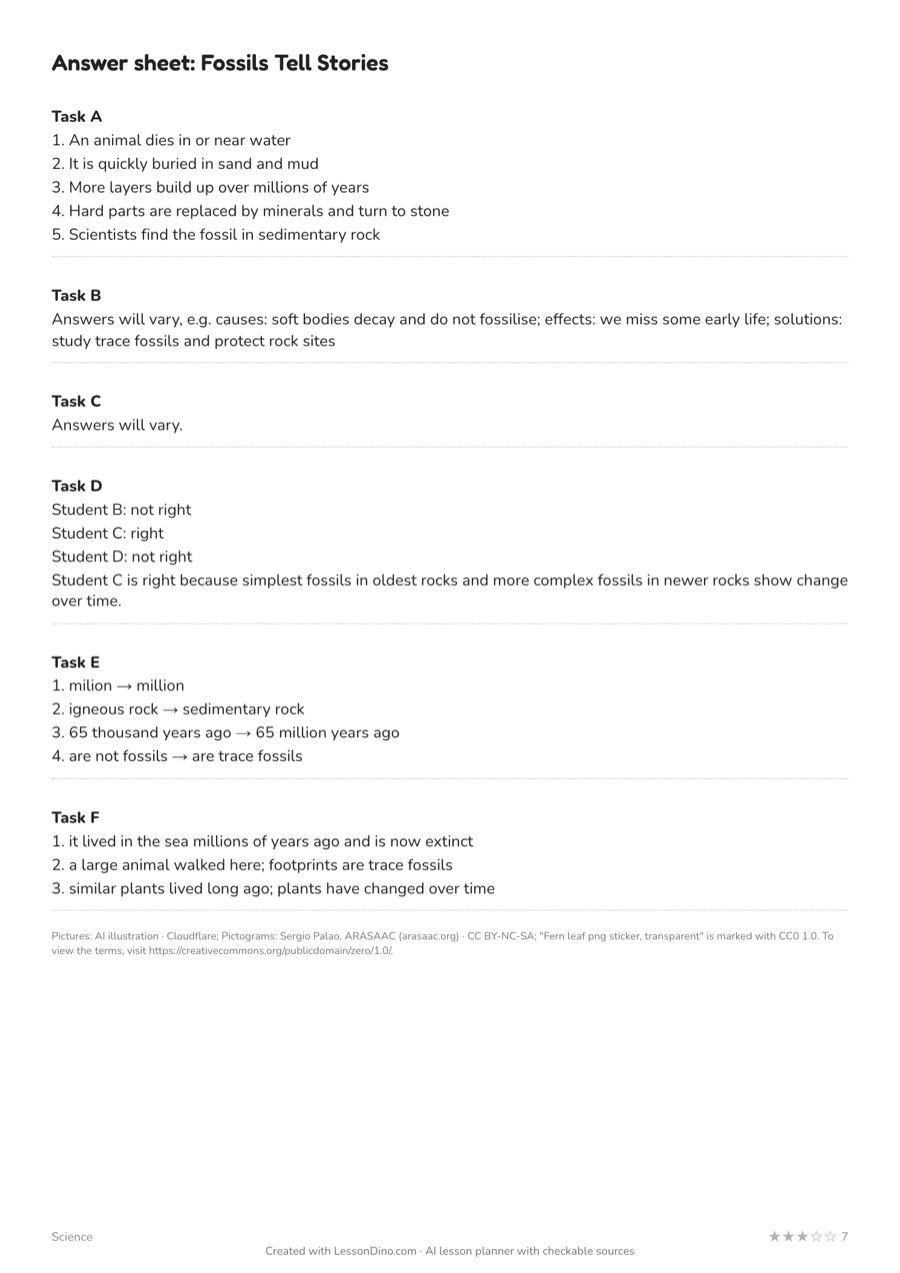
- The answer sheet is the last page, so you can print it on its own or let students check their own work.
Key vocabulary
- fossil: remains or marks of ancient living things kept in rock
- evolution: very slow change in living things over millions of years
- extinct: when no living members of a kind are left alive
- ammonite: curly-shelled sea animal that lived millions of years ago
Mistakes to watch for
- Thinking only big bones count as fossils. Remind that footprints, burrows and roots are trace fossils left in sediment, and body fossils are bones, teeth and shells.
- Thinking living things always looked as they do now. Stress that ammonites became extinct about 65 million years ago and fossils show life very different from today.
- Thinking soft and hard parts fossilise equally well. Explain hard parts do not decay easily but soft-bodied forms left few traces, which leaves gaps.
What's on the worksheet
Life Long Ago
Find out what fossils tell us about the past.
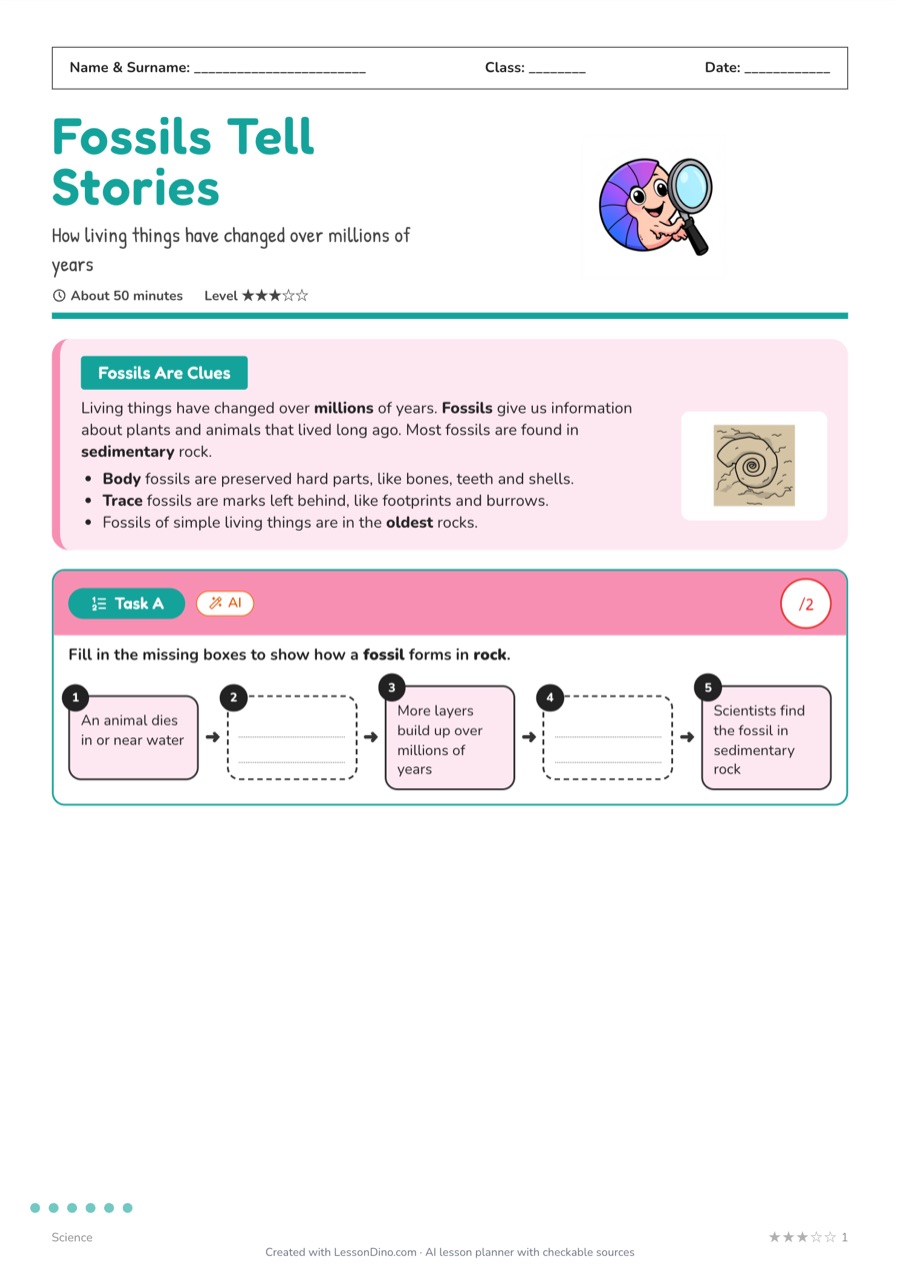
Fossils Are Clues
- Living things have changed over millions of years. Fossils give us information about plants and animals that lived long ago. Most fossils are found in sedimentary rock.
- Body fossils are preserved hard parts, like bones, teeth and shells.
- Trace fossils are marks left behind, like footprints and burrows.
- Fossils of simple living things are in the oldest rocks.
Fill in the missing boxes to show how a fossil forms in rock.
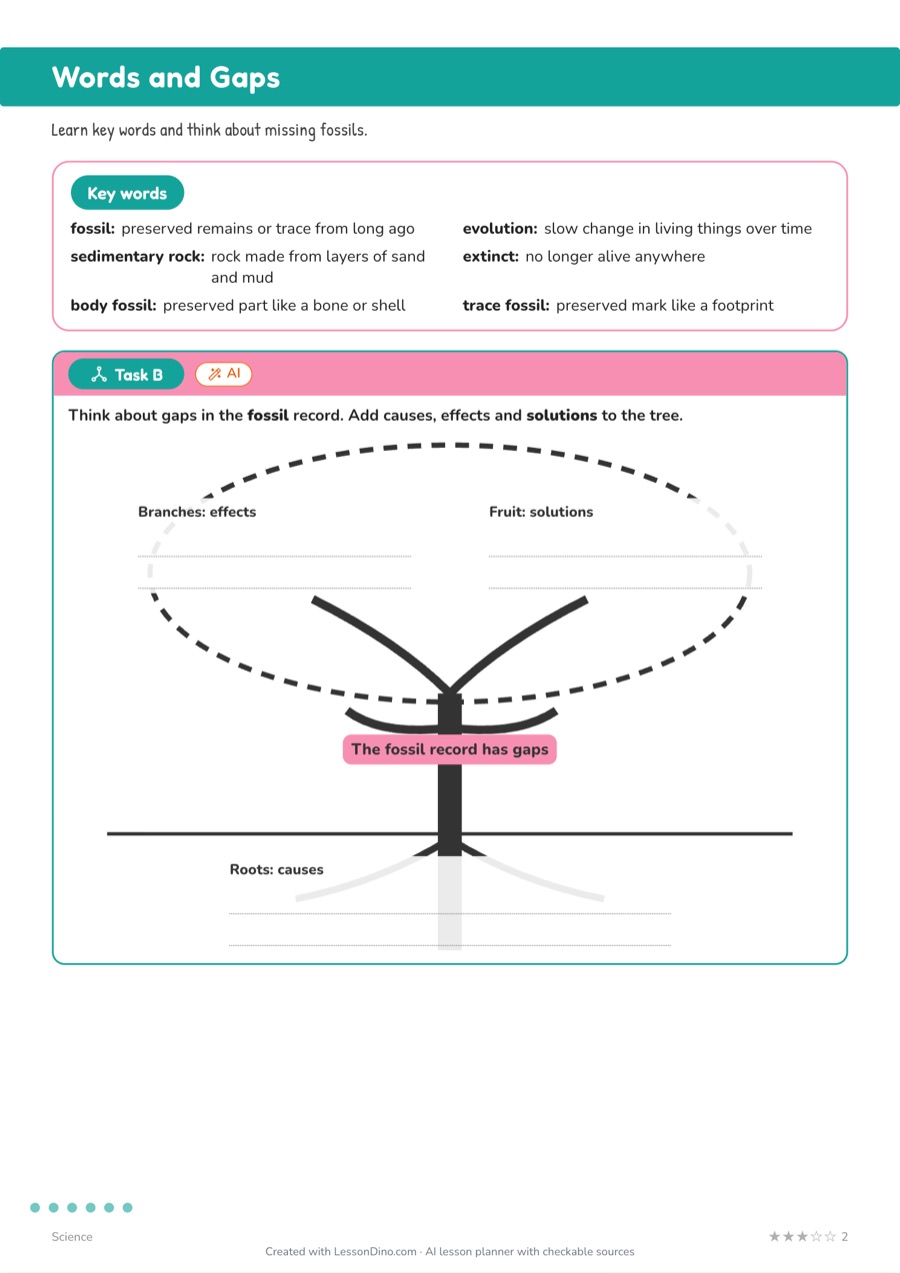
Words and Gaps
Learn key words and think about missing fossils.
| Word | Meaning |
|---|---|
| fossil | preserved remains or trace from long ago |
| evolution | slow change in living things over time |
| sedimentary rock | rock made from layers of sand and mud |
| extinct | no longer alive anywhere |
| body fossil | preserved part like a bone or shell |
| trace fossil | preserved mark like a footprint |
Think about gaps in the fossil record. Add causes, effects and solutions to the tree.
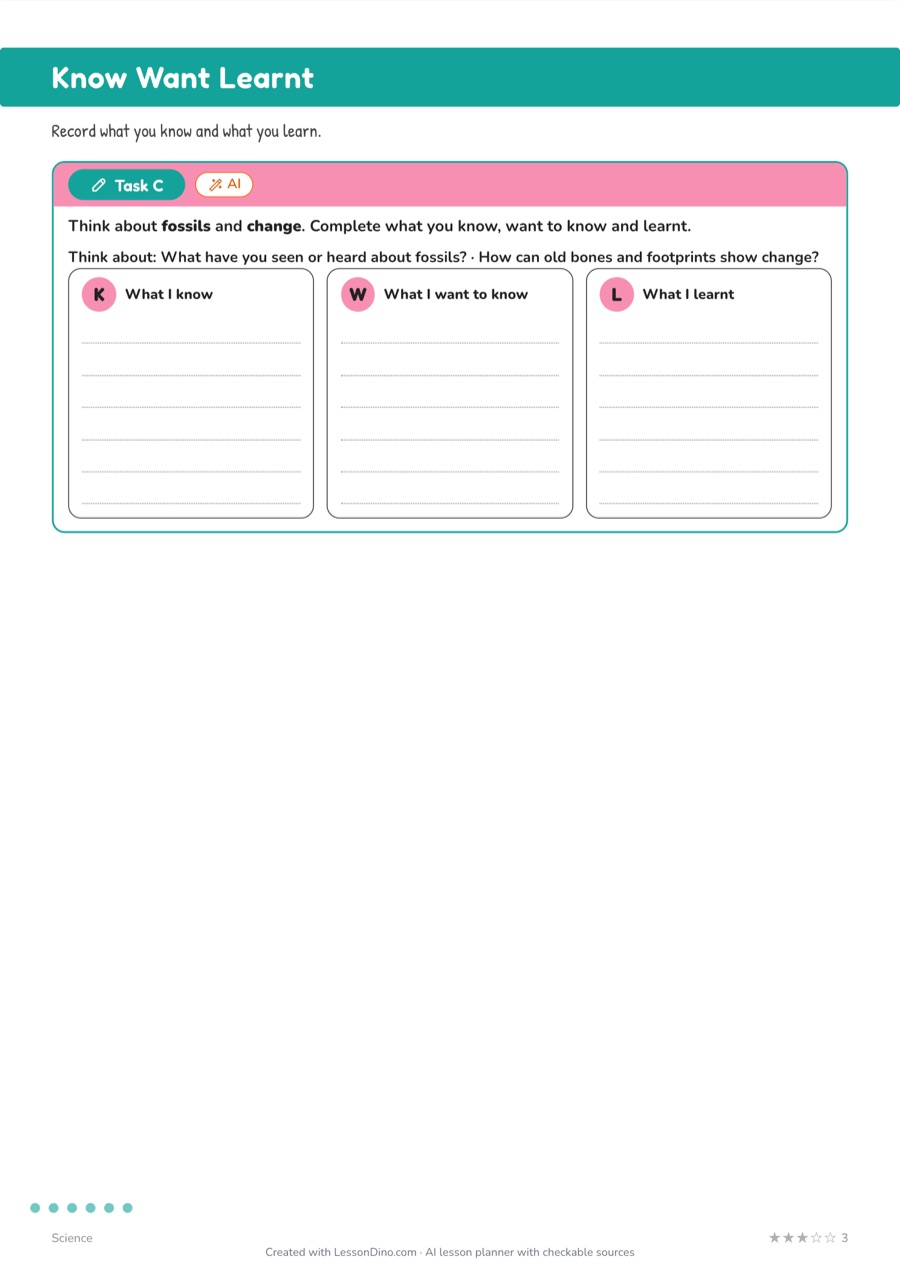
Know Want Learnt
Record what you know and what you learn.
Think about fossils and change. Complete what you know, want to know and learnt.
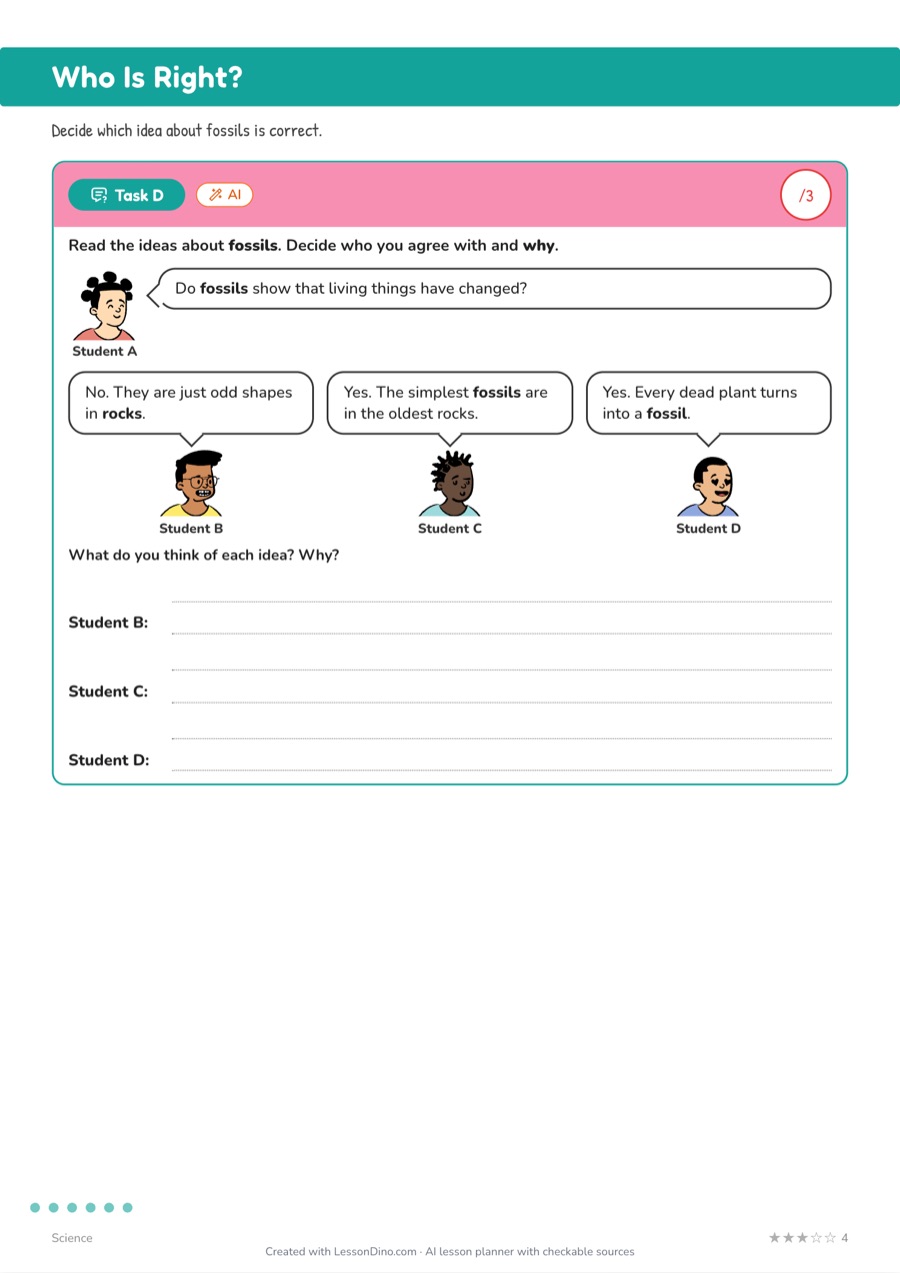
Who Is Right?
Decide which idea about fossils is correct.
Read the ideas about fossils. Decide who you agree with and why.
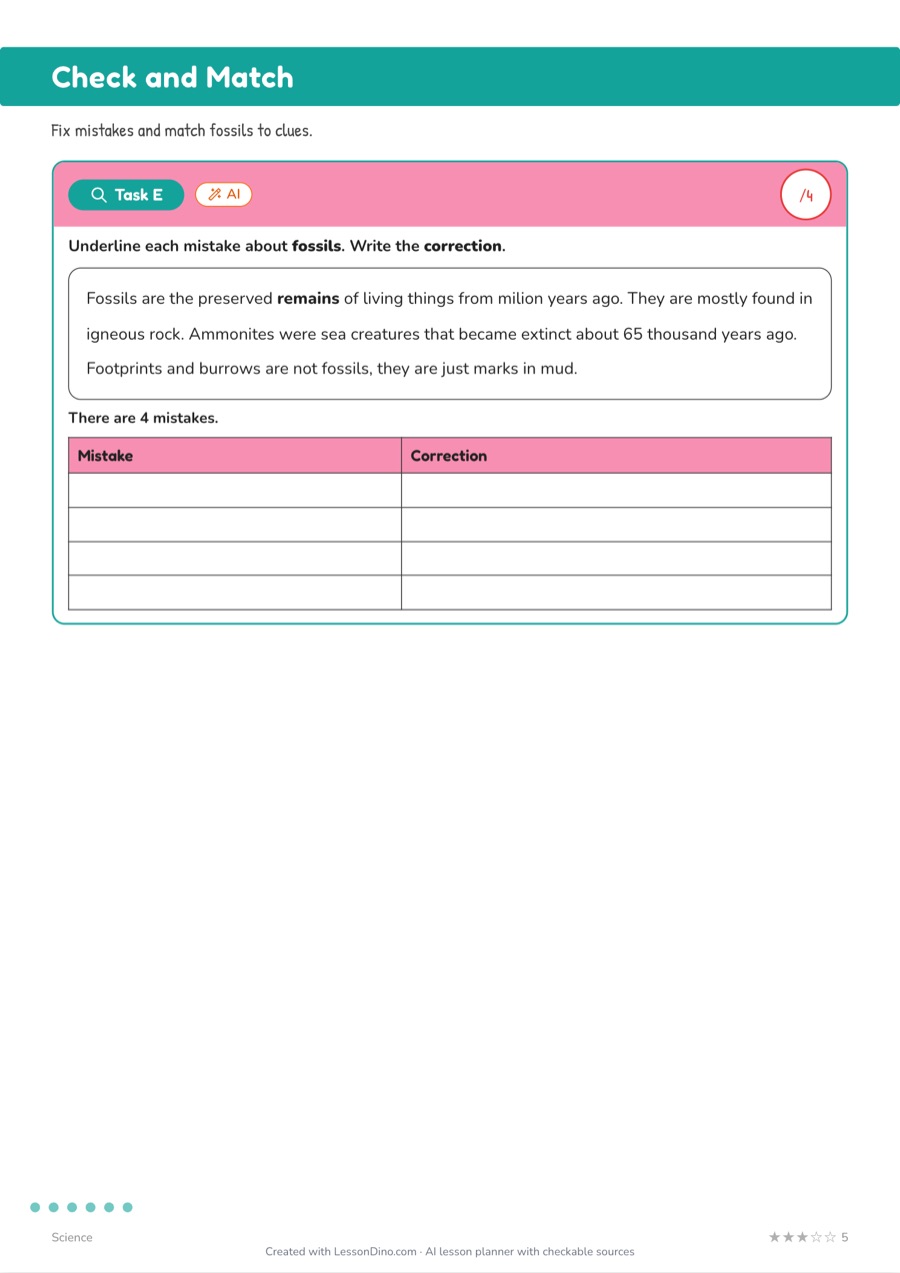
Check and Match
Fix mistakes and match fossils to clues.
Underline each mistake about fossils. Write the correction.
- Fossils are the preserved remains of living things from milion years ago. They are mostly found in igneous rock. Ammonites were sea creatures that became extinct about 65 thousand years ago. Footprints and burrows are not fossils, they are just marks in mud.
Page 6
Look at each fossil card. Write what it tells us about the past.
Answers
Show the answers
The answers are on the answer sheet, the last picture above.
Curriculum
recognise that living things have changed over time and that fossils provide information about living things that inhabited the Earth millions of years ago
Made with Lesson Dino's AI on 17 October 2026. AI can make mistakes, so check the answers and facts against the sources before you teach.