Slides
Lesson plan
Fossils Tell Us Living Things Changed
Students learn that living things changed over millions of years. They study fossil clues to infer what ancient life looked like.
Objectives
- Students will recognise living things changed over millions of years.
- Students will explain what fossils reveal about ancient living things.
- Students will describe in order how fossils form in rock.
Success criteria
- I can explain that living things have changed over time.
- I can describe what a fossil tells us about the past.
- I can say how a buried living thing becomes a fossil.
Key words
| Word | Meaning |
|---|---|
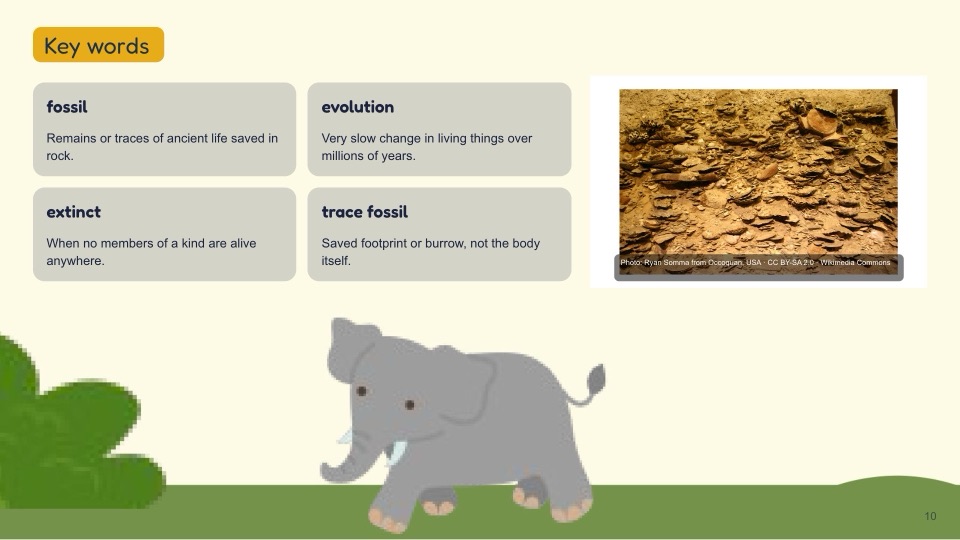
| fossil | remains or marks of ancient living things kept in rock |
| evolution | very slow change in living things over millions of years |
| extinct | when no living members of a kind are left alive |
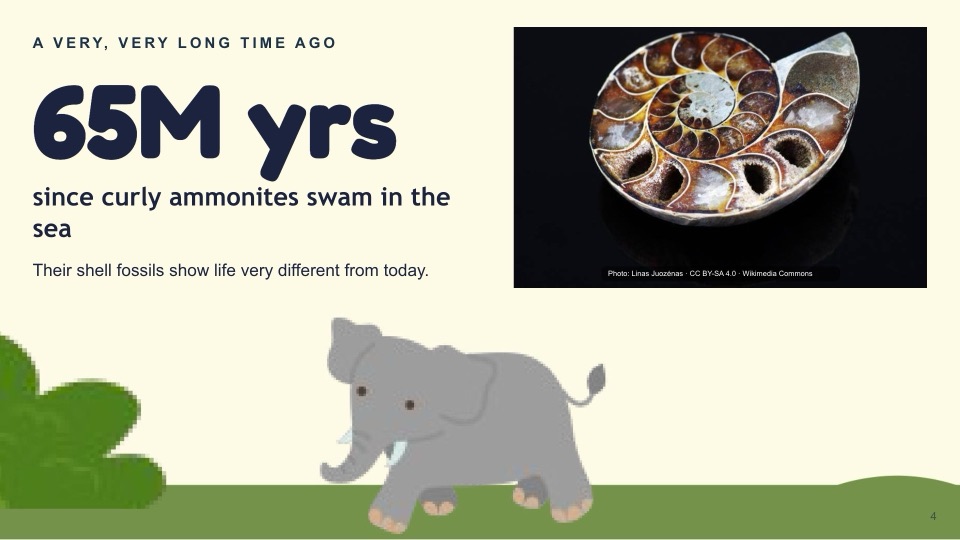
| ammonite | curly-shelled sea animal that lived millions of years ago |
Timed plan (60 minutes)
| Time | Stage | What happens |
|---|---|---|
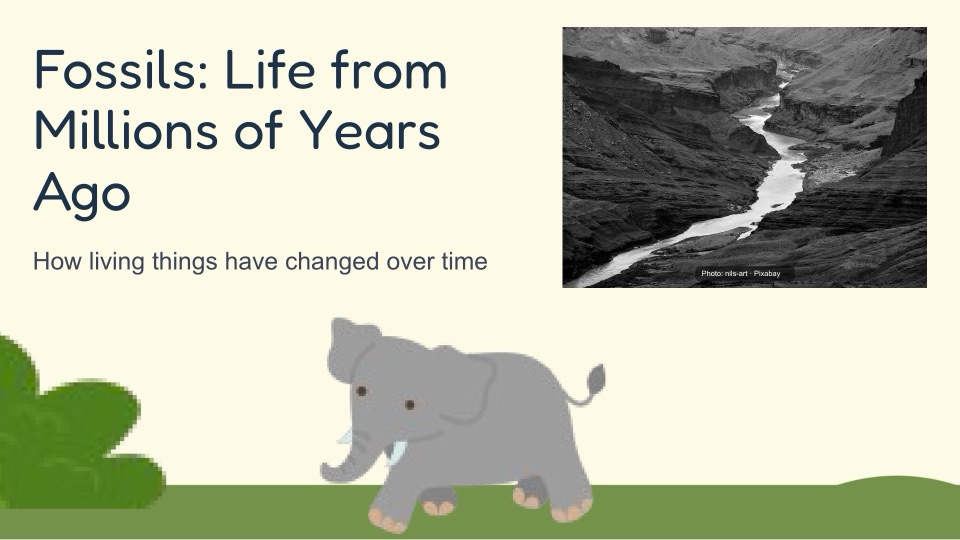
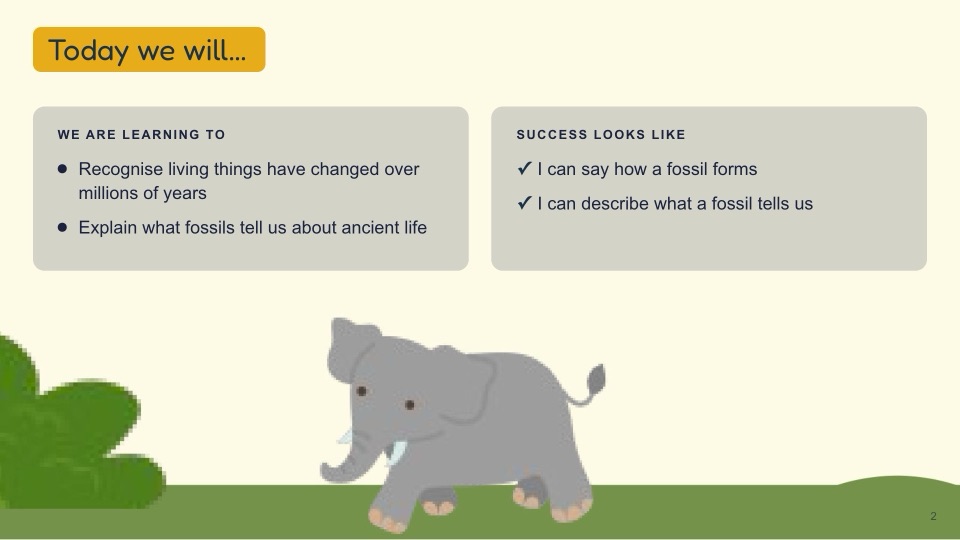
| 7 min | Starter | Hook curiosity about fossil clues and revisit the idea of change over time. Show Slide 1 Fossils: Life from Millions of Years Ago and read the title. Say the hook and show one footprint picture to spark curiosity. Show Slide 2 Today we will and read the three aims in your own words. Ask what students already know about fossils and dinosaurs. |
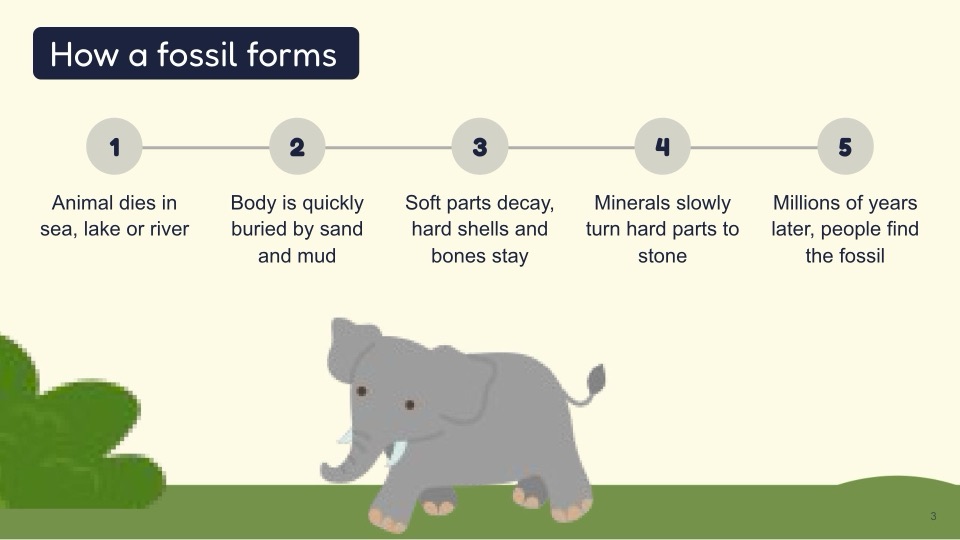
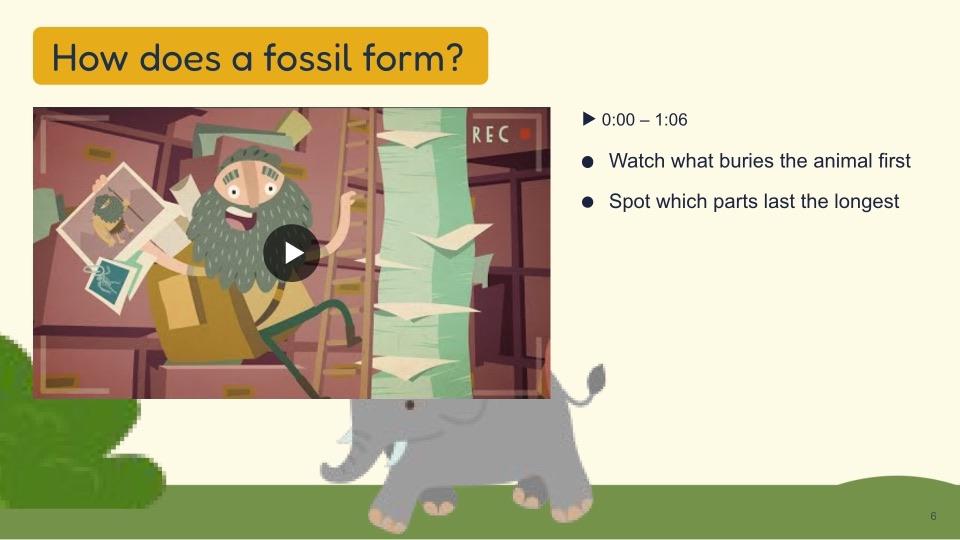
| 13 min | Teaching | Explain in order how living things become trapped and turn into fossils. Show Slide 3 How a fossil forms and talk through the steps in order. Explain burial in sand and mud and why hard parts last longer. Play Video clip 1 (0:00-1:06) on Slide 6. Ask students to spot what buries first and what lasts longest. Model the four-step story with hand actions: dies, buried, decays, turns to stone. |
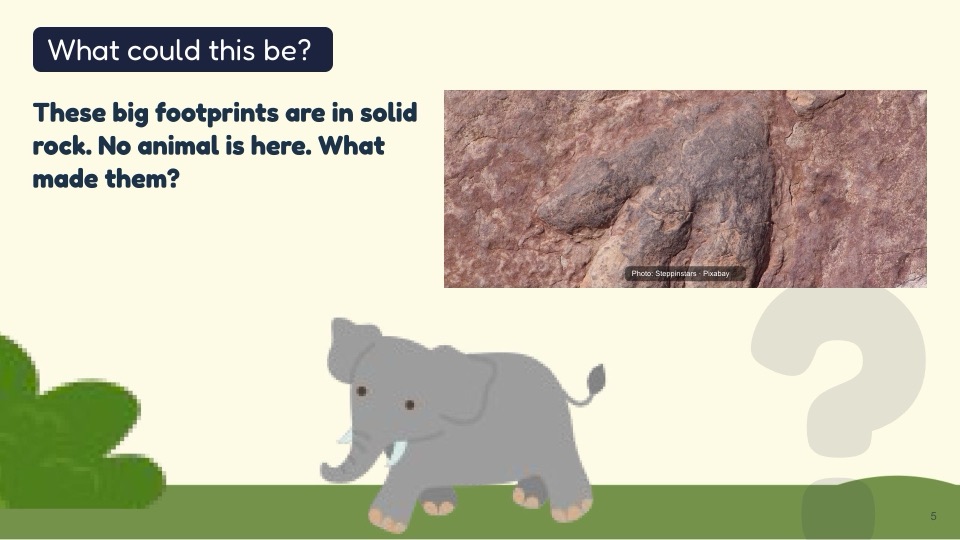
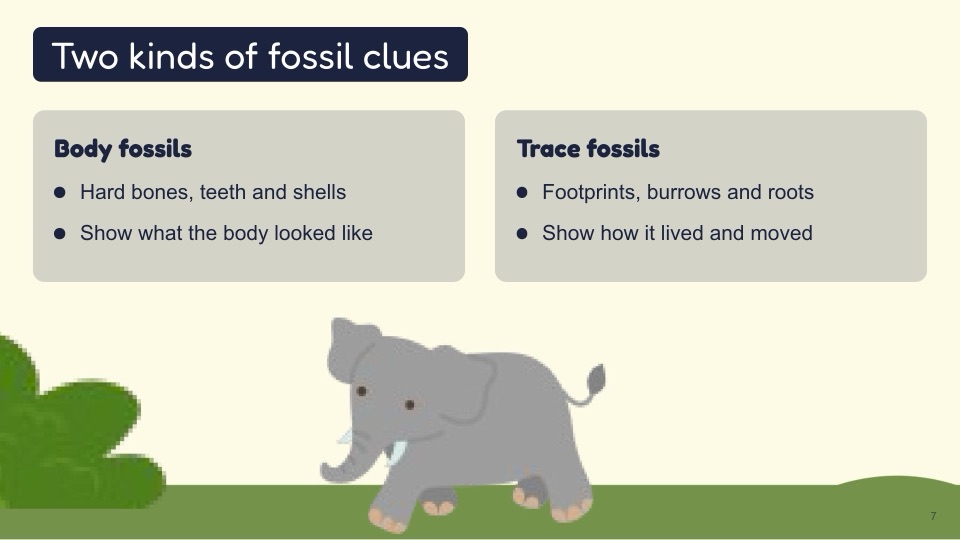
| 20 min | Main activity | Infer what past living things looked like and where they lived from fossil clues. Show Slide 4 and explain curly ammonites swam in the sea and became extinct about 65 million years ago. Show Slide 5 mystery footprints and Slide 7 Two kinds of fossil clues. Explain body fossils show the body and trace fossils show movement. Model one card: think aloud what it was, where it lived, what has changed. Give out Worksheet Task F and fossil photo cards and set the group task and time. |
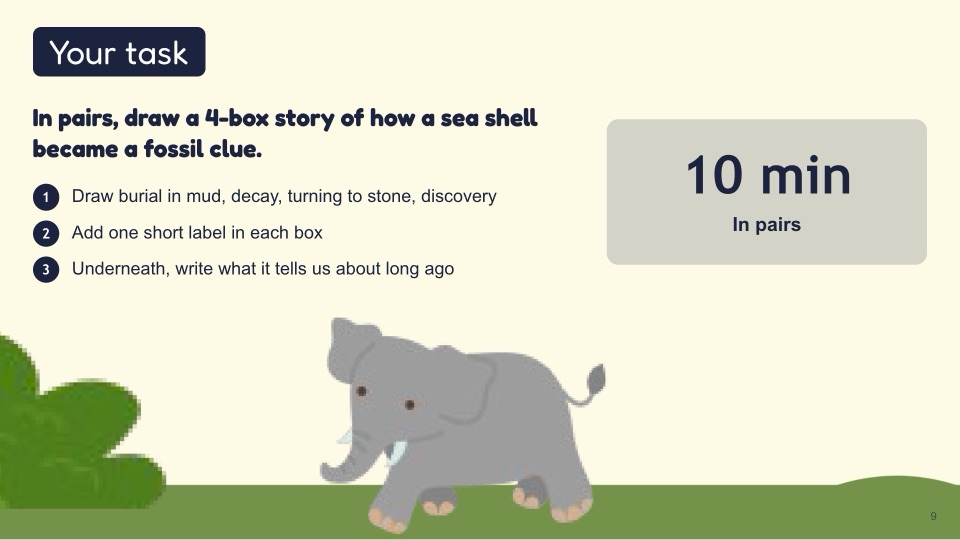
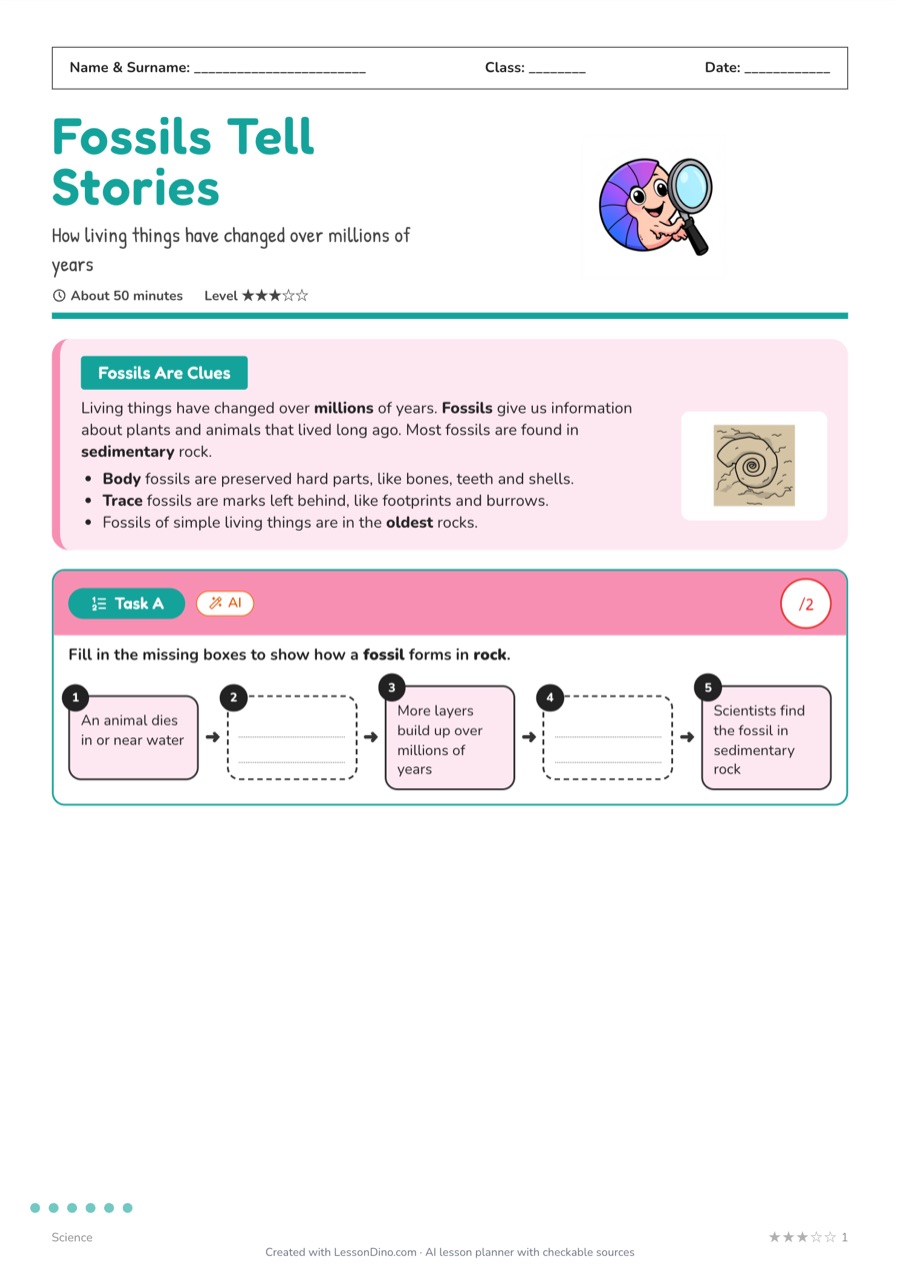
| 10 min | Practice | Record the fossil sequence and link it to slow change over time. Show Slide 9 Your task and explain the four boxes: burial in mud, decay, turning to stone, discovery. Show Slide 10 Key words and read fossil and evolution meanings together. Model the first two boxes of Worksheet Task A flow chart on the board. Set pairs to finish Task A and add one label per box. |
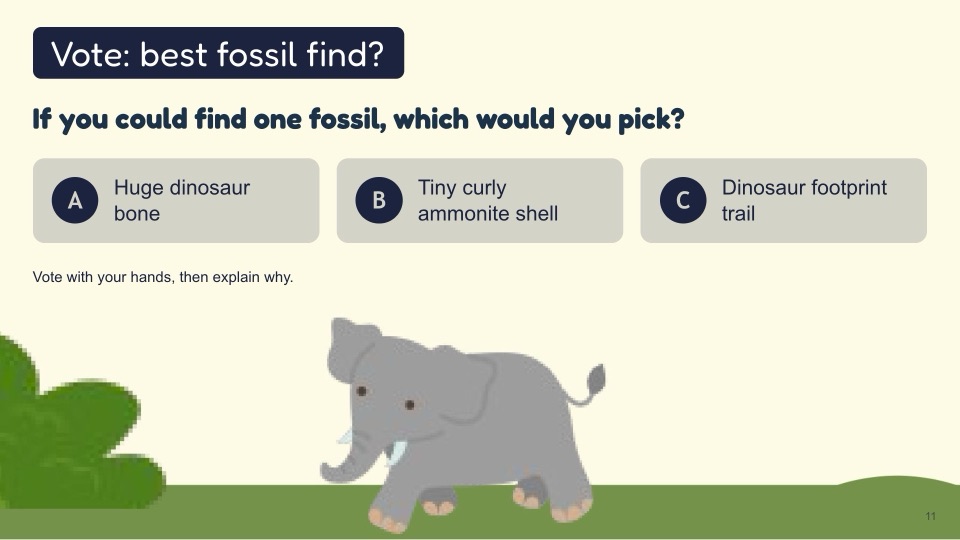
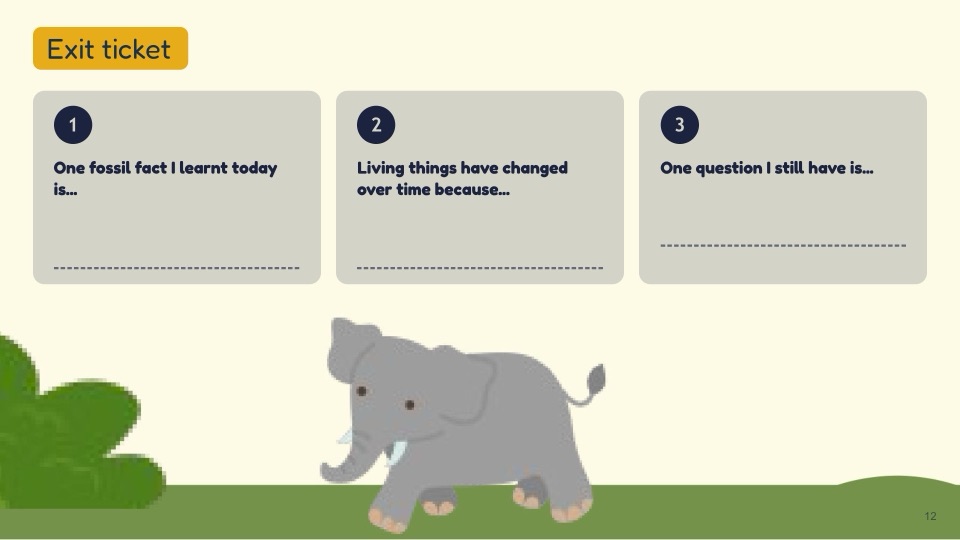
| 10 min | Plenary | Return to the aims and check what fossils tell us about change. Show Slide 11 Vote: best fossil find and take a quick class vote with reasons. Show Slide 12 Exit ticket and ask students to finish the two sentences on paper. Take three answers linking fossil evidence to change over time. Restate the lesson idea: fossils are our witness to change. |
Common mistakes
- Thinking only big bones count as fossils.
How to spot it: Students call footprints just marks, not fossils.
Remind that footprints, burrows and roots are trace fossils left in sediment, and body fossils are bones, teeth and shells. - Thinking living things always looked as they do now.
How to spot it: Students say the ammonite still lives in the sea today.
Stress that ammonites became extinct about 65 million years ago and fossils show life very different from today. - Thinking soft and hard parts fossilise equally well.
How to spot it: Students expect leaves and jelly-like bodies to fossilise like shells.
Explain hard parts do not decay easily but soft-bodied forms left few traces, which leaves gaps.
Support
- Use picture prompts, word banks and clue questions about water or land and plant or animal.
- Pre-teach fossil, evolution and extinct with real card examples.
- Pair less confident students with a buddy to scribe while they point and explain.
Stretch
- Predict what a higher younger layer with a different fossil would tell us about age.
- Explain what the same ammonite in two far-apart rocks tells us about age and past seas.
- Discuss how Mary Anning style piecing of many finds builds the story of change.
Check questions
- Name one way a fossil can form in rock.
Answer: Quick burial by sand and mud, soft parts decay, hard parts turned to stone by minerals. - Is a dinosaur footprint a fossil and what does it tell us?
Answer: Yes, a trace fossil; it tells how it lived and moved, not what its bones looked like. - How do fossils show living things changed over time?
Answer: Fossils provide information about living things millions of years ago; simplest in oldest rocks and more complex in newest rocks shows change.
Curriculum
recognise that living things have changed over time and that fossils provide information about living things that inhabited the Earth millions of years ago
Video clips
Clips on YouTube, from the start and end times we chose. Check each one before you show it.
-
How fossils form from 0:00 to 1:06
Education: Formation of Fossils BBC Bitesize science
BBC Bitesize clip made for UK pupils aged 10-11 with simple language showing how fossils preserve life from millions of years ago.
-
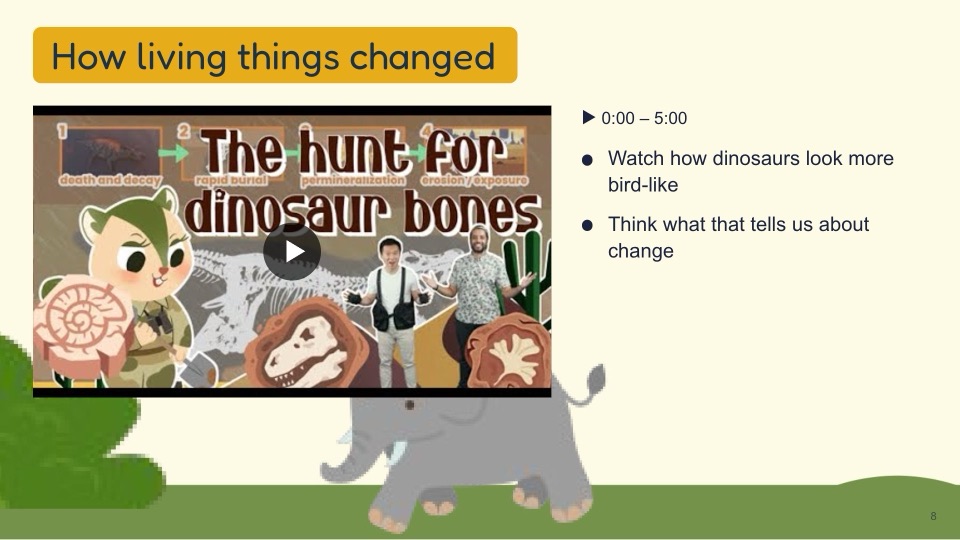
Dinosaur fossils and evolution from 0:00 to 5:00
Big Bang Academy Kids: Evolution | What do you know about DINOSAUR FOSSILS ?? | Earth Science For Kids
Kids’ science style suits ages 10-11 and directly connects dinosaur fossils to living things changing over time.
Worksheet
Sources
- Evolution science curriculum map | Natural History Museum nhm.ac.uk
- National curriculum in England: science programmes of study assets.publishing.service.gov.uk
- Fossils - British Geological Survey bgs.ac.uk
- Evidence of evolution - rock fossils - Evolution - AQA - GCSE ... bbc.co.uk
- Evidence of evolution - Rock fossils - Evolution - Edexcel ... bbc.co.uk
- Year 11 Biology: Evidence For Evolution Through Fossils And ... keystagelearning.co.uk
- Evidence for Evolution and Fossils – GCSE Biology Worksheet ... virtusacademy.co.uk
- Evolution News -- ScienceDaily sciencedaily.com
- Flexi answers - How do paleontologists learn about evolution? | CK-12 Foundation ck12.org
- Evolution - Wikipedia en.wikipedia.org
- Evolution Facts for Kids kids.kiddle.co
- Evolution and fossils | ScienceBlogs scienceblogs.com
- Theory of Evolution - Education education.nationalgeographic.org
- Evolution - National Human Genome Research Institute genome.gov
- What is evolution? – KS2 Science curriculum - BBC Bitesize bbc.co.uk
- The Top Five Human Evolution Discoveries from England smithsonianmag.com
Picture credits
- Photo: nils-art · Pixabay
- Photo: Linas Juozėnas · CC BY-SA 4.0 · Wikimedia Commons
- Photo: Steppinstars · Pixabay
- Photo: Ryan Somma from Occoquan, USA · CC BY-SA 2.0 · Wikimedia Commons
- AI illustration · Cloudflare
- Pictograms: Sergio Palao, ARASAAC (arasaac.org) · CC BY-NC-SA
- Picture: unknown · CC0 · rawpixel via Openverse
Made with Lesson Dino's AI on 17 October 2026. AI can make mistakes, so check facts against the sources before you teach.