Slides
Lesson plan
Light Straight Into Our Eyes
Pupils learn that light travels in straight lines into the eye. They model and draw how luminous and non-luminous objects are seen.
Objectives
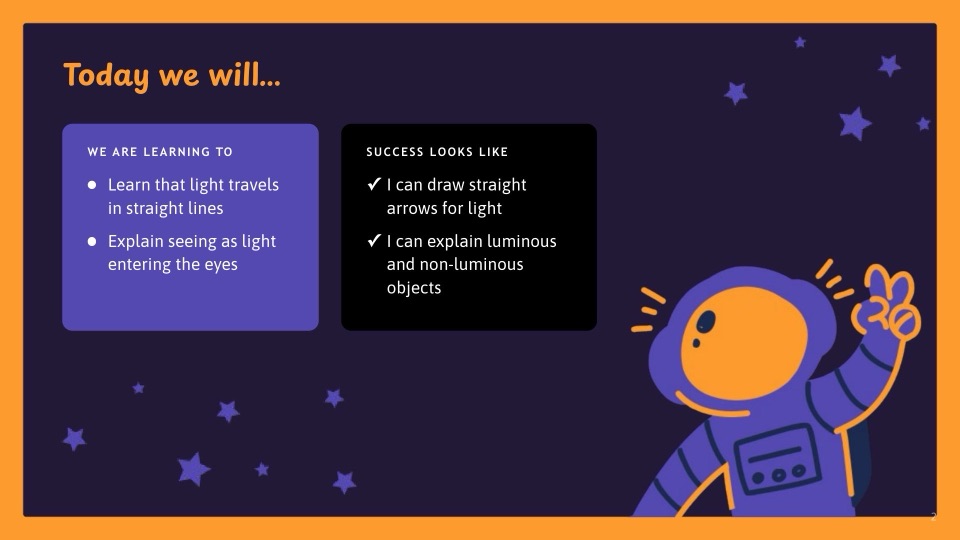
- Students will explain seeing as light travelling straight from source into eye.
- Students will compare luminous sources and non-luminous objects that reflect light to eye.
Success criteria
- I can draw straight arrows to show light entering the eye.
- I can explain luminous and non-luminous objects when I see them.
Key words
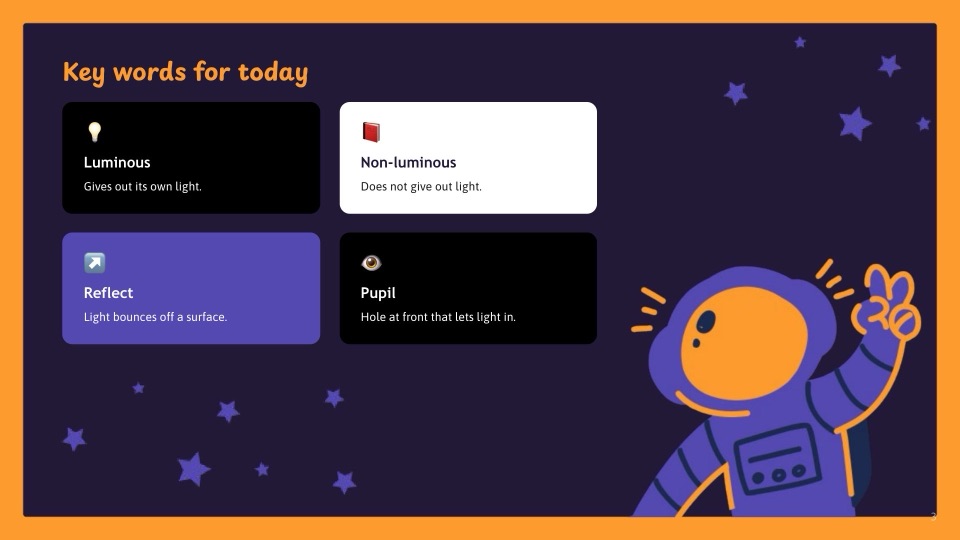
| Word | Meaning |
|---|---|
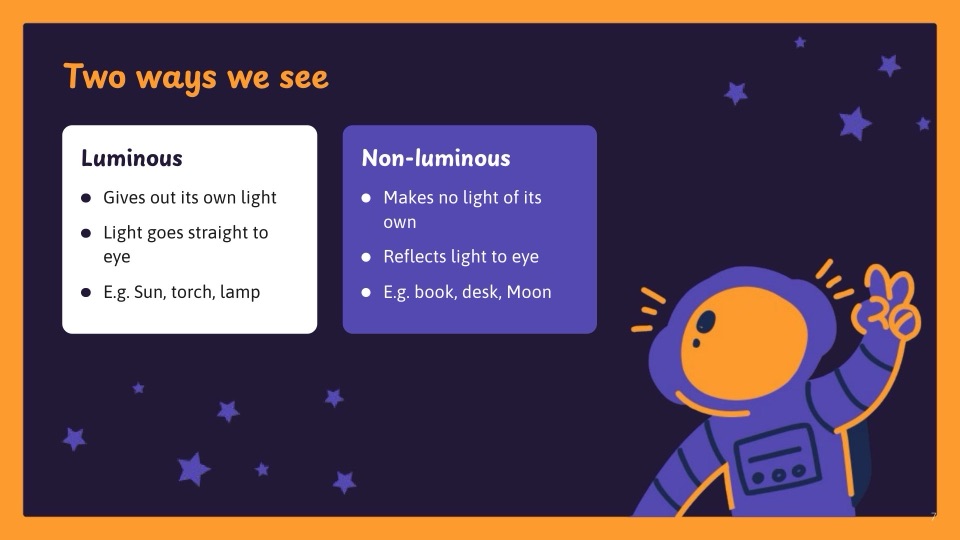
| luminous | makes and sends out its own light |
| non-luminous | does not make its own light and is seen by bouncing back other light |
| reflect | when light bounces off a surface |
| pupil | hole at the front of the eye that lets light in |
| retina | back surface inside the eye that senses light |
Timed plan (60 minutes)
| Time | Stage | What happens |
|---|---|---|
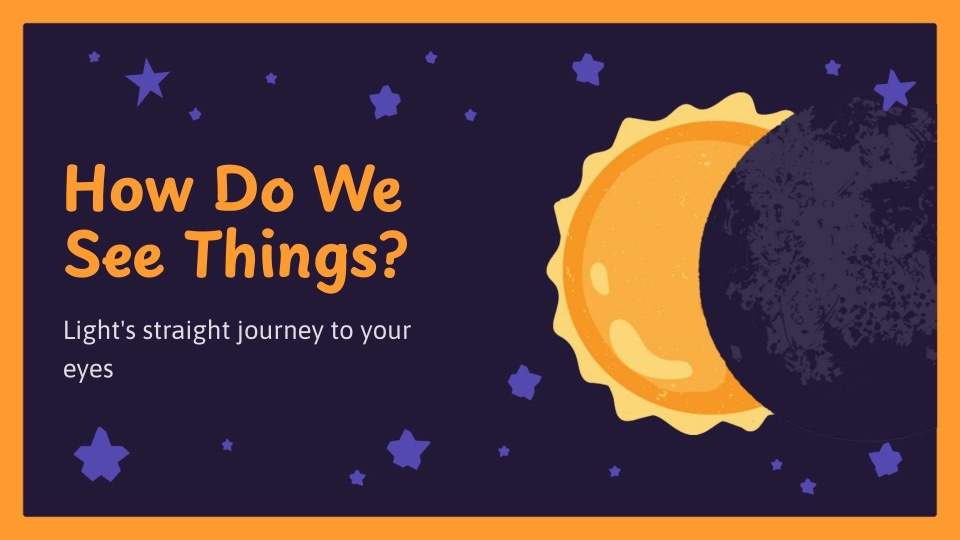
| 8 min | Starter | To hook curiosity about darkness and recall light sources and seeing. Show Slide 1 title and ask the hook question with lights still on. Show Slide 2 objectives and read the two goals and success lines together. Show Slide 3 key words and drill luminous, non-luminous, reflect and pupil. Take quick answers about seeing in a dark cupboard and link to today's question. |
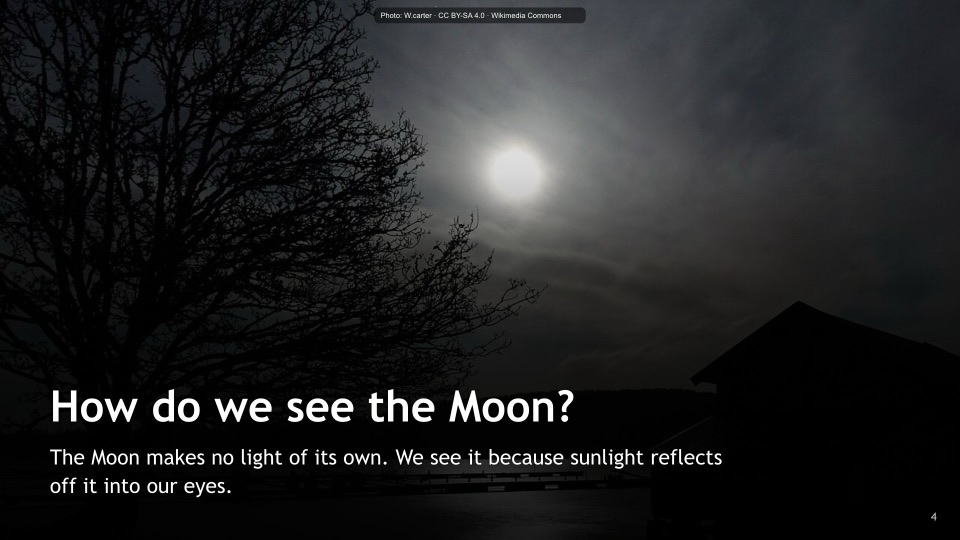
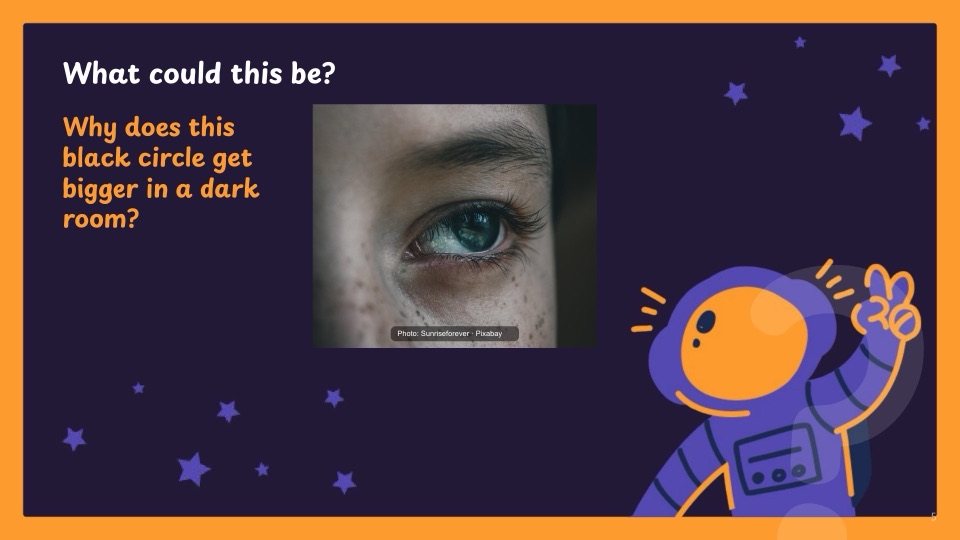
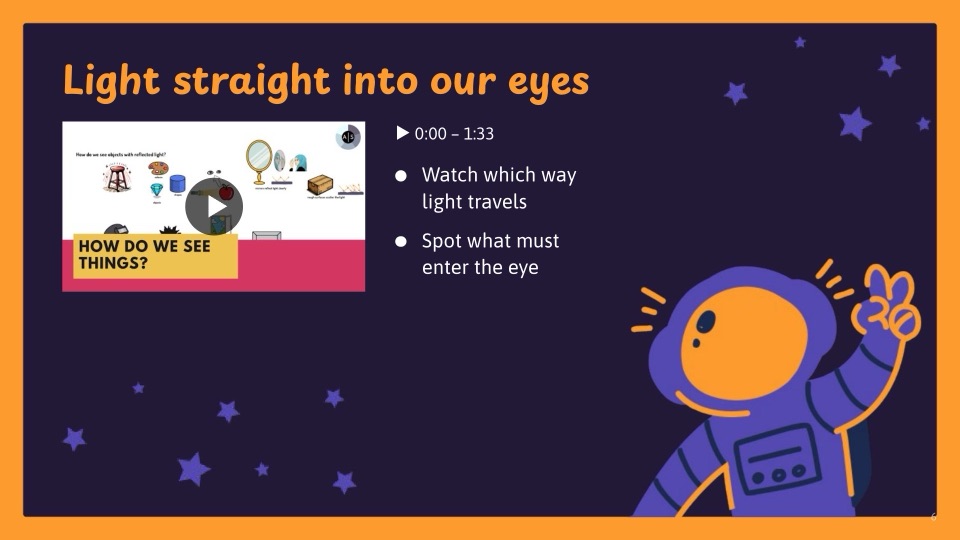
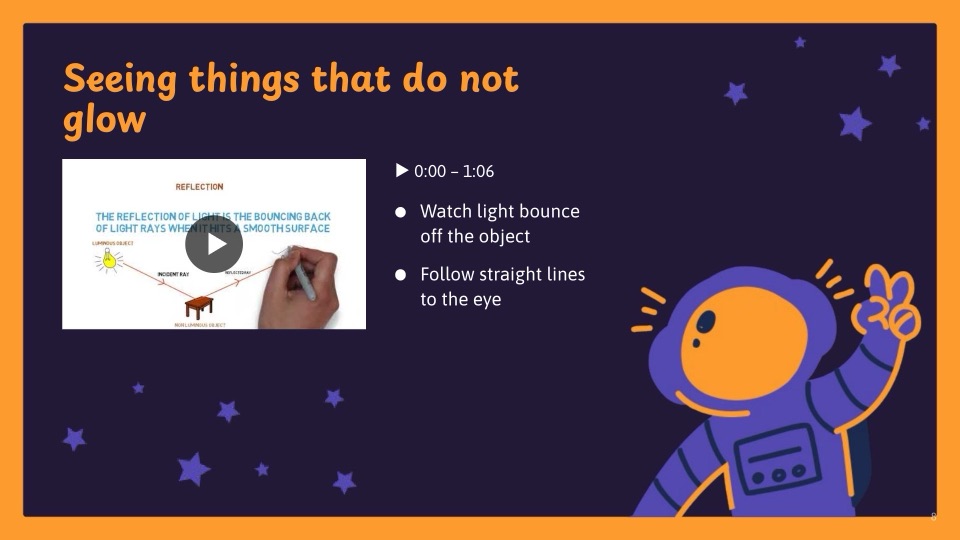
| 15 min | Teaching | To explain straight-line travel from source to object to eye for both kinds of objects. Show Slide 4 photo and explain the Moon makes no light of its own but is seen because sunlight reflects off it into our eyes. Show Slide 5 mystery pupil and explain the pupil is the hole that lets light in. Play Video clip 1 (0:00-1:33) on Slide 6, then Slide 7 compare, stressing luminous gives out light and non-luminous reflects light to the eye. Play Video clip 5 (0:00-1:06) on Slide 8 and model a ray diagram with ruler and arrows towards the eye. |
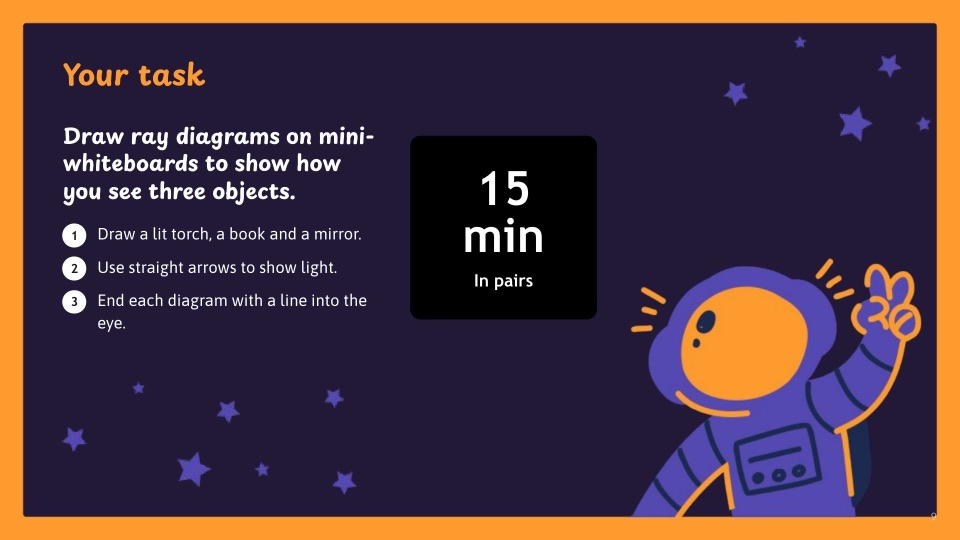
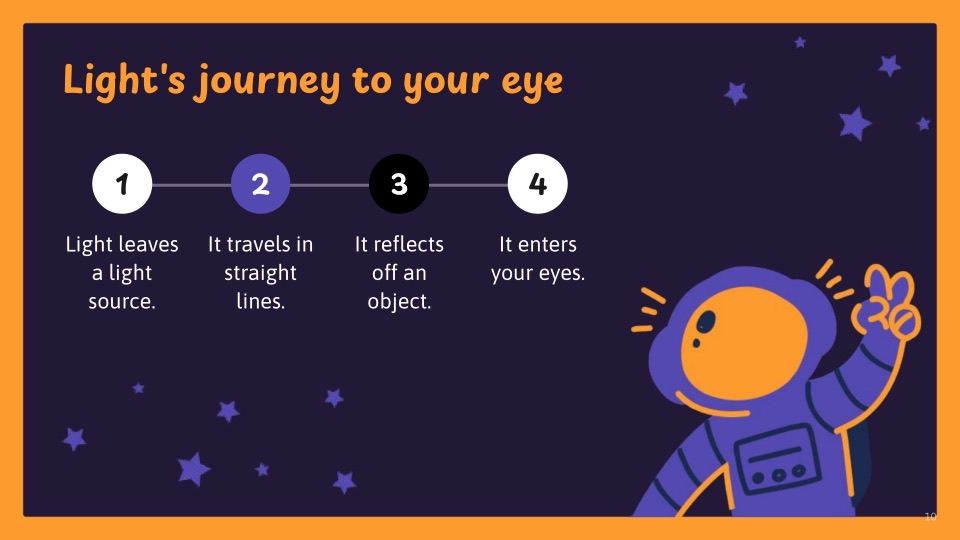
| 22 min | Main activity | To model and draw straight light paths from source to object to eye. Organise threes: torch holder as source, book holder as non-luminous object, observer as eye. Show Slide 10 steps and direct pupils to stretch string in two straight sections, torch to book and book to eye, because light travels in straight lines. Show Slide 9 task and direct trios to draw the torch, book and mirror on mini-whiteboards with ruler-straight arrows ending into the eye. Circulate, correct arrows to point towards the eye and prompt full sentences with reflects and enters. |
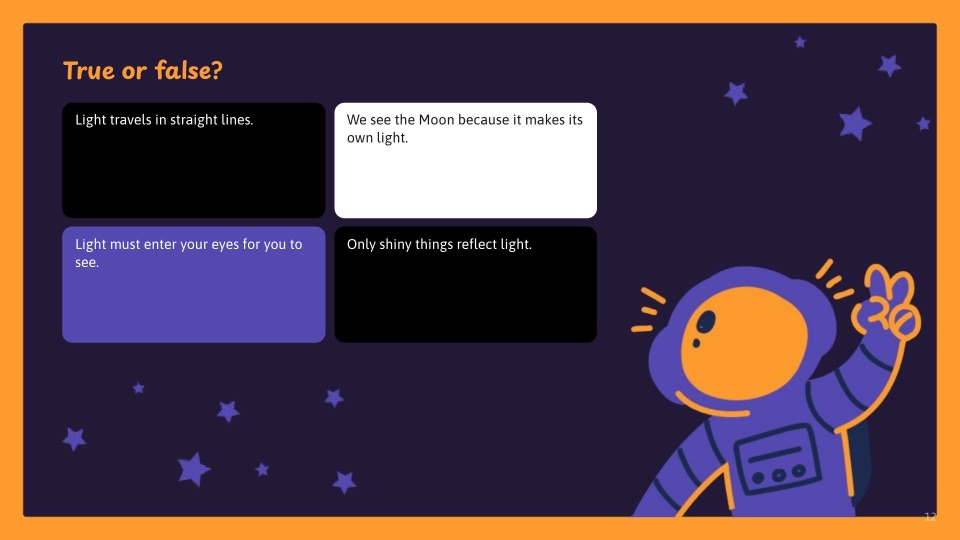
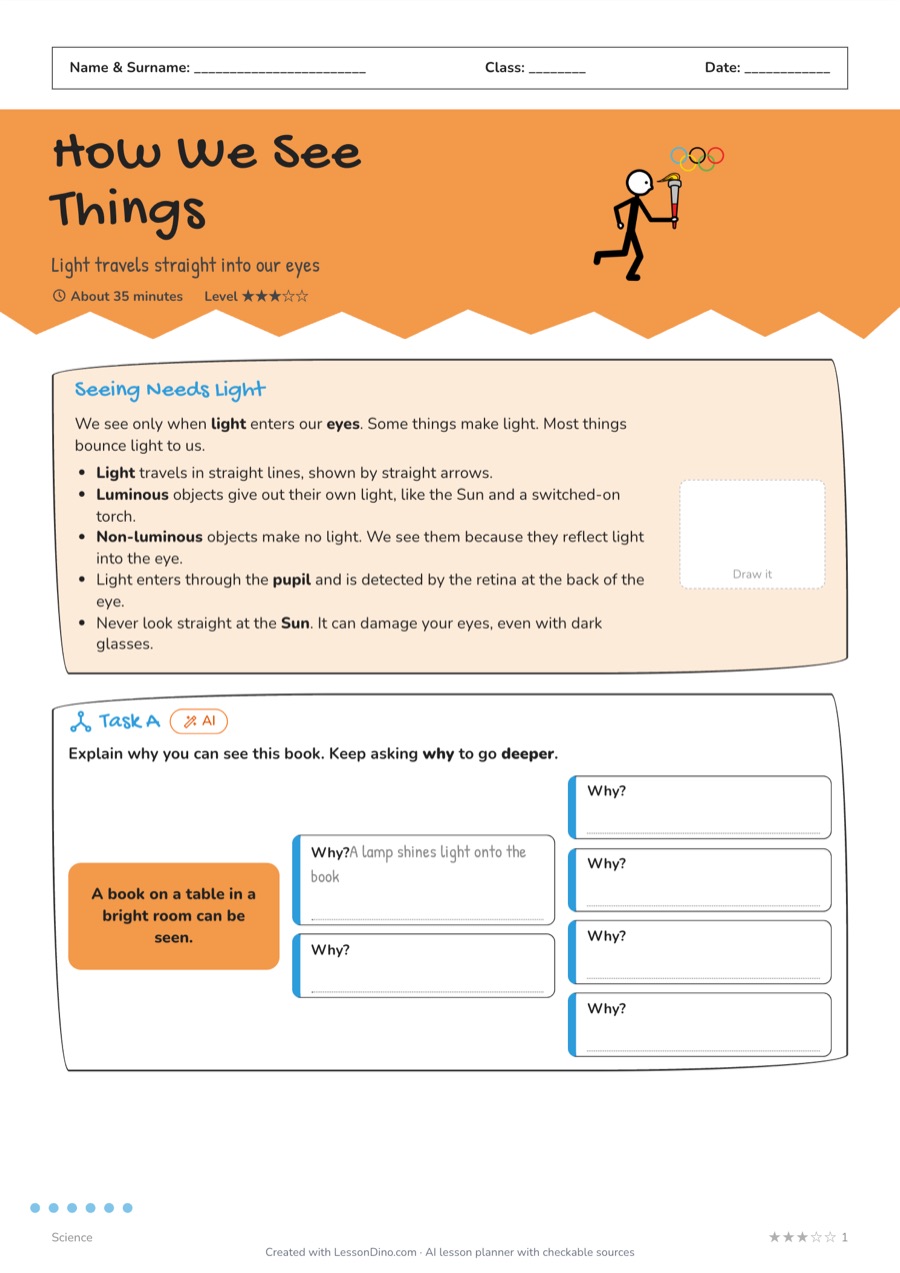
| 15 min | Plenary | To check explanations of darkness and correct use of straight-line ideas. Show Slide 11 question and give pairs one minute to agree a because sentence about seeing a partner now but not in darkness. Hand out Worksheet Task F and read the word bank aloud: straight, luminous, non-luminous, reflect, eyes, pupil; pairs fill gaps and say each sentence aloud. Show Slide 12 true or false statements and confirm light travels in straight lines and the Moon reflects sunlight to us. Collect exit answers and restate the journey: source to object to eye. |
Common mistakes
- Thinking the Moon is luminous like a bulb.
How to spot it: Diagram shows arrows starting at the Moon with no Sun.
Remind that the Moon does not make its own light; draw Sun to Moon to eye because sunlight reflects off it. - Drawing rays leaving the eye to the object.
How to spot it: Arrowheads point away from the eye towards torch or book.
Rehearse that light must enter our eyes to see; flip arrows to enter the pupil to the retina. - Drawing curved or zig-zag rays or thinking only mirrors reflect.
How to spot it: Wavy lines, or claim dull book sends no light.
Insist on ruler-straight lines and that all surfaces reflect light, dull ones by scattering.
Support
- Give a frame with the start drawn: torch to book to eye, so students only add straight lines with a ruler and the words reflects and enters, because light must enter our eyes for us to see it.
Stretch
- Add a mirror as the object and show how the straight path changes direction at the shiny surface but stays straight on each side.
Check questions
- You see a book in a lit room. Draw and explain the light path.
Answer: Straight arrow source to book, straight arrow book to eye; light reflects off book and enters eye. - Is the Sun luminous or non-luminous, and how is it seen?
Answer: Luminous; it gives out light that travels straight into our eyes. - Why can you not see the Moon if the Sun is blocked?
Answer: Moon is non-luminous and needs reflected sunlight; no source means nothing to reflect into eyes.
Curriculum
use the idea that light travels in straight lines to explain that objects are seen because they give out or reflect light into the eye
Video clips
Clips on YouTube, from the start and end times we chose. Check each one before you show it.
-
How we see objects Year 6 from 0:00 to 1:33
Advisory Science: How Do We See Objects? | Year 6 Light | KS2 Science
Made for Year 6 KS2 aged 10-11 and directly explains seeing as light travelling straight from a source or reflected into the eye.
-
Reflection and seeing objects from 0:00 to 1:06
MrCurio: Reflection(How do we see objects)
Very clear for 10-11 year olds showing reflected light travelling straight to explain seeing non-light sources.
Worksheet
Sources
- National curriculum in England: science programmes of study gov.uk
- Year 6 Science Curriculum - warden-house.kent.sch.uk warden-house.kent.sch.uk
- How Do We See Things marvelslane.lewisham.sch.uk
- How Do We See Things? Key Stage 2 - Royal Museums Greenwich rmg.co.uk
- How To See Things As They Are raptitude.com
- How We See Things: The Biology of Vision - Biology Insights biologyinsights.com
- How do we see things? - Science Sparks science-sparks.com
- Why do we see colours differently? - BBC Teach bbc.co.uk
- Lesson: How we see things | Oak National Academy thenational.academy
Picture credits
- Photo: Pexels · Pixabay
- Photo: W.carter · CC BY-SA 4.0 · Wikimedia Commons
- Photo: Sunriseforever · Pixabay
- Pictograms: Sergio Palao, ARASAAC (arasaac.org) · CC BY-NC-SA
Made with Lesson Dino's AI on 17 October 2026. AI can make mistakes, so check facts against the sources before you teach.