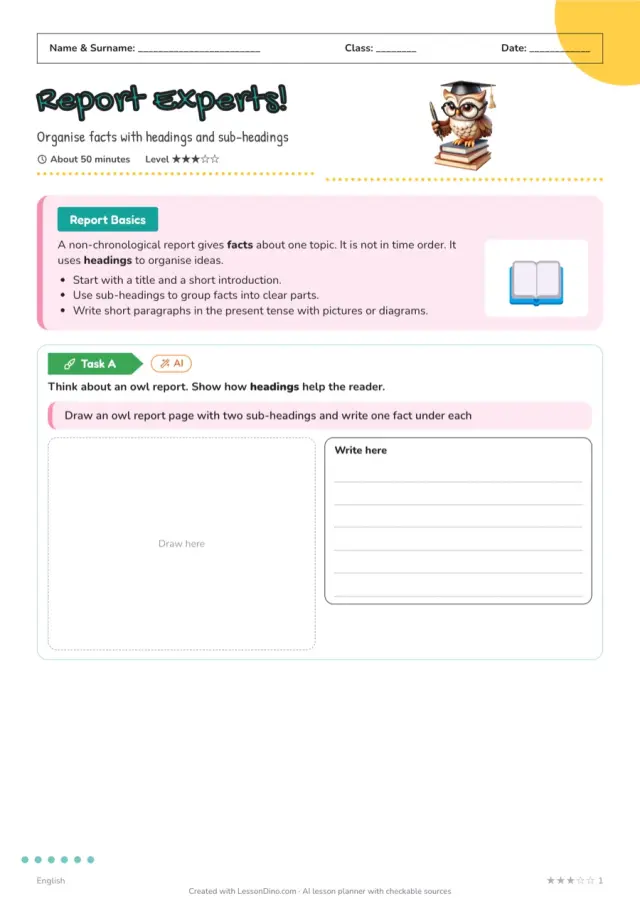
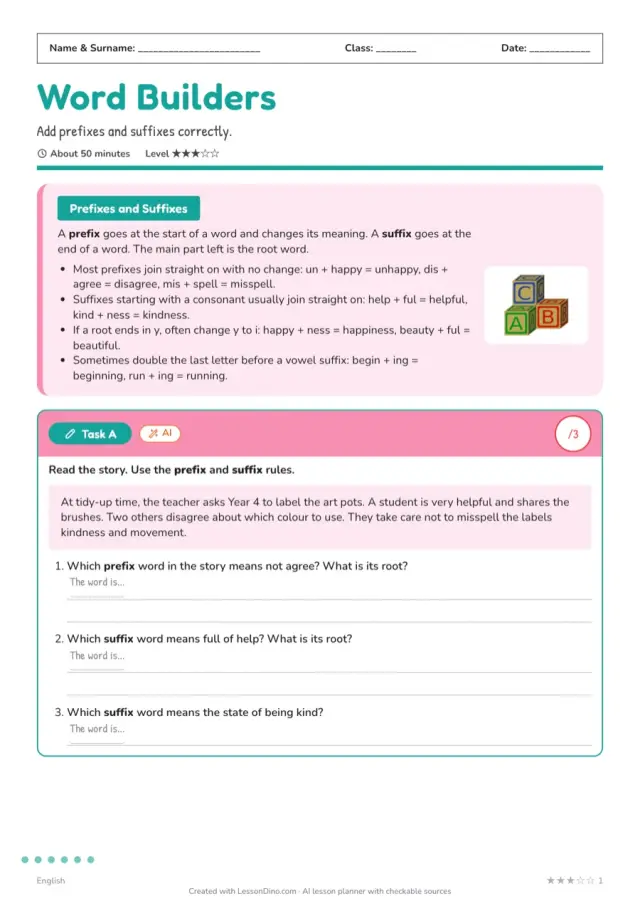
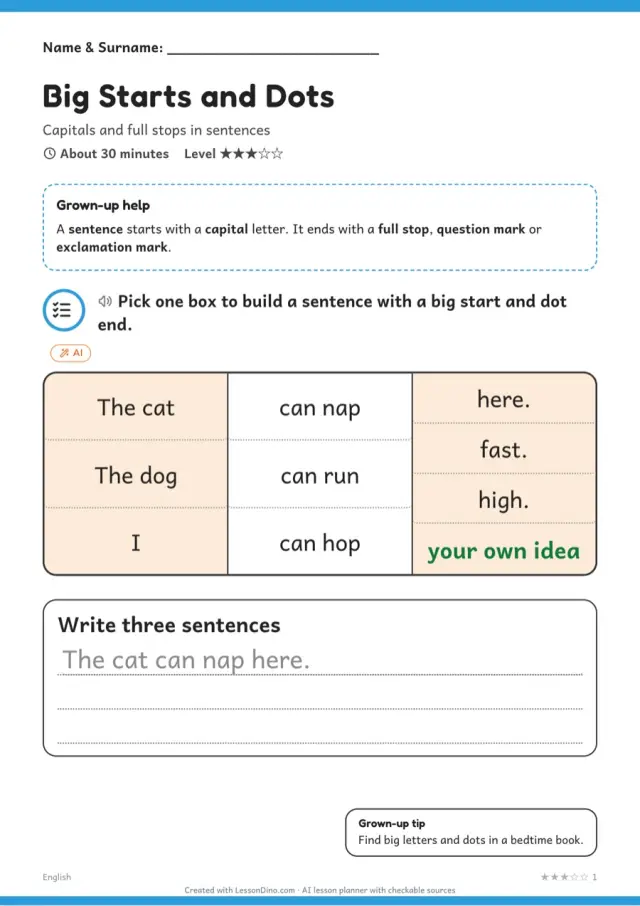
The worksheet
About this worksheet
Pupils learn to link ideas with when, if, because and although. They repair short ideas into super sentences and write their own. This Year 4 English worksheet gives students (ages 8–9) five pages of practice on subordinating conjunctions, part of the grammar and punctuation unit. It goes with our free Subordinating conjunctions lesson, which has the slides and a timed lesson plan.
What it covers
By the end, students should be able to:
- Students will join two short ideas into one sentence using when, if, because or although.
- Students will choose the best joiner to show time, condition, reason or contrast.
- Students will write super sentences with the extra part in the middle or at the start.
How to use it
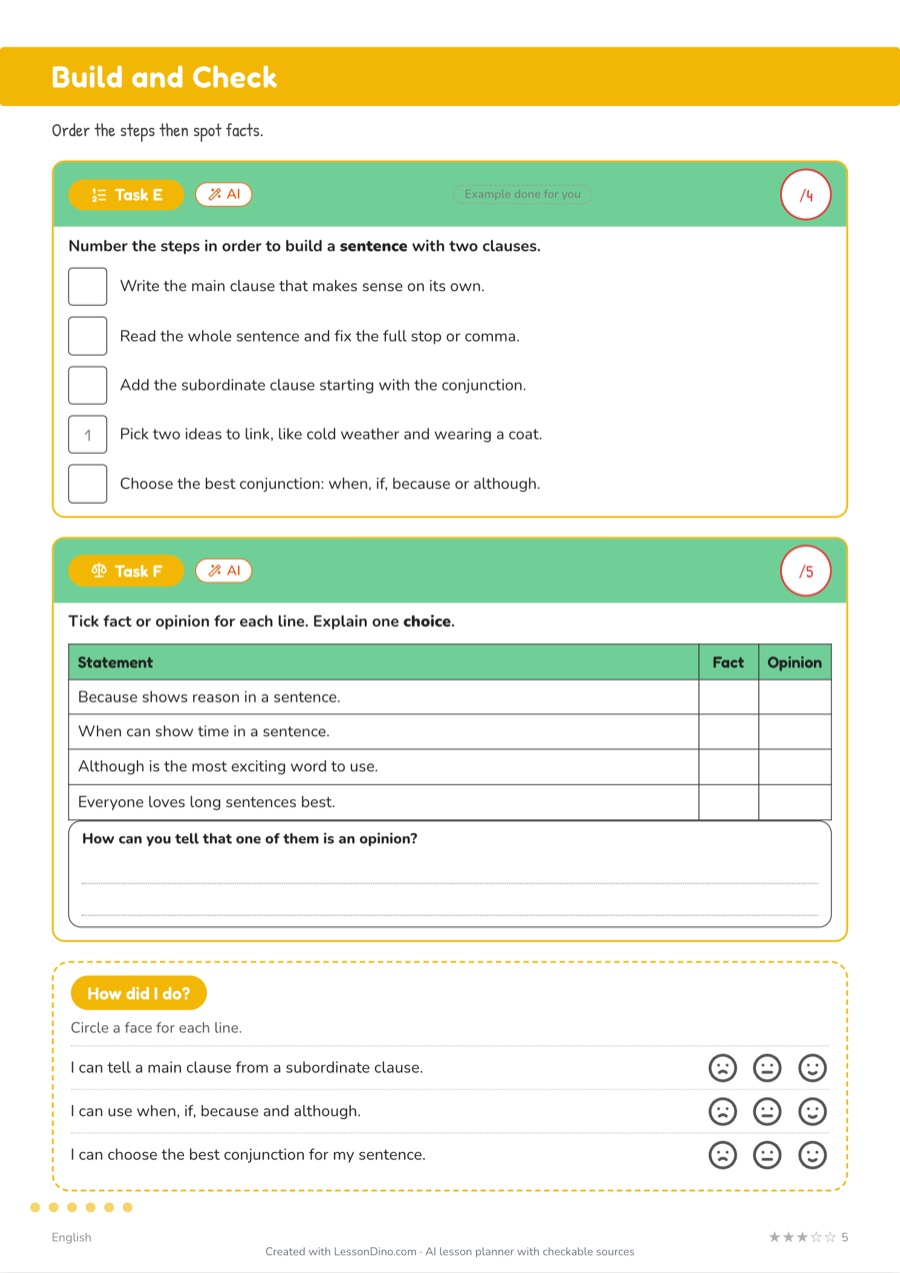
- Plenary (13 minutes): Hand out Worksheet Task E and ask pupils to number the steps in order to build a sentence with two clauses.
- Support: Provide sentence frames with the conjunction already printed in the middle, so pupils only add the endings.
- Stretch: Ask pupils to rewrite the same repaired sentence starting with the subordinate clause and add the comma.
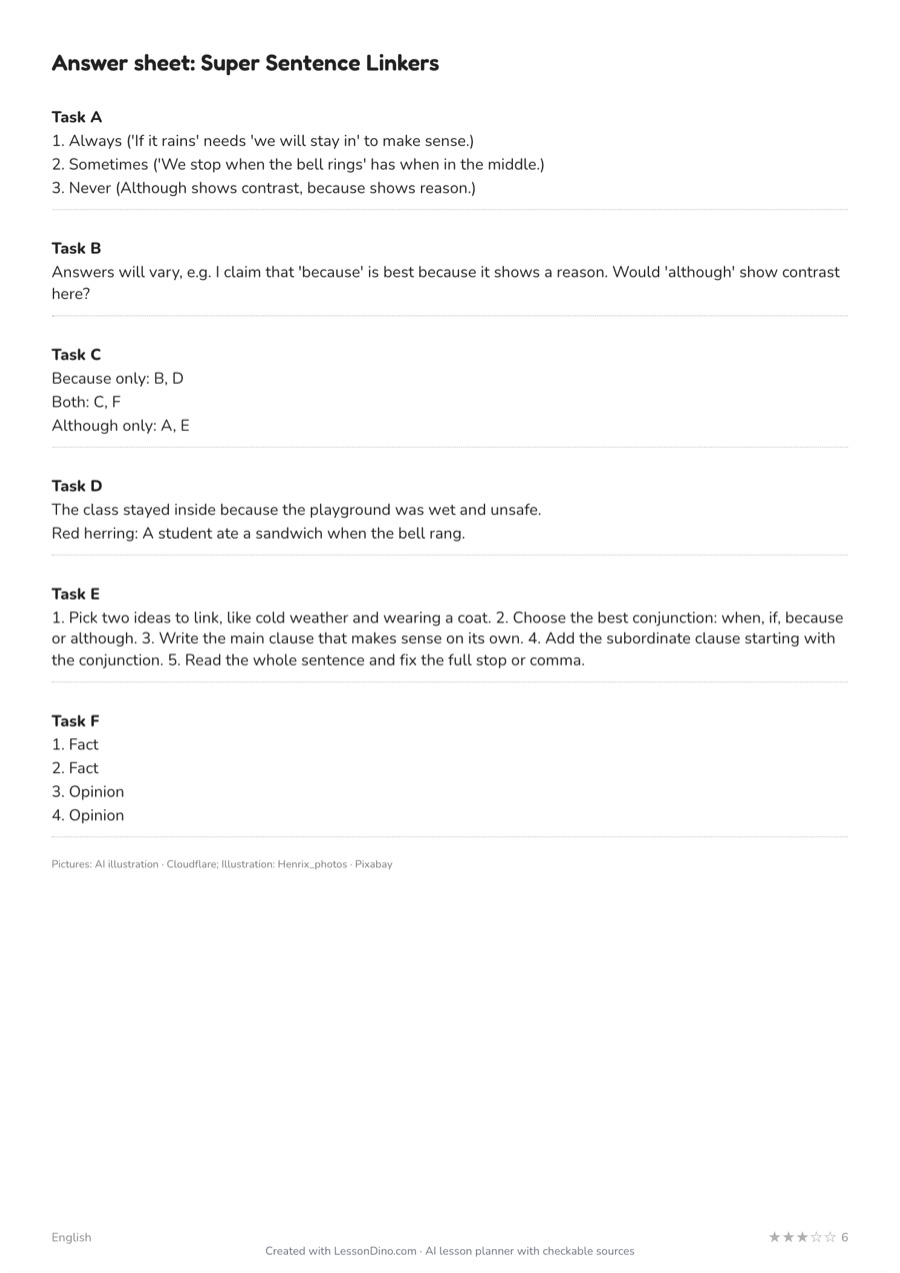
- The answer sheet is the last page, so you can print it on its own or let students check their own work.
Key vocabulary
- conjunction: a joining word that links two parts of a sentence
- main clause: a short idea that makes sense on its own as a sentence
- subordinate clause: an extra idea that needs another part to make complete sense
- although: a joining word that shows a surprise or contrast between ideas
Mistakes to watch for
- Writing the extra part alone as a sentence, e.g. Because I was hungry. Show it does not make sense on its own and must be added to a main clause to complete the idea; clap the main part only.
- Using because for every sentence. Ask what the link is: time, condition, reason or contrast, and push when, if and although as well as because.
- Mixing up although and but and trying to swap them. Explain but links two clauses as an equal pair, while although introduces a subordinate clause; practise Although she was tired, she kept reading with a comma.
What's on the worksheet
Joining Clauses Together
Learn how four linkers join two ideas.
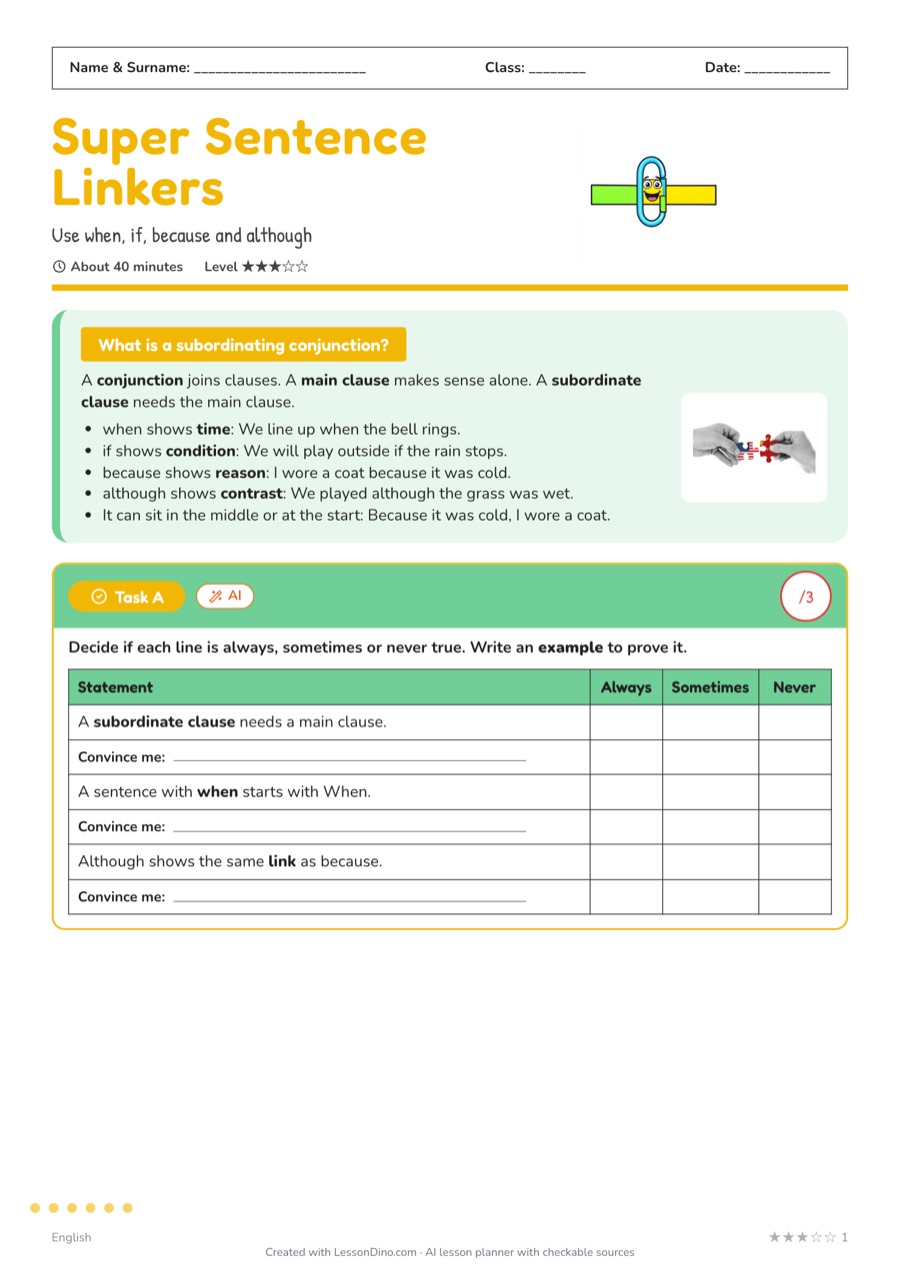
What is a subordinating conjunction?
- A conjunction joins clauses. A main clause makes sense alone. A subordinate clause needs the main clause.
- when shows time: We line up when the bell rings.
- if shows condition: We will play outside if the rain stops.
- because shows reason: I wore a coat because it was cold.
- although shows contrast: We played although the grass was wet.
- It can sit in the middle or at the start: Because it was cold, I wore a coat.
Decide if each line is always, sometimes or never true. Write an example to prove it.
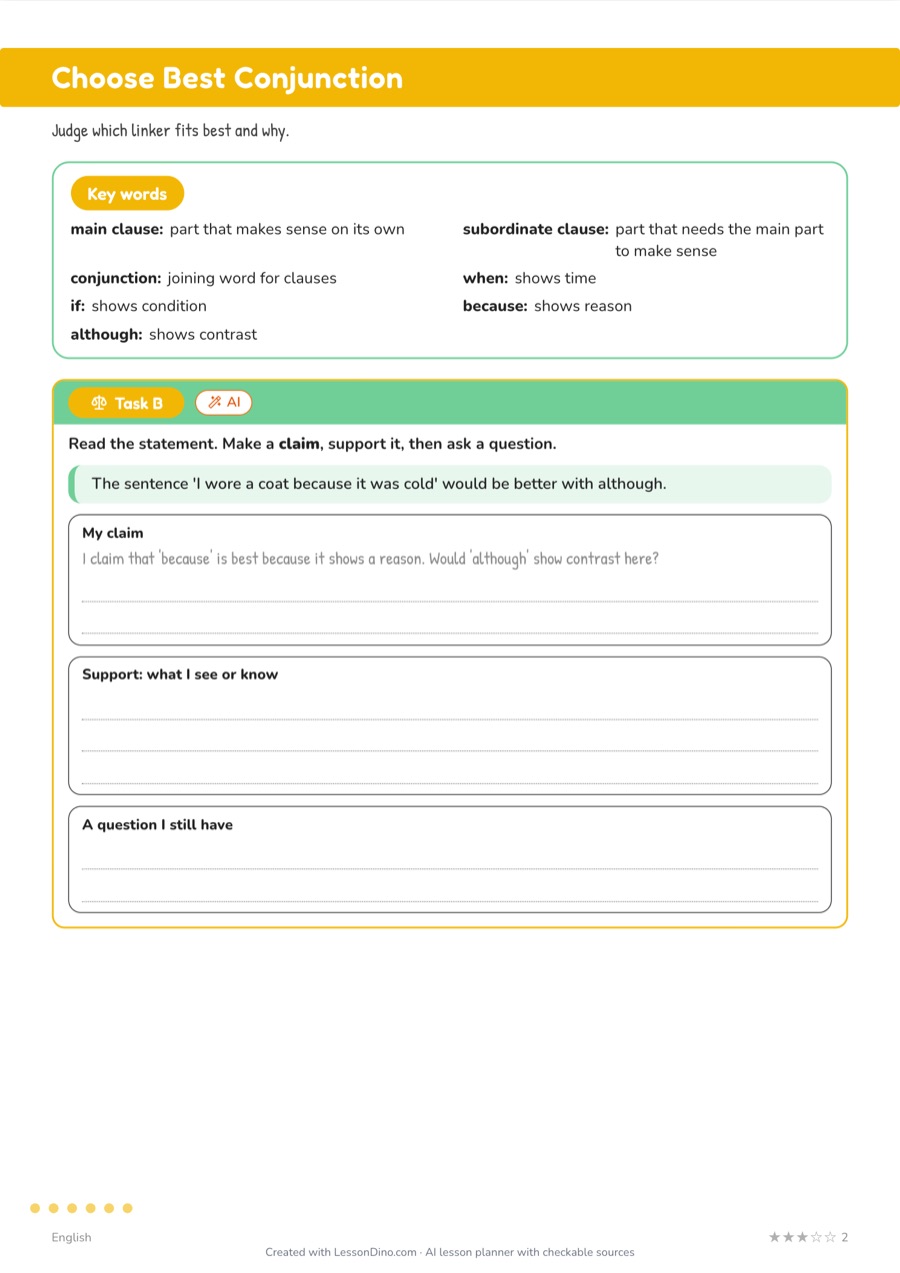
Choose Best Conjunction
Judge which linker fits best and why.
| Word | Meaning |
|---|---|
| main clause | part that makes sense on its own |
| subordinate clause | part that needs the main part to make sense |
| conjunction | joining word for clauses |
| when | shows time |
| if | shows condition |
| because | shows reason |
| although | shows contrast |
Read the statement. Make a claim, support it, then ask a question.
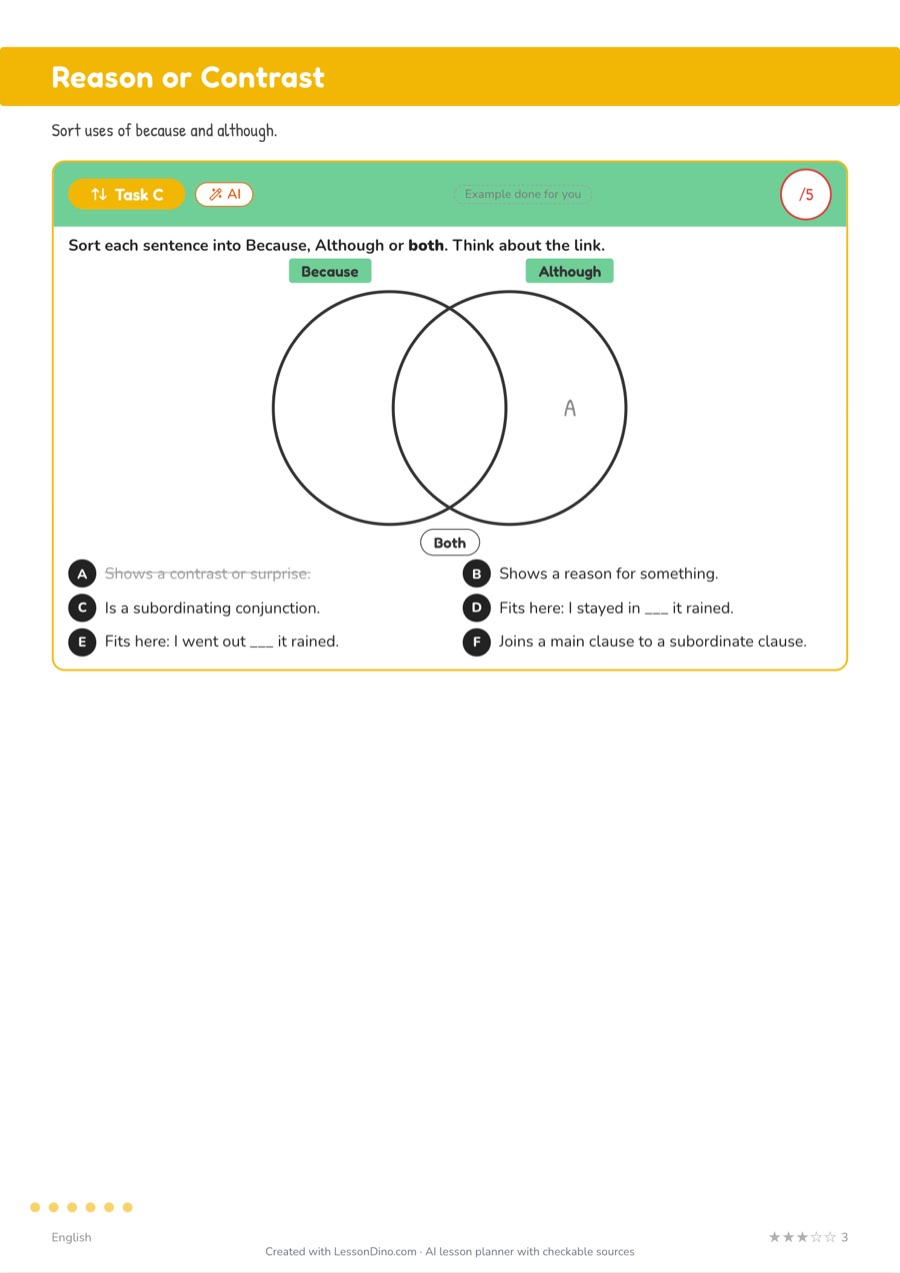
Reason or Contrast
Sort uses of because and although.
Sort each sentence into Because, Although or both. Think about the link.
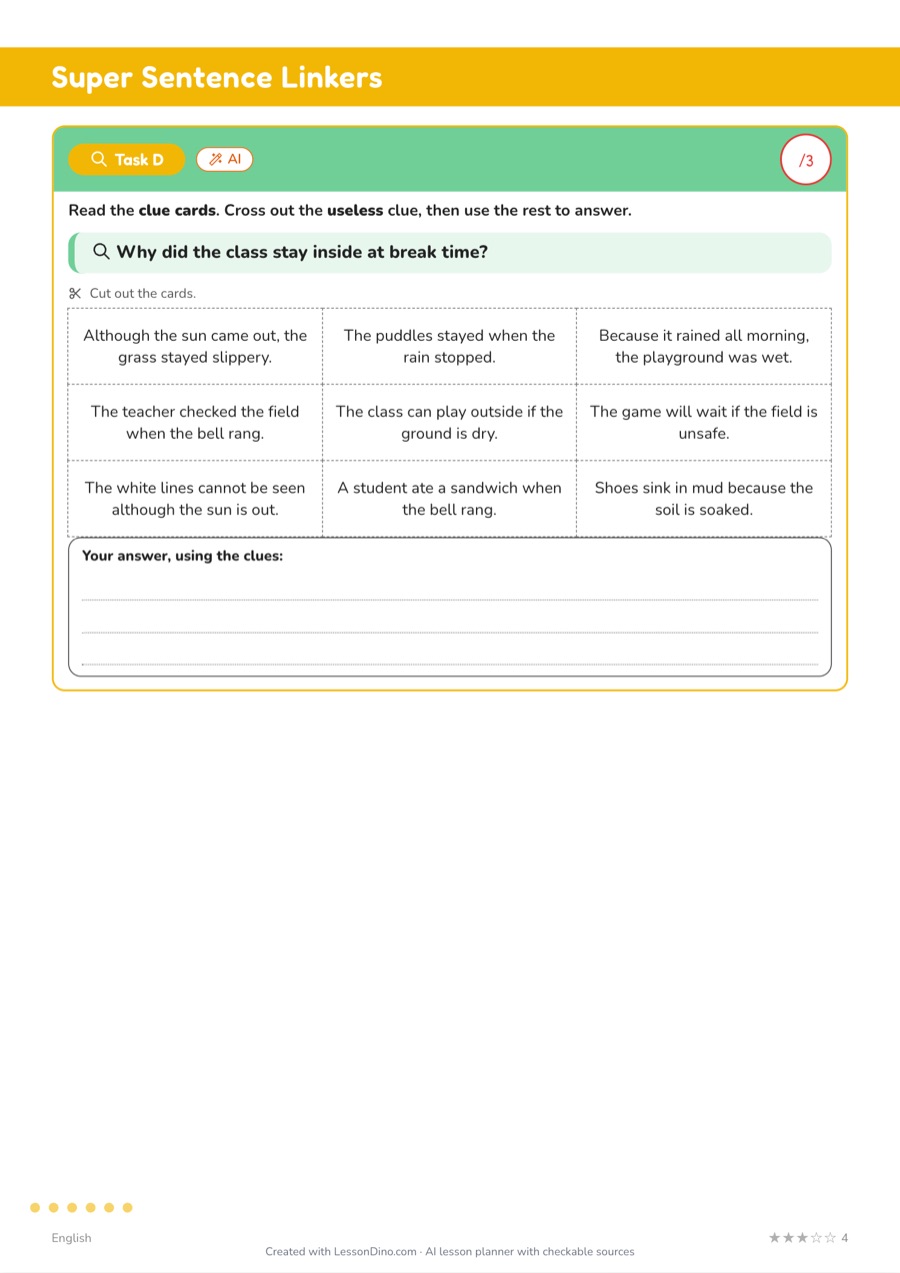
Page 4
Read the clue cards. Cross out the useless clue, then use the rest to answer.
Build and Check
Order the steps then spot facts.
Number the steps in order to build a sentence with two clauses.
Tick fact or opinion for each line. Explain one choice.
Answers
Show the answers
The answers are on the answer sheet, the last picture above.
Curriculum
extending the range of sentences with more than one clause by using a wider range of conjunctions, including: when, if, because, although
Made with Lesson Dino's AI on 19 October 2026. AI can make mistakes, so check the answers and facts against the sources before you teach.