The worksheet
About this worksheet
Pupils compare rocks by colour, feel, shape and weight. They sort rocks into groups and explain their choices. This Year 3 Science worksheet gives students (ages 7–8) six pages of practice on rocks. It goes with our free Rocks lesson, which has the slides and a timed lesson plan.
What it covers
By the end, students should be able to:
- Students will compare rocks by colour, texture, shape and weight.
- Students will group rocks with matching appearance and properties.
- Students will explain rock groups using features they observed.
How to use it
- Use it for practice after the teaching part of the lesson, once students have seen the worked examples on the slides.
- Support: Give a sorting mat with two choices, such as spotty or not spotty, to limit choices.
- Stretch: Ask students to split one large group into two smaller groups using a second feature.
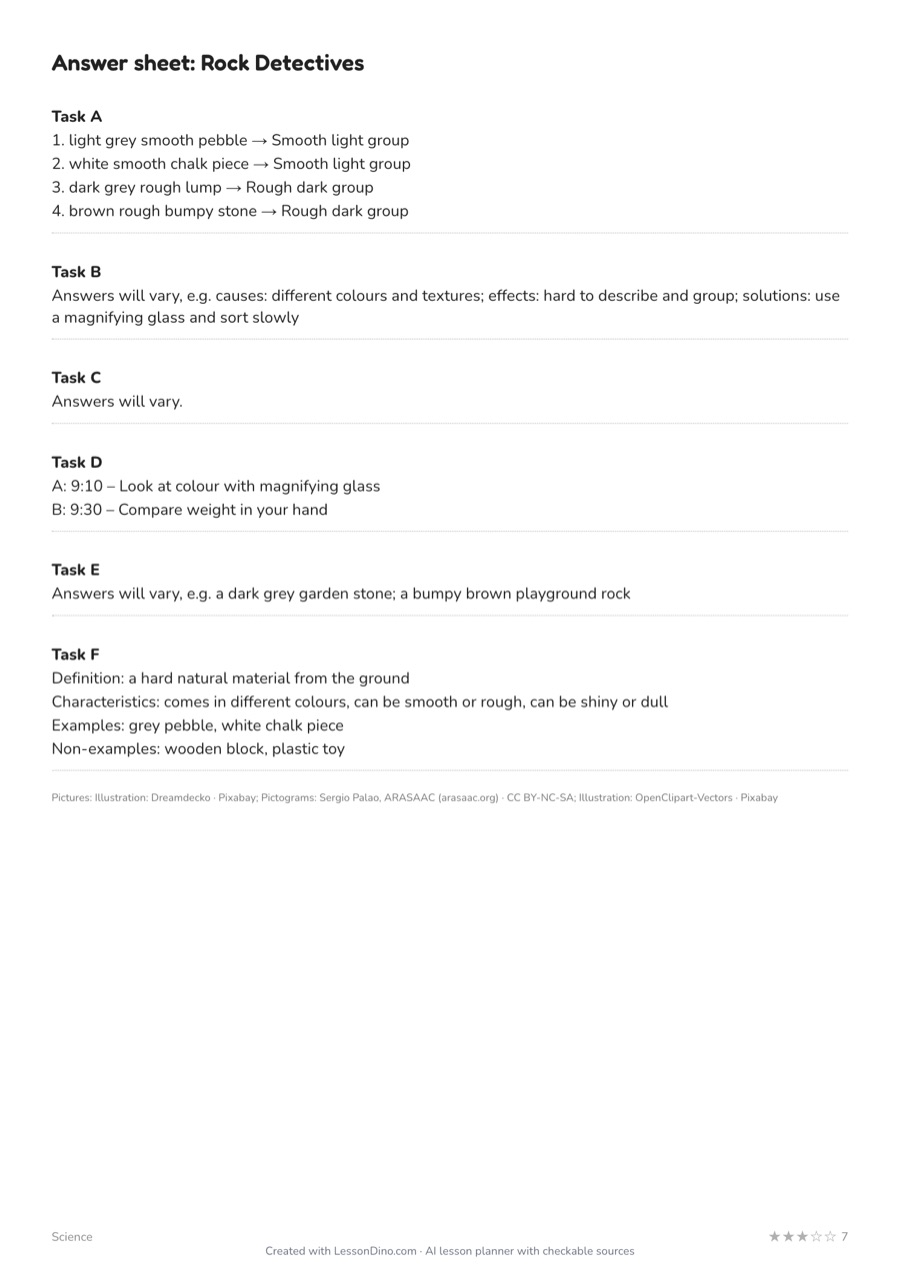
- The answer sheet is the last page, so you can print it on its own or let students check their own work.
Key vocabulary
- appearance: what something looks like to your eyes
- texture: how rough or smooth something feels when you touch
- property: something you can see or feel about an object
- group: things put together because they match
Mistakes to watch for
- Thinking size is the same as weight and putting all big rocks as heavy. Hold same-sized rocks, one in each hand, to compare heavy for its size, then check feel again.
- Grouping only by favourite colour shade and ignoring spots, stripes or texture. Use magnifying glass to explore examples closely and re-sort by spots, holes or shiny bits.
- Thinking there are only the three names igneous, sedimentary and metamorphic so appearance does not matter. Remind them to name groups by property first, e.g. rough darks, then link to scientist groups later.
What's on the worksheet
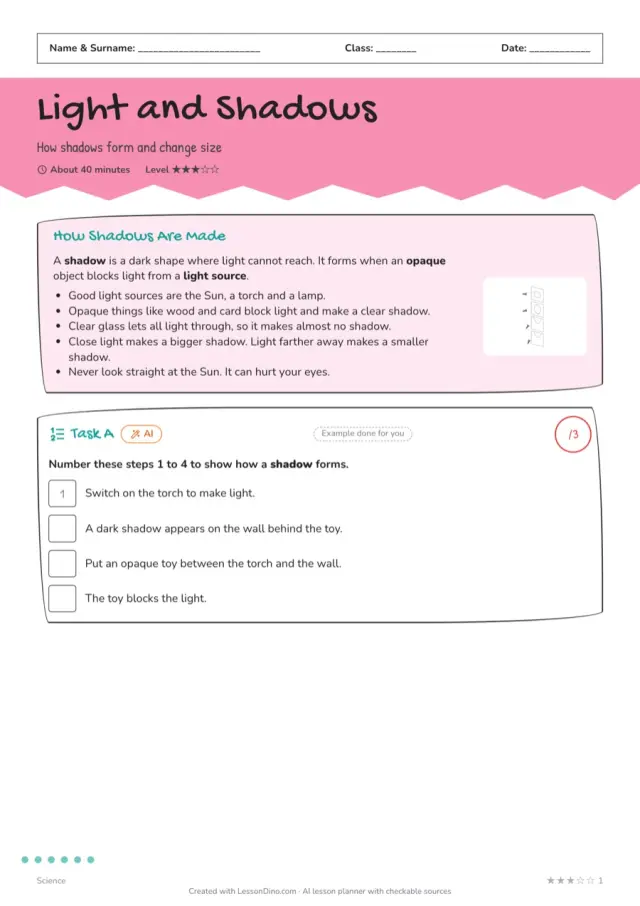
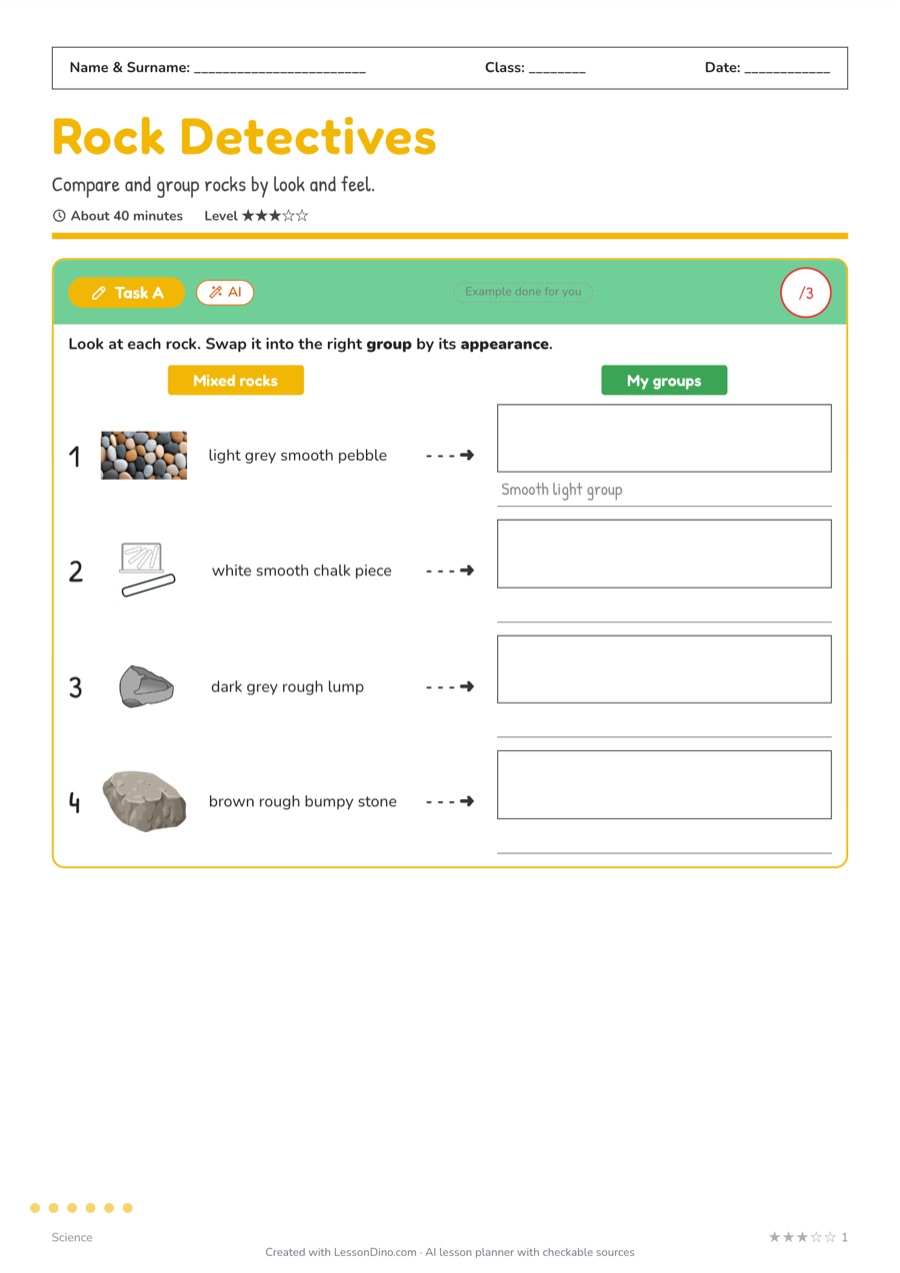
Look at Rocks
Compare rocks by what you can see and feel.
Look at each rock. Swap it into the right group by its appearance.
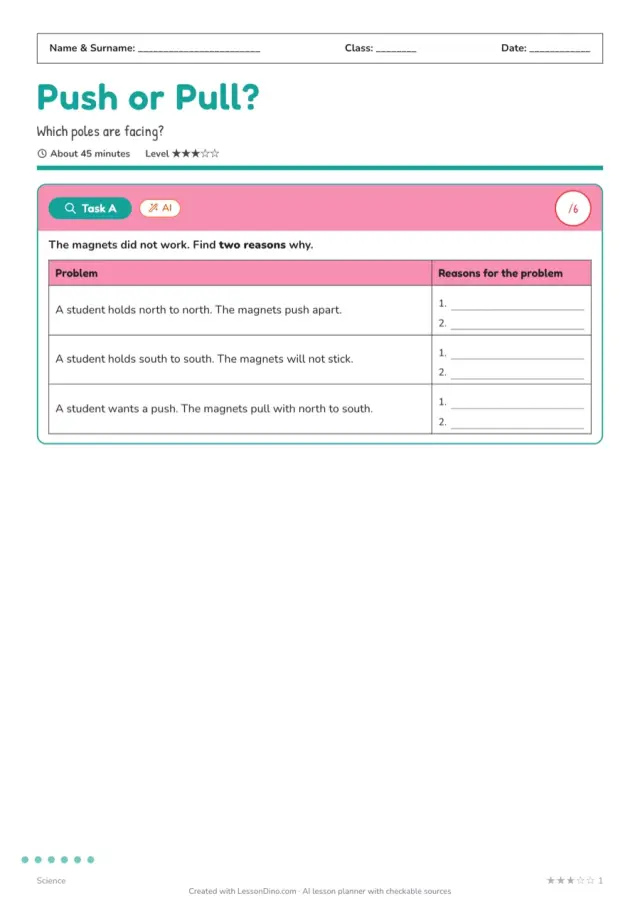
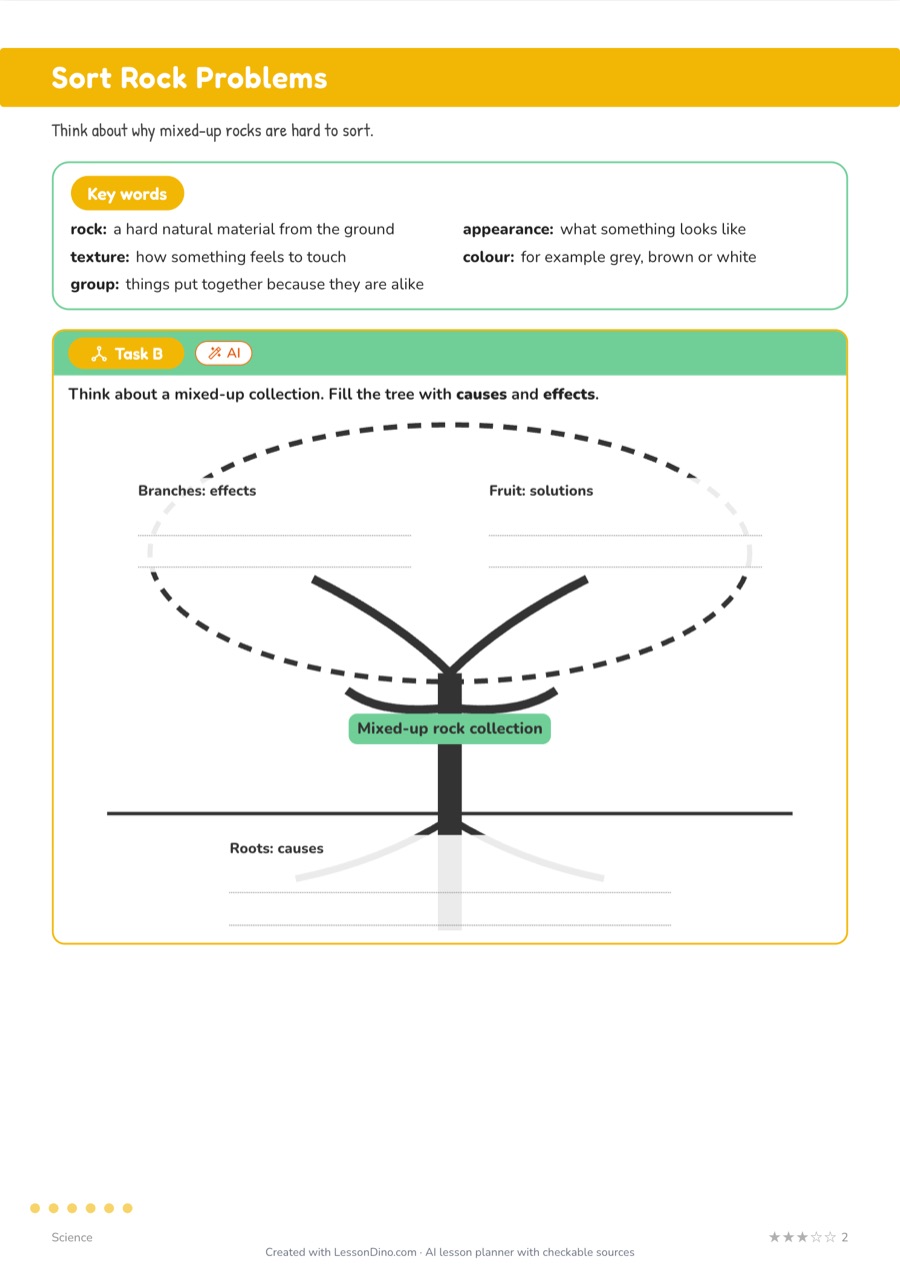
Sort Rock Problems
Think about why mixed-up rocks are hard to sort.
| Word | Meaning |
|---|---|
| rock | a hard natural material from the ground |
| appearance | what something looks like |
| texture | how something feels to touch |
| colour | for example grey, brown or white |
| group | things put together because they are alike |
Think about a mixed-up collection. Fill the tree with causes and effects.
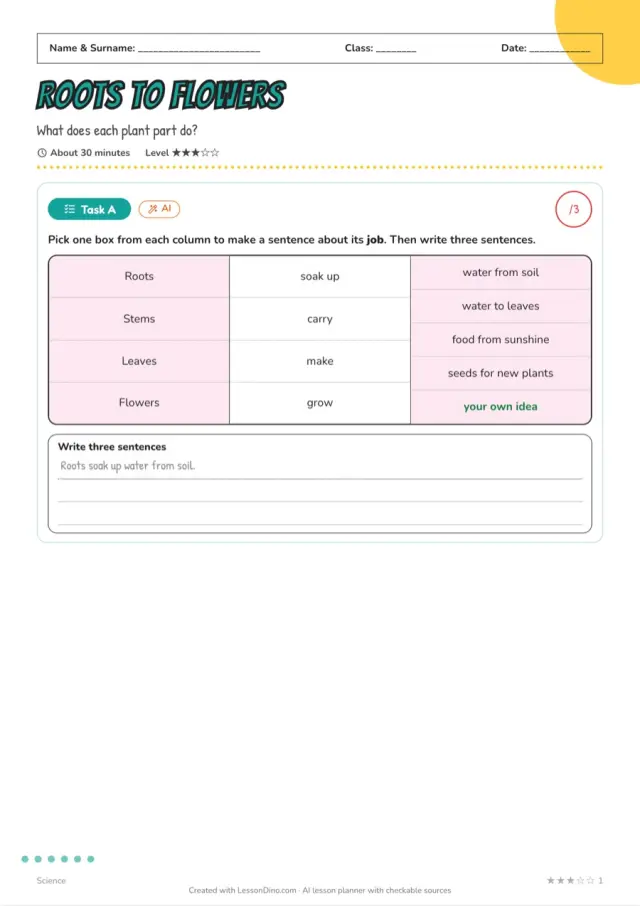
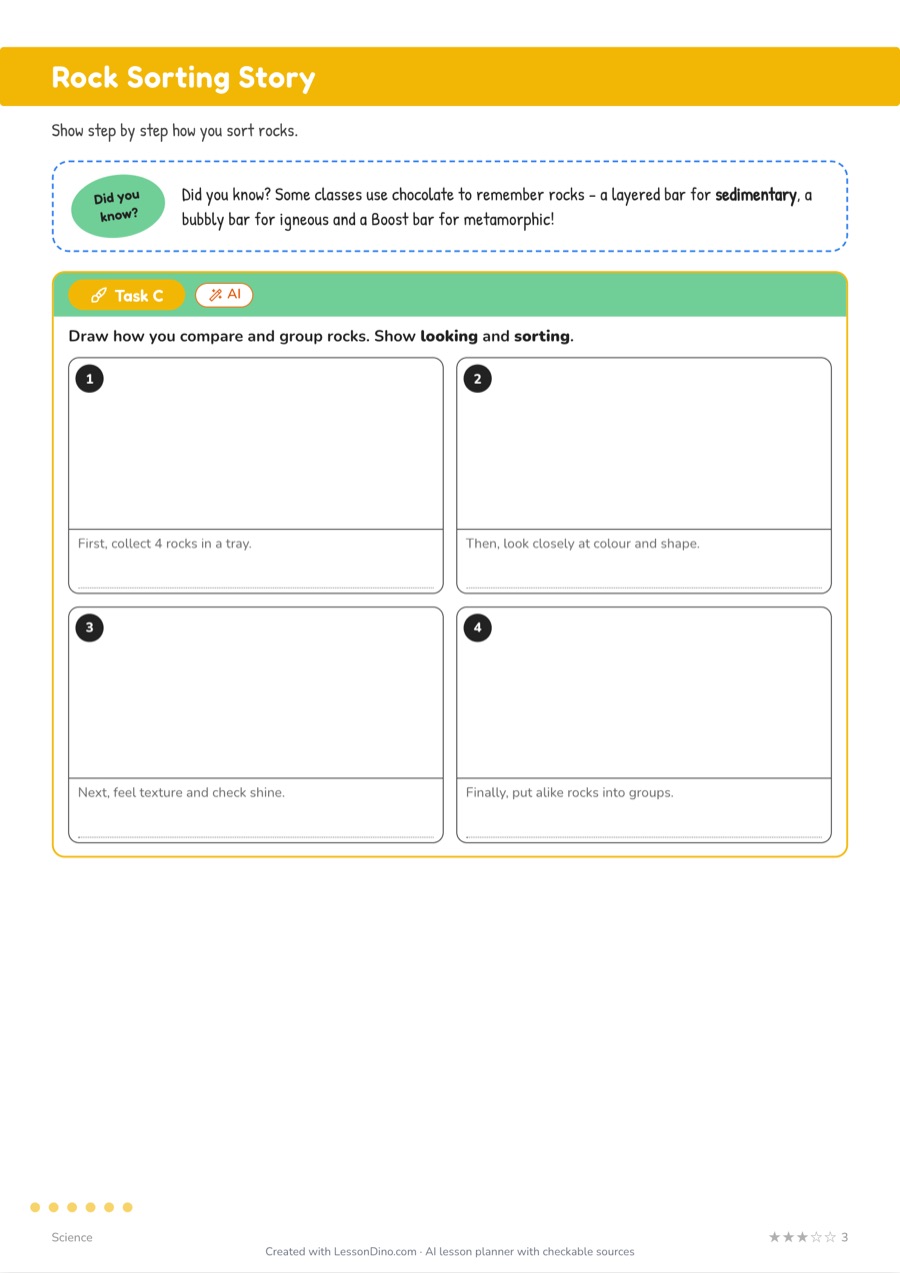
Rock Sorting Story
Show step by step how you sort rocks.
- Did you know? Some classes use chocolate to remember rocks - a layered bar for sedimentary, a bubbly bar for igneous and a Boost bar for metamorphic!
Draw how you compare and group rocks. Show looking and sorting.
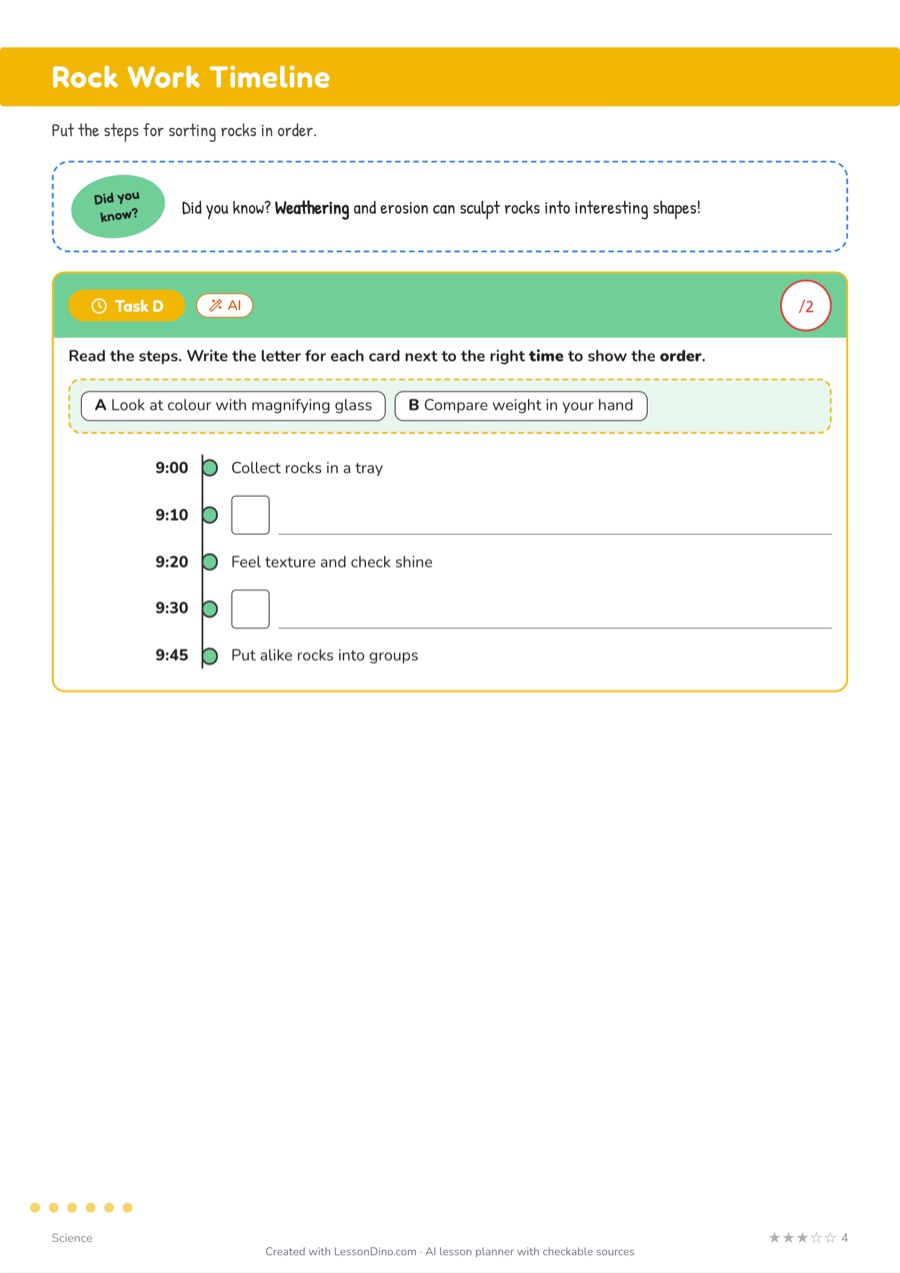
Rock Work Timeline
Put the steps for sorting rocks in order.
- Did you know? Weathering and erosion can sculpt rocks into interesting shapes!
Read the steps. Write the letter for each card next to the right time to show the order.
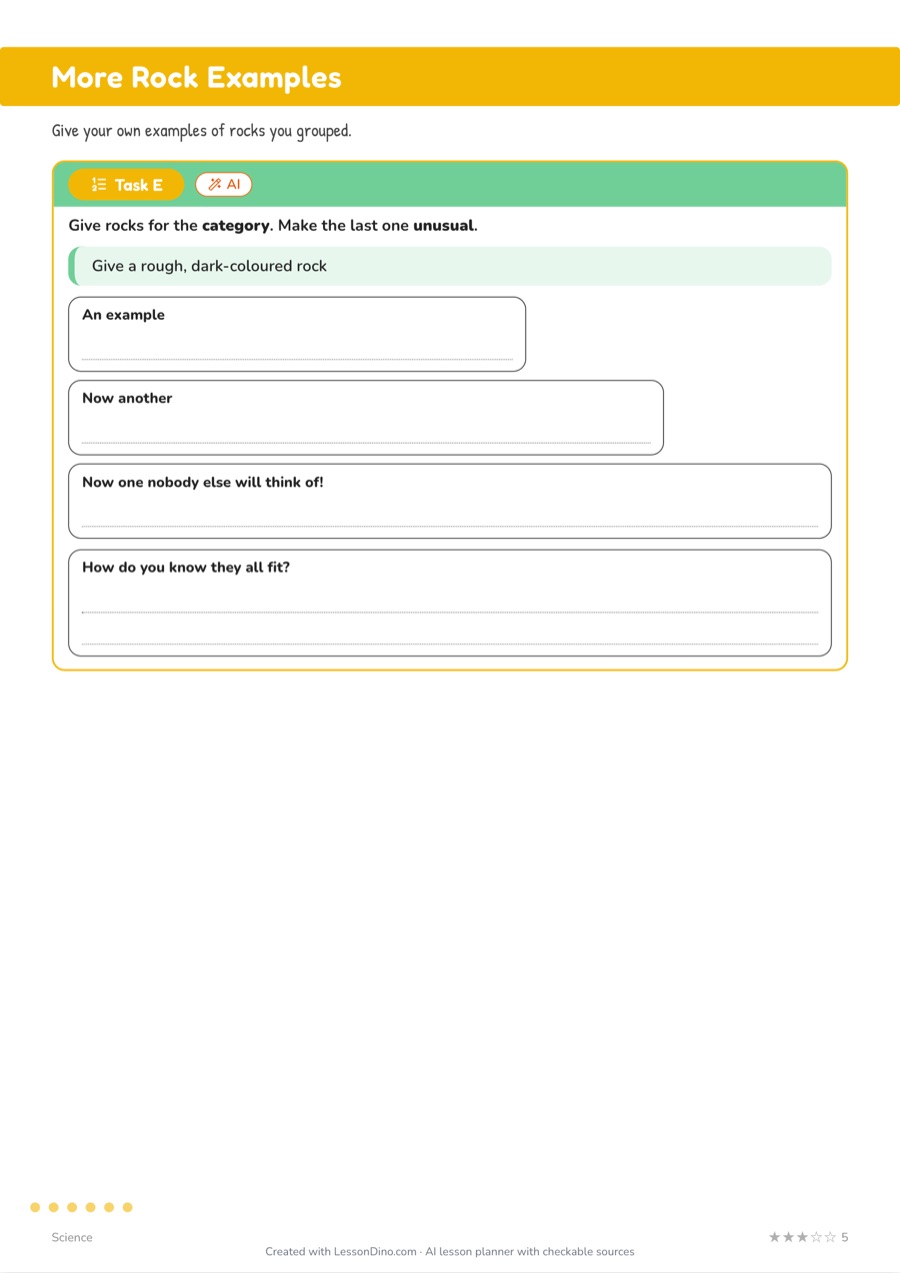
More Rock Examples
Give your own examples of rocks you grouped.
Give rocks for the category. Make the last one unusual.
Page 6
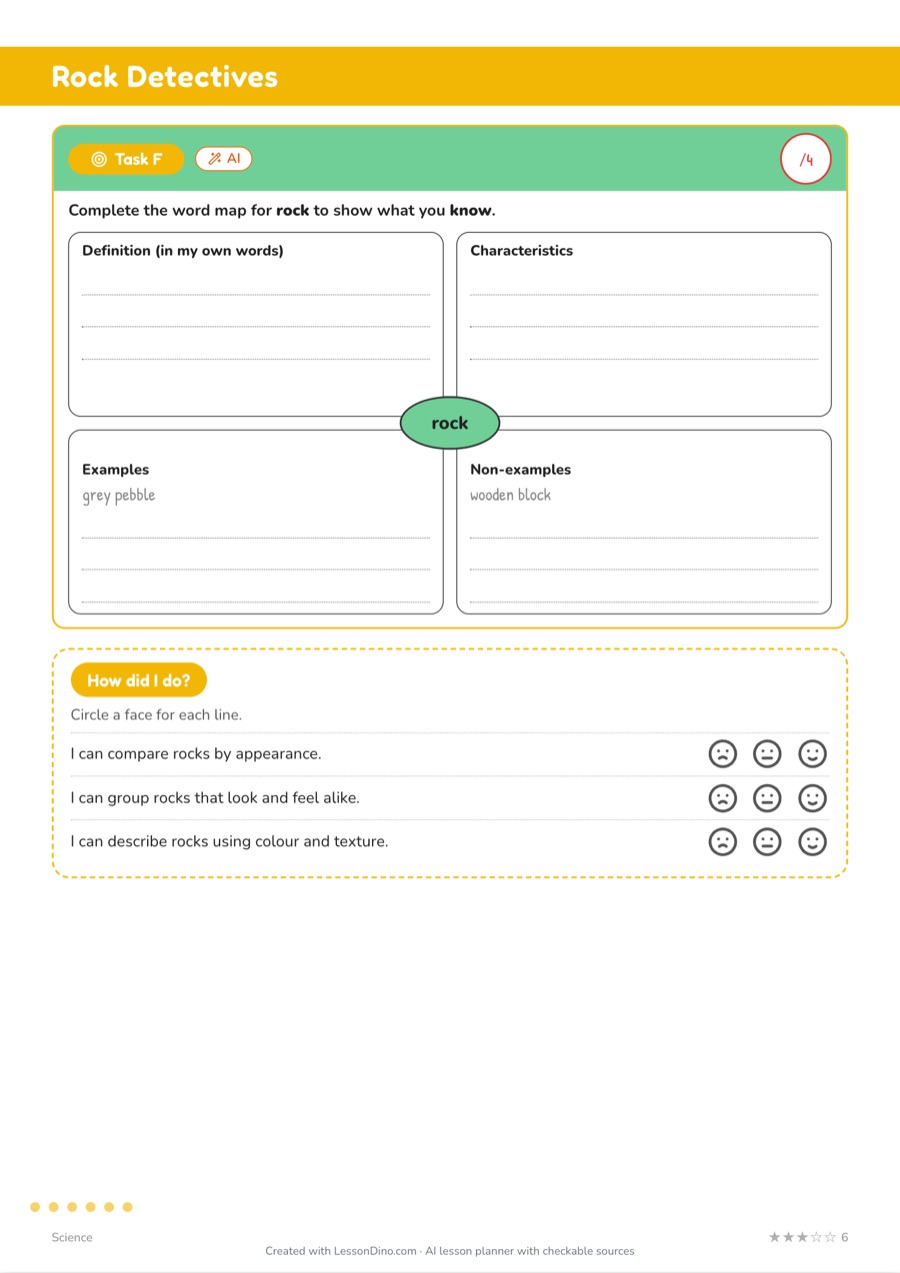
Complete the word map for rock to show what you know.
Answers
Show the answers
The answers are on the answer sheet, the last picture above.
Curriculum
compare and group together different kinds of rocks on the basis of their appearance and simple physical properties
Made with Lesson Dino's AI on 17 October 2026. AI can make mistakes, so check the answers and facts against the sources before you teach.