The worksheet
About this worksheet
Pupils learn the pole rule for attract and repel. They predict for each pole pair then test it with bar magnets. This Year 3 Science worksheet gives students (ages 7–8) five pages of practice on magnets, part of the forces and magnets unit. It goes with our free Magnets lesson, which has the slides and a timed lesson plan.
What it covers
By the end, students should be able to:
- Students will name the north pole and south pole on a bar magnet.
- Students will predict attract or repel from the poles facing each other.
- Students will test predictions by bringing poles close without touching.
How to use it
- Main activity (20 minutes): Give out two bar magnets, prediction sheets and Worksheet Task C strips.
- Support: Give a card showing N–S with arrows together and N–N with arrows apart to copy.
- Stretch: Ask students to predict what will happen if one magnet is turned round before testing.
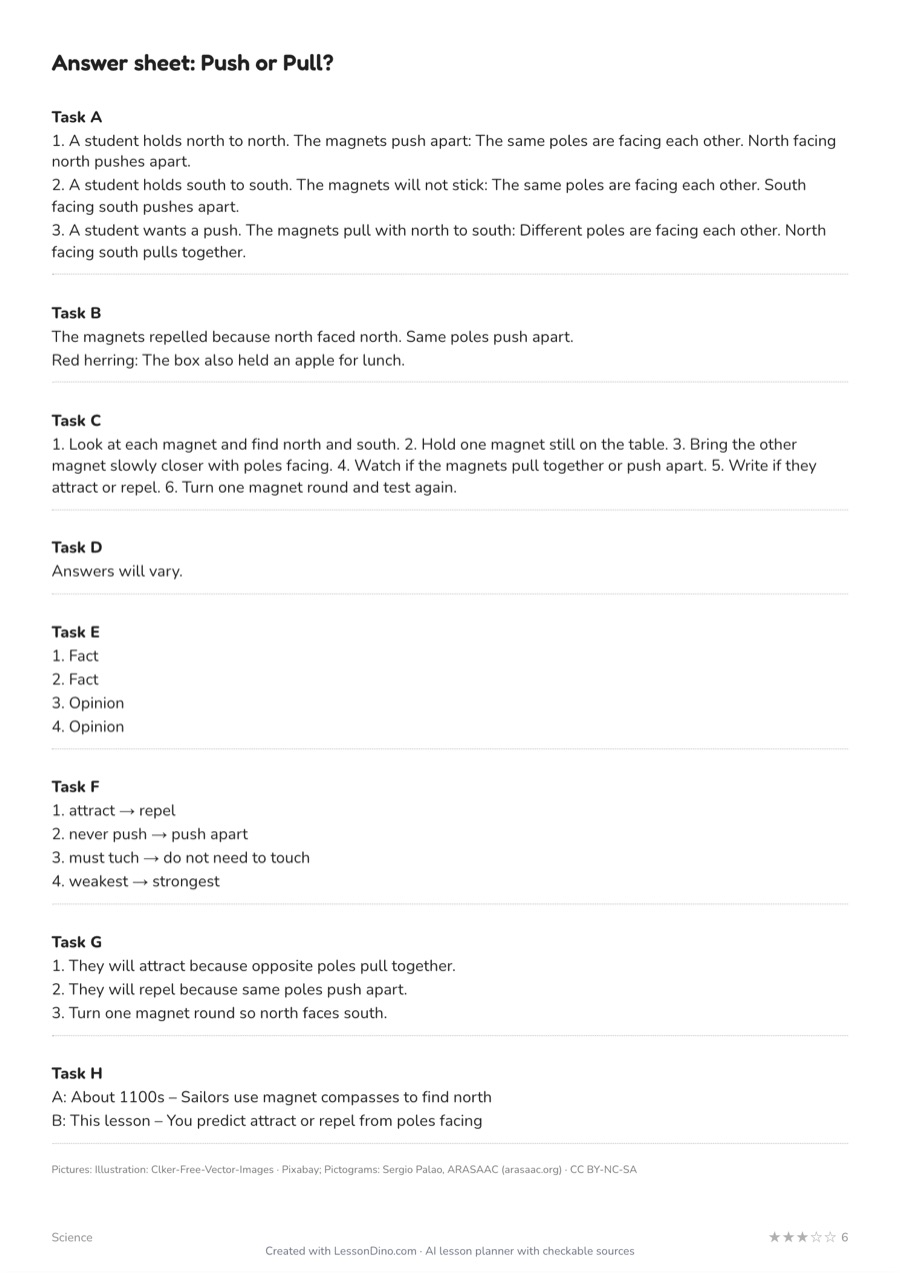
- The answer sheet is the last page, so you can print it on its own or let students check their own work.
Key vocabulary
- north pole: one marked end of a bar magnet
- south pole: the other marked end of a bar magnet
- attract: to pull together, like opposite ends snapping together
- repel: to push apart, like same ends moving away
- predict: to say what will happen before you try it
Mistakes to watch for
- Thinking the same poles attract, predicting attract for North–North. Name both facing poles first, then use same means push apart and test slowly to feel the push.
- Thinking magnets only work when touching. Hold a small gap and feel the pull or push, magnetism can act without direct contact.
- Predicting without looking at which poles are facing. Insist on saying North faces… then apply opposite attract, same repel.
What's on the worksheet
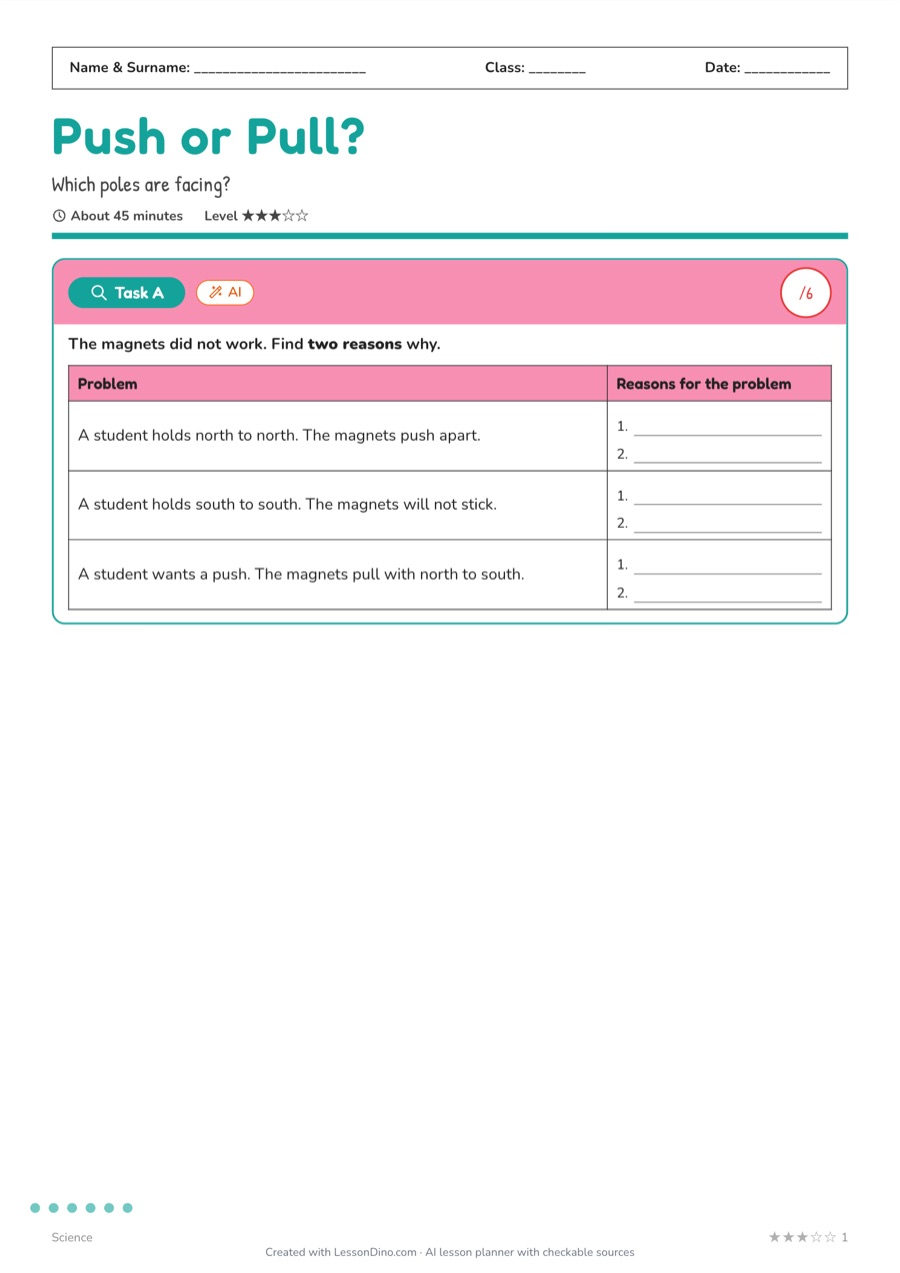
Poles Decide!
Learn how poles make magnets pull or push.
The magnets did not work. Find two reasons why.
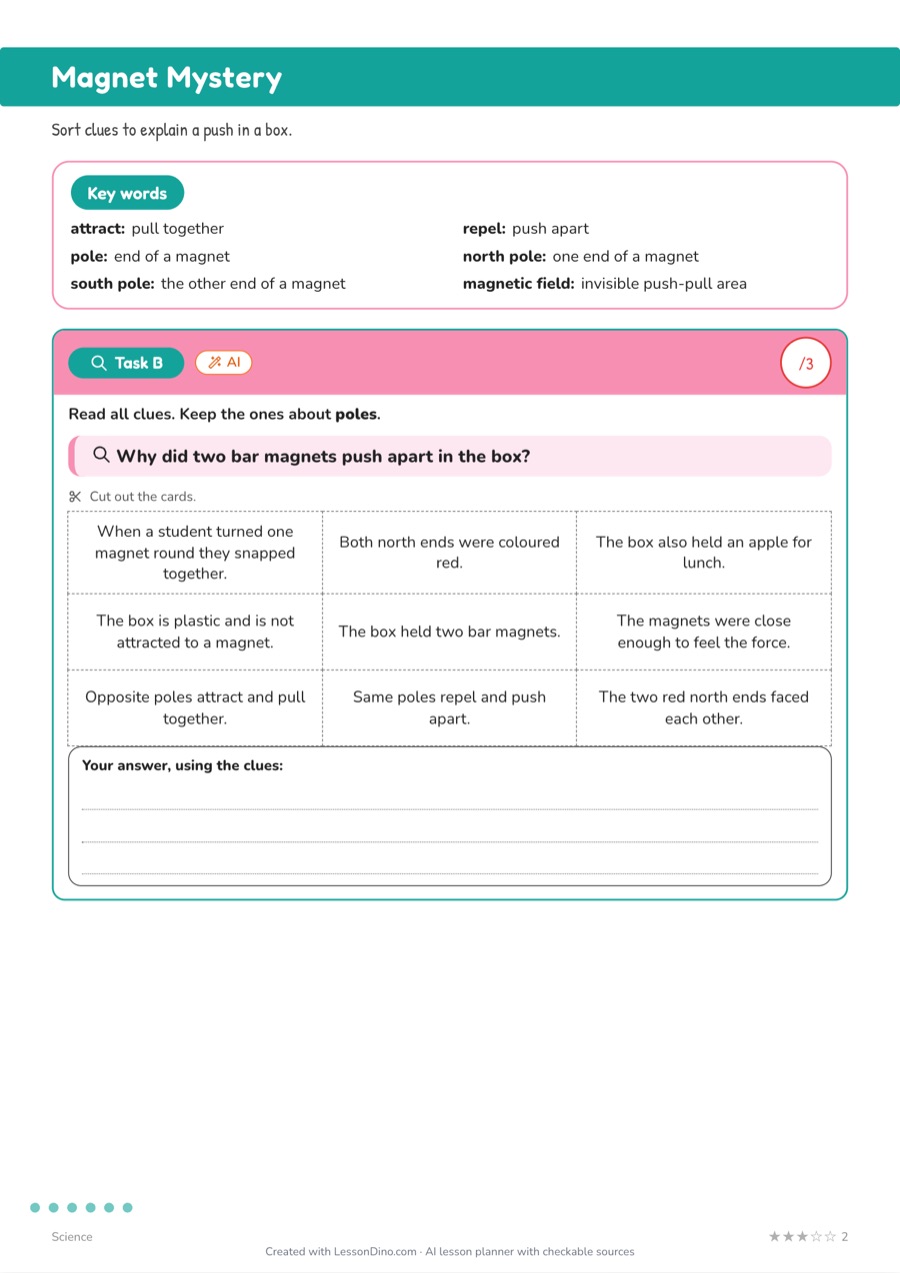
Magnet Mystery
Sort clues to explain a push in a box.
| Word | Meaning |
|---|---|
| attract | pull together |
| repel | push apart |
| pole | end of a magnet |
| north pole | one end of a magnet |
| south pole | the other end of a magnet |
| magnetic field | invisible push-pull area |
Read all clues. Keep the ones about poles.
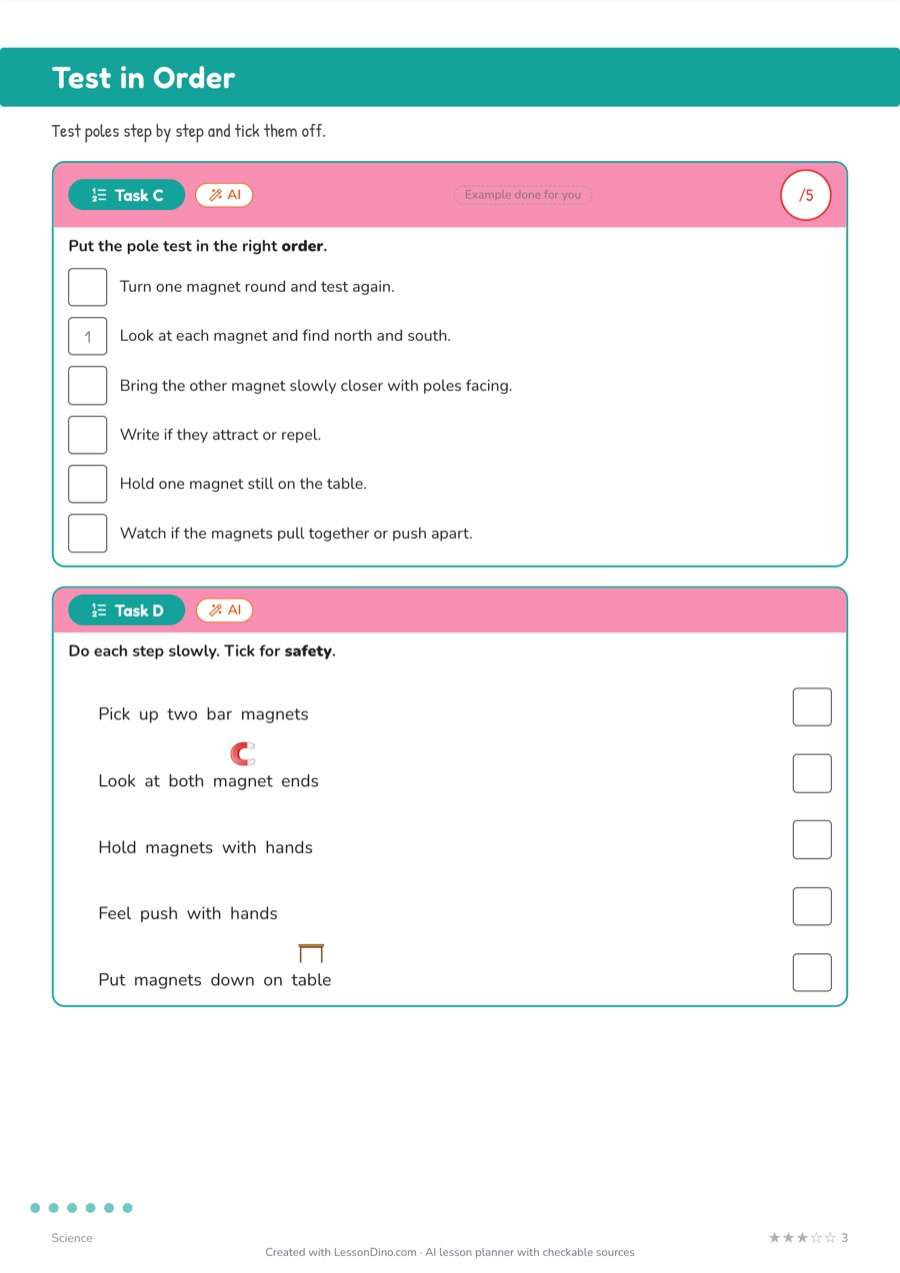
Test in Order
Test poles step by step and tick them off.
Put the pole test in the right order.
Do each step slowly. Tick for safety.
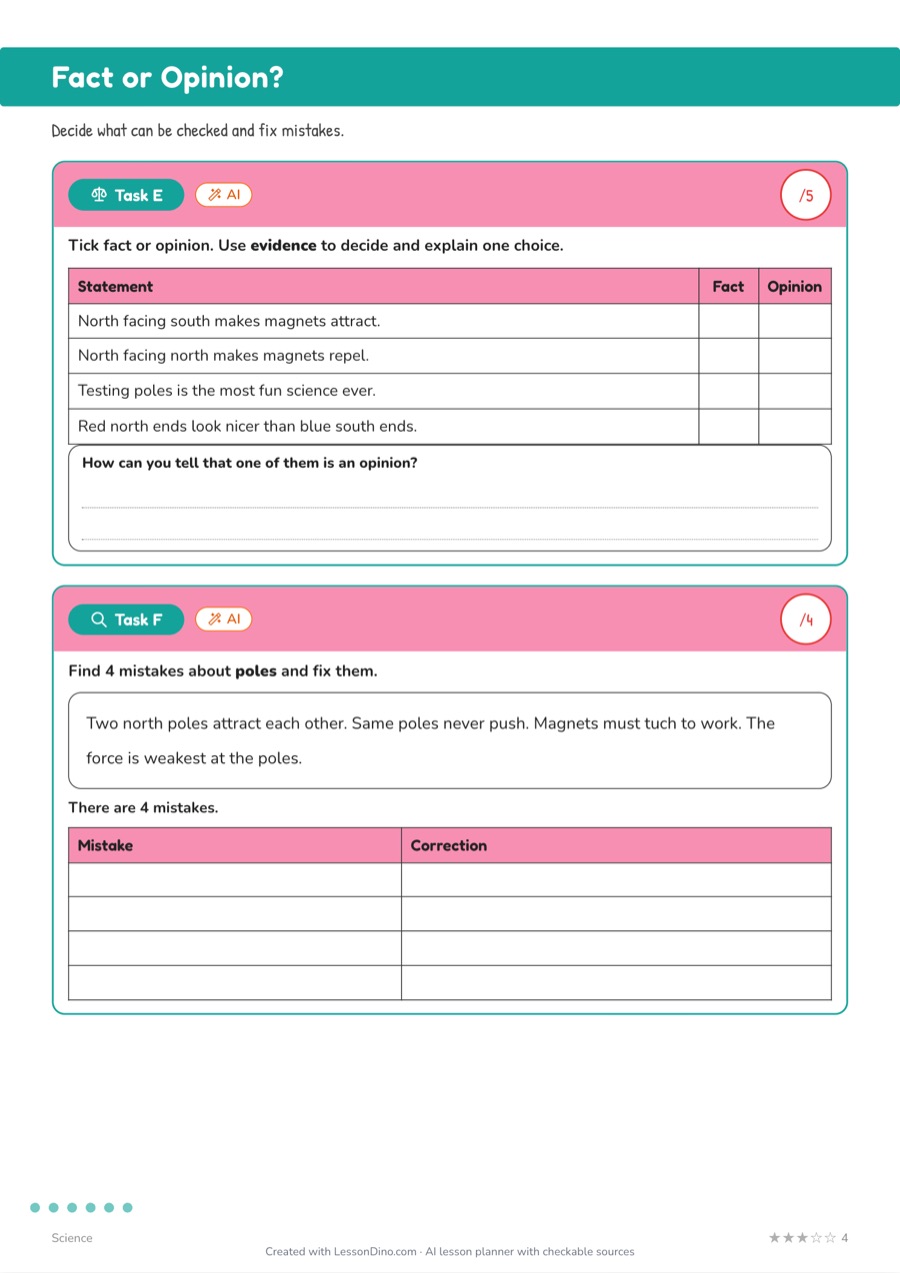
Fact or Opinion?
Decide what can be checked and fix mistakes.
Tick fact or opinion. Use evidence to decide and explain one choice.
Find 4 mistakes about poles and fix them.
- Two north poles attract each other. Same poles never push. Magnets must tuch to work. The force is weakest at the poles.
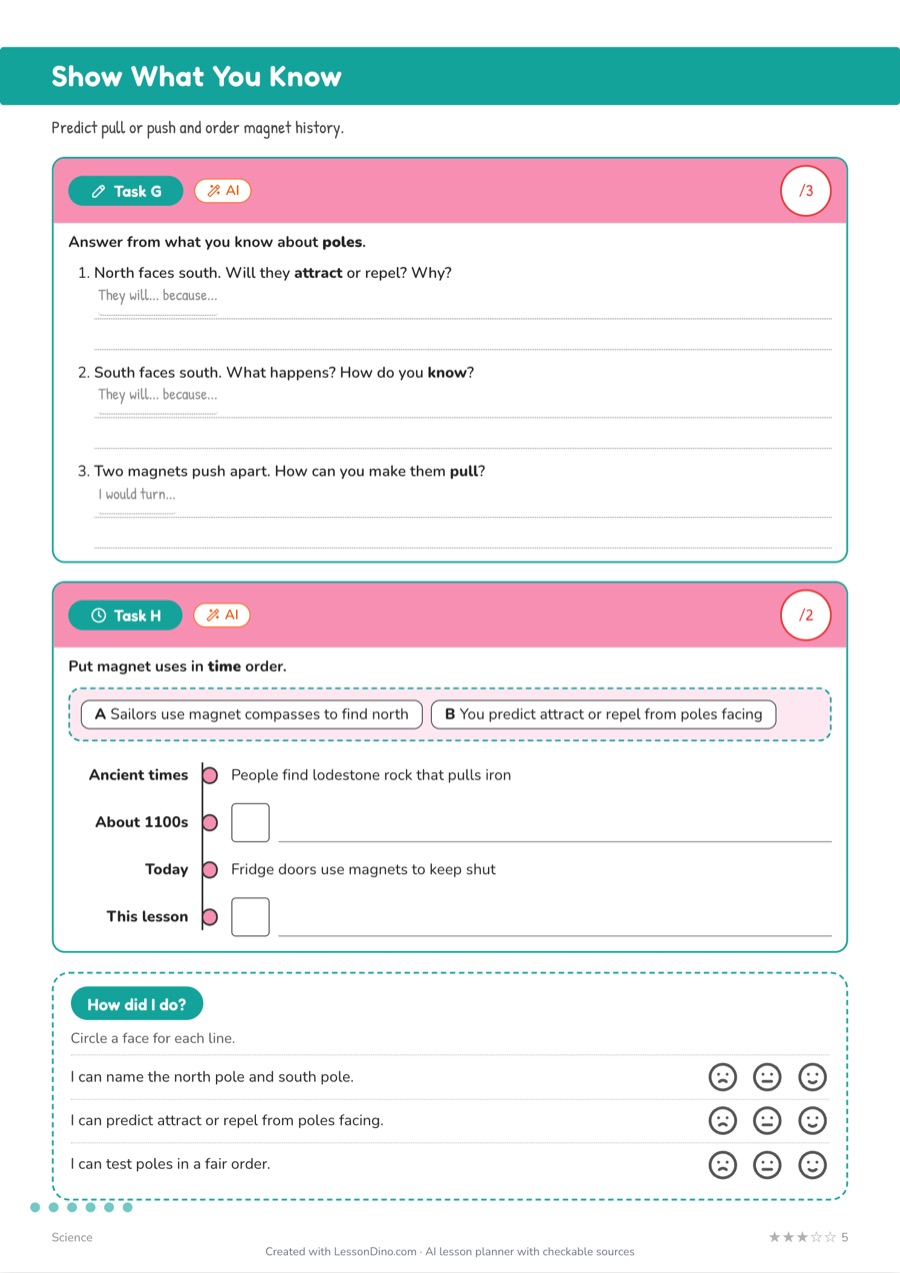
Show What You Know
Predict pull or push and order magnet history.
Answer from what you know about poles.
- North faces south. Will they attract or repel? Why?
- South faces south. What happens? How do you know?
- Two magnets push apart. How can you make them pull?
Put magnet uses in time order.
Answers
Show the answers
- North faces south. Will they attract or repel? Why? They will attract because opposite poles pull together.
- South faces south. What happens? How do you know? They will repel because same poles push apart.
- Two magnets push apart. How can you make them pull? Turn one magnet round so north faces south.
The answer sheet is the last picture above.
Curriculum
predict whether 2 magnets will attract or repel each other, depending on which poles are facing
Made with Lesson Dino's AI on 17 October 2026. AI can make mistakes, so check the answers and facts against the sources before you teach.