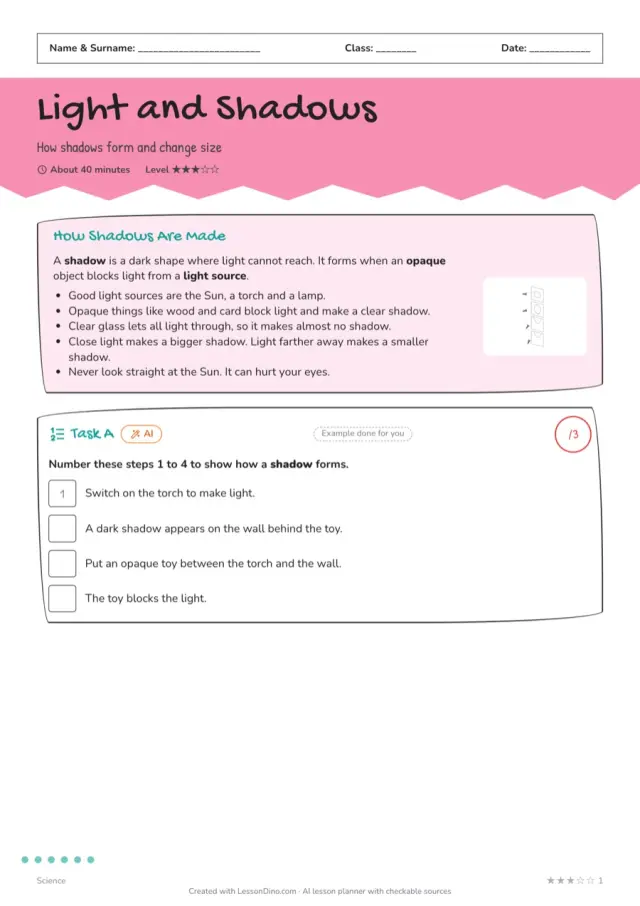
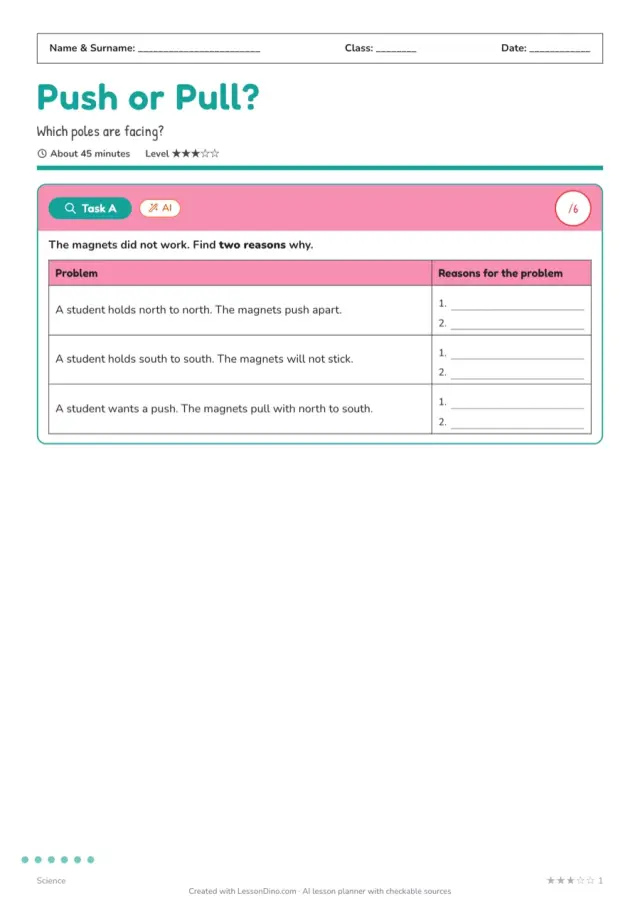
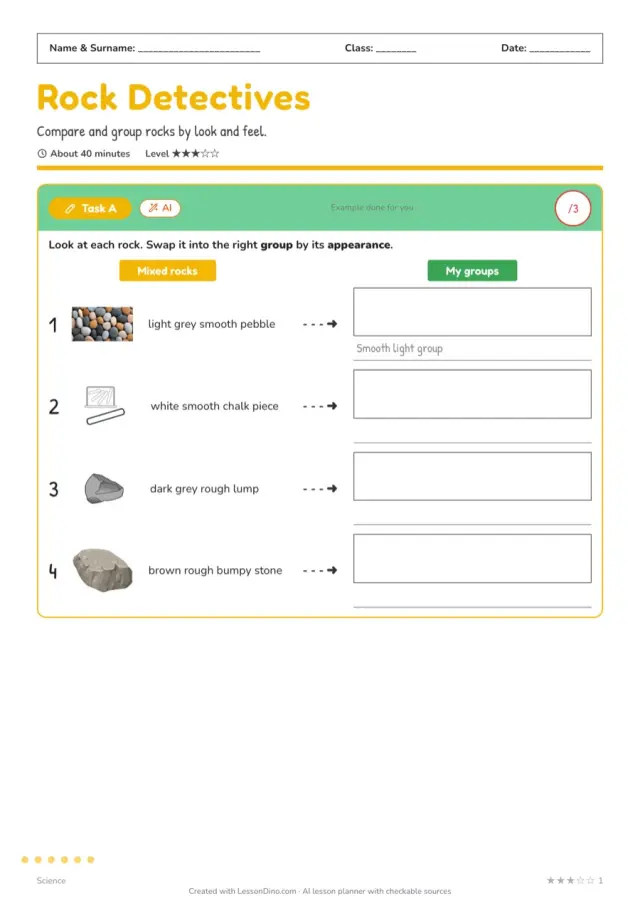
The worksheet
About this worksheet
Pupils learn the jobs of roots, stem, leaves and flowers. They act out the jobs and label a real flowering plant. This Year 3 Science worksheet gives students (ages 7–8) six pages of practice on parts of a plant, part of the plants unit. It goes with our free Parts of a plant lesson, which has the slides and a timed lesson plan.
What it covers
By the end, students should be able to:
- Students will name the roots, stem, leaves and flowers on a plant.
- Students will describe one important job for each plant part.
- Students will explain how a tree trunk is like a big stem.
How to use it
- Watch and join in (10 minutes): Hand out Worksheet Task D and replay the video and ask pupils to write one job in each box as you watch the video.
- Support: Give a simple diagram with arrows and part words to match to the real plant while looking.
- Stretch: Ask pupils to predict what would happen to the rest of the plant if the roots could not get water, and explain why.
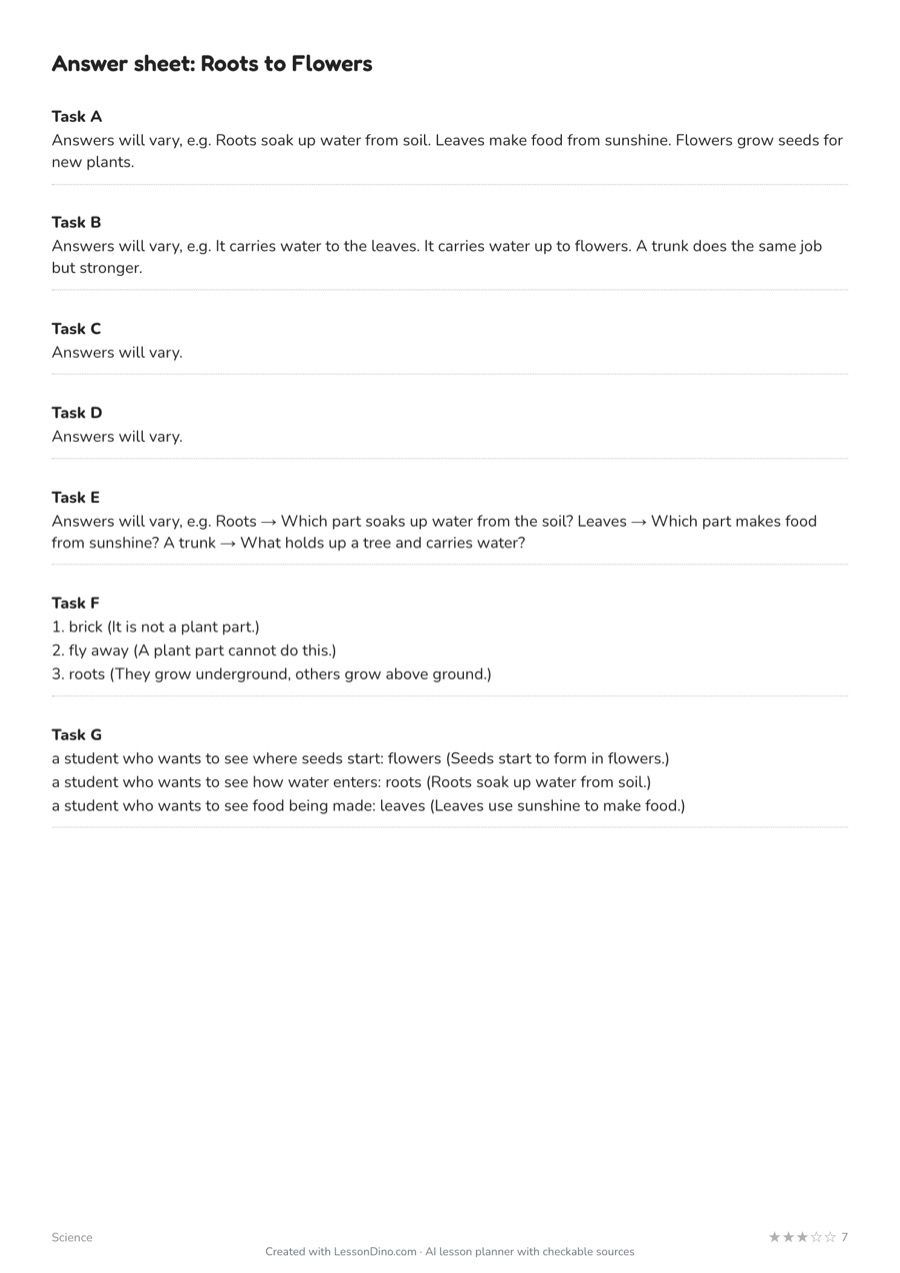
- The answer sheet is the last page, so you can print it on its own or let students check their own work.
Key vocabulary
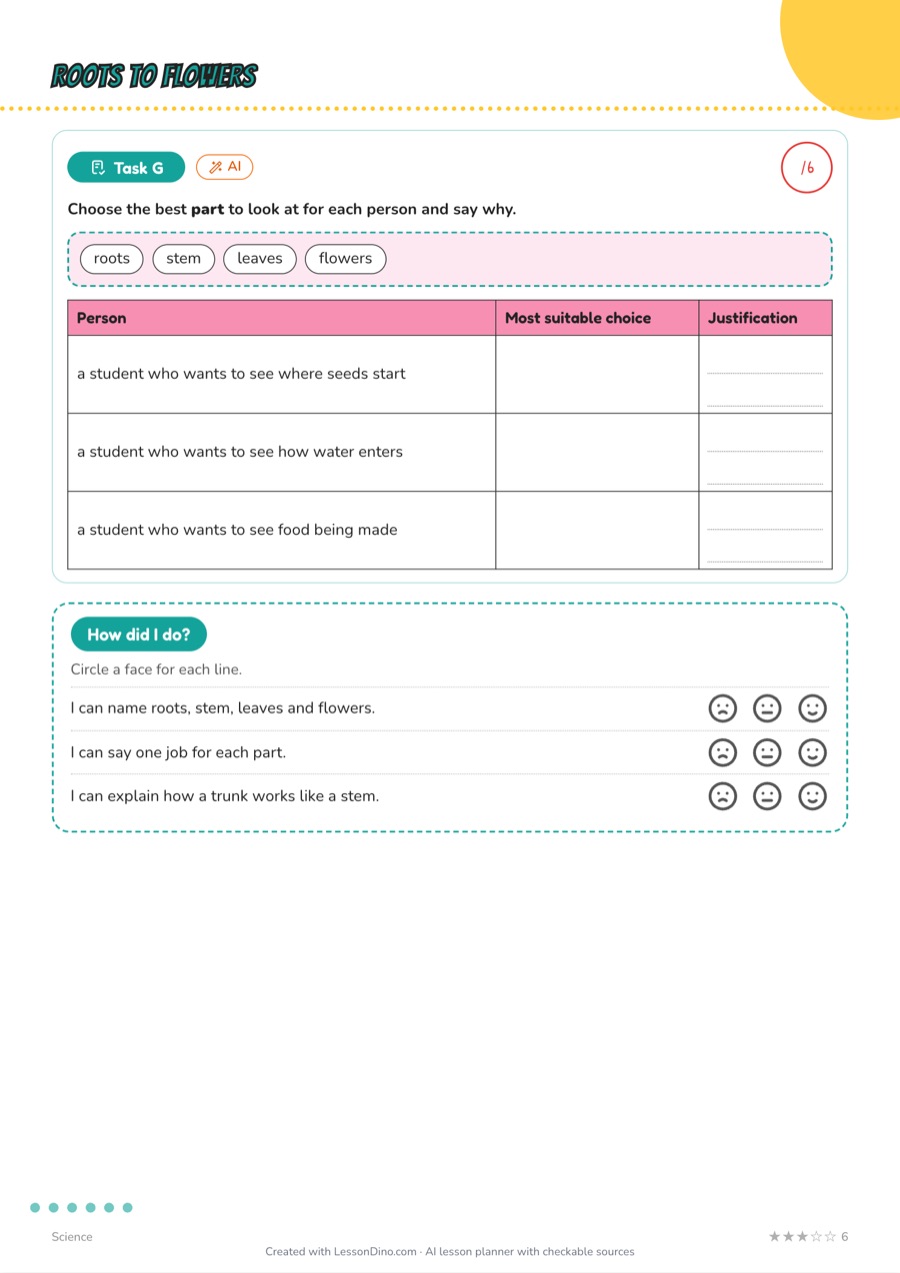
- roots: parts that grow under the soil and soak up water
- stem: stalk that holds a plant up and moves water upwards
- trunk: thick, strong, woody stalk of a tree covered in bark
- leaves: flat green parts that catch sunshine to make food
- flowers: bright coloured parts where seeds develop for new plants
Mistakes to watch for
- Thinking roots only hold the plant and do not take in water. Point to roots and repeat that they take in water and nutrients from the soil as well as holding it up.
- Thinking the stem only holds the plant and does not carry water. Trace up the stem with a finger and repeat that it carries water to the leaves.
- Thinking flowers are just pretty and do not make anything. Show flower and seeds and repeat that flowers are where the seeds develop and produce seeds which form new plants.
What's on the worksheet
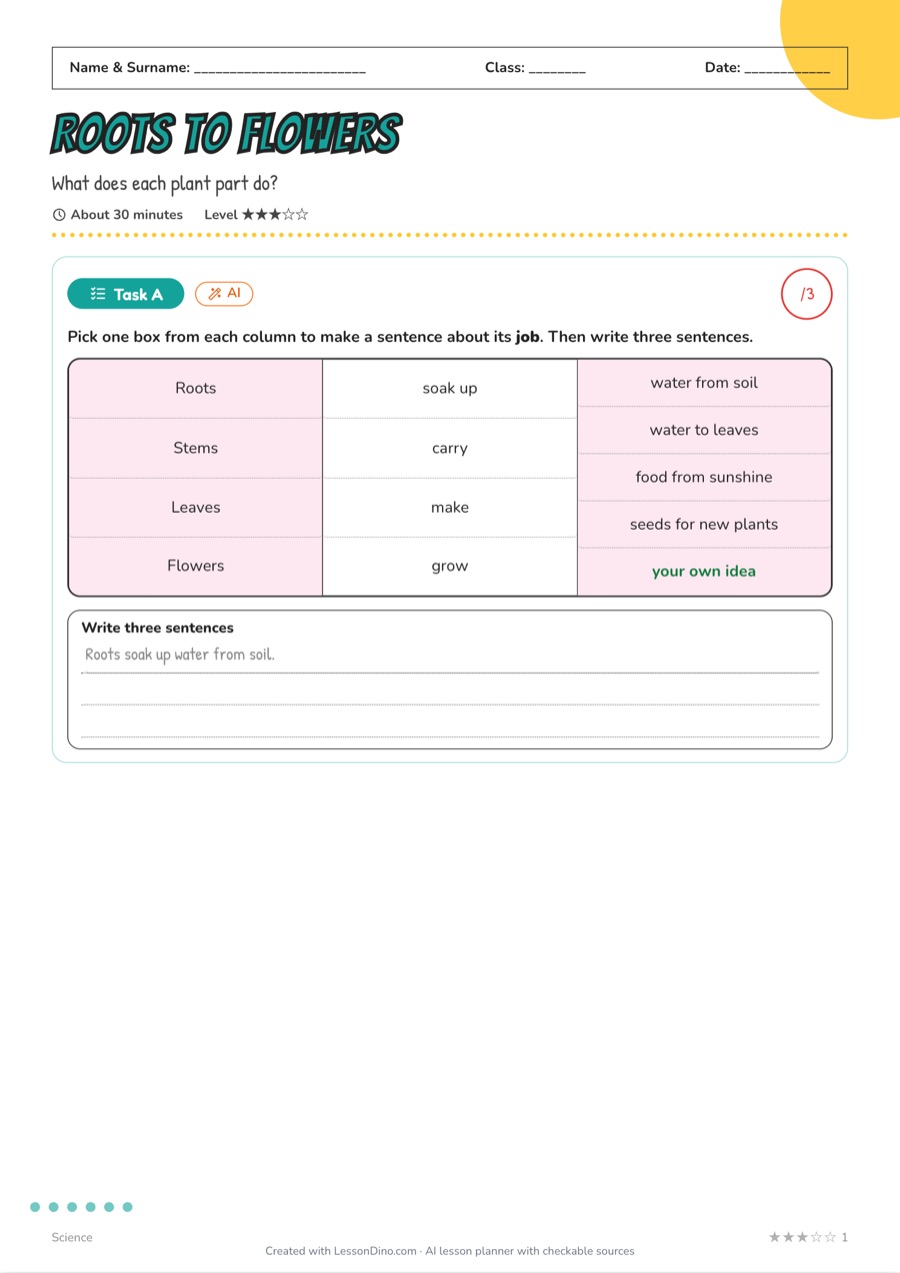
Meet Plant Parts
Learn the four jobs that keep a plant alive.
Pick one box from each column to make a sentence about its job. Then write three sentences.
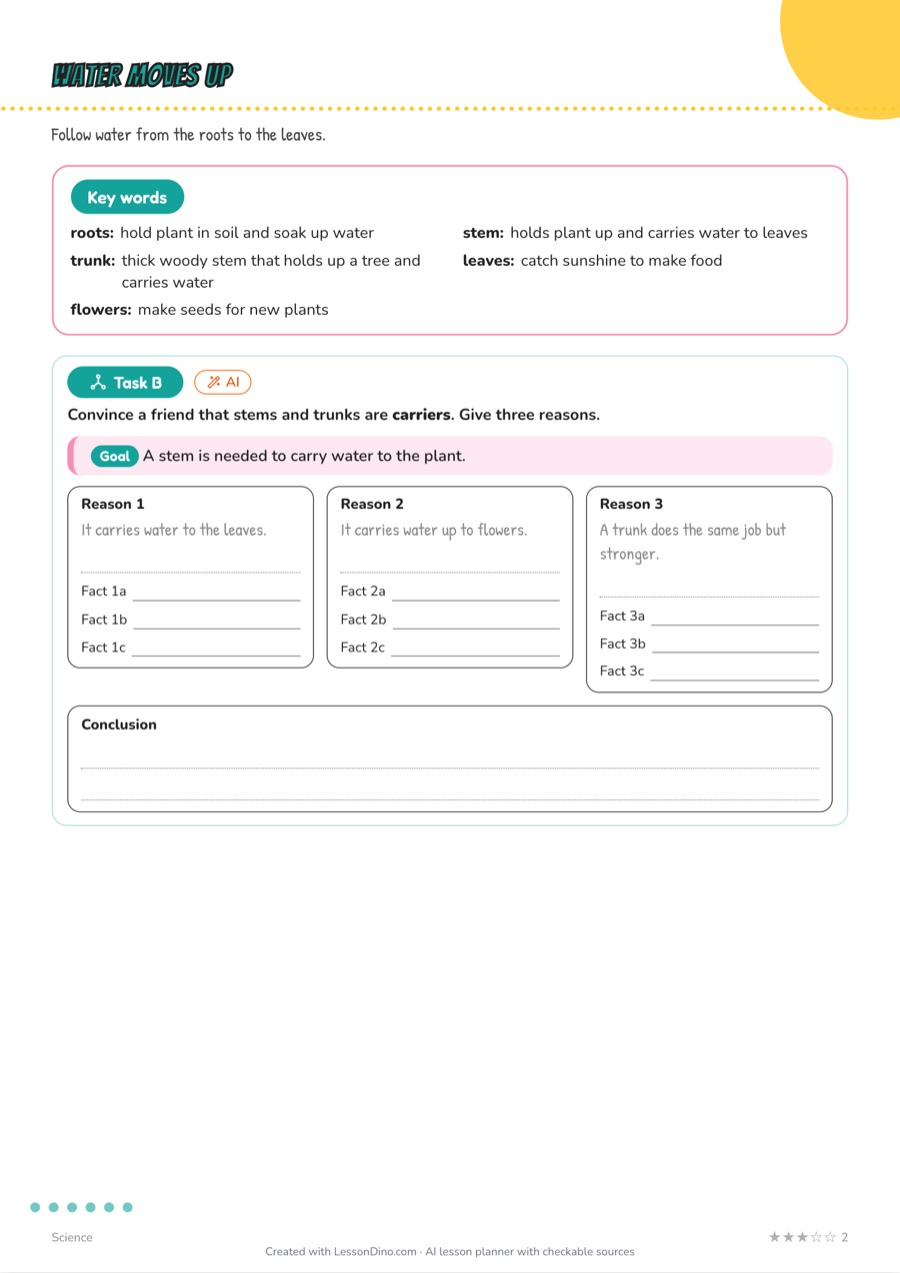
Water Moves Up
Follow water from the roots to the leaves.
| Word | Meaning |
|---|---|
| roots | hold plant in soil and soak up water |
| stem | holds plant up and carries water to leaves |
| trunk | thick woody stem that holds up a tree and carries water |
| leaves | catch sunshine to make food |
| flowers | make seeds for new plants |
Convince a friend that stems and trunks are carriers. Give three reasons.
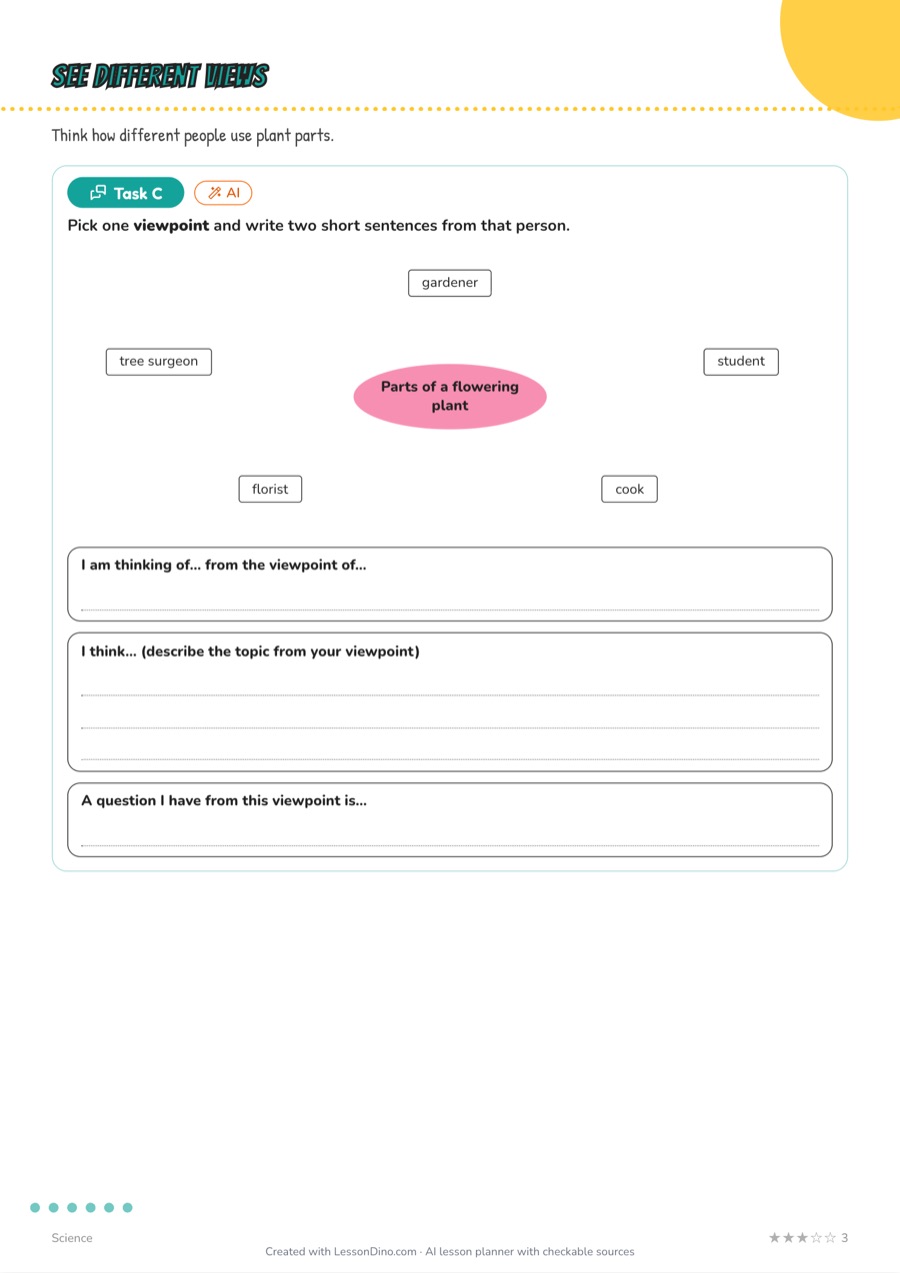
See Different Views
Think how different people use plant parts.
Pick one viewpoint and write two short sentences from that person.
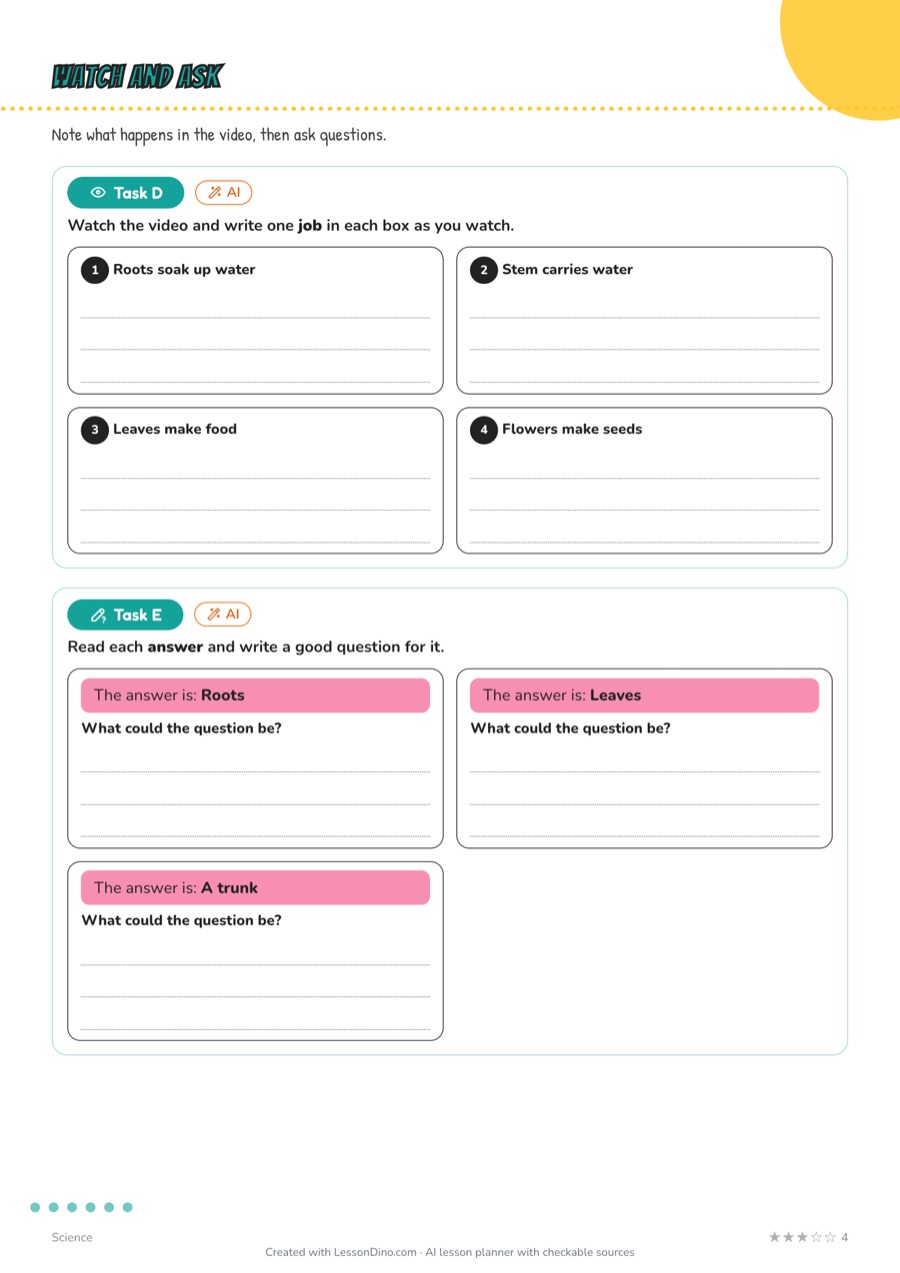
Watch and Ask
Note what happens in the video, then ask questions.
Watch the video and write one job in each box as you watch.
Read each answer and write a good question for it.
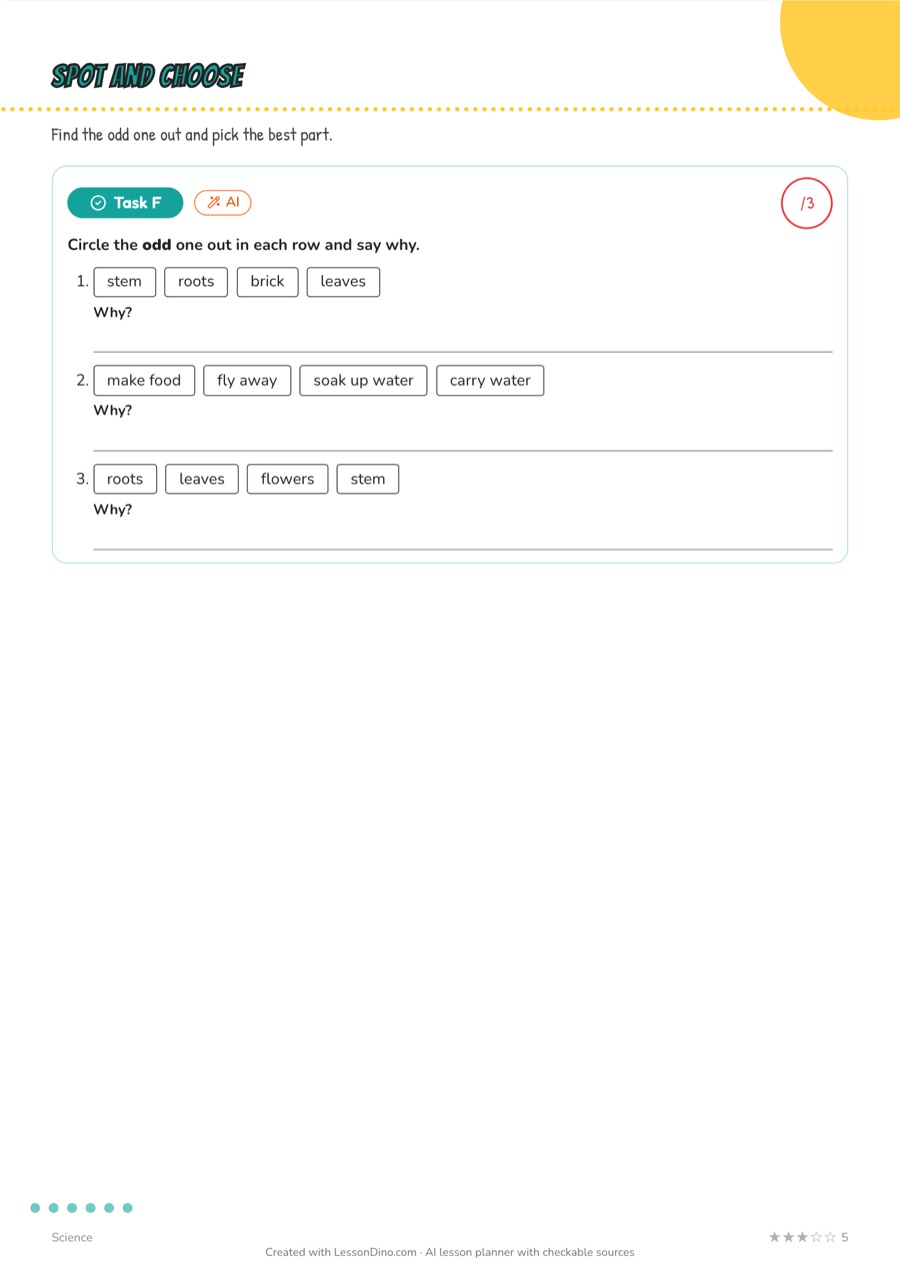
Spot and Choose
Find the odd one out and pick the best part.
Circle the odd one out in each row and say why.
Page 6
Choose the best part to look at for each person and say why.
Answers
Show the answers
The answers are on the answer sheet, the last picture above.
Curriculum
identify and describe the functions of different parts of flowering plants: roots, stem/trunk, leaves and flowers
Made with Lesson Dino's AI on 17 October 2026. AI can make mistakes, so check the answers and facts against the sources before you teach.