The worksheet
About this worksheet
Pupils learn how opaque objects block light to make shadows. They measure toy shadows to prove close light makes big shadows. This Year 3 Science worksheet gives students (ages 7–8) five pages of practice on light and shadows, part of the light unit. It goes with our free Light and shadows lesson, which has the slides and a timed lesson plan.
What it covers
By the end, students should be able to:
- Students will recognise how an opaque object blocks light to form a shadow.
- Students will measure shadows and describe the pattern as distance changes.
How to use it
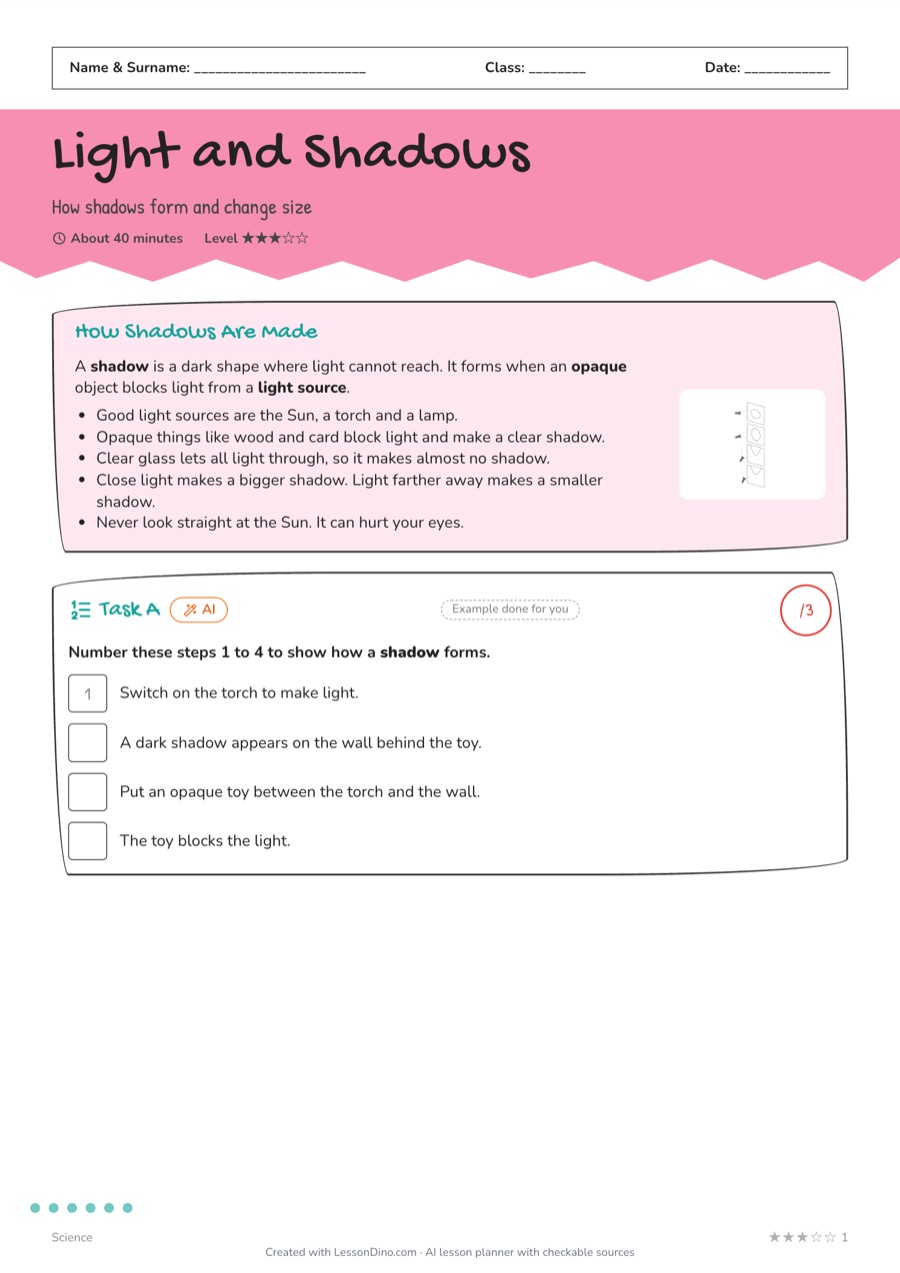
- Teaching (12 minutes): Model Worksheet Task A ordering, then pupils number steps 1 to 4 on their own sheet.
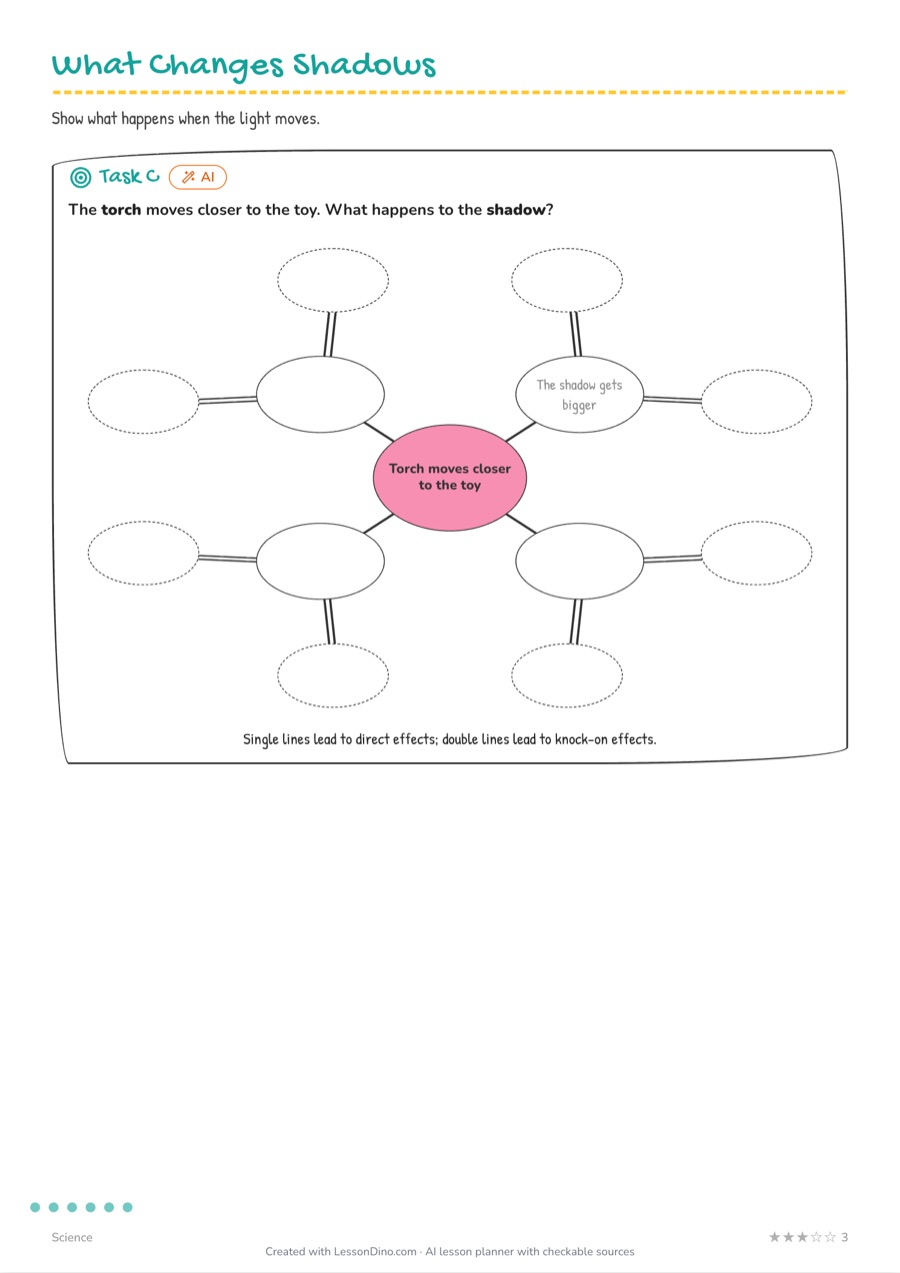
- Main activity (25 minutes): Stop halfway to check tables, then prompt Worksheet Task C about torch moving closer.
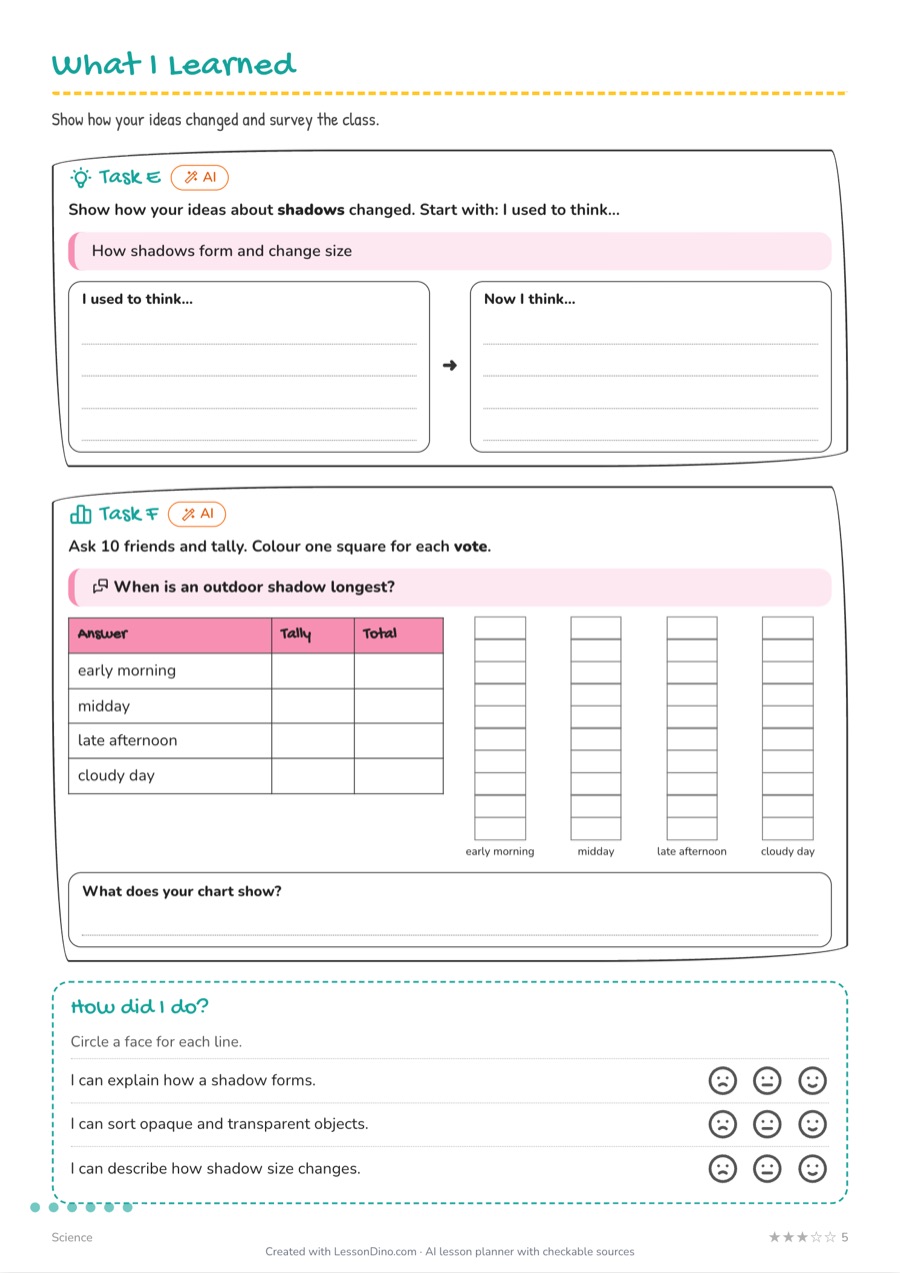
- Plenary (10 minutes): Give Worksheet Task E time to write I used to think... now I think...
- Support: Give pre-cut large shapes and sentence frame: The shadow formed because the ___ blocked the light.
- Stretch: Predict what two layers of tracing paper will do, then test and explain.
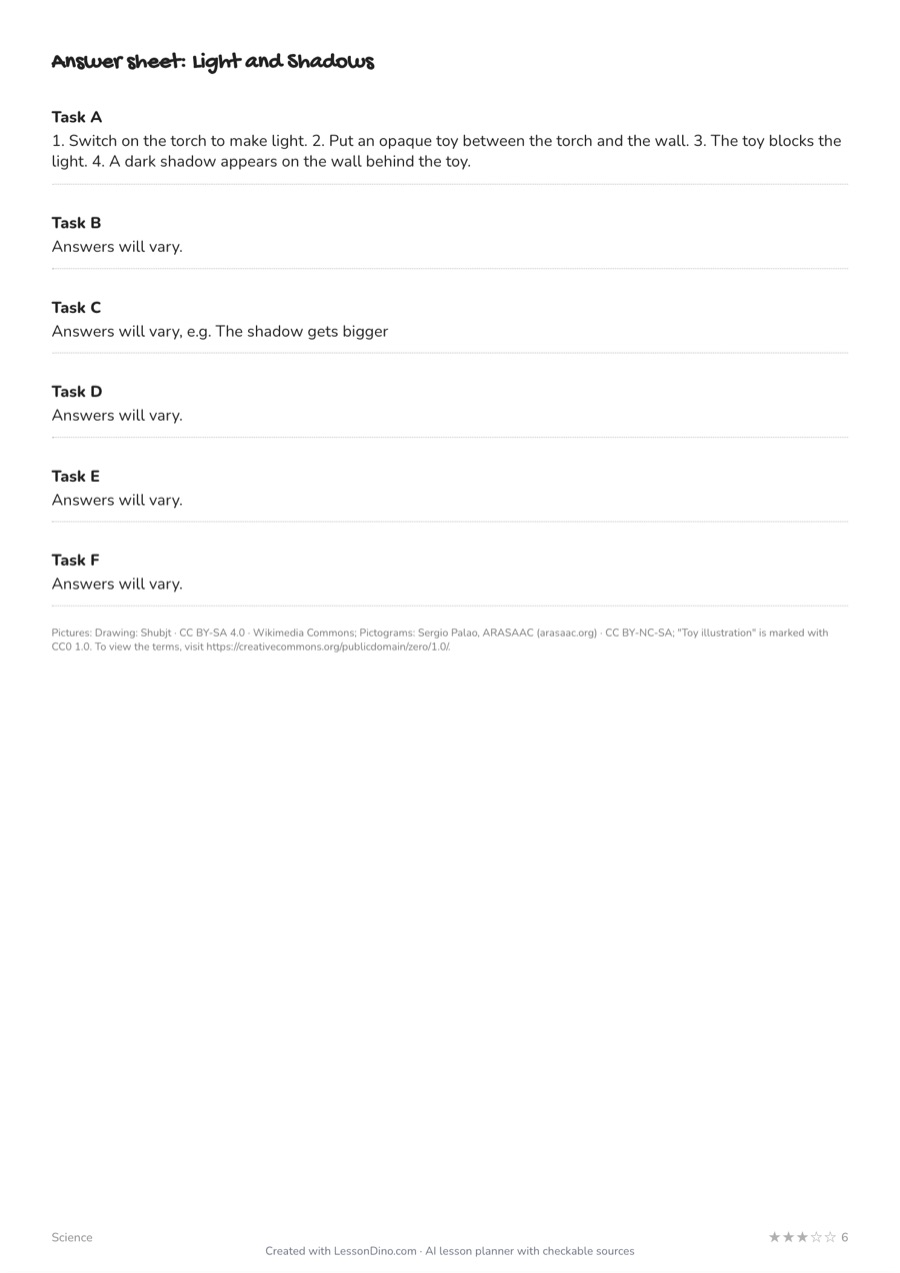
- The answer sheet is the last page, so you can print it on its own or let students check their own work.
Key vocabulary
- light source: something that makes its own light, like the Sun or a torch
- opaque: material that lets no light pass through it
- shadow: dark shape left where light is stopped by something blocking it
- measure: use a ruler to find how tall or long something is in centimetres
- pattern: something that happens again in the same way so you can predict it
Mistakes to watch for
- Thinks clear plastic or glass makes a dark shadow. Retest with torch: transparent lets light completely through, so almost no shadow.
- Thinks shadow can move or stay on its own. Freeze test: if both light and object stay still then shadow stays still too.
- Thinks only object size sets shadow size. Compare same brick at 10 cm and 30 cm: further away gives smaller shadow.
What's on the worksheet
How Shadows Form
Learn how shadows form and order the steps.
How Shadows Are Made
- A shadow is a dark shape where light cannot reach. It forms when an opaque object blocks light from a light source.
- Good light sources are the Sun, a torch and a lamp.
- Opaque things like wood and card block light and make a clear shadow.
- Clear glass lets all light through, so it makes almost no shadow.
- Close light makes a bigger shadow. Light farther away makes a smaller shadow.
- Never look straight at the Sun. It can hurt your eyes.
Number these steps 1 to 4 to show how a shadow forms.
Light Shadow Hunt
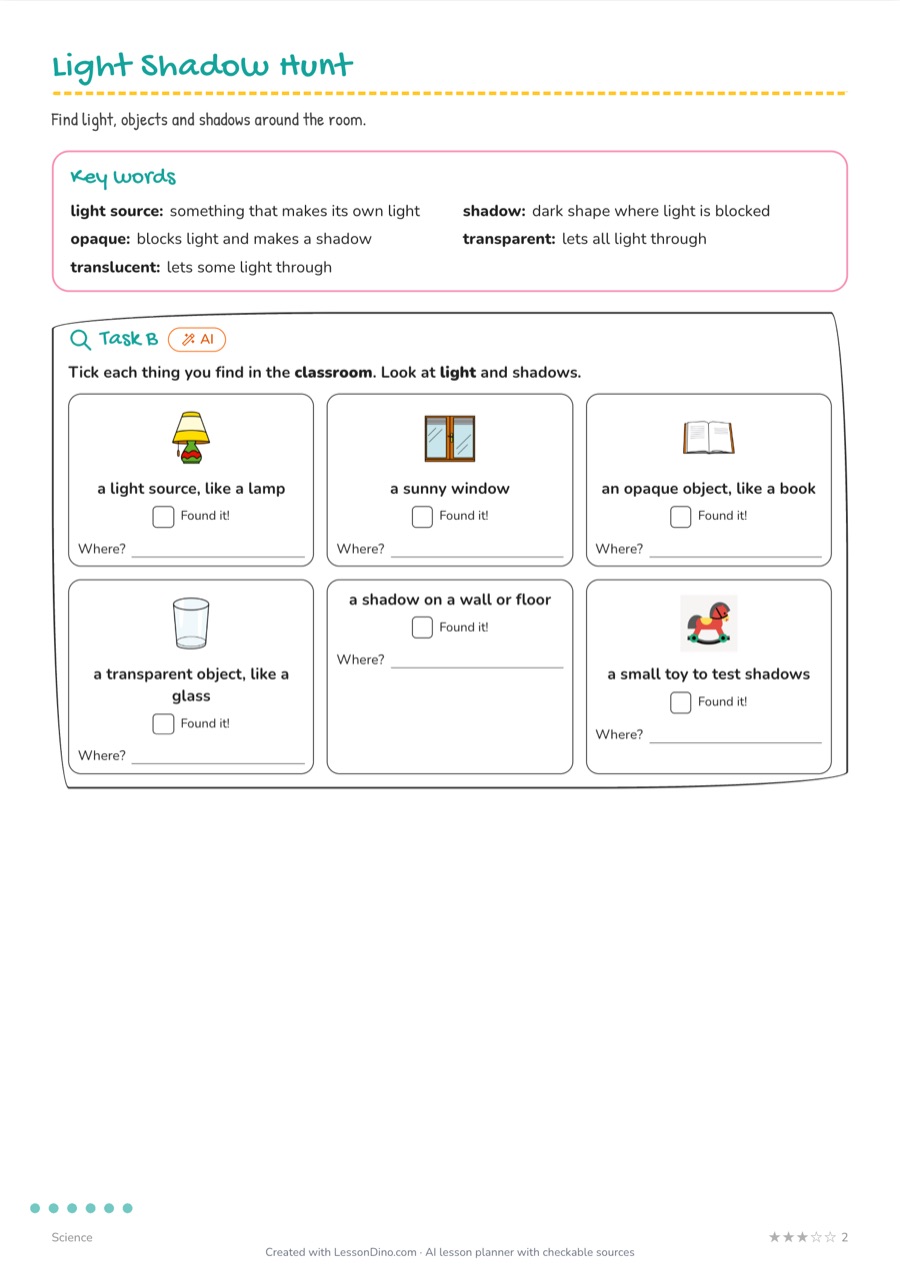
Find light, objects and shadows around the room.
| Word | Meaning |
|---|---|
| light source | something that makes its own light |
| shadow | dark shape where light is blocked |
| opaque | blocks light and makes a shadow |
| transparent | lets all light through |
| translucent | lets some light through |
Tick each thing you find in the classroom. Look at light and shadows.
What Changes Shadows
Show what happens when the light moves.
The torch moves closer to the toy. What happens to the shadow?
Seeing Different Views
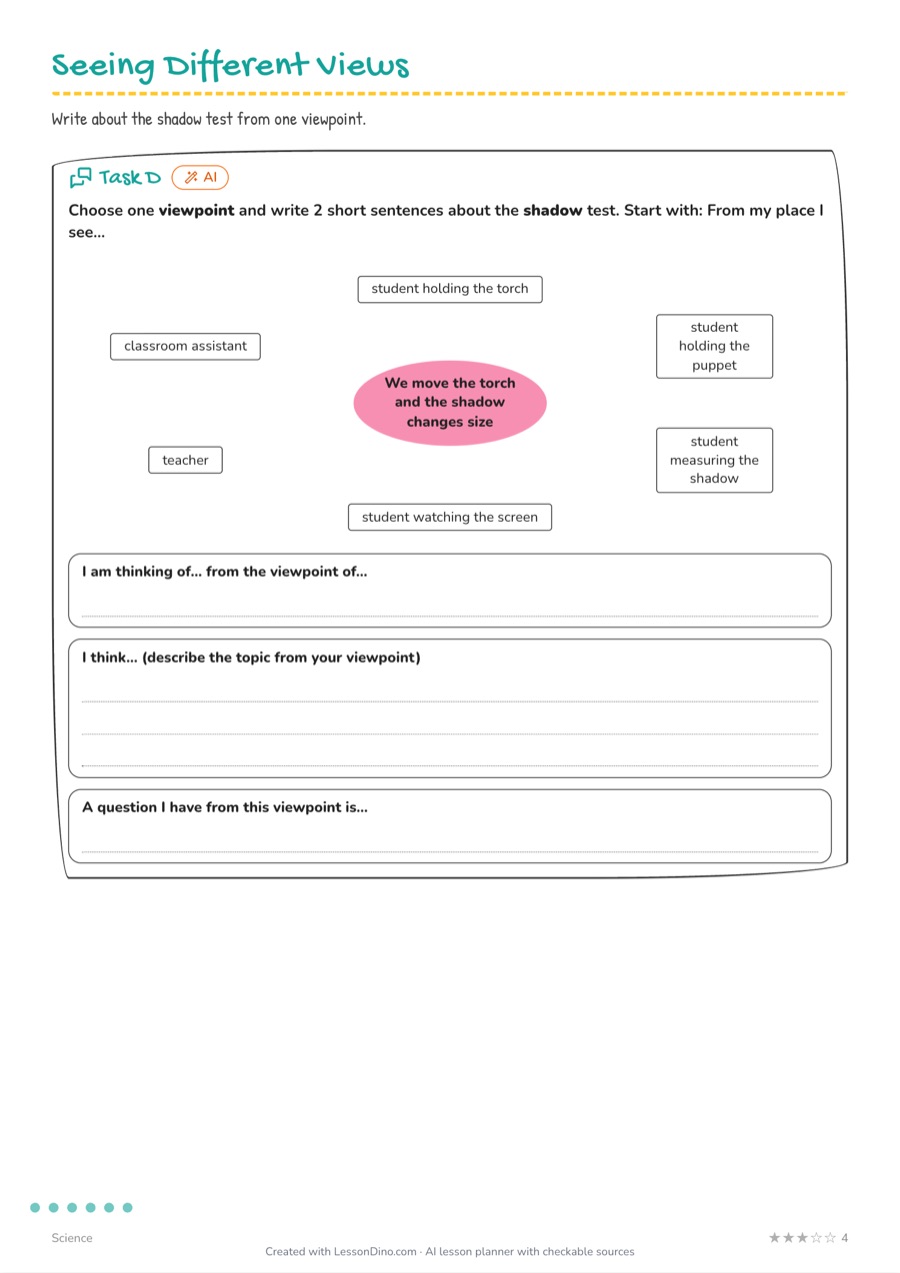
Write about the shadow test from one viewpoint.
Choose one viewpoint and write 2 short sentences about the shadow test. Start with: From my place I see...
What I Learned
Show how your ideas changed and survey the class.
Show how your ideas about shadows changed. Start with: I used to think...
Ask 10 friends and tally. Colour one square for each vote.
Answers
Show the answers
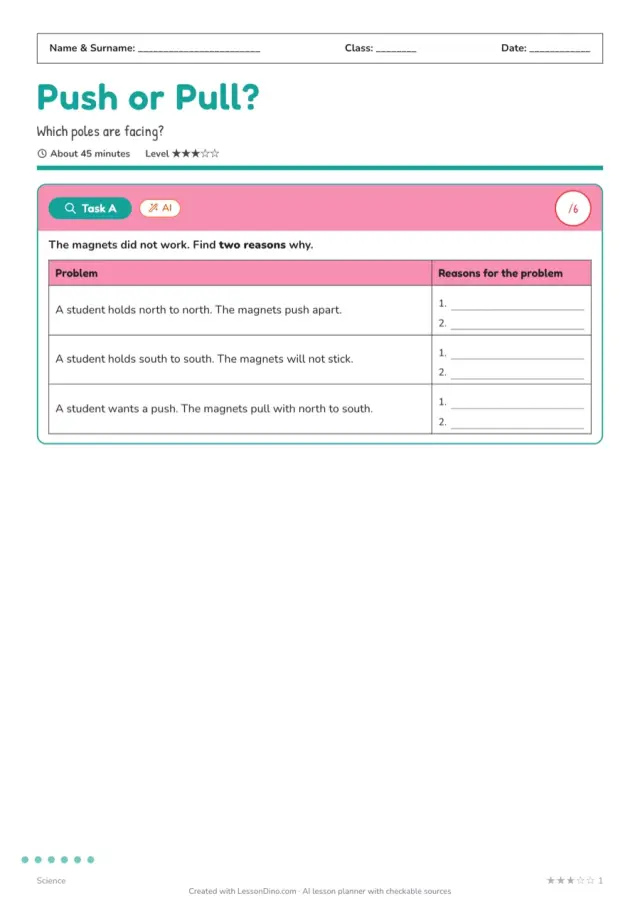
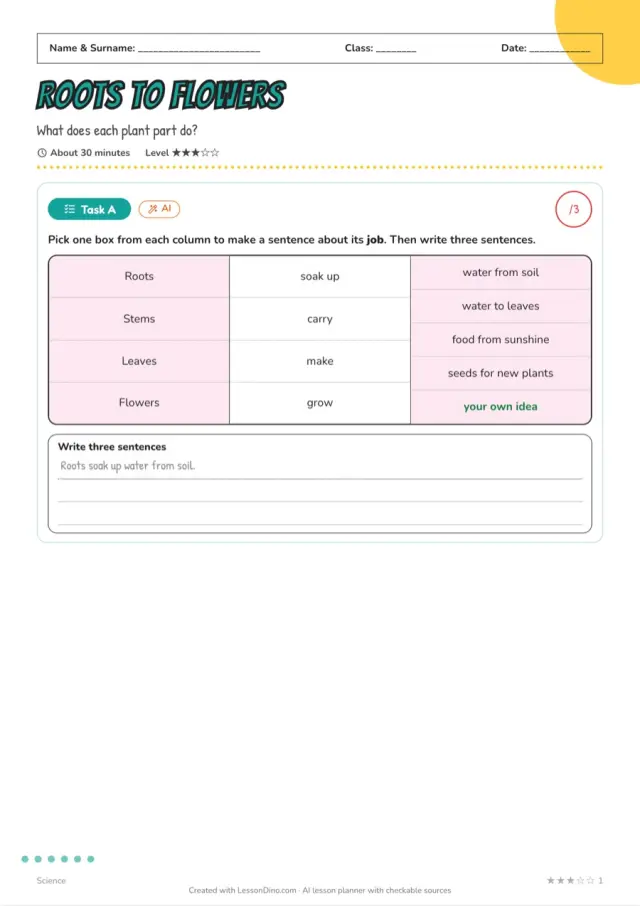
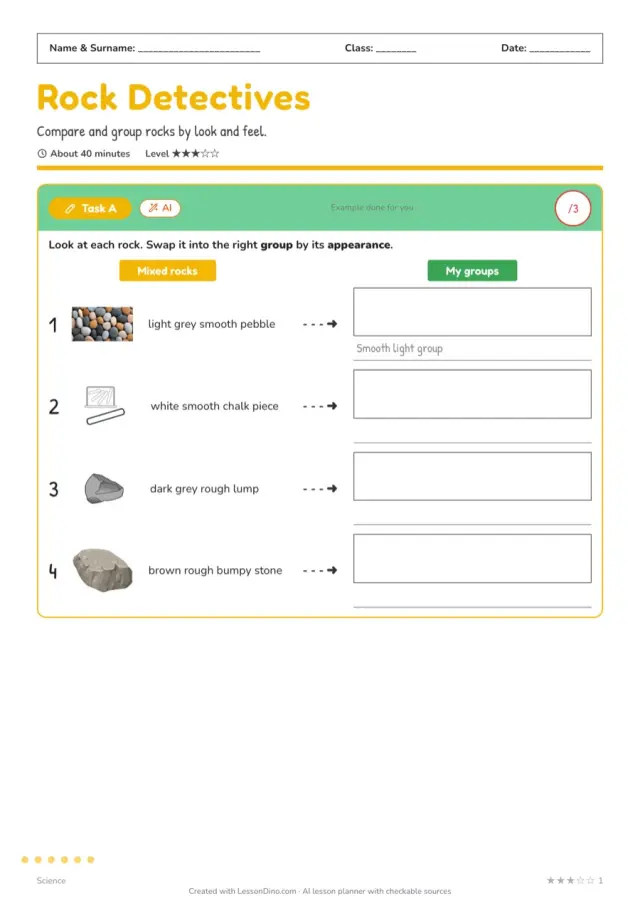
The answers are on the answer sheet, the last picture above.
Curriculum
recognise that shadows are formed when the light from a light source is blocked by an opaque object; find patterns in the way that the size of shadows change
Made with Lesson Dino's AI on 17 October 2026. AI can make mistakes, so check the answers and facts against the sources before you teach.