The worksheet
About this worksheet
Students learn to find theme and trace how it grows. They track clues and write a short objective summary. This Grade 8 ELA worksheet gives students (ages 13–14) six pages of practice on reading comprehension: theme, part of the reading literature unit. It goes with our free Reading comprehension: theme lesson, which has the slides and a timed lesson plan.
What it covers
By the end, students should be able to:
- Students will determine a theme and trace its growth from start to end.
- Students will explain how character, setting, and plot develop theme with evidence.
- Students will write an objective summary of key events in order.
How to use it
- Use it for practice after the teaching part of the lesson, once students have seen the worked examples on the slides.
- Support: Use frame with blanks for character, setting, and plot plus word bank: bravery, fairness, growing up, pressure.
- Stretch: Track a second, smaller theme and explain where the two themes connect or conflict.
- The answer sheet is the last page, so you can print it on its own or let students check their own work.
Key vocabulary
- theme: the author's big message about life shown by the story
- central idea: what a text is mostly about, said in one sentence
- development: how a message gets clearer step by step through a story
- objective summary: a short retelling with only important facts in order and no opinions
- setting: where and when a story happens, plus the mood of the place
Mistakes to watch for
- Writing a one-word topic like courage as the theme. Expand to full sentence using stem: ___ leads to ___ or ___ requires ___, then link to character, setting, plot.
- Adding opinions like I think, best, boring to a summary. Cross out opinion words and keep who, problem, key events, and ending only.
- Finding theme only at the end and ignoring growth. Require one clue from beginning, middle, and end and ask how each makes the message clearer.
What's on the worksheet
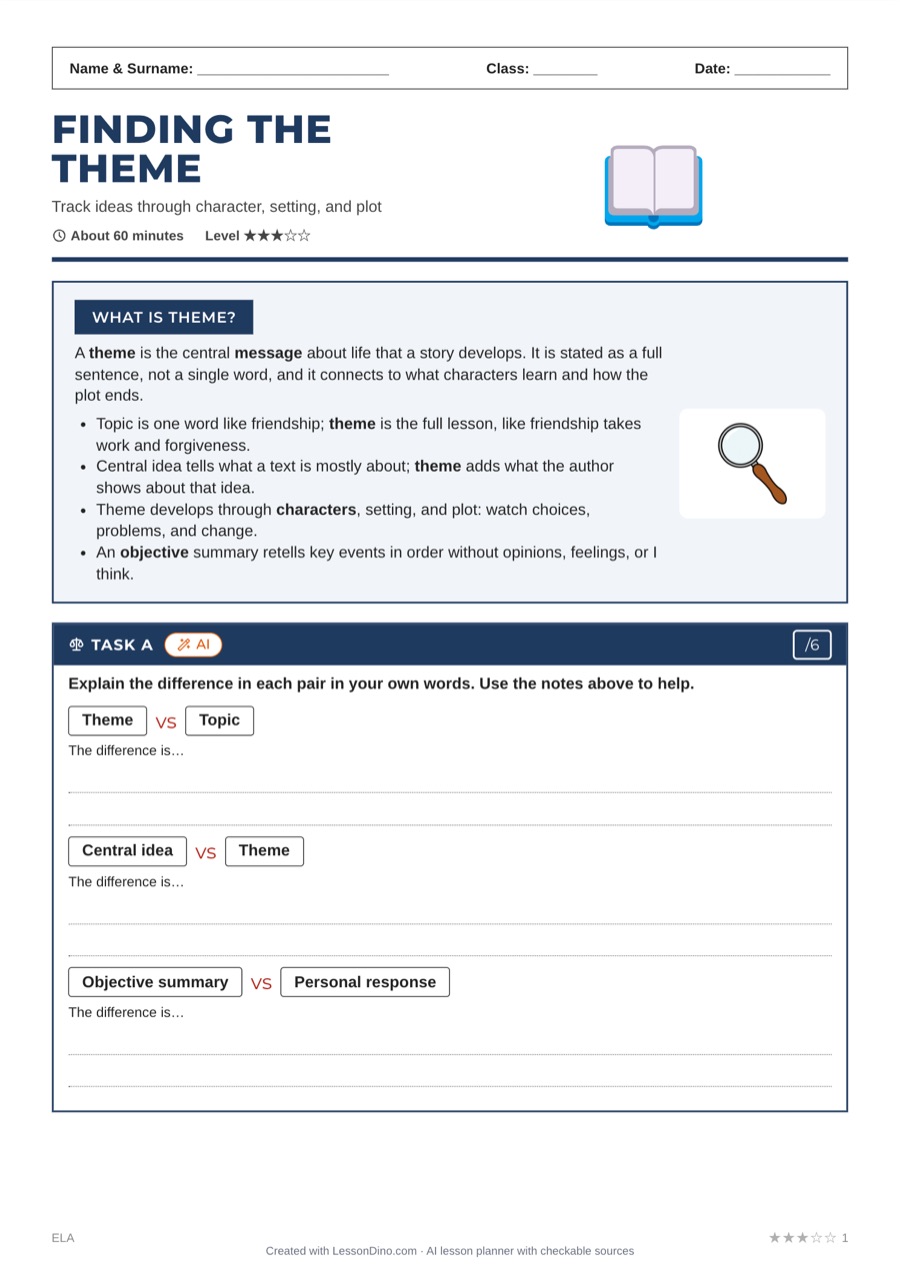
Theme Basics Explained
Learn what theme is and how it differs from topic and summary.
What Is Theme?
- A theme is the central message about life that a story develops. It is stated as a full sentence, not a single word, and it connects to what characters learn and how the plot ends.
- Topic is one word like friendship; theme is the full lesson, like friendship takes work and forgiveness.
- Central idea tells what a text is mostly about; theme adds what the author shows about that idea.
- Theme develops through characters, setting, and plot: watch choices, problems, and change.
- An objective summary retells key events in order without opinions, feelings, or I think.
Explain the difference in each pair in your own words. Use the notes above to help.
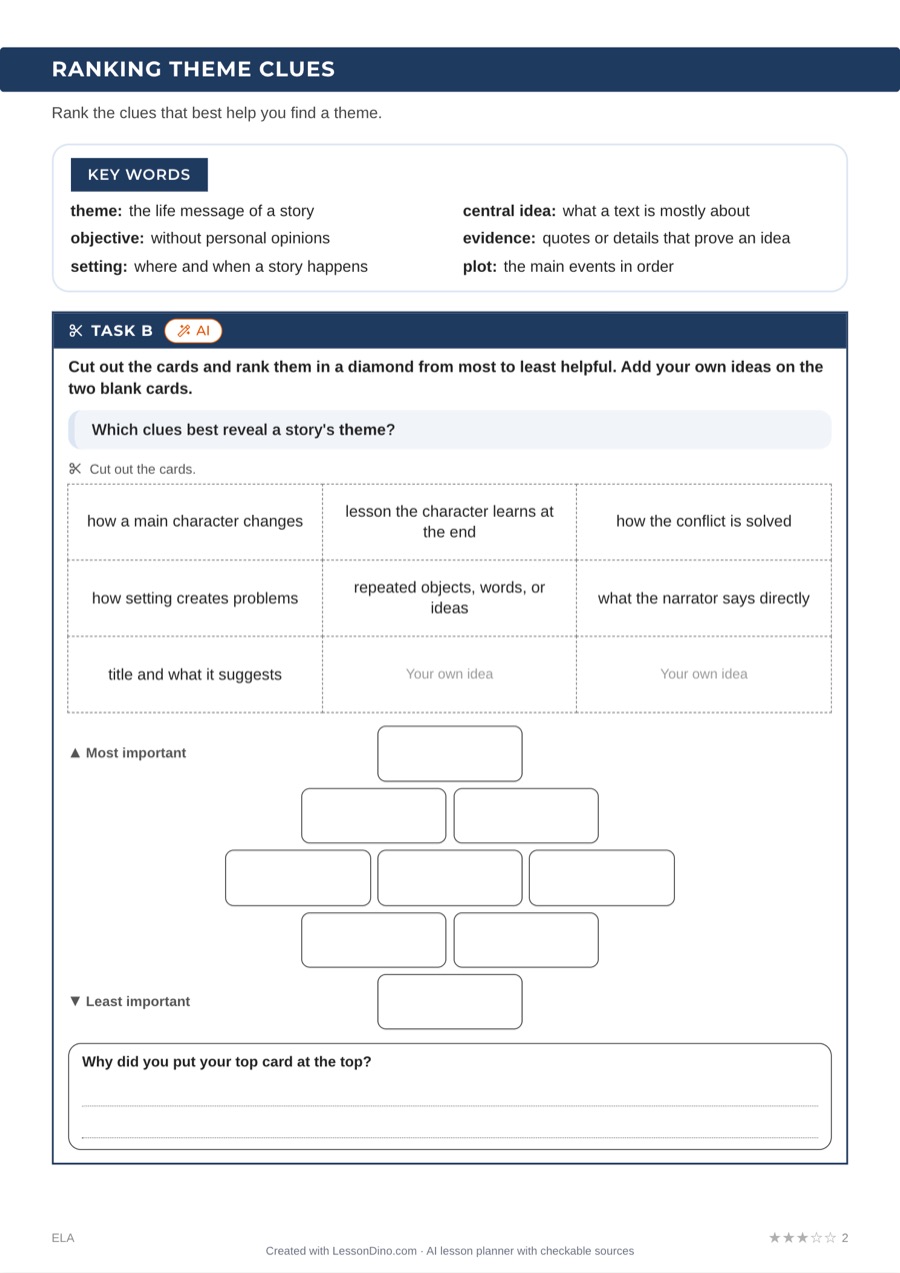
Ranking Theme Clues
Rank the clues that best help you find a theme.
| Word | Meaning |
|---|---|
| theme | the life message of a story |
| central idea | what a text is mostly about |
| objective | without personal opinions |
| evidence | quotes or details that prove an idea |
| setting | where and when a story happens |
| plot | the main events in order |
Cut out the cards and rank them in a diamond from most to least helpful. Add your own ideas on the two blank cards.
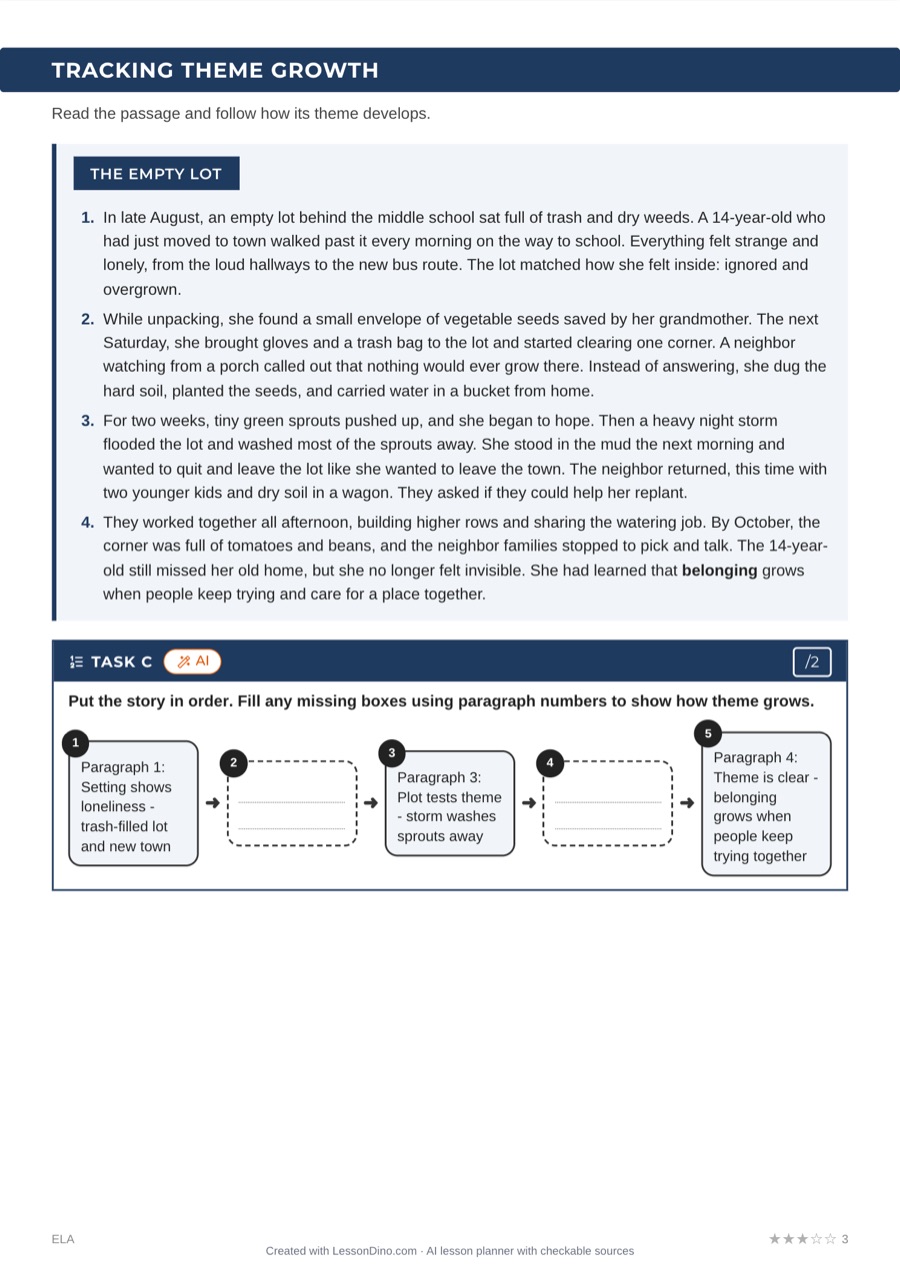
Tracking Theme Growth
Read the passage and follow how its theme develops.
The Empty Lot
Put the story in order. Fill any missing boxes using paragraph numbers to show how theme grows.
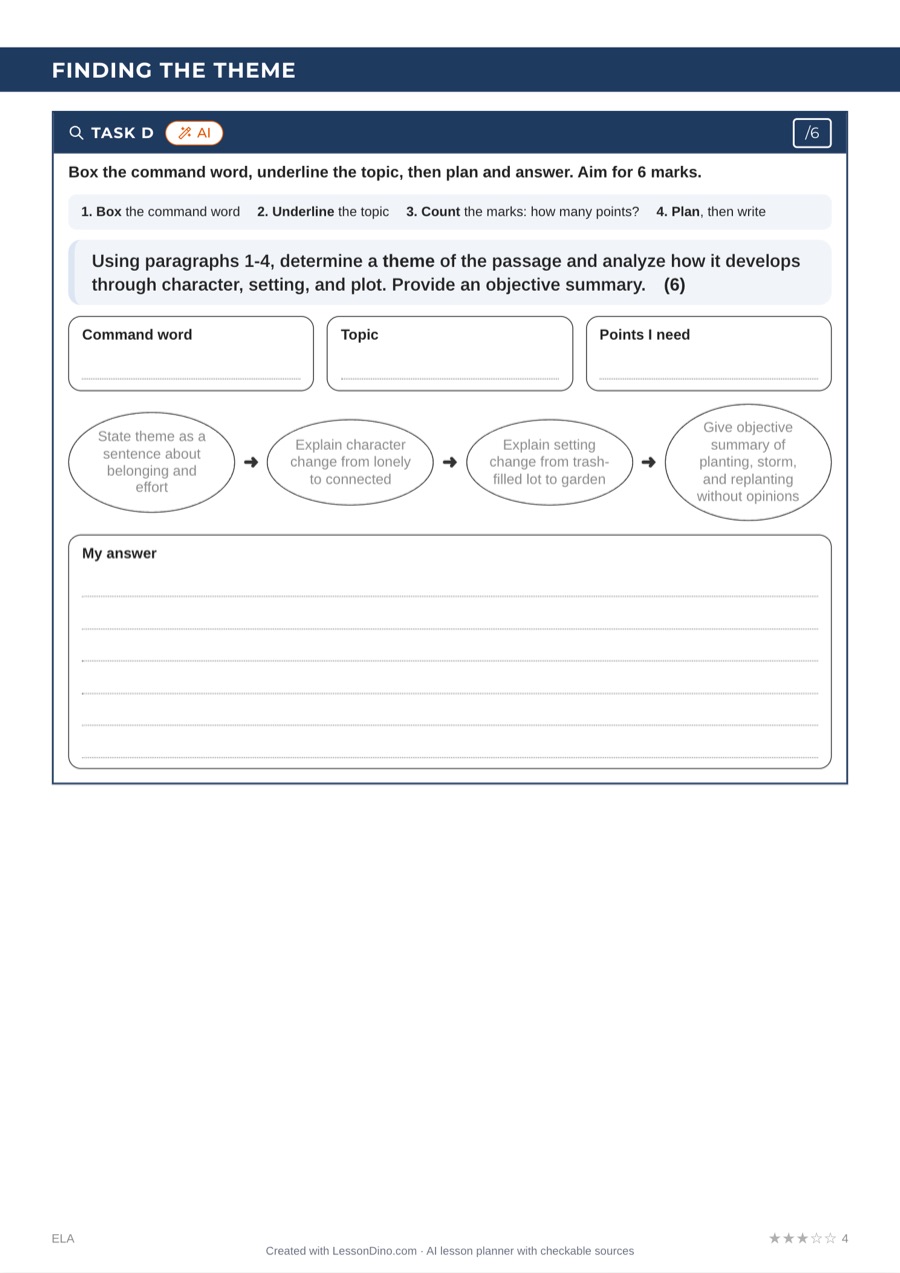
Page 4
Box the command word, underline the topic, then plan and answer. Aim for 6 marks.
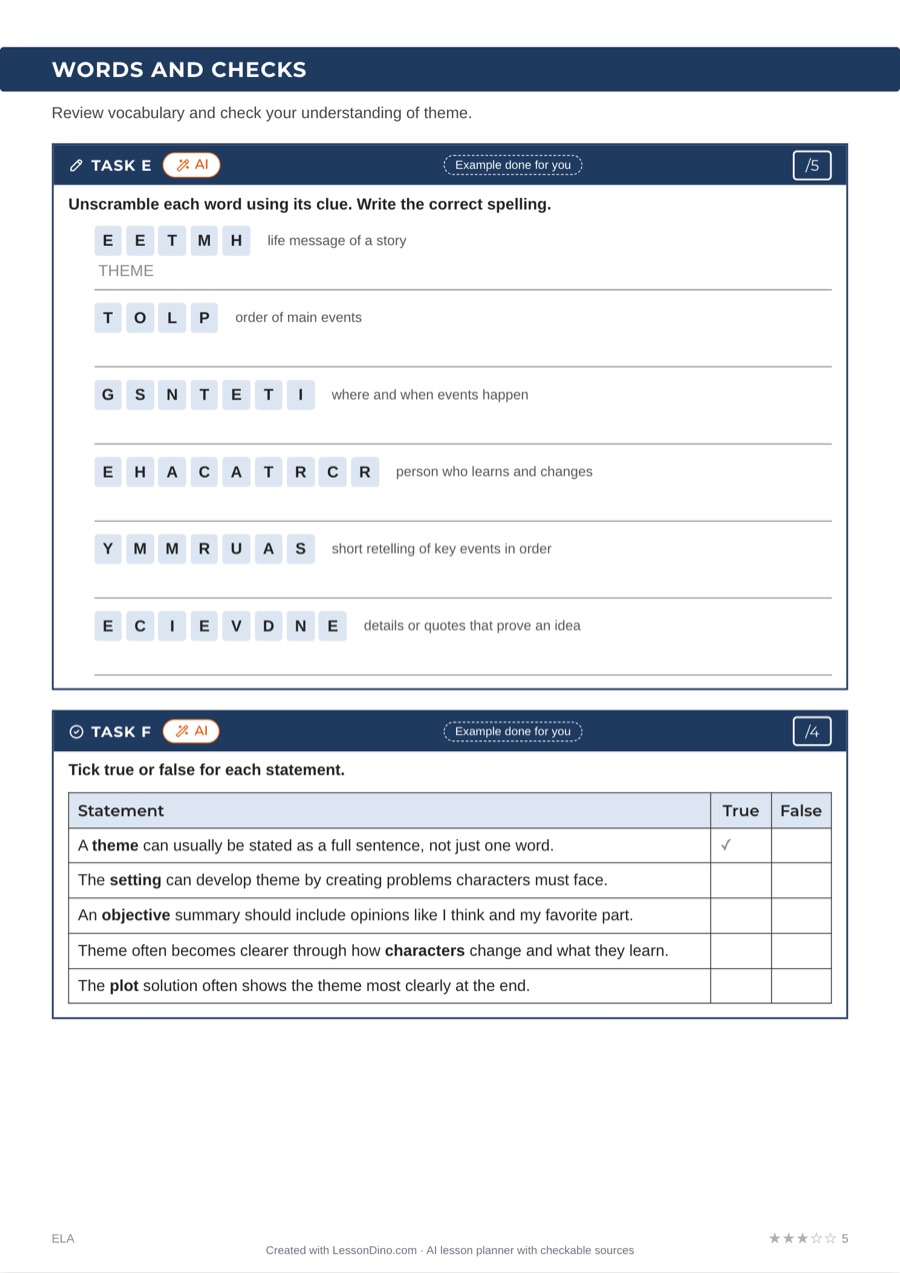
Words and Checks
Review vocabulary and check your understanding of theme.
Unscramble each word using its clue. Write the correct spelling.
Tick true or false for each statement.
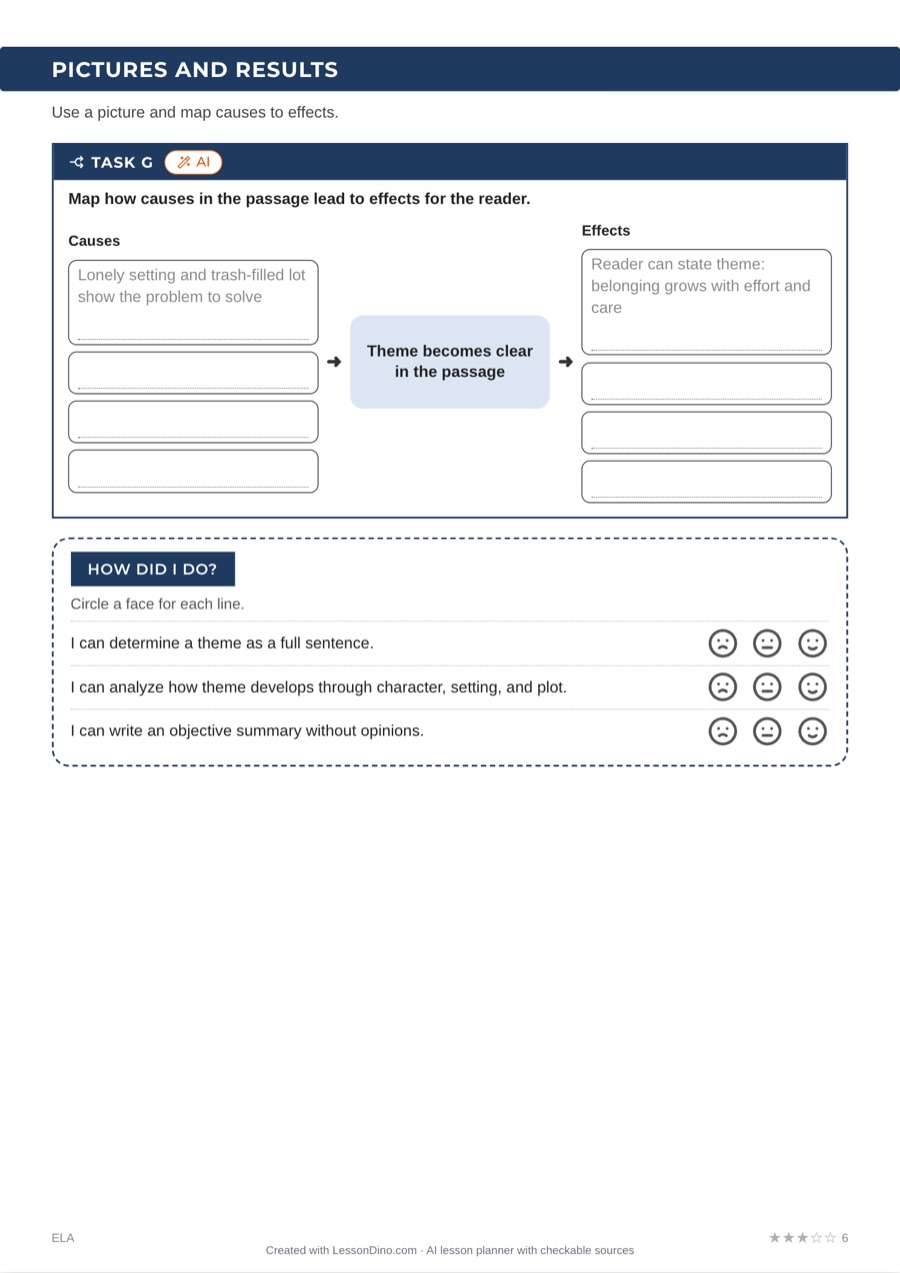
Pictures and Results
Use a picture and map causes to effects.
Map how causes in the passage lead to effects for the reader.
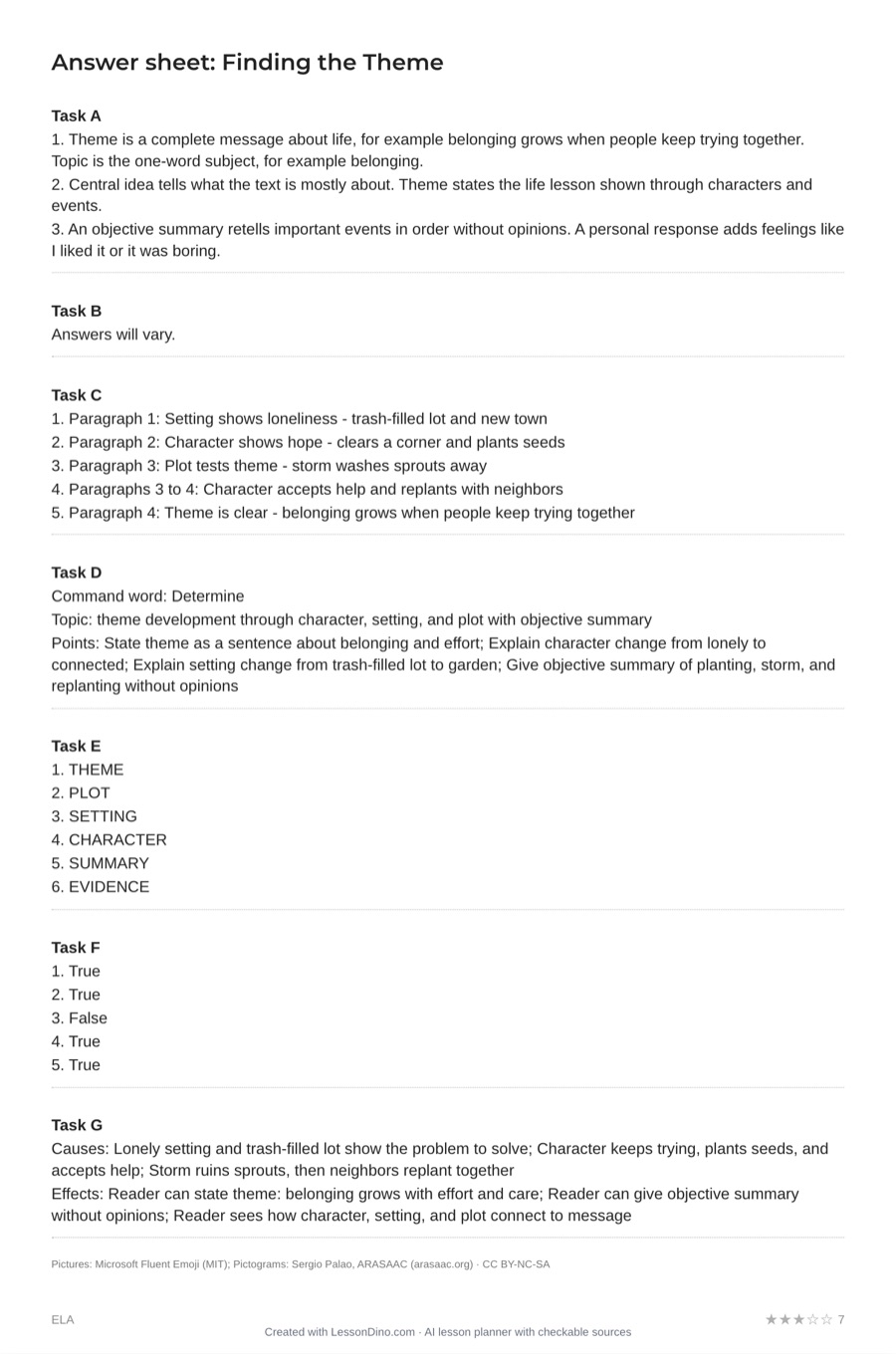
Answers
Show the answers
The answers are on the answer sheet, the last picture above.
Curriculum
Determine a theme or central idea of a text and analyze its development over the course of the text, including its relationship to the characters, setting, and plot; provide an objective summary of the text.
Made with Lesson Dino's AI on 17 October 2026. AI can make mistakes, so check the answers and facts against the sources before you teach.