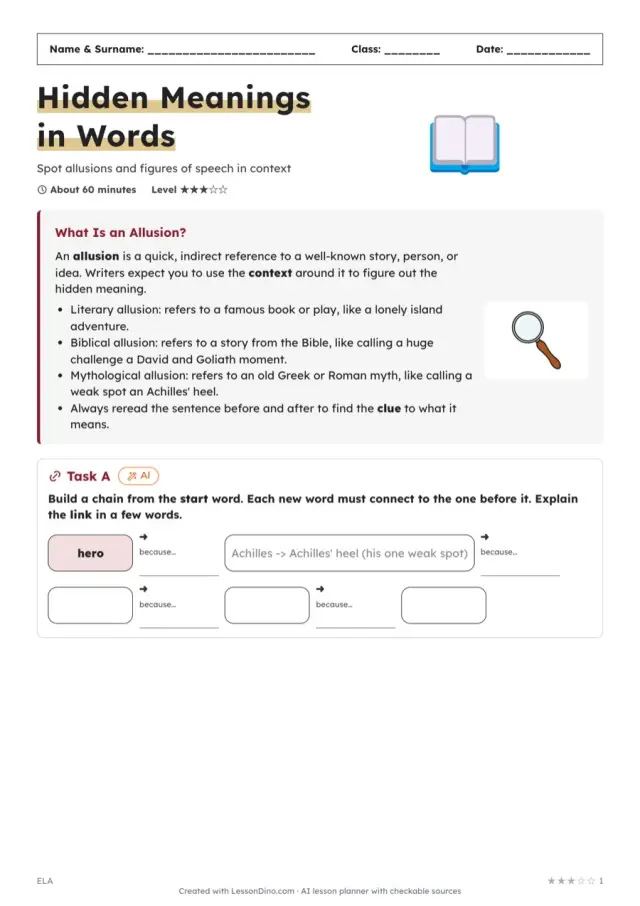
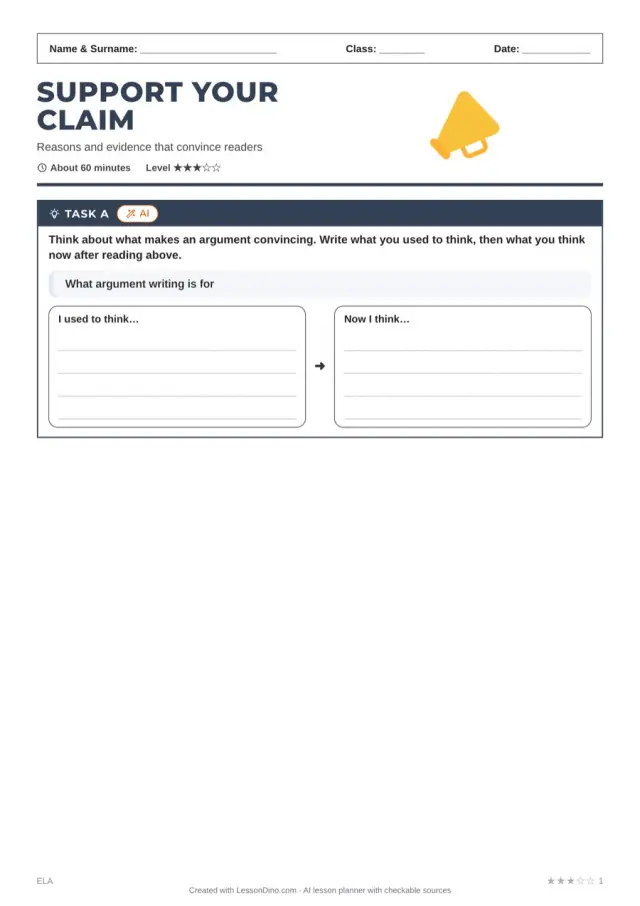
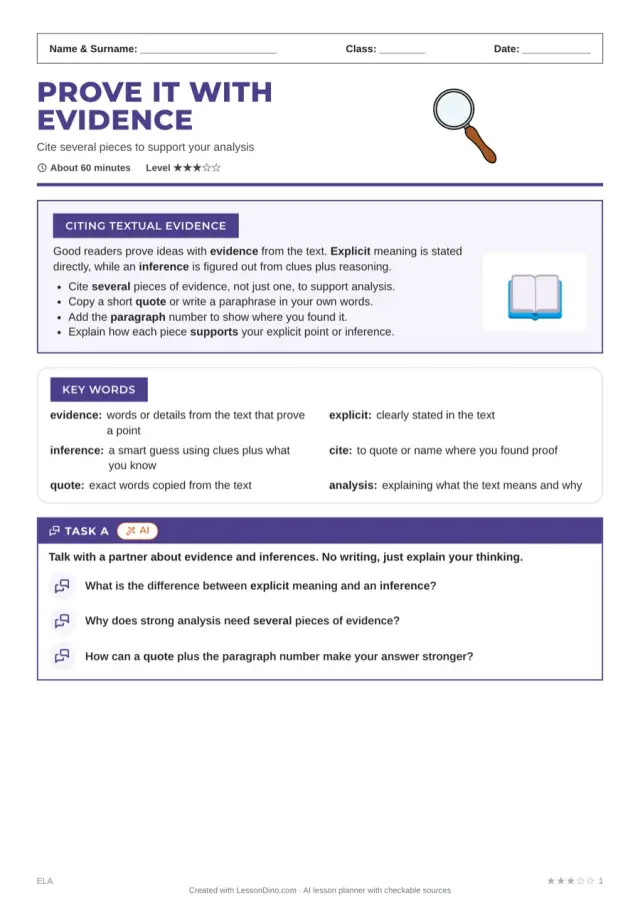
The worksheet
About this worksheet
Students learn to teach with facts and explain what facts show. They build one strong body paragraph for a class informative essay. This Grade 7 ELA worksheet gives students (ages 12–13) four pages of practice on essay writing: informative essays, part of the writing unit. It goes with our free Essay writing: informative essays lesson, which has the slides and a timed lesson plan.
What it covers
By the end, students should be able to:
- Students will write factual explanations that teach about a topic without opinions.
- Students will select and organize facts into paragraphs with one clear focus.
- Students will analyze facts to support a clear factual one-sentence thesis statement.
How to use it
- Use it for practice after the teaching part of the lesson, once students have seen the worked examples on the slides.
- Support: Provide a frame with starters for explaining, such as This shows that and This means for readers.
- Stretch: Have students add a comparison that helps explain the fact without adding opinion.
- The answer sheet is the last page, so you can print it on its own or let students check their own work.
Key vocabulary
- informative: teaching the reader with true facts, not feelings
- thesis statement: one sentence that gives the essay's main focus
- credible source: a trustworthy place known for correct information
- organization: putting ideas in a clear, sensible order
- analysis: explaining what facts mean and why they matter
Mistakes to watch for
- Writing an opinion as if it were a fact. Rewrite it as a teachable fact that educates with checkable information.
- Listing facts with no explanation. Add This shows that or This means for readers to analyze facts for the thesis.
- Putting mixed points in one paragraph. Regroup so each paragraph has one focus and follows logical organization.
What's on the worksheet
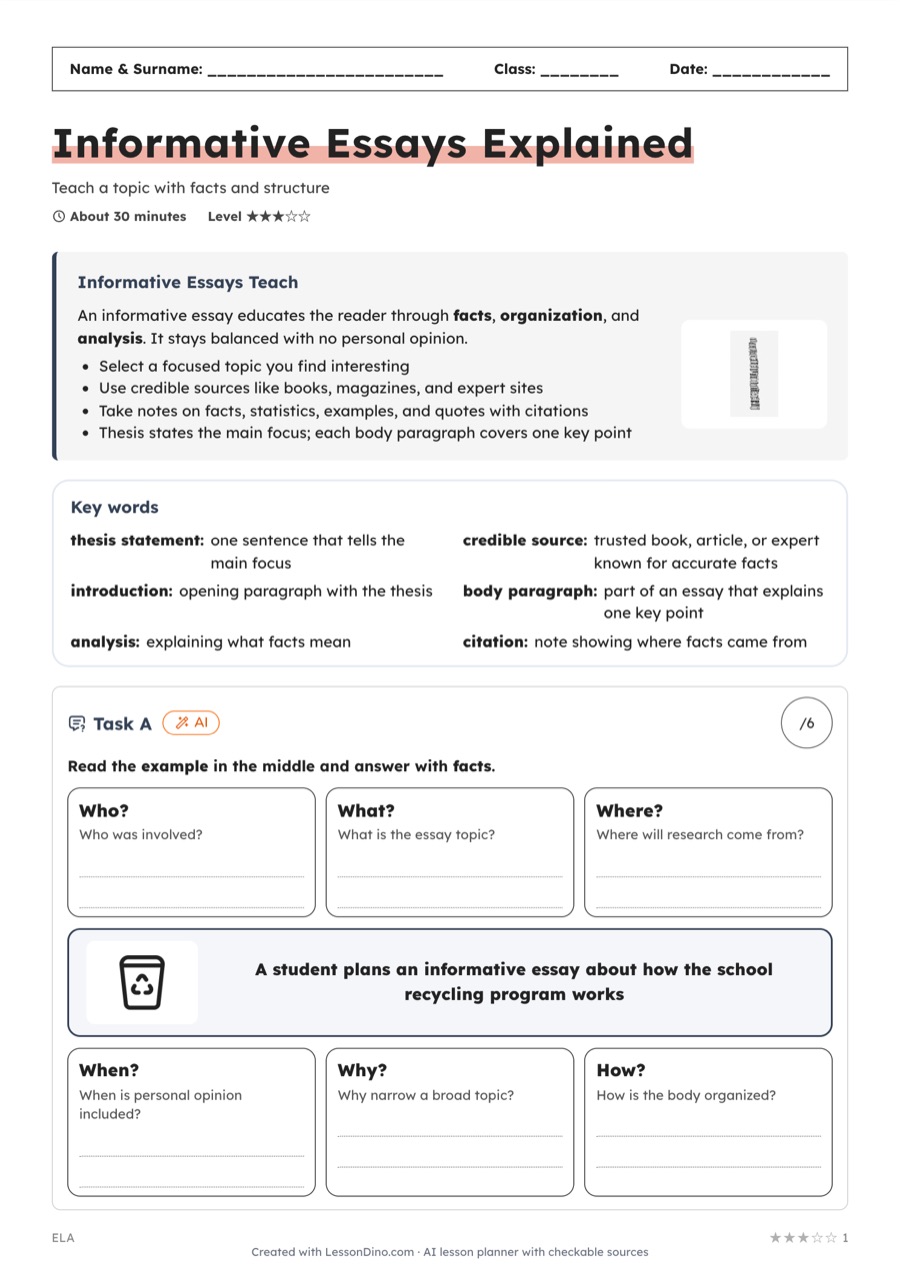
Explain With Facts
What makes an informative essay work.
Informative Essays Teach
- An informative essay educates the reader through facts, organization, and analysis. It stays balanced with no personal opinion.
- Select a focused topic you find interesting
- Use credible sources like books, magazines, and expert sites
- Take notes on facts, statistics, examples, and quotes with citations
- Thesis states the main focus; each body paragraph covers one key point
| Word | Meaning |
|---|---|
| thesis statement | one sentence that tells the main focus |
| credible source | trusted book, article, or expert known for accurate facts |
| introduction | opening paragraph with the thesis |
| body paragraph | part of an essay that explains one key point |
| analysis | explaining what facts mean |
| citation | note showing where facts came from |
Read the example in the middle and answer with facts.
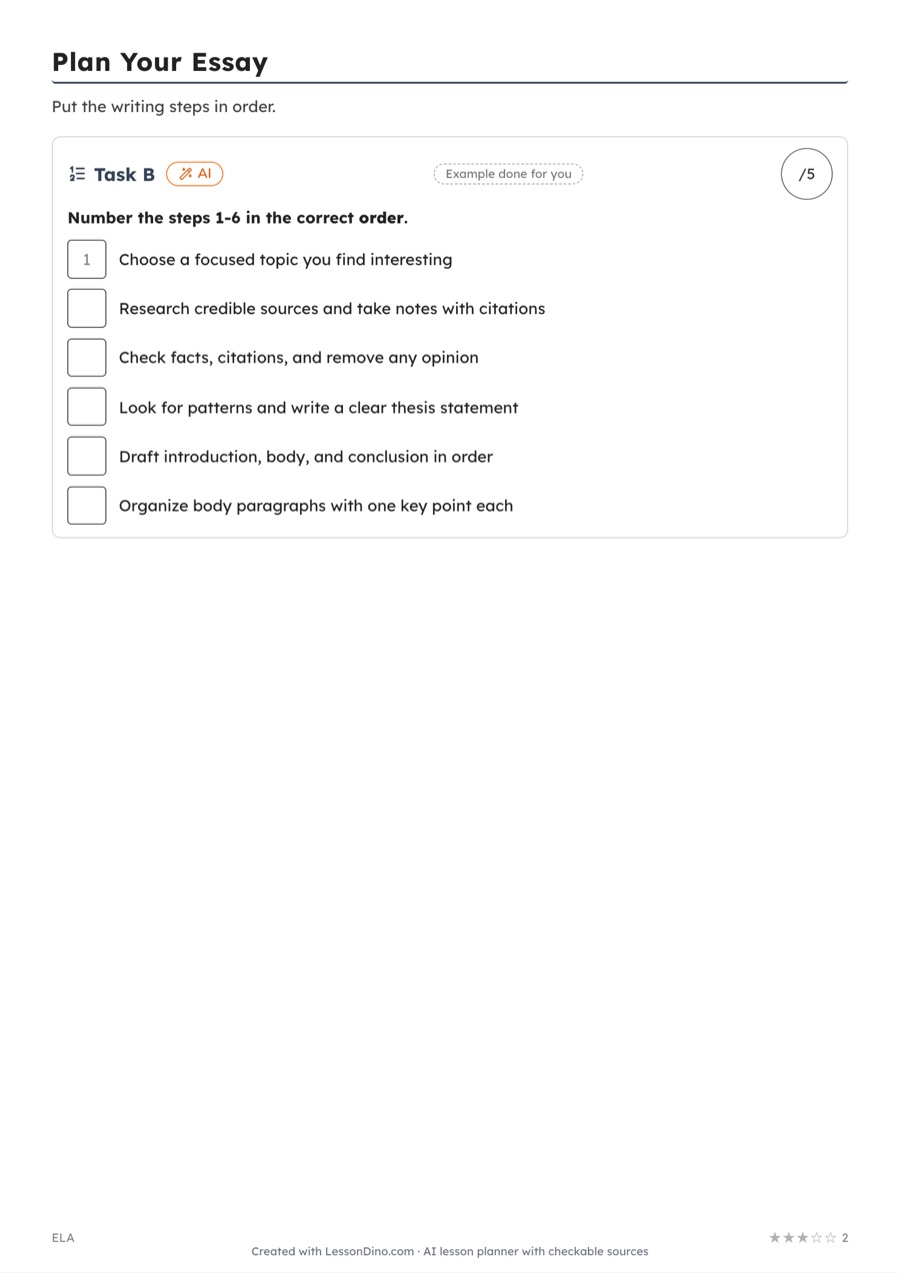
Plan Your Essay
Put the writing steps in order.
Number the steps 1-6 in the correct order.
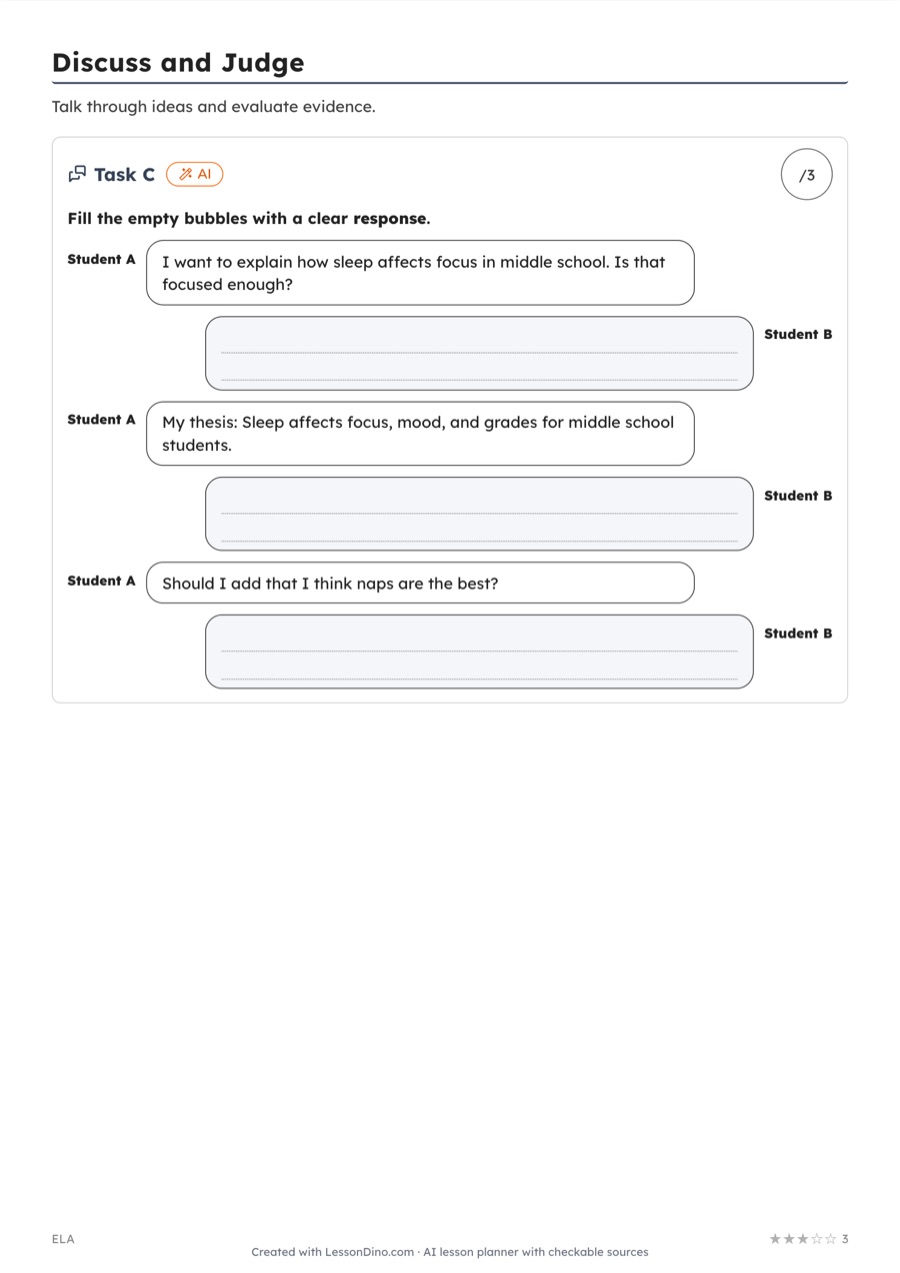
Discuss and Judge
Talk through ideas and evaluate evidence.
Fill the empty bubbles with a clear response.
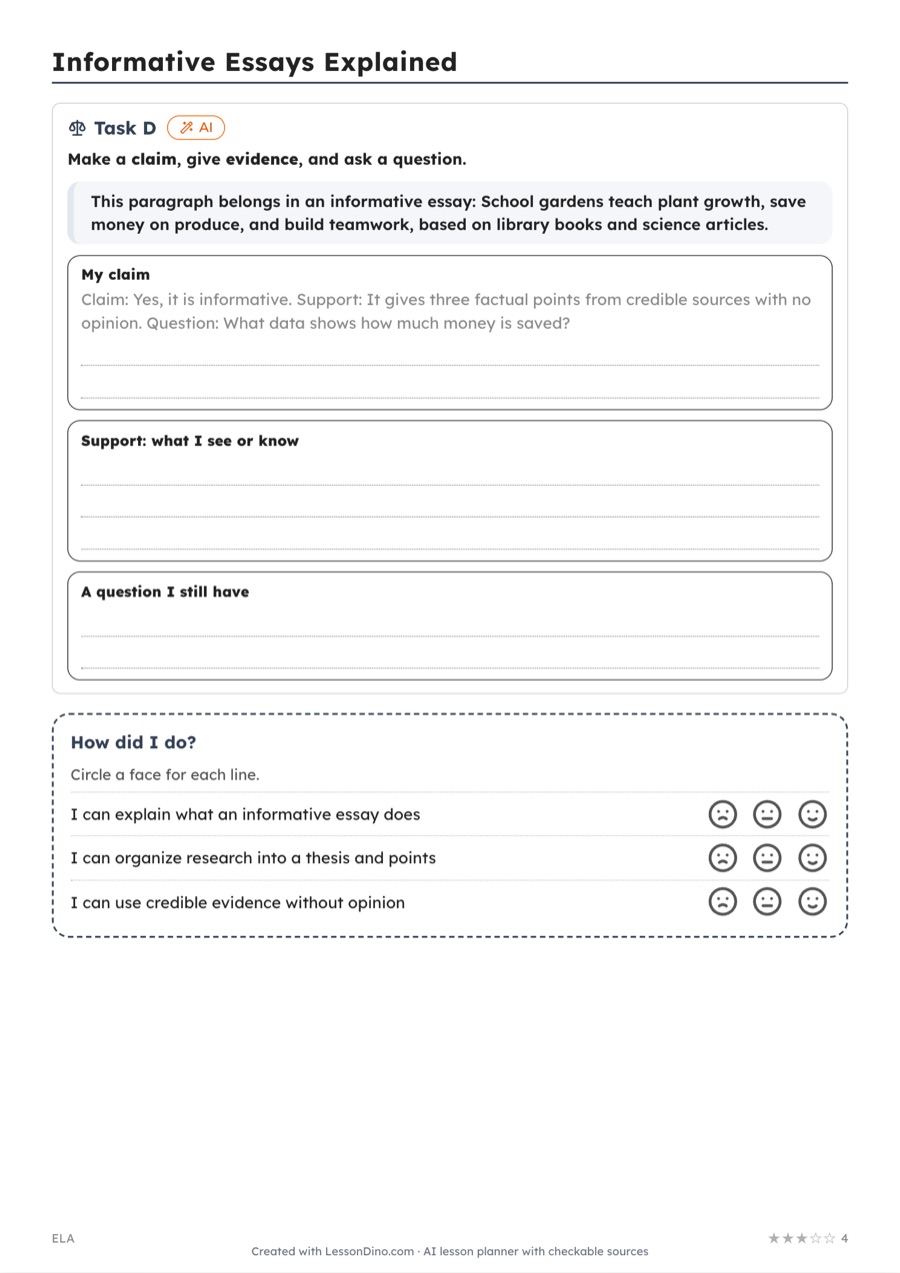
Page 4
Make a claim, give evidence, and ask a question.
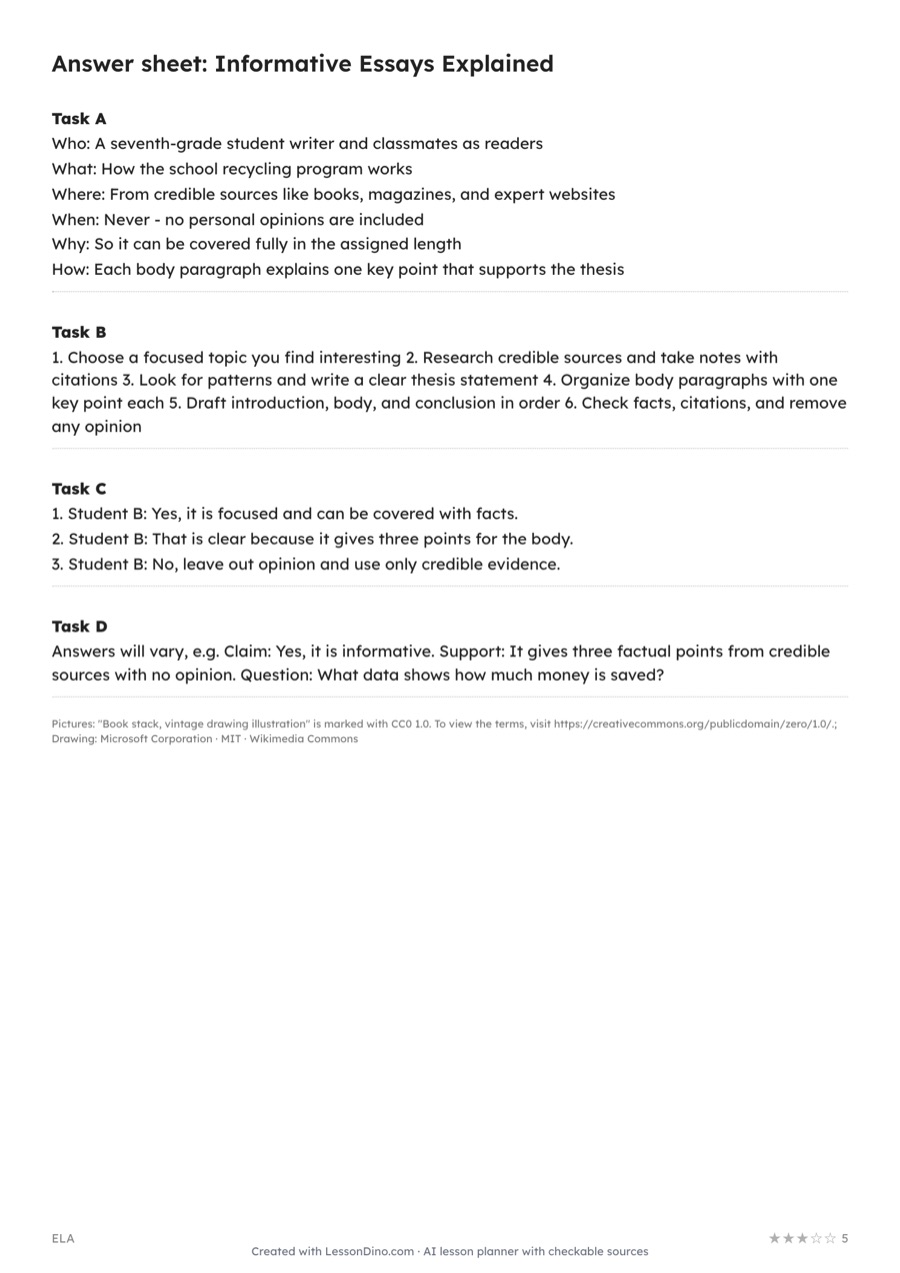
Answers
Show the answers
The answers are on the answer sheet, the last picture above.
Curriculum
Write informative/explanatory texts to examine a topic and convey ideas, concepts, and information through the selection, organization, and analysis of relevant content.
Made with Lesson Dino's AI on 16 October 2026. AI can make mistakes, so check the answers and facts against the sources before you teach.