The worksheet
About this worksheet
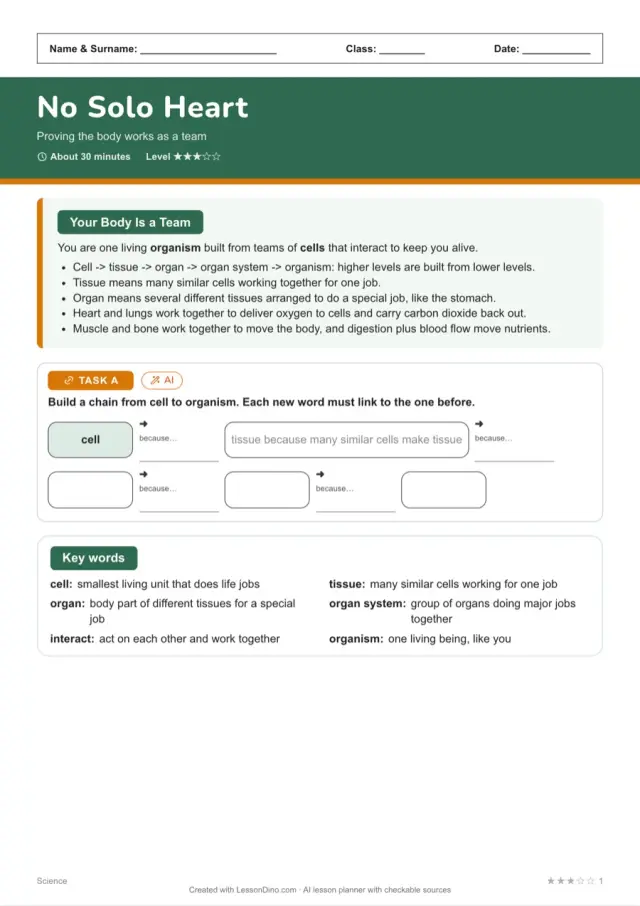
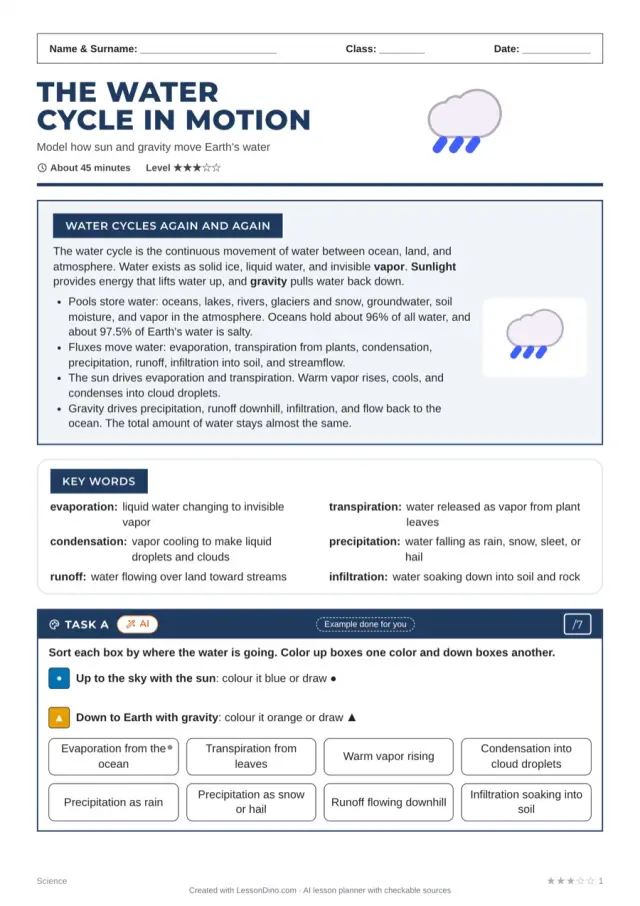
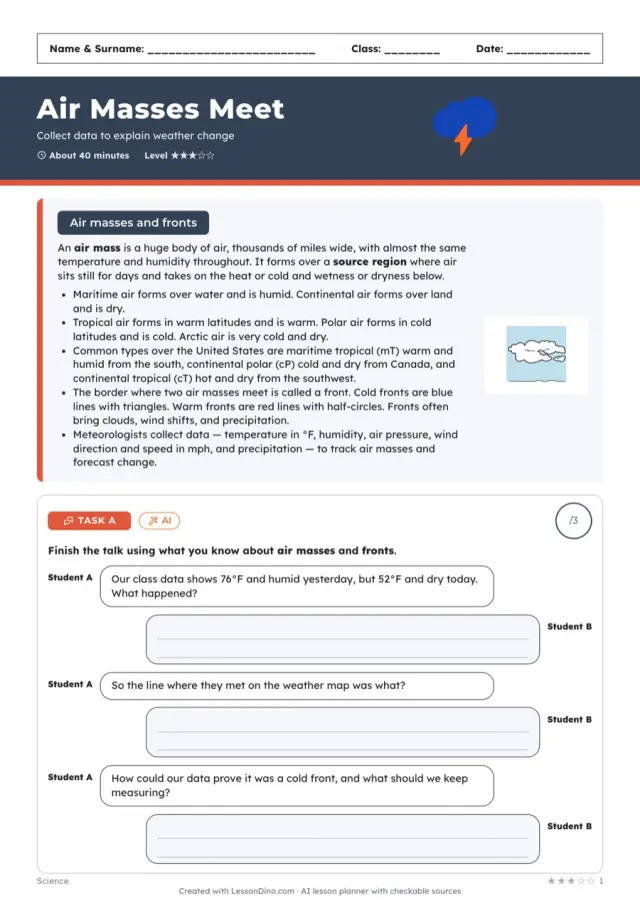
Students learn living things are made of cells. They use microscopes to find cell evidence in plant and animal samples. This Grade 6 Science worksheet gives students (ages 11–12) five pages of practice on living things are made of cells, part of the from molecules to organisms: structures and processes unit. It goes with our free Living things are made of cells lesson, which has the slides and a timed lesson plan.
What it covers
By the end, students should be able to:
- Students will investigate microscope evidence that living things are made of cells.
- Students will compare one-celled and many-celled organisms using observations.
- Students will explain cells as the smallest unit of life with evidence.
How to use it
- Plenary (10 minutes): Collect Worksheet Task A evidence sentences and read two strong examples aloud.
- Support: Give a pre-focused microscope and a drawing frame with two boxes labeled what I see and what repeats.
- Stretch: Have students compare and contrast plant and animal cell structure and function in a Venn diagram.
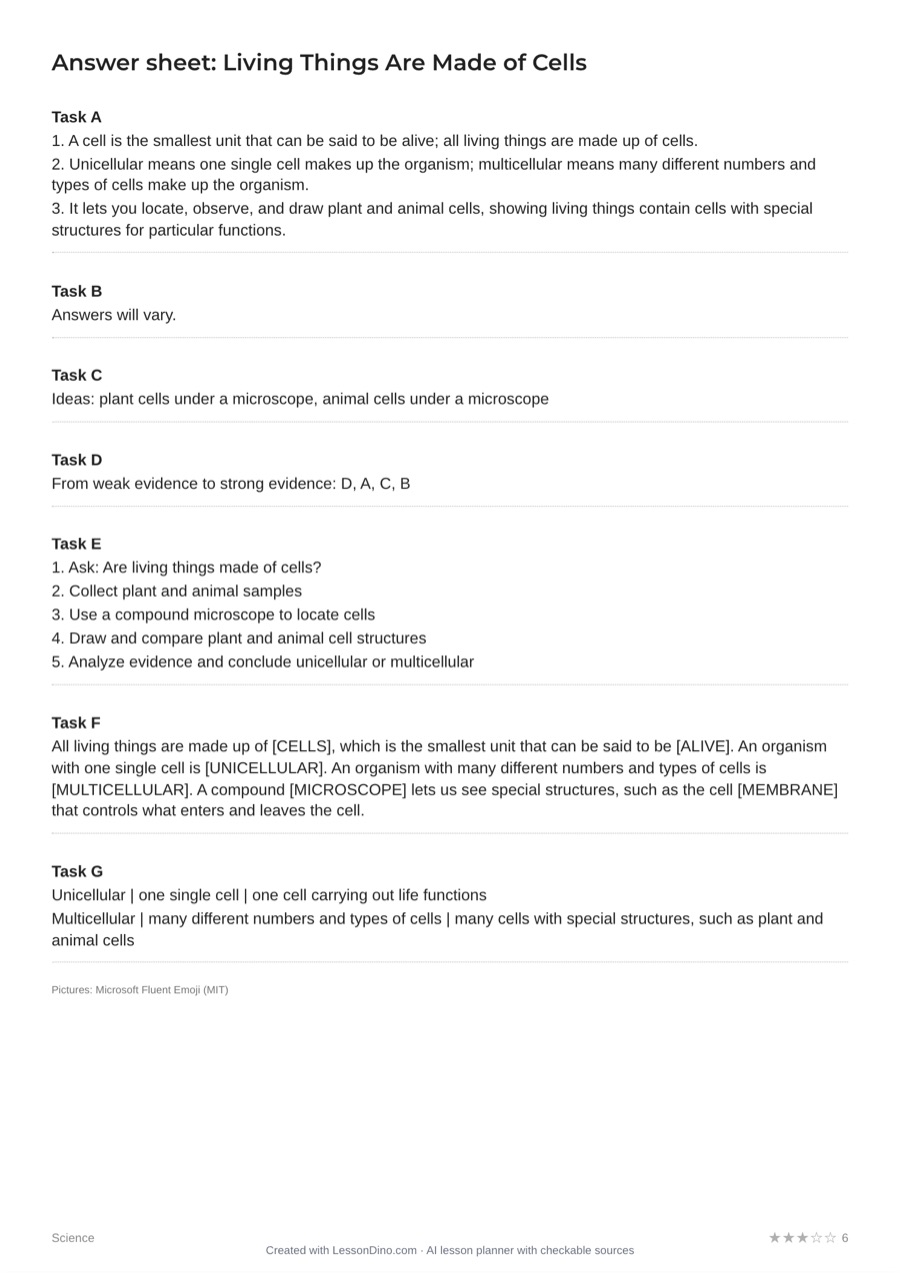
- The answer sheet is the last page, so you can print it on its own or let students check their own work.
Key vocabulary
- cell: a very tiny building block that can be alive on its own
- unicellular: a living thing made from just one tiny living unit
- multicellular: a living thing made from many tiny living units sharing jobs
- microscope: a tool that makes things too small to see look larger
- evidence: something you observe or measure that helps show an idea is true
Mistakes to watch for
- Thinking only plants have cells because onion boxes are easy to see. Put both sketches side by side and trace repeating boundaries in each to show all living things are made of cells.
- Thinking unicellular means no cell or not alive. Show single moving unit and state even one-celled organisms have a cell that does all jobs.
- Thinking cells are the same as atoms or just dots on paper. Require three repeated units with traced boundaries and label what repeats, linking to smallest unit that can be alive.
What's on the worksheet
Cells Make Life
Learn what evidence shows all living things are made of cells.
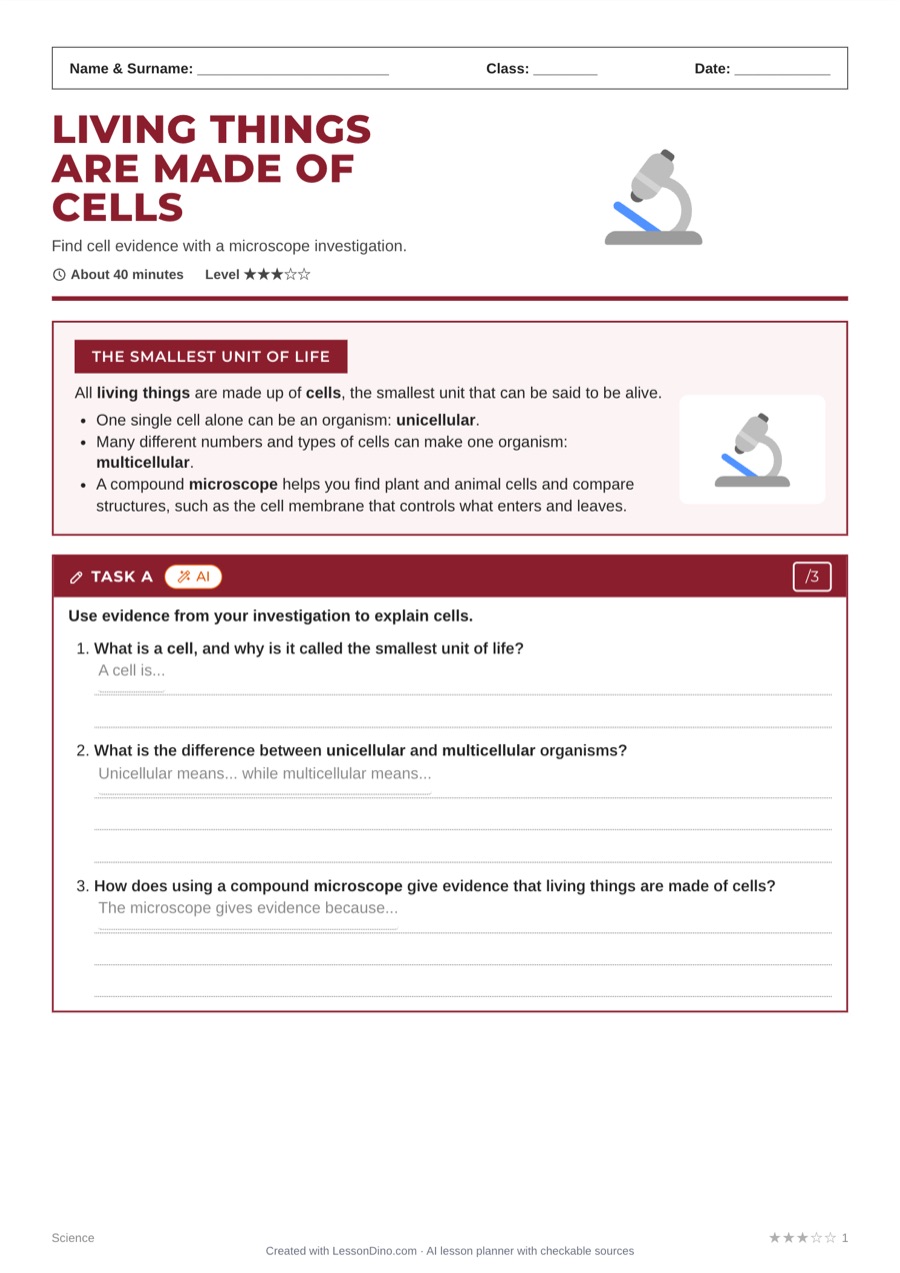
The Smallest Unit of Life
- All living things are made up of cells, the smallest unit that can be said to be alive.
- One single cell alone can be an organism: unicellular.
- Many different numbers and types of cells can make one organism: multicellular.
- A compound microscope helps you find plant and animal cells and compare structures, such as the cell membrane that controls what enters and leaves.
Use evidence from your investigation to explain cells.
- What is a cell, and why is it called the smallest unit of life?
- What is the difference between unicellular and multicellular organisms?
- How does using a compound microscope give evidence that living things are made of cells?
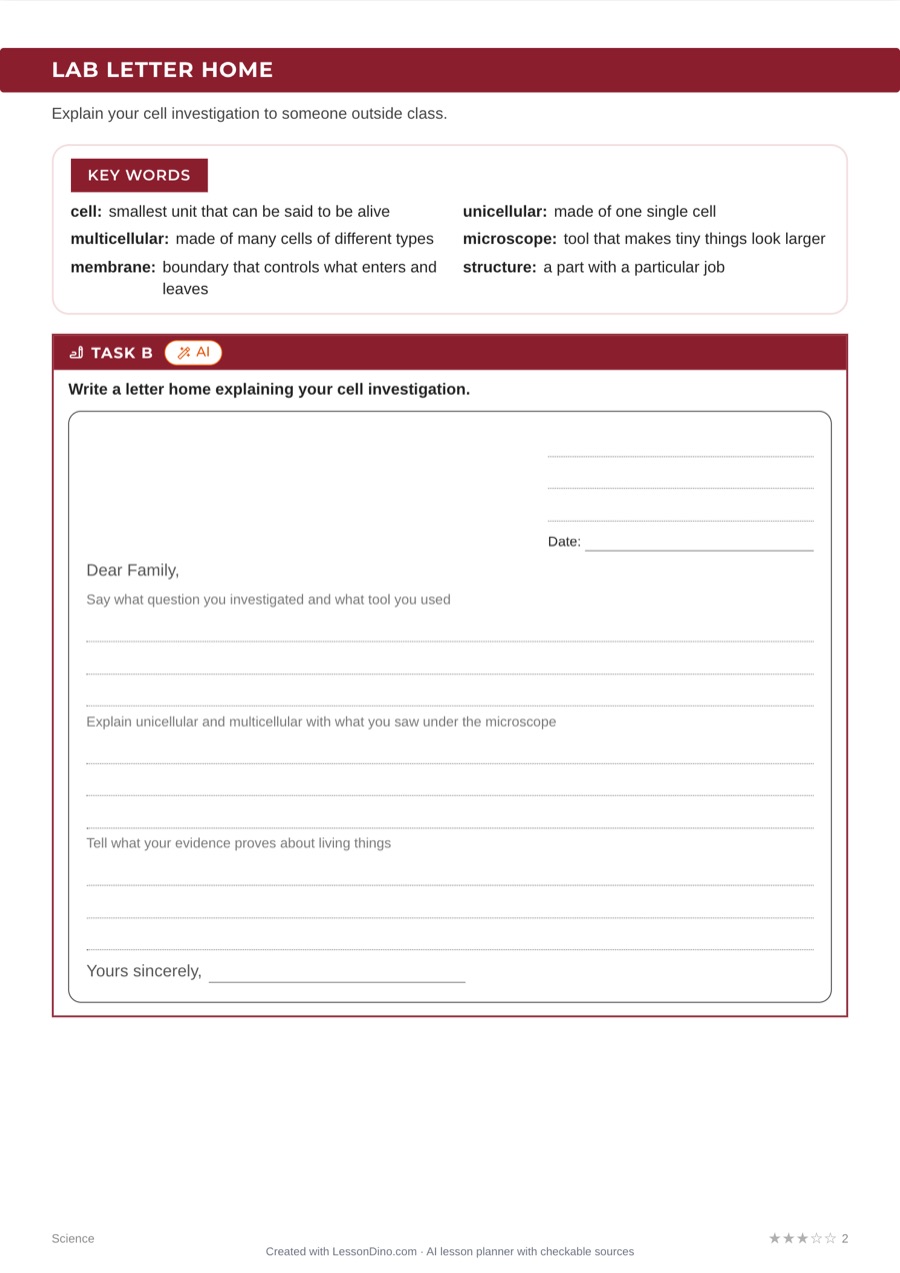
Lab Letter Home
Explain your cell investigation to someone outside class.
| Word | Meaning |
|---|---|
| cell | smallest unit that can be said to be alive |
| unicellular | made of one single cell |
| multicellular | made of many cells of different types |
| microscope | tool that makes tiny things look larger |
| membrane | boundary that controls what enters and leaves |
| structure | a part with a particular job |
Write a letter home explaining your cell investigation.
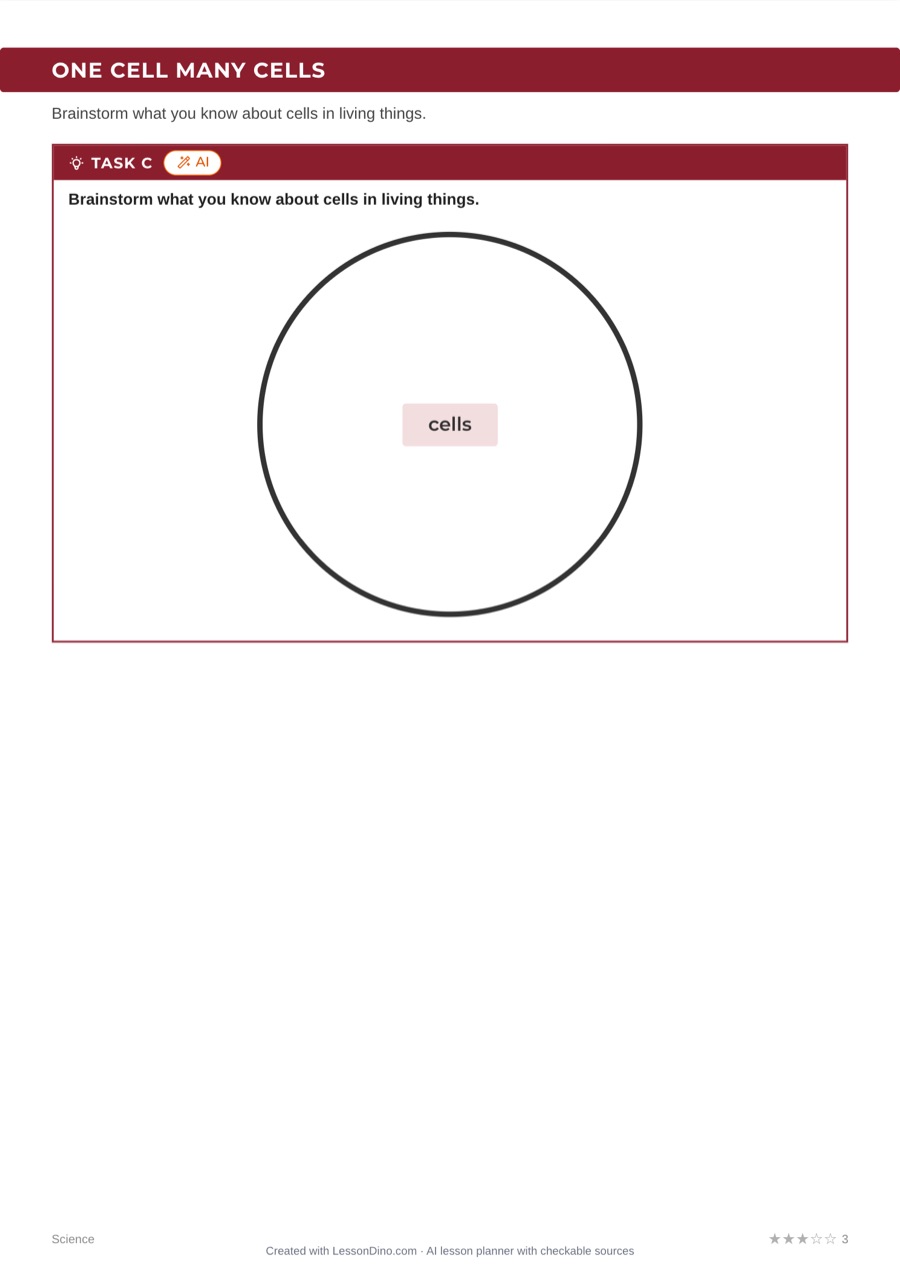
One Cell Many Cells
Brainstorm what you know about cells in living things.
Brainstorm what you know about cells in living things.
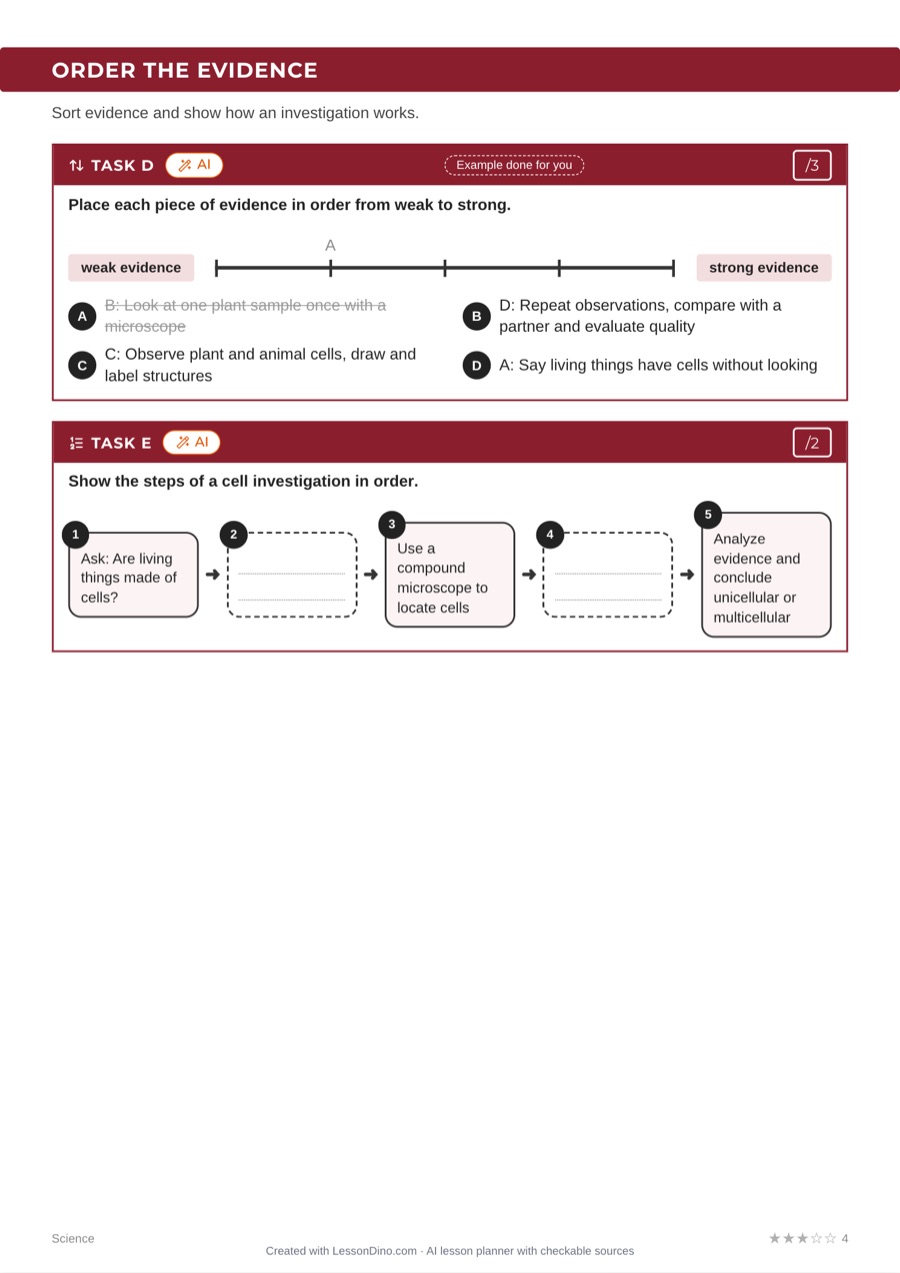
Order the Evidence
Sort evidence and show how an investigation works.
Place each piece of evidence in order from weak to strong.
Show the steps of a cell investigation in order.
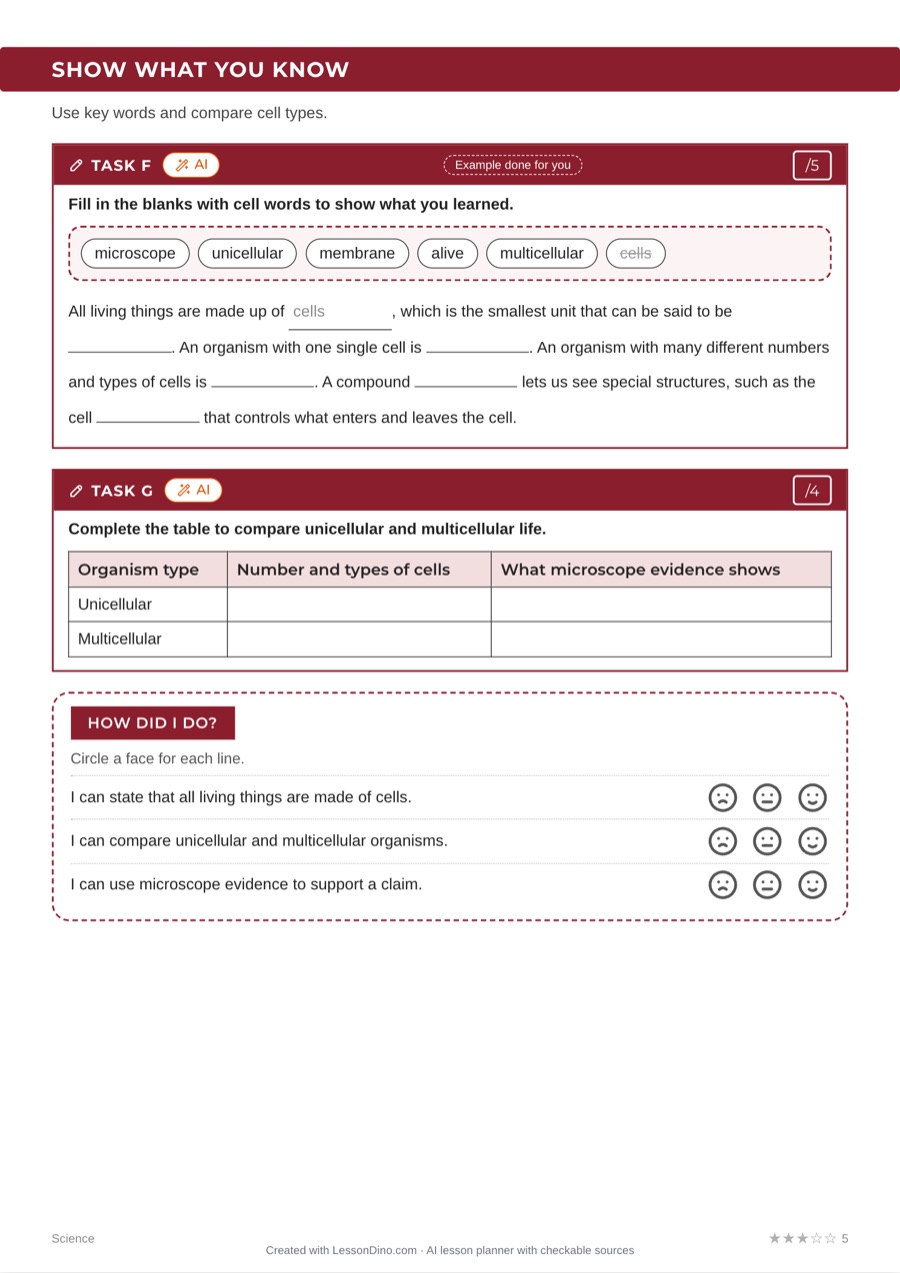
Show What You Know
Use key words and compare cell types.
Fill in the blanks with cell words to show what you learned.
- All living things are made up of [[cells]], which is the smallest unit that can be said to be [[alive]]. An organism with one single cell is [[unicellular]]. An organism with many different numbers and types of cells is [[multicellular]]. A compound [[microscope]] lets us see special structures, such as the cell [[membrane]] that controls what enters and leaves the cell.
Complete the table to compare unicellular and multicellular life.
Answers
Show the answers
- What is a cell, and why is it called the smallest unit of life? A cell is the smallest unit that can be said to be alive; all living things are made up of cells.
- What is the difference between unicellular and multicellular organisms? Unicellular means one single cell makes up the organism; multicellular means many different numbers and types of cells make up the organism.
- How does using a compound microscope give evidence that living things are made of cells? It lets you locate, observe, and draw plant and animal cells, showing living things contain cells with special structures for particular functions.
The answer sheet is the last picture above.
Curriculum
Conduct an investigation to provide evidence that living things are made of cells; either one cell or many different numbers and types of cells.
Made with Lesson Dino's AI on 16 October 2026. AI can make mistakes, so check the answers and facts against the sources before you teach.