Slides
Lesson plan
Tiny Building Blocks of Life
Students learn living things are made of cells. They use microscopes to find cell evidence in plant and animal samples.
Objectives
- Students will investigate microscope evidence that living things are made of cells.
- Students will compare one-celled and many-celled organisms using observations.
- Students will explain cells as the smallest unit of life with evidence.
Success criteria
- I can show cell evidence from microscope observations.
- I can compare one cell and many cells with examples.
- I can explain why cells are the smallest unit of life.
Key words
| Word | Meaning |
|---|---|
| cell | a very tiny building block that can be alive on its own |
| unicellular | a living thing made from just one tiny living unit |
| multicellular | a living thing made from many tiny living units sharing jobs |
| microscope | a tool that makes things too small to see look larger |
| evidence | something you observe or measure that helps show an idea is true |
Timed plan (60 minutes)
| Time | Stage | What happens |
|---|---|---|
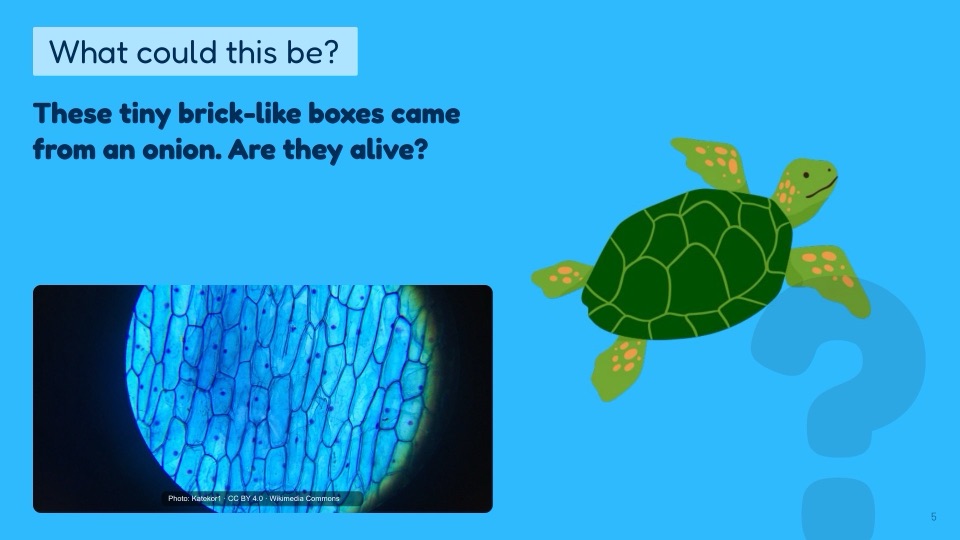
| 5 min | Starter | Hook students and surface ideas about unseen building blocks of living things. Show Slide 1 title and read lesson goals on Slide 2. Ask hook: If you and an onion are both built from tiny parts you cannot see, how could we check that together? Show Slide 5 mystery onion boxes and take 3 predictions: alive or not, and how to test. State today we will use a microscope to show evidence that plant and animal samples are made of cells. |
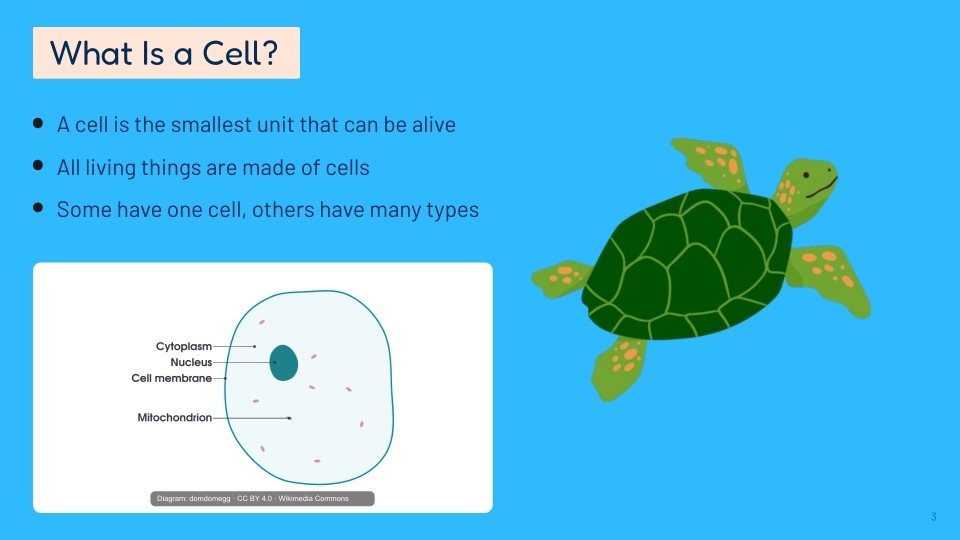
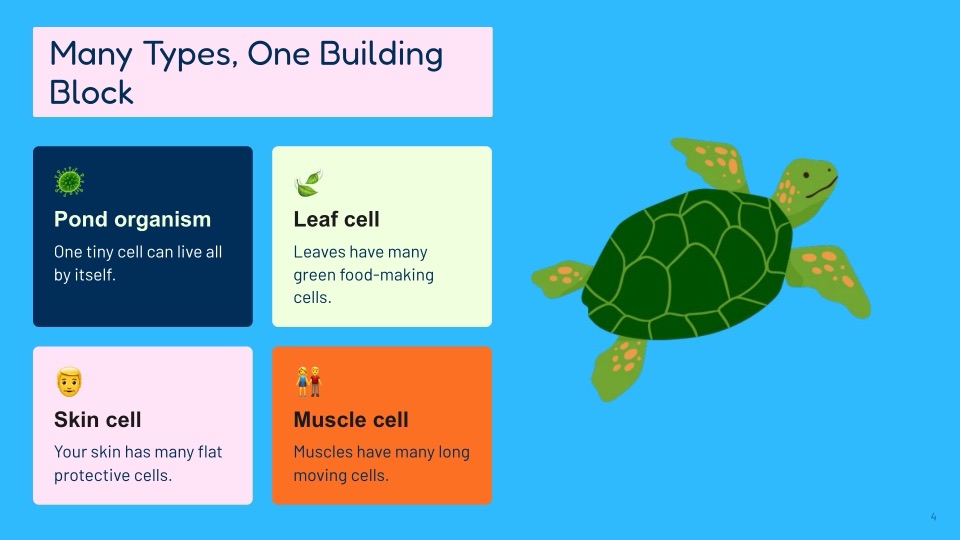
| 10 min | Teaching | Teach core idea that cells are the smallest living unit in one-celled and many-celled life. Show Slide 3 and explain all living things are made up of cells, which is the smallest unit that can be said to be alive. Show Slide 4 cards for pond organism, leaf, and skin to explain one tiny unit can live alone or many units can form tissue. Explain microbiology grew after the invention of the microscope in the 1600s, and Theodor Schwann extended cell ideas to animals. Model science rule: natural science is based on empirical evidence from observation and experimentation. |
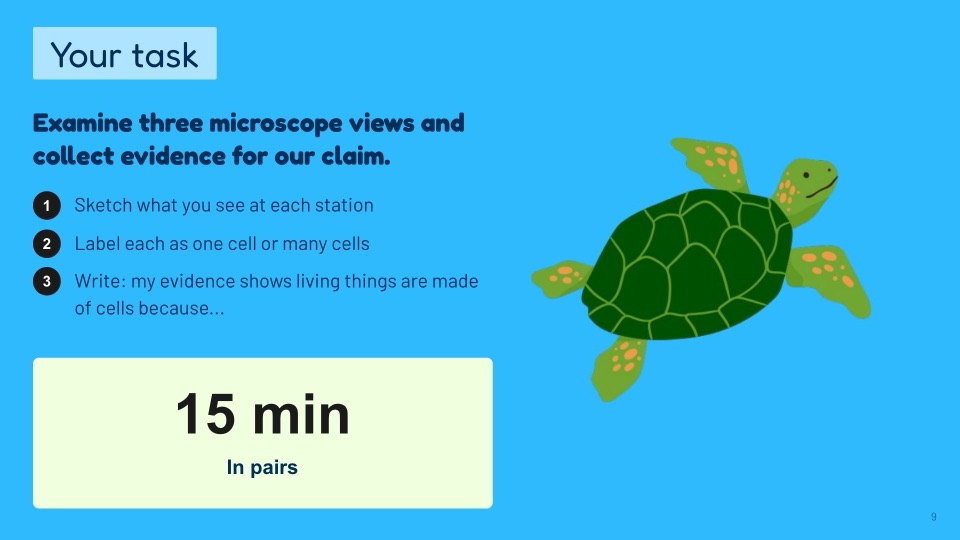
| 25 min | Main activity | Investigate plant and animal slides to collect drawn evidence for cells. Show Slide 9 task and demo focusing, drawing three repeated units, and noting boundaries. Send pairs to stations to use a compound microscope to locate and identify characteristics of different types of cells. Circulate to check focus, counting of repeating units, and labeling one cell or many cells. Prompt evidence sentence starter: Our evidence is... and connect to smallest unit of life. |
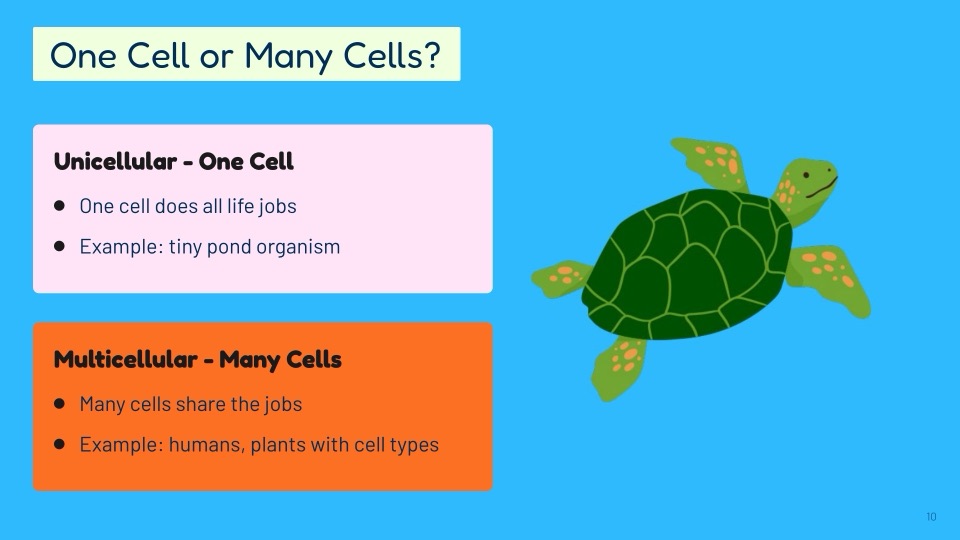
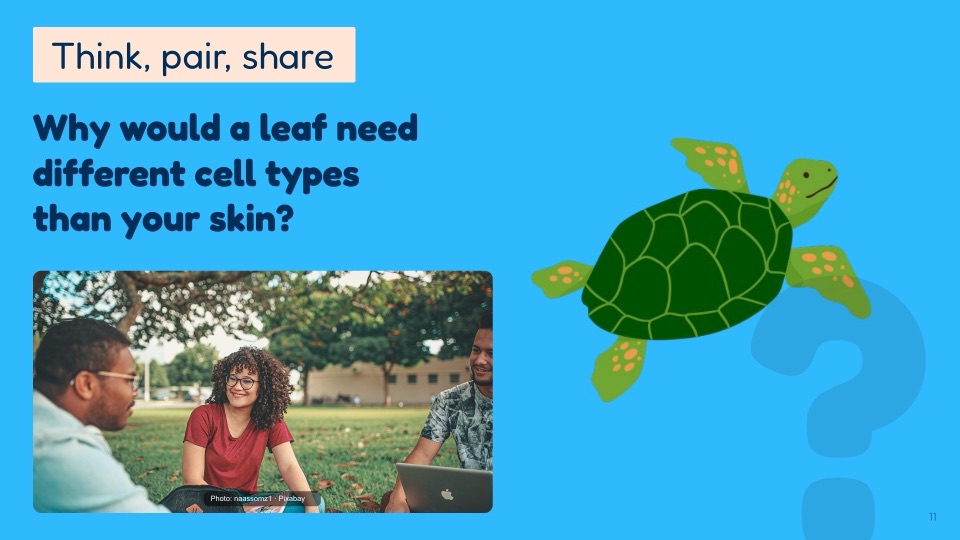
| 10 min | Compare | Sort and explain unicellular versus multicellular life using evidence. Show Slide 10 compare chart and define one cell does all jobs and many cells share jobs. Lead 4-minute sort: pond organism, leaf, human skin into unicellular or multicellular with evidence pointer. Show Slide 11 question and run think, pair, share on different jobs for leaf and skin. Tie to special structures having particular functions inside cells. |
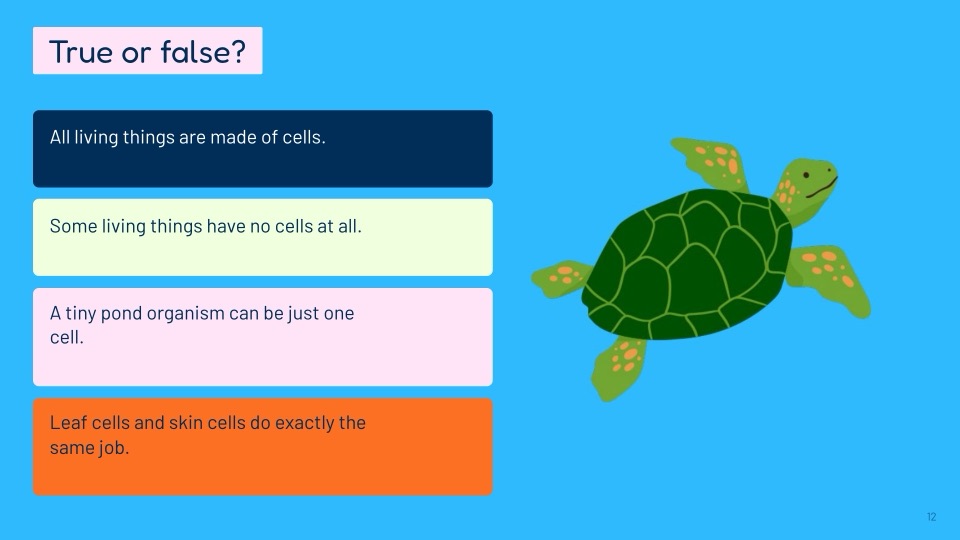
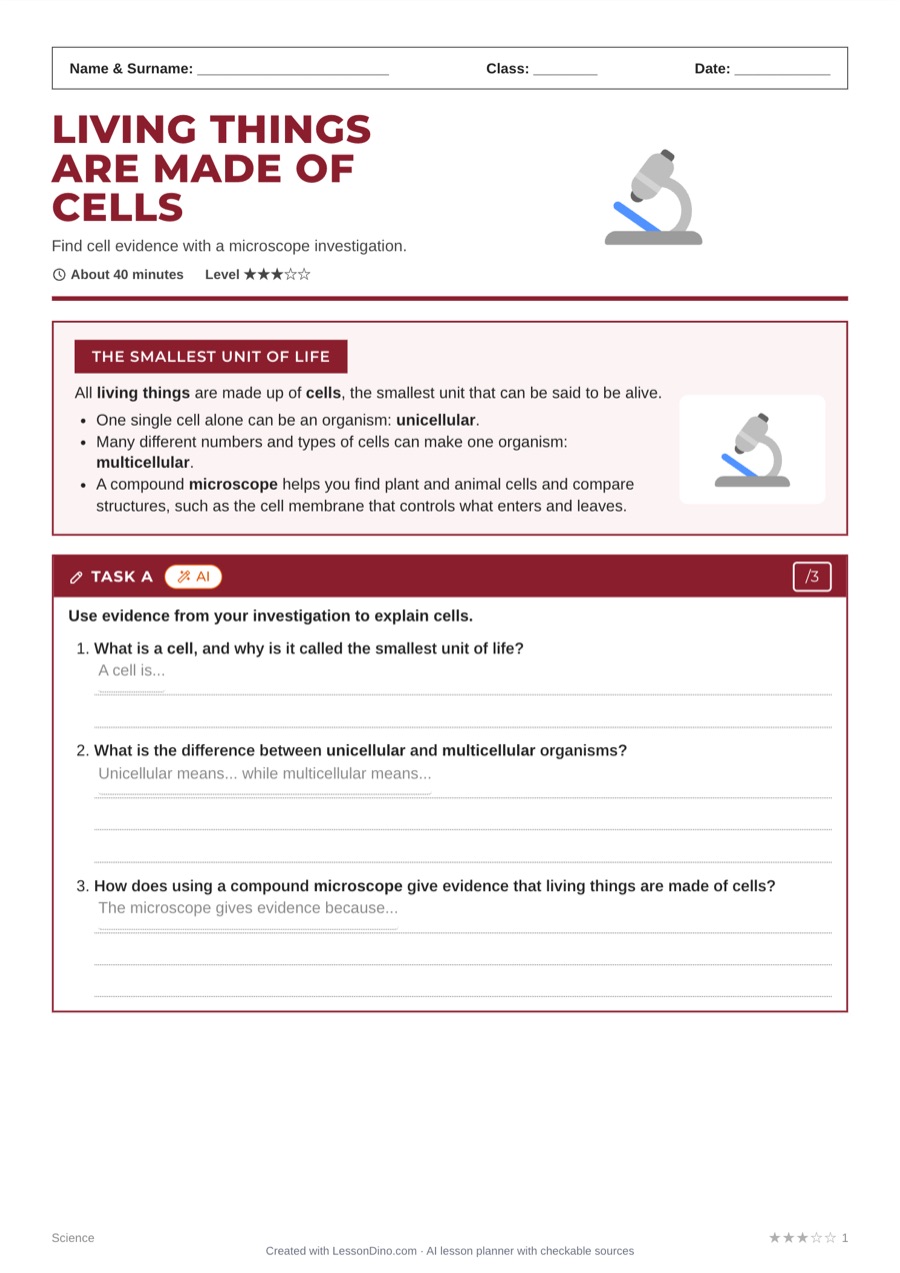
| 10 min | Plenary | Check understanding and secure claim that every living thing is built from cells. Show Slide 12 true or false statements for all to answer. Review success lines: show cell evidence, compare one and many, explain smallest unit. Collect Worksheet Task A evidence sentences and read two strong examples aloud. Set homework and preview next lesson on cell parts and jobs. |
Common mistakes
- Thinking only plants have cells because onion boxes are easy to see
How to spot it: Student labels onion as cells but cheek as no cells
Put both sketches side by side and trace repeating boundaries in each to show all living things are made of cells - Thinking unicellular means no cell or not alive
How to spot it: Student says pond microbe has zero cells
Show single moving unit and state even one-celled organisms have a cell that does all jobs - Thinking cells are the same as atoms or just dots on paper
How to spot it: Student draws random dots with no boundaries
Require three repeated units with traced boundaries and label what repeats, linking to smallest unit that can be alive
Support
- Give a pre-focused microscope and a drawing frame with two boxes labeled what I see and what repeats.
- Provide sentence frames: I observed... This supports cells because... and word bank for one cell and many cells.
Stretch
- Have students compare and contrast plant and animal cell structure and function in a Venn diagram.
- Ask students to add inside dots for special structures and explain how structure helps function.
Check questions
- What evidence from today shows living things are made of cells?
Answer: Both onion skin and cheek samples showed repeating units with boundaries under the microscope. - Give one example of unicellular and one of multicellular life.
Answer: Unicellular: tiny pond organism; multicellular: human or leaf with many cells sharing jobs. - Why is a cell called the smallest unit of life?
Answer: Because it is the smallest unit that can be said to be alive and all living things are made of cells.
Curriculum
Conduct an investigation to provide evidence that living things are made of cells; either one cell or many different numbers and types of cells.
Video clips
Clips on YouTube, from the start and end times we chose. Check each one before you show it.
-
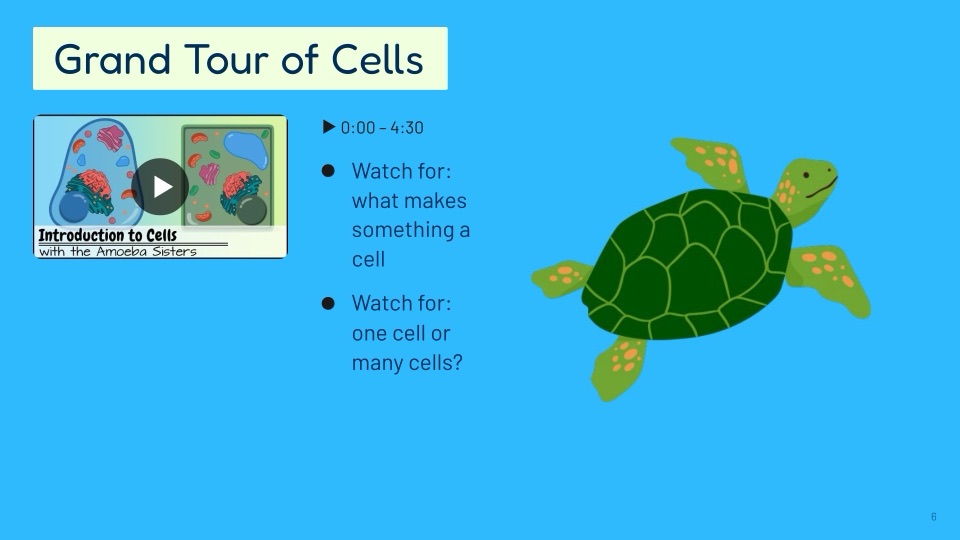
Grand Cell Tour intro from 0:00 to 4:30
Amoeba Sisters: Introduction to Cells: The Grand Cell Tour
Amoeba Sisters humor and vocabulary are perfect for ages 11-12 and directly show that living things are made of one or many cells.
-
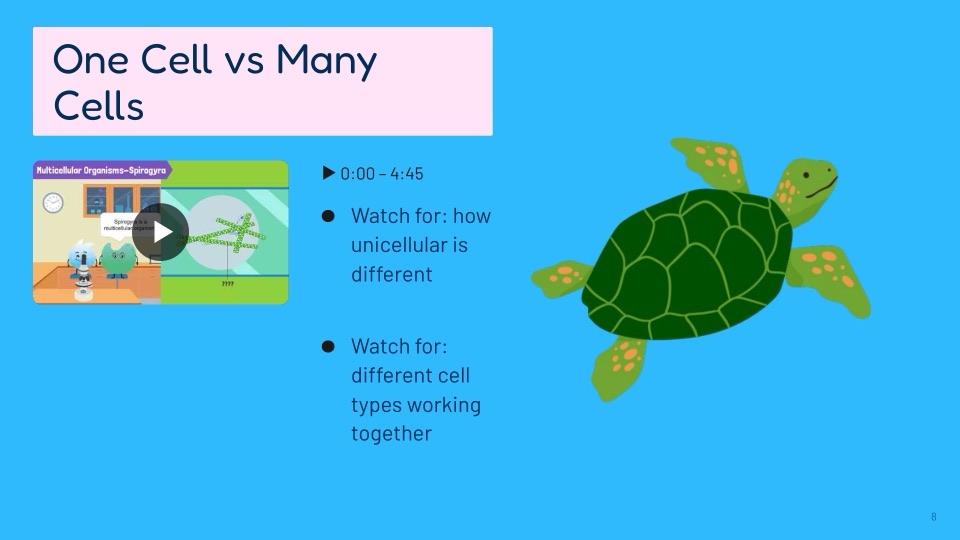
One cell vs many cells from 0:00 to 4:45
Knowledge Platform: Cells, Unicellular Organisms, and Multicellular Organisms
Clearly compares unicellular and multicellular organisms with visuals and vocabulary that suit ages 11-12.
Worksheet
Sources
- Unit 4 avon.k12.ct.us
- Natural science Wikipedia
- Stranger Things Wikipedia
- Theodor Schwann Wikipedia
Picture credits
Made with Lesson Dino's AI on 16 October 2026. AI can make mistakes, so check facts against the sources before you teach.