The worksheet
About this worksheet
Students learn the body is interacting subsystems built from cell groups. They collect breath and pulse data and write a claim with evidence. This Grade 6 Science worksheet gives students (ages 11–12) four pages of practice on human body systems, part of the human body unit. It goes with our free Human body systems lesson, which has the slides and a timed lesson plan.
What it covers
By the end, students should be able to:
- Students will order cells, tissues, organs and systems to show body organization.
- Students will use breath and pulse data to argue two systems interact.
- Students will explain that body is interacting subsystems made of cell groups.
How to use it
- Argument writing (13 minutes): Hand out Worksheet Tasks D and E. Pairs read the sprint story, list what changed, and pick the claim with the best evidence of interaction.
- Plenary (8 minutes): Show Slide 12 True or false statements and do Worksheet Task C tick true or false with evidence.
- Support: Starter strip with level names in order and picture matching with word bank.
- Stretch: Explain why one organ can belong to more than one system in function.
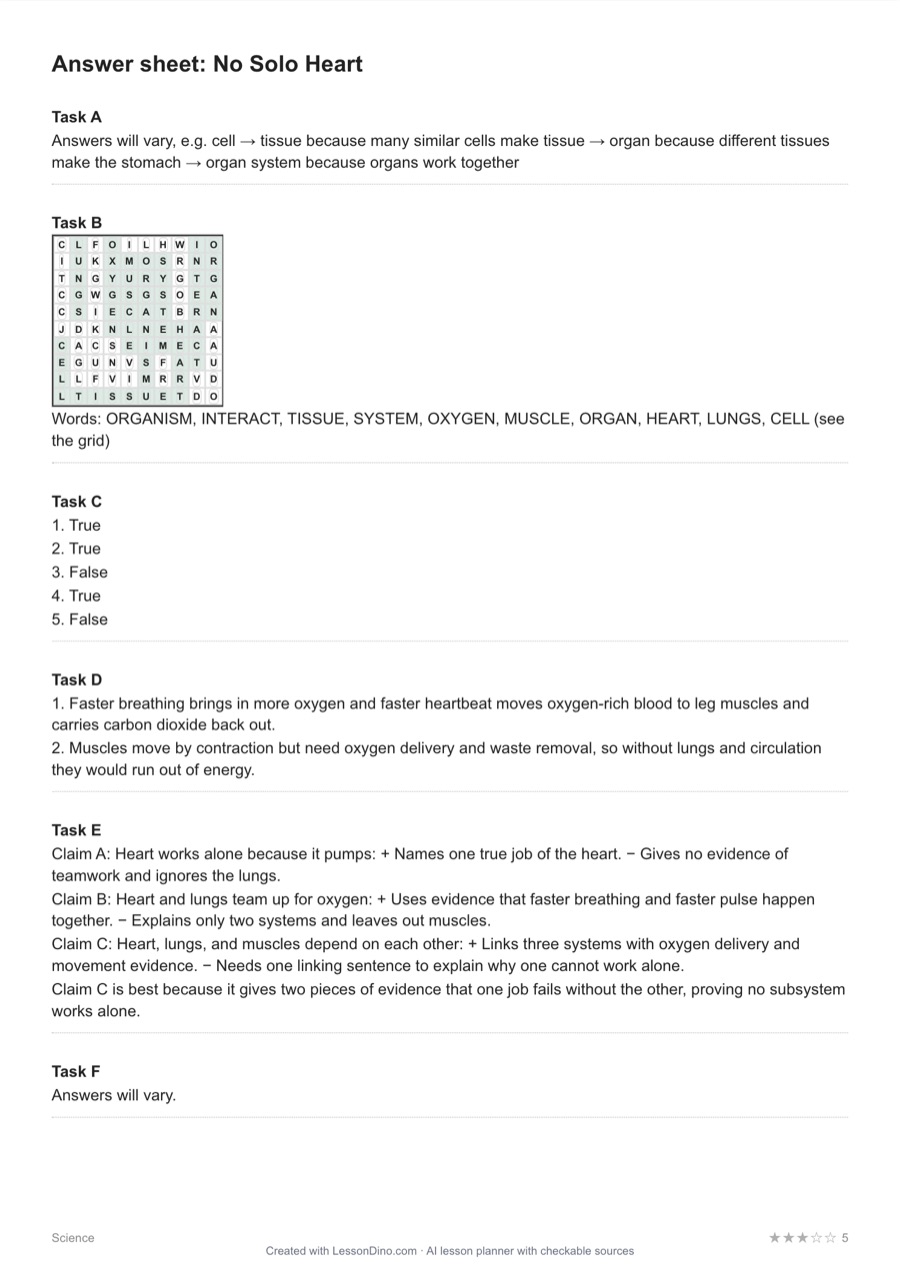
- The answer sheet is the last page, so you can print it on its own or let students check their own work.
Key vocabulary
- cell: tiniest living building block that carries out life jobs
- tissue: many similar tiny living blocks joined to do one job together
- organ: body part made from two or more joined block-groups with a special job
- system: team of body parts that work together to do a large life job
Mistakes to watch for
- Thinks the heart or lungs work alone. Remind that heart and lungs work together to deliver oxygen and remove carbon dioxide and no part works in isolation.
- Mixes up cell, tissue, organ, and system order. Rebuild that higher levels are built from lower levels: cells to tissues to organs to organ systems, with tissues as similar cells together.
What's on the worksheet
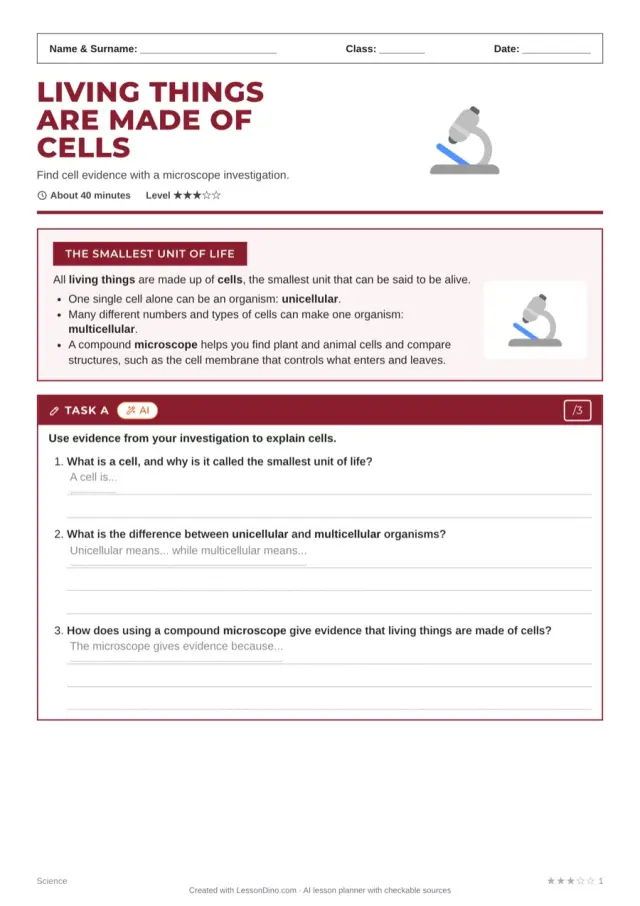
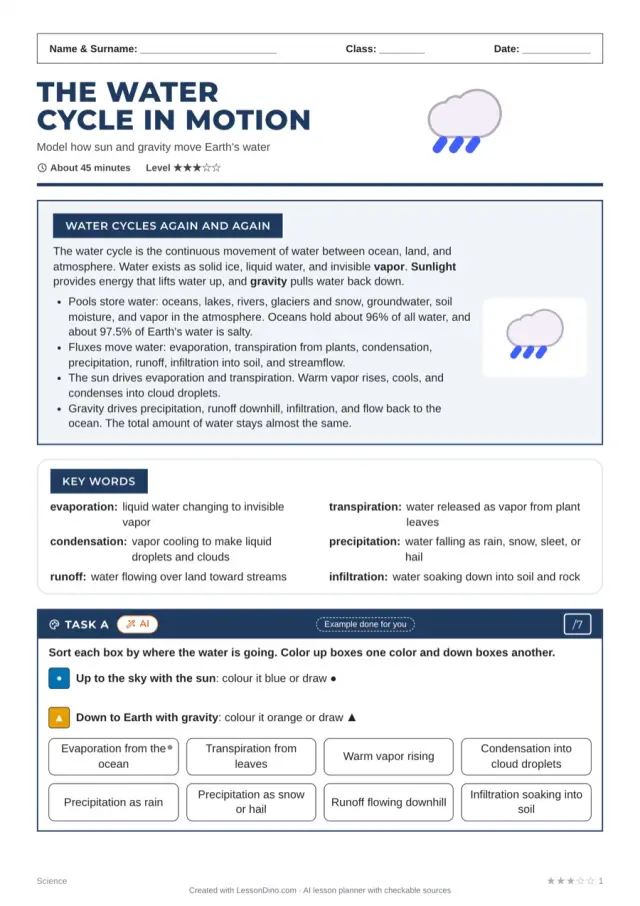
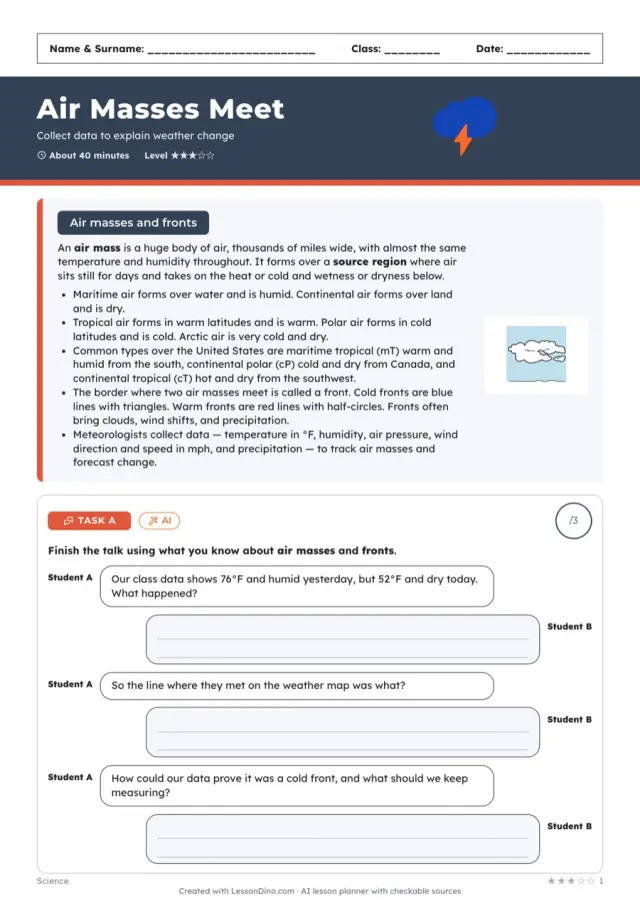
Teams Inside You
See how cell groups build tissues, organs, and systems.
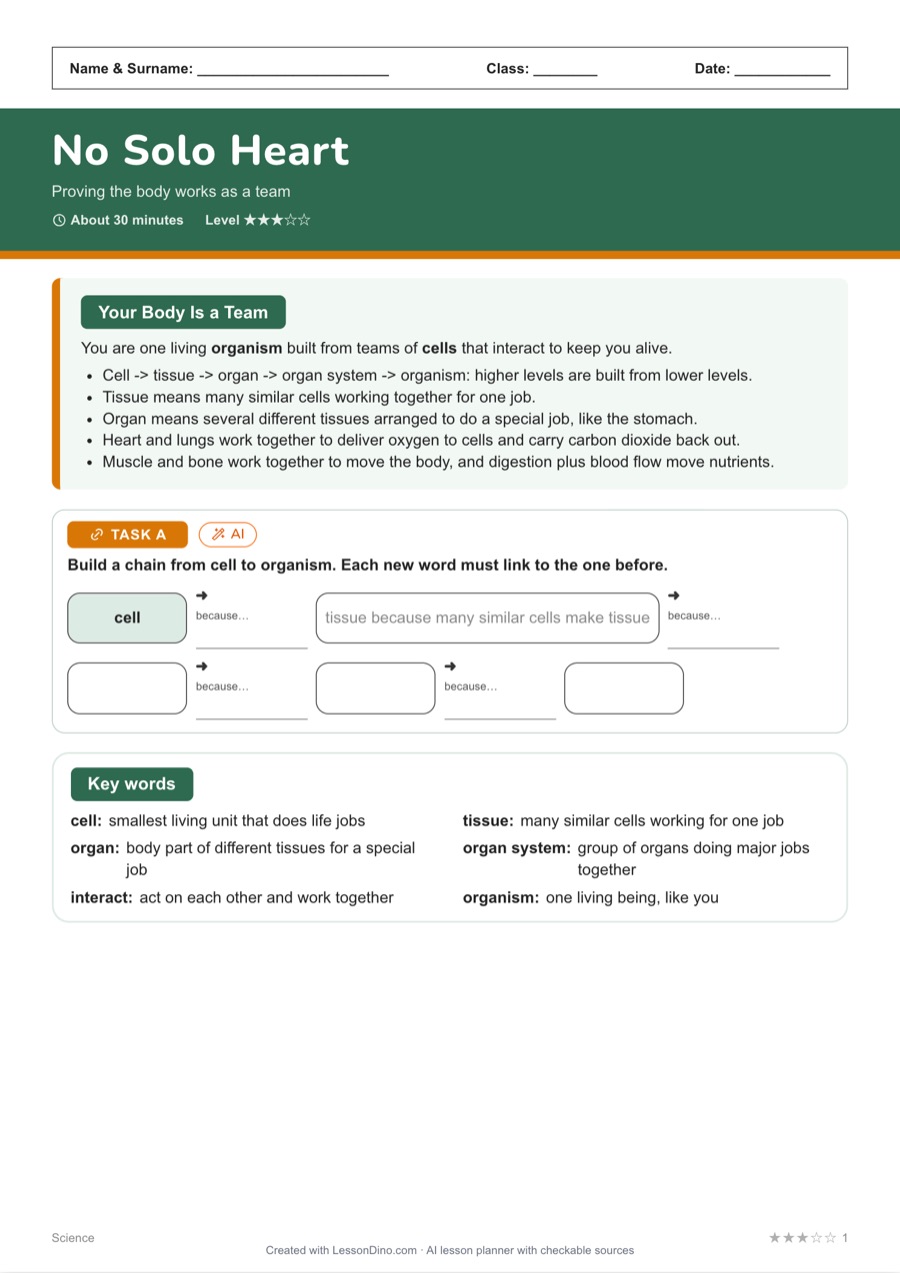
Your Body Is a Team
- You are one living organism built from teams of cells that interact to keep you alive.
- Cell -> tissue -> organ -> organ system -> organism: higher levels are built from lower levels.
- Tissue means many similar cells working together for one job.
- Organ means several different tissues arranged to do a special job, like the stomach.
- Heart and lungs work together to deliver oxygen to cells and carry carbon dioxide back out.
- Muscle and bone work together to move the body, and digestion plus blood flow move nutrients.
Build a chain from cell to organism. Each new word must link to the one before.
| Word | Meaning |
|---|---|
| cell | smallest living unit that does life jobs |
| tissue | many similar cells working for one job |
| organ | body part of different tissues for a special job |
| organ system | group of organs doing major jobs together |
| interact | act on each other and work together |
| organism | one living being, like you |
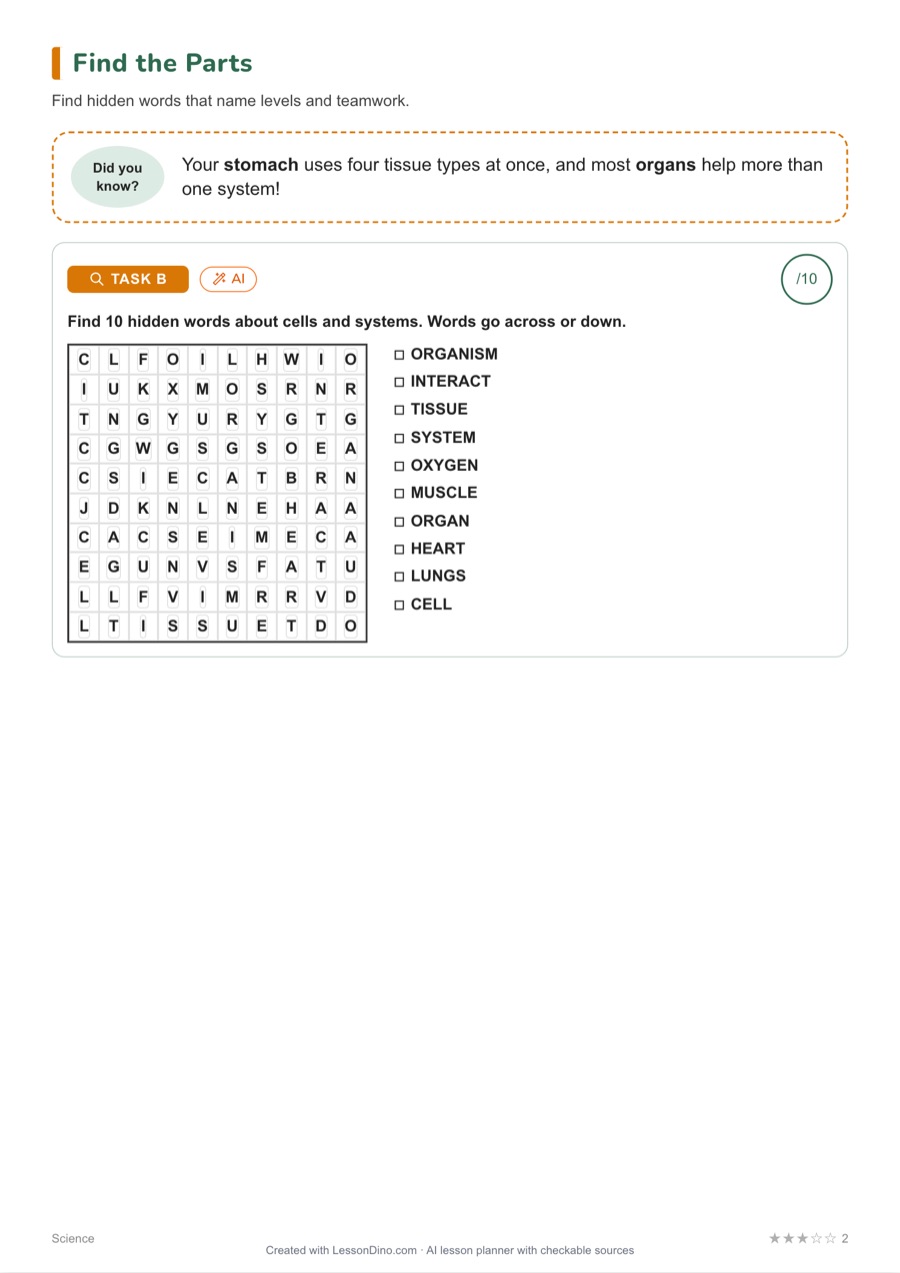
Find the Parts
Find hidden words that name levels and teamwork.
- Your stomach uses four tissue types at once, and most organs help more than one system!
Find 10 hidden words about cells and systems. Words go across or down.
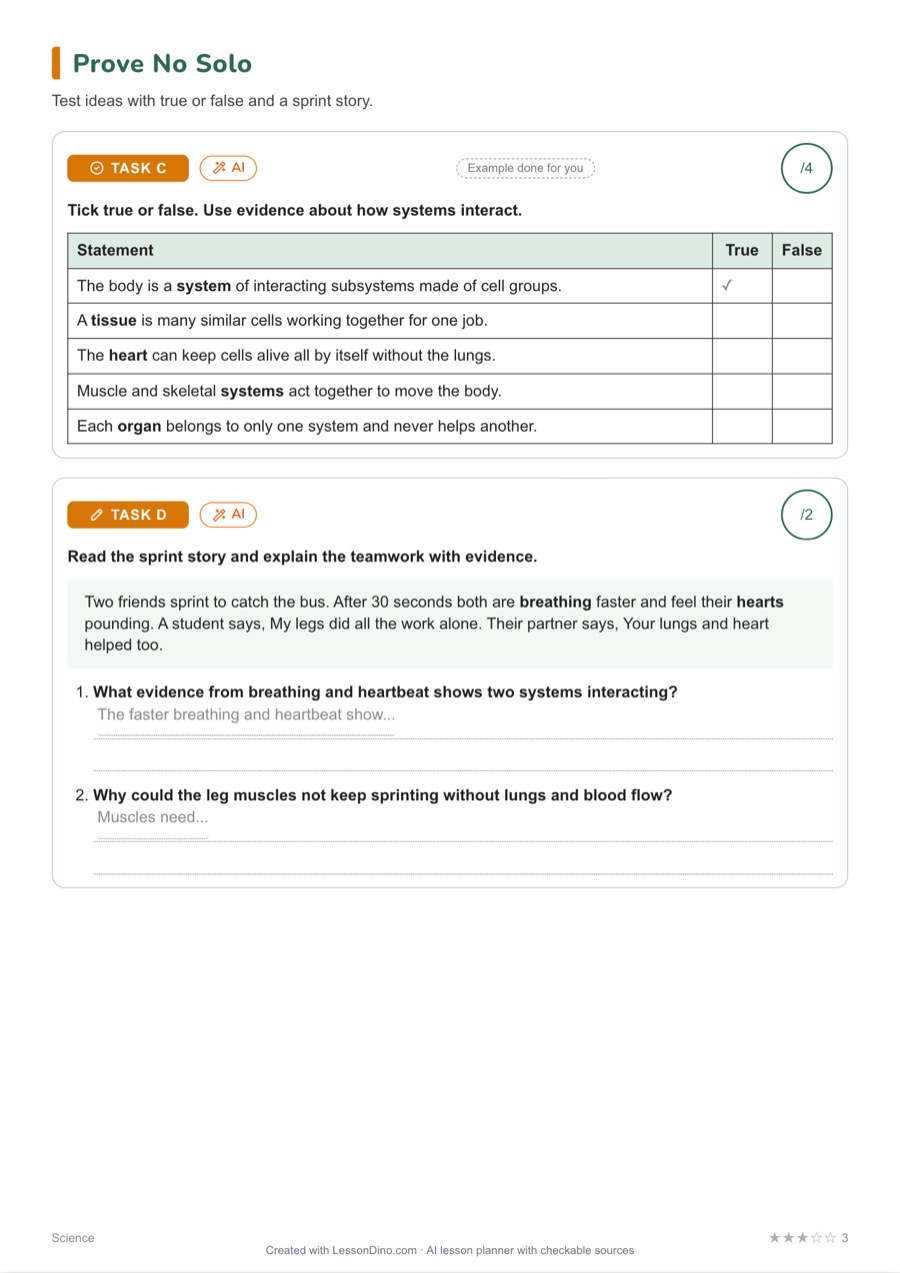
Prove No Solo
Test ideas with true or false and a sprint story.
Tick true or false. Use evidence about how systems interact.
Read the sprint story and explain the teamwork with evidence.
- What evidence from breathing and heartbeat shows two systems interacting?
- Why could the leg muscles not keep sprinting without lungs and blood flow?
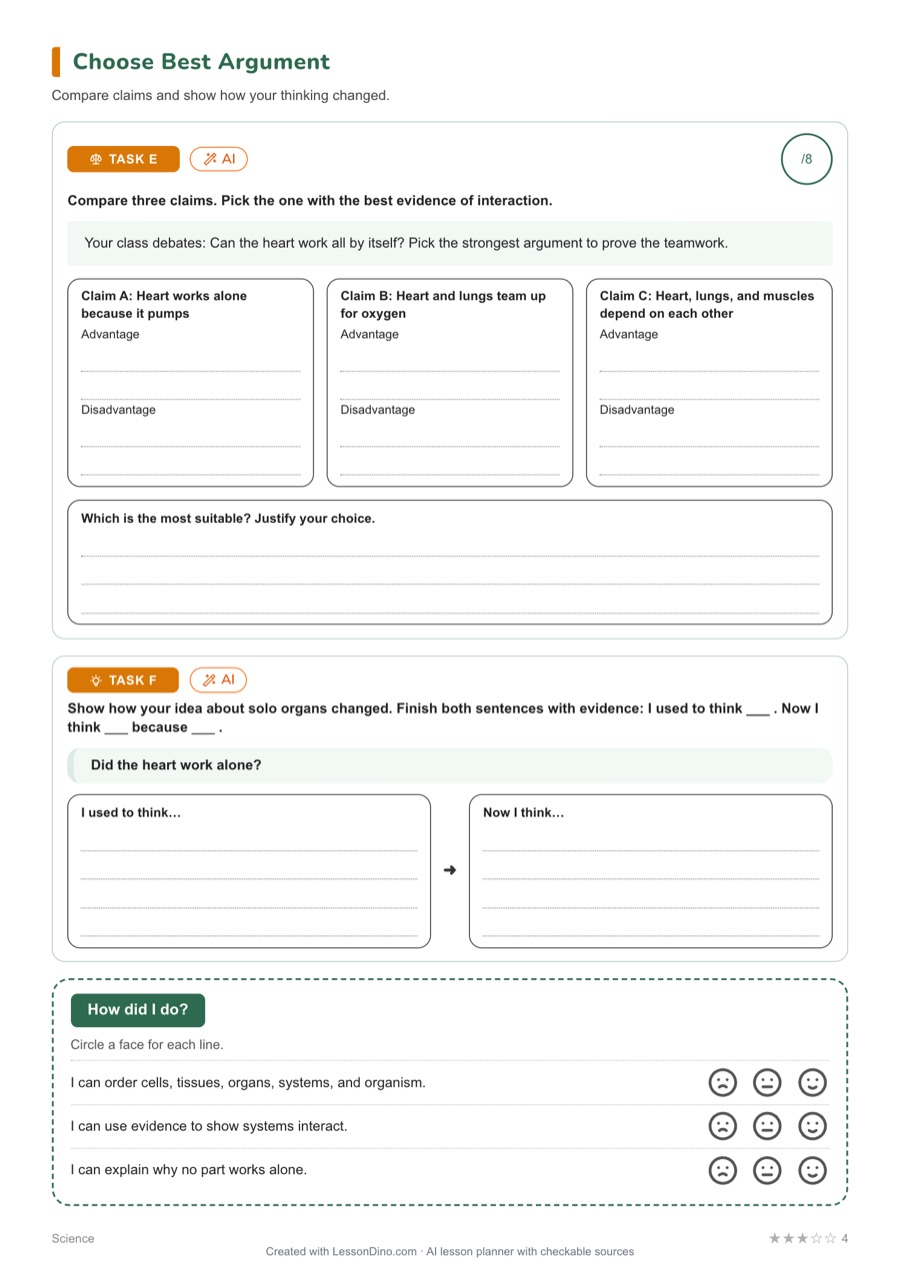
Choose Best Argument
Compare claims and show how your thinking changed.
Compare three claims. Pick the one with the best evidence of interaction.
Show how your idea about solo organs changed. Finish both sentences with evidence: I used to think ___ . Now I think ___ because ___ .
Answers
Show the answers
- What evidence from breathing and heartbeat shows two systems interacting? Faster breathing brings in more oxygen and faster heartbeat moves oxygen-rich blood to leg muscles and carries carbon dioxide back out.
- Why could the leg muscles not keep sprinting without lungs and blood flow? Muscles move by contraction but need oxygen delivery and waste removal, so without lungs and circulation they would run out of energy.
The answer sheet is the last picture above.
Curriculum
Use argument supported by evidence for how the body is a system of interacting subsystems composed of groups of cells.
From Next Generation Science Standards (middle school), MS-LS1-3.
Made with Lesson Dino's AI on 17 October 2026. AI can make mistakes, so check the answers and facts against the sources before you teach.